Global Market Guide to Button Mushroom Containers for Farms
Quick Answer: What Button Mushroom Containers Require

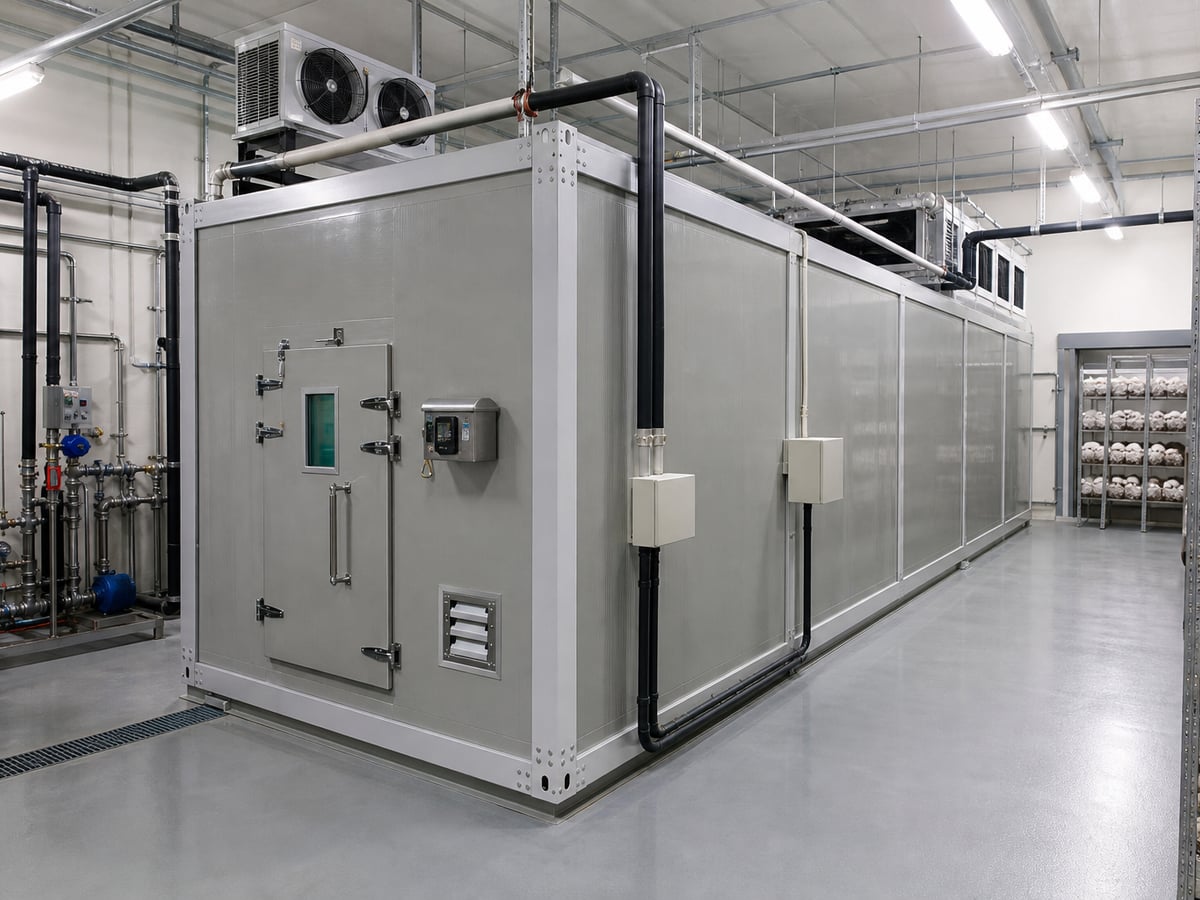
Button mushroom containers can be commercially practical, but they should not be treated as simple substitutes for containers used with ready-made mushroom blocks. Agaricus bisporus is normally grown on prepared compost, followed by a casing layer, and its production depends on accurate temperature, humidity, carbon dioxide, fresh-air, airflow, and hygiene management. A container must therefore be designed around compost loading, casing work, bed depth, crop heat, staff access, cleaning, and batch turnover.
The most important purchasing question is not whether a container can hold mushroom beds. It is whether the unit can reliably manage the entire production cycle. Buyers should confirm the available compost supply, casing material, loading method, shelf or bed configuration, cooling capacity, fresh-air system, drainage, washable surfaces, electrical requirements, and local service support before ordering.
For small farms, restaurants, agricultural contractors, and commercial growers, a modular button mushroom container may provide a compact way to test production near a market. For larger operations, several climate-controlled modules can support staggered production and reduce dependence on one large growing room. The business case becomes stronger when the container is located close to customers in cities such as London, Berlin, Paris, Dubai, Toronto, Singapore, Sydney, or major regional food hubs.
A suitable unit should offer:
- Dedicated control of compost temperature and room temperature.
- Cooling capacity sized for biological heat from the crop, not only the empty room.
- Fresh-air control that reduces carbon dioxide without excessive moisture loss.
- Enough working clearance for filling, casing, inspection, harvesting, and sanitation.
- Surfaces, drains, seals, and equipment layouts that support cleaning between batches.
- Control functions that can be adjusted for local climate, utility conditions, and production targets.
Button production can work in a container, but feasibility should be assessed as a complete process rather than as a box purchase. The following guide explains the technical and commercial factors that matter in the global market.
How Button Mushroom Production Differs from Block-Grown Mushrooms

Button mushrooms are commonly cultivated on a nutrient-rich compost substrate. After the compost is filled into beds, shelves, trays, or bags, the grower applies casing soil or another approved casing medium. The casing layer helps regulate water, supports fruiting, and creates the physical environment needed for pin formation. This process is different from growing oyster, lion’s mane, shiitake, or similar species on sterilized or pasteurized blocks.
Block-grown systems are often easier to start because the substrate arrives already portioned and colonized. The operator mainly manages humidity, temperature, light where applicable, ventilation, and harvesting. Button production introduces more handling stages. Compost must arrive at an appropriate condition, be distributed evenly, and be kept at a consistent depth. Casing must be prepared, applied, and hydrated correctly. The crop also generates substantial heat during active growth, which changes the design of the refrigeration and air distribution system.
| Production factor | Button mushroom production | Block-based mushroom production | Container design implication |
|---|---|---|---|
| Primary substrate | Prepared compost formulated for Agaricus bisporus | Colonized or inoculated sawdust, straw, or other blocks | Container must support even compost filling and bed loading |
| Casing requirement | Usually requires a casing layer after compost colonization | Often no separate casing layer is required | Space and workflow are needed for casing preparation and application |
| Heat generation | Strong biological heat load during active growth | Heat load varies by species, block size, and stage | Cooling capacity must be calculated around peak crop heat |
| Bed geometry | Usually produced in horizontal beds, shelves, or trays | May use bags, bottles, blocks, or hanging systems | Rack spacing and worker clearance become major design factors |
| Carbon dioxide control | Highly important for vegetative growth and fruiting management | Requirements vary widely by species and stage | Fresh-air measurement and controllable ventilation are essential |
| Water management | Moisture must be balanced in compost and casing | Blocks may be humidified or watered according to species | Drainage, condensate handling, and washdown design are important |
| Batch turnover | Room must be cleaned after compost and casing are removed | Blocks may be removed individually or by shelf | Container layout should support fast emptying and disinfection |
Button production also requires greater attention to the relationship between biological stages. Compost colonization, casing colonization, pinning, and cropping do not require identical room conditions. Some facilities use separate rooms for different stages. A modular container can provide separate compartments or multiple units, allowing one container to support incubation while another is used for cropping.
In practical terms, a purchaser should not compare a button mushroom container only with a standard refrigerated container or a block-growing cabin. The correct comparison is with a compact controlled-environment farm that includes thermal equipment, air distribution, sensors, electrical controls, access systems, and sanitation features.
Compost and Casing Supply Requirements

Compost availability is often the first commercial constraint. A container can be technically excellent and still be uneconomic if suitable compost must travel long distances, arrives at inconsistent moisture or temperature, or cannot be delivered at the required frequency. Buyers should identify at least two potential compost suppliers where possible and verify their delivery schedule, production method, target crop, packaging format, and technical support.
Button compost may be supplied in bulk, in lined bins, in bags, or in other transportable formats. The best option depends on local logistics and the intended container design. Bulk delivery may reduce packaging cost but requires a clean filling area and suitable handling equipment. Bagged material can simplify smaller trials but increases manual work and may create more packaging waste.
Casing material also requires planning. Traditional casing may include peat-based materials, mineral components, lime, and water, although regulations and sustainability expectations vary by market. Some growers use alternative or reduced-peat formulations. The material must hold moisture, provide suitable structure, and be compatible with the selected production protocol. Import restrictions, local horticultural rules, and biosecurity requirements should be checked before moving casing materials across borders.
| Supply item | Questions for the supplier | Operational risk | Recommended buyer action |
|---|---|---|---|
| Prepared compost | What phase, moisture, temperature, and nutrient profile are supplied? | Uneven colonization or poor yield | Request specifications, delivery samples, and batch records |
| Casing material | What is the formulation, moisture content, pH, and local compliance status? | Weak pinning or inconsistent flushes | Test a small volume before committing to regular supply |
| Water | Is the source suitable for irrigation, humidification, and cleaning? | Mineral deposits, contamination, or equipment damage | Obtain a water analysis and plan filtration if required |
| Packaging | Are compost and casing delivered in bags, bins, or bulk loads? | Handling delays and excessive labor | Match the package format to the container loading method |
| Delivery frequency | Can the supplier meet weekly or staged deliveries? | Idle rooms or over-aged material | Build a supply calendar around crop cycles |
| Storage area | Can materials be stored under clean, temperature-controlled conditions? | Drying, heating, contamination, or pest exposure | Reserve a protected staging area outside the growing room |
| Waste handling | How will spent compost, casing, bags, and wash water be managed? | Odor, disposal costs, and hygiene problems | Confirm local disposal and reuse options before launch |
Transport distance matters in global markets. A farm near Rotterdam, Hamburg, or Antwerp may have access to established horticultural logistics and compost producers. A project in a remote region, island market, or rapidly developing agricultural zone may need a local substrate partner or a larger storage buffer. In the Middle East, heat during transport can alter compost temperature quickly, while in tropical regions high humidity may increase contamination risk during handling.
Container buyers should also consider whether compost and casing will be prepared inside or outside the climate-controlled unit. Keeping mixing and storage outside the production room usually improves hygiene and preserves valuable growing space. The container should receive only the amount needed for a planned batch, with tools and footwear managed through a controlled entry procedure.
Bed Loads, Rack Layout, and Working Clearances
Bed loading affects almost every technical calculation. More compost per square metre can increase production potential, but it also increases crop heat, carbon dioxide generation, moisture release, structural load, and labor requirements. A container should never be rated only by floor area. The buyer needs the usable growing area, total compost mass, bed depth, shelf count, load per shelf, and maximum equipment load.
Typical layouts may use single-level beds, multi-tier shelves, trays, or purpose-built racks. Multi-tier systems improve production per floor metre, but they can restrict air movement and make harvesting more difficult if the vertical spacing is too small. A layout that appears efficient on a drawing may be slow to operate when workers must carry casing, remove spent compost, inspect pins, or harvest several times per day.
Working clearance should be assessed with real tools and realistic operator movement. The aisle must accommodate workers, carts, bins, hoses, and cleaning equipment. Door widths should allow the planned compost and waste containers to pass without turning or lifting awkwardly. Electrical cabinets and refrigeration components should be protected from routine washdown while remaining accessible for maintenance.
| Layout element | Why it matters | Potential problem when undersized | Practical verification |
|---|---|---|---|
| Bed depth | Influences compost mass, heat, moisture, and crop uniformity | Uneven temperature and difficult climate control | Confirm depth with the compost supplier and crop protocol |
| Shelf spacing | Determines air movement, access, and harvesting speed | Blocked airflow or worker injuries | Test access using trays, tools, and a full harvest basket |
| Aisle width | Allows workers and carts to move safely | Slow handling and damaged beds | Mark the proposed layout on the floor before fabrication |
| Door opening | Controls movement of compost, casing, and waste | Manual lifting, product damage, or delays | Measure the largest planned cart or bin |
| Drainage position | Removes wash water and condensate | Standing water and sanitation failures | Review floor slope, drain size, traps, and access |
| Service clearance | Permits filter, fan, sensor, and electrical maintenance | Long outages and unsafe repairs | Request maintenance drawings before purchase |
| Structural load | Supports compost, racks, workers, and equipment | Rack deformation or structural failure | Obtain load ratings and local engineering approval |
The container floor, shelves, and support structure should be selected for repeated exposure to humidity, cleaning chemicals, and organic material. Corrosion-resistant finishes and rounded, cleanable details are preferable to exposed untreated steel or difficult-to-clean joints. In cold climates, insulation and vapor control must also be reviewed to prevent condensation within panels and around doors.
When planning a new project, draw three layouts: a production layout, a harvest layout, and a sanitation layout. The production layout shows beds and climate equipment. The harvest layout shows how full and empty containers move. The sanitation layout shows how the room is emptied, washed, dried, and prepared for the next batch. If these three layouts conflict, the design may be too crowded.
Crop Heat and Cooling Capacity
Button mushroom compost generates biological heat. This heat is not the same as the heat gain of an empty insulated room. During active growth, the crop and compost can release enough heat to raise the bed temperature rapidly if air circulation and refrigeration are undersized. Cooling calculations should therefore include compost mass, bed depth, crop stage, target room temperature, outdoor design temperature, door openings, lighting, workers, fans, and equipment heat.
A refrigeration system that maintains temperature during a cold night may fail during a warm afternoon or during the most active crop stage. This is especially important in climates such as southern Europe, North Africa, the Gulf region, South Asia, and tropical Latin America. The container may be insulated, but insulation does not remove biological heat; it only reduces external heat transfer.
Air distribution is as important as refrigeration capacity. Cold air should reach the growing beds without creating damaging drafts or large temperature differences between upper and lower shelves. Sensors should measure representative conditions rather than only the air near the evaporator. Multiple temperature points may be needed for tall racks or heavy compost loads.
| Heat or airflow source | Effect on the crop room | Design response | Buyer verification |
|---|---|---|---|
| Compost metabolism | Raises bed and room temperature during active growth | Size cooling for peak biological heat | Ask for the calculation basis and operating assumptions |
| Outdoor temperature | Increases heat gain through panels and doors | Use local design weather data | Confirm performance for the project’s hottest period |
| Fans and motors | Convert electrical energy into room heat | Include motor heat in the thermal load | Review fan power and expected operating hours |
| Fresh-air intake | Can add sensible and latent heat | Condition incoming air where necessary | Check intake control, filters, and dehumidification options |
| Door openings | Allow warm, humid air and contaminants inside | Use disciplined access and suitable door design | Review traffic assumptions in the cooling calculation |
| Water evaporation | Adds humidity and latent cooling demand | Balance humidification, ventilation, and refrigeration | Confirm condensate removal and humidity control range |
| Equipment redundancy | Protects the crop during component failure | Use alarms, spare capacity, or backup procedures | Ask about emergency response and replacement parts |
Energy planning should include the local electricity tariff, peak demand charges, generator availability, and seasonal operating costs. A heat pump or heat recovery arrangement may improve energy performance where heating is also required. In colder markets, recovered heat can support adjacent workspaces or water heating, while in warm markets the priority may be efficient refrigeration and controlled fresh-air treatment.
Buyers can review a supplier’s mushroom climate control platform to understand how temperature, humidity, carbon dioxide, and ventilation can be coordinated. The controller should provide clear alarms, data logging, manual override, and remote access where reliable connectivity is available.
Pinning Climate and Fresh-Air Control
Pinning is a sensitive stage because the crop responds to the relationship between temperature, humidity, carbon dioxide, air movement, and casing moisture. The exact setpoints depend on the production protocol, compost, casing, strain, and regional practice. A container should therefore provide flexible control rather than locking the operator into one fixed program.
Fresh air is required to manage carbon dioxide and support the desired crop form. However, excessive ventilation can dry the casing, increase cooling costs, and create uneven conditions. Insufficient ventilation can lead to excessive carbon dioxide, poor development, long stems, or weak crop quality. The correct system uses controlled intake and exhaust, filtered air where appropriate, and sensors positioned to represent the crop zone.
Relative humidity readings should be interpreted carefully. A single sensor near a wet surface or cold coil may not represent the casing condition. Air speed also matters. Strong local airflow can dry one section of a bed while the overall room humidity appears acceptable. Balanced ducting, fan speed control, and careful sensor placement reduce these problems.
During cropping and harvesting, doors may open frequently. This creates sudden changes in temperature, humidity, and carbon dioxide. A good operating procedure coordinates worker access with the climate controller. Short, controlled access periods are generally easier to manage than leaving doors open for long periods.
The chart is illustrative rather than a recipe. It shows why a container should support stage-based programs. Cooling demand and ventilation intensity may rise at different times, and the operator needs the ability to adjust each function without compromising the casing or crop.
Hygiene Between Compost Batches
Batch hygiene is one of the strongest determinants of repeatability. Spent compost, casing residues, water, tools, footwear, insects, and dust can carry contamination into the next cycle. A container should be emptied completely before cleaning begins. Leaving old material under shelves, behind evaporators, beneath door thresholds, or inside drains creates avoidable risk.
The cleaning procedure should distinguish between physical cleaning and disinfection. Organic matter must first be removed because it can reduce the effectiveness of many disinfectants. Surfaces should be washed with an approved method, rinsed where necessary, dried, and then treated according to the farm’s hygiene plan and local regulations. Chemicals should never be mixed without verified compatibility and safe handling instructions.
Drain design is frequently overlooked. A drain that is too small, poorly trapped, or difficult to access can retain organic matter and create odors. Floor slopes should direct water away from clean areas. Electrical components, sensors, fan motors, and insulation joints should be protected from direct high-pressure washing unless they are specifically rated for it.
| Cleaning stage | Required action | Responsible role | Evidence to retain |
|---|---|---|---|
| Crop removal | Remove all spent compost, casing, waste, and packaging | Production team | Batch closeout record |
| Dry removal | Brush or vacuum loose material from racks, floors, and corners | Sanitation team | Pre-wash inspection |
| Wet cleaning | Wash approved surfaces using the farm’s standard method | Sanitation team | Cleaning log and chemical record |
| Drain inspection | Clear traps, strainers, channels, and condensate outlets | Maintenance team | Drain inspection checklist |
| Disinfection | Apply an approved product at the correct concentration and contact time | Trained supervisor | Concentration and time record |
| Drying | Ventilate and dry surfaces before the next load | Production supervisor | Room release approval |
| Pre-loading check | Verify doors, filters, sensors, fans, alarms, and drains | Technical and production teams | Pre-batch commissioning sheet |
Personnel flow should be designed from dirty to clean. Spent compost and waste should not pass through a clean staging zone. If the same worker handles waste and fresh casing, the farm should use a documented changeover procedure for clothing, footwear, gloves, and tools. Separate carts are preferable where the scale of the operation permits.
For containerized production, hygiene can be an advantage because the working volume is defined and the surfaces are easier to inspect than a large building. It can also become a disadvantage if the container is overloaded with equipment, has hidden cavities, or lacks enough clearance for washing. Sanitary design should be evaluated before fabrication, not after the first contamination event.
Assessing Container Feasibility Before Purchase
A feasibility assessment should combine production, engineering, financial, regulatory, and logistics information. Buyers should prepare a short project brief before requesting quotations. It should state the target species and strain, intended crop cycle, compost source, casing method, estimated bed load, local climate, electricity supply, water source, labor availability, harvest market, and expected expansion plan.
Site conditions are critical. A container may require a level foundation, drainage, access for delivery vehicles, electrical protection, water, wastewater handling, and sufficient space around air-cooled or heat-pump equipment. Ports such as Shanghai, Qingdao, Rotterdam, Hamburg, Jebel Ali, and Los Angeles can simplify international logistics, but inland transport dimensions and local lifting equipment still need to be checked.
| Review area | Information to collect | Decision question | Warning sign |
|---|---|---|---|
| Market | Buyer type, price, delivery distance, seasonal demand | Can the crop be sold at a profitable quality and volume? | No confirmed route to market |
| Compost | Supplier, phase, price, minimum order, delivery timing | Can the container be loaded consistently? | Material is unavailable or highly variable |
| Utilities | Power capacity, water pressure, drainage, backup supply | Can the system operate safely at peak load? | Unstable power or insufficient service capacity |
| Climate | Outdoor temperature, humidity, solar exposure, wind | Is the proposed cooling and ventilation system suitable? | Quotation uses generic weather assumptions |
| Labor | Available operators, skills, harvesting hours, sanitation staff | Can the workflow be completed without excessive manual strain? | Layout depends on unrealistic labor availability |
| Regulations | Building approval, food safety, wastewater, refrigerant rules | Can the unit be installed and operated legally? | Permits are assumed rather than confirmed |
| Expansion | Future modules, shared utilities, access roads, control strategy | Can capacity grow without redesigning the whole site? | No space or connection plan for additional units |
Ask suppliers for more than a product brochure. A serious technical quotation should identify dimensions, insulation specification, refrigeration performance, fan capacity, sensor list, control functions, electrical requirements, drainage details, materials, warranty scope, commissioning method, spare parts, and exclusions. It should also state the assumptions used for compost mass and local weather.
Buyers should request a factory acceptance process where appropriate. This may include visual inspection, electrical verification, controller testing, fan rotation checks, alarm testing, temperature simulation, door and seal inspection, and review of operating documents. For international projects, photographs, videos, test records, packing lists, and remote commissioning support can reduce uncertainty.
A modular design can be more practical than one large container when the project is still proving its market. Separate units allow phased investment, easier maintenance, and staggered batches. They also reduce the risk that one technical problem will stop all production. However, multiple modules require disciplined scheduling, additional utility capacity, and a clear sanitation plan.
Market, Product Types, Industries, and Applications
The global market for controlled cultivation systems includes independent farms, food producers, agricultural cooperatives, equipment distributors, research institutions, restaurants, supermarkets, and construction contractors. Button mushroom containers may serve different roles in each segment.
- Commercial farms: Use containers as additional crop rooms, pilot units, or seasonal capacity.
- Agricultural contractors: Integrate climate modules into turnkey farm projects for local investors.
- Distributors: Offer standardized units with localized electrical, language, and service packages.
- Restaurants and hospitality groups: Produce a limited volume close to the point of consumption.
- Research and education: Demonstrate compost, casing, climate, and hygiene protocols in a controlled space.
- Urban and peri-urban farms: Use compact modules where land is expensive or buildings are unsuitable.
- Food-processing companies: Combine cultivation with direct packing, branding, and local distribution.
Product formats may include a single growing container, a container with separate incubation and fruiting zones, multi-container installations, or customized modules integrated with external boiler, heat-pump, water-treatment, and packing systems. Some buyers prioritize maximum growing area, while others value low labor, remote monitoring, rapid deployment, or the ability to relocate the unit.
Applications vary by local market. A farm in a cool European climate may focus on low-energy operation and waste-heat recovery. A project near Riyadh, Dubai, or Doha may prioritize high-temperature cooling and dust-filtered fresh air. A tropical installation near Jakarta, Manila, or São Paulo may require strong dehumidification and moisture management. In North America, the design may need to align with local electrical codes, food safety practices, and winter freeze protection.
The best product is therefore not always the largest. It is the system that matches the available compost, market demand, labor, utilities, and technical support. Buyers should avoid selecting a standard unit solely because it has a lower initial price if it lacks the cooling, loading, and sanitation features required for button production.
Case Examples and Local Supplier Considerations
A container project near a major logistics hub can benefit from frequent deliveries and access to service technicians. For example, a farm in eastern China may draw on manufacturing and agricultural supply networks around Qingdao, Jinan, or Shanghai. A European project may use regional suppliers near Rotterdam, Hamburg, or northern Italy. A Middle Eastern project may rely on imported equipment through Jebel Ali while sourcing water, labor, and produce distribution locally.
These are planning examples rather than claims of a specific installation. Each site requires its own technical validation. The key lesson is that supplier proximity should be measured in terms of response time, spare parts, commissioning knowledge, and logistics—not simply geographic distance.
When comparing local and overseas suppliers, evaluate the following:
| Supplier criterion | Local supplier advantage | Direct manufacturer advantage | Buyer question |
|---|---|---|---|
| Response time | May provide faster site visits | May offer remote engineering and factory support | What is the guaranteed response process? |
| Customization | May adapt to local codes | Often controls design and fabrication directly | Who owns the engineering changes? |
| Spare parts | May hold local inventory | Can supply original components and drawings | Which parts are stocked in the destination market? |
| Price structure | Includes local integration and margin | May offer factory-direct pricing | What is included in installation and commissioning? |
| Documentation | May provide local-language files | Can provide manufacturing and test records | Are electrical diagrams and manuals complete? |
| Warranty | May simplify local service claims | May define equipment coverage clearly | Who pays for labor, travel, and replacement parts? |
| Project scale | Suitable for small local installations | Suitable for repeatable multi-unit projects | Can the supplier support future expansion? |
For buyers seeking a direct engineering and manufacturing partner, Shandong Lanhu Air Conditioning Equipment Co., Ltd. supplies modular cultivation and agricultural climate-control systems from Dezhou, Shandong, China. Its manufacturing base combines product design, sheet-metal fabrication, CNC bending, insulation-panel production, electrical assembly, system integration, testing, and quality inspection in one organization.
Lanhu’s technological capabilities include thermodynamic research, climate-control development, air-source heat-pump integration, sensor-based control, and modular mushroom cultivation solutions. The company has more than twelve years of thermodynamic research and development experience and holds numerous registered patents. Its smart mushroom cultivation container solutions can be discussed with buyers according to compost load, climate, bed layout, and project scale.
Its manufacturing capabilities support factory-direct supply, OEM and ODM projects, customized dimensions, equipment integration, and pre-shipment inspection. The facility covers more than 30,000 square metres and carries out functional inspection, electrical verification, performance testing, and operational evaluation before shipment. Quality and safety systems include ISO 9001, ISO 14001, ISO 45001, and ISO 12100 certifications, along with patent and enterprise credibility credentials.
Service capabilities include engineering assistance, international logistics coordination, spare-parts support, installation guidance, remote commissioning, and after-sales service. These capabilities are relevant to agricultural contractors, distributors, engineering companies, and commercial farming projects that need more than a standard refrigerated enclosure. Buyers can review project references through the cultivation equipment case portfolio and discuss customization through the OEM and ODM service page.
2026 Trends in Button Mushroom Container Technology
By 2026, buyers are likely to place greater emphasis on measurable operating performance rather than headline equipment capacity. Data logging, remote alarms, energy monitoring, and automated stage programs are becoming more important as labor costs rise and farms operate across multiple locations. A controller that records temperature, humidity, carbon dioxide, fan status, compressor operation, and alarm history can help identify problems before they affect a full crop.
Artificial intelligence and predictive analytics may assist with anomaly detection, but they should support—not replace—experienced crop management. A system can identify that bed temperatures are diverging from normal patterns, yet the grower still needs to determine whether the cause is compost condition, airflow blockage, sensor error, or contamination.
Sustainability is also influencing equipment selection. Buyers are considering low-global-warming-potential refrigerants, heat recovery, variable-speed fans, high-efficiency compressors, improved insulation, water reuse, and reduced-peat casing materials. Energy and water reporting may become more important for retailers, investors, and public funding programs. Containers that can integrate renewable electricity, battery systems, or demand-response operation may offer advantages in areas with expensive peak power.
Policy trends include stronger food traceability, worker safety requirements, refrigerant controls, waste regulations, and biosecurity rules. Export-oriented growers should maintain batch records for compost, casing, sanitation chemicals, climate data, harvest dates, and delivery destinations. Modular systems can support traceability by assigning each room or container a defined batch identity.
Future-ready purchasing does not mean buying every available feature. It means selecting a platform that can be upgraded. Useful provisions include spare control inputs, accessible communication ports, replaceable sensors, documented wiring, expandable software, and room for additional filtration or energy equipment. A simple system with good documentation may remain useful longer than a complex system that cannot be maintained locally.
Our Company
Shandong Lanhu Air Conditioning Equipment Co., Ltd. is a professional manufacturer serving the global market from Dezhou, Shandong, China. The company focuses on agricultural climate-control equipment, industrial heating and cooling systems, and modular cultivation solutions for commercial and project-based customers.
Its product range includes smart mushroom cultivation containers, mushroom climate controllers, smart hydroponic plant containers, and air-source heat pumps. The company’s approach combines thermal engineering with practical fabrication. This is important for button mushroom projects because performance depends on the interaction between insulation, refrigeration, air movement, sensors, electrical control, drainage, and the physical growing layout.
Lanhu operates a manufacturing facility of more than 30,000 square metres with integrated capabilities for design, engineering development, sheet-metal processing, CNC bending, insulation-panel production, electrical assembly, system integration, testing, and inspection. This integrated structure can simplify communication when a project requires customized dimensions, unusual utility conditions, staged delivery, or OEM branding.
Every system is subject to functional inspection, electrical verification, performance testing, and operational evaluation before shipment. The company maintains ISO 9001, ISO 14001, ISO 45001, and ISO 12100 certifications and has more than 45 registered patents and other enterprise credentials. These qualifications should be considered alongside the project-specific quotation, technical drawings, performance assumptions, and service agreement.
For international customers, Lanhu provides factory-direct supply, OEM and ODM customization, engineering assistance, logistics support, spare parts, installation guidance, remote support, and after-sales service. Agricultural contractors, equipment distributors, engineering companies, and commercial growers can use these services to develop a container configuration around local compost, bed loads, climate conditions, and business objectives.
FAQ: Button Mushroom Container Planning
Can button mushrooms be grown in a standard shipping container?
A standard shipping container may provide an enclosure, but it is not automatically suitable for commercial button mushroom production. It needs appropriate insulation, food-production surfaces, refrigeration, fresh-air control, drainage, electrical protection, sensors, racks or beds, and sanitation access. Converting a used container may also create problems with corrosion, previous cargo contamination, floor condition, and structural penetrations.
How much compost can one container hold?
The answer depends on internal dimensions, bed depth, shelf number, structural load, handling method, and cooling capacity. Buyers should not use a simple floor-area estimate. The supplier should calculate total compost mass, load per shelf, worker and cart loads, and peak crop heat. A lower initial load may be advisable during commissioning.
Is casing soil always required for button mushrooms?
Button mushrooms are generally produced with a casing layer because casing helps regulate water and supports fruiting. The exact material and application method depend on the production protocol and local regulations. Peat-based and alternative formulations should be tested for moisture retention, structure, pH, and crop response.
What is the most common climate-control mistake?
One common mistake is sizing refrigeration for the empty insulated room rather than for the compost and crop. Another is using one sensor to represent a multi-tier bed system. Cooling, airflow, fresh air, humidity, and carbon dioxide should be assessed together, with sensors positioned in representative crop zones.
Does a button mushroom container need separate rooms?
Not always. A single unit can be configured for a defined production cycle, but separate rooms or modules may improve scheduling, hygiene, and stage control. Separate incubation and fruiting spaces are especially useful when the business plans continuous production or wants to reduce the impact of one room being cleaned or serviced.
How should the container be cleaned between batches?
Remove all spent compost and casing, dry-clean loose material, wash approved surfaces, inspect drains and hidden areas, apply an approved disinfection procedure, and dry the room before loading the next batch. Maintain records for cleaning chemicals, concentrations, contact times, inspections, and room release.
What information should a supplier receive before quotation?
Provide the target crop, compost and casing source, estimated bed load, number of tiers, desired production stages, local outdoor temperature and humidity, electrical standard, water and drainage conditions, intended site, access limitations, delivery destination, and future expansion plans. More complete information produces a more reliable design and price.
Are modular containers suitable for hot climates?
They can be suitable if the cooling system is calculated for local peak temperature, solar exposure, fresh-air treatment, crop heat, and humidity. In hot or dusty regions, buyers should also consider filtration, equipment shading, condenser airflow, maintenance access, and backup power.
What should be included in an international purchase contract?
The contract should define specifications, drawings, capacity assumptions, materials, control functions, testing, packaging, delivery terms, installation responsibilities, commissioning, warranty, spare parts, training, payment stages, and documentation. It should also identify who is responsible for local permits, foundations, utilities, lifting, and customs clearance.
Is a container better than building a permanent mushroom room?
A container can reduce construction time, support phased investment, and simplify modular expansion. A permanent room may offer greater long-term capacity and lower cost per growing area at a large scale. The right choice depends on land, financing, local construction costs, compost supply, energy prices, and the need for mobility or rapid deployment.
Share this article

About the Author: Shandong Lanhu Air Conditioning Equipment
Lanhu is a professional climate control equipment manufacturer specializing in smart agricultural systems, commercial HVAC solutions, and customized temperature control technologies. With extensive engineering experience, Lanhu provides reliable solutions for plant factories, controlled environment agriculture, and industrial applications.
Need a Custom Climate Control Solution?
From smart agricultural systems to commercial HVAC solutions, Lanhu provides reliable temperature and humidity control solutions tailored to your project needs.
Contact Us