
Tour Our Manufacturing Facility
Visit Shandong Lanhu Air Conditioning Equipment Co.,LTD’s manufacturing facility in Dezhou, Shandong, and explore our production capabilities, including sheet metal fabrication, CNC bending, insulation panel production, electrical assembly, and equipment testing. Through integrated manufacturing processes and strict quality management, we deliver customized climate control solutions for agricultural and industrial applications.
Integrated Assembly: Complete production capabilities covering structural fabrication, component integration, electrical installation, and final equipment assembly.
Strict QA Trials: Each system undergoes functional inspection and performance testing before shipment to ensure reliable operation.
Four Core Product Solutions
Explore our intelligent climate control and agricultural equipment solutions for modern farming, cultivation, and commercial applications.
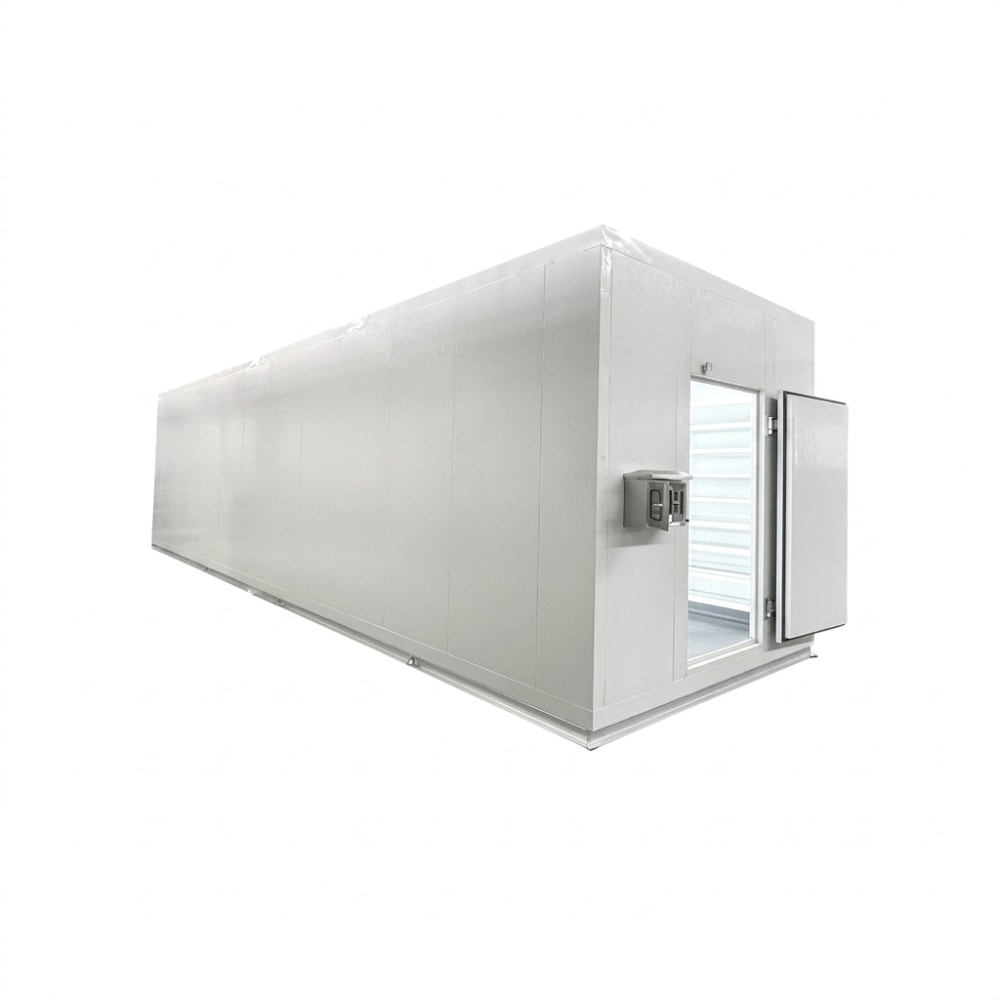
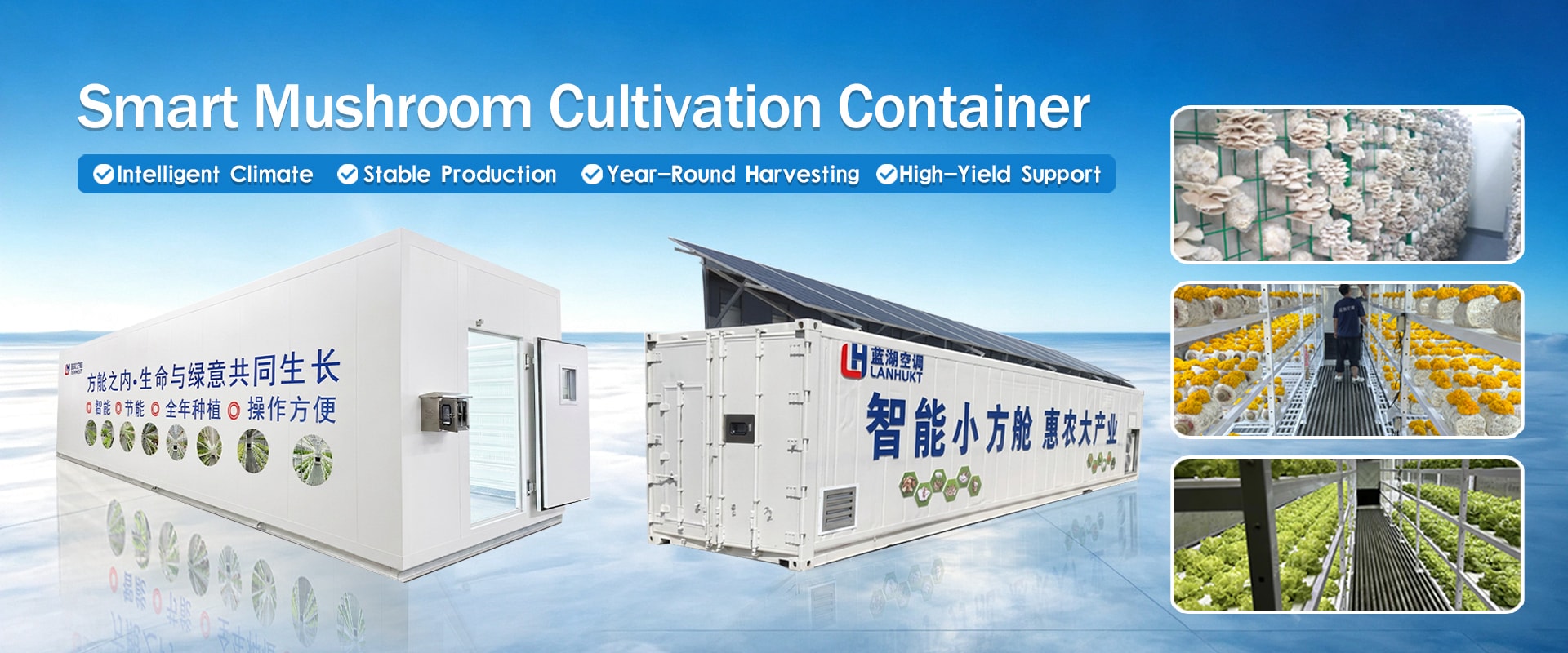
Smart Mushroom Cultivation Container
A modular mushroom cultivation solution integrating environmental control, insulation, and intelligent management systems for efficient production.
View Product Details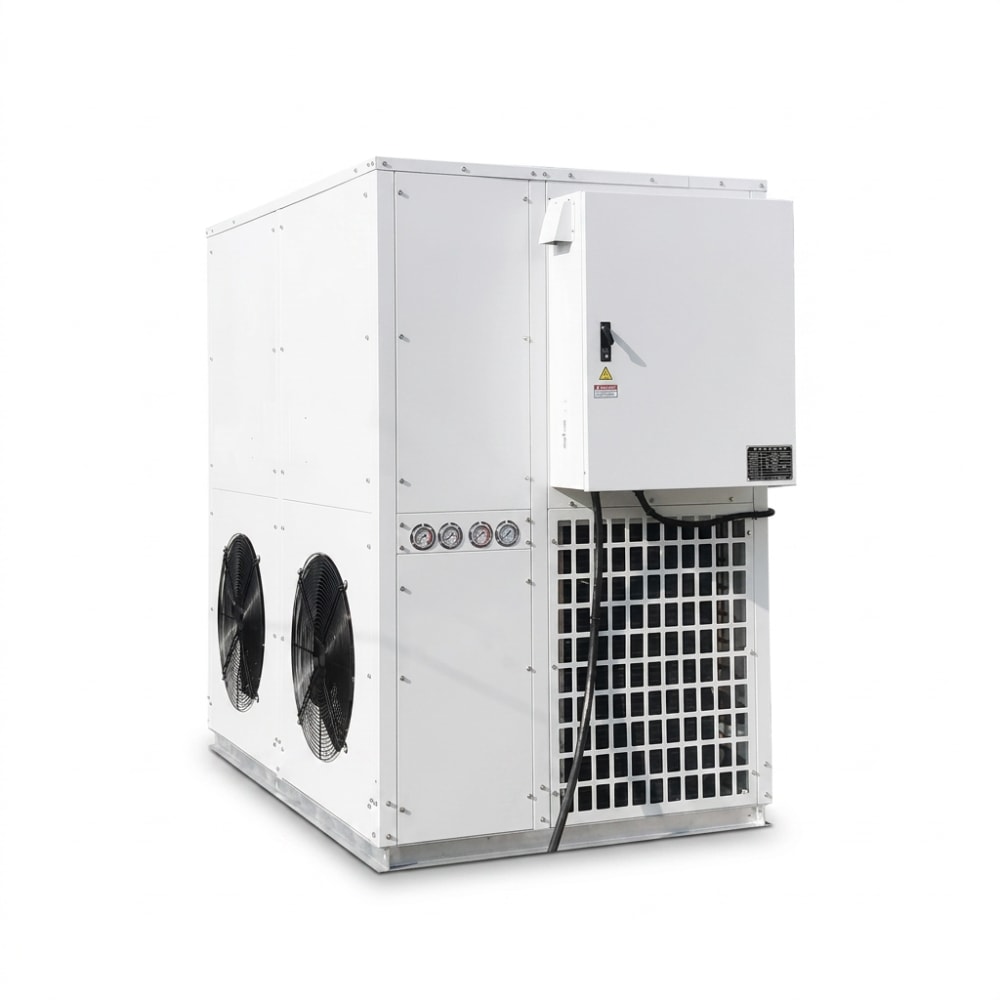
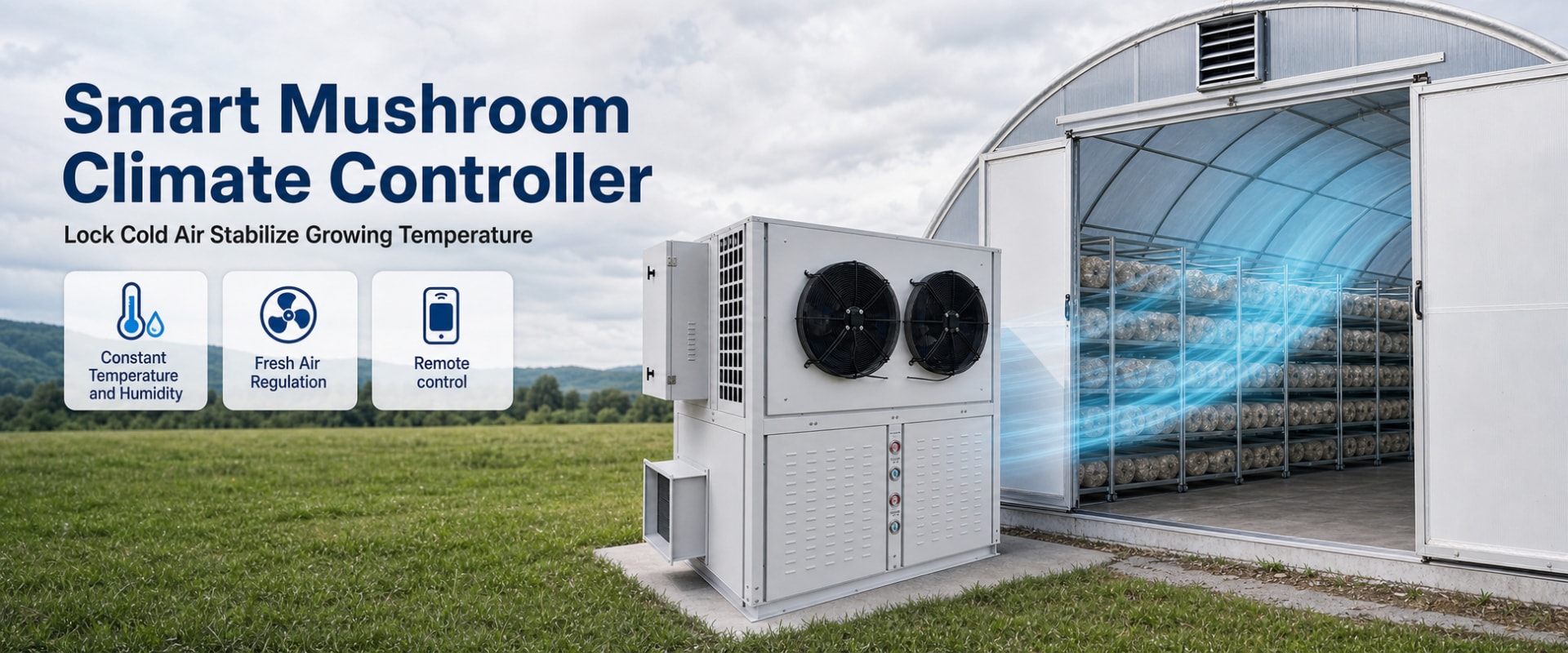
Smart Mushroom Climate Controller
A specialized climate control system designed to maintain precise temperature, humidity, CO₂, and ventilation conditions for mushroom cultivation.
View Product Details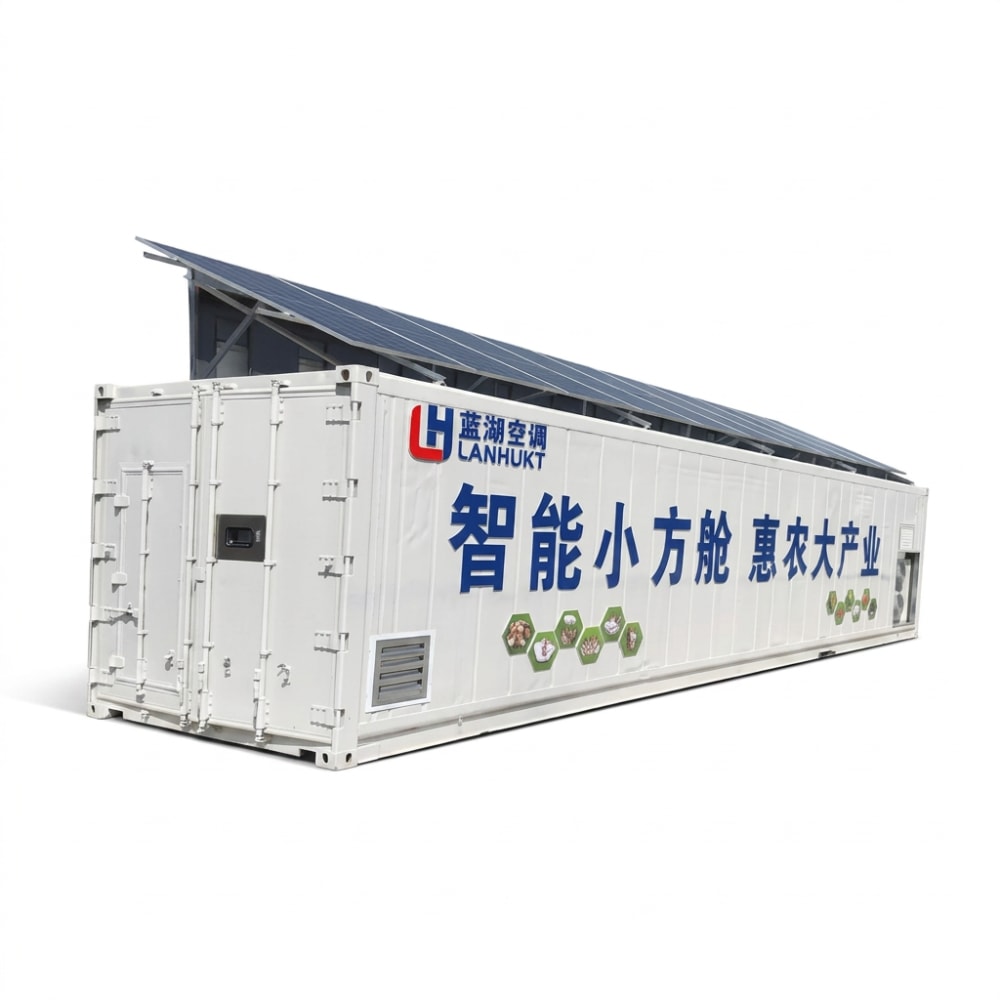
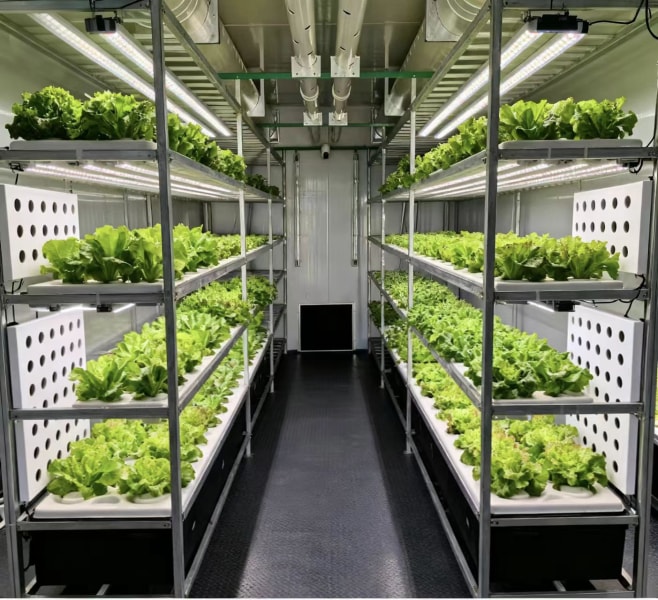
Smart Hydroponic Plant Container
An integrated indoor farming solution combining hydroponic cultivation, environmental control, and smart management technology for year-round plant production.
View Product Details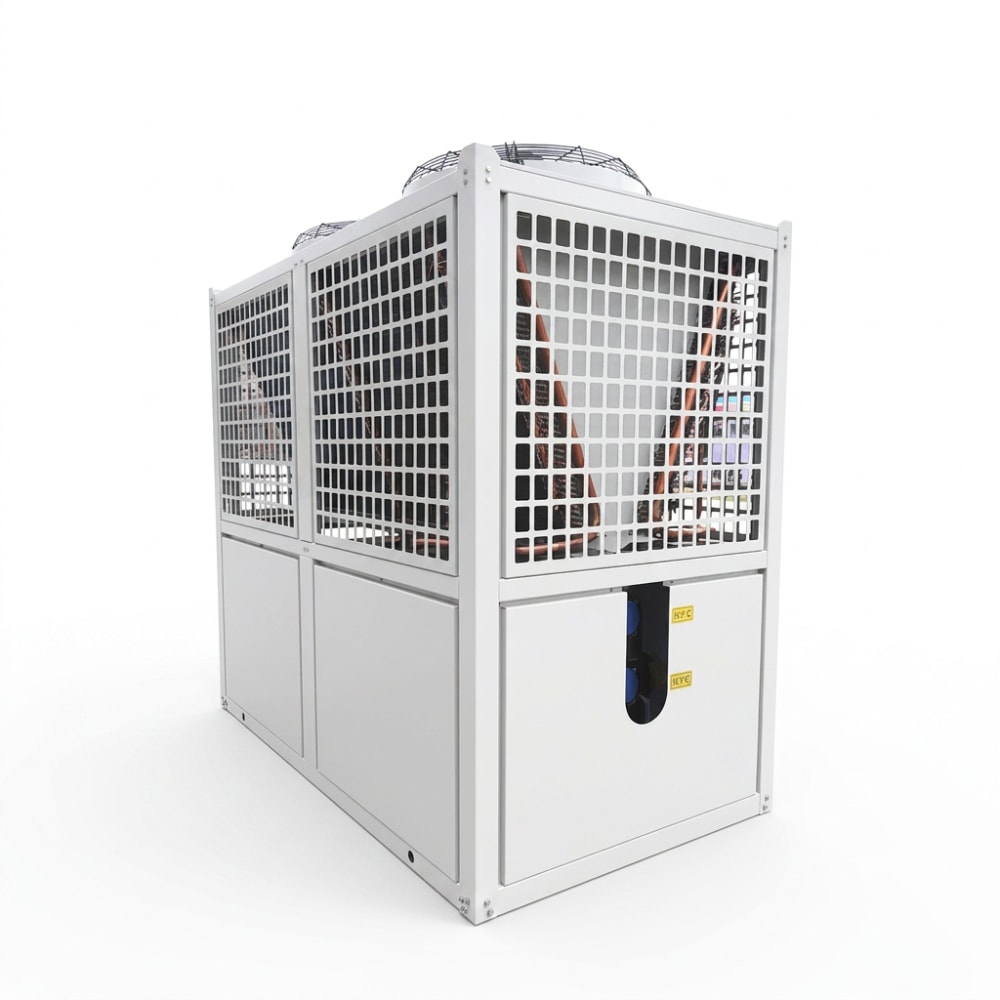
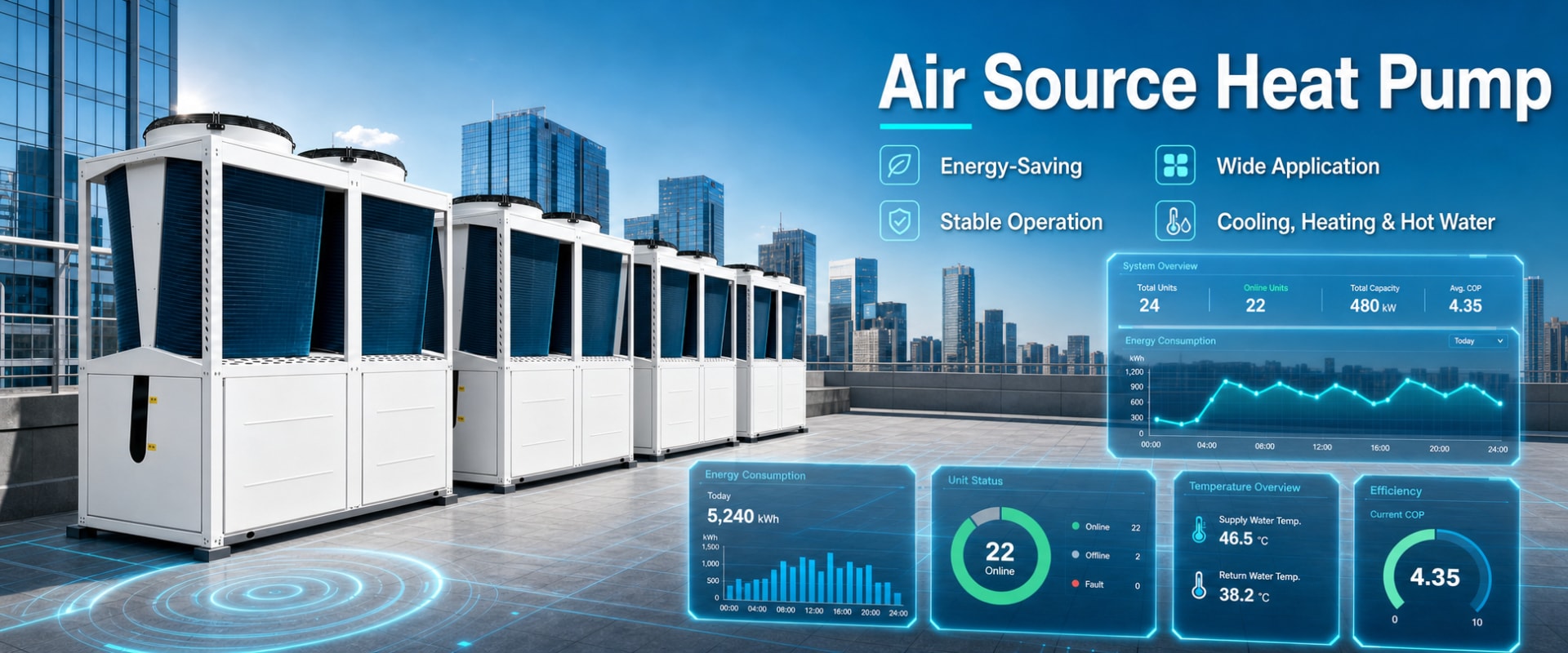
Air Source Heat Pump
An energy-efficient thermal solution using air source technology to provide reliable heating, cooling, and hot water solutions for various applications.
View Product DetailsCommercial Project Applications
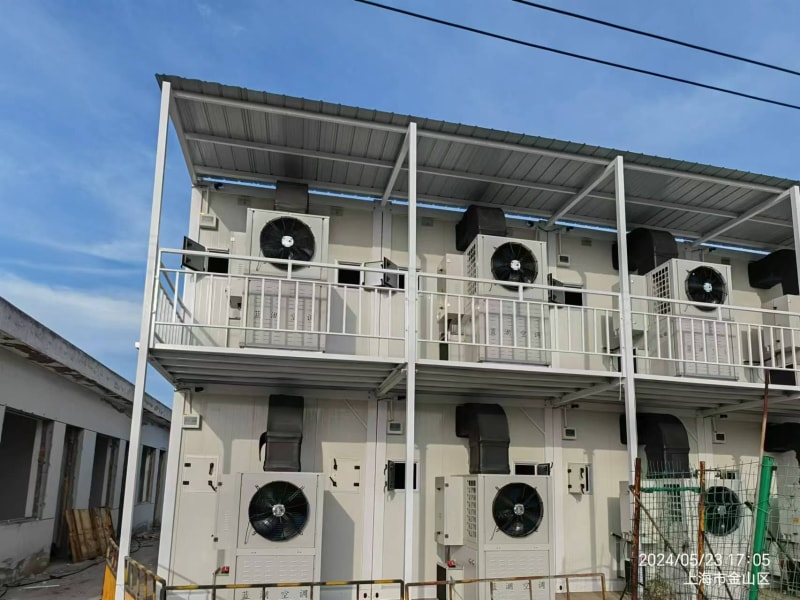
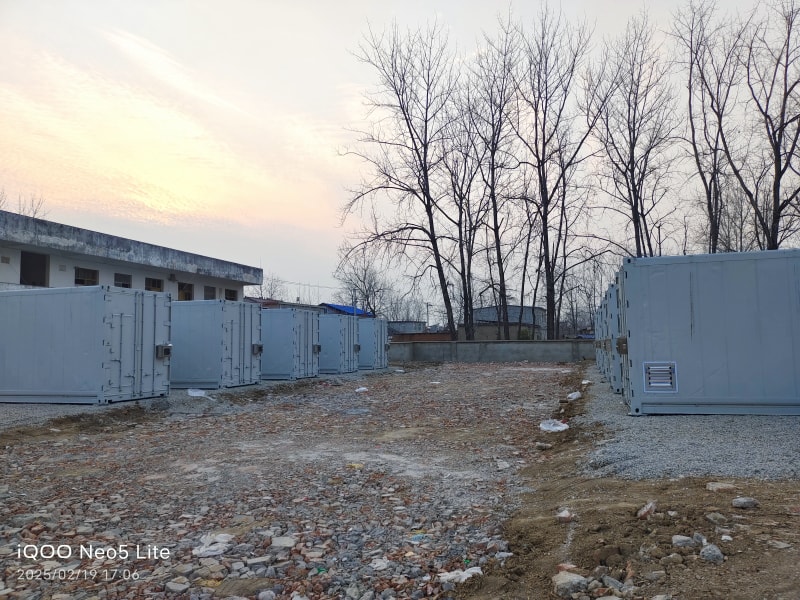
Explore real application cases of Lanhu climate control equipment in agricultural and industrial environments.
Factory Certifications & Credentials
Our products are manufactured according to established quality, safety, and environmental management standards.
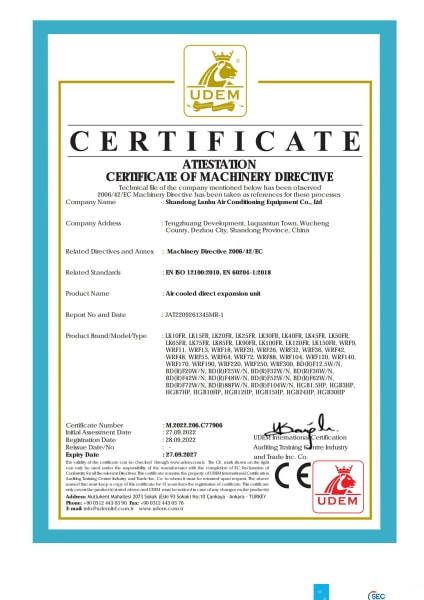
ISO 12100:2010
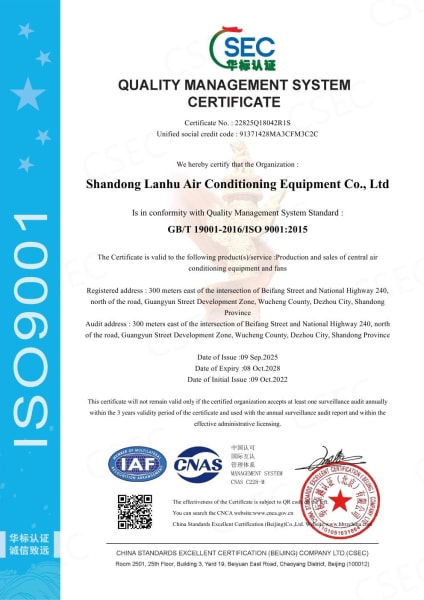
ISO 9001
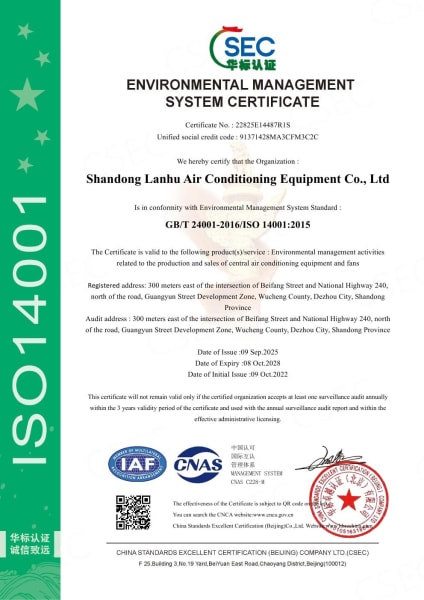
ISO14001
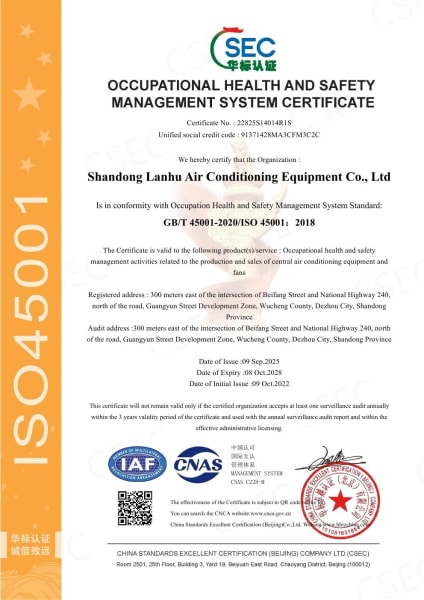
ISO45001
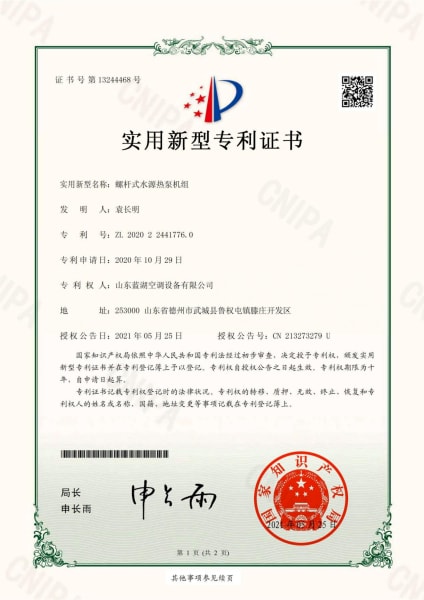
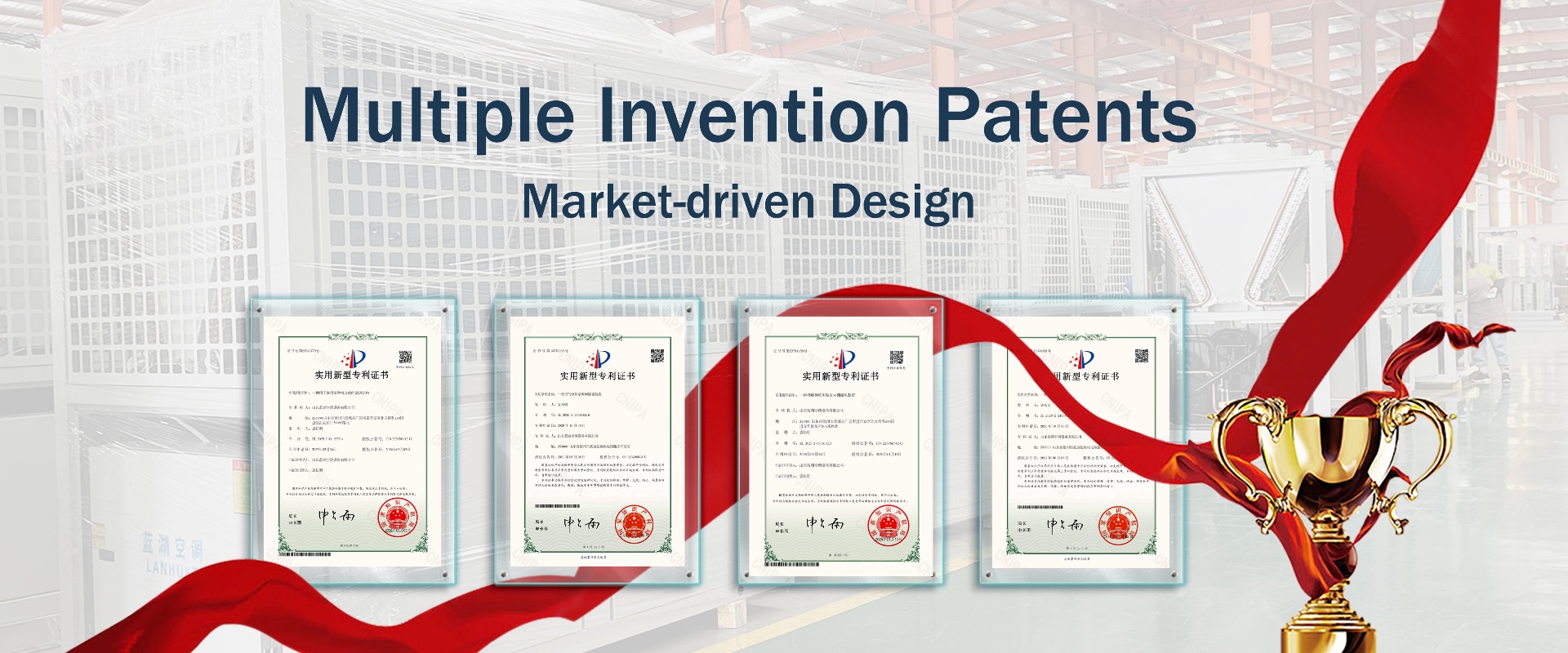
Patent Certificate
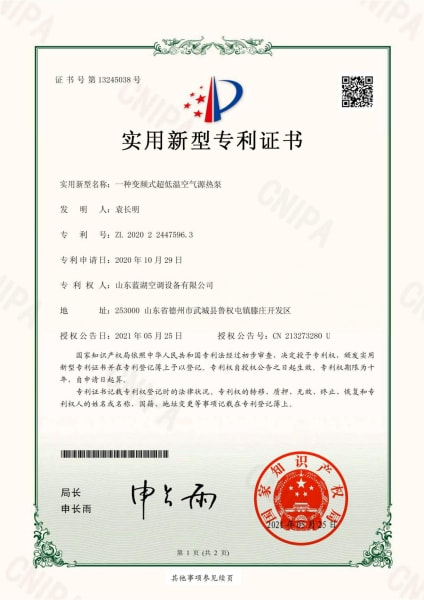
Patent Certificate
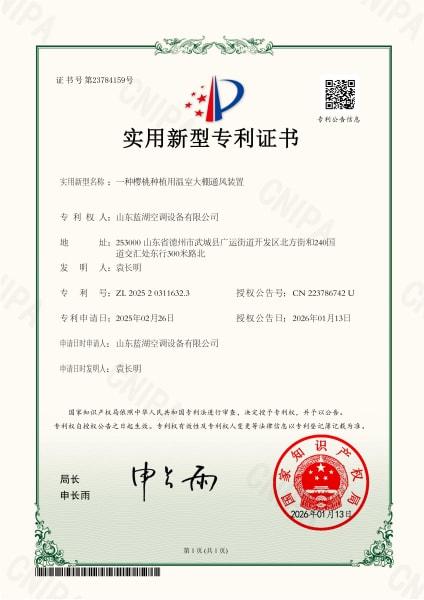
Patent Certificate
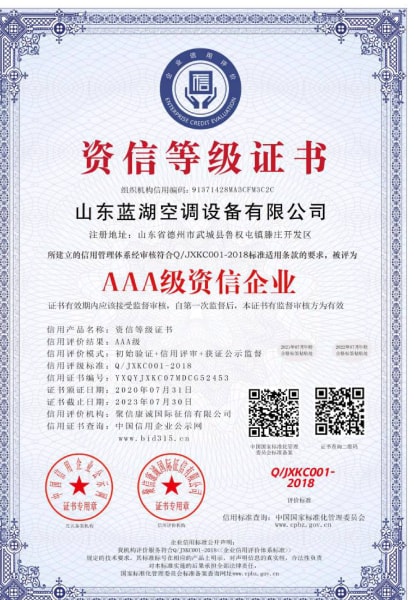
Honest Enterprise
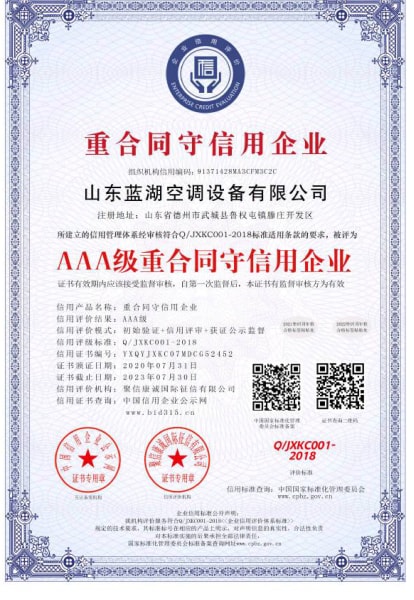
Honest Enterprise
A Professional Manufacturer of Agricultural HVAC Systems
Shandong Lanhu Air Conditioning Equipment Co.,LTD is a specialized manufacturer focused on agricultural climate control equipment and modular cultivation systems.
Located in Dezhou, Shandong, we operate a modern production facility covering more than 30,000㎡, providing direct factory supply for customers worldwide.
By combining HVAC engineering expertise with agricultural environmental control technology, we develop solutions for mushroom cultivation, plant factories, and commercial farming projects.
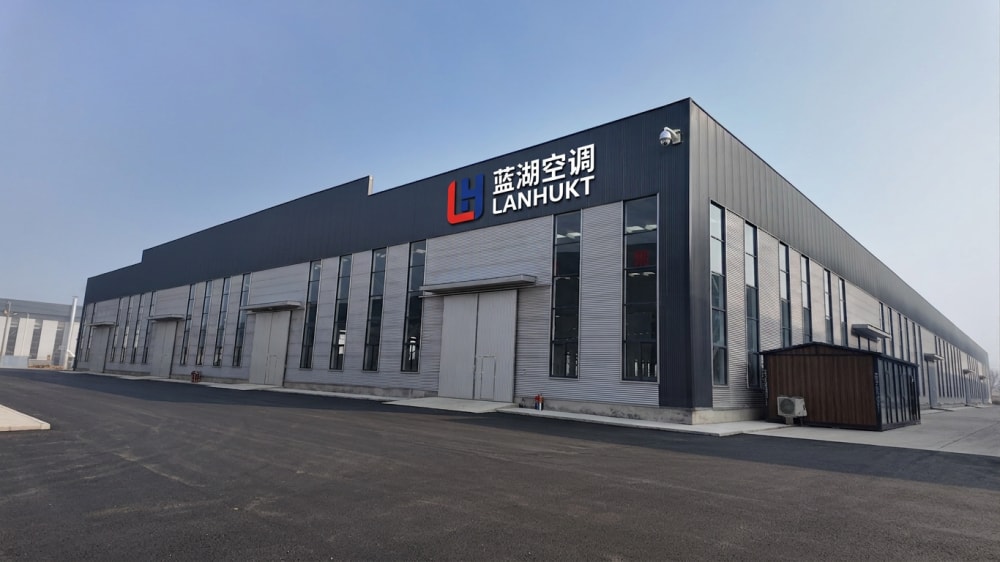
Dezhou Factory
Shandong, China
Why Choose Lanhu
We combine manufacturing experience, engineering capabilities, and direct factory communication to provide reliable agricultural climate solutions.
Direct Factory Cooperation
Work directly with our engineering and production teams for efficient communication, flexible customization, and competitive supply solutions.
System Testing Before Delivery
Each climate control system completes inspection and operational testing before shipment to verify key functions and performance.
Intelligent Control Systems
Smart control panels support automatic temperature, humidity, and operational management for easier system operation.
Engineering Support
Our technical team provides project communication, equipment configuration support, and after-sales assistance for international customers.
Agricultural Climate Control Knowledge
Explore practical insights about temperature management, humidity control, energy efficiency, and modern agricultural environment solutions.
-
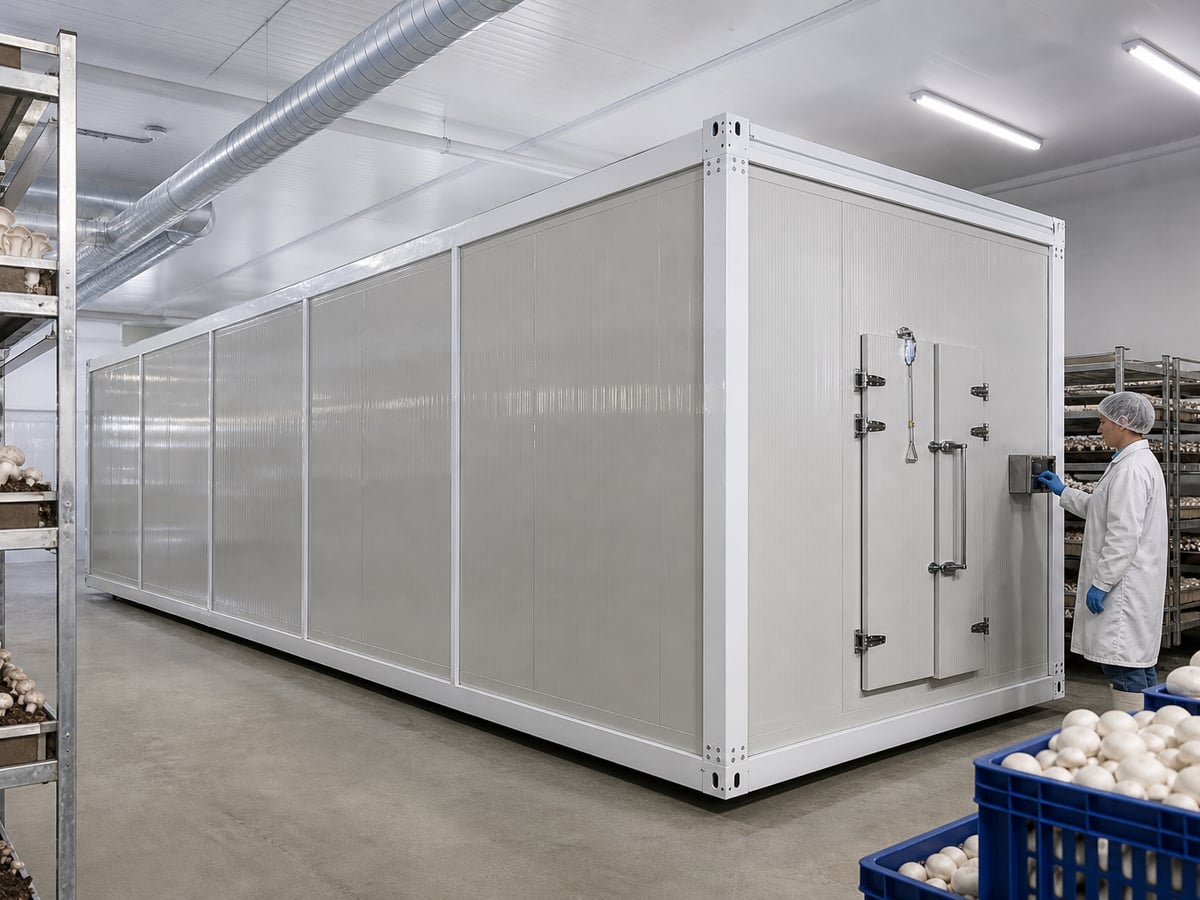
Global Market Guide to Mushroom Container Automation
Smart mushroom cultivation containers can automate many repeatable environmental tasks in the Global Market, including temperature control, humidification, dehumidification, fresh-air exchange, CO2 management, fan operation, damper positioning, lighting schedules, data recording, and fault notifications. These controls can keep a container closer to the environmental targets required by each mushroom species and crop stage.However, automation does not replace the grower. A reliable system supports the grower by maintaining stable setpoints, reducing response time, recording operating data, and raising alarms when conditions move outside acceptable limits. Crop observation, disease recognition, substrate assessment, harvesting decisions, sanitation, and recovery after severe failures still require trained people.For commercial farms, contractors, and equipment distributors, the most valuable automation strategy is usually not “fully unattended growing.” It is a practical combination of dependable control loops, clear manual override functions, remote monitoring, preventive maintenance, and operating procedures that local teams can follow. This approach is relevant for container farms shipped through global trade hubs such as Shanghai, Rotterdam, Dubai, Singapore, Los Angeles, and Santos.Mushroom cultivation containers are controlled growing spaces where outdoor weather can change rapidly while the crop needs a relatively stable indoor environment. Automation is especially useful for climate tasks that are measurable, repetitive, and connected to controllable equipment. Sensors collect environmental data, a climate controller compares actual values with target values, and outputs activate equipment such as compressors, heaters, evaporator fans, humidifiers, fresh-air fans, dampers, and lights.The strongest automation candidates are temperature, relative humidity, CO2 concentration, air exchange, lighting time, pressure balance, and equipment status monitoring. A well-designed controller can also log trends that help growers identify why a yield, flush uniformity, or quality result changed from one production cycle to another.Different mushroom species and substrate systems require different control programs. Oyster mushrooms, shiitake, lion’s mane, enoki, button mushrooms, and medicinal mushrooms may use different temperature ranges, CO2 levels, air movement patterns, light requirements, and humidification strategies. Therefore, a container should use configurable recipes rather than one fixed program.Climate TaskTypical Automated EquipmentPrimary Sensor InputWhy Automation HelpsGrower Verification NeededCooling and heatingHeat pump, refrigeration unit, heater, circulation fanAir temperature sensorMaintains crop-stage temperature targets day and nightCheck sensor accuracy and crop responseHumidificationUltrasonic humidifier, high-pressure fogger, solenoid valveRelative humidity sensorReduces drying of primordia and fruiting bodiesInspect for condensation and wet capsDehumidificationCooling coil, heat recovery unit, exhaust fanHumidity and dew-point dataControls excessive moisture and condensation riskConfirm surfaces remain clean and dry enoughCO2 managementFresh-air fan, exhaust fan, modulating damperNDIR CO2 sensorSupports morphology and respiration managementAssess stem length, cap shape, and crop densityLighting scheduleLED grow lights, timer, relay panelProgram clock or crop recipeProvides repeatable photoperiods where requiredVerify light intensity and fixture cleanlinessAlarm monitoringController, SMS gateway, remote dashboardAll critical sensors and equipment status signalsSpeeds up response to out-of-range conditionsFollow recovery procedures and investigate causesThe table shows that automation is most effective where a sensor can provide reliable feedback and the system has a safe method of correction. It also shows why visual crop inspection remains necessary. Sensors can measure air conditions, but they cannot fully judge cap texture, abnormal mycelium growth, bacterial blotch, insect activity, substrate contamination, or harvesting maturity.Across the Global Market, automated mushroom containers are used by commercial mushroom farms, agricultural investors, university research facilities, hospitality suppliers, food-security projects, rural development programs, and controlled-environment agriculture contractors. Demand is growing in regions where climate variability, limited farmland, high labor costs, difficult site conditions, or long transport distances make conventional mushroom houses less practical.Container systems are commonly supplied as fruiting containers, incubation containers, multi-stage modular units, mobile trial units, and integrated farms with several connected containers. A project in a hot coastal city such as Dubai may prioritize heat rejection and insulation performance, while an installation near Rotterdam, Hamburg, Toronto, or Seoul may prioritize winter heating capacity, condensate control, and energy-efficient ventilation. Projects in Nairobi, São Paulo, Jakarta, and Manila may also require designs suited to local voltage, humidity, logistics, and maintenance capabilities.Temperature and humidity are the core climate control loops in a mushroom container. A feedback loop begins with a correctly located sensor. The controller reads the air condition, compares it with the programmed setpoint and deadband, then starts or modulates equipment to move the environment back toward the target. The system repeats this process continuously.For temperature, the controller may activate cooling when the air rises above the upper limit and activate heating when the air falls below the lower limit. To avoid rapid switching that can shorten equipment life, control logic normally uses deadbands, minimum run times, compressor protection delays, and staged capacity control. Larger systems may use variable-speed fans, electronic expansion valves, inverter compressors, or air source heat pumps for more stable operation.Humidity control needs more careful design because water vapor, fresh air, cooling coils, crop respiration, and surface condensation all interact. Adding moisture when relative humidity is low may be simple, but removing moisture without causing excessive cooling can be more complex. An integrated system can coordinate cooling, reheat, ventilation, and humidification instead of allowing each device to operate independently.Crop StageControl PriorityTemperature Control ApproachHumidity Control ApproachImportant ObservationContainer pre-coolingStabilize empty room conditionsRun cooling or heating before substrate loadingConfirm humidifier and drain operationCheck for leaks, condensation, and uneven airflowIncubationUniform substrate temperatureControl air temperature without overcooling blocksMaintain conditions appropriate to the substrate systemWatch for overheating within densely packed materialPinning initiationTrigger consistent fruiting conditionsApply programmed temperature changes graduallyMaintain high humidity without surface waterInspect pin distribution across shelvesEarly fruitingPrevent pin dryingMaintain stable air temperature and circulationUse short, controlled humidification cyclesLook for dry edges or water droplets on capsHarvest developmentProtect quality and morphologyLimit heat buildup from crop respiration and lightsBalance moisture with disease preventionCheck firmness, color, and cap openingPost-harvest resetPrepare for the next flush or sanitationReturn to recipe-specific recovery conditionsDry or humidify according to cleaning proceduresInspect drains, coils, filters, and internal surfacesThe table emphasizes that climate targets should not be treated as permanent values. Each crop stage has a different objective. During pinning, for example, growers may prioritize uniform initiation; during later development, they may focus on fruit body quality, controlled evaporation, and prevention of condensation-related disease.Sensor placement is equally important. A temperature and humidity sensor installed directly in the path of a humidifier nozzle, supply-air outlet, heater discharge, exterior door, or cold wall may not represent the crop zone. Commercial installations often use protected sensors placed at representative shelf height, away from direct water spray and strong supply-air streams. Larger containers may benefit from multiple sensors or zone-based monitoring.For buyers considering a smart mushroom climate controller, important questions include sensor calibration access, control accuracy, historical data storage, remote communication options, alarm configuration, manual override capability, and compatibility with local electrical systems.CO2 concentration is a key variable in mushroom production because mushrooms respire continuously and can rapidly increase CO2 levels in a tightly sealed container. The acceptable concentration depends on the species and the growth stage. High CO2 may be useful or tolerated in some phases, but excessive CO2 during fruiting can lead to undesirable morphology, elongated stems, reduced cap development, lower air freshness, and inconsistent crops.Automation usually relies on an NDIR CO2 sensor connected to a controller. When CO2 rises above the upper setpoint, the controller can open a fresh-air damper, start an exhaust fan, increase variable-speed fan capacity, or use a coordinated intake-and-exhaust sequence. Once the CO2 value returns to the desired range, the controller reduces ventilation to avoid unnecessary energy loss and humidity disturbance.Fresh air should not be treated as an isolated function. Outdoor air can be very hot, cold, dry, humid, dusty, smoky, or contaminated. In regions with high summer heat, such as the Gulf, northern Australia, inland India, or parts of Mexico, frequent ventilation can significantly increase cooling demand. In cold locations such as Northern Europe, Canada, or northern China, uncontrolled fresh-air intake can increase heating demand and create dry air conditions. Proper dampers, filtration, insulation, and control sequencing are therefore important.CO2 ConditionAutomatic ResponseEnergy ConsiderationHumidity ConsiderationManual CheckBelow minimum targetReduce fresh-air rate or close modulating damperAvoid unnecessary fan energy usePrevents excessive drying from outside airConfirm sensor has not drifted lowWithin target bandMaintain minimum ventilation and circulationUse low-speed fan operation where possibleMaintain stable moisture balanceObserve even crop developmentSlightly above targetIncrease fresh-air fan speed or damper openingUse staged ventilation before full capacityPrepare humidification compensation if neededInspect air paths for blockagesHigh CO2 alarm levelRun enhanced exhaust and intake sequenceAccept temporary energy increase for crop protectionMonitor for sudden humidity declineCheck fan operation and crop densitySensor fault signalSwitch to safe backup ventilation strategyUse time-based temporary mode only when necessaryAvoid prolonged over-ventilationCalibrate or replace the CO2 sensorPower recovery eventRestart equipment in programmed sequencePrevent all loads starting simultaneouslyRe-establish air exchange before intensive mistingReview alarm log and crop conditionThis control sequence helps buyers understand why CO2 automation should include more than a simple on/off exhaust fan. Modulating dampers, variable-speed fans, alarm thresholds, sensor calibration plans, and backup rules can improve stability and reduce wasted energy. The design should also prevent unfiltered outside air, insects, and rainwater from entering the cultivation area.Lighting automation is generally simpler than temperature or humidity control, but it is still valuable for production consistency. Some mushrooms require light as a developmental signal, while others need limited or no light during particular phases. Programmable LED lighting allows growers to set photoperiods, light intensity, switching times, and crop-specific recipes.Lighting schedules should account for the mushroom species, room layout, shelf depth, fixture distance, worker access, and heat load. LEDs are commonly preferred because they offer long service life, lower heat output than traditional lamps, and the ability to use timers or controller-based programs. Lights should be sealed or appropriately rated for humid conditions and positioned so they can be cleaned safely.Automation can also provide work-light modes. During harvesting, inspection, loading, cleaning, or maintenance, staff may require brighter lighting than the crop schedule normally provides. A controlled manual override allows workers to activate task lighting without permanently changing the crop recipe.When selecting an automated container, buyers should confirm whether the lighting system is integrated into the climate controller or operates on a separate timer. Integrated systems can record lighting status in the same dashboard as temperature, humidity, CO2, and equipment alarms. This makes troubleshooting easier, particularly for remote farms and multi-container projects.Ask suppliers whether the electrical panel includes separate protection for lights, humidifiers, fans, refrigeration equipment, and sockets. A fault in one circuit should not unnecessarily stop the entire container. For export projects, verify voltage, frequency, plug standards, breaker ratings, local electrical codes, and the availability of replacement LED drivers.Automated systems should be designed around the expectation that failures can occur. Power interruptions, sensor drift, water shortages, drainage blockage, refrigerant faults, fan failures, communication outages, and door-left-open events can all affect crop conditions. A strong fault strategy combines alarms, backup operating rules, manual control access, clear labeling, and trained staff.Alarm notifications may be sent through a local buzzer, indicator light, touchscreen display, SMS message, email, cloud dashboard, or mobile application. Not every alarm should have the same priority. A brief temperature deviation may require observation, while a high-temperature alarm during a heatwave or a refrigeration shutdown could require immediate action.Fault EventSuggested Alarm PriorityAutomatic Protective ActionManual Recovery StepPreventive MeasureMain power failureCriticalSend outage alert and preserve controller settingsStart generator or restore supply safelyInstall backup power plan and surge protectionHigh temperatureCriticalStart cooling sequence and high-temperature alarmCheck compressor, doors, condenser, and ambient conditionsClean condenser and test alarm responseLow humidityHighActivate humidification within safety limitsCheck water source, nozzle, pump, and mist outputClean filters and inspect water qualityHigh CO2HighIncrease ventilation and open damperCheck exhaust fan, intake path, and sensor readingMaintain fans and calibrate sensorsDrain blockageHighLimit humidification if water accumulation is detectedClear drain line and sanitize affected areaSchedule drain cleaning between cyclesSensor communication lossHighUse programmed safe mode and send fault alertInspect wiring, connectors, and sensor moduleKeep spare sensors and protect cables from moistureThe table demonstrates why alarm systems must be paired with recovery procedures. An alert alone does not protect the crop if nobody knows which breaker, valve, fan, drain, or controller setting should be checked first. Each site should maintain a simple operating manual in the local working language, including emergency contacts, equipment diagrams, daily inspection steps, and escalation rules.Manual mode is not a weakness in an automated container. It is a necessary safety feature. Authorized personnel should be able to operate key fans, humidifiers, lights, and climate equipment during troubleshooting. At the same time, manual controls should be protected from accidental activation and should clearly show whether the system is in automatic, off, or manual operation.Automation can control air conditions, but mushrooms are biological crops. Skilled growers remain responsible for interpreting what the crop is showing. They determine whether a climate recipe is working, whether a flush is uniform, whether substrate quality is acceptable, and whether a change in morphology comes from climate, genetics, contamination, watering practice, nutrition, or handling.Human expertise is especially important for receiving substrate or spawn, evaluating bag or block condition, arranging shelves, monitoring mycelial health, identifying contamination, adjusting harvest timing, grading produce, cleaning equipment, and deciding whether a room should be isolated after a disease issue. Workers also manage food safety, traceability, packing, cold-chain transfer, and customer quality requirements.In high-value markets such as Japan, Singapore, Germany, the United Arab Emirates, the United Kingdom, and major North American cities, buyers may expect uniform packaging, reliable supply, clean appearance, and documented production practices. Automation can support these goals through stable climate records, but it cannot replace trained crop management and quality assurance.Automated mushroom containers can support fresh mushroom production near cities, specialty mushroom farms, restaurant supply programs, agricultural demonstration centers, research institutions, food-security projects, remote mining or camp catering, and modular farm developments. They can also help distributors supply packaged cultivation solutions to local entrepreneurs.For urban applications, containers can be placed near distribution zones around London, Dubai, Johannesburg, Sydney, Vancouver, Lima, or Bangkok, reducing the distance between production and customers. For rural applications, modular units can support decentralized production where land is available but climate-controlled buildings are limited. The right configuration depends on crop volume, utility capacity, labor skills, water quality, local climate, and access to substrate.Automation should be tested before substrate, bags, blocks, shelves, or growing materials are loaded into the container. Empty-room commissioning is one of the most effective ways to identify wiring issues, sensor errors, incorrect equipment rotation, airflow imbalance, drain problems, and control logic conflicts without risking a crop.A complete test should include heating, cooling, humidification, dehumidification, fresh-air intake, exhaust operation, damper movement, lighting control, CO2 sensor response, water supply, drainage, alarms, remote access, and manual override. The system should also be tested during simulated faults, such as disconnecting a sensor, opening the door, stopping a fan, or interrupting a water supply.Pre-Loading TestWhat to VerifyAcceptance ResultRisk if IgnoredRecommended RecordTemperature pull-down testCooling capacity and temperature stabilityContainer reaches target within planned timeHeat stress after crop loadingTime-to-setpoint logHeating testHeating response and electrical protectionStable recovery without breaker tripsCold damage in winter operationsHeating run reportHumidity testHumidifier output and sensor feedbackHumidity rises without pooling waterDry pins or excessive condensationHumidity trend graphCO2 response testSensor, fan, and damper coordinationVentilation activates at programmed thresholdMisshapen fruiting bodiesCO2 alarm verification sheetDrainage testCondensate and wash-water dischargeWater flows freely to designated outletStanding water and hygiene problemsDrain inspection checklistAlarm and remote testNotification delivery and user accessAlarm reaches responsible staff promptlyDelayed response to equipment failureContact and escalation test recordThese tests should be documented because they create a baseline for future service. If a container later struggles to maintain temperature or humidity, technicians can compare current performance with the original commissioning results. This is particularly helpful for international installations where equipment may travel from a Chinese manufacturing site through Qingdao or Shanghai ports to customers in Africa, Europe, the Middle East, Oceania, or the Americas.Before crop loading, operators should also check hygiene. Internal wall panels, shelving, floor drains, humidification components, filters, doors, seals, and condensate trays should be cleaned and inspected. A technically advanced controller cannot compensate for poor sanitation or contaminated substrate.Shandong Lanhu Air Conditioning Equipment Co., Ltd. supports commercial controlled-environment agriculture projects with integrated climate-control and modular cultivation equipment. Its solutions are designed for customers seeking factory-direct equipment for mushroom production, hydroponic growing, agricultural engineering, and climate-managed container applications across the Global Market.Lanhu develops smart cultivation solutions based on more than 12 years of thermodynamic research and development experience. Its product range includes smart mushroom cultivation containers, mushroom climate controllers, hydroponic plant containers, and air source heat pumps. The company’s technical focus includes coordinated temperature, humidity, ventilation, CO2, and lighting control, helping customers create configurable climate recipes for different crop stages.For growers planning a modular project, the smart mushroom cultivation container can be specified around crop type, regional climate, available utilities, capacity requirements, and operational preferences. Control functions can be selected to support both daily automation and practical manual recovery when required.Lanhu operates a manufacturing facility of more than 30,000 square meters in Dezhou, Shandong, China. Its integrated production capabilities include product design, engineering development, sheet metal fabrication, CNC bending, insulation panel production, electrical assembly, system integration, equipment testing, and quality inspection. This integrated workflow helps maintain coordination between the insulated container structure, HVAC equipment, electrical cabinet, drainage arrangement, and control system.Before shipment, systems undergo functional inspection, electrical verification, performance testing, and operational evaluation. Lanhu holds ISO 9001, ISO 14001, ISO 45001, and ISO 12100 certifications and has accumulated more than 45 registered patents. Buyers can review cultivation project examples to understand how modular climate-control concepts can be applied in different commercial settings.Lanhu provides factory-direct supply, OEM and ODM customization, engineering assistance, international logistics support, spare-parts support, installation guidance, and after-sales service. These services are important for overseas buyers who need clear commissioning plans, wiring documentation, replacement-part planning, remote troubleshooting, and local contractor coordination.For distributors, engineering companies, and agricultural contractors, OEM and ODM customization services can support private-label projects, project-specific layouts, climate configurations, electrical specifications, and branded equipment requirements. Early communication about local conditions, import requirements, utilities, crop plans, and maintenance teams helps reduce avoidable commissioning delays.By 2026, mushroom container automation is expected to move toward more connected, energy-aware, and traceable systems. Remote dashboards will increasingly combine sensor trends, energy use, alarm history, maintenance reminders, and crop recipes in one interface. Predictive maintenance may use fan runtime, compressor current, coil temperature, and sensor behavior to identify faults before they become critical.Sustainability will also become a stronger purchasing factor. Buyers are increasingly evaluating insulation performance, low-GWP refrigerant options where locally permitted, heat-pump integration, variable-speed equipment, water-saving humidification practices, condensate management, durable materials, and reduced crop losses. In markets with carbon reporting, food-safety controls, energy-efficiency programs, or import requirements, transparent equipment specifications and recorded operating data can support project compliance.Policy trends may encourage local food production, water efficiency, reduced food miles, worker safety, and energy management. Nevertheless, buyers should assess regulations in their specific country, including electrical certification, refrigerant rules, building permits, food-processing requirements, wastewater handling, fire safety, and import documentation. A modular container can simplify deployment, but it still needs to fit local legal and operational conditions.No. It can automate routine environmental control, monitoring, and alarms, but workers are still needed for crop inspection, cleaning, substrate handling, harvesting, packing, maintenance, and fault recovery.Temperature, humidity, CO2-based ventilation, fan and damper control, lighting schedules, data logging, and alarms usually provide the most immediate value because they are repetitive and measurable.Not necessarily. Continuous full-speed ventilation can waste energy and disturb humidity. A CO2-based control strategy with minimum ventilation, staged fan operation, and damper modulation is usually more efficient.Sensor inspection and calibration frequency depends on the equipment, crop risk, and operating environment. As a practical rule, growers should regularly compare readings, inspect sensor condition, review trends, and follow the manufacturer’s calibration recommendations.Test cooling, heating, humidification, drainage, CO2 response, ventilation, lighting, alarms, remote access, and manual override functions. Empty-room testing is safer and less costly than discovering faults after crop loading.Yes. Projects can be adapted for local voltage, frequency, ambient climate, insulation needs, water conditions, logistics, crop types, available service personnel, and relevant regulations. Clear technical specifications should be agreed before manufacturing and shipment. -
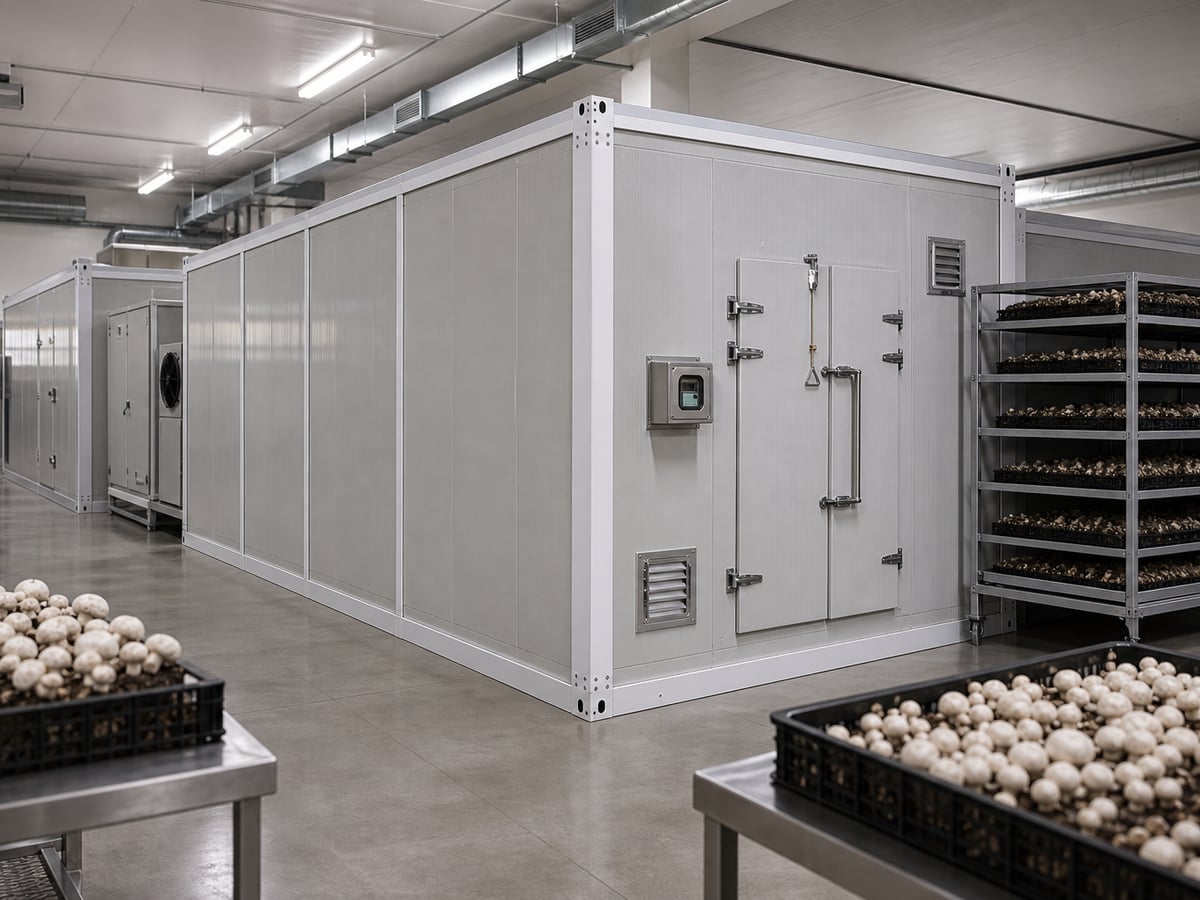
Global Market Guide to Mushroom Incubation Containers
Mushroom incubation containers should be selected as controlled production environments, not simply insulated storage boxes. For commercial growers in the Global Market, the correct design must manage substrate-generated heat, rack spacing, clean loading, air circulation, batch traceability, and contamination response before fruiting begins.The most important purchasing check is whether the container can maintain stable substrate core temperatures when bags, blocks, bottles, or trays are densely loaded. During colonization, mycelium produces heat. A container that appears adequately cooled when empty can become too warm after full loading, especially in warm trade regions, coastal humid climates, or facilities operating near logistics hubs such as Rotterdam, Dubai, Singapore, Los Angeles, Melbourne, and Durban.For many oyster, shiitake, lion’s mane, and specialty mushroom operations, incubation targets are commonly different from fruiting targets. Incubation often requires a warmer, darker, cleaner, and less ventilated environment than fruiting. Buyers should therefore evaluate whether a multi-purpose cultivation container can reliably switch between stages or whether a separate incubation container provides better operational consistency.A practical buying checklist includes the following: verified insulation performance; sufficient cooling and heating capacity under full substrate load; adjustable circulation fans; shelving designed around bag dimensions; temperature and humidity sensors placed at representative levels; alarms for high core temperature; washable internal surfaces; segregated loading procedures; and remote monitoring capability. A smart mushroom cultivation container can combine these controls in a modular format for farms that need predictable expansion without constructing a permanent building first.Buying CheckWhy It Matters During IncubationPractical Question for SuppliersCooling capacitySubstrate metabolism can raise the internal temperature after loading.What cooling output is available at full rack density and high ambient temperature?Insulation structureWeak insulation causes energy losses and unstable temperatures.What panel thickness, insulation material, and thermal design are used?Rack configurationPoor spacing traps heat and limits air movement around bags or blocks.Can shelf height and aisle width be adjusted for our substrate format?Air circulationUneven airflow creates hot spots and inconsistent colonization.How is air distributed from top to bottom and front to rear?Control systemIncubation requires dependable responses to changing biological loads.Can the controller manage temperature, humidity, timing, alarms, and remote access?Sanitation designIncubation rooms can spread contamination when surfaces are difficult to clean.Are walls, floors, corners, drains, and electrical components washdown-friendly?This table shows why container selection should start with biological performance rather than exterior dimensions alone. The most affordable unit may become expensive if it causes slow colonization, heat stress, high rejection rates, or additional labor for cleaning and batch management.Incubation and fruiting are distinct cultivation stages. Incubation supports mycelial colonization of a prepared substrate. Fruiting encourages pin formation and mushroom development. Although exact setpoints vary by species, strain, substrate formula, and local production protocol, the environmental logic is consistent: incubation generally prioritizes substrate temperature stability and cleanliness, while fruiting generally requires stronger fresh-air exchange, species-specific humidity, lighting schedules, and often lower temperatures.For example, oyster mushroom farms may incubate blocks in a comparatively warm and dark area before moving them to a fruiting room with fresh air, humidity, and light. Shiitake producers may require an incubation and maturation sequence that differs substantially from the fruiting climate. Lion’s mane can also benefit from controlled transitions that prevent excessive condensation, uneven growth, or delayed pinning.A container intended for both stages should have programmable recipes rather than one fixed climate mode. It should also be evaluated for how quickly it can recover after doors open, after a batch is loaded, or after the system changes from incubation conditions to fruiting conditions. For operators managing several species, separate recipes and user access controls are valuable because one incorrect setpoint can affect an entire batch.Operating FactorTypical Incubation PriorityTypical Fruiting PriorityTemperatureStable conditions suited to mycelial growth and substrate core control.Species-specific conditions that support pinning and crop development.Fresh-air exchangeModerate circulation with limited unnecessary outside-air exposure.Higher exchange to manage carbon dioxide and support morphology.LightUsually minimal or absent, depending on species and workflow.Often scheduled or diffused according to crop requirements.HumidityManaged to avoid drying and surface condensation during storage.Closely controlled to support mushroom formation without pooling water.Cleaning riskFocused on preventing contamination during loading and colonization.Focused on hygiene, crop handling, and water management.Door activityIdeally limited after batch loading to preserve stable conditions.More frequent due to inspection, harvest, and crop maintenance.The comparison clarifies why a fruiting room is not automatically a suitable incubation room. A fruiting design with constant high fresh-air exchange may waste energy and introduce unnecessary variability during colonization. Conversely, an incubation-only room may lack the airflow, humidification response, lighting, and drainage needed for productive fruiting.For emerging farms, a programmable modular system can reduce initial capital requirements. For larger facilities, separating stages often improves biosecurity, labor flow, and crop scheduling. The right decision depends on production volume, crop diversity, building layout, labor availability, energy cost, and the financial impact of a contaminated or overheated batch.Substrate heat is one of the most underestimated factors in mushroom incubation container design. Colonizing mycelium is biologically active. As it grows through substrate, metabolic activity generates heat inside each bag, block, bottle, or tray. In a densely loaded container, this heat accumulates faster than many operators expect, particularly in the center of racks and in the middle of large batches.Air temperature alone is not enough for decision-making. A wall-mounted sensor may show an acceptable reading while the substrate core in the middle rack is several degrees warmer. This difference can slow colonization, encourage competitor organisms, alter moisture balance, or stress heat-sensitive strains. Buyers should ask suppliers where sensors are installed, whether probes can be inserted into representative substrate units, and whether high-temperature alarms are configurable.Heat risk rises when substrates are freshly sterilized or pasteurized and loaded before their temperature is fully equalized, when bags are packed tightly, when containers are placed in direct sun, or when refrigeration is sized only for empty-room calculations. Projects in tropical, desert, and subtropical regions require particular attention to ambient design temperatures. Container placement near a hot concrete yard, rooftop, shipping terminal, or sun-exposed warehouse wall can materially affect cooling demand.Heat Source or ConditionPotential ResultRecommended Design ResponseDense substrate loadingHeat accumulates at rack centers and between adjacent bags.Use rack gaps, calculated loading limits, and balanced airflow paths.Warm incoming substrateInitial cooling load overwhelms the climate system.Define loading temperature limits and allow pre-cooling when needed.High external ambient temperatureCompressor runtime increases and recovery becomes slower.Specify equipment for the project climate, shading, and insulation level.Blocked return-air pathAir does not circulate through the lower or central racks.Maintain clear aisles and prevent bags from covering vents.Oversized batchInternal heat exceeds the planned biological load.Stagger loading dates or reduce the number of units per cycle.Single-point sensingHidden hot spots remain undetected until crop quality declines.Use multiple air sensors and periodic substrate core checks.The table demonstrates that equipment capacity and operating discipline must work together. Even a powerful cooling system cannot compensate for blocked ducts, overloaded shelves, or poor batch sequencing. During commissioning, operators should conduct a loaded thermal test using the real substrate format, realistic bag density, normal door-opening behavior, and the expected local ambient conditions.For remote farms or container projects shipped through ports such as Jebel Ali, Hamburg, Santos, Mombasa, or Busan, planning should also include local power supply stability. Voltage variation, generator backup, and refrigeration restart behavior should be reviewed before the equipment arrives on site.Rack density determines how much production can fit inside a container, but maximum density is not always maximum profitability. Overpacking may increase the number of substrate units per cycle while reducing airflow, raising core temperatures, increasing uneven colonization, and making contamination checks difficult. The optimum layout balances capacity with climate uniformity and labor access.Aisles should allow personnel to inspect all shelves without crushing bags or brushing against exposed filters, vents, or surfaces. Rack materials should resist corrosion and support repeated cleaning. Adjustable shelves are useful for growers who change between short blocks, tall bags, bottle systems, and experimental products. Shelf design should also prevent water accumulation and avoid inaccessible corners where debris can build up.Core temperature mapping is an effective commissioning practice. Place probes in representative substrate units at the top, middle, and lower shelf levels; near doors; at the rear; and in the center of the densest rack zone. Compare readings over a full cycle, including the first days after loading when metabolic heat may increase. The goal is not only to obtain one acceptable reading but to identify differences across the container.The chart illustrates a common operating pattern: room air appears stable while substrate cores become warmer, especially in central racks. It is an example only, not a universal setpoint recommendation. Each farm should validate its own species, substrate formula, bag size, inoculation rate, and loading arrangement.Operators should document the maximum safe load per rack and per container. This procedure is especially important when production teams attempt to increase output by reducing spacing. A controlled trial with temperature logging is safer than changing the layout during a commercial batch.Ventilation during mycelial growth should be purposeful rather than excessive. Mycelium needs a stable environment, but the container must still circulate air adequately to avoid stagnant zones, trapped heat, localized condensation, and uneven conditions. The proper balance depends on species, substrate packaging, filter design, room cleanliness, and the amount of biological activity in the batch.Internal air circulation and outside-air exchange are different functions. Internal circulation moves conditioned air through the room and around racks. Outside-air exchange introduces fresh air and removes gases from the room. During incubation, strong fresh-air exchange may not be necessary at the same level as during fruiting, yet circulation must remain sufficient to distribute cooling or heating throughout the container.Air outlets should not blow aggressively onto exposed bag filters or delicate substrate surfaces. High-velocity drafts can cause localized drying and may create inconsistent microclimates. At the same time, insufficient air movement can leave the lower shelves warmer and more humid than the upper shelves. A well-designed system uses fan placement, return-air paths, baffles, and programmable schedules to maintain uniformity.Ventilation IssueVisible or Measurable SignCorrective ActionInsufficient circulationWarm centers, condensation, uneven colonization, stale odors.Check fan operation, rack gaps, return paths, and airflow balance.Excessive direct airflowDry bag surfaces or inconsistent moisture near vents.Redirect outlets, reduce fan speed, or add diffusion control.Blocked ventsOne side of the container performs differently from the other.Reposition stored materials and enforce a no-blocking zone.Uncontrolled door openingRapid temperature and humidity swings after inspections.Use inspection windows, batch schedules, and clear access procedures.Dirty filters or coilsReduced airflow, higher energy use, slower climate recovery.Follow documented preventive maintenance intervals.Incorrect controller settingsFans run continuously or remain off when thermal demand rises.Review control logic and verify sensor calibration.This operating guide helps separate equipment failures from workflow failures. A ventilation problem may be caused by an undersized system, but it may also result from a blocked aisle, neglected filter, improperly positioned rack, or unplanned changes in batch density.For container farms operating in urban industrial zones, external air quality should also be considered. Facilities near busy roads, processing plants, ports, or dust-prone construction areas may need suitable filtration and disciplined door management to reduce contaminant entry.Clean loading begins before substrate reaches the incubation container. The loading path should separate dirty activities, substrate preparation, inoculation, clean transfer, incubation, fruiting, harvesting, and waste handling as much as the site allows. A container can have excellent climate performance but still suffer poor results if workers move contaminated tools, footwear, packaging, or waste through the same route used for fresh inoculated substrate.Each batch should have a clear identity: species, strain, substrate recipe, inoculation date, supplier or spawn lot, operator, container location, rack position, and expected transfer date. Basic labeling enables growers to identify patterns. If contamination increases on a particular rack or within a particular production week, records help distinguish a climate issue from a substrate, spawn, or handling issue.Batch separation can be physical, temporal, or procedural. Physical separation uses separate rooms or containers. Temporal separation loads one batch at a time and avoids mixing ages. Procedural separation uses designated tools, entry practices, cleaning routines, and access rules. The best option depends on scale, but even small farms should avoid placing old suspect batches beside newly inoculated substrate whenever possible.Loading ControlPurposeRecommended PracticeEntry hygieneReduces introduction of contaminants from personnel.Use clean footwear, hand hygiene, protective garments, and clear entry rules.Batch labelsSupports traceability and faster problem investigation.Label each rack zone and substrate group before loading.First-in, first-out flowPrevents forgotten batches and unnecessary mixing of ages.Plan unloading dates before loading begins.Tool segregationLimits transfer of contamination between areas.Assign cleaning tools to specific rooms or containers.Waste isolationPrevents spent or contaminated material from crossing clean routes.Remove waste through a separate route whenever possible.Loading recordsLinks crop outcomes to operational conditions.Record time, substrate temperature, load count, and personnel involved.The table supports a practical rule: sanitation is not one cleaning event. It is a repeatable system that begins with material handling and continues through inspection, unloading, and waste removal. Clean loading is especially valuable for contract growers, farms supplying retail chains, and export-oriented businesses that need consistent production records.Monitoring should combine automated data with trained visual inspection. Climate controllers can record temperature, humidity, equipment status, alarm history, and operating time. However, human inspection remains necessary to identify abnormal colors, sour odors, wet patches, weak mycelial growth, damaged filters, pest activity, or condensation on bags and shelves.Inspection frequency should be based on crop risk and labor capacity. Excessive door opening can disturb the climate, but no inspection can allow problems to spread unnoticed. Many commercial operations use scheduled checks, inspection windows where possible, remote camera systems, and targeted core-temperature measurements. The objective is early action rather than frequent disruption.A smart mushroom climate controller can support disciplined monitoring by centralizing setpoints, historical trends, alarm notifications, and operating schedules. For multi-container farms, remote access can help managers compare performance between batches or sites, including projects located far from the main office.When contamination is found, isolate the affected materials according to the farm’s sanitation procedure. Do not move suspect bags through clean zones without containment. Record the rack location, batch identity, visual condition, and timing. Review whether the issue is isolated, concentrated by location, connected to a substrate supplier, associated with a specific loading team, or correlated with abnormal climate data.A separate incubation space usually pays off when a farm has regular production volume, multiple fruiting rooms, valuable specialty strains, strict delivery schedules, or recurring contamination caused by mixed-stage operations. Separation allows each zone to be optimized for its task. Incubation can remain darker, cleaner, and more stable, while fruiting rooms can focus on fresh-air exchange, crop access, humidity, lighting, and harvesting workflow.The financial case should consider more than the purchase price of another container. Compare reduced crop losses, better scheduling, lower labor disruption, improved quality consistency, easier sanitation, and the ability to load new batches while harvest teams work elsewhere. For farms supplying hotels, supermarkets, meal-kit companies, or wholesale distributors, predictable output can be more valuable than the additional floor area.Separate incubation is particularly useful when the farm operates near regional distribution centers. A producer serving markets from Istanbul, Nairobi, São Paulo, Vancouver, Kuala Lumpur, or Frankfurt may need to maintain steady weekly delivery volumes. A protected incubation workflow can reduce the risk that fruiting-room activity, harvesting traffic, and open-door ventilation disrupt colonizing batches.Modular expansion also offers a practical path. A business may begin with one flexible container, then add a dedicated incubation unit after demand and operating procedures are proven. Growers can review completed project layouts and installation approaches through the mushroom cultivation project cases page before defining their own staged expansion plan.Shandong Lanhu Air Conditioning Equipment Co., Ltd. develops modular climate-control solutions for commercial agriculture, including mushroom cultivation containers, climate controllers, hydroponic growing containers, and air source heat pump systems. The company supports Global Market customers that require factory-built systems for indoor farming, pilot projects, agricultural contracting, distribution, and scalable mushroom production.Technological capabilities are built around more than 12 years of thermodynamic research and development. Lanhu applies climate-control engineering to temperature management, humidity control, ventilation, electrical integration, automation, and operational monitoring. Its product development supports programmable cultivation environments that can be configured around mushroom species, ambient conditions, production scale, and local utility requirements.Manufacturing capabilities include an integrated production facility of more than 30,000 square meters in Dezhou, Shandong, China. Core processes include product design, engineering development, sheet metal fabrication, CNC bending, insulation panel production, electrical assembly, system integration, equipment testing, and quality inspection. Systems undergo functional inspection, electrical verification, performance testing, and operational evaluation before shipment. The company maintains ISO 9001, ISO 14001, ISO 45001, and ISO 12100 certifications and holds multiple patented technologies.Service capabilities cover factory-direct supply, OEM and ODM customization, project engineering assistance, international logistics coordination, spare parts support, installation guidance, and after-sales service. For buyers who need customized layouts, branding, regional electrical specifications, or specialized control logic, Lanhu provides OEM and ODM cultivation equipment services that can be aligned with commercial project requirements.Whether equipment is routed through Qingdao, Shanghai, Ningbo, Antwerp, Long Beach, or another international logistics gateway, project planning should account for container transport, local offloading, electrical connection, site drainage, ventilation clearance, and commissioning access. Early engineering coordination reduces avoidable delays after delivery.Yes, a programmable container can be used for both stages, particularly for smaller farms or pilot projects. However, dedicated incubation and fruiting spaces usually provide better biosecurity, workflow control, and environmental stability as production volume increases.Mycelium produces metabolic heat inside the substrate. The core can become significantly warmer than the surrounding air, especially in dense racks. Core monitoring helps identify hidden overheating before it affects colonization quality.The safe density depends on bag or block dimensions, species, substrate formula, inoculation rate, rack design, airflow pattern, cooling capacity, and local ambient temperature. Farms should validate density through a fully loaded temperature-mapping trial rather than relying on empty-container performance.They require controlled air circulation and appropriate ventilation, but incubation generally does not need the same fresh-air exchange level as fruiting. Excessive outside-air exchange can increase energy consumption and climate instability.Keep the species, strain, substrate recipe, spawn lot, inoculation date, loading date, rack position, room settings, substrate temperature checks, inspection results, contamination observations, and transfer or disposal date. These records improve traceability and decision-making.In 2026, buyers are increasingly prioritizing remote climate monitoring, energy-efficient inverter systems, heat recovery opportunities, predictive maintenance alarms, modular farm expansion, recyclable insulation approaches, water-conscious humidification, and production data traceability. Sustainability expectations are also increasing as agricultural projects seek lower energy use, reduced crop waste, and clearer environmental management practices. Policy trends in many regions are encouraging controlled-environment agriculture, food resilience, efficient refrigeration, worker safety, and documented quality systems. Buyers should select container designs that can be upgraded through software, sensors, and modular equipment rather than becoming obsolete after one production cycle. -
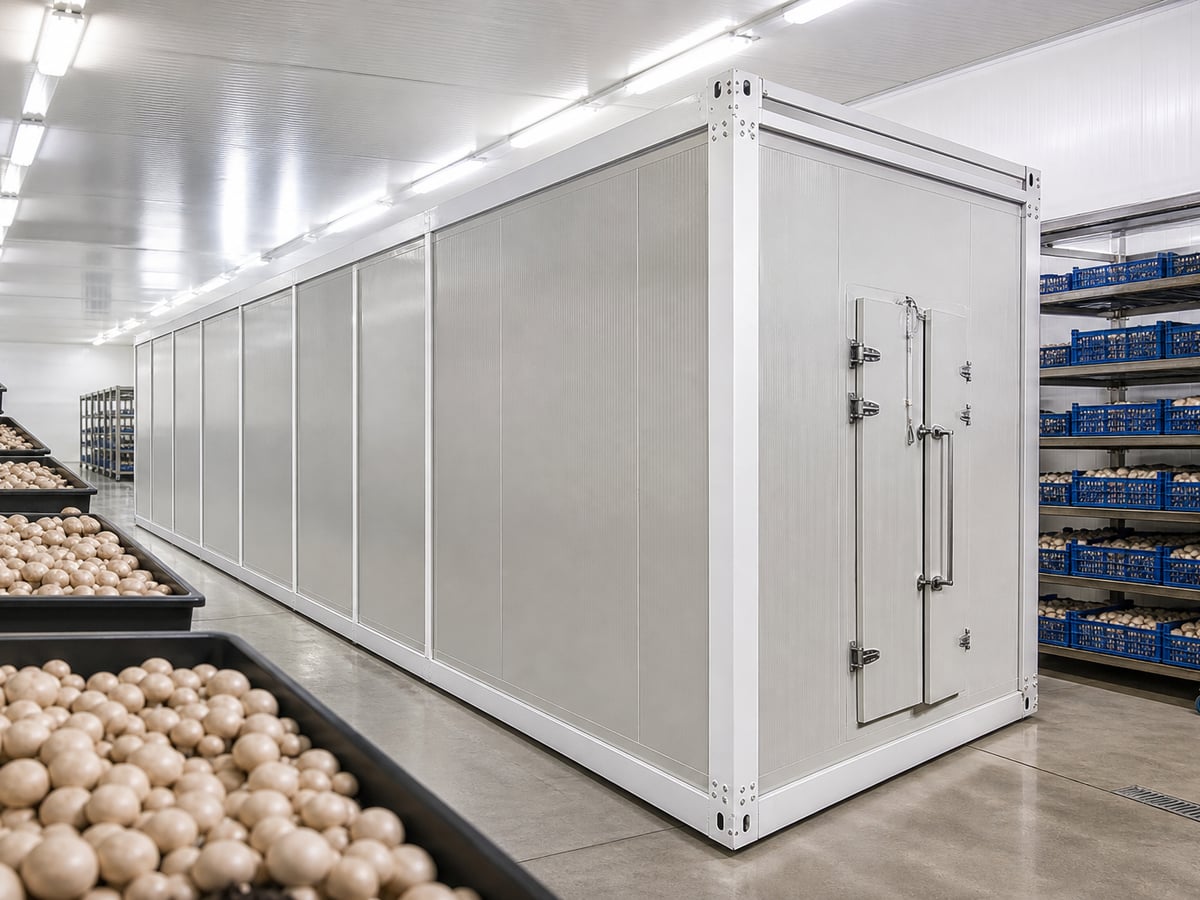
Global Market Guide to Mushroom Fruiting Containers 2026
A mushroom fruiting container is a controlled cultivation room designed to take fully colonized substrate blocks from incubation into pinning, mushroom development, harvest, recovery, and the next flush. For growers in the Global Market, the best system is not simply an insulated shipping container with cooling equipment. It is an integrated cultivation environment that controls temperature, fresh air, carbon dioxide, humidity, airflow direction, lighting, drainage, sanitation, and worker access at each stage.For oyster mushrooms, shiitake, lion’s mane, enoki, king oyster mushrooms, and other commercial varieties, fruiting conditions can change rapidly after blocks are opened or cut. A productive container must respond to biological demand rather than operate at one static temperature and humidity setting. It should remove excess CO2 after pinning begins, maintain high humidity without keeping caps or block surfaces constantly wet, and provide airflow that reaches every production tier without drying the mushrooms.The most practical buying approach is to select a container based on daily block volume, target species, harvest labor availability, climate at the installation site, power supply, water quality, and cleaning workflow. A grower operating near Rotterdam, Dubai, Singapore, Durban, Los Angeles, São Paulo, or Melbourne may face very different outdoor temperatures, humidity loads, shipping conditions, and utility costs. A properly engineered mushroom fruiting container reduces those local variables through insulation, refrigeration, dehumidification, ventilation, and smart climate controls.For farms that need an integrated solution, a smart mushroom cultivation container can combine an insulated structure, shelving layout, climate equipment, drainage design, and automated control platform in one modular unit. This approach is especially useful for commercial pilots, distributed farms, restaurants, agricultural projects, and growers expanding without constructing a permanent building.Fruiting RequirementWhat the Container Should DoRisk if Poorly ControlledTemperatureMaintain species-specific setpoints with stable day-to-night operation.Slow pinning, malformed mushrooms, reduced yield.Fresh airReplace stale air while distributing incoming air evenly.Long stems, small caps, weak mushroom structure.CO2 removalUse sensors and staged exhaust to manage concentration.Species-specific morphology defects and inconsistent crops.HumidityMaintain humid air without continuous water deposition.Cracking, drying, bacterial blotch, or aborts.Air movementPrevent stagnant zones without blowing directly onto fruit bodies.Uneven pinning and dry edges on shelves.SanitationProvide washable interiors, drainage, and easy access.Contamination pressure between production cycles.The table shows why fruiting container design is a biological and operational decision. Equipment capacity alone does not guarantee a stable crop. The air must be conditioned, delivered, sensed, and removed in a way that matches the crop density and the physical layout of the growing room.A well-designed fruiting container manages the interaction between the mushroom crop and the room environment. Colonized blocks generate metabolic heat and moisture. As blocks begin to fruit, they also require more oxygen and lower CO2 than during incubation. The container must offset these changing loads while preventing sudden fluctuations caused by door openings, outdoor weather, irrigation cycles, or uneven rack loading.Temperature is often the first specification buyers discuss, but the most important issue is temperature stability at crop level. A sensor installed close to the evaporator may show an acceptable value while blocks on the upper rear shelves experience warmer, drier conditions. Multiple monitoring points, correctly positioned supply ducts, return-air paths, and calibrated controllers help growers understand what the mushrooms actually experience.Humidity must be interpreted alongside air temperature and airflow. Warm air can carry more water vapor than cold air, while airflow increases evaporation from exposed mushroom surfaces. A container that produces high humidity readings but directs air too aggressively at blocks may still cause caps to dry. Conversely, a room with fogging equipment but poor extraction can become wet, stagnant, and vulnerable to bacterial problems.Lanhu’s technological capability is centered on thermodynamic design and integrated environmental control. With more than 12 years of research and development experience in climate systems, the company designs solutions that coordinate cooling, heating, humidification, dehumidification, ventilation, and intelligent sensing. A dedicated mushroom climate controller can help operators manage temperature, humidity, CO2, fan schedules, alarms, and stage-based recipes from one control interface.Control VariablePinning PriorityFruiting PriorityRecommended Design FeatureAir temperatureTrigger species-appropriate pin initiation.Support steady development and cap quality.Variable-capacity cooling and heating control.Relative humidityKeep exposed substrate and primordia from drying.Protect developing mushrooms without condensation.Fine-mist humidification with sensor feedback.CO2 concentrationBegin reducing concentrations as pins develop.Maintain morphology appropriate to the species.CO2 sensor, exhaust fan, and fresh-air damper.Air velocityUse gentle circulation across loaded racks.Prevent stagnant zones and surface wetness.Ducted air distribution and adjustable diffusers.LightingProvide consistent exposure where required by species.Support orientation and harvest visibility.Moisture-resistant LED lighting.DrainageRemove condensate and cleaning water promptly.Keep floors dry and safe for workers.Sloped floor, drain channels, and sealed connections.These variables should not be controlled separately. For example, adding outdoor air lowers CO2 but may introduce hot, cold, humid, or dry air depending on the local climate. The controller should compensate with cooling, heating, or humidification capacity. This is particularly important in coastal regions with high moisture loads, desert regions with dry intake air, and northern climates where winter ventilation can rapidly cool a small container.Fruiting performance begins before blocks enter the container. Colonized substrate should be fully run through, structurally firm, correctly labeled, and inspected for contamination, excess moisture, damaged bags, or incomplete mycelial growth. Loading weak or partially colonized blocks into the fruiting room increases labor, occupies valuable shelf space, and can create avoidable sanitation risks.Before loading, growers should confirm the species, strain, substrate formula, inoculation date, intended fruiting method, and expected harvest schedule. Different products require different handling. Oyster mushroom bags may be cut with X-shaped slits or side openings. Shiitake blocks may require a rest period, bag removal, soaking, chilling, or a controlled shock depending on the strain and production method. Lion’s mane is often fruited through a carefully sized opening to maintain form and reduce unnecessary drying.Blocks should be transferred using clean carts, clean gloves, and a defined movement route. Avoid bringing incubation-room debris, damaged packaging, or unwashed tools into the fruiting area. In larger facilities, the loading process should follow a one-way flow from incubation to fruiting to harvest to waste handling. This reduces the chance of moving contaminants backward into cleaner zones.Loading StepOperator CheckWhy It MattersBlock inspectionConfirm complete colonization and no visible contamination.Prevents weak blocks from occupying productive space.Lot identificationRecord species, strain, date, and rack location.Supports traceability and yield analysis.Bag preparationCut, open, remove, or shock according to the crop recipe.Creates a uniform fruiting trigger.Rack spacingLeave adequate gaps between blocks and shelves.Improves air delivery and harvest access.Climate preconditioningStabilize the room before blocks arrive.Reduces stress caused by sudden environmental change.Loading recordsDocument quantity, time, batch, and expected first harvest.Helps schedule labor and forecast sales.Container loading density should be determined by climate capacity, not only by physical shelf volume. A tightly packed container may hold more bags, but it also increases metabolic heat, moisture release, CO2 generation, and obstruction of airflow. A buyer should ask suppliers for recommended loading densities for the intended species and local design conditions rather than relying on a single nominal block capacity.Pinning and fruiting are connected but distinct biological stages. During pinning, the crop needs conditions that encourage primordia formation and retain small developing pins. During full fruiting, mushrooms need stable conditions that support size, cap development, density, color, texture, and shelf life. A container operated with one fixed recipe through both stages may produce acceptable crops, but stage-specific control usually improves consistency.For many oyster mushroom varieties, the transition toward fruiting involves more fresh air, lower CO2, appropriate light exposure, and carefully maintained humidity. However, exact targets vary by strain, substrate, market preference, and local production experience. King oyster mushrooms are commonly managed differently from blue oyster mushrooms, while shiitake and lion’s mane each have their own temperature and humidity sensitivities. Buyers should request configurable recipes rather than a controller with rigid, generic settings.Crop load changes over time. A newly loaded room may have high block density but limited mushroom surface area. Later, a heavy fruiting flush can dramatically increase evaporation and fresh-air demand. Smart controls should allow separate schedules for pinning, fruiting, recovery, night operation, and emergency ventilation. Historical trend data can help growers identify why one flush performed differently from another.In the Global Market, producers increasingly use digital crop recipes to standardize production across cities and sites. A grower in Hamburg can use the same core production logic as a grower in Nairobi or Vancouver while adjusting equipment capacity and intake-air treatment for local climate conditions. This is valuable for franchise farms, regional distributors, and commercial projects supplying restaurants, supermarkets, and food-service customers.Fresh-air management is one of the defining functions of a mushroom fruiting container. Mycelium and fruit bodies respire continuously, releasing CO2. As CO2 builds up, mushroom form changes. Oyster mushrooms may develop longer stems and smaller caps, while other species can show different quality effects. The objective is not simply to run an exhaust fan continuously; it is to maintain an appropriate CO2 range while preserving temperature and humidity stability.A practical ventilation system includes a CO2 sensor located where it reflects crop-zone conditions, a fresh-air intake path, exhaust capacity, controlled dampers, filtration where needed, and air circulation that distributes fresh air across all racks. Exhaust placement should prevent short-circuiting, where incoming air is immediately removed before it reaches the crop. Likewise, supply air should not create harsh jets directly across fruiting surfaces.Outdoor air quality should be considered during project planning. Farms near busy roads, industrial zones, ports, or dusty agricultural areas may require improved intake filtration. Projects near the Port of Shanghai, Jebel Ali, Antwerp-Bruges, Long Beach, or major logistics corridors should evaluate dust, salt air, fuel emissions, and seasonal weather conditions. The right intake design protects the crop while reducing cleaning requirements inside the container.Ventilation SituationRecommended ResponseOperational ResultCO2 rises after loadingIncrease staged fresh-air exchange and verify sensor accuracy.Supports the transition from incubation conditions.Upper racks fruit poorlyCheck duct balance and return-air circulation.Improves climate uniformity throughout the room.Caps dry after ventilationReduce direct air velocity and coordinate humidification.Maintains quality while retaining gas control.Outdoor air is very hotUse adequate cooling capacity and controlled intake cycles.Prevents heat spikes during ventilation.Outdoor air is very coldUse heat recovery or staged ventilation where appropriate.Reduces heating demand and temperature shocks.External air is dustyUse serviceable intake filtration and scheduled inspection.Protects crop surfaces and internal equipment.CO2 management also affects energy costs. Over-ventilation wastes conditioned air; under-ventilation compromises quality. Automated sensor-based control is usually more efficient than relying only on fixed fan timers, particularly when crop density changes from one flush to the next. Operators should still verify readings with periodic calibration and visual crop assessment.High humidity is essential for many fruiting mushrooms, but persistent water on caps, stems, block openings, walls, and floors is not desirable. Wet surfaces can encourage bacterial blotch, promote uneven development, create slippery floors, and increase sanitation work. The goal is humid air with controlled evaporation, not a permanently wet room.Humidification methods may include ultrasonic systems, high-pressure misting, fogging systems, or other finely atomized approaches. The most suitable method depends on container size, water quality, ambient climate, refrigeration design, airflow pattern, and species. Regardless of the equipment selected, droplets should have time to evaporate into the air rather than settling heavily onto crops.Water treatment and maintenance are equally important. Mineral-rich water can clog nozzles and leave deposits. Poorly maintained reservoirs or pipes can become microbial reservoirs. Buyers should ask about filtration, cleaning access, drain-down procedures, replacement parts, and water-quality recommendations. In hard-water areas, a treatment strategy can protect humidification equipment and maintain reliable output.Humidity sensors must be placed away from direct mist discharge and away from locations where condensation produces false readings. Several sensors across the room may be useful in larger or densely loaded containers. The operator should also observe mushroom surfaces, block edges, floor conditions, and wall condensation because visual inspections complement digital data.A fruiting container should support harvesting as efficiently as it supports climate control. Commercial mushrooms are often harvested over multiple flushes, requiring workers to enter the room repeatedly, inspect blocks, remove mature clusters, trim stems, collect waste, and monitor new pins. A poorly planned rack arrangement can make these daily tasks slow, unsafe, and damaging to the crop.Rack depth, aisle width, shelf height, door position, lighting, and collection-cart access should be considered before production begins. Shelves that are too deep create unreachable blocks and airflow shadows. Narrow aisles can improve nominal capacity but limit worker movement and make it harder to harvest without brushing mushrooms. The optimum layout balances block count with labor productivity, airflow, and cleaning access.Harvest timing strongly influences yield quality and market value. Mushrooms should be harvested at the stage requested by local buyers, whether that means tighter caps for long-distance transport or more developed caps for nearby restaurants and farmers’ markets. In cities such as London, Toronto, Tokyo, Paris, and Sydney, premium fresh mushroom customers often value visual consistency, firmness, cleanliness, and reliable delivery windows.Batch records should include first pin date, first harvest date, flush yield, rejected product, labor hours, and observed climate conditions. These records make it possible to compare strains, substrate suppliers, room recipes, and seasonal operating costs. Over time, the container becomes a measurable production system rather than a simple growing space.Cleaning between batches protects future production and extends equipment life. After the final planned flush, spent blocks should be removed promptly and transferred through a controlled waste route. The container should then be emptied of loose debris, washed according to farm sanitation procedures, rinsed where appropriate, dried, inspected, and prepared for the next loading cycle.Interior wall panels, shelving, floor drains, door seals, humidification lines, fan guards, drain pans, sensors, and air filters all require attention. Organic residues can collect in corners, beneath racks, around drains, and behind equipment panels. A container designed with washable surfaces, sealed joints, corrosion-resistant materials, drainage slope, and accessible service points reduces the time required to complete this work.Lanhu’s manufacturing capability supports this practical requirement through integrated product design, engineering development, sheet metal fabrication, CNC bending, insulation-panel production, electrical assembly, system integration, testing, and quality inspection. The company operates a modern manufacturing facility exceeding 30,000 square meters in Dezhou, Shandong, allowing key components and finished modular systems to be coordinated through a controlled production process.Before shipment, functional inspection, electrical verification, performance testing, and operational evaluation help confirm that equipment is ready for installation. This manufacturing discipline is relevant for overseas buyers who need dependable container systems shipped through trade hubs such as Qingdao, Tianjin, Ningbo, Rotterdam, or Dubai. Durable construction and accessible components are particularly valuable when replacement lead times may be longer for international projects.Cleaning AreaBetween-Batch ActionReason for the ProcedureSpent blocks and bagsRemove promptly using a designated waste path.Reduces pest and contamination pressure.Racks and shelvesBrush, wash, sanitize, rinse if required, and dry.Eliminates organic residue from crop contact surfaces.Floor and drainsClear debris, flush drains, and inspect drainage flow.Prevents standing water and odor buildup.Humidification systemClean reservoirs, lines, filters, and nozzles.Maintains water hygiene and misting performance.Air-handling equipmentInspect filters, coils, fans, and drain pans.Protects airflow capacity and energy efficiency.Sensors and controlsCheck calibration, wiring, alarms, and stored recipes.Ensures the next batch starts with reliable data.The cleaning table should become part of a written standard operating procedure. Farms with multiple containers benefit from a consistent release checklist confirming that the room is clean, dry, mechanically sound, and climate-stable before new blocks are introduced.Shandong Lanhu Air Conditioning Equipment Co., Ltd. supplies agricultural climate-control equipment, industrial HVAC solutions, and modular cultivation systems for customers across the Global Market. Its product range includes smart mushroom cultivation containers, climate controllers, hydroponic plant containers, and air source heat pumps. The company’s experience supports projects ranging from small commercial trials to larger cultivation installations for agricultural contractors, equipment distributors, engineering companies, and commercial farms.Lanhu’s service capability is designed around the practical needs of international buyers. Factory-direct supply can simplify product communication and configuration, while OEM and ODM options allow customers to adapt container dimensions, rack layouts, electrical standards, climate recipes, branding, and auxiliary equipment to project requirements. Learn more about available OEM and ODM cultivation equipment services for specialized commercial applications.Project support can include engineering assistance, international logistics coordination, spare-parts support, installation guidance, and after-sales service. For buyers preparing sites in Africa, Europe, the Middle East, Southeast Asia, Oceania, or the Americas, early planning should address delivery route, foundation requirements, crane access, electrical connection, water supply, drainage, local permits, and operator training.Lanhu holds ISO 9001, ISO 14001, ISO 45001, and ISO 12100 certifications, alongside patent certificates and enterprise credibility credentials. With more than 45 registered patents, the company continues to develop integrated climate solutions that improve operating control and modular farm deployment. Prospective customers can review practical deployment examples through the mushroom cultivation project case studies.For buying decisions, compare suppliers on more than container appearance. Ask for climate design assumptions, insulation specifications, cooling and heating capacity, humidity method, CO2 strategy, control functions, electrical drawings, spare-parts list, warranty terms, remote-support process, cleaning access, and commissioning guidance. Local suppliers may provide fast on-site response, while an experienced manufacturer can offer stronger customization and integrated production capability. The best choice depends on the project’s technical complexity and long-term service plan.Looking toward 2026, mushroom container design is moving toward connected sensors, remote diagnostics, variable-speed equipment, energy monitoring, automated crop recipes, lower-water humidification methods, and better insulation performance. Sustainability expectations are also increasing. Buyers are evaluating refrigerant choices, renewable-energy compatibility, heat recovery, water reuse where safe and permitted, and efficient logistics. Food-security policies, urban agriculture programs, and controlled-environment agriculture incentives may further support modular mushroom projects in many regions.What size mushroom fruiting container should a new commercial farm choose?Start with your expected weekly block volume, crop cycle length, number of flushes, labor capacity, and sales channel. A smaller modular container can be a practical first step because it allows recipe development and market validation before expansion. Do not choose capacity only by the maximum number of bags that can physically fit inside.Can one container fruit several mushroom species?It is possible when species have compatible environmental requirements, but dedicated rooms usually provide better consistency. Oyster mushrooms, shiitake, lion’s mane, and king oyster mushrooms may need different temperature, CO2, humidity, lighting, or fruiting triggers. Separate recipes and careful scheduling are essential when sharing a container.How is CO2 controlled in a mushroom fruiting container?CO2 is managed through sensors, programmable ventilation, exhaust fans, fresh-air intake, and air circulation. The system should increase air exchange when crop respiration raises CO2 while avoiding unnecessary temperature and humidity losses.Why are mushrooms wet even when the humidity setting seems correct?The cause may be oversized droplets, poor humidifier placement, weak air circulation, condensation from cold surfaces, excessive misting time, or inadequate drainage. Relative humidity readings alone do not reveal whether water is depositing on mushroom surfaces.What should buyers ask about after-sales support?Ask about installation guidance, remote troubleshooting, spare-parts availability, electrical documentation, controller training, warranty coverage, recommended maintenance intervals, and response procedures for refrigeration, ventilation, or sensor issues. These points are especially important for international installations.What 2026 trends should mushroom growers consider?Key trends include remote environmental monitoring, predictive maintenance, digital batch records, energy-efficient inverter systems, enhanced insulation, lower-carbon equipment choices, water-management improvements, and modular farms located closer to urban food markets. These developments can help growers improve traceability, reduce waste, and respond more quickly to changing demand.
Discuss Your Crop Environmental Requirements
Contact our engineering team to discuss your project requirements, equipment configuration, OEM cooperation, and customized climate control solutions.