Ready-to-Fruit Blocks for the Global Mushroom Market
Quick Answer: How to Buy Ready-to-Fruit Blocks

Buying ready-to-fruit mushroom blocks for a smart cultivation capsule is a joint production decision, not simply a purchase of substrate. The buyer needs to specify the species and strain, block weight and dimensions, maturity and condition at dispatch, packaging, delivery temperature, expected yield basis, and responsibilities if blocks arrive damaged or perform outside agreed limits. The supplier needs to provide blocks made for the intended fruiting conditions and enough technical information for the farm to handle them consistently.
Before committing to a large order, verify that sample blocks fit the capsule’s racks and airflow pattern. Agree on a receiving inspection, a short-term storage plan, and a delivery schedule that matches the capsule’s readiness. Use written procedures for loading and fruiting by block type, and record rejected blocks separately from saleable harvests. These practical controls make it easier to distinguish supplier quality issues from handling, climate, or operating problems.
For international buyers, the process also involves freight timing, customs documentation, local plant-health rules, and the capabilities of the destination farm. A smart mushroom cultivation container can provide controlled temperature, humidity, ventilation, and other operating functions, but it cannot correct inconsistent substrate or replace a clear supplier agreement. Treat the block specification, equipment settings, and crop records as one connected production plan.
Define What the Block Supplier Must Deliver

A ready-to-fruit block is not a standardized commodity across every mushroom species, supplier, or market. The term may refer to fully colonized substrate ready for fruiting, or to a block that still needs a defined recovery period or opening procedure. Put the supplier’s exact meaning in the purchase specification. This prevents a mismatch between the buyer’s expectation of immediate fruiting and the supplier’s intended handling protocol.
Start with identity and traceability. Specify species, strain or commercial variety, substrate formulation where disclosure is available, inoculation or production batch, and the date or age range at dispatch. Ask for the block’s net and gross weight, packaging materials, closure method, and any visible indicators used to judge maturity. For repeat orders, require a batch code that connects delivered units to production records and any later quality discussion.
Then define measurable acceptance criteria. These can include an agreed size range, intact packaging, absence of visible contamination, acceptable temperature on arrival, and no evidence of excessive drying, leakage, crushing, or premature fruiting. Avoid vague wording such as “good quality.” If visual checks cannot verify internal condition, define how a sample will be opened or assessed, who conducts the check, and how findings are documented. Sampling should be practical and agreed in advance rather than improvised after a disputed shipment.
Yield expectations need careful wording. A supplier may quote biological efficiency, total crop weight, first-flush yield, or a result achieved under a specific test environment. These figures are not interchangeable. State whether a performance figure is a target, a historical range, or a guarantee, and list the conditions behind it: block size, strain, temperature, humidity, ventilation, number of flushes, and harvest maturity. The farm should not treat a supplier’s trial result as a guaranteed commercial outcome unless the contract explicitly says so.
Packaging and delivery terms matter just as much as cultivation data. Specify whether blocks are transported upright, stacked to a maximum height, protected from direct sun, or kept within a stated temperature range. Confirm whether the seller or buyer arranges freight, insurance, export documents, and delivery to the farm or only to a port or terminal. Buyers importing into hubs such as Rotterdam, Hamburg, Singapore, or Dubai should confirm local entry requirements with the relevant authorities and logistics provider before shipment.
| Specification item | What to state | Why it matters |
|---|---|---|
| Crop identity | Species, strain, and intended product format | Different crops can require different fruiting and handling procedures. |
| Block dimensions | Length, width, height, and tolerance | Confirms physical fit on the rack and suitable airflow clearance. |
| Block mass | Net mass range and packaging mass if relevant | Supports shelf loading, freight planning, and consistent crop comparisons. |
| Condition at dispatch | Maturity, closure state, and handling instructions | Clarifies whether blocks are ready for immediate fruiting or need recovery. |
| Packaging | Material, seal condition, and stacking limits | Helps prevent damage, drying, and contamination during transport. |
| Acceptance checks | Visible defects, temperature checks, and sampling method | Creates an objective process for accepting or reporting a shipment. |
| Performance basis | Yield measure, test conditions, and number of flushes | Prevents misleading comparisons between unlike claims. |
| Traceability | Batch code and production or dispatch records | Connects crop results to a specific production lot if issues arise. |
For new suppliers, buy a pilot quantity before setting a recurring shipment plan. A pilot should be large enough to test handling across the available rack levels and operating zones, but small enough to limit losses if the block dimensions or fruiting response do not match expectations. Record the agreed specification and any approved deviations in the order confirmation. Verbal assurances about dimensions, yield, or storage life are difficult to apply consistently across repeat orders.
Check Block Dimensions Against Rack Openings

Physical compatibility is one of the simplest issues to prevent and one of the most disruptive to discover on delivery day. Measure the rack opening, shelf depth, usable height, door access, and any internal obstructions in the cultivation capsule. Compare those measurements with the supplier’s actual block dimensions, including packaging, handles, protruding filters, or other features that may affect placement. Do not rely solely on a nominal block size shown in a catalogue.
Allow for more than the block itself. Operators need room to lift and rotate blocks without tearing packaging or brushing neighbouring units. Air must circulate around the crop in a manner consistent with the equipment design and the cultivation protocol. Overfilling a rack can block air paths, create uneven humidity or temperature conditions, and make inspection and harvest harder. Conversely, an unnecessarily low loading density can reduce output per production cycle. The right loading pattern balances accessible handling with the required environmental distribution.
Ask the supplier for dimensional tolerances and measure a representative sample from the pilot batch. Blocks can vary because of moulds, bag filling, settling, or packaging. If a capsule uses removable shelf supports or adjustable rack spacing, confirm the permitted configuration with the equipment provider before changing it. A basic trial layout using empty sample packaging or a measured drawing can reveal access problems before the crop is delivered.
Weight is also a structural and operational consideration. Calculate the total load on each shelf and rack, including packaging and any water or accessories, and compare it with the manufacturer’s stated loading limits. Consider how the load is distributed rather than assuming that an acceptable total weight makes every arrangement safe. The farm should also assess whether staff or handling equipment can move the blocks without unsafe lifting. A supplier’s pallet configuration may be efficient for transport but unsuitable for the capsule’s loading route.
| Check | Measurement or question | Decision |
|---|---|---|
| Rack opening | What are the usable width and height between supports? | Confirm the largest expected block clears the opening. |
| Shelf depth | Does the block sit securely without extending into access routes? | Approve a safe orientation and placement. |
| Air clearance | What spacing is needed around the block for the chosen protocol? | Prevent blocked circulation and crowded loading. |
| Door and aisle access | Can staff carry the largest unit through the route? | Test handling before delivery at full volume. |
| Rack load | What is the combined mass per shelf and support level? | Stay within equipment and site limits. |
| Packaging profile | Do filters, seals, or folds change the effective dimensions? | Measure the block as it will be loaded. |
| Operator ergonomics | Can workers load, inspect, and harvest without awkward reaching? | Adjust loading density or workflow as needed. |
Make a block loading diagram for each product type and rack configuration. Label orientation, spacing, and any prohibited positions. This is especially useful when several workers load the same capsule or when a farm operates multiple sites. The diagram should be reviewed after equipment changes, supplier changes, or a move to a different block format.
Plan Receiving Inspection and Temporary Storage
Receiving is a quality-control step, not an administrative formality. Assign a trained person to check the shipment promptly, before blocks are mixed with existing inventory or placed into the fruiting environment. Compare the count, batch labels, packaging, and delivery condition against the purchase order and packing list. Photograph damaged pallets and representative defects, and note the time of arrival and any unusual delay or temperature exposure reported by the carrier.
Use a written inspection form that separates visible observations from conclusions. A torn outer wrap is an observation; an assumption that every block inside is contaminated is not. Record the number of affected units, where they were positioned in the load, whether inner packaging is intact, and any odor, leakage, discoloration, or premature growth seen. If the agreement calls for temperature measurement, use a consistent method and calibrated instrument, and record both the measurement location and time.
Where sampling is agreed, inspect a defined number of units or a defined proportion of each batch. Keep retained samples only if the supplier and farm have a safe, practical procedure for doing so. Do not open every block unnecessarily: opening can change the condition of a unit and may introduce contamination. If a serious quality concern appears, isolate the affected material and contact the supplier quickly with the batch code, photographs, inspection results, and shipment details. Follow local food-safety and biosecurity requirements for disposal or return.
Temporary storage should be based on the supplier’s written instructions for the specific block, rather than a universal rule. Different species, formulations, maturity stages, and packaging systems may have different acceptable holding conditions. Avoid unplanned temperature swings, direct sunlight, wet floors, and heavy stacking. Keep incoming batches identifiable and physically organized so operators do not lose the link between a block and its delivery lot. First-in, first-out handling can help, but only where it does not conflict with a product-specific storage limit or crop plan.
Set a maximum receiving-to-loading interval with the supplier where practical. If transport delays are common, define who decides whether the blocks can be held, need priority loading, or should be rejected. The decision should rely on documented condition and supplier instructions, not on an improvised guess. For high-volume sites, consider a designated receiving area with washable surfaces, sufficient access, clear batch labels, and a route that avoids cross-contamination between incoming stock, active crops, and waste.
Coordinate Delivery Dates with Capsule Availability
Blocks should arrive when the cultivation capsule is prepared to receive them. A capsule that is still being commissioned, cleaned, repaired, or calibrated is not ready merely because a delivery slot has been booked. Work backward from the proposed loading date and confirm that the room or container has passed its operational checks, the racks are ready, staff are available, and the fruiting program is approved for the intended crop.
Build a delivery calendar that includes production lead time, freight time, customs clearance where applicable, local transport, receiving inspection, and a reasonable contingency for delays. International buyers moving goods through ports such as Rotterdam, Antwerp, Los Angeles, Vancouver, Singapore, or Jebel Ali should account for port handling and inland transport variability. These hubs serve different trade routes and requirements; verify the actual route, documentation, and delivery terms for each order rather than assuming that prior shipments will follow the same schedule.
Match delivery volume to actual capsule capacity and labor. A large shipment may reduce freight cost per block but can overwhelm receiving space, staff, or rack capacity. Several smaller deliveries may improve freshness and cash flow, yet increase handling and transport costs. Compare total landed cost, expected loading rate, storage capacity, and production continuity when deciding shipment size. For a new supplier or route, use conservative forecasts until the farm has dependable performance data.
Keep a shared schedule between the block supplier, freight contact, equipment operator, and production manager. Confirm the dispatch date, estimated arrival window, quantity, batch identifiers, and escalation contact. If shipment timing changes, communicate quickly so the farm can adjust labor, capsule preparation, and any empty-cycle plan. A supplier’s dispatch confirmation is not the same as a confirmed arrival at the farm; maintain visibility through the final delivery point.
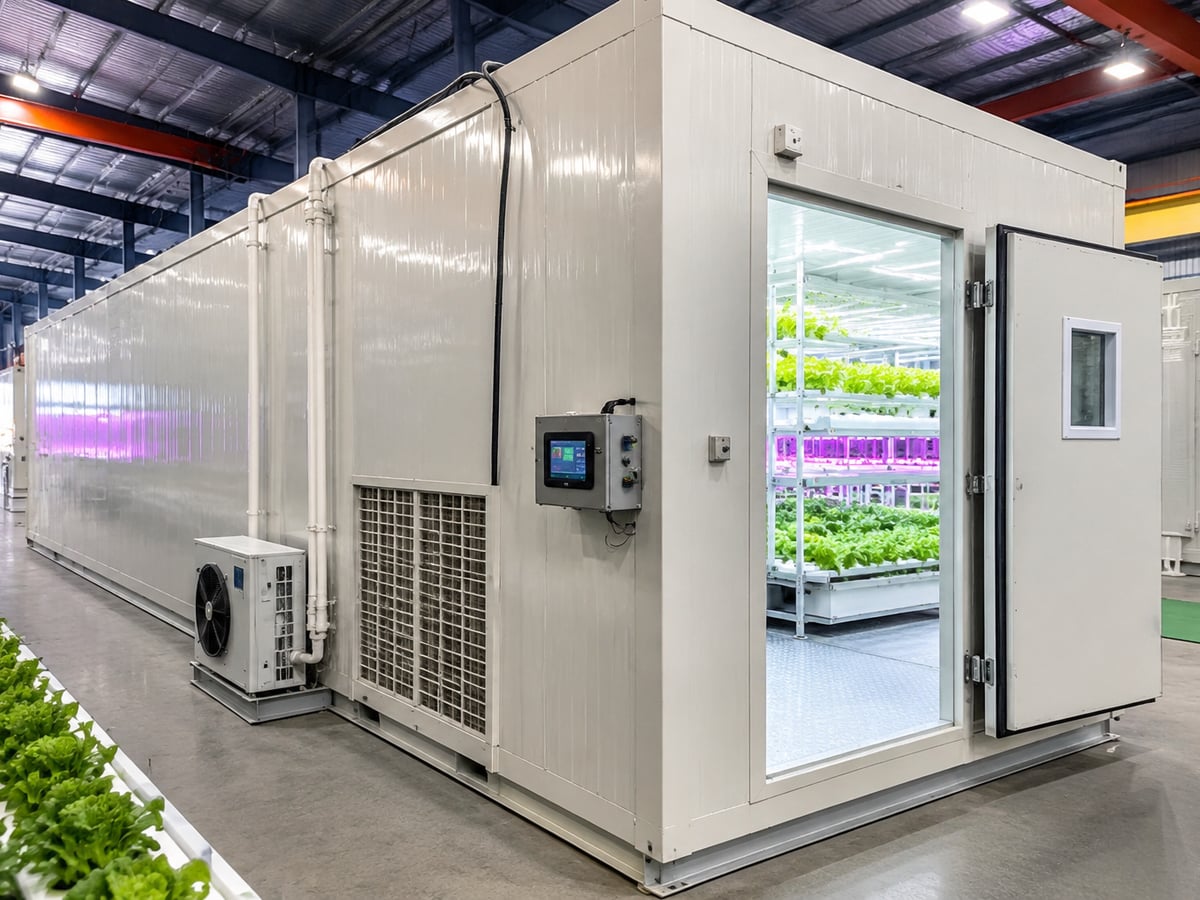
For buyers arranging a new unit, review the proposed production calendar alongside the equipment configuration. Lanhu’s smart mushroom cultivation container information can help project teams consider the capsule and its use as part of a controlled cultivation workflow. Confirm the selected model, rack arrangement, electrical supply, site conditions, and delivery schedule with the project team. Equipment readiness and substrate availability should be treated as linked milestones, not separate purchasing tasks.
Set Loading and Fruiting Procedures by Block Type
A single operating procedure may not be suitable for every block type. Species, strain, substrate, bag design, maturity, and supplier recommendations can change how a block should be opened, positioned, hydrated, or exposed to the fruiting environment. Obtain written instructions for the specific batch, then convert them into a farm procedure that operators can follow reliably. Do not infer a procedure from an unrelated crop simply because the packaging looks similar.
Before loading, verify the capsule’s cleanliness, operating status, sensor readings, and intended set points. Confirm that the environmental program is suitable for the crop and that airflow distribution is not blocked by the selected layout. Operators should check the batch label, inspect the block, use the approved opening method, and record its rack position. Consistent placement makes it easier to compare outcomes by supplier batch and to identify zones where environmental conditions may vary.
Write the fruiting protocol as a sequence with clear decision points. It may cover block preparation, opening or cutting, placement, monitoring, adjustment authority, harvesting, and post-flush handling. Record the conditions the farm actually used, not just the target settings displayed on a controller. If readings differ from the intended program, note the duration and corrective action. A climate control system can assist with repeatable environmental management, but the operator must still interpret crop response and use suitable settings for the species and production stage.
A smart mushroom climate controller can support monitoring and adjustment of cultivation conditions, depending on the system configuration. During commissioning, confirm sensor placement, alarm thresholds, data access, and the process for responding to equipment or communication faults. Avoid changing several environmental variables at once when troubleshooting, because doing so makes cause and effect harder to assess. Document each adjustment and the crop response over an appropriate observation period.
Standardize harvest definitions as well. Define what counts as saleable, downgraded, or rejected product for the intended market, including maturity, appearance, size, handling damage, and packaging condition. Train staff to harvest and record consistently. For commercial supply, the buyer’s customer specification may be more restrictive than the farm’s internal grade. Separate quality observations from weight records so the farm can evaluate both total biological output and the quantity that earns a saleable price.
When changing block types, avoid treating the first crop cycle as proof of a permanent result. A new strain or supplier may require a controlled pilot with documented operating conditions. Use comparable rack positions and procedures where possible, and avoid changing capsule settings, block type, loading density, and harvest criteria simultaneously. This makes the pilot more informative and reduces the chance of attributing an outcome to the wrong factor.
Track Block Rejections and Saleable Harvests
Useful production records begin at delivery and continue through the final harvest. Assign every block or manageable group of blocks a lot identifier connected to its supplier batch. Record delivered quantity, rejected quantity, reasons for rejection, date loaded, rack position, operating program, harvest dates, and saleable weight. Include downgraded weight and disposal where relevant. Without these distinctions, a farm may see a good total harvest while overlooking poor marketability, or may blame a supplier for losses caused by transport damage or handling.
Agree on rejection categories before the first shipment. Examples include damaged packaging, confirmed contamination, incorrect dimensions, premature fruiting, unacceptable condition on arrival, or a missing batch identity. Avoid combining unlike problems into a single “bad block” category. For instance, a block that cannot fit a rack is a specification issue, while a block that fits but later produces poorly may involve substrate quality, crop handling, or environmental conditions. Record the evidence supporting each category and notify the supplier within the agreed reporting period.
Harvest data should be interpreted against the agreed performance basis. If a supplier discusses first-flush yield, do not compare it directly with a farm’s cumulative yield across several flushes. If the farm reports saleable yield, show the total harvested mass and the proportion meeting the customer grade. Track the number of blocks that complete the intended cycle, and note major interruptions such as a capsule fault, power event, delayed harvest, or unplanned climate change. A concise event log often explains variation better than a single summary figure.
| Metric | How to record it | What it can indicate |
|---|---|---|
| Delivery acceptance rate | Accepted blocks divided by delivered blocks | Whether packaging, transport, or specification issues are recurring. |
| Rejection rate by cause | Rejected units grouped by documented reason | Where corrective action may be needed in the supply chain. |
| Time to first harvest | Days from loading to the farm-defined first harvest | Whether batch maturity and operating conditions are consistent. |
| Total harvested mass | Harvest weight per block or defined batch | Overall production output under the recorded conditions. |
| Saleable yield | Weight meeting the buyer’s grade specification | Commercial output after quality grading. |
| Saleable proportion | Saleable weight divided by total harvested weight | How much production converts into acceptable product. |
| Cycle duration | Time from loading to removal or cycle close | How efficiently rack and capsule capacity is being used. |
| Unplanned events | Date, duration, location, and response | Whether operational disruptions explain a result difference. |
Review results by batch and over time rather than relying on one unusually strong or weak cycle. A useful monthly review asks whether rejection reasons are changing, whether delivery dates match capacity, whether certain rack positions repeatedly underperform, and whether saleable yield tracks with the supplier’s stated assumptions. Share a fair summary with the supplier where appropriate. Good records support improvement conversations and provide evidence if contract remedies are needed.
Agree on Responsibilities When Crop Results Vary
Crop results can vary even when blocks are supplied to the same specification. Biological material is influenced by production variation, shipping conditions, farm handling, environmental control, sanitation, harvest timing, and market grading. A robust agreement acknowledges that reality and defines how both parties will investigate a concern. It should not promise an outcome that neither party can control without precise conditions and a clear measurement method.
Separate responsibilities by stage. The supplier can be responsible for producing blocks to the agreed specification, identifying batches, packaging them appropriately, providing handling instructions, and reporting known changes. The carrier’s responsibilities depend on the transport contract and applicable terms. The buyer is generally responsible for receiving checks, compliant storage, correct handling, maintaining equipment, following the agreed protocol, and keeping accurate records. These allocations must be confirmed in the contract and checked against local law and the chosen trade terms.
Define notification deadlines and evidence requirements. For example, the agreement can require the buyer to report visible arrival damage within a stated period, include batch labels and photographs, and preserve relevant delivery records. A later performance concern may require block-level production data, environmental logs, harvest grades, and evidence that the agreed protocol was followed. The parties should specify who can inspect samples, whether an independent assessment is available, and how costs are handled if the cause remains uncertain.
Choose practical remedies in advance. Depending on the issue and local law, options may include replacement blocks, a credit, a corrected shipment, a technical review, or no remedy when the evidence shows the product met the contract. Define whether remedies are limited to affected units or apply to a wider batch, and set any liability cap or exclusion only with qualified legal advice. A clear resolution process helps preserve a working relationship while protecting both parties from open-ended claims.
For performance-based arrangements, write the test conditions in detail. Specify the block quantity, equipment configuration, crop program, environmental range, harvest definition, measurement method, and acceptable variation. State whether performance is measured per block, per kilogram of substrate, per square metre, or by saleable output. If multiple variables cannot be standardized, treat the result as a comparative trial rather than a guarantee. In all cases, avoid comparing a supplier’s controlled demonstration with commercial production unless the conditions are sufficiently similar.
Evaluate Markets, Product Types, and Applications
The global market for ready-to-fruit blocks serves commercial growers, restaurants and hospitality suppliers, urban farms, distributors, and agricultural project developers. Demand is shaped by access to fresh produce, labor availability, local substrate production, energy costs, consumer preferences, and the ability to manage a controlled crop environment. A buyer’s best sourcing model varies by region. Farms close to established substrate producers may favor frequent local deliveries; remote or import-dependent projects may prioritize shelf-life information, freight resilience, and reliable technical support.
Product types differ according to species, substrate, block size, packaging, and stage of readiness. Buyers may evaluate blocks for oyster mushrooms, shiitake, lion’s mane, or other cultivated species, but each requires supplier-specific advice and appropriate local market validation. Some farms seek uniform blocks for intensive rack loading; others choose a format compatible with manual handling or a particular retail channel. Compare products using a documented specification rather than assuming that names or photographs describe equivalent units.
Smart cultivation capsules are used in commercial farming projects where a controlled, modular space can help organize production. They may be considered by agricultural contractors, food producers, distributors, educational facilities, or investors developing containerized growing capacity. Applications include pilot production, decentralized fresh supply, controlled trials, and expansion where conventional buildings are difficult to adapt. Suitability depends on site infrastructure, operator skill, crop economics, and local requirements; modular equipment alone does not guarantee a profitable crop.
Regional buying decisions should account for the full landed cost. In Europe, a project importing through Rotterdam or Hamburg may need to evaluate customs, inland distribution, and regional food or plant-health rules. North American buyers may compare access through Los Angeles, Vancouver, or other suitable ports against domestic substrate supply. In Asia and the Middle East, Singapore and Dubai can serve as trade and distribution hubs, but the final route, permits, and delivery conditions depend on the destination. These examples are planning prompts, not a statement that any product automatically qualifies for import.
| Buyer or project | Primary decision | Useful preparation |
|---|---|---|
| Established commercial farm | Consistent output and repeatable supplier performance | Compare batch data, delivery reliability, and total landed cost. |
| New container farm | Matching block format to capsule and planned capacity | Run rack-fit checks and a small production pilot before scaling. |
| Distributor | Handling, storage, traceability, and customer support | Define batch labels, claims process, and delivery obligations. |
| Agricultural contractor | Integration of equipment, substrate, utilities, and workflow | Coordinate commissioning dates with block supply and operator training. |
| Urban producer | Space, labor, neighborhood logistics, and fresh-market demand | Assess loading access, waste handling, sales channels, and local rules. |
| Research or pilot site | Reliable comparisons between protocols or block sources | Control variables, document methods, and retain traceable records. |
| Food-service supplier | Grade consistency, harvest timing, and delivery frequency | Agree customer specifications and coordinate harvest with orders. |
As an illustrative case, a new farm near a large port might receive a trial batch of two block formats. The team measures packaging-inclusive dimensions, loads a limited number of racks, and records performance by batch and rack position. One format may be easier to handle but occupy more usable shelf space; another may fit densely but require more precise airflow management. The right choice depends on saleable output, labor, transport, and the farm’s actual operating data, rather than on block price alone.
Another common scenario is a farm facing a delayed shipment. A pre-agreed escalation plan helps the operator decide whether to prepare an empty cycle, accept a revised delivery window, or request that the supplier hold the product under specified conditions. By tracking the capsule’s readiness and the freight status together, the buyer can avoid loading blocks into an unprepared environment or allowing an unverified shipment to wait without a storage plan.
Local suppliers can offer shorter transport routes and easier communication, while international suppliers may offer specialized formats, production capacity, or a broader equipment package. Evaluate each on comparable terms: traceability, specifications, response time, export experience, logistics options, technical documentation, warranty terms, and the buyer’s total cost. Ask for recent examples relevant to the intended crop and equipment, while recognizing that another farm’s results cannot be assumed to transfer directly to a different climate or operating team.
Prepare for 2026: Technology, Policy, and Sustainability
In 2026, buyers can expect increasing attention to connected production records, remote monitoring, and more integrated planning between substrate supply and controlled-environment equipment. Digital records can link a supplier lot to rack position, environmental data, harvest grade, and dispatch outcome. Better traceability does not require complicated software at the start: a well-designed spreadsheet or farm system with consistent identifiers is more useful than an advanced platform with incomplete data. Farms should evaluate who owns the data, how it is exported, and what happens if connectivity is lost.
Control technology is also developing toward easier alarm management, clearer operating histories, and more responsive adjustment. A climate controller may help operators observe trends and maintain a repeatable program, while sensors and automated functions can reduce the need for manual checks. Buyers should assess sensor calibration, service availability, alarm logic, electrical compatibility, and cybersecurity practices as part of procurement. Automation should support trained decision-making, not obscure the condition of the crop or create dependence on a single unsupported system.
Policy developments vary by country and can affect importing, food safety, packaging, energy use, worker protection, and environmental reporting. Do not assume that a block, growing system, or shipment accepted in one market will meet another market’s rules. Importers should confirm current requirements with customs brokers and relevant authorities. Equipment purchasers should also review electrical and safety requirements, building permissions, and any local obligations that apply to commercial food production. Suppliers can provide documents and technical information, but the importer remains responsible for confirming destination-market obligations.
Sustainability is increasingly assessed across the whole production chain. Buyers can compare substrate inputs, transport distance, packaging, water use, energy consumption, rejected-block handling, and the useful life of cultivation equipment. A nearby source is not automatically lower impact if production or storage is inefficient; an imported product is not automatically unsuitable if it enables reliable supply and avoids other losses. Request information that can be verified, set measurable project targets, and avoid unsupported environmental claims.
For capsule projects, energy planning should be considered alongside crop performance. Insulation, equipment selection, maintenance, operating schedules, and local electricity supply all influence the operating footprint. Heat recovery or other efficiency measures may be relevant depending on the design and site conditions, but require engineering evaluation. When comparing suppliers, look at serviceability and spare-part availability as well as headline efficiency figures. An efficient unit that cannot be maintained locally may create avoidable downtime.
Our Company: Integrated Cultivation Equipment and Support
Shandong Lanhu Air Conditioning Equipment Co., Ltd. is based in Dezhou, Shandong, China, and develops agricultural climate-control equipment, industrial HVAC systems, and modular cultivation solutions for international projects. Its product range includes smart mushroom cultivation containers, mushroom climate controllers, smart hydroponic plant containers, and air-source heat pumps. For a block-based mushroom project, the equipment discussion can cover the cultivation environment, loading arrangement, control requirements, and intended operating workflow.
Technological capabilities: Lanhu brings more than 12 years of thermodynamic research and development experience to its equipment work and reports more than 45 registered patents. Its project teams can support engineering discussions around system configuration and environmental control. Buyers should share the intended crop, block dimensions, production goals, site conditions, electrical supply, and local climate during early planning so that the proposed equipment can be assessed against the application rather than selected from a generic description.
Manufacturing capabilities: The company operates a manufacturing facility of more than 30,000 square metres in Dezhou. Its integrated processes include product design, engineering development, sheet-metal fabrication, CNC bending, insulation-panel production, electrical assembly, system integration, and testing. Systems undergo functional inspection, electrical verification, performance testing, and operational evaluation before shipment. The company holds ISO 9001, ISO 14001, ISO 45001, and ISO 12100 certifications. Buyers should confirm the scope and applicability of any certification documentation to the product and project under consideration.
Service capabilities: Lanhu provides factory-direct supply, OEM and ODM customization, engineering assistance, international logistics support, spare-parts support, installation guidance, and after-sales service for agricultural contractors, distributors, engineering companies, and commercial farming projects. Customers can review OEM and ODM customization options when evaluating a project-specific layout or control package. Before ordering, agree on project drawings, interfaces, delivery responsibilities, commissioning scope, training, warranty conditions, and the process for obtaining replacement parts.
A cultivation capsule and a ready-to-fruit block supplier are separate parts of the production chain, so buyers should not assume that equipment supply includes substrate or that substrate supply includes crop design. Lanhu can discuss equipment requirements and engineering support, while the farm remains responsible for selecting blocks and validating their performance under its production conditions. To review a project, share the target market, site location, planned capacity, preferred crop, available utilities, rack dimensions, and expected delivery schedule through the project contact page.
For purchasing teams, useful questions include whether the proposed capsule suits the planned block size, what site preparation is needed, how the control system is configured, what inspection documents accompany shipment, and how installation support is delivered internationally. Ask for written answers and ensure that the final scope reflects local electrical, safety, transport, and installation conditions. A clear division of responsibilities helps align the equipment, blocks, and operating team before the first production cycle.
FAQ: Ready-to-Fruit Mushroom Blocks and Capsules
What should I confirm before ordering ready-to-fruit blocks?
Confirm crop identity, batch traceability, dimensions, weight, readiness stage, packaging, transport conditions, receiving criteria, storage instructions, and the meaning of any yield claim. Also agree on delivery terms, reporting deadlines for defects, and how a performance concern will be reviewed.
Can any ready-to-fruit block fit a smart cultivation capsule?
No. Block dimensions, packaging, rack openings, shelf capacity, loading access, and required air clearance all matter. Measure actual sample blocks and compare them with the capsule layout before placing a commercial order. Verify loading limits and do not alter equipment configuration without appropriate guidance.
How many blocks should I test before a full order?
There is no universal quantity. A useful pilot is large enough to represent the intended handling method, rack positions, and operating workflow, while remaining manageable if results are poor. Agree on the pilot’s evaluation criteria with the supplier and record batch, handling, and crop data consistently.
How should I store blocks if delivery arrives early?
Follow the supplier’s written instructions for the specific species, substrate, packaging, and maturity stage. Keep batches identifiable and protected from unsuitable conditions, and set a maximum holding period with the supplier. Do not apply a generic storage temperature or duration without confirming it for the product.
What does a supplier’s yield figure mean?
Ask whether it represents first-flush yield, cumulative yield, biological efficiency, or saleable harvest. Confirm the block basis, test environment, crop protocol, harvest standard, number of flushes, and whether the figure is a historical result, target, or contractual guarantee.
Who is responsible when blocks produce poorly?
Responsibility depends on the contract and evidence. The supplier may be accountable for a product that fails its agreed specification; the buyer generally needs to show correct receiving, storage, handling, equipment operation, and recordkeeping. Define evidence, deadlines, investigation steps, and remedies before shipment.
Do smart climate controls guarantee a successful crop?
No. Controls can support consistent monitoring and environmental management, but crop performance also depends on block quality, sanitation, loading, operator decisions, harvest timing, and external disruptions. Commission the system, verify sensors, train operators, and maintain logs for meaningful troubleshooting.
What should an international buyer check before importing blocks?
Confirm destination-market rules, required documents, customs procedures, plant-health or food-related requirements where applicable, transport terms, insurance, and the delivery route. Work with a qualified broker and relevant authorities because requirements differ by country and may change.
How can I compare local and overseas suppliers fairly?
Compare the same specifications and include total landed cost, batch consistency, delivery reliability, packaging, technical support, traceability, service response, and applicable import costs. Run a pilot where possible and evaluate saleable output and handling requirements, not just the price per block.
What records are most useful for a first production cycle?
Keep purchase and batch details, inspection findings, rejected units and reasons, loading dates and rack positions, environmental records, unplanned events, harvest weights, saleable grades, and cycle duration. Consistent identifiers allow the farm to review supplier and operating performance together.
Share this article

About the Author: Shandong Lanhu Air Conditioning Equipment
Lanhu is a professional climate control equipment manufacturer specializing in smart agricultural systems, commercial HVAC solutions, and customized temperature control technologies. With extensive engineering experience, Lanhu provides reliable solutions for plant factories, controlled environment agriculture, and industrial applications.
Need a Custom Climate Control Solution?
From smart agricultural systems to commercial HVAC solutions, Lanhu provides reliable temperature and humidity control solutions tailored to your project needs.
Contact Us