Air-to-Water Heat Pumps for the Global Market: Buyer Guide
Quick Answer

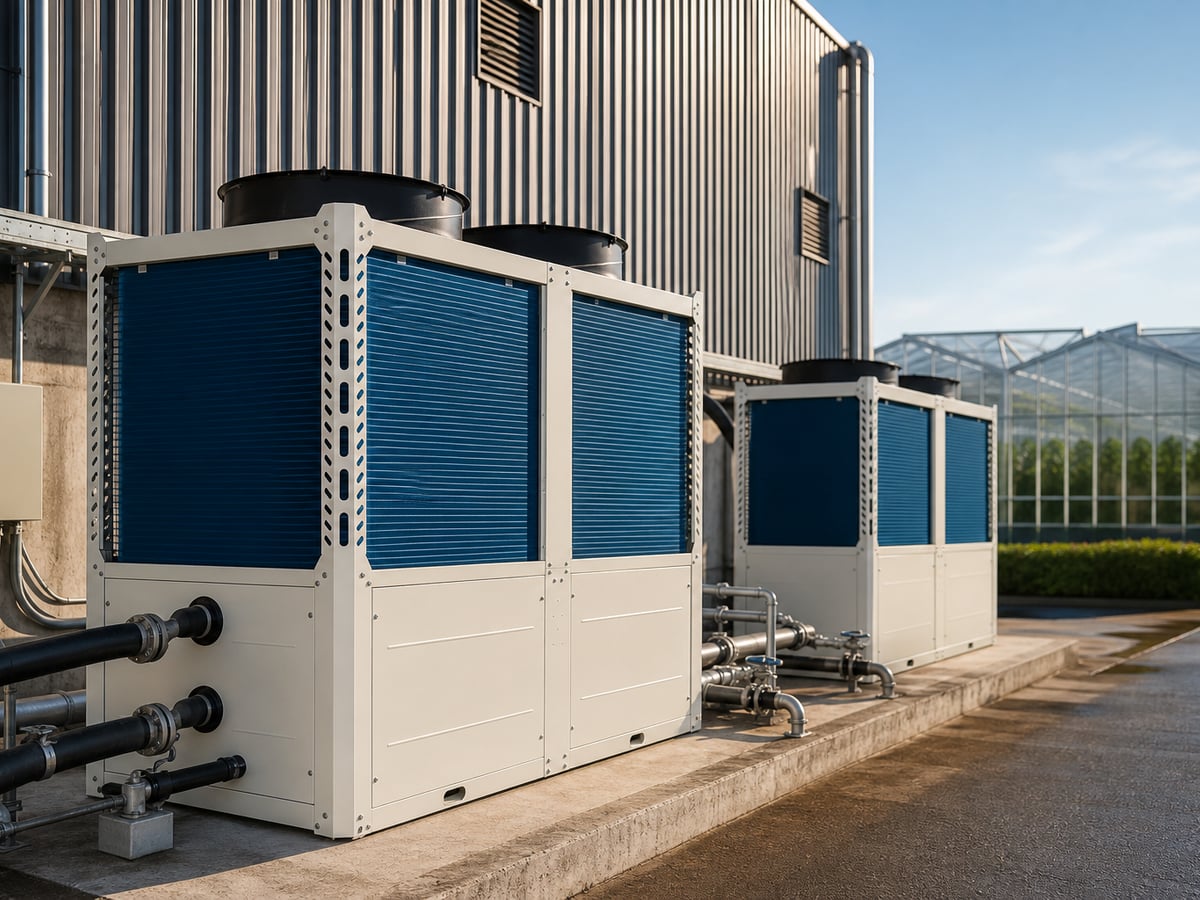
An air-to-water heat pump transfers energy from outdoor air into water for space heating, domestic hot water, process heating, and, in reversible models, chilled-water cooling. It uses electricity to operate a refrigeration circuit rather than generating all heat through direct electric resistance or combustion. For commercial users in the global market, this can reduce energy consumption, support decarbonization plans, and provide a flexible heating and cooling platform for buildings, farms, food facilities, greenhouses, accommodation projects, and light industrial sites.
A commercial air-to-water heat pump normally consists of an outdoor refrigeration unit, hydraulic components, water pipes, buffer or storage tanks, circulation pumps, valves, controls, and terminal equipment such as fan coils, radiant floor loops, air handlers, unit heaters, plate heat exchangers, or process-water tanks. The correct system is selected by heating load, cooling load, design outdoor temperature, required leaving-water temperature, local electrical supply, hydraulic conditions, acoustic limits, and operational schedule—not simply by nameplate capacity.
For projects from Rotterdam and Hamburg to Dubai, Singapore, Sydney, São Paulo, Johannesburg, and Los Angeles, buyers should verify published performance at the actual operating point. A unit rated at 50 kW under mild ambient conditions may produce substantially less heat at low outdoor temperature and high supply-water temperature. The practical question is therefore: how much usable capacity and efficiency will the system deliver at the project’s winter design condition, flow temperature, and flow rate?
Commercial heat pumps are often applied in cascade systems. Multiple modules can provide staged capacity, redundancy, easier transport, and a more stable part-load operation. A well-designed system may combine heat pumps with thermal storage, electric backup, boilers, solar thermal equipment, photovoltaic power, or heat recovery depending on climate, energy tariffs, site constraints, and local regulations.
What Is an Air-to-Water Heat Pump and Where Is It Used?
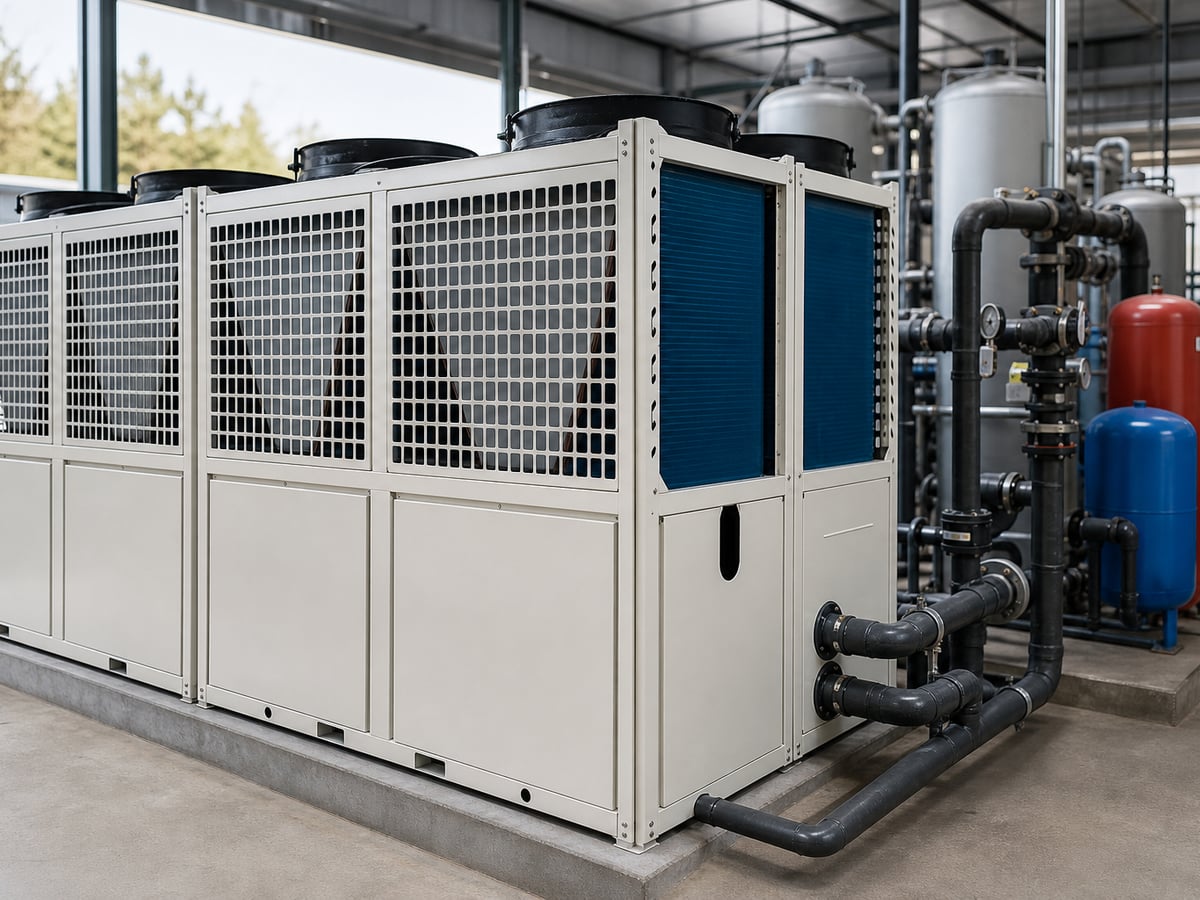
An air-to-water heat pump extracts low-grade thermal energy from ambient air and upgrades it through a vapor-compression cycle. Refrigerant absorbs heat in the outdoor coil, the compressor raises refrigerant pressure and temperature, and a water-side heat exchanger transfers that heat into the hydronic circuit. In cooling mode, the cycle reverses or uses a dedicated cooling arrangement to remove heat from water and reject it outdoors.
Unlike air-to-air systems, which supply conditioned air directly to occupied spaces, air-to-water heat pumps distribute thermal energy through water. Water enables long-distance distribution, zoning, storage, process integration, and connection with many terminal types. This makes air-source hydronic heat pumps particularly relevant for commercial buildings and agricultural projects where heating zones have different schedules or humidity-control requirements.
Typical applications include hotels, office buildings, schools, retail centers, worker accommodation, villas, hospitals, swimming pools, poultry houses, mushroom farms, hydroponic facilities, greenhouses, food processing rooms, warehouses, wash-down areas, and low-temperature industrial processes. In agriculture, the heat pump can serve a buffer tank and climate-control coils while separate ventilation and dehumidification equipment maintains crop-specific humidity.
In colder regions, the unit may operate as the primary heat source down to its certified ambient limit and then receive support from electric heaters, a boiler, or a hybrid plant. In mild coastal climates such as Lisbon, Auckland, Istanbul, Barcelona, Cape Town, and Vancouver, well-designed low-temperature hydronic systems can often rely predominantly on heat pump capacity throughout the heating season.
| Application | Typical Water Temperature | Heat Pump Role | Important Design Consideration |
|---|---|---|---|
| Radiant floor heating | 30–45°C | Primary heating source | Low water temperature supports high seasonal efficiency |
| Fan-coil heating and cooling | 35–50°C heating; 7–18°C cooling | Reversible comfort conditioning | Condensate drainage and humidity control are required in cooling |
| Domestic hot-water production | 45–60°C | Tank heating or preheating | Storage volume, peak draw profile, and hygiene strategy matter |
| Swimming pools | 26–32°C | Continuous low-temperature heating | Corrosion-resistant heat exchanger and evaporation management |
| Greenhouses and cultivation rooms | 30–55°C | Climate and root-zone heating | Load changes with ventilation, humidity, and solar radiation |
| Food and light industrial processes | 35–70°C | Process-water or wash-water heating | Confirm duty cycle, sanitation requirements, and backup capacity |
The table shows why temperature requirement is central to selection. Systems requiring 35°C water generally achieve higher efficiency than systems requiring 60°C water. A commercial buyer should first reduce the water-temperature requirement through larger heat emitters, improved insulation, better controls, or process optimization before purchasing a higher-temperature heat pump.
Available Unit Types and Commercial Applications
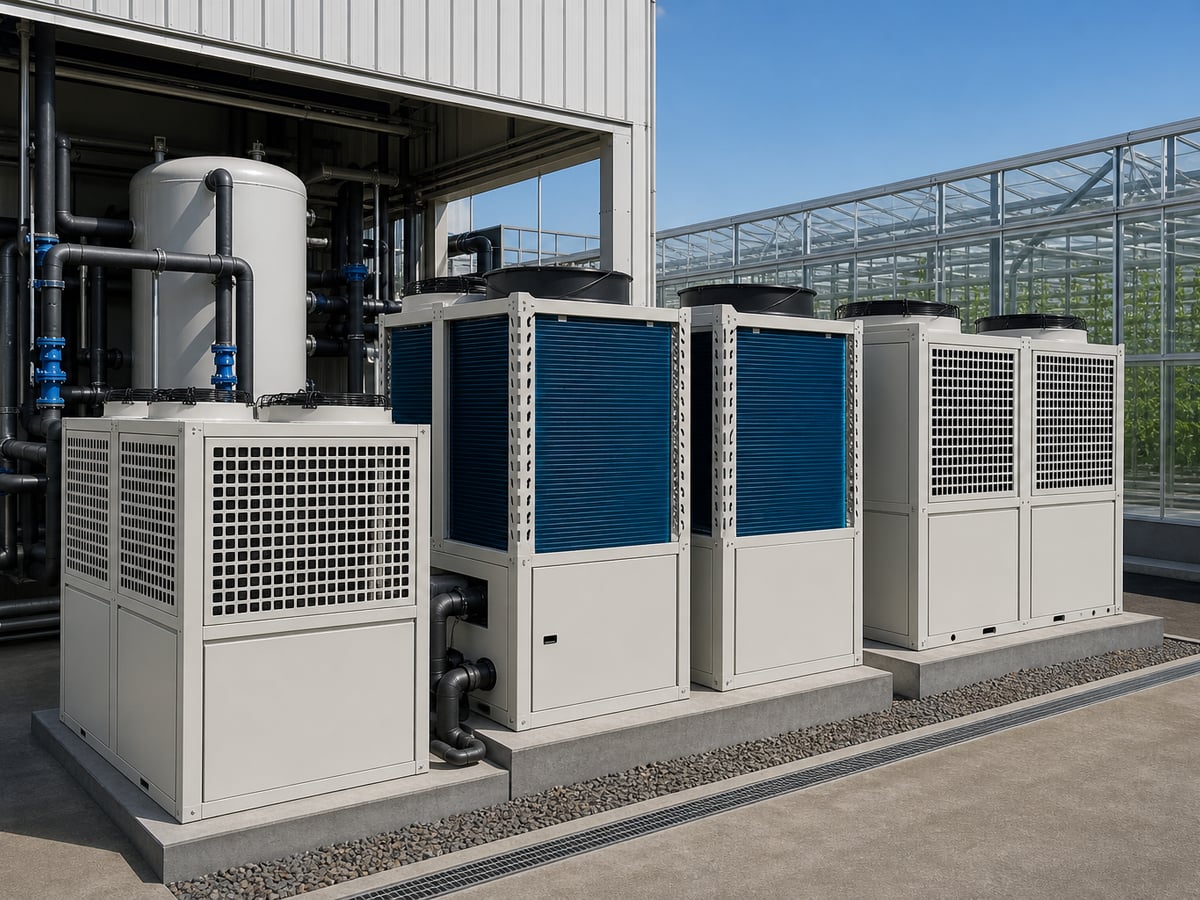
Air-to-water heat pumps are available as monobloc units, split systems, packaged rooftop-style hydronic units, modular chillers, high-temperature heat pumps, and integrated hot-water systems. Each format has operational and installation implications. The best choice depends on climate, project scale, service access, water-side freeze risk, refrigerant regulations, transportation limits, and local installer capability.
A monobloc heat pump contains the refrigeration circuit within the outdoor unit. Water or water-glycol travels between the unit and indoor hydraulic system. This can simplify refrigeration installation because field refrigerant piping may not be required, but freeze protection must be designed carefully in cold climates. A split system places the refrigerant circuit between outdoor and indoor sections, reducing outdoor water exposure but requiring qualified refrigerant installation, pressure testing, evacuation, and charging procedures.
Modular commercial units are suitable for hotels, farm clusters, factories, and large buildings. Multiple modules can be hydraulically connected in parallel and controlled in rotation. This approach helps match partial loads, supports maintenance without complete shutdown, and allows phased capacity expansion. For projects near busy logistics corridors such as the Port of Shanghai, Jebel Ali, Port of Rotterdam, Port of Santos, or Long Beach, modular equipment can also be easier to ship and position than one large centralized chiller.
| Unit Type | Best-Fit Projects | Main Advantages | Selection Caution |
|---|---|---|---|
| Monobloc heat pump | Small and medium commercial sites | Factory-sealed refrigerant circuit; straightforward placement | Protect outdoor water pipes against freezing |
| Split heat pump | Cold-climate and retrofit projects | Reduced outdoor hydronic exposure | Needs certified refrigerant piping work on site |
| Modular air-source heat pump | Hotels, campuses, agricultural clusters | Scalable capacity and N+1 redundancy options | Requires balanced hydraulic headers and sequencing controls |
| High-temperature heat pump | Retrofit radiators and process heating | Can serve higher supply-water needs | Efficiency may be lower at elevated water temperatures |
| Heat pump chiller | Offices, retail, data support spaces | Heating and chilled-water cooling capability | Confirm simultaneous-load and heat-recovery requirements |
| Integrated hot-water heat pump | Hotels, dormitories, gyms, kitchens | Dedicated tank and domestic hot-water control | Size for peak-hour demand, not daily average alone |
Commercial applications should be assessed by load diversity. A hotel may have domestic hot-water demand early in the morning and late in the evening, while a greenhouse may have highest heating demand overnight. A mushroom cultivation facility may require stable temperature control around the clock, but its ventilation and dehumidification loads can change rapidly with crop stage. In such cases, the heat pump should be integrated into a complete climate strategy rather than viewed as an isolated heat generator.
For commercial buyers, a supplier should provide a technical selection sheet showing capacity, power input, COP, flow rate, pressure drop, sound level, refrigerant, electrical requirement, operating range, dimensions, weight, and recommended hydraulic diagram. Buyers can review Lanhu air-source heat pump solutions when comparing equipment configurations for agriculture and commercial climate-control projects.
Heating and Cooling Capacity, COP, SCOP, and Ambient Ratings
Heating capacity is the useful heat delivered to water, usually expressed in kilowatts. Cooling capacity is the heat removed from chilled water. Electrical input is the power consumed by compressors, fans, pumps, control components, crankcase heaters, and auxiliary devices, depending on the test method. COP, or coefficient of performance, is calculated as heating capacity divided by electrical power input at a specified test condition. A COP of 4.0 means that the unit delivers approximately 4 kW of heat for each 1 kW of electrical input under that stated condition.
COP is not a fixed property. It changes with ambient temperature, humidity, supply-water temperature, water flow, compressor speed, defrost activity, and system cleanliness. SCOP, or seasonal coefficient of performance, estimates efficiency over a heating season using part-load performance and climate-bin conditions. It is useful for broad comparison, but project engineers should still evaluate detailed performance data at the expected design points.
For example, A7/W35 commonly indicates 7°C outdoor air and 35°C leaving-water temperature. This is a favorable heating condition. A unit running at A-7/W55 faces a much larger temperature lift and will normally have lower capacity and COP. Asking only for “a 30 kW heat pump” is therefore incomplete; the buyer should specify both the outdoor and water-side conditions.
| Performance Item | What It Means | Why It Matters to Buyers | Recommended Verification |
|---|---|---|---|
| Rated heating capacity | Heat output at a named test point | Shows nominal size only | Request output at design winter ambient and target water temperature |
| Rated cooling capacity | Heat removal from chilled water | Determines summer comfort or process suitability | Check chilled-water supply and return temperatures |
| COP | Heating output divided by electric input | Indicates point efficiency | Compare only under identical test conditions |
| SCOP | Seasonal heating efficiency estimate | Supports annual energy analysis | Match the declared climate class to the project region |
| Operating ambient range | Permitted outdoor temperature range | Defines cold-weather and hot-weather suitability | Confirm heating, cooling, and standby limits separately |
| Sound pressure level | Noise measured at a specified distance | Important near residences and hospitality sites | Review distance, installation environment, and night-mode data |
A proper energy model should use local weather data and operating hours. Winter conditions in Warsaw, Toronto, Harbin, Seoul, and northern Japan require different capacity and defrost assumptions from conditions in Nairobi, Mexico City, Athens, or the Gulf region. Likewise, cooling design in Bangkok, Miami, Manila, and Doha must account for high wet-bulb conditions, not just dry-bulb temperature.
Capacity selection should also include a margin for pipe losses, tank recovery, fouling allowance where relevant, future expansion, and simultaneous loads. However, excessive oversizing can cause short cycling, reduced efficiency, unstable water temperature, and higher first cost. Variable-speed compressors and multiple modules reduce this risk, but they do not eliminate the need for a sound load calculation.
Supply-Water Temperature, Flow Rate, and Hydraulic Design
Hydraulic design is one of the most important factors in commercial heat-pump reliability. The heat pump needs a specified water flow rate to transfer heat efficiently and protect the heat exchanger. Insufficient flow can cause high-pressure trips in heating, freezing risk in cooling, excessive temperature difference, unstable operation, or frequent alarms. Excessive flow can create unnecessary pump energy consumption, noise, erosion, and poor hydraulic balance.
The required flow rate can be estimated from capacity and design temperature difference. In metric practice, water flow in cubic meters per hour is approximately heating capacity in kW divided by 1.163 and divided by the design water temperature difference in °C. For a 60 kW load with a 5°C temperature difference, the approximate flow requirement is 10.3 m³/h. The final design must follow the manufacturer’s minimum and maximum flow requirements and account for glycol concentration.
Most commercial systems benefit from a buffer tank, especially where zones open and close frequently or the heat pump has a minimum run-time requirement. The buffer volume helps stabilize water temperature and reduce compressor cycling. Primary-secondary piping may be needed where the heat-pump flow differs from distribution flow. Low-loss headers, hydraulic separators, differential-pressure bypass valves, and variable-speed pumps should be applied carefully, based on the actual control sequence.
| Hydraulic Component | Primary Function | Commercial Benefit | Common Error to Avoid |
|---|---|---|---|
| Buffer tank | Adds thermal mass | Reduces short cycling and supports defrost recovery | Using an undersized tank without reviewing minimum system volume |
| Expansion vessel | Absorbs water-volume expansion | Maintains stable pressure and protects relief components | Incorrect pre-charge or insufficient vessel volume |
| Air separator | Removes entrained air | Reduces corrosion, noise, and pump cavitation risk | Installing it away from the hottest or lowest-pressure point |
| Dirt separator or strainer | Captures debris | Protects pumps, valves, and plate heat exchangers | Failing to clean it after commissioning |
| Variable-speed circulation pump | Matches flow to demand | Reduces pump electricity and improves control | Operating below the heat pump’s required minimum flow | Glycol protection loop | Prevents freezing in exposed circuits | Improves cold-climate resilience | Using excessive glycol concentration that reduces heat transfer |
Supply-water temperature should be reset according to outdoor temperature where possible. During mild weather, a lower leaving-water setpoint can significantly improve COP. For example, a fan-coil system may operate at 45°C during the coldest hours but only require 35–40°C during much of the season. Weather compensation, zone valves, room sensors, and demand-based pump control can work together to maintain comfort while reducing energy use.
For cooling, designers must consider condensation. Chilled-water pipes, valves, buffer tanks, and fan coils require vapor-tight insulation. Water temperature must remain above the dew point if the system is not designed for condensation management. In crop rooms and food facilities, humidity control may be as important as sensible cooling, so dedicated dehumidification or air-handling equipment may be required.
Compressor, Refrigerant, Heat Exchangers, Fans, and Pumps
The compressor is the central energy-conversion component of an air-to-water heat pump. Commercial models may use rotary, scroll, twin-rotary, or other compressor technologies. Inverter-driven scroll and rotary compressors are common because they can adjust capacity to match demand, improve part-load efficiency, reduce starting current, and maintain steadier water temperature.
Refrigerant selection affects performance, system pressure, safety classification, environmental compliance, service practice, and future availability. Commercial buyers should ask which refrigerant is used, its global warming potential, applicable transport and installation requirements, and the supplier’s spare-parts and technical-support plan. The appropriate refrigerant depends on equipment design and local regulations; it should not be selected only by marketing claims.
On the air side, fin-and-tube coils transfer heat between refrigerant and outdoor air. Coil area, fin geometry, corrosion coating, fan design, and air-path management affect efficiency and defrost behavior. In coastal locations such as Busan, Marseille, Valparaíso, Durban, and Manila, salt-laden air can accelerate corrosion. Protective coil coatings, suitable cabinet materials, correct drainage, and regular cleaning become particularly important.
On the water side, plate heat exchangers are compact and efficient, while shell-and-tube heat exchangers may be used for certain process or pool applications. Water quality should be evaluated before commissioning. Hard water, suspended solids, high chloride content, or untreated process water can damage heat-transfer surfaces and reduce capacity. A secondary loop with a suitable heat exchanger may be advisable when the process fluid is not clean or chemically controlled.
Fans should provide sufficient airflow at low sound levels. EC or inverter-controlled fans can modulate with compressor capacity and ambient conditions. Pumps may be integrated or externally selected. For larger plants, external pumps often provide greater flexibility for head pressure, redundancy, and staged control. The pump curve should be checked against pipe resistance, terminal resistance, filter pressure drop, control-valve authority, and future fouling allowance.
Inverter Control, EVI, Defrosting, and Safety Protection
Inverter control allows the compressor and often the fans to vary speed instead of switching only between full load and off. This helps the heat pump follow real demand, maintain more stable leaving-water temperatures, lower start-stop frequency, and improve seasonal performance. In a modular system, the controller can stage units, rotate lead operation, limit peak electrical demand, prioritize hot-water recovery, and maintain redundancy.
Enhanced vapor injection, commonly called EVI, is a vapor-compression enhancement used in some low-ambient and high-temperature applications. It can improve heating capacity and operating stability at more demanding conditions by injecting intermediate-pressure vapor into the compression process. EVI does not remove the physical effect of cold weather, but it can help certain units maintain useful performance when standard cycles would experience a larger capacity reduction.
Defrosting is essential when outdoor coils operate below freezing while moisture in the air forms frost. Frost reduces airflow and heat transfer. Most air-source heat pumps periodically reverse the refrigeration cycle or use another controlled method to melt frost. Defrost frequency and duration depend on ambient temperature, humidity, coil design, airflow, control logic, water temperature, and system load. Defrost energy should be considered in cold, humid climates.
| Control or Protection Feature | Purpose | Value for Commercial Operation | Buyer Review Point |
|---|---|---|---|
| Variable-speed inverter | Modulates capacity | Improves part-load efficiency and temperature stability | Check modulation range and minimum stable capacity |
| Weather compensation | Adjusts water setpoint by outdoor condition | Reduces unnecessary high-temperature operation | Confirm controller supports adjustable curves |
| EVI cycle | Supports demanding heating conditions | Can improve low-ambient performance | Review data at the exact design point |
| Automatic defrost | Removes frost from outdoor coil | Maintains airflow and heating reliability | Provide drainage and account for temporary output reduction |
| High/low pressure protection | Protects refrigeration circuit | Reduces risk from abnormal operating conditions | Ensure fault history is accessible to service technicians |
| Flow switch and freeze protection | Protects water-side heat exchanger | Prevents damage from low flow or freezing | Do not rely on controls alone where exposed pipes can freeze |
Modern commercial controllers can support remote monitoring through wired or networked communication. This is valuable for multi-site operators, distributors, and agricultural managers who need to review water temperatures, alarms, run hours, compressor status, defrost activity, and energy trends. Remote access should supplement—not replace—local safety devices, trained maintenance staff, and periodic physical inspection.
Future trends through 2026 include wider use of lower-global-warming-potential refrigerants, smarter demand-response controls, tighter integration with photovoltaic systems and battery storage, heat-pump cascades with thermal storage, and digital fault detection. Policies in many markets increasingly favor electrification, energy efficiency, renewable integration, and reduced fossil-fuel use. Project teams should assess local incentives, electrical tariffs, refrigerant rules, building codes, noise limits, and grid capacity early in the design process.
Installation, Commissioning, Maintenance, and Warranty
Successful installation begins with location planning. The outdoor unit needs unobstructed airflow, adequate service clearance, stable foundation support, drainage, vibration isolation, and sufficient distance from windows, walkways, property boundaries, and noise-sensitive areas. Avoid narrow enclosed corners, exhaust-air recirculation, roof areas with poor structural capacity, and locations where snow, leaves, dust, cooking grease, or agricultural debris can block the coil.
In cold climates, defrost water must drain safely without creating ice hazards. The base should be raised appropriately, and condensate drainage must not freeze. In hot climates, ensure that discharged air cannot recirculate into the intake side. In high-wind areas, mounting design should account for local wind loads. Electrical work should include correctly sized cabling, isolators, grounding, overcurrent protection, phase-sequence checks for three-phase units, and surge protection where appropriate.
Commissioning is not simply switching on the unit. It should confirm pipe flushing, water quality, air removal, expansion-vessel pressure, valve positions, flow rate, pump rotation, electrical voltage, insulation integrity, sensor readings, safety devices, control parameters, communication functions, and heating or cooling performance. A documented commissioning record gives owners a baseline for future service.
Routine maintenance normally includes cleaning outdoor coils, checking fan condition, inspecting drainage, cleaning strainers, confirming system pressure, checking glycol concentration where used, reviewing alarm history, verifying pump operation, inspecting electrical terminals, and confirming water-treatment conditions. Maintenance frequency depends on environment. Dusty industrial zones, farms, coastal sites, and locations near busy roads may require more frequent coil inspection than clean urban installations.
Warranty terms should be reviewed before purchase, including coverage period, labor policy, freight responsibility, excluded conditions, required maintenance, approved installation standards, spare-parts availability, and claim procedure. Buyers should retain commissioning documents, serial numbers, photographs, water-treatment records, and maintenance logs. Detailed support information is available through the warranty and after-sales service page.
Our Company
Shandong Lanhu Air Conditioning Equipment Co., Ltd. supplies air-source heat pumps and integrated climate-control equipment for commercial agriculture, controlled-environment cultivation, and industrial HVAC projects. The company serves global customers including agricultural contractors, equipment distributors, engineering companies, commercial farming operators, and project developers seeking factory-direct equipment and practical technical coordination.
From a technological perspective, Lanhu draws on more than 12 years of thermodynamic research and development experience and holds over 45 registered patents. Its product engineering focuses on climate control, thermal management, system matching, and application-specific integration. For mushroom cultivation containers, hydroponic plant containers, and agricultural facilities, heat-pump selection can be coordinated with ventilation, temperature control, humidity management, insulation performance, and operational automation rather than treated as a standalone purchase.
From a manufacturing perspective, Lanhu operates a modern production facility exceeding 30,000 square meters in Dezhou, Shandong, China. Internal capabilities include product design, engineering development, sheet-metal fabrication, CNC bending, insulation-panel production, electrical assembly, system integration, equipment testing, and quality inspection. Systems undergo functional inspection, electrical verification, performance testing, and operational evaluation before shipment. The company maintains ISO 9001, ISO 14001, ISO 45001, and ISO 12100 certifications alongside patent and enterprise credential documentation.
From a service perspective, Lanhu provides OEM and ODM customization, engineering assistance, international logistics coordination, spare-parts support, installation guidance, and after-sales service. This can assist buyers arranging deliveries through international trade routes connecting China with regional hubs such as Dubai, Rotterdam, Singapore, Durban, and Santos. For customized configurations, buyers may review the OEM and ODM service options; for project discussions, technical requests, and commercial quotations, they can contact the Lanhu team.
A practical purchasing process starts with project data: location, winter and summer design temperatures, required heating and cooling loads, desired supply-water temperature, terminal type, water quality, electrical details, installation space, noise restrictions, operating schedule, and any need for modular redundancy. Providing these details enables a more accurate proposal and reduces the risk of oversizing, undersizing, or incompatible hydraulic design.
FAQ
What is the main difference between an air-to-water heat pump and a boiler?
A boiler usually creates heat through combustion or electric resistance, while an air-to-water heat pump moves available heat from outdoor air into a water circuit. Its efficiency can be significantly higher than direct electric heating when operating under suitable conditions, particularly with low-temperature heat emitters.
Can an air-to-water heat pump provide both heating and cooling?
Yes. Reversible models can supply hot water for heating and chilled water for cooling. The building or process system must be designed for cooling, including insulated pipes, condensate drainage, suitable fan coils or air handlers, and humidity management where required.
How do I choose the correct commercial heat-pump capacity?
Start with a professional heating and cooling load calculation. Then confirm performance at the actual design ambient temperature and required leaving-water temperature. Include domestic hot-water recovery, process loads, defrost impact, building expansion, operational diversity, and redundancy requirements.
Does a heat pump work in freezing weather?
Many commercial models operate below 0°C, but available capacity and COP decline as outdoor temperature falls and supply-water temperature rises. Low-ambient designs, EVI technology, thermal storage, cascade systems, and properly sized backup heat can improve cold-climate reliability.
What water temperature gives the best efficiency?
Lower supply-water temperatures generally produce better efficiency. Radiant heating systems commonly operate around 30–45°C and are highly compatible with heat pumps. Existing radiator systems may require higher temperatures, so emitter upgrades or weather-compensated control should be evaluated.
Is a buffer tank always necessary?
Not always, but it is frequently beneficial in commercial systems. A buffer tank can improve minimum water volume, reduce compressor cycling, stabilize zoning changes, and support defrost operation. The required volume should be determined from the unit’s requirements and hydraulic design.
What maintenance does an air-source heat pump need?
Typical maintenance includes outdoor-coil cleaning, strainer cleaning, pressure checks, electrical inspection, drainage checks, pump verification, alarm review, and water-quality management. Sites exposed to dust, salt air, agricultural particles, or pollution should be inspected more often.
Can Lanhu customize equipment for an agricultural or commercial project?
Yes. Lanhu provides factory-direct supply and can support OEM and ODM requirements, project engineering coordination, climate-control integration, logistics support, installation guidance, spare parts, and after-sales service. Additional common questions can be found in the heat pump and equipment FAQ section.
Share this article

About the Author: Shandong Lanhu Air Conditioning Equipment
Lanhu is a professional climate control equipment manufacturer specializing in smart agricultural systems, commercial HVAC solutions, and customized temperature control technologies. With extensive engineering experience, Lanhu provides reliable solutions for plant factories, controlled environment agriculture, and industrial applications.
Need a Custom Climate Control Solution?
From smart agricultural systems to commercial HVAC solutions, Lanhu provides reliable temperature and humidity control solutions tailored to your project needs.
Contact Us