Global Market Container Mushroom Farm Planning Guide
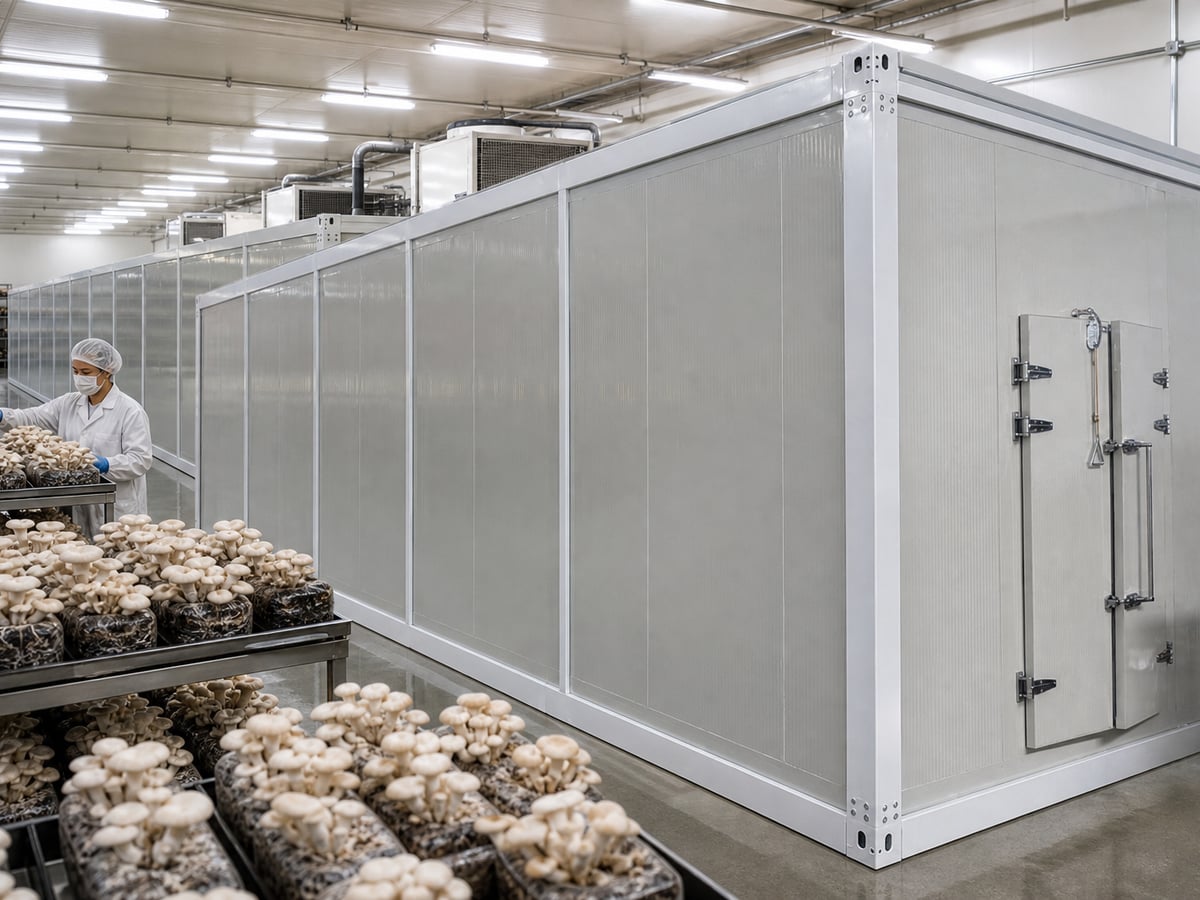
Quick Answer

For most new growers, the safest way to begin a container mushroom farm is to start with one fully climate-controlled fruiting container, purchase reliable colonized blocks from an established supplier, sell into a defined local market, and record production results for at least three crop cycles before adding more units. This approach limits biological risk, reduces labor complexity, and provides a clear picture of actual demand.
A container farm can support commercial production of oyster mushrooms, lion’s mane, shiitake, king oyster mushrooms, enoki, and selected specialty varieties. The right model depends on whether the business is focused on restaurant supply, wholesale distribution, retail packs, farm shops, supermarkets, export-oriented aggregation, or educational and demonstration farming. In the Global Market, modular container systems are increasingly used near cities, food hubs, ports, resorts, controlled-environment agriculture projects, and rural production centers where conventional buildings are costly or slow to develop.
The first planning priorities are straightforward: select a container model that fits the crop and climate, decide whether to buy fruiting blocks or produce substrate in-house, keep incubation and fruiting conditions separate when possible, calculate weekly harvest capacity instead of relying on total room volume, and confirm that power, water, drainage, labor, and sales channels can support continuous production.
A smart mushroom cultivation container can help new operators standardize temperature, humidity, fresh-air exchange, lighting, and alarms inside a compact production unit. However, automation does not remove the need for crop observation. Mushrooms remain a biological product: harvest timing, contamination control, packaging discipline, and customer communication determine whether the operation becomes profitable.
The best first unit is not necessarily the largest one. It is the unit that can be filled consistently, managed by available staff, supplied with dependable inputs, and matched to repeatable customer orders. Build the farm around weekly sales commitments rather than around theoretical maximum yield.
Choosing a Container Farm Model

Container mushroom farms are available in several configurations. Some are designed primarily for fruiting colonized blocks, while others include incubation shelves, substrate preparation equipment, sterilization systems, or multi-room layouts. A new business should avoid buying more process capability than it can manage. Substrate production and spawn handling require different hygiene standards, equipment, skills, and workflow controls from fruiting operations.
For urban and peri-urban markets such as Dubai, Singapore, Rotterdam, London, Los Angeles, Sydney, Johannesburg, São Paulo, and Nairobi, a fruiting-focused model is often the fastest route to market. Colonized blocks can be delivered on a schedule, placed into the container, and harvested for nearby restaurants, retail stores, hotel kitchens, specialty grocers, and distributors. In larger agricultural zones, an integrated substrate-to-fruit model may become attractive after sales volumes are proven.
| Container Farm Model | Typical Use | Best Starting Crop | Capital Requirement | Operating Complexity | Recommended Buyer |
|---|---|---|---|---|---|
| Fruiting-only container | Fruit colonized blocks | Oyster mushrooms | Lower | Low to medium | New commercial growers |
| Incubation container | Colonize bags or blocks | Oyster and shiitake | Medium | Medium | Growing block suppliers |
| Combined incubation and fruiting unit | Small-batch production | Specialty mushrooms | Medium | Medium to high | Pilot projects with tight space |
| Multi-container farm | Staggered commercial harvests | Mixed species | High | High | Established producers |
| Mobile demonstration container | Education, tourism, branding | Oyster mushrooms | Medium | Low to medium | Schools, resorts, exhibitions |
| Integrated substrate and fruiting facility | Full production control | Multiple commercial species | High | Very high | Regional mushroom enterprises |
This comparison shows why a fruiting-only unit is often the preferred first purchase. It isolates the most market-visible stage of production: growing mushrooms that customers can buy. A dedicated fruiting container also makes it easier to test different block suppliers, mushroom varieties, packaging formats, and harvest schedules before investing in sterilizers, mixers, bagging lines, and laboratory equipment.
When evaluating a container, inspect insulation quality, floor construction, corrosion resistance, washability, shelving design, air distribution, humidification method, refrigeration capacity, heating performance, lighting placement, drainage slope, electrical protection, and remote monitoring options. The system should be designed for the temperature extremes of the installation location. A unit operating in a hot Gulf climate, a humid tropical zone, a cold northern region, or a coastal port environment needs different engineering allowances.
Climate control should be selected according to the crop’s actual requirements, not generic greenhouse specifications. A dedicated mushroom climate controller can coordinate cooling, heating, humidification, ventilation, carbon dioxide management, and alarms. This improves repeatability, particularly when day and night outdoor conditions change sharply.
Buying Blocks or Making Substrate

The choice between buying colonized blocks and making substrate is one of the most important decisions in container mushroom farming. Purchased blocks simplify startup. In-house substrate production can reduce unit cost at scale, but it creates a new manufacturing operation with contamination risks and stricter sanitation requirements.
Buying blocks is usually the best option when a farm is validating demand, training employees, introducing mushrooms to a new retail area, or operating where agricultural residues are inconsistent. It enables the grower to focus on fruiting climate, harvesting, post-harvest handling, and customer service. The supplier should provide product specifications, inoculation dates, substrate ingredients, expected first-flush timing, storage instructions, block weight, contamination policy, and recommended fruiting parameters.
Making substrate can become economically attractive where sawdust, straw, cottonseed hulls, corn cobs, bagasse, coffee waste, or other suitable agricultural by-products are consistently available. Yet a lower raw-material price does not automatically mean a lower finished-block cost. Labor, water treatment, energy, packaging, sterilization, contamination losses, quality testing, and downtime must all be included.
| Decision Factor | Buying Colonized Blocks | Making Substrate In-House | Planning Implication |
|---|---|---|---|
| Startup speed | Fast | Slower | Blocks allow earlier sales testing |
| Initial equipment | Fruiting infrastructure only | Mixing, bagging, sterilizing, inoculation equipment | In-house production needs more capital |
| Contamination exposure | Lower at the farm | Higher across production stages | Sanitation procedures become essential |
| Raw-material control | Limited | High | Useful where local residues are reliable |
| Labor demand | Lower | Higher | Budget for trained processing staff |
| Scalability | Dependent on supplier capacity | Dependent on process discipline | Expand only after demand is confirmed |
| Quality consistency | Depends on supplier | Depends on internal systems | Track yield by batch in either model |
The table highlights a practical rule: purchase blocks when the primary unknown is market demand; make substrate when the market is reliable and the primary opportunity is manufacturing efficiency. Many successful operations use a hybrid transition. They begin with external blocks, develop brand recognition and sales routines, then add substrate production once volumes justify the investment.
Before signing a supply agreement, test blocks from at least two batches under the same conditions. Compare pinning speed, first-flush yield, second-flush potential, visual quality, contamination rate, shelf life, and customer response. The cheapest block can be the most expensive if it produces inconsistent harvests or weak-looking mushrooms.
For processors and agricultural contractors, OEM and project-specific layouts can be valuable when the farm needs to accommodate local block sizes, rack spacing, voltage standards, door orientation, or harvest workflows. Lanhu supports tailored project discussions through its OEM and ODM customization service, helping buyers align equipment configuration with local operating conditions.
Separating Incubation from Fruiting
Incubation and fruiting are distinct biological stages. During incubation, mycelium colonizes the substrate under relatively stable conditions with limited fresh-air demand and no need for intensive light. During fruiting, the crop requires carefully managed fresh-air exchange, humidity, temperature, carbon dioxide levels, and lighting. Combining these stages in one room can work for a very small pilot, but it usually reduces control and raises contamination-management challenges as production expands.
Separating incubation from fruiting provides several operational advantages. It protects colonizing blocks from the frequent door opening, humid air, spore load, and handling associated with harvest rooms. It also enables each space to follow the correct climate setpoints. If a fruiting room needs cleaning, the incubation cycle can continue uninterrupted elsewhere.
| Production Stage | Main Environmental Priority | Typical Handling Activity | Key Risk | Recommended Space |
|---|---|---|---|---|
| Substrate mixing | Clean water and measured moisture | Ingredient blending | Incorrect recipe or moisture level | Separate processing area |
| Bagging | Clean packaging workflow | Filling and sealing bags | Foreign material contamination | Dedicated preparation zone |
| Sterilization or pasteurization | Time and temperature control | Heat treatment | Insufficient treatment | Utility-equipped processing zone |
| Inoculation | High sanitation standard | Adding spawn | Microbial contamination | Clean inoculation room |
| Incubation | Stable temperature | Batch inspection | Hidden contamination spread | Incubation room or container |
| Fruiting | Humidity, air exchange, temperature | Pinning, harvest, cleaning | Poor morphology or drying | Dedicated fruiting container |
| Packing and cold holding | Hygiene and rapid cooling | Weighing and labeling | Shelf-life reduction | Clean packing area and cold storage |
This workflow table demonstrates why container farming should be planned as a system rather than a single box. A fruiting container may be the central production asset, but it needs receiving space for blocks, a clean route for staff, a place to wash tools, a packing bench, refrigeration, and waste handling. Even compact farms benefit from one-way movement: clean material enters, mushrooms leave, and waste exits without crossing the harvest route.
For species such as oyster mushrooms, poor separation may lead to uneven pin sets, stretched stems, smaller caps, or excessive drying. For lion’s mane, unstable humidity and airflow can affect shape and quality. For shiitake, different block maturation and fruiting requirements may complicate mixed-room scheduling. The more species a farm grows, the stronger the argument for dedicated zones or carefully sequenced production.
Estimating Weekly Harvest Capacity
Weekly harvest capacity should be calculated from sellable kilograms, not from the number of shelves or the nominal size of the container. Every crop has a cycle length, expected yield per block, usable rack capacity, loss rate, and harvest pattern. A reliable estimate also accounts for the fact that mushrooms do not all mature on the same day unless batches are deliberately staggered.
A practical capacity calculation is:
Weekly sellable harvest = active blocks × average sellable yield per block × weekly harvest share − expected losses.
For example, if a fruiting container holds 1,000 active oyster blocks, each block produces an average sellable yield of 0.75 kg through its planned flushes, and the crop cycle distributes harvest across six weeks, the average weekly harvest is approximately 125 kg before adjustments for waste and irregularity. If 8% is lost to quality issues, handling damage, or unsold excess, the planned weekly sales target should be closer to 115 kg.
| Planning Variable | Example Value | Why It Matters | How to Verify |
|---|---|---|---|
| Number of active blocks | 1,000 blocks | Sets maximum productive inventory | Count usable shelf positions |
| Average block weight | 2.5 kg | Influences biological yield potential | Check supplier batch records |
| Sellable yield per block | 0.75 kg | Determines marketable output | Measure harvested kilograms |
| Crop cycle length | 6 weeks | Controls weekly harvest distribution | Track batch start and finish dates |
| Quality-loss allowance | 8% | Protects sales planning accuracy | Record rejects and shrinkage |
| Harvest-day allocation | 5 days per week | Supports labor and delivery schedules | Match orders with picking records |
| Cold-storage buffer | 1–2 days | Reduces delivery pressure | Monitor shelf-life performance |
The table should be used as a live farm-management worksheet. Replace example figures with crop-specific data after every cycle. Do not plan restaurant contracts using supplier yield claims alone. Real output depends on the container environment, local water quality, block age at delivery, staff handling, harvesting discipline, and the actual genetics of the strain.
Staggered loading is essential. Instead of placing every block in the container on the same day, load a portion each week. This creates smoother harvesting, steadier cash flow, simpler delivery planning, and less pressure on staff. A farm that harvests 500 kg on one week and 20 kg the next week is harder to sell than a farm that consistently delivers 100 kg every week.
This chart is illustrative rather than a yield guarantee. Its purpose is to show why managers should plan for a harvest curve. Tracking this curve by batch helps identify whether a problem comes from block quality, climate settings, delayed picking, airflow imbalance, or a changing seasonal load on the cooling system.
Planning Power, Water, and Drainage
Utilities are often the difference between a productive container farm and an unreliable one. Before equipment arrives, confirm electrical supply, voltage and frequency, breaker capacity, grounding, backup plans, water pressure, water quality, drainage location, and site access for installation and maintenance. A container cannot maintain mushroom conditions if power is undersized or if condensate and wash water have nowhere to go.
Power demand depends on climate zone, insulation, crop setpoints, container size, cooling load, heating requirement, humidification, ventilation fans, lighting, pumps, refrigeration, and any external cold room. Sites in hot climates may need substantial cooling capacity, while cold regions may require more heating and freeze protection. Ports and coastal cities such as Rotterdam, Mombasa, Jebel Ali, Santos, Busan, and Melbourne also require attention to corrosion resistance and electrical enclosure protection.
| Utility Item | What to Confirm | Common Failure if Ignored | Recommended Planning Action |
|---|---|---|---|
| Electrical supply | Voltage, phase, frequency, available amperage | Overloaded circuits and shutdowns | Obtain site electrical survey |
| Backup power | Generator or battery-supported controls | Crop damage during outages | Protect critical fans and controls |
| Water source | Pressure, hardness, cleanliness, volume | Blocked humidifiers and poor hygiene | Install filtration where needed |
| Drainage | Floor drain route and wastewater destination | Standing water and sanitation issues | Create a sloped, cleanable discharge path |
| Site foundation | Level, load-bearing, accessible pad | Door misalignment and drainage problems | Prepare concrete or engineered base |
| Internet connection | Signal stability for remote monitoring | Missed alarms and limited support access | Use stable wired or cellular backup options |
| Cold storage | Capacity for packed harvest | Short shelf life and unsellable stock | Size storage to peak harvest day |
The utility checklist above should be completed before final equipment specification. A site with limited grid capacity may need load management, a generator, additional insulation, or a phased expansion plan. A remote project may require spare sensors, pumps, contactors, humidification parts, and critical electrical components to reduce downtime.
Water management is both a food-safety and sustainability issue. Use clean water appropriate for humidification and sanitation. Where practical, monitor consumption, repair leaks promptly, and avoid excessive humidification that causes standing water or condensation on surfaces. Good air distribution and accurate sensors can reduce waste while maintaining mushroom quality.
Staffing Daily Checks and Harvests
Even a highly automated container mushroom farm needs people every day. The daily routine should include visual crop inspection, climate review, alarm check, humidity verification, water-system inspection, harvest assessment, cleaning, packing, and sales communication. One trained operator can manage a small fruiting container, but harvest peaks, deliveries, customer orders, and cleaning days may require additional labor.
The most valuable staff skill is not simply knowing how to turn controls on and off. It is recognizing crop signals early. Mushrooms communicate environmental stress through cap shape, stem length, pin formation, color, surface texture, and growth speed. Staff should understand what normal development looks like for every species and variety.
| Daily Task | Typical Frequency | Responsible Role | Record to Keep |
|---|---|---|---|
| Review climate controller readings | Morning and afternoon | Grower or supervisor | Temperature, humidity, CO2 alarms |
| Inspect blocks for contamination | Daily | Grower | Batch, location, removed blocks |
| Harvest mature mushrooms | Daily or as required | Harvest staff | Weight by species and batch |
| Pack and label product | On harvest days | Packing staff | Lot code, weight, customer order |
| Clean floors and work surfaces | Daily | All operating staff | Cleaning checklist |
| Check water and drainage systems | Daily | Grower or technician | Leaks, filters, drain condition |
| Confirm customer orders | Daily or weekly | Sales coordinator | Forecast, delivery route, returns |
This staffing structure helps protect both crop quality and customer confidence. A small operation may combine the grower, packer, and sales roles, but the records should still be kept separately. Knowing which batch produced each delivery is useful if a customer asks about freshness, variety, or quality consistency.
Train staff in hygiene, safe electrical practices, chemical handling, ladder and rack safety, harvest technique, packaging standards, and basic equipment troubleshooting. Create simple standard operating procedures with photos of acceptable and unacceptable crop conditions. This is particularly useful when farms operate across different countries, languages, or seasonal labor structures.
Testing Demand Before Adding Units
Adding containers should follow sales evidence, not enthusiasm alone. Mushroom demand can look promising during a launch period but weaken if repeat customers do not reorder. Test demand by obtaining regular purchase commitments from several channels: chefs, specialty stores, produce distributors, meal-kit companies, hotels, caterers, health-food retailers, farmers’ markets, and direct subscription customers.
Start with a narrow product range. Oyster mushrooms are often suitable for market entry because they are versatile, visually appealing, and relatively familiar to chefs. Lion’s mane can command premium interest in wellness-oriented and fine-dining markets, while shiitake may fit Asian grocery channels and established retail demand. The correct species mix depends on local cuisine, price sensitivity, cultural familiarity, and distribution distance.
A strong expansion signal is not one large order. It is a pattern of repeat orders that absorbs at least 70% to 80% of planned weekly output at a sustainable price. Before adding a second container, confirm that current customers are reordering, new leads are entering the pipeline, and the business can sell harvests during high-yield weeks.
Use a simple demand test: offer sample packs to chefs, track conversion to paid orders, monitor reorder frequency, ask distributors about required pack sizes, and record product returns. In markets served through airports, maritime ports, or large logistics centers, assess cold-chain reliability before promising deliveries beyond the immediate production radius.
Real installation examples can help buyers compare project layouts, crops, climate conditions, and operating objectives. Explore practical applications through Lanhu’s mushroom container project cases when developing a site plan or preparing an investor presentation.
By 2026, the Global Market is expected to place greater emphasis on traceable local food, controlled-environment production, efficient use of agricultural by-products, reduced food miles, energy monitoring, and resilient supply chains. Cities with water constraints may prioritize efficient humidification and drainage systems. Regions with rising electricity prices may prioritize higher insulation performance, heat recovery, smart scheduling, and renewable-energy integration. Food buyers are also likely to request clearer records on production methods, lot traceability, packaging materials, and post-harvest handling.
Policy trends may also influence project design. Depending on the country, farms may need to consider food labeling rules, building permits, wastewater requirements, electrical approvals, worker safety rules, import documentation, and local agricultural incentives. Engage local authorities and qualified installers early, particularly when placing containers near commercial districts, schools, hotels, ports, industrial estates, or residential areas.
Our Company
Shandong Lanhu Air Conditioning Equipment Co., Ltd. supports global customers developing controlled-environment agriculture and modular cultivation projects. The company is based in Dezhou, Shandong, China, a major manufacturing region with practical access to domestic industrial supply chains and export logistics routes through hubs such as Qingdao, Tianjin, Shanghai, and Ningbo.
Technological Capabilities
Lanhu’s technical focus combines agricultural climate management, thermodynamic engineering, industrial HVAC development, and modular cultivation design. With more than 12 years of thermodynamic research and development experience, the company develops smart mushroom cultivation containers, mushroom climate controllers, hydroponic plant containers, and air source heat pump solutions. The goal is to create stable growing environments through coordinated temperature, humidity, ventilation, cooling, heating, sensing, and control functions.
For mushroom projects, this capability is especially important because uniformity matters. Airflow distribution, sensor placement, humidity response, refrigeration sizing, insulation performance, and control logic affect crop consistency. Lanhu’s product development is supported by more than 45 registered patents and quality-management credentials including ISO 9001, ISO 14001, ISO 45001, and ISO 12100.
Manufacturing Capabilities
Lanhu operates a modern manufacturing facility covering more than 30,000 square meters. Its integrated production workflow includes product design, engineering development, sheet metal fabrication, CNC bending, insulated panel production, electrical assembly, system integration, equipment testing, and quality inspection. This in-house coordination helps maintain consistency between the container structure, HVAC components, electrical systems, control equipment, and internal cultivation layout.
Before shipment, systems undergo functional inspection, electrical verification, performance testing, and operational evaluation. For buyers planning international projects, this reduces the risk of receiving a container that has not been tested as an integrated system. It also supports customization for rack arrangement, climate requirements, power conditions, external finish, access doors, and operational workflow.
Service Capabilities
Lanhu provides factory-direct supply, OEM and ODM customization, engineering assistance, international logistics support, spare-parts support, installation guidance, and after-sales service. These services are relevant to agricultural contractors, distributors, engineering firms, commercial growers, food-production investors, and controlled-environment agriculture projects around the world.
For a first container farm, the most useful supplier relationship is one that begins before ordering. Share the proposed site location, ambient climate, electrical standard, crop plan, block size, target weekly output, labor availability, water source, drainage route, and delivery destination. This information enables a more appropriate technical proposal and reduces changes after delivery.
FAQ
How many containers should a new mushroom farm buy?
Most new commercial growers should begin with one fruiting container unless they already have proven demand, experienced staff, reliable block supply, and a confirmed route to market. A single unit provides valuable production data before expansion.
Can one container handle both incubation and fruiting?
It can for small pilots, but separate areas are usually better for commercial consistency. Incubation and fruiting have different environmental needs, and separation reduces workflow conflicts and sanitation risks.
Which mushroom is best for a first container farm?
Oyster mushrooms are often a practical first crop because they grow quickly, have broad culinary uses, and are suitable for restaurant, retail, and direct-sales channels. The final choice should reflect local customer demand and block availability.
Do container mushroom farms need cold storage?
Yes, cold storage is strongly recommended for commercial sales. Rapid cooling after harvest helps preserve appearance, texture, and shelf life, especially when products will be delivered to restaurants, retailers, or distributors.
How much labor does one fruiting container require?
A small unit may be managed by one trained person for routine checks, but harvest peaks, packing, cleaning, deliveries, and sales activities often require additional support. Labor needs depend on crop variety, harvest volume, and customer delivery frequency.
What utility issue causes the most problems?
Insufficient electrical capacity is a common issue, especially in hot climates where cooling demand is high. Poor drainage and untreated water can also cause serious operational problems. Complete a site survey before equipment selection.
When should a farm start making its own substrate?
Consider in-house substrate production only after weekly sales are stable, block demand is predictable, raw materials are reliable, and the business can support the extra labor, equipment, sanitation controls, and quality management required.
How can a grower reduce production risk?
Use staggered loading, record yields by batch, maintain preventive maintenance routines, keep spare critical parts, train staff to identify crop issues early, and avoid depending on one customer or one block supplier.
What sustainability trends matter for container mushroom farming in 2026?
Important trends include using agricultural residues responsibly, reducing energy waste through better insulation and smart controls, monitoring water use, selecting recyclable packaging, improving crop traceability, and locating production closer to customers where practical.
Can container mushroom farms serve hotels, restaurants, and food-service projects?
Yes. Container farms are well suited to hotels, resorts, restaurants, catering companies, supermarkets, food hubs, and institutional kitchens that value fresh specialty mushrooms, reliable supply, and visible local production.
Share this article

About the Author: Shandong Lanhu Air Conditioning Equipment
Lanhu is a professional climate control equipment manufacturer specializing in smart agricultural systems, commercial HVAC solutions, and customized temperature control technologies. With extensive engineering experience, Lanhu provides reliable solutions for plant factories, controlled environment agriculture, and industrial applications.
Need a Custom Climate Control Solution?
From smart agricultural systems to commercial HVAC solutions, Lanhu provides reliable temperature and humidity control solutions tailored to your project needs.
Contact Us