Air Source Heat Pumps for the Global Market: Buyer Guide
Quick Overview of Commercial Air Source Heat Pumps
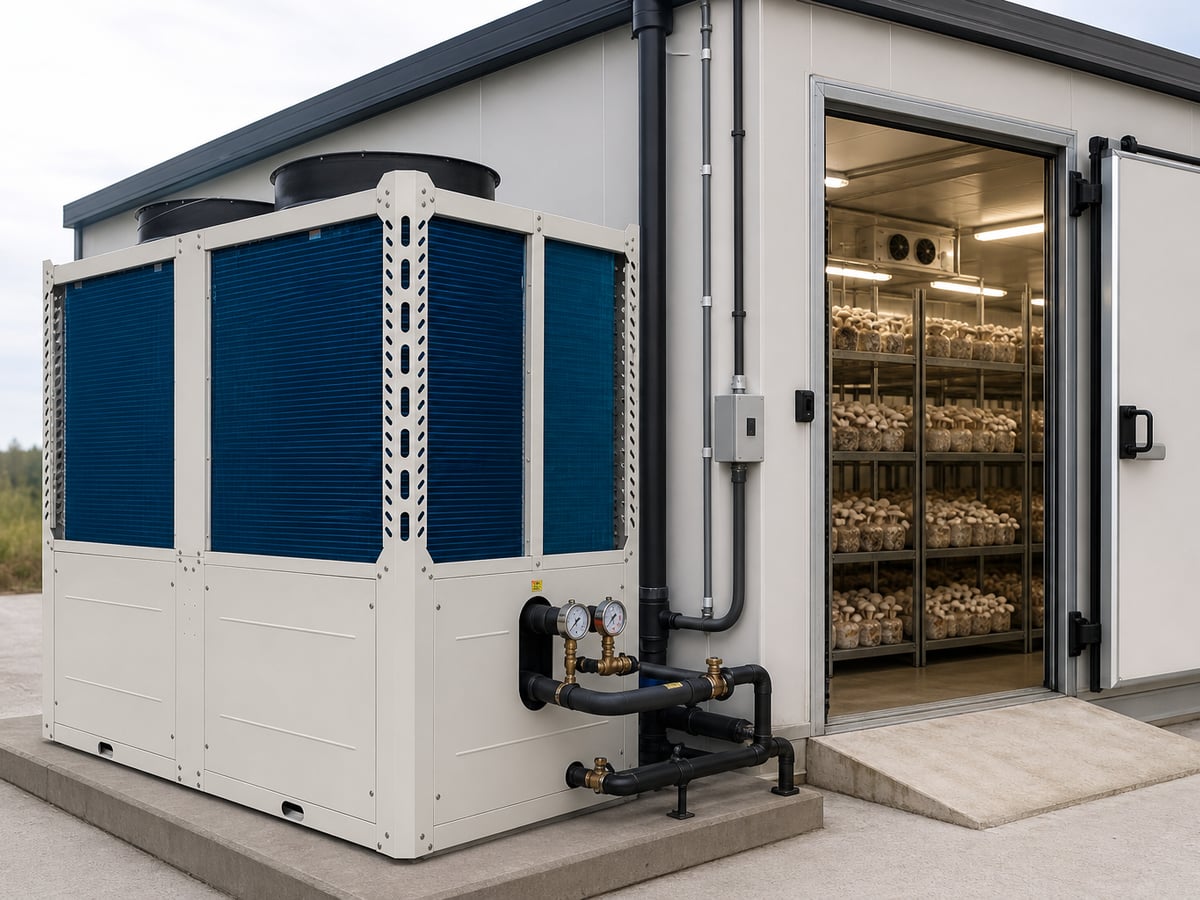
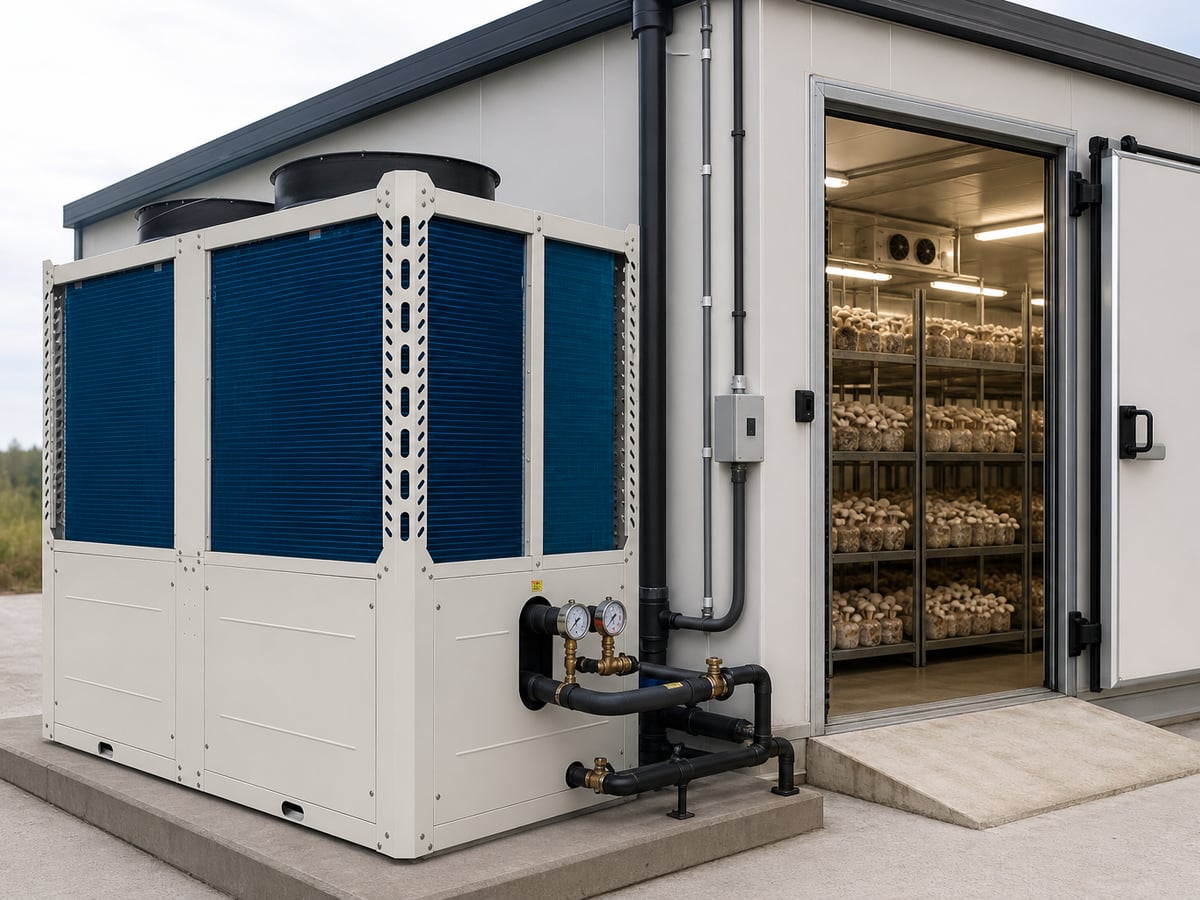
An air source heat pump transfers heat between outdoor air and a water-based or air-based distribution system. In heating mode, it extracts low-grade energy from ambient air and delivers useful heat for space heating, domestic hot water, process water, drying, or controlled agricultural environments. In cooling mode, a reversible unit removes heat from the building or process and rejects it outdoors.
For the Global Market, commercial air source heat pumps are increasingly specified as an alternative to boilers, electric resistance heaters, packaged chillers, and fossil-fuel heating systems. Their value depends on correct sizing, climate conditions, required leaving-water temperature, electrical infrastructure, hydraulic design, and maintenance capability. A well-selected inverter heat pump can provide efficient year-round heating and cooling for farms, warehouses, hotels, greenhouses, mushroom facilities, food-processing rooms, schools, offices, and modular buildings.
The practical buying rule is simple: evaluate capacity at the real design ambient temperature and required supply-water temperature, not only at a favorable laboratory rating point. Confirm seasonal efficiency, defrost behavior, electrical demand, acoustic limits, water flow requirements, controls compatibility, refrigerant compliance, spare-parts availability, and the supplier’s commissioning support before issuing a purchase order.
What an Air Source Heat Pump Is and Where It Is Used
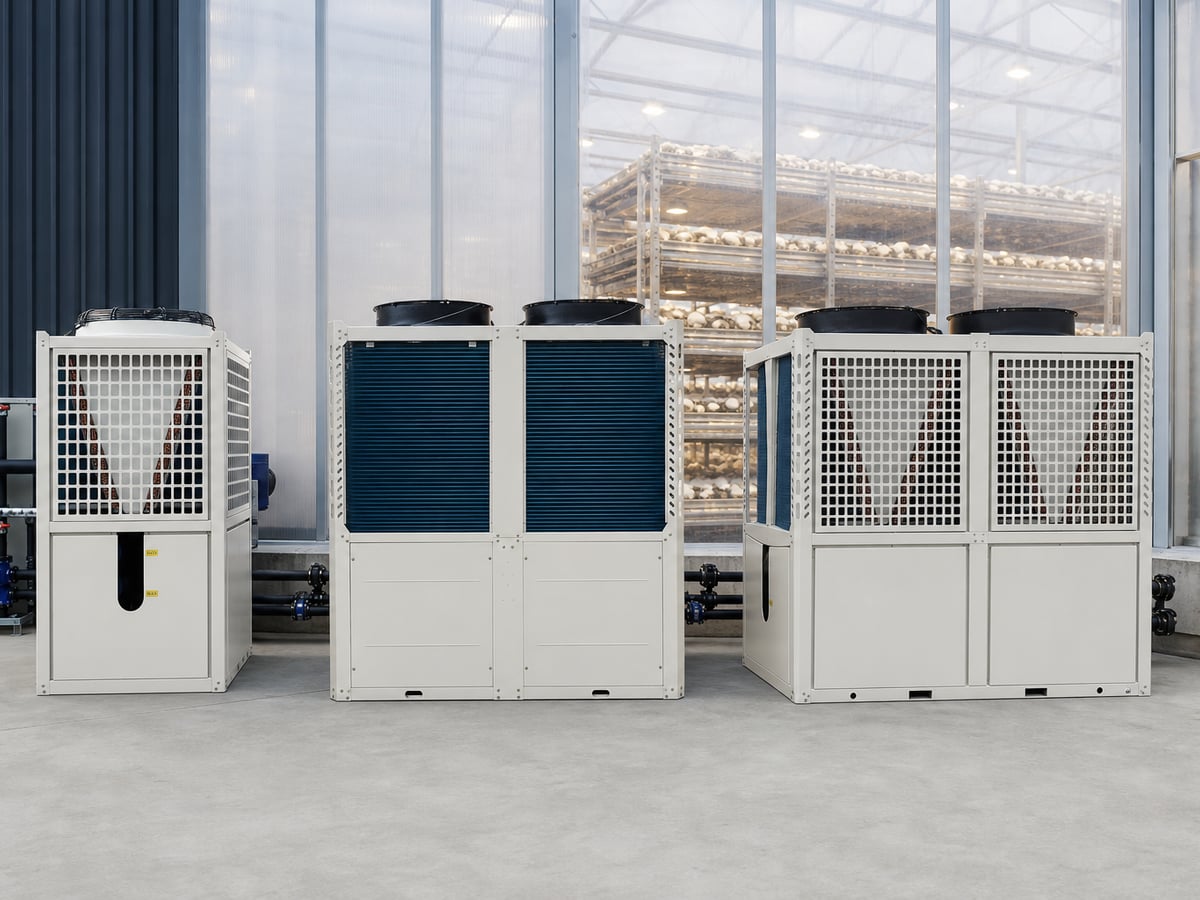
An air source heat pump uses a refrigeration circuit consisting of a compressor, heat exchangers, expansion devices, refrigerant, fans, controls, and safety devices. The outdoor coil absorbs or rejects heat depending on operating mode. The plate or shell-and-tube water heat exchanger transfers that energy to chilled water, heating water, buffer tanks, fan coils, underfloor circuits, air handling units, unit heaters, or process equipment.
Commercial users choose air-to-water heat pumps where there is a stable hydronic network or where a water loop can be created economically. They are especially suitable for medium-temperature applications, often operating efficiently with supply water between 35°C and 55°C. High-temperature models can serve retrofit projects requiring hotter water, but capacity and coefficient of performance generally decline as supply-water temperature rises.
Typical demand centers include Rotterdam and Hamburg logistics warehouses, Dubai hospitality projects, São Paulo food facilities, Nairobi horticultural farms, Melbourne schools, Johannesburg light-industrial buildings, and agricultural projects near Qingdao, Shanghai, and Shenzhen export routes. Selection always needs adjustment for local climate, utility tariffs, building codes, refrigerant rules, corrosion exposure, and service access.
For product categories and project-oriented options, review the commercial air source heat pump range. The correct unit should be selected as part of an entire thermal system rather than as an isolated nameplate item.
Commercial Unit Types and Their Applications
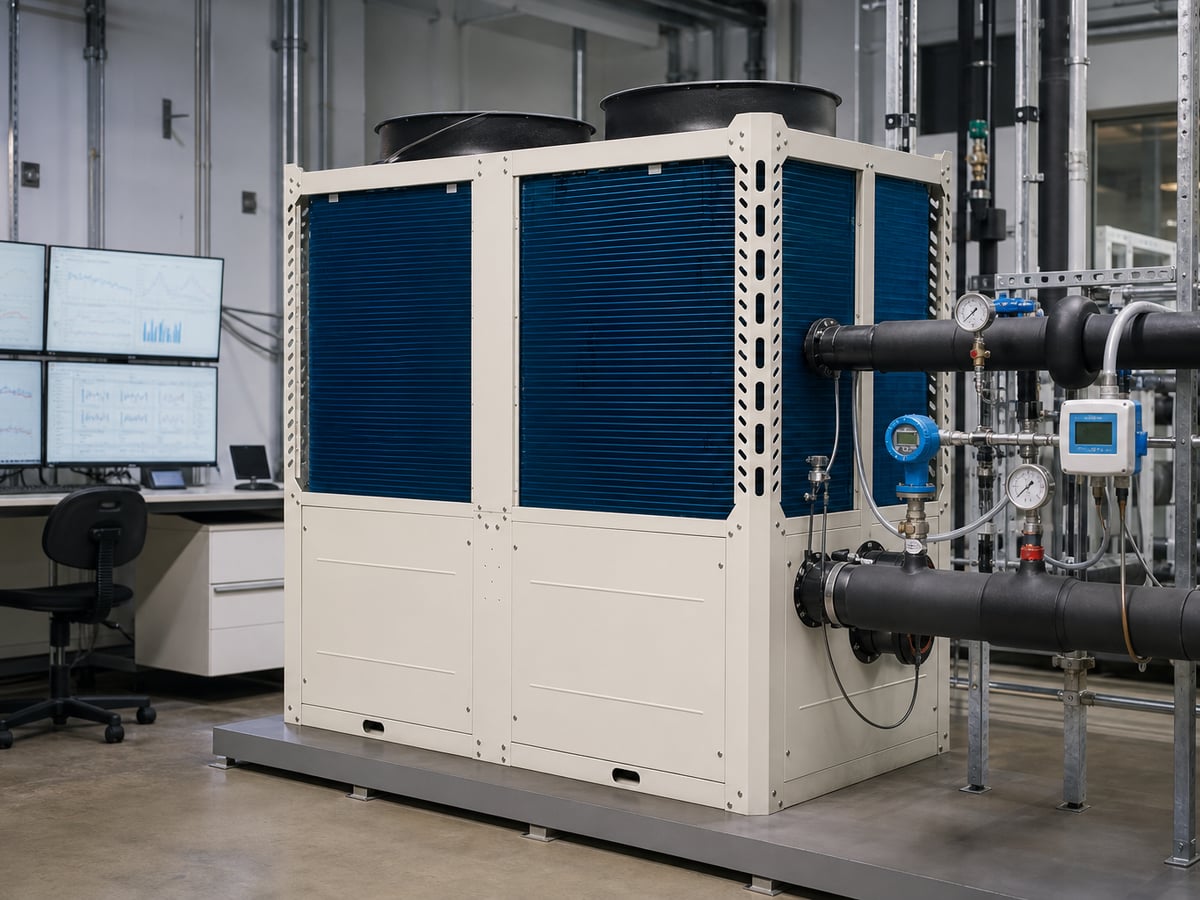
Commercial heat pumps are available in several configurations. Monobloc units contain the refrigerant circuit within the outdoor cabinet and circulate water or glycol to the building. Split systems separate the outdoor refrigeration section from the indoor hydraulic module. Packaged air-to-water chillers and heat pumps commonly serve larger buildings, while modular systems combine multiple units for redundancy and staged capacity.
| Unit Type | Typical Capacity Range | Best-Fit Application | Key Advantage | Key Consideration |
|---|---|---|---|---|
| Monobloc air-to-water | 10–100 kW | Small commercial buildings and farms | Factory-sealed refrigerant circuit | Freeze protection for outdoor water piping |
| Split heat pump | 8–80 kW | Retrofits and compact plant rooms | Indoor hydraulic components | Requires qualified refrigerant installation |
| Modular heat-pump chiller | 60–1,000+ kW | Hotels, hospitals, campuses | Scalable capacity and redundancy | Header and control sequencing are essential |
| Low-ambient heating unit | 15–300 kW | Cold-climate heating | Enhanced winter operation | Defrost design affects usable capacity |
| High-temperature heat pump | 20–250 kW | Boiler replacement and process water | Higher leaving-water temperature | Lower COP at high temperature lift |
| Heat recovery unit | 30–500 kW | Simultaneous cooling and hot water | Recovers rejected heat | Needs coincident heating and cooling loads |
The table shows why “commercial heat pump” is not one universal product. A mushroom growing site may prioritize stable cooling, dehumidification support, and precise room conditions. A hotel may require domestic hot water priority. A warehouse may require low-temperature radiant heating. A food facility may benefit most from heat recovery during refrigeration operation.
For agricultural climate-control projects, the heat pump should be coordinated with ventilation, fresh-air treatment, humidity control, insulation, crop heat load, and operational schedules. It is particularly important in cultivation containers, grow rooms, hatcheries, livestock facilities, and drying rooms where indoor temperature swings can affect product quality.
Heating and Cooling Capacity, COP, SCOP, and Ambient Ratings
Heating capacity is the thermal output delivered to water or air in heating mode, usually expressed in kilowatts. Cooling capacity is the heat removed in cooling mode. Both figures change substantially with ambient air temperature, entering-water temperature, leaving-water temperature, airflow, water flow, humidity, defrosting, and compressor speed.
COP, or coefficient of performance, is heating output divided by electrical input at a stated rating condition. A COP of 4.0 means the unit provides four kilowatts of heat for each kilowatt of electrical power consumed under that test condition. SCOP is a seasonal heating performance indicator that better reflects operation across varying outdoor temperatures and part-load conditions. Cooling performance may be described by EER, SEER, IPLV, or regional seasonal metrics.
Buyers should request a performance map rather than accepting a single COP figure. For example, a unit rated at outdoor air 7°C and water 35°C may not provide the same capacity or efficiency at -10°C and water 50°C. This distinction is critical in Northern Europe, Canada, Central Asia, northern China, and high-altitude locations.
| Evaluation Item | Why It Matters | Recommended RFQ Requirement | Common Risk if Omitted |
|---|---|---|---|
| Heating capacity at design ambient | Confirms winter coverage | State minimum outdoor dry-bulb temperature | Insufficient heating in cold weather |
| Capacity at required water temperature | Reflects actual hydraulic demand | State return and supply temperatures | Output overstated at low test temperature |
| COP at multiple conditions | Shows efficiency curve | Request published operating points | Unrealistic energy-cost estimate |
| SCOP or seasonal metric | Supports annual comparison | Specify the applicable climate zone | Poor comparison between suppliers |
| Minimum operating ambient | Determines cold-weather suitability | State design low temperature and humidity | Lockout or reduced winter operation |
| Maximum cooling ambient | Protects hot-climate performance | State summer design temperature | Cooling shortfall during peak heat |
Capacity should include an allowance for defrost energy in cold, humid climates. The outdoor coil can frost when its surface temperature is below freezing while moist air passes over it. During defrost, the unit temporarily shifts energy to melt frost, reducing net heat delivered to the load. A buffer tank, staged units, auxiliary heat, or load-management strategy may be necessary for stable supply temperatures.
Commercial projects should also distinguish between nominal capacity, available capacity, and system capacity. Nominal capacity is usually a catalog rating. Available capacity is what the machine produces at actual conditions. System capacity includes losses or gains from pipework, pumps, tanks, heat exchangers, ventilation loads, and controls.
This chart is illustrative, not a substitute for manufacturer-certified data. Real results vary with refrigerant, compressor technology, water temperature, airflow, frost conditions, and controls. Use it to understand why a winter design-point selection is more reliable than choosing equipment only by nominal capacity.
Supply-Water Temperature, Flow Rate, and Hydraulic Design
Supply-water temperature is one of the strongest drivers of heat-pump efficiency. Lower-temperature emitters such as underfloor heating, oversized fan coils, low-temperature radiators, and air handling coils normally allow higher COP than high-temperature legacy radiator circuits. Cooling systems also require careful control of chilled-water temperatures, condensation risk, and coil selection.
Water flow must meet the unit’s specified range. Low flow can trigger protection alarms, unstable compressor operation, freezing risk in the water heat exchanger, and poor heat transfer. Excessive flow increases pump electricity use, noise, erosion risk, and pressure drop. Variable-speed pumps can reduce pumping energy when paired with correctly configured differential-pressure or temperature controls.
| Hydraulic Component | Primary Function | Selection Guidance | Typical Commercial Benefit |
|---|---|---|---|
| Buffer tank | Adds water volume and thermal stability | Size for minimum run time and defrost support | Reduces short cycling |
| Primary pump | Maintains unit water flow | Match required flow and pressure drop | Protects heat exchanger operation |
| Secondary pump | Serves building distribution loop | Use when hydraulic separation is needed | Independent load-side control |
| Low-loss header | Decouples primary and secondary circuits | Use for variable flow or multiple circuits | Stable system hydraulics |
| Expansion vessel | Accommodates water expansion | Calculate for total volume and temperature range | Controls system pressure |
| Air separator and dirt filter | Removes air and debris | Install at appropriate high-temperature locations | Improves reliability and heat transfer |
A basic heat-pump flow estimate can be obtained from thermal load and design temperature difference. At typical water conditions, flow rate is proportional to load divided by the water temperature difference. A smaller temperature difference requires higher flow. However, the final value must follow the manufacturer’s minimum and maximum flow limits, hydraulic schematic, and pump head calculation.
Use glycol where outdoor pipework is exposed to freezing conditions, but recognize that glycol changes viscosity, heat transfer, pressure drop, pump requirements, and capacity. Water quality must also be managed. Poor-quality water, excessive hardness, debris, oxygen ingress, or corrosion products can damage plate heat exchangers and pumps.
For a modular plant room, design isolation valves, check valves, strainers, temperature sensors, pressure gauges, drain points, air vents, flexible connections, vibration supports, and access space for service. If domestic hot water is required, use a correctly sized tank, coil, plate heat exchanger, recirculation arrangement, mixing valve, and anti-scald strategy according to local codes.
Compressors, Refrigerants, Heat Exchangers, Fans, and Pumps
The compressor is the central energy-conversion component. Scroll compressors are common in commercial air source heat pumps because of their compact design, reliability, and part-load compatibility. Larger systems may use multiple scroll compressors, rotary compressors, or alternative arrangements depending on capacity and refrigerant strategy.
Refrigerant selection affects efficiency, charge volume, pressure, safety classification, service procedures, environmental compliance, and future availability. Current global markets include systems using R32, R410A in existing equipment, R290 in appropriately designed low-charge systems, and other lower-global-warming-potential alternatives. Buyers should verify the refrigerant requirements of the installation country and confirm whether local technicians can legally and safely service the equipment.
Hydrophilic-coated finned coils, corrosion-resistant cabinets, high-efficiency EC fans, electronically controlled expansion valves, brazed plate heat exchangers, and variable-speed pumps can improve performance and durability. Coastal projects near ports such as Singapore, Mombasa, Durban, Los Angeles, Antwerp, and Busan require special attention to salt-laden air and corrosion protection.
| Component | Commercial Selection Point | Reliability Consideration | Maintenance Focus |
|---|---|---|---|
| Inverter scroll compressor | Wide modulation range | Correct electrical protection and oil return | Monitor alarms and operating envelope |
| Outdoor fin coil | Large surface area and protective coating | Frosting and corrosion exposure | Clean fins and remove obstructions |
| Plate heat exchanger | High water-side heat transfer | Water quality and freeze protection | Clean strainers and inspect flow |
| EC axial fan | Efficient variable airflow | Balance, bearings, and weather exposure | Inspect blades and electrical connections |
| Variable-speed pump | Adjusts to hydraulic demand | Correct head and control setting | Check pressure, noise, and seals |
| Electronic expansion valve | Precise refrigerant control | Sensor accuracy and controller logic | Verify diagnostics during service |
Component quality should be reviewed alongside system-level engineering. A recognized compressor alone does not guarantee a dependable heat pump. The refrigerant circuit design, brazing quality, sensor calibration, airflow path, software logic, electrical panel layout, insulation, pressure testing, and final functional test all affect field performance.
Inverter Control, EVI, Defrosting, and Safety Protection
Inverter-driven compressors adjust speed according to load. This reduces repeated starts, improves part-load efficiency, stabilizes leaving-water temperature, and allows better matching to variable occupancy or agricultural production schedules. In modular systems, unit sequencing should rotate run hours and stage capacity progressively to avoid unnecessary simultaneous operation.
Enhanced Vapor Injection, commonly called EVI, is used in some low-ambient heat pumps to improve heating capacity and discharge-temperature control in colder weather. EVI can make a unit more suitable for low-temperature conditions, but buyers should still ask for performance data at the exact design point rather than assuming that EVI guarantees all-weather operation.
Defrost strategy is a major commercial differentiator. Demand defrost based on coil temperature, ambient conditions, runtime, pressure signals, and control algorithms is generally preferable to a fixed timer because it can reduce unnecessary defrost cycles. The system must manage temporary heat loss, condensate drainage, fan operation, and protection of outdoor walking areas from ice.
Essential protection functions include high- and low-pressure protection, discharge-temperature protection, compressor overload protection, phase-loss or phase-sequence protection where applicable, water-flow protection, antifreeze protection, sensor fault detection, communication fault alarms, fan-motor protection, and electrical leakage protection. A remote monitoring interface can provide alarms, trends, operating hours, energy data, and service reminders.
By 2026, procurement is likely to place greater emphasis on lower-GWP refrigerants, smart-grid compatibility, demand-response controls, hybrid heat-pump and thermal-storage systems, remote diagnostics, and documented lifecycle carbon performance. Sustainability-focused buyers should compare seasonal energy use, refrigerant strategy, material durability, repairability, and the ability to integrate solar photovoltaic power or recovered process heat.
Installation, Commissioning, Maintenance, and Warranty
Installation quality determines whether the published performance can be achieved. Locate the outdoor unit where airflow is unobstructed and discharge air cannot recirculate into the coil. Maintain manufacturer clearances, avoid narrow enclosed courtyards, consider prevailing winds, protect against snow accumulation where relevant, and provide a solid level foundation with vibration isolation.
Noise should be assessed at property boundaries, bedrooms, offices, livestock areas, and nearby public spaces. Sound power data and sound pressure at stated distances are not interchangeable. Acoustic screens can help when correctly designed, but they must not restrict airflow or create recirculation.
Commissioning should include electrical verification, phase checks, insulation-resistance checks, water-system flushing, air removal, pressure confirmation, flow measurement, sensor verification, valve-position checks, control logic testing, heating and cooling operation, defrost testing where feasible, alarm testing, and handover training. Record initial operating data for future troubleshooting.
Routine maintenance usually includes coil cleaning, debris removal, filter and strainer cleaning, leak inspection, pump checks, electrical terminal inspection, controller alarm review, water-pressure verification, glycol concentration testing where used, drain inspection, and operational testing at seasonal changeover.
Lanhu supports project reliability through manufacturing capabilities that include in-house sheet-metal fabrication, CNC bending, insulation panel production, electrical assembly, equipment integration, testing, and quality inspection. Its production facility in Dezhou, Shandong covers more than 30,000 square meters, enabling coordinated production control from cabinet fabrication to final system evaluation.
Service capabilities should be agreed before delivery. Lanhu can provide factory-direct supply, OEM and ODM customization, engineering assistance, international logistics coordination, spare-parts support, installation guidance, and after-sales communication for distributors, contractors, agricultural projects, and commercial users. Review the available warranty and after-sales support information before defining project responsibilities.
Commercial Heat-Pump Specification and RFQ Checklist
A complete request for quotation allows suppliers to provide comparable technical proposals. The RFQ should define site conditions, heating and cooling loads, operating schedule, hydraulic requirements, electrical supply, required controls, certification needs, delivery terms, and service expectations. Avoid requesting only “a 100 kW heat pump,” because the required rating conditions may change the appropriate unit selection substantially.
| RFQ Item | Information to Provide | Why Suppliers Need It |
|---|---|---|
| Project location | City, country, altitude, coastal or inland condition | Determines climate and corrosion assumptions |
| Heating design point | Outdoor temperature and required supply/return water | Sizes winter heating capacity |
| Cooling design point | Outdoor temperature and chilled-water conditions | Sizes summer cooling capacity |
| Load profile | Peak load, annual hours, day/night variation | Supports inverter and modular selection |
| Electrical data | Voltage, frequency, phase, available demand | Ensures power compatibility |
| Hydraulic arrangement | Flow rate, pipe distance, buffer tank, glycol use | Confirms pump and system design |
| Control requirement | BMS protocol, remote monitoring, zoning | Defines communications and automation scope |
| Commercial terms | Quantity, delivery port, warranty, spare parts | Provides accurate logistics and support proposal |
For international projects, identify the destination port and inland delivery plan early. Containerized equipment can be routed through major trade hubs such as Rotterdam, Jebel Ali, Santos, Durban, Mombasa, Sydney, Vancouver, and Los Angeles, but local unloading equipment, customs documentation, crane access, and storage conditions must be planned.
Technological capabilities are also important when selecting a supplier. Lanhu has more than 12 years of thermodynamic research and development experience and more than 45 registered patents. For specialized mushroom cultivation containers, hydroponic plant containers, and agricultural HVAC projects, system integration can be coordinated around temperature, humidity, ventilation, insulation, and operational control requirements rather than treating the heat pump as a stand-alone device.
Buyers seeking branded, private-label, or project-specific equipment can explore OEM and ODM customization services. A useful technical discussion should include casing dimensions, electrical configuration, controller language, branding, coil coating, hydraulic components, transport packaging, documentation, and replacement-parts strategy.
For local suppliers, prioritize companies that can demonstrate refrigeration competence, hydronic commissioning experience, electrical licensing, access to approved parts, and familiarity with the regional code environment. In markets where local heat-pump service networks are developing, it is prudent to purchase recommended spare sensors, control boards, pumps, contactors, fan motors, and other critical components with the initial order.
Frequently Asked Questions About Commercial Air Source Heat Pumps
Can an air source heat pump replace a commercial boiler?
Often yes, particularly when the building can operate with lower supply-water temperatures or when a hybrid arrangement is acceptable. Boiler replacement should be based on heat-loss calculations, actual radiator or coil capacity, design ambient temperature, domestic hot-water demand, and electrical infrastructure.
What COP should a commercial buyer expect?
COP depends on operating conditions. Higher values occur in mild weather with low leaving-water temperatures. At colder outdoor temperatures or higher water temperatures, COP falls. Request performance data at several specified conditions and compare seasonal energy use rather than relying on one catalog figure.
Is a buffer tank always required?
Not always, but it is common and often beneficial. A buffer tank can provide minimum water volume, reduce compressor cycling, support defrosting, stabilize temperature, and simplify hydraulic separation. The required volume depends on unit controls, load variation, zoning, and the system design.
How long does commercial installation take?
Lead time and installation duration depend on equipment size, pipework, electrical works, foundations, controls integration, and site access. Small packaged installations may be completed quickly, while modular plants and process applications require coordinated engineering, testing, and commissioning.
What maintenance is needed?
Commercial maintenance includes inspection of coils, fans, pumps, water filters, electrical components, alarms, refrigerant circuit condition, drains, safety devices, and controls. Maintenance frequency should reflect dust, salt exposure, operating hours, water quality, and local regulations.
Can a heat pump support mushroom growing or hydroponic farming?
Yes. It can provide heating, cooling, and water-loop control within an integrated environmental system. However, crop facilities also need properly designed insulation, ventilation, humidity management, air circulation, sensors, and automation to achieve stable growing conditions.
How can I request a technical recommendation?
Prepare the project location, ambient temperature range, building or process load, required water temperatures, electrical details, intended application, and quantity. You can submit project information through the commercial equipment contact page. For additional common questions, visit the heat-pump and climate-control FAQ page.
Share this article

About the Author: Shandong Lanhu Air Conditioning Equipment
Lanhu is a professional climate control equipment manufacturer specializing in smart agricultural systems, commercial HVAC solutions, and customized temperature control technologies. With extensive engineering experience, Lanhu provides reliable solutions for plant factories, controlled environment agriculture, and industrial applications.
Previous Post
Need a Custom Climate Control Solution?
From smart agricultural systems to commercial HVAC solutions, Lanhu provides reliable temperature and humidity control solutions tailored to your project needs.
Contact Us