Global Market Guide to Evaluating Mushroom Grow Containers
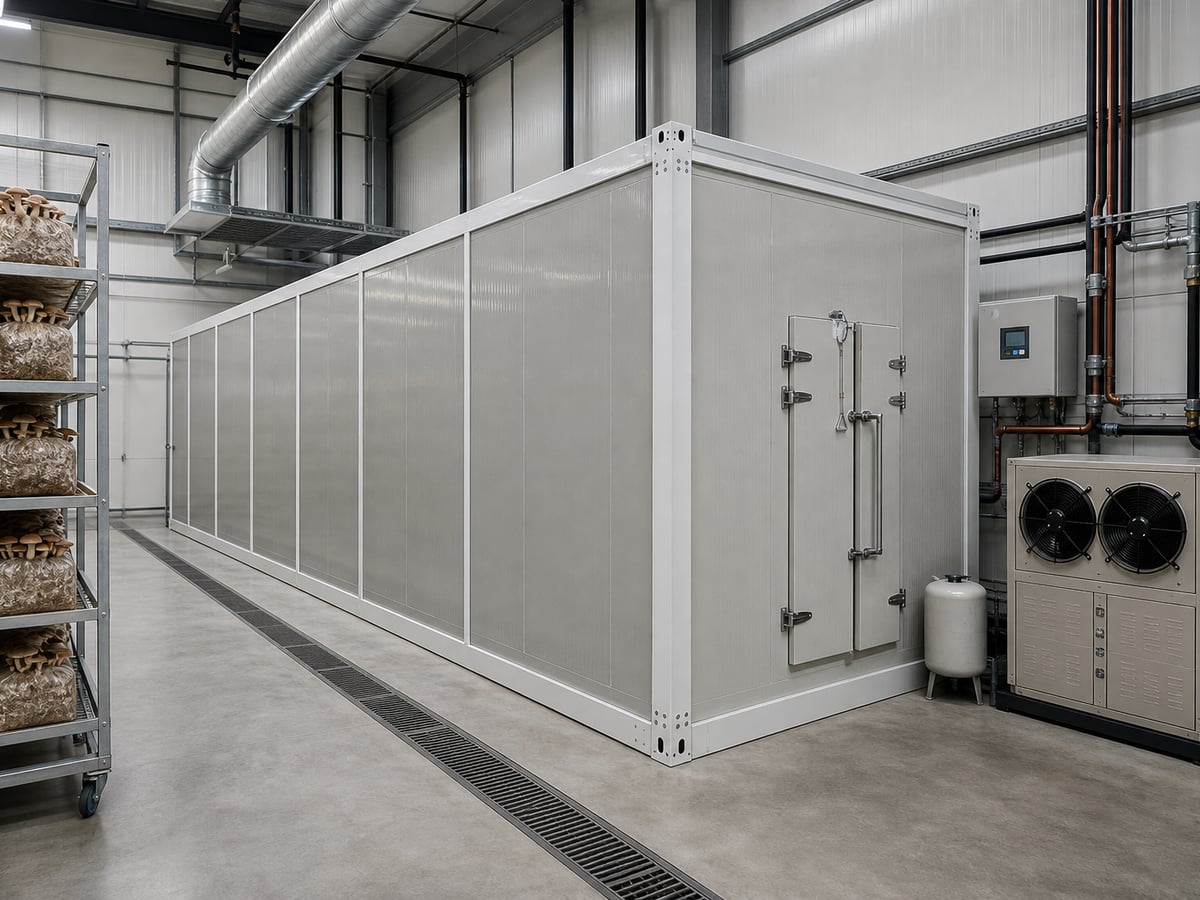
Fast Buying Guidance

Buying a mushroom growing container is not only a question of container size or advertised price. For commercial farms, distributors, contractors, and agricultural investors in the Global Market, the correct decision depends on crop requirements, climate performance, insulation quality, electrical design, utility availability, local installation conditions, and supplier service capacity.
Before selecting mushroom cultivation containers for sale, confirm five essentials: the species you plan to grow, the production capacity you need, the climate conditions the system can maintain, the equipment included in the price, and the support available after delivery. A container designed for oyster mushrooms may not provide the same humidity, fresh-air exchange, shelving layout, or cooling performance required for shiitake, lion’s mane, button mushrooms, or specialty medicinal fungi.
The strongest purchasing approach is to compare suppliers using drawings, technical data, inspection evidence, operating conditions, and warranty documents rather than relying only on photos or a low quotation. A reliable supplier should be able to explain how the container works in hot climates, cold climates, coastal regions, inland logistics hubs, and locations where power supply or water pressure may vary.
For projects in regions such as Rotterdam, Dubai, Singapore, Johannesburg, Los Angeles, São Paulo, Hamburg, Mombasa, Melbourne, and Jebel Ali, transport routes, local electrical standards, port handling, and site preparation can materially affect total project cost. A factory-direct quotation may look competitive, but the final investment must also include freight, customs clearance, unloading, electrical connection, water supply, drainage, commissioning, and operator training.
Use this guide as a pre-purchase checklist for modular mushroom farms, containerized mushroom rooms, climate-controlled growing cabins, and turnkey mushroom cultivation systems.
| Pre-Purchase Check | Why It Matters | What to Request | Common Risk if Ignored |
|---|---|---|---|
| Crop species | Each mushroom variety needs different temperature, humidity, CO₂, and airflow control. | Species-specific climate range and production recommendations. | Slow colonization, weak fruiting, contamination, or low yield. |
| Container dimensions | Internal area determines rack capacity, worker access, and harvest workflow. | External and internal dimensions, clear aisle width, rack drawings. | Overcrowded racks and inefficient labor movement. |
| Climate equipment | Cooling, heating, humidification, ventilation, and dehumidification affect crop stability. | Equipment list, rated capacity, and operating conditions. | System cannot maintain conditions during peak weather. |
| Electrical system | Voltage and frequency must match the site grid. | Electrical load list, wiring diagram, breaker specifications. | Unexpected converter costs or unsafe installation. |
| Insulated panels | Panel construction affects energy use, condensation, hygiene, and lifespan. | Panel thickness, core material, density, and surface finish. | High power bills, heat leakage, and moisture damage. |
| Warranty and service | Commercial farms need rapid support when climate equipment fails. | Written warranty scope, spare-parts list, response process. | Long downtime during production cycles. |
The table above shows why a container purchase should be evaluated as a production system rather than as a modified shipping box. The growing room, HVAC equipment, controls, racks, plumbing, electrical cabinet, drainage, and support package must work together.
Select the Right Unit for Your Mushroom Species

The first decision is to match the unit to your mushroom crop and production model. Different species tolerate different environmental variations. Oyster mushroom farms may prioritize frequent fresh-air exchange and strong humidity control during fruiting. Shiitake production may require longer cycle planning and stable cooling. Button mushroom projects usually involve compost handling and different room designs, while lion’s mane and medicinal mushroom farms may demand precise climate management and stricter hygiene procedures.
Ask the supplier whether the quoted unit is intended for incubation, fruiting, drying, storage, spawn handling, or a combined production process. Some modular containers are designed primarily for fruiting blocks that have already been colonized in another room. Others include climate settings suitable for incubation, but may not have the shelving density, cooling reserve, or airflow arrangement needed for high-output fruiting.
For a first commercial project, it is often practical to separate processes. A farm can use one insulated unit for incubation and another for fruiting, reducing the risk that spores, humidity, worker movement, and air exchange interfere with different production stages. This approach can also improve scheduling for farms supplying restaurants, grocery distributors, hotels, food processors, and local wholesale markets.
Production capacity should be calculated using substrate block quantity, expected biological efficiency, crop cycle length, shelf configuration, loading density, and daily harvest target. Do not accept a capacity claim without understanding whether it refers to the number of substrate bags, the number of shelves, peak harvest weight, monthly production, or estimated annual output.
A supplier should provide a practical layout for the selected mushroom species. You can review examples of a complete smart mushroom cultivation container to understand how racks, air handling, humidification, lighting, drainage, and access doors can be integrated into one compact cultivation space.
| Mushroom Type | Primary Climate Priority | Recommended Unit Focus | Typical Operational Concern |
|---|---|---|---|
| Oyster mushroom | Fresh-air exchange, humidity, temperature stability | High-airflow fruiting container with adjustable humidification | High CO₂ can create long stems and poor cap development. |
| Shiitake | Cooling consistency and controlled humidity | Well-insulated container with reliable low-temperature operation | Temperature swings may reduce fruiting quality. |
| Lion’s mane | Stable humidity and clean filtered airflow | Fine-control climate system with sanitation-friendly interior | Dry air can affect shape and density. |
| King oyster | Cool fruiting environment and CO₂ control | Precision climate container with evenly distributed air supply | Uneven airflow can cause inconsistent stem formation. |
| Reishi | Species-specific temperature and longer production planning | Customizable modular cultivation room | Cycle timing can be longer than common edible mushrooms. |
| Button mushroom | Compost process integration and temperature staging | Purpose-designed room or larger modular farm system | Not every standard container is suitable for compost-based production. |
This comparison is not a substitute for an agronomist’s growing protocol, but it helps buyers identify whether the supplier understands crop-specific design. When requesting a proposal, state the species, substrate format, planned daily loading volume, target harvest, local climate, and whether you need incubation, fruiting, or both.
Verify What the Quoted Price Actually Covers

Advertised prices for mushroom containers can vary widely because suppliers may quote different scopes. One price may include only the insulated container shell and racks. Another may include cooling, heating, humidification, ventilation, automation, electrical cabinet, lights, water system, remote monitoring, packaging, and export documentation. A third quotation may appear lower because it excludes shipping, installation guidance, spare parts, or commissioning.
Request a line-by-line commercial offer. It should identify the container body, panels, doors, racks, climate equipment, controller, sensors, lights, drainage, electrical components, water piping, pumps, packaging, and shipping terms. For international buyers, Incoterms such as EXW, FOB, CFR, CIF, DAP, or DDP should be clearly stated. A FOB Qingdao price is different from a delivered-to-site price in Nairobi, Lima, Warsaw, Houston, or Auckland.
Do not assume that “automatic control” means the same thing across suppliers. Some systems allow basic temperature and humidity setpoints. More advanced systems can coordinate cooling, heating, humidification, exhaust fans, fresh-air dampers, alarms, history records, remote access, and multiple environmental zones. Review the actual functions of the control panel and determine whether the operating interface is suitable for your team.
For farms operating across several containers, ask whether the supplier can provide centralized monitoring, user permissions, remote alarm notifications, multilingual displays, data logging, and compatibility with farm management systems. These functions are increasingly important for distributed operations near urban farming zones and major food logistics networks.
| Quotation Item | Often Included | Often Excluded | Buyer Action |
|---|---|---|---|
| Container body | Steel frame, insulated panels, standard door | Foundation, unloading, local assembly work | Confirm panel thickness and structural treatment. |
| Climate system | Cooling, heating, fans, basic controls | Backup equipment, extra filtration, seasonal upgrades | Request brand, model, capacity, and operating limits. |
| Racking system | Standard shelves or hanging arrangement | Custom trays, trolleys, specialized harvest equipment | Check loading capacity and corrosion resistance. |
| Electrical package | Control cabinet and internal wiring | Site cable, generator, transformer, electrician labor | Match voltage, frequency, and local compliance needs. |
| Water and drainage | Internal humidification piping and drains | External water tank, filtration, site drainage connection | Clarify water pressure and wastewater requirements. |
| Freight and insurance | Export packing and port delivery under some terms | Import duty, destination charges, trucking, crane service | Request a route-specific logistics estimate. |
| Training and support | Manuals and remote installation guidance | On-site commissioning or local technician travel | Define the response process before ordering. |
The table explains why a lower unit price can produce a higher project cost. Compare offers using the same technical scope and delivery term. If one supplier includes a climate controller, electrical assembly, export packaging, and spare sensors while another does not, the quotations should not be compared as equivalent products.
Examine Floor Plans and Utility Schematics
Before making a deposit, request drawings that show the interior layout and utility arrangement. A professional layout should identify container length and width, insulation thickness, door locations, rack positions, aisle widths, drainage points, air supply outlets, exhaust points, lighting, humidifier placement, electrical cabinet location, and maintenance clearances.
Workers need enough room to load substrate blocks, inspect crops, harvest mushrooms, clean surfaces, and remove waste. A design that maximizes shelf count but leaves no safe access can reduce actual productivity. Consider whether workers can move harvest crates without damaging fruiting bodies or blocking airflow.
Utility drawings should cover electrical load, voltage, cable routing, circuit protection, water inlet size, drainage outlet, condensate drainage, and ventilation openings. If you are placing containers in a hot region such as the Gulf, North Africa, inland Australia, southern Spain, Mexico, or India, ask whether the electrical load calculation includes peak summer cooling demand. In colder markets, ask how defrosting, heating capacity, and freeze protection are handled.
The site itself must be prepared. A level concrete pad, reliable electrical supply, clean water source, drainage path, access road, and unloading area are usually necessary. In locations near ports such as Antwerp, Busan, Durban, Santos, Vancouver, or Long Beach, local trucking restrictions and container handling equipment should be checked before shipment. A modular growing unit may arrive by standard container transport, but final placement can still require a crane, forklift, tilt-bed truck, or reach stacker.
Layout review is also an opportunity to plan hygiene zoning. Consider a clean entry area, hand-washing point, footbath, storage for tools, waste removal route, and separate access for incoming substrate if your farm size justifies it. Preventing contamination is usually less expensive than correcting an outbreak after production starts.
| Drawing Element | What to Review | Why It Affects Production | Question for Supplier |
|---|---|---|---|
| Rack spacing | Vertical and horizontal clearance between shelves | Controls block density, airflow, and harvest access. | How many blocks fit without restricting circulation? |
| Main aisle | Clear width from entrance to rear of container | Influences worker safety and daily handling time. | Can workers carry crates through the full length? |
| Air outlets | Location and direction of supply air | Prevents hot, dry, or stagnant crop zones. | How is airflow balanced across all shelves? |
| Drainage | Floor slope, drains, condensate discharge route | Reduces standing water and sanitation risks. | What floor cleaning method is recommended? |
| Electrical cabinet | Access space, protection level, cable entry | Supports safe inspection and quick troubleshooting. | Can components be serviced without moving racks? | Door system | Opening direction, seal quality, threshold design | Limits climate loss and contamination entry. | What is the door insulation and sealing specification? |
The drawing review process is especially valuable for OEM and project-specific orders. Buyers who need non-standard shelving, larger access doors, different voltage, external condenser placement, forklift access, or multiple linked modules should confirm those details in approved drawings before fabrication begins.
Ask for Climate Capacity Under Real Operating Conditions
Climate performance is the core of any mushroom cultivation container. Suppliers should state the temperature range, humidity range, ventilation capacity, dehumidification capability where applicable, and the outdoor design conditions used to calculate performance. A unit that maintains 18°C indoors when ambient temperature is 28°C may not achieve the same result when outside temperatures reach 42°C under direct sun.
Ask for performance conditions in writing. These may include outdoor dry-bulb temperature, relative humidity, solar exposure, door-opening frequency, crop heat load, lighting load, substrate load, and fresh-air demand. Mushroom substrate generates biological heat, especially during incubation, and this internal heat must be considered. A system sized only for an empty container can struggle after full loading.
Humidity requirements should also be discussed carefully. High humidity does not automatically mean good growing conditions. Excess moisture may cause condensation on walls, racks, ceilings, or fruiting blocks. Condensation can contribute to sanitation issues and uneven crop quality. Proper design balances humidification, air movement, cooling coil operation, fresh-air intake, and drainage.
A dedicated mushroom climate controller can help operators set and monitor temperature, humidity, CO₂, ventilation cycles, alarms, and equipment operation. When reviewing controller functions, check the number of sensors, sensor placement, calibration options, alarm history, remote access, and manual override capability.
For projects in tropical areas, coastal regions, or locations with high ambient humidity, request a discussion of latent load and corrosion protection. For dry climates, ask how the humidification system performs under low ambient humidity and high ventilation rates. For mountainous or cold regions, discuss heating efficiency, insulation value, compressor operating limits, and frost management.
| Climate Parameter | Information to Request | Site Factor to Provide | Reason for Verification |
|---|---|---|---|
| Temperature control | Setpoint range and cooling/heating capacity | Highest and lowest local seasonal temperatures | Confirms year-round crop suitability. |
| Humidity control | Humidity range, humidifier type, water demand | Local ambient humidity and water quality | Helps prevent dry crops or excess condensation. |
| Fresh-air exchange | Fan capacity and air exchange strategy | Crop species and loading density | Controls CO₂ and supports fruiting form. |
| CO₂ monitoring | Sensor range, accuracy, and control logic | Target crop protocol and occupancy pattern | Reduces poor stem and cap development. |
| Cooling reserve | Performance at stated outdoor temperature | Solar exposure, site shading, hottest-day conditions | Protects against summer production losses. | Heating and defrost | Heat source, defrost method, cold-weather limit | Winter design temperature and frost conditions | Maintains operation in cold climates. |
This table is important because climate equipment ratings must be interpreted in context. A clear technical response from the supplier usually indicates that the system has been engineered for actual agricultural use rather than assembled from unrelated components.
Check Construction Quality and Maintenance Accessibility
Container durability depends on material selection, fabrication quality, corrosion protection, insulation construction, sealing, drainage, and accessibility for service. The interior should be easy to wash and resistant to high humidity. Smooth, hygienic surfaces and properly sealed panel joints help reduce dirt accumulation and moisture infiltration.
Inspect the panel structure. Ask whether the insulated wall system uses polyurethane, polyisocyanurate, rock wool, or another material. Confirm thickness, density, fire considerations, surface coating, and joint design. In hot and humid markets, thicker insulation can reduce cooling load and improve temperature stability. In colder climates, insulation reduces heat loss and helps manage condensation.
Service access matters as much as appearance. Fans, filters, pumps, humidifiers, sensors, electrical components, cooling coils, drains, and valves should be inspectable without dismantling major parts of the room. If a sensor fails during a harvest cycle, operators need a practical way to replace it quickly. Ask where spare parts are stored and whether common components can be sourced locally.
Pay particular attention to floor design. Floors should support the expected rack and crop load, withstand cleaning, provide appropriate drainage, and avoid water pooling. Door seals should close tightly, while hinges and handles should be durable enough for frequent use. Stainless steel or corrosion-resistant fittings may be advisable in high-humidity environments and coastal locations.
Ask for photos or videos of completed units under test, not only renderings. You may also request factory inspection records, electrical verification procedures, and commissioning photos. Buyers can review relevant project examples through the supplier’s mushroom cultivation case studies to compare applications and modular configurations.
Confirm Shipping, Installation, and Warranty Responsibilities
International delivery should be planned well before production is complete. Confirm shipment dimensions, gross weight, lifting points, packing method, container loading plan, export port, lead time, and documents included. Depending on the destination, common shipping routes may move through Qingdao, Shanghai, Ningbo, Shenzhen, Singapore, Dubai, Rotterdam, Hamburg, Durban, or Los Angeles.
For the Global Market, buyers should also confirm import rules for electrical equipment, refrigerants, insulated panels, and agricultural machinery. Some destinations may require specific labeling, electrical conformity, local plug standards, customs codes, certificates, or inspection procedures. Your freight forwarder or customs broker should review the equipment specification before shipment.
Installation terms should state whether the supplier provides remote guidance, video support, installation manuals, electrical diagrams, online commissioning, or on-site technical service. For a single preassembled container, site work may be limited to placement and utility connection. For larger modular farms, installation can involve connecting multiple rooms, external HVAC units, drainage, water lines, ventilation ducts, and centralized controls.
A warranty should identify covered components, duration, exclusions, labor responsibility, shipping responsibility for replacement parts, and troubleshooting process. Understand the difference between a warranty on the container structure, insulated panels, refrigeration components, electrical components, sensors, and controller. Ask how the supplier handles a failure in a remote location where a local technician is not immediately available.
Keep a recommended spare-parts kit on site. For commercial operations, this may include sensors, fuses, relays, contactors, humidifier accessories, fan belts where applicable, valves, filters, control modules, and basic electrical items. The correct inventory depends on the unit design and local supply chain reliability.
Build a Clear Agenda for Your Supplier Discussion
A structured supplier call can reveal whether the manufacturer understands your farm, site, crop, and commercial goals. Send your project information before the call: crop species, target production volume, city or region, seasonal climate, available voltage, water source, drainage arrangement, site photos, delivery address, and preferred timeline.
During the call, ask the supplier to explain how the unit will perform during the hottest and coldest local periods. Ask how the airflow is distributed, how CO₂ is managed, how much water the humidification system uses, what happens during a power interruption, and how maintenance is performed. If you are buying several units, ask how the system can expand over time.
It is useful to invite your electrician, grower, project manager, logistics provider, or local installer to the discussion. Their questions often identify practical issues that a purchasing manager may not see, including cable sizing, access road limits, drainage slope, crane requirements, voltage compatibility, import paperwork, and crop workflow.
Suppliers should also be willing to discuss realistic limitations. No container can solve poor substrate quality, inadequate sanitation, unreliable power, poor water quality, or insufficient trained labor. A professional supplier will explain which site conditions are necessary for the equipment to achieve expected performance.
| Supplier Call Question | What a Useful Answer Should Include | Why It Is Important |
|---|---|---|
| Which mushroom species is this design optimized for? | Specific crop stages, climate ranges, and shelf recommendations. | Shows whether the design fits your production plan. |
| What is included in the quotation? | Detailed equipment list, accessories, exclusions, and Incoterm. | Prevents unexpected project costs. |
| How does the unit perform in our local climate? | Outdoor design conditions and capacity explanation. | Validates cooling and heating suitability. |
| What electrical supply is required? | Voltage, frequency, rated load, breaker requirements, wiring notes. | Supports safe site preparation. |
| How are temperature, humidity, and CO₂ controlled? | Sensor layout, automation logic, manual mode, alarm functions. | Clarifies daily operating control. |
| What maintenance is needed? | Cleaning schedule, filter service, inspection points, replacement parts. | Reduces unplanned downtime. |
| What warranty and after-sales support are available? | Component coverage, time period, response channels, spare-part policy. | Protects operational continuity. |
The questions in this table can be used for quotations, factory visits, online meetings, and technical comparison sheets. Written answers are preferable because they create a clearer basis for procurement approval and final contract review.
Our Manufacturing and Support Capabilities
Shandong Lanhu Air Conditioning Equipment Co., Ltd. supports mushroom cultivation projects through integrated climate-control engineering, modular manufacturing, and international service coordination. The company is based in Dezhou, Shandong, China, an industrial manufacturing area with access to major domestic logistics links and export routes through ports such as Qingdao and Tianjin.
From a technological perspective, Lanhu develops agricultural climate-control systems that combine cooling, heating, humidification, ventilation, sensing, automation, and environmental control logic. More than 12 years of thermodynamic research and development experience and over 45 registered patents support the design of smart mushroom cultivation containers, mushroom climate controllers, hydroponic plant containers, and air source heat pump solutions. This experience helps the engineering team assess crop requirements, climate load, air movement, humidity control, and utility conditions for customized projects.
From a manufacturing perspective, the company operates a modern facility exceeding 30,000 square meters. Integrated capabilities include product design, engineering development, sheet metal fabrication, CNC bending, insulated panel production, electrical assembly, system integration, equipment testing, and quality inspection. Functional inspection, electrical verification, performance testing, and operational evaluation are completed before shipment. ISO 9001, ISO 14001, ISO 45001, and ISO 12100 certifications support its quality, environmental, occupational safety, and machinery safety management approach.
From a service perspective, Lanhu offers factory-direct supply, OEM and ODM customization, engineering support, export logistics assistance, spare-parts planning, installation guidance, and after-sales communication for agricultural contractors, distributors, engineering companies, and commercial farming projects. Buyers planning a customized mushroom farm can use the project inquiry page to share climate conditions, crop type, utility details, required capacity, and destination information.
For Global Market customers, the practical value of an integrated manufacturer is that the container structure, insulation, HVAC system, controls, electrical assembly, and project documentation can be coordinated as one solution. This can simplify technical communication compared with sourcing separate components from unrelated vendors.
Looking toward 2026 and beyond, mushroom container projects are expected to place greater emphasis on remote operation, energy efficiency, water management, traceable production data, lower-carbon refrigeration solutions, and scalable urban food systems. Policy direction in many markets is encouraging local food resilience, controlled-environment agriculture, energy monitoring, food safety documentation, and reduced transport waste. Buyers should therefore consider not only today’s harvest capacity but also whether the system can support future sensor upgrades, remote alarms, energy optimization, and expanded production modules.
Frequently Asked Buyer Questions
Can a mushroom container operate in very hot climates?
Yes, if the cooling system, insulation, ventilation design, electrical supply, and solar exposure are properly considered. Request performance data based on your local peak temperature and humidity, not only standard laboratory conditions. Shading, roof protection, and adequate electrical capacity may also be necessary.
How long does it take to produce a mushroom cultivation container?
Lead time depends on container size, customization, component availability, factory schedule, testing requirements, and shipping arrangement. Standard units may require less time than custom multi-container projects with special electrical, rack, climate, or branding requirements. Confirm the production and shipment schedule in the contract.
Do I need a concrete foundation?
Most units require a level, stable base that supports the loaded weight and allows drainage. A concrete pad is commonly recommended, although final site preparation depends on the container design, soil conditions, local construction rules, and installation method.
What utilities are required for operation?
Typical requirements include electrical power, water supply, drainage, and internet access if remote monitoring is used. Exact voltage, frequency, water pressure, water quality, electrical load, and drainage specifications should be supplied before shipment.
Can one container grow more than one mushroom species?
It is possible when species have similar fruiting requirements, but it is usually better to separate crops with different temperature, humidity, CO₂, or sanitation needs. Separate units or zones can provide more consistent results and easier crop management.
What should be included in a spare-parts package?
A spare-parts package should be based on the installed equipment and local service availability. Common items include sensors, relays, fuses, contactors, filters, valves, humidifier parts, and controller accessories. Ask the supplier to recommend priority spares for your location.
Are mushroom containers suitable for small farms as well as commercial projects?
Yes. Smaller farms can use a single unit to create a controlled fruiting environment, while commercial operators can deploy multiple modules for staged production. The key is matching the unit size and operating cost to realistic sales volume, labor capacity, substrate supply, and market demand.
What 2026 trends should buyers consider before investing?
Important trends include remote environmental monitoring, AI-assisted climate optimization, energy-efficient heat pump integration, improved insulation, water-saving humidification, food traceability, low-global-warming-potential refrigerants, modular expansion, and compliance with evolving food safety and energy regulations. Selecting an upgrade-ready system can improve long-term flexibility.
Share this article

About the Author: Shandong Lanhu Air Conditioning Equipment
Lanhu is a professional climate control equipment manufacturer specializing in smart agricultural systems, commercial HVAC solutions, and customized temperature control technologies. With extensive engineering experience, Lanhu provides reliable solutions for plant factories, controlled environment agriculture, and industrial applications.
Need a Custom Climate Control Solution?
From smart agricultural systems to commercial HVAC solutions, Lanhu provides reliable temperature and humidity control solutions tailored to your project needs.
Contact Us