Global Market Mushroom Farm Design Climate Guide
Quick Answer

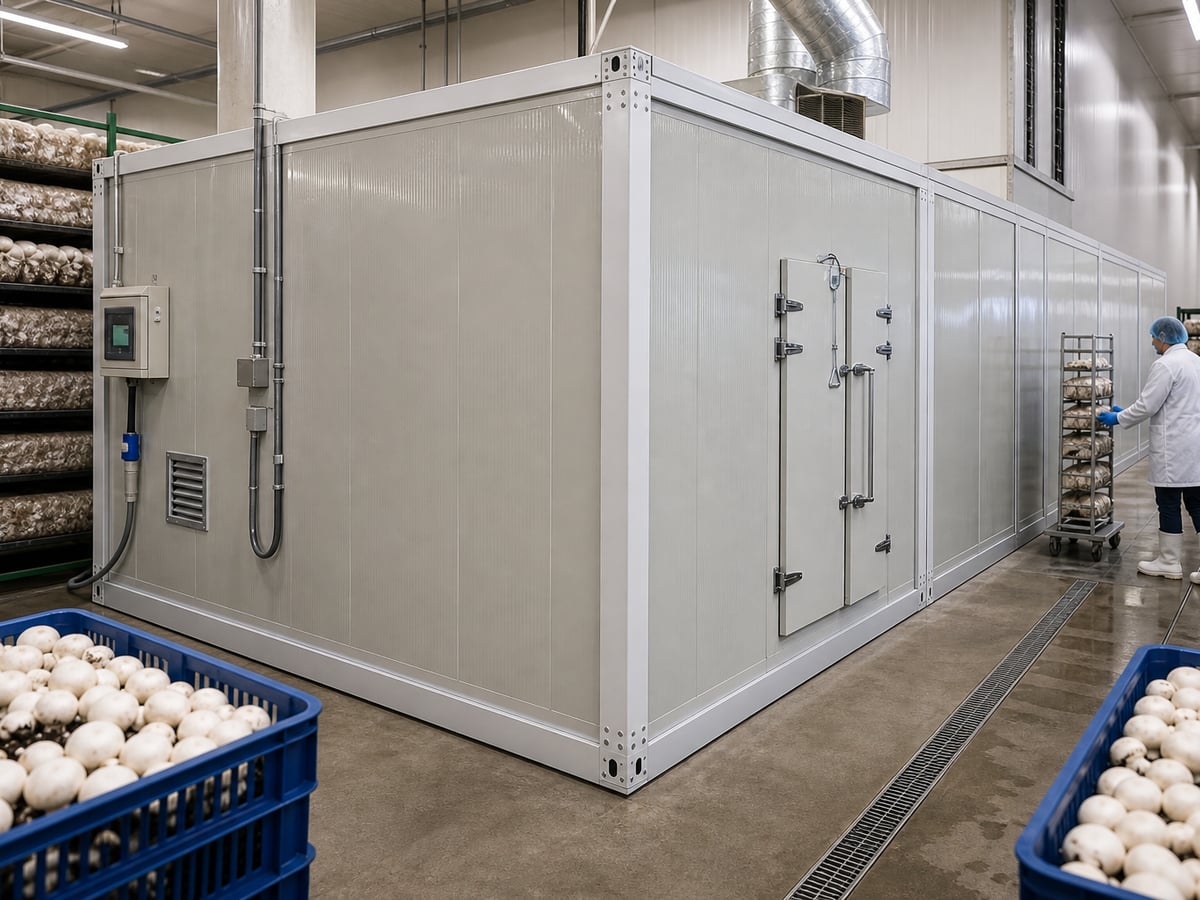
Mushroom farm design should begin with a defined production target, mushroom species, substrate system, harvest rhythm, local climate data, and operating budget. A successful commercial farm is not simply a group of insulated rooms: it is an integrated cultivation environment where clean material flow, climate stability, moisture control, energy efficiency, sanitation, and labor movement work together.
For the Global Market, the most reliable approach is to separate receiving, incubation, fruiting, packing, cleaning, and waste handling into controlled zones. Design fruiting rooms around crop-specific temperature, humidity, carbon dioxide, airflow, and fresh-air requirements. Select washable insulation panels, sloped floors, protected drains, adequate electrical capacity, treated water, automated controls, and backup power before construction begins.
For small and medium growers, a modular smart mushroom cultivation container can reduce construction time and provide a standardized production unit. For larger farms, purpose-built insulated growing rooms with centralized or distributed climate systems can support phased expansion, better labor planning, and lower cost per kilogram when properly engineered.
The essential rule is simple: calculate loads from the crop and the building, then size the equipment with realistic safety margins. Oversized equipment can cause short cycling and unstable humidity, while undersized equipment can create poor pinning, long crop cycles, disease pressure, and inconsistent yield.
Mushroom Farm Design Inputs and Production Targets
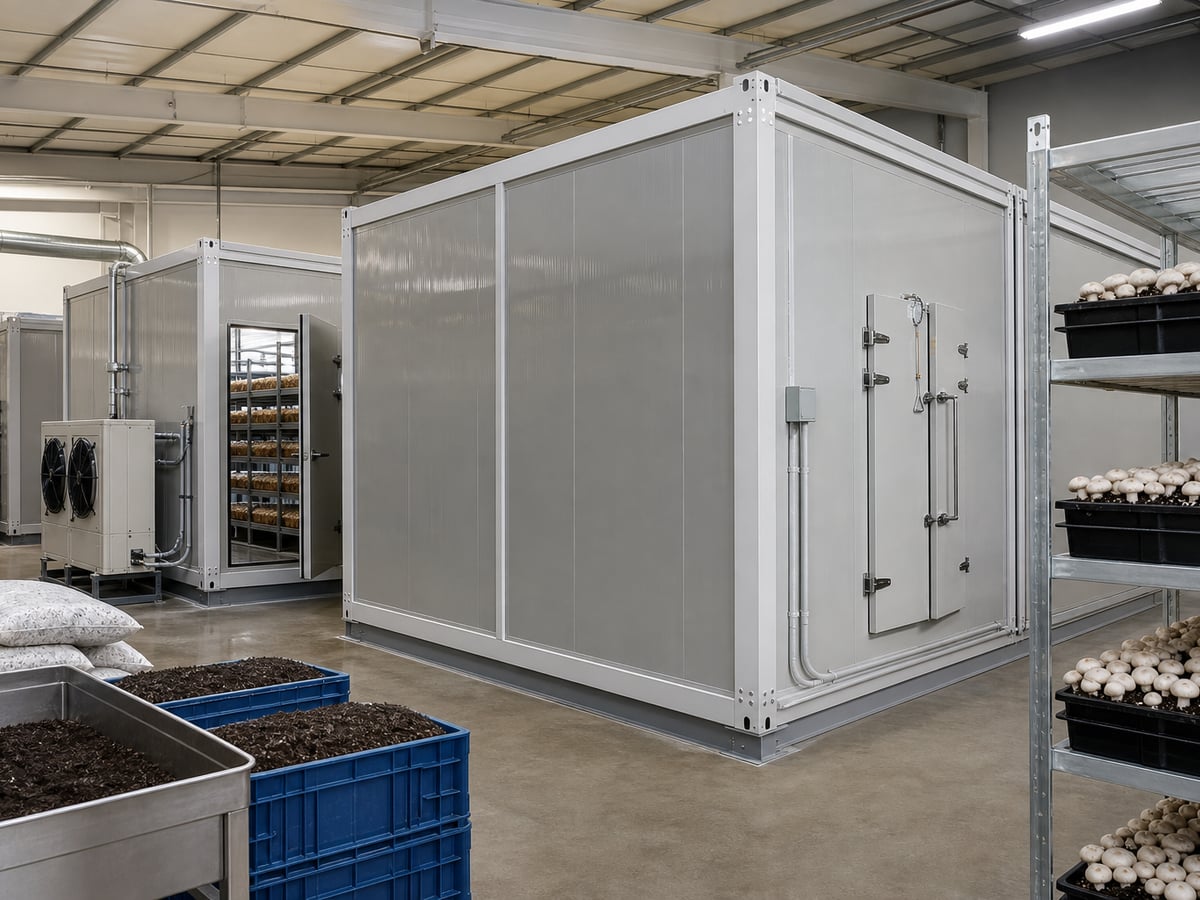
Every cultivation project should start with a design brief. This document translates a business objective into room numbers, shelf area, utility loads, equipment selection, and operating procedures. A farm producing oyster mushrooms for local wholesale markets has different requirements from a shiitake farm supplying restaurants, a button mushroom tunnel system, or a high-value medicinal mushroom facility.
Set production targets in sellable kilograms per week rather than only annual output. Weekly targets make it easier to calculate room turnover, substrate loading, harvest labor, cold storage capacity, packaging needs, and delivery schedules. A grower serving Dubai, Rotterdam, Los Angeles, Singapore, or São Paulo may also need to consider freight schedules, retailer specifications, traceability, and local import rules for equipment and spare parts.
| Design input | Why it matters | Typical planning question |
|---|---|---|
| Mushroom species | Determines the climate recipe, cropping cycle, and shelving method. | Will the farm grow oyster, shiitake, lion’s mane, enoki, or button mushrooms? |
| Weekly sales target | Defines substrate volume, harvest area, labor, packaging, and cold storage. | How many kilograms must be shipped each week? |
| Substrate format | Affects handling equipment, room loading, and contamination controls. | Will production use bags, blocks, bottles, trays, or bulk compost? |
| Climate zone | Influences cooling, heating, dehumidification, insulation, and backup capacity. | What are the hottest, coldest, and most humid outdoor design conditions? |
| Market channel | Changes pack-house flow, storage time, quality standards, and product grading. | Will mushrooms be sold fresh, dried, processed, wholesale, or direct-to-consumer? |
| Expansion strategy | Prevents utility and circulation bottlenecks in later phases. | Can future rooms connect to the same power, water, and drainage backbone? |
The table above should be reviewed before any building drawings are finalized. It helps investors avoid a frequent mistake: selecting a room size first and only later attempting to fit production targets into it. The crop plan should shape the building, not the other way around.
Production calculations that support investment decisions
Start with the expected biological efficiency or yield per kilogram of substrate, then apply a conservative commercial allowance for variation, contamination, and grading losses. Divide the planned weekly mushroom output by average yield per block or bag to estimate weekly loading. Multiply this loading by the fruiting duration to estimate the number of blocks simultaneously occupying fruiting rooms.
For example, if a farm needs 2,000 kg of fresh oyster mushrooms per week, the design team should estimate the number of substrate blocks required per week, their average weight, the fruiting period, flush pattern, harvest window, and expected reject rate. This calculation determines rack area, aisle length, loading doors, humidification capacity, drainage volume, and labor demand more accurately than a generic “room per ton” rule.
Seasonality should also be included. Fresh mushroom demand may rise during holidays, restaurant seasons, or regional festivals. Farms serving major trade hubs such as Hamburg, Jebel Ali, Shenzhen, Antwerp, and Melbourne should plan buffer capacity for logistics delays, peak orders, and local temperature extremes during transport.
Process Flow, Zoning, and Biosecurity Separation
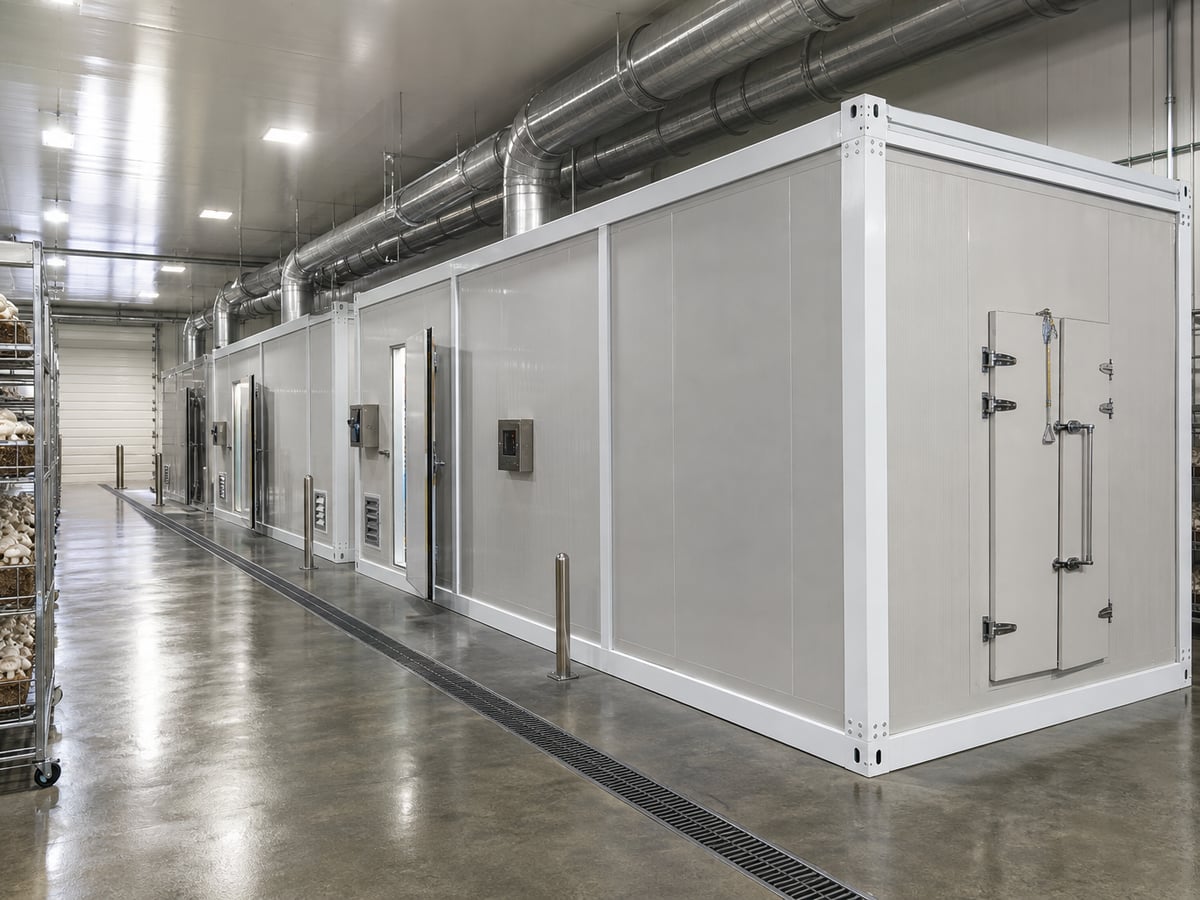
A mushroom farm should move people, materials, and air from cleaner activities toward less clean activities whenever possible. The objective is to reduce cross-contamination between incoming substrate, incubation material, fruiting rooms, harvesting activities, packaging areas, and waste. A clear process flow also reduces walking time and makes daily sanitation easier to supervise.
For farms purchasing fully colonized blocks, the main flow may be receiving, quarantine, incubation equalization if needed, fruiting, harvesting, pre-cooling, packing, dispatch, cleaning, and waste removal. Farms producing their own substrate need additional zones for raw-material receiving, mixing, sterilization or pasteurization, inoculation, incubation, and laboratory work. These operations must be more carefully separated because inoculation is highly sensitive to contamination.
| Zone | Primary function | Biosecurity requirement |
|---|---|---|
| Receiving area | Accepts substrate, packaging, tools, and maintenance supplies. | Inspect incoming materials and keep pallets outside clean growing areas. |
| Clean entry and changing room | Controls staff access to cultivation zones. | Provide handwashing, footwear change, protective clothing, and visitor records. |
| Incubation zone | Holds colonizing substrate under stable conditions. | Separate from fruiting rooms and control unnecessary traffic. |
| Fruiting zone | Supports pinning, growth, harvesting, and crop monitoring. | Use room-specific tools, washable surfaces, and controlled air exchange. |
| Harvest and packing zone | Sorts, weighs, packs, labels, and pre-cools mushrooms. | Maintain food-grade hygiene and keep product away from waste flow. |
| Waste and wash-down zone | Handles spent substrate, damaged product, and cleaning wastewater. | Locate downstream and prevent return movement into clean areas. |
This zoning model is particularly important when the site is near humid coastal regions, industrial estates, livestock operations, or dusty agricultural areas. Outdoor air may carry spores, insects, pollutants, and microorganisms. Filter selection, intake placement, positive-pressure strategies for clean zones, and door discipline should therefore be part of the engineering plan.
People, product, and waste routes
Workers should enter through a controlled personnel route rather than through loading doors. Clean uniforms, footwear sanitation, handwashing stations, and room-entry records create a practical management system without slowing daily operations excessively. Visitors, contractors, and maintenance personnel should receive clear access instructions.
Harvested mushrooms should move directly toward weighing, packing, and cold storage. Spent blocks should leave through a separate route whenever possible. If the same corridor must serve both functions, schedule waste removal after harvest and sanitize the route before fresh product movement resumes. Dedicated carts for clean product and spent substrate are a low-cost but valuable control measure.
Air movement should not carry unfiltered air from waste handling or packing areas into fruiting rooms. Room pressure, exhaust placement, and duct routing matter. In multi-room farms, each room should have enough control independence to avoid one crop cycle disturbing another.
Applications and industry sectors
Commercial mushroom climate engineering supports fresh produce farms, urban agriculture projects, food distributors, hospitality suppliers, supermarket programs, agricultural cooperatives, research centers, medicinal mushroom processors, and containerized farming operators. Modular units are especially useful for remote mining camps, islands, resort kitchens, arid regions, educational farms, and markets where dependable fresh produce is difficult to source.
Dimensions, Racking, Aisles, and Material Handling
Room dimensions should support crop access, airflow distribution, cleaning, and safe material handling. The highest theoretical number of shelves is not always the most profitable arrangement. Excessively narrow aisles reduce harvest speed, block air circulation, make sanitation difficult, and increase the risk of damaging substrate blocks or racks.
Rack selection depends on crop format. Bag-grown oyster mushrooms often use multi-tier shelving with horizontal or vertical block placement. Bottle systems need specialized conveyors and automated handling. Tray systems and bulk substrate require different floor loads, equipment clearances, and harvesting positions. Stainless steel is durable but costly; hot-dip galvanized steel, aluminum, or coated steel may be appropriate where corrosion protection and cleaning chemistry have been evaluated.
| Layout element | Recommended design principle | Operational benefit |
|---|---|---|
| Room width | Match width to rack rows, central aisle, and supply-air distribution. | Improves access and avoids dead-air zones. |
| Clear aisle width | Allow safe passage for workers, carts, and cleaning equipment. | Supports faster harvest and lower injury risk. |
| Rack height | Limit top shelf height to practical harvesting and cleaning reach. | Maintains labor productivity and crop visibility. |
| Rack spacing | Leave sufficient gaps for airflow around blocks and shelves. | Reduces localized carbon dioxide accumulation and uneven growth. |
| Door opening | Size doors for carts, pallet jacks, and equipment replacement. | Prevents costly alterations during expansion or repairs. |
| Floor loading | Calculate for wet racks, substrate, workers, carts, and water. | Protects structural safety and reduces cracking. |
The table provides planning principles rather than universal dimensions because each species, substrate system, local safety code, and handling method differs. A project using manual carts may require different aisle geometry from one using electric pallet trucks or automated guided equipment. The best layout balances usable growing area with travel efficiency and service access.
Material handling choices
For a compact farm, manual trolleys and washable food-grade carts are often sufficient. Medium-scale facilities may use pallet jacks, rail carts, mobile racks, lifting tables, or roller conveyors. Large operations can consider automated block loading, sensor-based inventory tracking, barcode systems, and programmable harvest scheduling.
Design material handling around the heaviest and widest item that must pass through the facility. Include turning radii at corridor intersections and provide protected wall corners near doors. Storage for empty trays, packaging cartons, cleaning tools, and replacement filters should be allocated early; otherwise, these items frequently migrate into corridors and reduce hygiene performance.
Cooling, Heating, Humidity, CO2, and Airflow Loads
Climate engineering is the core of mushroom farm design. Fruiting mushrooms release moisture, heat, and carbon dioxide as they grow. The building also gains or loses heat through walls, roof, floor, doors, lighting, people, equipment, and ventilation air. HVAC equipment must manage these interacting loads while maintaining the crop’s required climate recipe.
Cooling capacity should be calculated from envelope transmission, solar exposure, outdoor air exchange, product respiration, lighting, fan motors, workers, and process equipment. In tropical or desert locations, outdoor air treatment can become a major cooling and dehumidification load. In cold continental climates, heating and humidification demand may dominate during winter.
| Climate factor | Design consideration | Risk if poorly controlled |
|---|---|---|
| Temperature | Use species- and growth-stage-specific setpoints with calibrated sensors. | Slow growth, malformed mushrooms, low yield, or poor pin formation. |
| Relative humidity | Control moisture without soaking caps, walls, or floor surfaces. | Drying, cracking, bacterial blotch, condensation, and mold pressure. |
| Carbon dioxide | Measure CO2 at representative crop level and provide managed fresh air. | Long stems, small caps, distorted growth, and uneven flushes. |
| Airflow | Distribute low-velocity conditioned air uniformly through rack zones. | Dry edges, stagnant pockets, excessive evaporation, and uneven crops. |
| Fresh-air filtration | Select filtration appropriate to outdoor dust, insects, and local contamination risk. | Higher disease pressure and dirty coils or ducts. | Dehumidification | Account for latent crop load, outside air moisture, and wash-down recovery. | Condensation, slippery floors, corrosion, and unstable humidity. |
The climate factors above are interdependent. Increasing fresh-air volume can reduce CO2 but may introduce heat and moisture loads. More humidification can protect developing mushrooms but may create condensation if the room surfaces are too cold. Stronger airflow can improve mixing but may dry fruit bodies. Automated controls should therefore coordinate equipment rather than operate every device independently.
Air distribution and sensor placement
Supply air should reach all rack levels without blowing directly onto sensitive mushroom caps. Perforated ducts, fabric ducts, carefully designed plenums, sidewall distribution, or ceiling diffusers may be suitable depending on room geometry. Return-air locations should draw air evenly across the crop rather than short-circuiting supply air near the ceiling.
Install temperature and humidity sensors at representative crop height, not only near the air handler. CO2 sensors should be protected from direct mist and positioned where workers can service and calibrate them. Use multiple sensors in larger rooms to identify gradients. Trend logging is valuable because it reveals recurring issues during defrost cycles, loading events, door openings, and peak outdoor conditions.
Technology trends for 2026 and beyond
In 2026, mushroom farms are increasingly adopting variable-speed compressors, EC fans, heat recovery, inverter heat pumps, predictive controls, remote alarms, and crop-room data logging. AI-assisted models can identify climate drift, estimate harvest timing, and flag abnormal CO2 or humidity patterns before quality losses become visible.
Sustainability policy is also influencing project design. Energy codes, refrigerant regulations, water-use expectations, food traceability rules, and carbon reporting are becoming more relevant across the Global Market. Projects that use high-performance insulation, low-global-warming-potential refrigerants where locally permitted, condensate recovery, LED lighting, solar-ready electrical infrastructure, and spent-substrate reuse pathways can improve both compliance readiness and long-term operating resilience.
Insulation, Vapor Control, Drainage, and Cleanability
Mushroom rooms operate under humid conditions, often with temperature differences between indoor and outdoor environments. Insulation and vapor control are therefore essential structural components, not cosmetic finishes. Poorly sealed panels can allow moisture migration into walls or ceilings, leading to mold, corrosion, insulation degradation, energy loss, and difficult-to-detect hygiene problems.
Use insulated panels with suitable thermal performance, corrosion-resistant skins, sealed joints, hygienic trims, and durable fasteners. The correct insulation thickness depends on the local climate, room temperature, energy cost, and building orientation. Tropical regions require strong protection against solar gain and hot, humid infiltration. Cold climates require attention to vapor migration, thermal bridging, and freeze protection.
| Building feature | Preferred approach | Reason for inclusion |
|---|---|---|
| Insulated wall panels | Use sealed, washable panels with appropriate thermal resistance. | Stabilizes climate and reduces energy use. |
| Vapor barrier continuity | Seal penetrations, joints, corners, and service openings. | Prevents moisture intrusion into the building envelope. |
| Floor finish | Use durable, non-slip, water-resistant surfaces. | Improves worker safety and wash-down durability. |
| Floor slope | Slope toward accessible trapped drains without standing-water pockets. | Supports sanitation and protects against bacterial growth. |
| Wall-to-floor cove | Install rounded hygienic transitions where practical. | Eliminates difficult-to-clean sharp corners. | Service penetrations | Use sealed sleeves and removable access details. | Allows maintenance without damaging the vapor seal. |
These construction details are central to cleanability. A room may have excellent refrigeration equipment but still fail operationally if water pools beneath racks, wall joints open after repeated washing, or ceilings develop condensation. Drainage must be sized for cleaning water and condensate, not only for normal humidity operation.
Water management and sanitation
Install hose points where cleaning is required, but avoid uncontrolled spraying near electrical enclosures, sensor cables, or unprotected air-handling components. Use backflow prevention where required by local code. Consider water treatment if the local supply has high mineral content, hardness, iron, or microbial concerns, especially where ultrasonic humidifiers, high-pressure fogging, or evaporative equipment are used.
Separate potable water, process water, condensate, and wastewater routes according to applicable regulations. Spent substrate may have value as compost feedstock, soil conditioner, animal-feed ingredient where legally approved, or anaerobic digestion feedstock. The waste plan should be evaluated early because its collection point, vehicle access, and odor control influence farm layout.
Power, Water, Controls, and Backup Requirements
Utilities should be designed as a production-critical system. A short power outage can rapidly affect temperature, humidity, CO2 concentration, and airflow. The economic impact may be significant during pinning, peak fruiting, heat waves, or cold spells. Electrical, water, controls, communications, and emergency systems must be aligned with the farm’s crop value and local reliability conditions.
Calculate electrical demand for refrigeration or heat pumps, fans, humidifiers, pumps, lighting, packaging machines, cold storage, sterilization equipment, air compressors, office loads, and future expansion. Include starting current, diversity factors, local voltage standards, phase balance, cable routes, disconnects, surge protection, and safe wash-down-rated enclosures.
Controls and resilience planning
A modern mushroom farm benefits from centralized controls with room-level setpoints, sensor alarms, historical trends, user permissions, and remote monitoring. A smart mushroom climate controller can coordinate cooling, heating, humidification, fresh-air dampers, exhaust fans, circulation fans, and alarms according to programmed cultivation stages.
Backup design should prioritize the functions that protect crop survival: ventilation, circulation, cooling or heating where climate risk is high, controls, communications, emergency lighting, and critical pumps. A generator should be tested under load, and fuel autonomy should reflect local service response times. In areas with unstable grids, consider automatic transfer switching, surge protection, voltage monitoring, and battery backup for controllers and internet gateways.
Buying advice for equipment and project packages
Compare suppliers based on performance data, engineering scope, material specifications, service availability, control capability, warranty terms, spare-parts lead time, and willingness to support commissioning. Do not choose climate equipment solely by nominal cooling capacity. Ask how the supplier calculated latent load, outdoor-air load, crop respiration, room infiltration, and defrost requirements.
For international buyers, confirm container loading plans, electrical standards, packaging protection, import documentation, installation responsibilities, remote support method, and availability of regional technicians. Projects moving through ports such as Ningbo, Qingdao, Rotterdam, Mombasa, Santos, and Long Beach benefit from clearly documented shipping dimensions and spare-parts lists.
Businesses seeking branded or project-specific equipment can review OEM and ODM cultivation equipment services for customized layouts, control functions, panel finishes, branding, and technical configurations.
Commissioning Tests and Performance Acceptance
Commissioning converts installed equipment into a reliable production system. It should occur before the first commercial crop is loaded. The process verifies that every room can maintain required conditions, alarms operate correctly, drainage works, doors seal, sensors agree with reference instruments, and controls respond properly to changing load conditions.
| Acceptance test | Method | Expected result |
|---|---|---|
| Temperature stability test | Log room temperature through representative operating cycles. | Setpoint is maintained within agreed tolerance across crop zones. |
| Humidity uniformity test | Measure humidity at multiple rack levels and room locations. | No persistent dry or over-wet areas affect the crop. |
| CO2 response test | Simulate or observe CO2 rise and verify ventilation response. | Controller restores target range without excessive cycling. |
| Airflow verification | Check supply and return distribution with approved field methods. | Air reaches all intended rack zones without damaging drafts. |
| Drainage and wash-down test | Run water across floor areas and inspect all drains. | Water drains freely with no pooling or leakage. | Backup power test | Simulate utility loss and verify automatic transfer and alarms. | Critical loads restart safely within the agreed response time. |
The commissioning table should be included in the project handover file. Each test needs documented results, corrective actions, equipment settings, wiring diagrams, maintenance schedules, and operator training records. A farm should also conduct a trial crop because biological response is the final validation of climate performance.
Performance acceptance during the first crop
Track room temperature, relative humidity, CO2, fresh-air position, equipment runtime, energy consumption, irrigation or humidification cycles, contamination observations, pinning uniformity, harvest weight, and grade-out rate. Compare these records with the crop plan. If yield or morphology is inconsistent, investigate airflow, sensor placement, substrate quality, loading density, hygiene, and harvest timing before changing all climate setpoints at once.
Good commissioning is especially valuable for farms operating across different climates. A unit commissioned in northern Europe may need different defrost behavior from one operating in Southeast Asia, the Gulf region, southern Africa, or inland Australia. Local outdoor design conditions must be reflected in the final control logic.
Our Company
Shandong Lanhu Air Conditioning Equipment Co., Ltd. supports commercial cultivation projects across the Global Market with integrated agricultural climate-control and modular growing solutions. The company serves agricultural contractors, distributors, engineering firms, and commercial farm operators that require practical climate engineering, configurable equipment, and export-oriented project support.
Technological capabilities
Lanhu applies more than 12 years of thermodynamic research and development experience to mushroom climate management, air-source heat pump systems, containerized cultivation environments, and control integration. Its development work supports coordinated temperature, humidity, CO2, ventilation, and airflow control for different mushroom production methods. With more than 45 registered patents, the company focuses on solutions that combine crop requirements with practical energy and maintenance considerations.
Clients can explore project examples and operating configurations through the company’s mushroom cultivation case studies. These examples help buyers evaluate modular farm applications, climate-control concepts, and the suitability of containerized or room-based solutions for their own locations.
Manufacturing capabilities
Based in Dezhou, Shandong, China, Lanhu operates a modern manufacturing facility exceeding 30,000 square meters. Its integrated production process includes product design, engineering development, sheet metal fabrication, CNC bending, insulation-panel production, electrical assembly, system integration, equipment testing, and quality inspection. This vertical capability helps maintain coordination between enclosure design, refrigeration components, electrical systems, and control hardware.
Each system undergoes functional inspection, electrical verification, performance testing, and operational evaluation before shipment. The company’s management and product credentials include ISO 9001, ISO 14001, ISO 45001, ISO 12100, patent certificates, and enterprise credibility documentation.
Service capabilities
Lanhu provides factory-direct supply, customization support, engineering assistance, international logistics coordination, installation guidance, spare-parts support, and after-sales service. For buyers planning a new mushroom farm, support can include equipment configuration discussions, modular cultivation solutions, climate-control recommendations, and coordination for OEM or ODM requirements.
To discuss a project target, site climate, preferred mushroom species, room dimensions, or export destination, contact the team through the mushroom farm equipment inquiry page. Early technical communication is the best way to align farm capacity, energy strategy, utility requirements, and future expansion plans.
FAQ
What is the first step in designing a mushroom farm?
Define the mushroom species, weekly production target, substrate format, market channel, site climate, and available utilities. These inputs determine room count, rack area, HVAC capacity, workflow, and budget.
Should incubation and fruiting rooms be separated?
Yes. Separate rooms provide better environmental control, lower cross-contamination risk, and more flexible production scheduling. Incubation usually requires different temperature, air exchange, and lighting conditions from fruiting.
How important is CO2 control in a mushroom growing room?
CO2 control is critical. Excessive CO2 can cause elongated stems, reduced cap development, uneven morphology, and lower market quality. Sensors, fresh-air control, and balanced circulation should be designed together.
Can a mushroom farm operate in hot or cold climates?
Yes, provided the building envelope and climate system are engineered for local design conditions. Hot climates need effective cooling, dehumidification, and solar protection; cold climates need insulation, heating capacity, vapor control, and freeze protection.
Is a modular mushroom container suitable for commercial production?
It can be suitable for pilot farms, distributed production, remote locations, specialty mushrooms, phased expansion, and standardized crop rooms. Larger projects may combine multiple containers or use insulated buildings with similar climate-control principles.
What maintenance is essential for mushroom climate equipment?
Regularly inspect filters, coils, drains, humidification equipment, fan motors, sensors, electrical connections, seals, and control alarms. Cleanliness and calibration are essential because humidity and organic matter can accelerate corrosion and affect sensor accuracy.
How can a farm reduce energy consumption?
Use appropriate insulation, sealed doors, variable-speed fans, efficient heat pumps or refrigeration systems, heat recovery where practical, staged controls, preventive maintenance, and accurate sensor feedback. Avoid unnecessary fresh-air volume and uncontrolled infiltration.
What should be included in a supplier quotation?
A complete quotation should state equipment models, capacities, electrical requirements, control scope, panel specifications, exclusions, shipping dimensions, installation support, warranty terms, spare-parts recommendations, and performance assumptions.
Share this article

About the Author: Shandong Lanhu Air Conditioning Equipment
Lanhu is a professional climate control equipment manufacturer specializing in smart agricultural systems, commercial HVAC solutions, and customized temperature control technologies. With extensive engineering experience, Lanhu provides reliable solutions for plant factories, controlled environment agriculture, and industrial applications.
Need a Custom Climate Control Solution?
From smart agricultural systems to commercial HVAC solutions, Lanhu provides reliable temperature and humidity control solutions tailored to your project needs.
Contact Us