Global Market Commercial Mushroom Farming Operations Guide
Quick Answer

Commercial mushroom farming is a controlled-environment production system in which substrate quality, spawn vigor, temperature, humidity, fresh-air exchange, carbon dioxide concentration, sanitation, harvesting discipline, and cold-chain handling must operate as one process. For the Global Market, the most reliable way to improve yield and reduce operating risk is to design the farm around measurable crop requirements rather than around building size alone.
A commercial operator should first select the species, sales channel, substrate strategy, crop cycle, target weekly output, and local utility conditions. From there, calculate room volume, shelving or bag capacity, HVAC load, humidification demand, fresh-air requirement, labor hours, packaging capacity, and cold-storage needs. Oyster mushrooms, shiitake, lion’s mane, button mushrooms, enoki, and specialty medicinal varieties all require different environmental profiles and workflows.
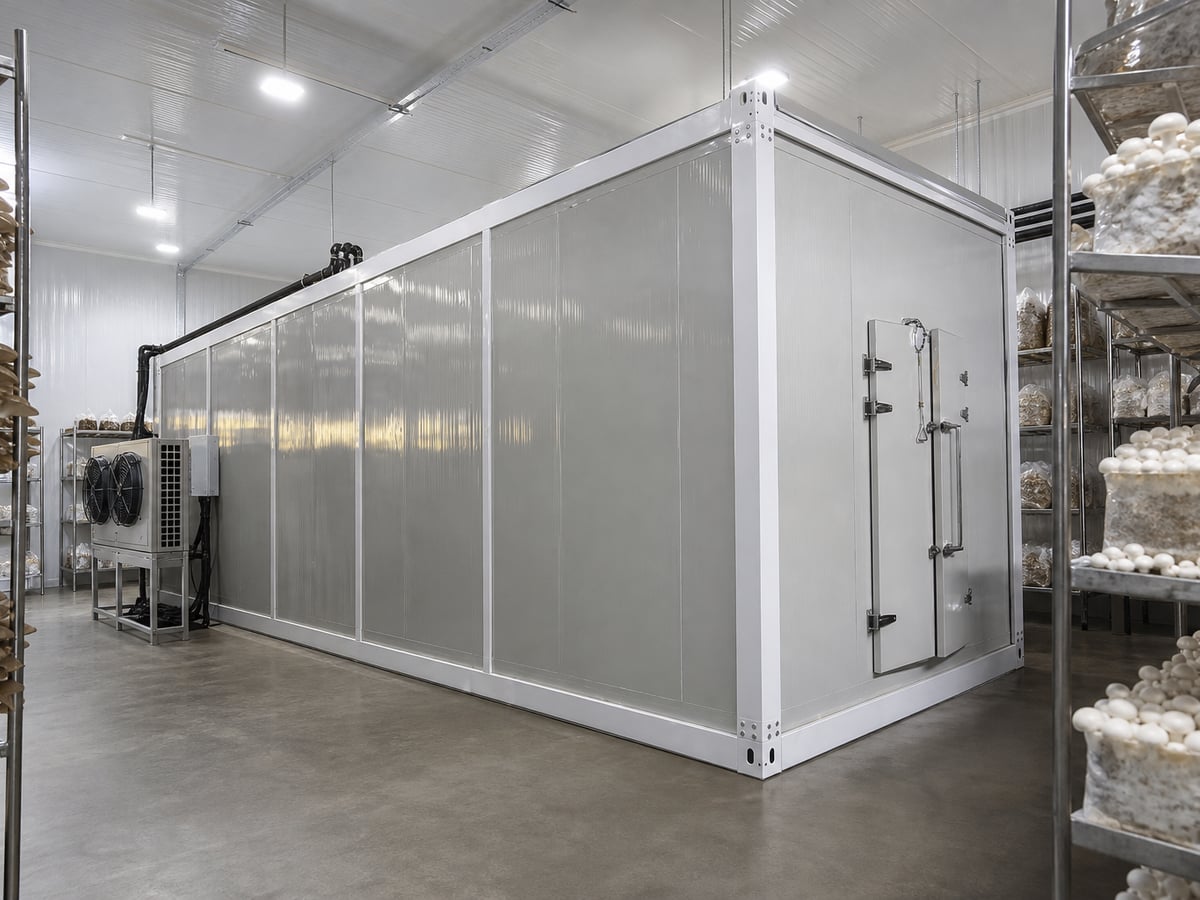
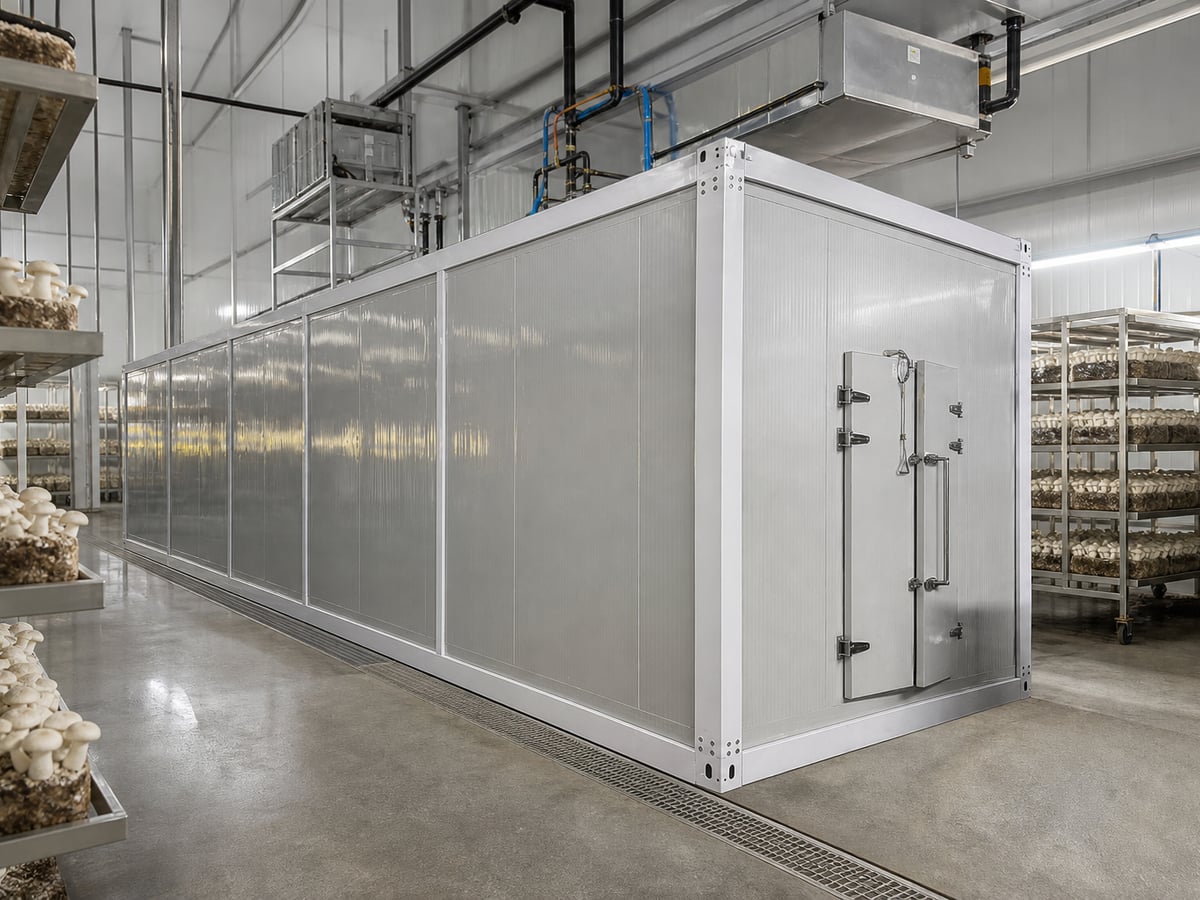
For many new projects, modular cultivation rooms or smart mushroom cultivation containers provide a practical starting point because insulation, airflow, refrigeration, heating, humidification, electrical controls, and crop racks can be integrated into a repeatable production unit. Larger farms may use purpose-built insulated rooms connected to a centralized plant, but they still need independent environmental zones for incubation, fruiting, packing, and storage.
The commercial objective is not simply to produce mushrooms. It is to deliver a consistent volume of clean, uniform, shelf-stable product at a predictable cost per kilogram. The best projects combine biological knowledge with robust industrial climate control, documented sanitation procedures, operator training, and a sales plan that matches local demand.
What Commercial Operators Should Know About Mushroom Farming
Mushroom production is biologically sensitive but operationally manageable when the farm is treated like a food-processing facility with living crops. Mycelium grows through substrate during incubation, then forms fruiting bodies when temperature, humidity, carbon dioxide, light, and airflow signal the correct conditions. Small deviations can reduce biological efficiency, delay pinning, create long stems, dry caps, bacterial blotch, uneven flushes, or widespread contamination.
Commercial farms generally operate through one of three business models:
- Fresh mushroom grower: buys ready-to-fruit blocks or compost and focuses on fruiting, harvesting, packing, and sales.
- Integrated substrate-to-market farm: produces or pasteurizes substrate, inoculates it, incubates blocks, fruits mushrooms, packs them, and distributes directly.
- Spawn, substrate, or contract-growing supplier: sells production inputs or grows on behalf of retail, foodservice, or branded partners.
The first model has lower technical complexity and can be suitable for urban distribution hubs such as Rotterdam, Dubai, Singapore, Los Angeles, Sydney, Johannesburg, or São Paulo. The integrated model can achieve greater input control and margin but needs stronger sanitation, steam or heat treatment capacity, substrate logistics, laboratory discipline, and trained technical management.
Product selection should follow demand before equipment purchase. Oyster mushrooms are often chosen for rapid cycles and broad culinary acceptance. Shiitake can command premium pricing but may require longer incubation and careful post-harvest handling. Lion’s mane serves specialty retail, wellness-focused restaurants, and direct-to-consumer channels. Button mushrooms remain a large-volume category but demand compost infrastructure and tightly managed harvesting labor. Enoki and king oyster mushrooms can support export-oriented premium programs where cold-chain capability is strong.
| Commercial Product Type | Typical Market Position | Production Complexity | Key Climate Priority | Common Sales Channel |
|---|---|---|---|---|
| Oyster mushroom | Accessible fresh specialty mushroom | Moderate | Fresh-air exchange and humidity balance | Wholesale, restaurants, retail |
| Shiitake | Premium culinary product | Moderate to high | Stable fruiting temperature and clean handling | Retail, Asian grocers, foodservice |
| Lion’s mane | Premium wellness and gourmet product | High | Humidity, low contamination, gentle airflow | Direct sales, chefs, specialty retail |
| King oyster | Premium versatile culinary product | High | CO2 management and crop uniformity | Retail chains, export distributors |
| Button mushroom | High-volume mainstream category | High | Compost, casing, cooling, harvesting labor | Supermarkets, processors |
| Enoki mushroom | Premium Asian-market product | Very high | Low-temperature precision and hygiene | Asian retail, export, foodservice |
This comparison shows why mushroom species selection is a commercial decision as much as an agricultural one. A species with a higher selling price may still be less profitable if it requires long incubation, highly skilled labor, slow turnover, or a market that cannot absorb weekly production.
Before signing a lease or ordering equipment, validate the addressable market. Speak with produce distributors, chefs, supermarkets, meal-kit companies, food processors, Asian grocery stores, and farm-shop buyers. Confirm weekly volume, preferred pack size, acceptable grade range, delivery days, payment terms, and whether buyers want loose bulk product, 150 g to 300 g retail punnets, or branded mixed-mushroom packs.
Why It Matters to Yield, Quality, and Operating Risk
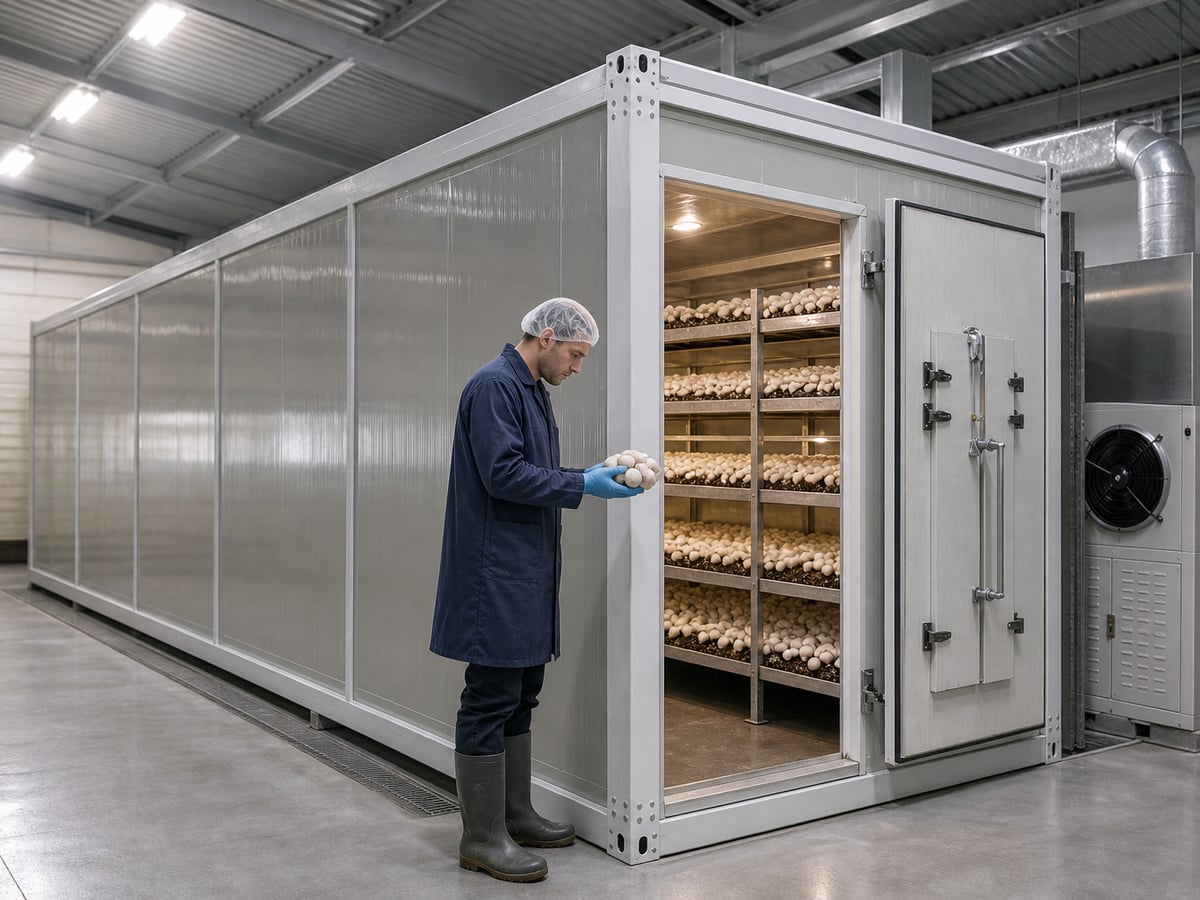
Environmental control directly determines crop physiology. If temperature rises above the preferred range, mushrooms may mature too quickly, become soft, or produce lower-quality caps. If relative humidity is too low, pins abort and fruiting bodies lose weight. If humidity remains high without adequate air movement, condensation can promote bacterial problems. If carbon dioxide accumulates, oyster mushrooms can develop long stems and undersized caps; if air movement is excessive, caps may dry or crack.
Yield should be measured using biological efficiency, crop weight per block, crop weight per square meter, and saleable yield after grading. A farm can appear productive while losing profitability through excessive trimming, damaged product, short shelf life, poor package weights, or discarded second-grade mushrooms. Daily data collection is therefore a core management tool, not an administrative burden.
Operating risk also includes utility interruption, poor water quality, failed sensors, refrigeration breakdown, supplier inconsistency, contamination entering through raw materials, and sales volatility. A resilient mushroom farm separates clean and dirty processes, maintains critical spare parts, alarms deviations early, and avoids dependence on a single buyer or substrate supplier.
| Risk Factor | Likely Symptom | Commercial Impact | Early Warning Measurement | Primary Corrective Action |
|---|---|---|---|---|
| High CO2 | Long stems, small caps, uneven clusters | Lower grade and reduced price | CO2 trend above crop setpoint | Increase controlled fresh air and rebalance airflow |
| Low humidity | Aborted pins, cracked caps, low weight | Reduced saleable yield | RH below target during pinning | Inspect humidification, leakage, and fan settings |
| Surface condensation | Bacterial blotch and wet caps | Short shelf life and rejection | Visible water, dew point mismatch | Improve air distribution and reduce over-humidification |
| Contaminated substrate | Green mold, sour odor, slow colonization | Block loss and cross-contamination | Incoming batch inspection and incubation sampling | Isolate lot, improve pasteurization or supplier controls |
| Cooling failure | Rapid crop maturation and heat stress | Flush loss and delivery failure | High-temperature alarm | Use backup response plan and repair immediately |
| Poor harvest timing | Overmature mushrooms, excess spores | Lower shelf life and poor appearance | Daily maturity checks | Train pickers and adjust harvest schedule |
The table demonstrates that most production losses begin as a measurable deviation before they become a visible crop failure. For this reason, farms should keep digital or manual records of room temperature, relative humidity, CO2, equipment status, crop age, contamination observations, harvest weight, discard volume, and customer returns.
In the Global Market, food safety and traceability expectations are rising. Retailers and importers increasingly ask for lot identification, cleaning records, worker hygiene procedures, pesticide policies, water management plans, and consistent cold-chain documentation. A well-designed facility supports these requirements by making cleaning easy, limiting standing water, using washable insulated surfaces, and separating receiving, cultivation, packing, and dispatch routes.
Key Parameters, Measurements, and Design Assumptions
Design assumptions must be crop-specific. A generic “mushroom room” is rarely enough for commercial consistency. Each species and crop stage needs its own acceptable operating band. Incubation generally requires less fresh air and often warmer conditions than fruiting. Fruiting requires strong environmental response, uniform air distribution, controlled humidification, and adequate CO2 removal without exposing mushrooms to harsh drafts.
The following ranges are planning references only. Final setpoints should be confirmed against the selected strain, substrate format, local climate, and technical guidance from the spawn supplier. Operators should test settings in a pilot room before scaling to multiple rooms.
| Parameter | Incubation Planning Range | Fruiting Planning Range | How to Measure | Why It Matters |
|---|---|---|---|---|
| Air temperature | Usually 20–28°C depending on species | Often 12–22°C depending on species | Calibrated room sensors at crop level | Controls metabolism, pinning, and maturation speed |
| Relative humidity | Moderate room control; block moisture is critical | Commonly 85–95% RH | RH sensors with routine verification | Supports pin formation and product weight |
| Carbon dioxide | Higher levels usually tolerated | Species-specific, often tightly controlled | NDIR CO2 sensor | Shapes stems, caps, and crop uniformity |
| Fresh-air exchange | Low to moderate | Moderate to high as required by crop | Fan speed, damper position, CO2 response | Removes CO2, heat, and moisture |
| Air velocity | Gentle and uniform | Gentle movement across crop | Airflow testing and smoke visualization | Prevents stagnant zones without drying caps |
| Light | Usually low or not required | Low-intensity diffuse light for many species | Lux meter and timer verification | Supports morphology and operator visibility |
| Water quality | Clean water for humidification and cleaning | Clean, low-residue water preferred | pH, hardness, microbial testing | Protects nozzles, crop surfaces, and hygiene |
These parameters must be understood as a system. For example, a room at 90% RH can still dry mushrooms if supply air is too cold, too fast, or poorly distributed. Likewise, adding fresh air to lower CO2 can unexpectedly reduce humidity and increase cooling or heating demand. Smart control logic should coordinate fans, refrigeration, heating, humidification, dampers, and alarms instead of operating each device independently.
Room capacity should be calculated from saleable output, not nominal shelf count. Start with desired weekly sales, divide by expected saleable yield per block or per square meter, then account for crop cycle length, flush distribution, reserve capacity, and unavoidable downtime for deep cleaning. A practical design commonly includes separate rooms or zones so that one crop age does not force the entire farm into the same harvest schedule.
For projects near humid tropical ports such as Jakarta, Ho Chi Minh City, Mombasa, and Santos, dehumidification and mold prevention may be more important than heating. In cold climates around Toronto, Warsaw, Helsinki, or northern China, heating load, frost protection, and heat recovery require more attention. In hot, dry regions such as Riyadh, inland Australia, or parts of Mexico, cooling and water-efficient humidification become critical design priorities.
Required Equipment, Controls, and Infrastructure
A commercial mushroom facility requires more than cooling equipment. The infrastructure must create stable conditions, allow cleaning, protect workers, and support a repeatable workflow. At minimum, the farm needs insulated cultivation rooms, shelving or hanging systems, climate equipment, cleanable flooring, drainage where appropriate, reliable power, water treatment, packing space, cold storage, and basic quality-control tools.
A purpose-built smart mushroom climate controller can coordinate temperature, humidity, CO2, fresh-air exchange, lighting, alarms, and historical data. This is particularly valuable when operators run multiple rooms with different crop ages or species. Remote monitoring can reduce response time during nights, weekends, or utility events, but it should supplement—not replace—routine on-site inspection.
| Equipment or Infrastructure | Main Function | Selection Consideration | Operational Check | Consequence if Undersized |
|---|---|---|---|---|
| Insulated panels and doors | Reduce heat gain, heat loss, and condensation | Insulation thickness, vapor sealing, washability | Inspect joints, seals, and thermal bridges | High energy use and unstable conditions |
| Cooling and heating system | Maintains crop temperature | Local ambient design temperature and redundancy | Check capacity, defrost, and alarms | Heat stress or slow crop development |
| Humidification system | Maintains fruiting humidity | Droplet size, water quality, room coverage | Inspect nozzles, filters, and drainage | Dry pins, low weight, uneven flushes |
| Fresh-air fans and dampers | Controls CO2 and air renewal | Variable speed and balanced distribution | Verify airflow paths and damper response | Malformed mushrooms and stagnant zones |
| CO2, RH, and temperature sensors | Provides automated control feedback | Accuracy, placement, calibration access | Compare against handheld instruments | Incorrect control decisions |
| Racks, shelves, or hanging rails | Holds bags, blocks, trays, or beds | Load rating, access, corrosion resistance | Inspect stability and cleaning condition | Poor labor efficiency and contamination traps |
| Cold room and packing benches | Preserves quality after harvest | Daily throughput and packaging format | Record product temperature and sanitation | Short shelf life and customer complaints |
This equipment list explains why low-cost construction shortcuts frequently become expensive later. Inadequate insulation increases compressor run time. Poorly positioned sensors result in false readings. Unbalanced fans create dry zones near supply air and wet zones near walls. Insufficient packing space causes harvested mushrooms to wait too long at room temperature, reducing freshness before delivery.
Lanhu supports commercial projects with integrated cultivation solutions designed around agricultural climate control. Its technological capability is rooted in more than 12 years of thermodynamic research and development, with control approaches that integrate refrigeration, heating, humidification, ventilation, and sensor feedback for mushroom environments. For operators seeking compact deployment, its modular systems can combine the cultivation envelope and environmental hardware in one engineered unit.
Manufacturing capability matters when projects require consistent panels, electrical assembly, sheet-metal components, insulation construction, control cabinets, and tested systems. Shandong Lanhu Air Conditioning Equipment Co., Ltd. operates a modern manufacturing facility in Dezhou, Shandong, covering more than 30,000 square meters. Its production process includes engineering development, CNC bending, insulation-panel production, electrical assembly, system integration, and functional testing before shipment. This integrated approach helps reduce interface risk between building, HVAC, and control components.
Recommended Workflow and Operating Procedure
A profitable farm uses a documented workflow from incoming material to dispatch. The exact details vary by mushroom type, but the central rule is to keep raw materials, incubation, fruiting, harvested product, waste, and personnel movement under control. Every operator should know which areas are clean, which are transitional, and which are high-risk.
- Receive and inspect inputs: Check substrate blocks, spawn, packaging, labels, and sanitation supplies. Record supplier lot numbers, delivery temperature, visible contamination, moisture condition, and quantity.
- Quarantine questionable lots: Do not place suspicious blocks directly into production rooms. Isolate them until the supplier issue is confirmed.
- Incubate by batch: Group blocks of the same species, supplier lot, and age where possible. This improves troubleshooting and harvest forecasting.
- Move into fruiting rooms: Initiate fruiting according to the crop plan. Avoid unnecessary handling, damage to bags, and abrupt environmental changes.
- Monitor room data daily: Review current readings and trends for temperature, RH, CO2, equipment runtime, alarms, and crop appearance.
- Harvest at the correct maturity: Pick cleanly, avoid crushing nearby clusters, trim consistently, and move product quickly to the packing area.
- Cool, pack, label, and dispatch: Maintain lot traceability, product temperature, pack weight, and buyer-specific labeling requirements.
- Clean and reset rooms: Remove spent substrate promptly, wash surfaces, inspect drains and seals, and verify room conditions before the next batch.
Staff should use dedicated footwear or footbaths where appropriate, clean tools between rooms, wash hands before packing, and avoid moving directly from waste handling into clean cultivation zones. A simple color-coded trolley and tool system can reduce cross-contamination. Written standard operating procedures should be available in the language used by the workforce.
For a staged commercial facility, schedule rooms so harvest volume is distributed across the week. This protects labor utilization and ensures regular deliveries to customers. A farm that produces its entire crop on one or two peak days may suffer from overtime, packing congestion, poor cooling, and market oversupply.
Capacity, Energy, Labor, and Cost Considerations
Capacity planning starts with the sales forecast. If the target is 2,000 kg of saleable fresh mushrooms per week, the farm must calculate the number of active blocks or beds needed at every crop stage, not merely the number harvested each week. Include a contingency allowance for variable biological efficiency, rejected blocks, cleaning downtime, maintenance, and seasonal sales variation.
Energy is usually one of the largest controllable operating costs, especially in locations with hot summers, cold winters, or high humidity. Energy demand comes from cooling, heating, ventilation, humidification, dehumidification, lighting, cold storage, pumps, and packing equipment. High-performance insulation, correct equipment sizing, variable-speed fans, sensible air recirculation, heat recovery where feasible, and well-maintained door seals can materially reduce consumption.
| Cost Category | Typical Cost Driver | How to Control It | Useful KPI | Planning Note |
|---|---|---|---|---|
| Substrate and spawn | Block price, delivery, contamination rate | Qualify suppliers and measure lot performance | Saleable kg per block | Cheapest input is not always lowest-cost input |
| Electricity | Climate load and utility tariff | Insulation, controls, maintenance, scheduling | kWh per kg sold | Model summer and winter separately |
| Labor | Harvesting, trimming, packing, cleaning | Ergonomic layout and staggered crop cycles | kg packed per labor hour | Harvest peaks often drive overtime |
| Packaging | Punnets, film, labels, cartons | Standardize pack formats and reduce waste | Packaging cost per kg | Retail packaging needs accurate weight control |
| Freight and delivery | Distance, temperature control, route density | Consolidate routes and plan delivery days | Delivery cost per kg | Local sales can protect freshness and margin |
| Maintenance | Filters, sensors, refrigeration parts | Preventive maintenance and critical spares | Unplanned downtime hours | Neglected maintenance risks entire crops |
| Product loss | Contamination, poor grading, spoilage | Data review and faster cold-chain handling | Discard percentage | Track loss by room and customer |
The table highlights the need to manage unit economics rather than only revenue. For example, a premium product may justify more labor-intensive packing if the buyer pays for quality and consistency. Conversely, a bulk wholesale program needs fast picking, low packaging cost, reliable crate handling, and disciplined delivery routes.
Labor requirements depend heavily on product format. Oyster mushrooms sold in bulk may require less trimming than small premium retail packs. Button mushroom harvesting can be highly labor intensive. Specialty mushrooms often need careful cluster separation, visual grading, and gentler packing. Design shelves and aisles for worker access; poor ergonomics slows harvest, increases damage, and raises staff turnover.
When comparing suppliers, request a capacity calculation based on location, room dimensions, crop load, outdoor design temperatures, target setpoints, fresh-air requirements, and number of doors opened per day. Avoid accepting an equipment proposal based solely on square meters. A heavily loaded fruiting room in Manila or Dubai has a different moisture and cooling profile from an identical room in Hamburg or Vancouver.
Common Mistakes, Failure Modes, and Corrective Actions
The most common commercial mistake is underestimating climate engineering. A standard air conditioner may lower room temperature but cannot necessarily control humidity, CO2, airflow distribution, fresh-air intake, and condensation simultaneously. Mushroom rooms need crop-level environmental management, not only room cooling.
Another frequent mistake is mixing incubation and fruiting in one room to save initial capital. This can work at very small scale, but it complicates climate setpoints, contamination control, harvest scheduling, and labor. As production increases, separate zones generally improve consistency and make crop problems easier to isolate.
- Failure: unreliable readings. Sensors placed close to humidifiers, doors, coils, or supply outlets may not represent crop conditions. Correction: install sensors at representative crop height and verify them with calibrated handheld instruments.
- Failure: over-humidification. Operators see dry edges and add more water, creating condensation elsewhere. Correction: inspect airflow, dew point, nozzle distribution, and fan speed before increasing humidity output.
- Failure: weak sanitation between cycles. Spent substrate and debris remain near active rooms. Correction: establish waste routes, deep-clean schedules, and inspection sign-off before reloading.
- Failure: no production data. Harvest figures are recorded only as total kilograms. Correction: measure yield by room, batch, block supplier, crop age, grade, and discard reason.
- Failure: inadequate cold chain. Mushrooms sit in harvest crates while the team finishes picking. Correction: use smaller harvest batches, shaded staging, rapid cooling, and dispatch discipline.
- Failure: one buyer concentration. A single customer changes orders or payment terms. Correction: develop wholesale, restaurant, retail, and direct channels where possible.
Commercial farms should also maintain contingency plans. At minimum, document procedures for power interruption, high-temperature alarms, refrigeration faults, water supply disruption, major contamination, staff absence, transport failure, and product recall. Emergency contacts, spare sensor stock, fan belts or drives, filters, backup communication, and alternative refrigerated transport can protect against expensive losses.
Implementation Checklist for a Commercial Project
A disciplined implementation sequence reduces costly redesign. Begin with the customer and crop, then work backward through capacity, building layout, environmental equipment, labor, utilities, and financial model. Do not treat the container, room, or HVAC system as an isolated purchase.
- Define target mushroom species, weekly sales volume, pack formats, and intended buyers.
- Confirm local demand through distributor, retailer, chef, and foodservice interviews.
- Select the production model: ready-to-fruit blocks, integrated substrate production, or contract growing.
- Evaluate site access, utility capacity, drainage, water quality, labor availability, and proximity to customers.
- Calculate capacity using saleable yield, crop cycle, flush pattern, downtime, and contingency allowance.
- Separate receiving, incubation, fruiting, packing, cold storage, dispatch, and waste-management routes.
- Specify climate control around actual ambient conditions and crop setpoints.
- Choose washable materials, sealed insulation, corrosion-resistant racks, and accessible service areas.
- Install calibrated sensors, remote alarms, and data logging before loading the first crop.
- Develop SOPs for hygiene, harvest, packing, cleaning, maintenance, and traceability.
- Run a pilot cycle, review results, then scale room by room.
- Maintain working capital for substrate purchases, labor, packaging, utilities, and customer payment delays.
For international projects, supplier coordination is also important. Confirm shipping method, destination port, spare-parts package, electrical standard, installation responsibilities, customs documentation, local technician availability, and commissioning schedule. Dezhou manufacturers may ship equipment through Qingdao or Tianjin, while project owners receiving in Jebel Ali, Rotterdam, Durban, or Long Beach should plan inland transport and site access in advance.
Lanhu’s service capability includes factory-direct supply, OEM and ODM customization, engineering assistance, international logistics support, spare-parts support, installation guidance, and after-sales service for contractors, distributors, engineering companies, and commercial farms. Operators can review commercial cultivation project cases to compare practical configurations, explore custom engineering and OEM/ODM options, or contact the technical team for project-specific capacity planning.
Looking toward 2026, the Global Market will see more sensor-based crop analytics, remote fault diagnostics, variable-speed climate systems, heat-pump integration, water-efficient humidification, recyclable packaging, and traceability platforms. Food-security policies, urban agriculture incentives, energy-efficiency standards, and retailer sustainability requirements are likely to increase demand for controlled-environment farms that can prove resource use and product consistency. The most competitive operators will combine low energy intensity with reliable local supply, minimal food waste, and transparent quality records.
FAQ
How much space is needed for a commercial mushroom farm?
Space depends on species, crop system, target output, and whether the farm makes its own substrate. A compact container-based project can begin with one or several modular units, while larger farms need separate areas for incubation, fruiting, packing, cold storage, and waste handling. Calculate from weekly saleable output rather than floor area alone.
Which mushroom is best for a new commercial operator?
Oyster mushrooms are often a practical starting point because they have relatively fast cycles and broad market acceptance. However, the best choice depends on local buyers, available substrate, climate, price expectations, and technical capability. Premium specialty mushrooms may offer stronger margins where demand is proven.
Can mushroom farming be profitable in hot climates?
Yes, but climate-control costs must be designed carefully. In hot regions, insulation, cooling capacity, door management, humidity control, and preventive maintenance become central to profitability. A site-specific energy model is essential.
What is the most important environmental measurement?
There is no single measurement. Temperature, relative humidity, CO2, airflow, and crop appearance must be evaluated together. CO2 is especially important in fruiting rooms because it strongly affects mushroom shape and quality.
How often should a cultivation room be cleaned?
Basic cleaning should occur continuously during operation, while a deep clean should be completed between crop cycles or batches according to the farm’s contamination risk and production schedule. Cleaning should include racks, floors, drains, doors, walls, tools, and air-distribution surfaces.
Should a farm use a container or a conventional building?
Containers are useful for rapid deployment, pilot production, modular expansion, and sites where construction time is limited. Conventional insulated buildings may suit larger integrated farms. The best choice depends on capacity, site conditions, budget, local construction cost, and future expansion plans.
What records should a commercial mushroom farm keep?
Maintain batch records, supplier details, climate logs, sensor calibration checks, harvest weights, grades, discard reasons, cleaning logs, maintenance records, packaging data, dispatch records, customer complaints, and corrective actions.
How can operators reduce mushroom spoilage after harvest?
Harvest at the correct maturity, minimize handling, cool product quickly, use suitable packaging, maintain clean packing conditions, and keep refrigerated storage and transport stable. Shelf-life performance should be measured by customer channel and delivery distance.
Share this article

About the Author: Shandong Lanhu Air Conditioning Equipment
Lanhu is a professional climate control equipment manufacturer specializing in smart agricultural systems, commercial HVAC solutions, and customized temperature control technologies. With extensive engineering experience, Lanhu provides reliable solutions for plant factories, controlled environment agriculture, and industrial applications.
Need a Custom Climate Control Solution?
From smart agricultural systems to commercial HVAC solutions, Lanhu provides reliable temperature and humidity control solutions tailored to your project needs.
Contact Us