Global Market Mushroom Container Cost and ROI Guide 2026
Quick Answer

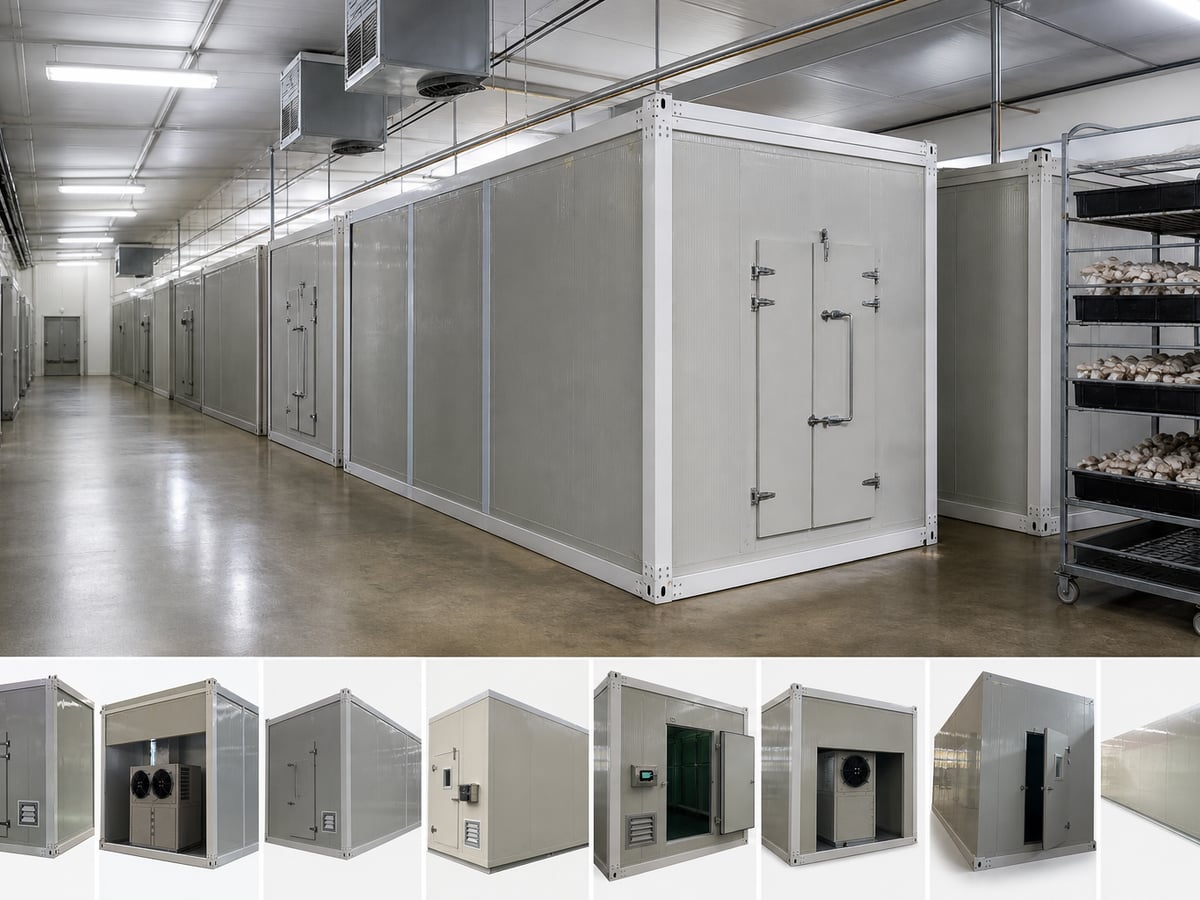
For the Global Market, a commercial mushroom growing container typically costs from approximately US$25,000 to US$120,000+ per unit before local land, civil works, permits, freight, and operating capital. A basic insulated container with shelving and simple environmental equipment sits at the lower end. A fully integrated smart cultivation container with HVAC, humidification, fresh-air exchange, CO₂ control, automation, remote monitoring, electrical panels, and customized racks is usually positioned in the mid-to-upper range.
The real mushroom growing container cost is not only the purchase price. A reliable investment estimate must include capital expenditure for the container, climate equipment, electrical connection, water treatment, commissioning, and site preparation; plus operating expenditure for labor, energy, substrate or blocks, water, packaging, maintenance, logistics, and crop-loss allowances. For oyster mushroom production, a properly managed 40-foot container may produce roughly 1.5 to 4.5 tonnes of fresh mushrooms per year depending on the growing method, crop cycle, climate setting, number of rooms, and local operator capability.
For buyers in Dubai, Rotterdam, Los Angeles, Singapore, São Paulo, Johannesburg, Mumbai, and other food-distribution hubs, modular containers can shorten project timelines compared with constructing permanent grow rooms. However, the best purchasing decision depends on local electricity pricing, market sales channels, species selection, labor availability, import conditions, sanitation standards, and service access. A lower initial quotation can become expensive if insulation, controls, airflow design, drainage, or after-sales support are inadequate.
As a practical rule, buyers should budget an additional 15% to 35% above the ex-factory equipment price for project-specific expenses. This contingency is especially important for first-time farms, remote locations, hot climates, cold climates, and projects that require local construction, certification, or custom power supplies.
| Commercial container level | Typical ex-factory cost | Best-fit use | Core inclusions | Buyer consideration |
|---|---|---|---|---|
| Basic growing container | US$25,000–45,000 | Small farm trials and local supply | Insulation, racks, lighting, basic ventilation | Often needs added automation and utility work |
| Standard climate-controlled unit | US$45,000–70,000 | Commercial oyster or shiitake production | HVAC, humidification, sensors, control panel | Confirm cooling capacity for local summer conditions |
| Smart cultivation container | US$65,000–95,000 | Year-round production and distributors | Integrated controls, CO₂ management, remote alarms | Suitable where consistent quality has a price premium |
| Multi-zone or dual-room system | US$80,000–120,000+ | Staggered harvests and multiple crop stages | Separate climate zones, enhanced racks, automation | Higher upfront cost but better production continuity |
| Customized export project | US$100,000–180,000+ | Large farms, institutions, harsh climates | Custom electrical, filtration, heat pump, branding | Requires detailed engineering and site data |
| Container farm cluster | US$200,000–1,000,000+ | Regional production hubs | Several containers, utility hub, packing area | Plan central workflow, cold chain, and management |
The ranges above are planning figures rather than universal quotations. Container dimensions, mushroom species, indoor design temperature, electrical standards, shipment route, and optional equipment can materially change the final budget. Buyers should request a technical scope that defines exactly what is included and excluded.
Mushroom Growing Container Cost: Typical Commercial Cost Structure

A commercial container farm is a packaged environmental-control system, not merely a shipping container fitted with shelves. The largest cost categories are the insulated structure, refrigeration or heat-pump capacity, humidity and fresh-air systems, air distribution, cultivation racks, electrical control, sensors, plumbing, drainage, and factory testing. Cost also changes according to whether the unit is designed for fruiting only, incubation only, or a multi-stage growing workflow.
In Global Market projects, delivered cost may differ sharply between ports. A shipment from China to Jebel Ali in Dubai, Rotterdam in the Netherlands, Long Beach in the United States, Santos in Brazil, Durban in South Africa, or Singapore can involve different sea freight, inland delivery, customs, crane handling, and clearance charges. An ex-factory price should therefore never be compared directly with a local turnkey installation price.
| Cost category | Typical share of equipment CAPEX | What it covers | Why it matters |
|---|---|---|---|
| Container body and insulation | 15%–25% | Steel frame, insulated panels, doors, floor finish | Controls heat gain, condensation, hygiene, and energy use |
| Climate-control equipment | 20%–35% | Cooling, heating, heat pumps, evaporators, fans | Determines stable temperature through changing weather |
| Humidity and ventilation | 8%–15% | Fogging, fresh air, dampers, ducts, filtration | Supports pinning, crop quality, and CO₂ removal |
| Racks and cultivation layout | 10%–18% | Galvanized or stainless racks, trays, hanging systems | Sets usable growing area and sanitation access |
| Controls and electrical systems | 10%–18% | PLC, sensors, VFDs, alarms, wiring, lighting | Reduces operator error and improves traceability |
| Freight, site work, and commissioning | 15%–35% of total project cost | Transport, foundations, utilities, installation, training | Often omitted from initial equipment comparisons |
A transparent supplier quotation should identify the container size, insulation thickness, compressor brand or performance rating, cooling and heating capacity, humidification method, ventilation rate, rack material, electrical input, controller functions, warranty terms, and packing method. Without this detail, two quotations that appear similar may represent fundamentally different systems.
For a modular starting point, buyers can review a smart mushroom cultivation container configuration and compare its environmental-control scope with local construction alternatives. The correct comparison is total installed cost per kilogram of saleable mushrooms, not only cost per container.
CAPEX: Equipment, Building, Utilities, and Controls

Capital expenditure includes all one-time investments required before regular commercial production begins. For a single container project, CAPEX normally starts with the equipment purchase but should extend through delivery, installation, utility connection, sanitation infrastructure, initial crop loading, and working capital. A project that only budgets for the container can face avoidable delays after arrival.
Site costs vary widely. A level concrete pad may be sufficient for a small unit, while a multi-container farm may require drainage channels, a loading area, staff changing facilities, a packing room, cold storage, and a backup power arrangement. In tropical locations near Jakarta, Lagos, Manila, or Mombasa, high ambient temperatures may justify larger cooling capacity, sun shading, and better roof insulation. In colder markets such as Toronto, Warsaw, or northern China, heating loads and freeze protection require greater attention.
| CAPEX item | Planning range | Usually included in container quote? | Procurement advice |
|---|---|---|---|
| Container cultivation system | US$25,000–120,000+ | Usually | Verify technical scope and performance conditions |
| Concrete pad and drainage | US$2,000–15,000 | Usually not | Design for cleaning water and forklift or trolley access |
| Electrical connection and distribution | US$2,000–25,000 | Partly | Confirm voltage, frequency, breaker size, and cable distance |
| Water storage and filtration | US$500–8,000 | Usually not | Test hardness, chlorine, sediment, and microbial quality |
| Backup generator or battery system | US$3,000–40,000 | Usually not | Important where grid reliability affects crop survival |
| Packing, cold storage, and tools | US$2,000–30,000 | Usually not | Match capacity to harvest peaks and delivery schedule |
| Initial substrate, spawn, and packaging | US$1,000–12,000 | No | Keep reserve stock while local supply is qualified |
Controls deserve special attention because they influence both product quality and labor demand. A capable controller should manage temperature, relative humidity, fresh-air exchange, CO₂ concentration, fan operation, alarms, schedules, and data records. Remote access can be valuable for franchise farms, distributor-managed installations, and sites where experienced mushroom growers are not continuously present. Buyers evaluating automation can review a smart mushroom climate controller as part of the overall equipment specification.
Technological capability is particularly important when a container must operate across a wide ambient-temperature range. Lanhu applies thermodynamic research and climate-control engineering to modular agricultural systems, allowing parameters such as cooling duty, humidity control, airflow, fresh-air ratio, and control logic to be adapted to the intended region and mushroom variety.
OPEX: Energy, Labor, Water, Consumables, and Maintenance
Operating expenditure determines whether a mushroom container is financially sustainable after installation. In most commercial operations, substrate or purchased grow blocks, labor, electricity, packaging, and distribution account for the majority of monthly cost. The exact percentage differs by business model. A farm that buys ready-to-fruit blocks has lower technical complexity but higher variable input cost. A farm that makes its own substrate has more control over inputs but needs sterilization, mixing, inoculation, incubation, labor, and biosecurity infrastructure.
Electricity is highly location-dependent. Cooling demand can dominate in hot climates, while heating can be material in colder regions. Humidity equipment, circulation fans, lighting, pumps, exhaust fans, and controllers add smaller but continuous loads. For planning, use local commercial electricity tariffs rather than national averages, and model seasonal peaks.
| OPEX category | Typical share of operating cost | Main drivers | Cost-control measure |
|---|---|---|---|
| Substrate or grow blocks | 25%–45% | Species, supplier distance, biological efficiency | Qualify multiple suppliers and measure yield by batch |
| Labor | 15%–35% | Harvest frequency, packing, cleaning, skills | Use ergonomic racks, SOPs, and staggered crop loading |
| Electricity | 10%–25% | Climate, insulation, tariff, setpoints | Use high-efficiency systems and avoid unnecessary air exchange |
| Packaging and labels | 5%–12% | Retail format, branding, food compliance | Standardize pack sizes and reduce rejected packaging |
| Water and treatment | 1%–5% | Humidification, cleaning, local water quality | Install suitable filtration and repair leaks quickly |
| Maintenance and spare parts | 3%–8% | Fans, pumps, filters, sensors, refrigeration service | Maintain preventive-service schedules and critical spares |
| Transport and sales distribution | 5%–20% | Distance to buyers, cold chain, delivery frequency | Locate close to food hubs and consolidate deliveries |
Water use is usually modest compared with field agriculture, but water quality matters greatly. Hard water can block fogging nozzles, and untreated water can introduce contaminants. Operations should monitor filters, clean humidification lines, keep drains free-flowing, and separate clean harvest areas from dirty waste-handling zones.
Maintenance should not be postponed until a breakdown occurs. Monthly inspection of filters, evaporator coils, drains, door seals, fans, sensors, electrical connections, and humidification equipment helps protect crop continuity. A container farm without a spare sensor, fan motor, relay, or service contact can lose an entire flush during an avoidable equipment failure.
Capacity and Production Assumptions Behind the Estimate
Container capacity must be calculated from actual usable cultivation area rather than exterior length alone. A 20-foot or 40-foot container may be fitted with different rack layouts, aisle widths, shelving levels, and crop systems. The number of grow blocks loaded per week, growing cycle duration, biological efficiency, contamination rate, and harvest grading all affect annual output.
For oyster mushrooms, a practical planning model may assume staggered loading, multiple harvest flushes, and a saleable yield allowance after losses. Shiitake, lion’s mane, enoki, and specialty mushrooms can have different temperature requirements, crop durations, block volumes, labor needs, and market prices. High-value mushrooms may produce fewer kilograms but deliver stronger gross margins if local chefs, retailers, wellness brands, or premium grocery channels support pricing.
| Production assumption | Conservative case | Base case | Optimized case |
|---|---|---|---|
| Container format | 20-foot unit | 40-foot standard unit | 40-foot multi-zone unit |
| Loaded grow blocks per cycle | 500–900 | 1,000–1,800 | 1,800–2,800 |
| Saleable fresh yield per block | 0.5–0.8 kg | 0.8–1.2 kg | 1.1–1.5 kg |
| Annual crop turns or equivalent loading | 3–5 | 5–8 | 7–10 |
| Annual saleable output | 1.0–2.0 tonnes | 2.0–4.5 tonnes | 4.5–8.0 tonnes |
| Crop-loss allowance | 15%–25% | 8%–15% | 5%–10% |
These figures are illustrative. They should be replaced by a crop plan based on the intended mushroom species, substrate supplier’s verified performance, rack design, ambient climate, and operating SOPs. The first six months of a new farm should normally use conservative yield and loss assumptions. A farm can improve results through data collection, sanitation discipline, disciplined harvesting, and stable environmental settings.
Production consistency also benefits from learning from operating installations. Buyers can review relevant mushroom container project cases to understand how equipment configuration, climate, and workflow affect real project design.
Specifications and Customization That Change Price
Customization can make a container more productive and more suitable for local conditions, but every option should have a measurable commercial purpose. The most important price variables are container size, panel insulation value, target indoor temperature, ambient design temperature, number of climate zones, rack material, humidity system, fresh-air treatment, control level, electrical standard, and export packaging requirements.
For example, a farm in Riyadh may need stronger cooling, solar-load protection, and dust filtration. A project in Norway may need more heating capacity and low-temperature component protection. A food retailer in London or Sydney may request stainless-steel surfaces, enhanced sanitation details, traceability records, and branded packing workflow. A university research project may need independent setpoint control and data export. These requirements increase cost, but may reduce operational risk or create access to better sales channels.
| Specification choice | Effect on initial cost | Effect on operation | When it is justified |
|---|---|---|---|
| Thicker insulation panels | Moderate increase | Lower cooling and heating losses | Hot, cold, or high-energy-cost locations |
| Air-source heat pump | Moderate to high increase | Can improve heating efficiency | Year-round production in mixed or cold climates |
| CO₂ sensors and automation | Moderate increase | Improves airflow decisions and repeatability | Commercial farms with limited skilled labor |
| Remote monitoring and alarms | Low to moderate increase | Reduces response time during failures | Remote sites and multi-location operations |
| Stainless steel racks | High increase | Better corrosion resistance and cleanability | Premium food projects or humid environments |
| Multi-zone internal layout | High increase | Supports staged production and harvest continuity | Farms serving weekly retail or restaurant orders |
| HEPA or advanced filtration | Moderate increase | May improve biosecurity but adds maintenance | High-value strains or challenging contamination conditions |
Manufacturing capability influences how successfully these choices are integrated. Shandong Lanhu Air Conditioning Equipment Co., Ltd. operates an integrated manufacturing facility in Dezhou, Shandong, with capabilities covering engineering development, sheet-metal fabrication, CNC bending, insulation-panel production, electrical assembly, system integration, and equipment testing. This integrated approach helps maintain control over fitment, wiring, insulation, and climate-system coordination rather than treating the container as a collection of unrelated components.
For branded equipment programs, local voltage standards, special dimensions, and distinctive crop requirements, buyers can explore OEM and ODM customization services. A good customization process begins with a site questionnaire and ends with documented testing rather than assumptions.
Yield, Revenue, Margin, and Break-Even Scenarios
Revenue is calculated from saleable yield multiplied by the actual net sales price. The key word is “net.” Wholesale price, retailer deductions, delivery cost, damaged-product returns, promotional discounts, and packaging expense must be deducted from headline shelf prices. Restaurants may pay a premium for freshness and specialty varieties, but demand can be variable. Supermarkets may provide volume but require consistent supply, barcodes, labels, food-safety compliance, and reliable delivery windows.
A base-case 40-foot oyster mushroom container producing 3,000 kg of saleable mushrooms annually and selling at US$5.00/kg generates US$15,000 in gross annual revenue. At US$9.00/kg through premium direct sales, gross revenue becomes US$27,000. Whether this supports a profitable operation depends on substrate, labor, energy, rent, finance cost, and delivery expense. One container is often best viewed as a pilot, premium local-sales unit, training platform, or component within a wider farm cluster rather than an automatic standalone high-profit business.
| Scenario | Annual yield | Average net selling price | Annual revenue | Indicative result |
|---|---|---|---|---|
| Low-yield wholesale | 2,000 kg | US$4.00/kg | US$8,000 | Weak for a standalone imported unit |
| Base wholesale | 3,000 kg | US$5.00/kg | US$15,000 | Requires tight operating-cost control |
| Strong local retail | 3,500 kg | US$7.00/kg | US$24,500 | More viable with direct distribution |
| Premium specialty crop | 2,200 kg | US$11.00/kg | US$24,200 | Depends on reliable premium demand |
| Optimized direct sales | 4,500 kg | US$8.00/kg | US$36,000 | Can support improved payback potential |
| Multi-container cluster | 15,000 kg | US$6.50/kg | US$97,500 | Benefits from shared labor and packing costs |
Break-even should be modeled at three levels: operating break-even, cash-flow break-even, and full investment payback. Operating break-even asks whether sales cover direct monthly costs. Cash-flow break-even includes debt repayments and owner salary. Full investment payback includes the original equipment, installation, site costs, and working capital. For many projects, realistic payback can range from three to seven years, but outcomes outside this range are possible when yield, energy costs, or market price differ from plan.
Hidden Costs, Risk Allowances, and Sensitivity Analysis
Hidden costs are often more damaging than visible equipment costs because they emerge after the investment decision has been made. Common examples include import duties, local certification, customs storage, port delays, crane rental, electrical upgrades, water treatment, air-conditioning service, replacement parts, food-safety testing, crop insurance, staff training, packaging artwork, waste disposal, rent, and working capital during crop establishment.
A sound sensitivity analysis changes one variable at a time. Test a 20% reduction in selling price, a 20% increase in electricity cost, a 15% yield reduction, a one-month commissioning delay, and a higher contamination rate. If the project only works under perfect conditions, it is not yet investment-ready. Strong projects remain manageable under conservative assumptions.
Risk allowances should be higher when shipping to remote inland sites, when using a new substrate supplier, when operating in extreme climates, or when depending on a single customer. Farms can reduce risk by establishing off-take discussions before installation, training more than one operator, holding critical spare parts, documenting hygiene procedures, and installing remote alarm notifications.
By 2026, mushroom container projects are increasingly shaped by energy efficiency, digital farming, local-food policies, reduced food miles, water stewardship, and traceability expectations. Future-ready systems are likely to use more efficient heat pumps, variable-speed fans, better insulation, connected sensors, predictive maintenance alerts, and more detailed crop records. In regions with renewable-energy incentives, solar integration and demand-managed operation may improve economics. Sustainability claims should still be measured carefully: a container farm’s environmental benefit depends on electricity source, local logistics, crop losses, and how effectively the equipment is operated.
Our Company
Shandong Lanhu Air Conditioning Equipment Co., Ltd. supports Global Market customers with modular cultivation and agricultural climate-control solutions. The company’s work is focused on smart mushroom cultivation containers, mushroom climate controllers, hydroponic plant containers, and air-source heat pumps for commercial agricultural applications.
From a technology perspective, Lanhu combines more than 12 years of thermodynamic research and development experience with environmental-control design for cultivation spaces. Smart control functions can help operators manage temperature, humidity, ventilation, CO₂ conditions, and alarms with greater repeatability. This is especially useful for projects where local growers are scaling from manual rooms to controlled-environment production.
From a manufacturing perspective, the company operates a modern facility of more than 30,000 square meters and applies integrated fabrication, assembly, inspection, and performance testing processes. Functional inspection, electrical verification, performance testing, and operational evaluation are completed before shipment. ISO 9001, ISO 14001, ISO 45001, ISO 12100, and multiple patent-related credentials support its quality and engineering framework.
From a service perspective, Lanhu provides factory-direct supply, project engineering assistance, OEM and ODM support, international logistics coordination, installation guidance, spare-parts support, and after-sales service. This can help agricultural contractors, distributors, engineering companies, and commercial farms manage technical details from specification to delivery. For a project discussion, quotation request, or site-specific consultation, buyers can contact the Lanhu team with their location, target mushroom species, expected output, utility conditions, and preferred container size.
FAQ
How much does a mushroom growing container cost in the Global Market?
A commercial system generally ranges from US$25,000 to US$120,000+ for the container equipment itself. Delivered project cost can be substantially higher after freight, customs, foundations, electrical work, water systems, installation, and working capital are included.
Is a 20-foot or 40-foot mushroom container better?
A 20-foot container can suit trials, urban sites, education, and limited production. A 40-foot container generally offers better usable growing area and a more favorable cost per kilogram, but it needs more site space, power capacity, and working capital. The choice should follow the crop plan and sales channel.
What mushroom species can be grown in a controlled container?
Common options include oyster mushrooms, shiitake, lion’s mane, king oyster, enoki, and other specialty varieties. Each species requires different temperature, humidity, CO₂, light, substrate, and crop-cycle conditions. Equipment should be specified around the selected species rather than using a generic climate setting.
What is the largest operating cost for a container mushroom farm?
For farms buying ready-to-fruit blocks, substrate or grow blocks are often the largest variable cost. Labor and electricity may also be major expenses, especially in regions with high wages, hot summers, cold winters, or expensive commercial power tariffs.
How long does it take to install a mushroom cultivation container?
Factory-built units can be deployed more quickly than conventional construction once the site is prepared. Typical timing depends on production lead time, ocean shipping, customs clearance, local delivery, utility connection, commissioning, and training. Site preparation should begin before the unit arrives.
Can the container operate in hot or cold climates?
Yes, but the system must be designed for local ambient conditions. Hot climates may require stronger cooling, shading, and insulation, while cold climates may require heating capacity, freeze protection, and appropriate drainage design. Buyers should provide the expected highest and lowest outdoor temperatures.
What information is needed for an accurate quotation?
Useful information includes project country and city, mushroom species, container size, production target, local voltage and frequency, highest and lowest ambient temperatures, water quality, installation site, preferred automation level, required delivery date, and whether the project needs OEM branding or local certification support.
Share this article

About the Author: Shandong Lanhu Air Conditioning Equipment
Lanhu is a professional climate control equipment manufacturer specializing in smart agricultural systems, commercial HVAC solutions, and customized temperature control technologies. With extensive engineering experience, Lanhu provides reliable solutions for plant factories, controlled environment agriculture, and industrial applications.
Need a Custom Climate Control Solution?
From smart agricultural systems to commercial HVAC solutions, Lanhu provides reliable temperature and humidity control solutions tailored to your project needs.
Contact Us