Mushroom Capsule Buying Guide for the Global Market
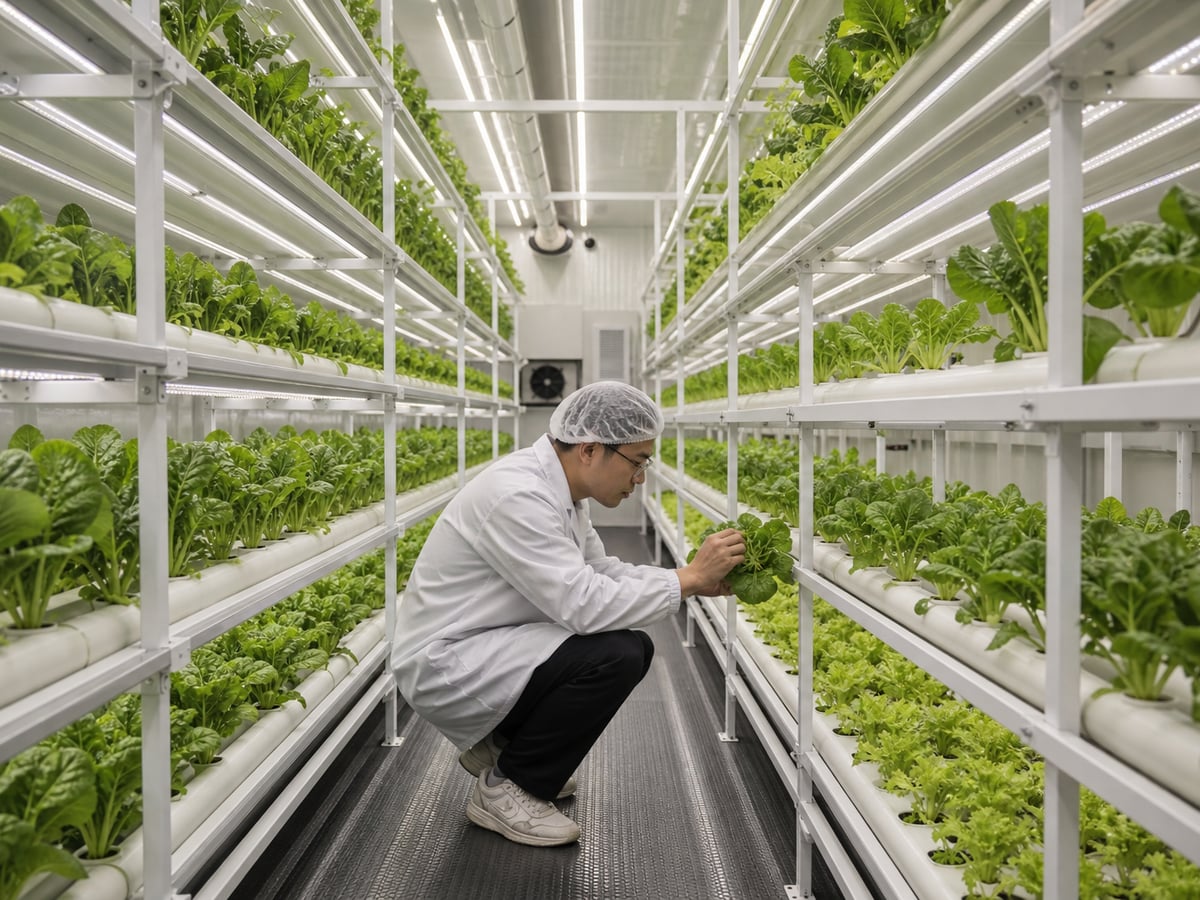
Quick Answer

A smart mushroom cultivation capsule is a compact, managed growing room designed to provide a controlled environment for one or more mushroom fruiting cycles. Before ordering, buyers should confirm what the supplier means by “capsule,” whether the quotation includes the insulated enclosure and climate equipment, which crop stages the unit supports, and how its rated capacity was calculated. A product described as a capsule may be a complete modular room, a containerized fruiting chamber, or an enclosure that still needs substantial equipment and site work.
Request a written scope of supply, crop-specific operating ranges, a proposed rack drawing, utility requirements, commissioning responsibilities, and after-sales terms. Check that temperature, humidity, ventilation, and carbon dioxide management suit the intended species and production method. Do not rely on a headline capacity expressed only as a number of bags: bag size, shelf dimensions, aisle clearance, loading access, and the crop cycle all affect usable production.
For most commercial projects, the clearest starting point is a fruiting-room capsule paired with a separate plan for substrate preparation and spawn production. A supplier can then confirm whether the project needs pasteurization or sterilization equipment, a boiler, cooling plant, water treatment, drainage, or additional rooms. The [smart mushroom cultivation container](https://smartmushroomcabin.com/smart-mushroom-cultivation-container/) and its control system should be evaluated as parts of a production workflow, not as a stand-alone box.
This guide explains the terminology, equipment scope, crop controls, rack capacity, site requirements, supplier evaluation, and practical questions that buyers in the global market can use to prepare a specification.
Define Capsule, Cabin, and Container Terminology

Names in this equipment category are not standardized. One manufacturer may use “capsule” for a prefabricated insulated room, while another may use “container” for a complete climate-controlled unit built inside a shipping-container format. “Cabin” may describe a small walk-in chamber or a modular room assembled at the installation site. The label alone does not establish what is included, how it is shipped, or what crops it can support.
Start by asking the supplier to identify the physical form and intended use. Is the unit a transportable container with its own floor and weather-resistant exterior, or an insulated panel room installed inside a customer-provided building? Does “smart” mean a digital controller, remote monitoring, automatic control sequences, alarms, or a combination of these? Ask for drawings and a scope list that answer these questions directly.
A cultivation capsule is often most useful for fruiting, where environmental conditions must be adjusted during pin formation and crop development. It does not automatically include all processes needed to grow mushrooms from raw materials. Substrate mixing, filling, sterilization or pasteurization, cooling, inoculation, incubation, and packaging may take place elsewhere and require separate equipment and hygiene controls.
| Term | Common meaning | What to confirm |
|---|---|---|
| Capsule | Compact cultivation chamber or packaged growing module | Whether it is a complete room, a container, or an equipment package |
| Cabin | Small walk-in or modular insulated growing space | Panel construction, floor, doors, and installation conditions |
| Container | Container-format unit or modular room | Dimensions, transport limits, weather protection, and equipment scope |
| Fruiting room | Room operated for mushroom development and harvest | Crop stage supported and design operating ranges |
| Turnkey system | Package intended to be ready for operation after installation | Exact boundaries of supply, commissioning, and customer-provided work |
| Smart controller | Control interface for environmental equipment | Sensors, outputs, alarms, data access, and manual override |
The table is a starting point, not a substitute for a contract scope. Ask the seller to use consistent terms in the quotation, technical schedule, layout drawing, and installation plan. If the unit is called turnkey, obtain a list of exclusions: building work, foundations, electrical connection, water supply, drainage, lifting, local permits, and operator training are often treated separately.
Product form should match the site. A containerized unit can suit a remote farm or a site with limited building infrastructure, but transport access, crane availability, road restrictions, and utility connections still matter. A panel-room solution may fit an existing agricultural building more efficiently, although the customer may need to prepare the floor, drainage, and surrounding envelope.
Identify the Enclosure and Climate Equipment Included

Separate the enclosure from the climate-control package when reviewing an offer. The enclosure may include insulated wall and ceiling panels, a door, floor construction, seals, and internal finishes. The climate package may include cooling, heating, humidification, ventilation, air circulation, sensors, a controller, and electrical components. Each item should be listed with a make or performance description where appropriate.
For the enclosure, check panel thickness and insulation properties, joint details, vapor management, washable surfaces, door dimensions, and resistance to the cleaning routine planned for the farm. Ask whether the floor is supplied and whether it is designed for wet cleaning, expected loads, and drainage. Confirm that cable penetrations, pipe openings, and equipment interfaces are sealed and shown on the drawings.
For climate equipment, ask how the design handles fresh air, exhaust air, internal circulation, cooling, heating, and humidity. A room that can reach a target temperature under one set of conditions may perform differently when loaded with wet substrate and active crops. Request the assumptions behind the supplier’s performance figures, including outdoor design conditions, room loading, and the intended crop.
| System area | Possible included components | Buyer verification |
|---|---|---|
| Room envelope | Insulated wall and ceiling panels | Dimensions, insulation data, joints, and finish |
| Access | Door, seals, hardware, viewing panel | Clear opening, loading route, and hygiene suitability |
| Floor | Floor panels or prepared-room interface | Load rating, moisture handling, slope, and drainage |
| Cooling and heating | Heat pump, refrigeration, or other thermal equipment | Capacity basis, operating range, redundancy, and service access |
| Humidity | Humidifier or moisture-control equipment | Control method, water quality needs, and cleaning access |
| Air movement | Fans, ducts, dampers, and diffusers | Air distribution across shelves and loading areas |
| Fresh-air exchange | Intake and exhaust components | Airflow range, filtration, control, and discharge location |
| Controls | Controller, probes, wiring, and alarm functions | Sensor count, setpoints, logging, remote access, and override |
Ask which components are factory-installed and which are supplied loose for site installation. Verify the electrical supply voltage and frequency, connection point, protective devices, and whether the supplier provides wiring diagrams. If the project spans multiple countries, confirm that the equipment configuration can be adapted to the destination’s electrical standards and available service network.
Hygiene should be considered in the design rather than added after delivery. Smooth, cleanable surfaces, accessible drains, protected electrical equipment, and a practical way to wash around racks can reduce routine friction. Ask the supplier to clarify what cleaning chemicals and methods the materials are intended to tolerate; do not assume every coating or sensor is suitable for aggressive washdown.
Separate Fruiting Tasks from Substrate Preparation
A fruiting capsule and a substrate-production line solve different problems. Fruiting equipment creates and maintains conditions for the development of mushrooms from colonized substrate. Substrate preparation equipment handles raw materials and may include storage, mixing, bag filling, sterilization or pasteurization, cooling, and inoculation areas. Incubation is also a separate stage in many production systems and may need a distinct room or climate strategy.
This distinction affects capital planning and food-safety or biosecurity procedures. A buyer purchasing only a fruiting capsule should establish a reliable source of prepared, inoculated substrate or budget for the upstream process. Where substrate is produced on site, the project may need process equipment, trained labor, clean workflow separation, water, steam or heat, and waste management. The capsule itself does not make those systems unnecessary.
Crop choice influences the boundary. Oyster mushrooms, shiitake, and other commercial species can differ in substrate, incubation duration, fruiting conditions, handling, and harvest routines. Even within one species, strain, substrate formulation, bag size, and production schedule can change the operating plan. Suppliers should therefore base their recommendations on the intended crop and process rather than a generic “mushroom” setting.
| Stage | Typical work | Potential equipment or room | Fruiting capsule normally covers it? |
|---|---|---|---|
| Raw-material handling | Receiving, storage, and weighing ingredients | Storage area, scales, handling tools | No |
| Substrate preparation | Mixing and moisture adjustment | Mixer, water system, work area | No |
| Filling | Filling bags, blocks, or other containers | Filling equipment and consumables | No |
| Thermal treatment | Pasteurization or sterilization, as required | Steam, heat-treatment, or sterilization system | No |
| Inoculation | Introducing spawn under suitable hygiene conditions | Controlled workspace and inoculation tools | No |
| Incubation | Colonization of prepared substrate | Separate room or controlled storage area | Usually not unless specified |
| Fruiting | Managing environmental conditions and crop development | Fruiting room or capsule | Yes, when included in the scope |
| Harvest and dispatch | Picking, grading, packing, and cooling | Clean work area, packing and cold-chain equipment | Usually not |
Before issuing a request for quotation, draw a simple process map from raw material to packed product. Mark which steps will be performed on site, which will be outsourced, and where staff and materials move. This reveals whether the capsule is the only facility needed or one element in a larger production project. It also helps prevent an expensive mismatch between room capacity and the supply of prepared substrate.
Commercial buyers should plan for cleaning, spent-substrate removal, and downtime between batches. Ask whether racks can be rolled out or disassembled, how the room is emptied, and what maintenance access is needed. These practical details can affect labor demand and throughput just as much as the room’s nominal growing capacity.
Check Control Functions for the Intended Crop
“Smart control” can refer to anything from a basic digital thermostat to a system that coordinates multiple environmental devices and records operating data. Evaluate functions rather than labels. At minimum, establish which variables the controller measures, which equipment it can command, how setpoints are changed, and how the operator is notified when readings move outside defined limits.
For a mushroom fruiting room, buyers commonly examine temperature, relative humidity, fresh-air exchange, carbon dioxide management, and air circulation. The correct ranges and control strategy depend on species, strain, crop stage, substrate, and local production practice. A supplier should state what the proposed system is designed to control and ask for the buyer’s crop requirements. Avoid treating any single range as universal advice.
Ask whether sensors are supplied, how many are included, where they are intended to be placed, and how they are calibrated or replaced. A single sensor near an air outlet may not represent conditions at every rack level. Request a sensor-location drawing and discuss whether additional probes are needed to understand gradients across a loaded room.
Control logic also matters. Find out whether humidification and ventilation can operate together, whether heating and cooling are interlocked, and whether the system supports stage-based programs or separate recipes. Confirm that operators can use manual control when needed, while keeping appropriate safeguards in place. Check what happens after a power interruption, communication failure, or sensor fault.
Remote access may help owners monitor several rooms or supervise a site from another location, but the details should be explicit. Ask about connectivity requirements, user permissions, data ownership, local operation during internet outages, software updates, and any recurring fees. For export projects, determine whether the interface, alarms, manuals, and support are available in the languages and time zones required by the operator.
Lanhu’s [mushroom climate controller](https://smartmushroomcabin.com/smart-mushroom-climate-controller/) is relevant to buyers comparing environmental-control options. Request a function list tied to the proposed capsule, including sensor inputs, equipment outputs, alarm behavior, and any data-recording or remote-monitoring features offered for that configuration.
| Function | Why it matters | Question for the supplier |
|---|---|---|
| Temperature monitoring | Supports crop-stage management and equipment response | How many sensors are included and where are they installed? |
| Humidity management | Helps operators manage the room environment | What device controls humidity, and what maintenance does it require? |
| Fresh-air control | Supports air exchange and crop-specific ventilation strategies | Can airflow be adjusted, scheduled, or linked to measurements? |
| Carbon dioxide monitoring | Provides information for ventilation decisions | Is a CO₂ sensor included, optional, or excluded? |
| Stage programs | Reduces repeated manual changes between crop phases | Can operators save and edit crop-specific programs? |
| Alarms and records | Helps identify interruptions and review operating history | What alarms, logs, and data-export options are available? |
Good controls support sound operating practice; they do not replace it. Operators still need to inspect crops, keep sensors clean, maintain equipment, and respond to alarms. Ask the supplier to provide an operating manual and training plan that explain routine checks, safe setpoint changes, and escalation steps for faults.
Confirm Capacity Using a Proposed Rack Drawing
Capacity is often the most attractive and least comparable number in a cultivation equipment quotation. A statement such as “holds 1,000 bags” is incomplete unless it defines bag size, loading pattern, shelf arrangement, aisle width, and whether the figure is a maximum physical load or a practical operating quantity. The actual harvest per cycle also depends on crop performance and production practice, so a rack count should not be presented as a guaranteed yield.
Ask for a dimensioned rack drawing before comparing offers. The drawing should show the room’s internal dimensions, rack footprint, number of tiers, shelf spacing, aisle clearance, door swing, equipment locations, and access for loading and cleaning. It should make clear whether racks are included, whether they are fixed or mobile, and what materials and load ratings apply.
Discuss air distribution across the proposed layout. A tightly packed arrangement may increase the nominal number of bags but make loading, inspection, harvesting, cleaning, and airflow less practical. Ask the supplier to explain how air reaches different levels and corners when the room is loaded. Where possible, request the assumptions used to estimate capacity and have them stated in the quotation.
| Drawing item | What it should show | Reason to verify |
|---|---|---|
| Room dimensions | Internal length, width, and usable height | Establishes the real space available after equipment is installed |
| Rack layout | Rack footprints, orientation, and number of units | Shows whether the proposed arrangement fits the room |
| Tier spacing | Vertical clearance between growing levels | Needs to suit the crop, bag format, and work method |
| Aisles and door | Clear paths, door opening, and turning space | Supports safe access, cart movement, and harvest work |
| Equipment clearance | Service zones around fans, coils, and controls | Prevents racks from blocking maintenance access |
| Loading assumptions | Bag or block dimensions and arrangement | Allows the quoted count to be checked consistently |
| Air distribution | Supply and return locations relative to racks | Helps assess environmental coverage throughout the room |
When calculating a working capacity, distinguish between installed rack capacity and the quantity that can be operated conveniently. Consider staff access, harvest frequency, cleaning time, crop rotation, and space for temporary staging. If the room is part of a multi-room farm, examine whether rack design and container sizes are consistent across rooms, since standardization can simplify handling and spare-parts planning.
For a supplier comparison, give all vendors the same room dimensions, substrate package size, crop, operating schedule, and access requirements. Request each supplier’s proposed rack drawing and written assumptions. This makes the comparison more meaningful than placing headline bag counts side by side.
List Site Utilities and Daily Operator Responsibilities
Site readiness can determine whether a capsule starts on schedule. Before ordering, confirm the available electrical supply, water source, drainage, access route, foundation or floor condition, ventilation discharge location, and internet or network availability if remote functions are required. Have local qualified professionals review the installation and utility design, especially where electrical, pressure, lifting, or building regulations apply.
Electricity requirements depend on the actual equipment configuration and operating conditions. Ask for connected load, expected operating load where available, supply voltage, frequency, protection requirements, and wiring diagrams. Clarify who supplies disconnects, cabling, earthing, and final electrical connection. If the local grid is unreliable, discuss whether a backup power strategy is needed and which systems must remain operational during an outage.
Water quality and availability matter where humidification, cleaning, or crop operations use water. Ask about flow and pressure requirements, filtration or treatment recommendations, and water consumption assumptions. Confirm where condensate and wash water go, whether floor drainage is included, and how the site will manage cleaning without standing water. Local discharge requirements vary, so the farm operator must check applicable rules.
Transport and installation need early attention. A container may require a suitable road route, turning space, lifting equipment, and a prepared base. A modular panel room may require indoor assembly access and a clear path for panels and equipment. For international shipments, confirm the shipping configuration, packaging, customs documentation responsibilities, unloading arrangements, and who bears costs if the site is not ready when the unit arrives.
Daily operation is not fully automated. Operators generally need to inspect crop condition, verify readings, check water and drainage, maintain cleanliness, remove spent material, and respond to alarms. A shift checklist can help make these tasks consistent. It should identify routine observations, acceptable operating boundaries defined by the farm’s crop protocol, cleaning frequency, and whom to contact when equipment behaves unexpectedly.
| Requirement | Information to obtain | Responsible party to confirm |
|---|---|---|
| Electrical supply | Voltage, frequency, load, protection, connection point | Buyer, local electrician, and equipment supplier |
| Water | Source, flow, pressure, quality, and treatment needs | Buyer and supplier |
| Drainage | Floor slope, drains, condensate, and discharge route | Buyer and local building contractor |
| Base and access | Foundation, floor loading, road access, and lifting plan | Buyer, installer, and logistics provider |
| Network access | Connectivity, local controls, and remote access needs | Buyer and supplier |
| Cleaning and waste | Cleaning method, chemical compatibility, and spent-substrate route | Farm operator and relevant local advisers |
| Staffing | Training, shifts, alarms, inspection, and escalation process | Farm management and supplier |
For international buyers, site planning should account for climate and logistics. A farm near Rotterdam, Hamburg, or Antwerp may have convenient access to European distribution networks, while a project serving the Gulf may route equipment through Jebel Ali. Buyers in Southeast Asia may consider port and inland transport options through Singapore or regional ports. These examples are logistics references, not endorsements of a particular route; confirm schedules, customs rules, and local delivery costs with a freight professional.
Prepare a Capsule Specification for Supplier Review
A concise, complete specification helps suppliers propose comparable solutions. Begin with the project location, intended crop and strain if known, production method, target batches, and the stages the capsule must support. Include room or site limitations, utility details, preferred delivery timeline, and whether the buyer expects equipment only, a modular room, or installation and commissioning assistance.
State the expected operating workflow rather than simply naming a product size. For example, explain whether the room will receive pre-colonized substrate, how often it will be loaded, how long each crop cycle is expected to occupy the room, and how harvest and cleaning will be handled. The supplier can then assess whether the proposed room and rack layout fit the process.
Include measurable documentation requirements. These might cover dimensioned general arrangement drawings, equipment schedules, electrical drawings, operating manuals, spare-parts lists, inspection records, and commissioning criteria. Ask the supplier to distinguish guaranteed design data from estimates, recommendations, and performance that depends on local conditions or crop management.
| Specification section | Buyer should provide | Supplier should return |
|---|---|---|
| Project profile | Country, site type, project stage, and delivery target | Proposed scope and delivery assumptions |
| Crop and process | Species, substrate format, crop stage, and operating plan | Crop-relevant control and equipment proposal |
| Room and racks | Site limits, preferred layout, and access needs | Dimensioned room and rack drawings |
| Utilities | Available power, water, drainage, and network | Connection requirements and consumption assumptions |
| Controls | Monitoring, alarms, records, and language needs | Controller function list and sensor layout |
| Installation | Local labor, lifting, foundation, and building readiness | Installation boundaries and commissioning plan |
| Support | Training, response expectations, and spare-parts needs | Warranty, service routes, documentation, and exclusions |
Ask for a commercial quotation that separates equipment, packaging, freight, installation, commissioning, training, and optional items. Request payment milestones, warranty terms, lead time, and the process for handling damage or missing components. For an overseas project, make sure the quotation states the delivery term and identifies who handles export documentation, import clearance, duties, and destination transport.
A supplier review should include technical and operational questions as well as price. Confirm how the manufacturer tests completed systems, what inspection documents are supplied, and whether the buyer can review a factory test or receive recorded test evidence. Ask how replacement parts are identified and ordered, and what technical information is available after delivery.
Buyers seeking a tailored configuration can review the manufacturer’s [OEM and ODM service](https://smartmushroomcabin.com/oem-odm-service/) and ask which dimensions, control functions, branding, electrical configurations, and documentation can be customized. Customization should be balanced against engineering time, spare-parts complexity, and the value of keeping proven components standardized.
Our Company
Shandong Lanhu Air Conditioning Equipment Co., Ltd. is based in Dezhou, Shandong, China, and manufactures agricultural climate-control equipment, industrial HVAC systems, and modular cultivation solutions. Its product range includes mushroom cultivation containers and climate controllers, hydroponic plant containers, and air source heat pumps. The company’s work is relevant to buyers who need a supplier able to discuss both the room and the environmental equipment that serves it.
Technological capabilities: Lanhu draws on more than 12 years of thermodynamic research and development experience and reports more than 45 registered patents. For cultivation projects, technical discussions can cover the intended crop, room configuration, environmental-control functions, and system integration. Buyers should still request configuration-specific drawings and performance information, since the appropriate design depends on the project’s crop, site, and operating plan.
Manufacturing capabilities: The company operates a manufacturing facility covering more than 30,000 square meters, with integrated capabilities that include product design, engineering development, sheet-metal fabrication, CNC bending, insulation-panel production, electrical assembly, and system integration. It states that systems undergo functional inspection, electrical verification, performance testing, and operational evaluation before shipment. Buyers can ask which checks apply to their configuration and what inspection documentation will be provided.
Service capabilities: Lanhu offers factory-direct supply, OEM and ODM customization, engineering assistance, international logistics support, spare-parts support, installation guidance, and after-sales service for agricultural contractors, distributors, engineering companies, and commercial farming projects. Its stated certifications include ISO 9001, ISO 14001, ISO 45001, and ISO 12100. International buyers should confirm the certification scope, destination-specific requirements, local installation arrangements, response channels, and warranty terms for the proposed project.
When evaluating Lanhu or any other manufacturer, compare the same crop, capacity assumptions, utilities, rack layout, control functions, and delivery scope. A productive supplier review is a two-way process: provide accurate site and crop information, then ask the supplier to make assumptions and exclusions visible. To discuss a project configuration, use the [contact form for cultivation equipment inquiries](https://smartmushroomcabin.com/contact-us/).
FAQ
What is a mushroom cultivation capsule?
It is a compact, controlled growing space intended to support mushroom cultivation, commonly fruiting. Depending on the supplier, the term can refer to an insulated room, a container-format unit, or a package of enclosure and climate equipment. Confirm the exact scope in writing.
Does a capsule include substrate sterilization equipment?
Not necessarily. Many capsules are designed for fruiting and do not include substrate mixing, filling, pasteurization or sterilization, inoculation, or incubation equipment. Ask the supplier to identify every included production stage and plan separately for any upstream process.
Can one capsule grow different mushroom species?
Possibly, but suitability depends on the capsule’s control functions, equipment capacity, room layout, and the crop protocols involved. Ask for a species- and stage-specific assessment. Do not assume that a control recipe suitable for one crop or strain will automatically suit another.
How should I compare the capacity of two capsules?
Compare dimensioned rack drawings, not only bag-count claims. Use the same substrate format and loading assumptions for each offer. Check tier spacing, aisle access, service clearance, door dimensions, and air distribution, and distinguish installed capacity from practical operating capacity.
What environmental controls should I request?
Discuss temperature, humidity, fresh-air exchange, carbon dioxide monitoring or management, and air circulation in relation to the intended crop and crop stage. Ask which sensors and control outputs are included, how alarms work, and whether operating data can be reviewed or exported.
Does “smart” mean remote control is included?
No. “Smart” is not a complete technical specification. Remote access, cloud services, data logging, phone alerts, and user permissions may be included, optional, or unavailable. Confirm connectivity requirements, costs, local operation during internet outages, and who owns access to recorded data.
What site utilities should be ready before delivery?
Typically, the project requires a suitable electrical supply, water provision where needed, drainage, a prepared base or floor, delivery access, and space for installation and maintenance. Exact requirements depend on the configuration. Request a utility schedule and have local professionals review site work and compliance.
What should I ask about after-sales support?
Confirm warranty coverage, response channels, spare-parts availability, technical documentation, operator training, commissioning responsibilities, and service limitations by country. For international deliveries, clarify who supports installation and how faults are diagnosed across time zones.
What trends may influence capsule purchases in 2026?
Buyers are increasingly assessing connected monitoring, clearer operating records, energy use, water management, and systems that can be configured for changing production requirements. Policy and compliance expectations differ by market, so purchasers should check applicable electrical, building, workplace-safety, environmental, and import rules. Sustainability evaluation can include insulation performance, efficient equipment operation, repairability, packaging, transport, water use, and responsible handling of spent substrate. Treat these as project criteria to verify rather than assuming a particular feature is standard.
How do I begin a supplier review?
Prepare a short project brief with location, crop, substrate format, workflow, desired room capacity, utilities, layout constraints, and support expectations. Request a written scope, equipment schedule, rack drawing, control-function list, site requirements, delivery terms, and warranty information. These documents make it easier to compare offers on the same basis.
Share this article

About the Author: Shandong Lanhu Air Conditioning Equipment
Lanhu is a professional climate control equipment manufacturer specializing in smart agricultural systems, commercial HVAC solutions, and customized temperature control technologies. With extensive engineering experience, Lanhu provides reliable solutions for plant factories, controlled environment agriculture, and industrial applications.
Need a Custom Climate Control Solution?
From smart agricultural systems to commercial HVAC solutions, Lanhu provides reliable temperature and humidity control solutions tailored to your project needs.
Contact Us