Explore the latest technologies, trends, and solutions in controlled environment agriculture and energy-efficient HVAC systems.
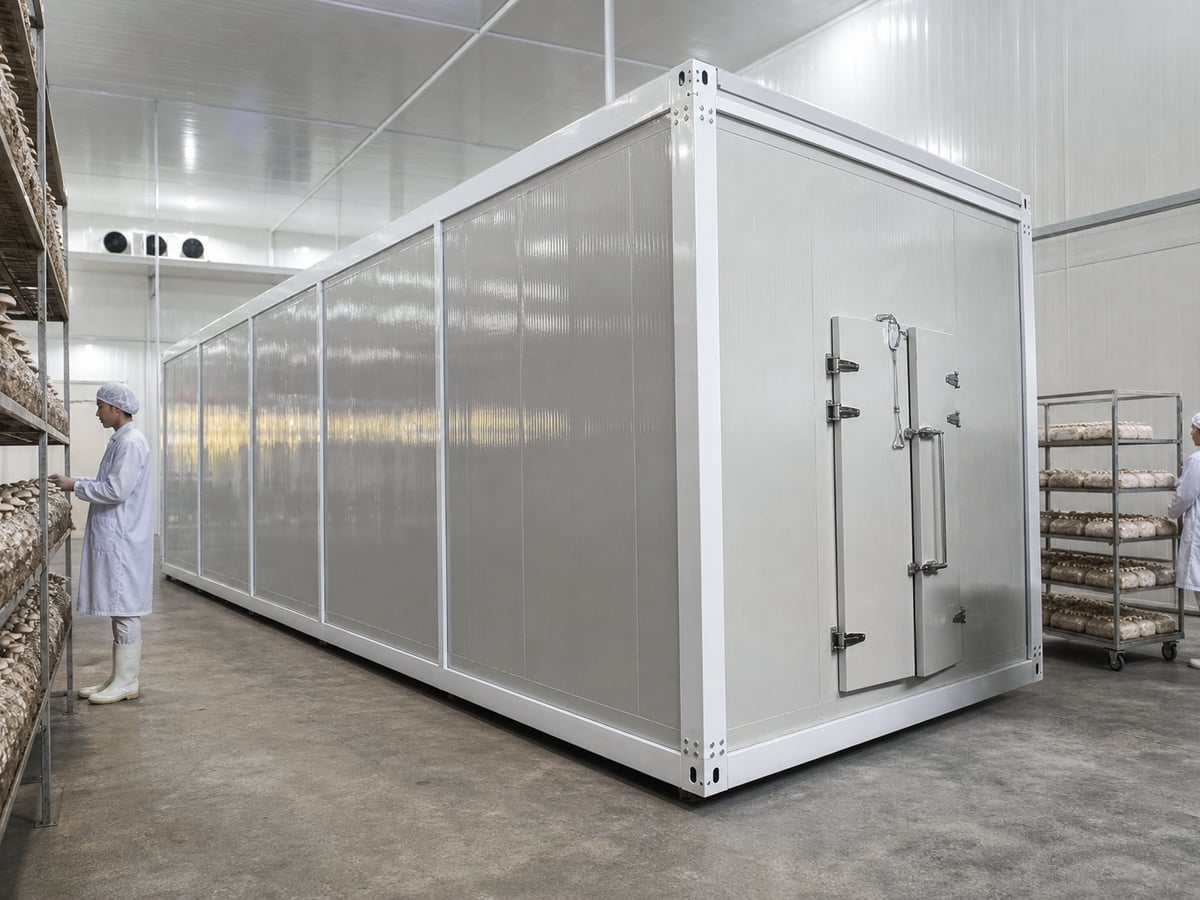
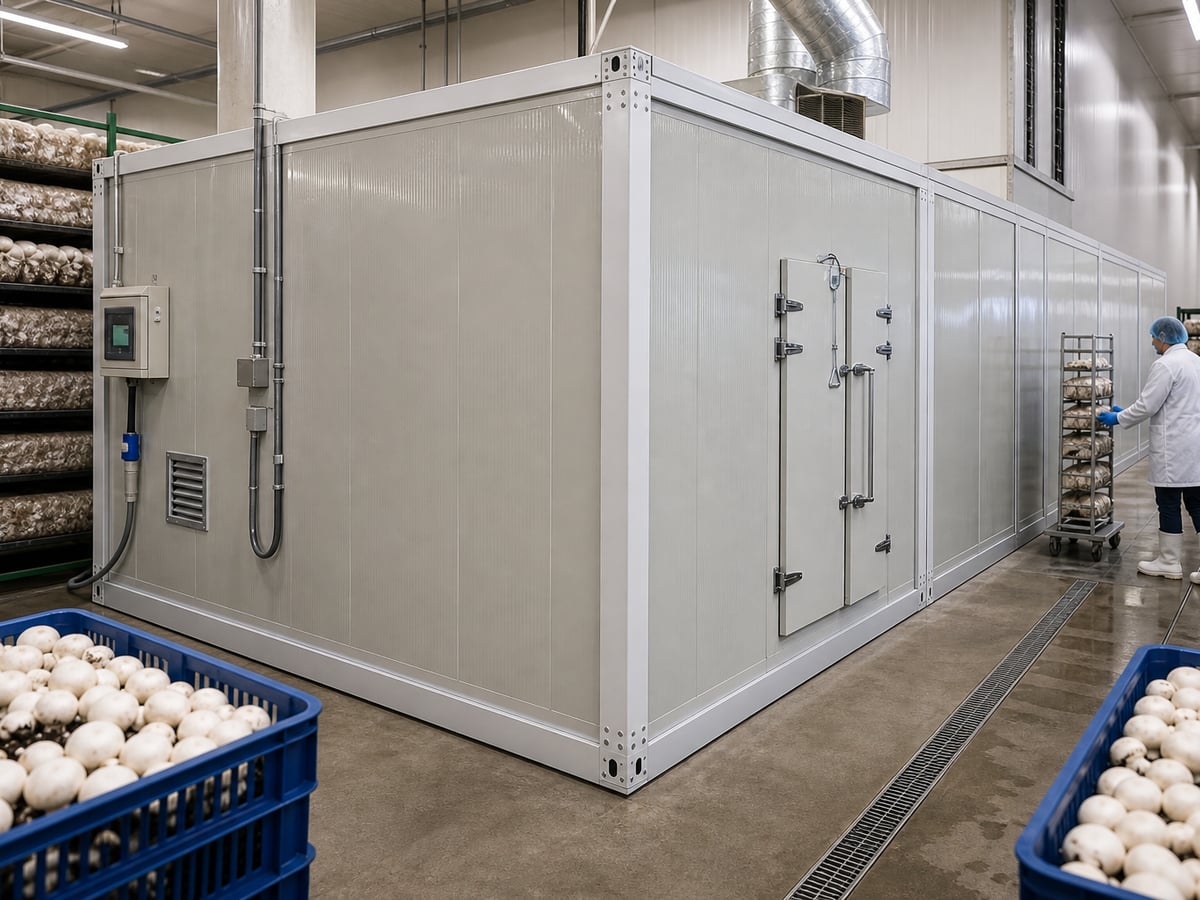
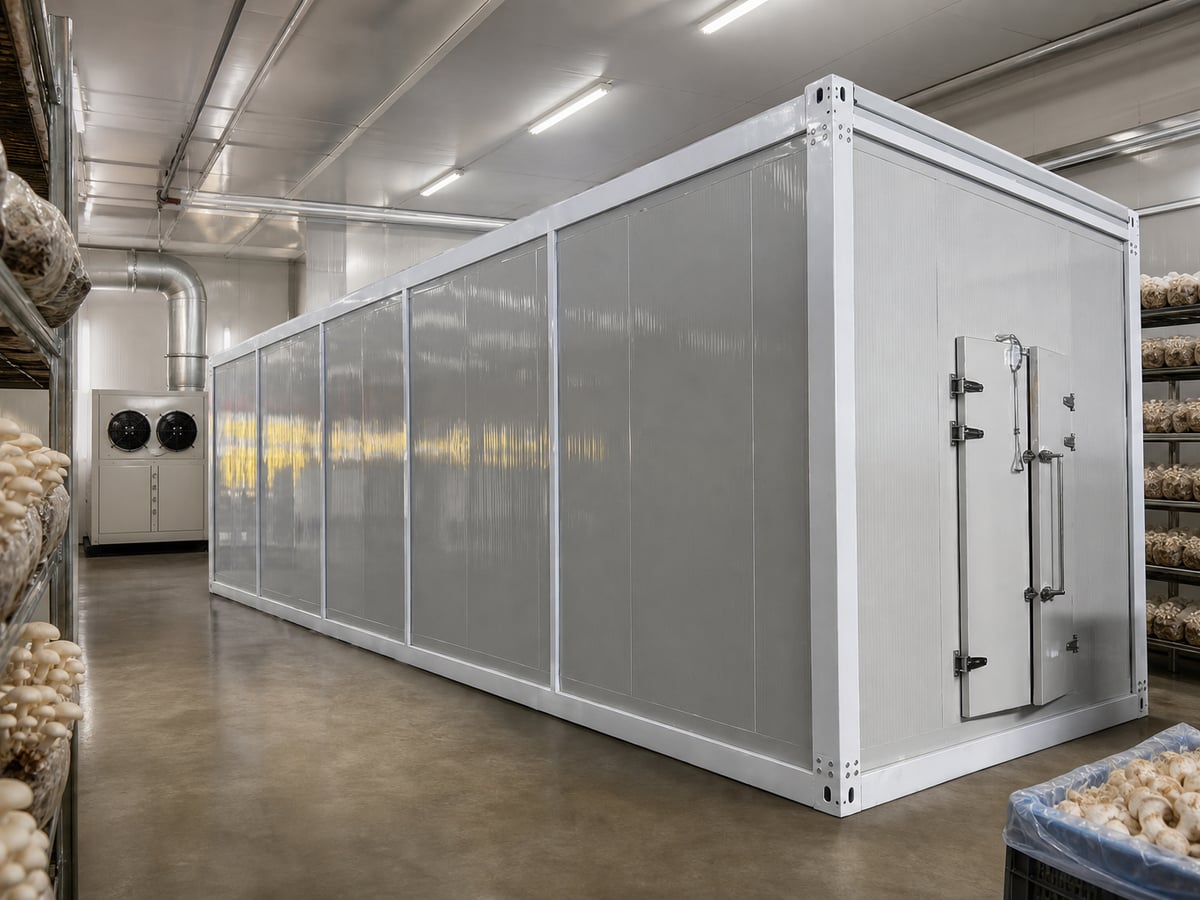
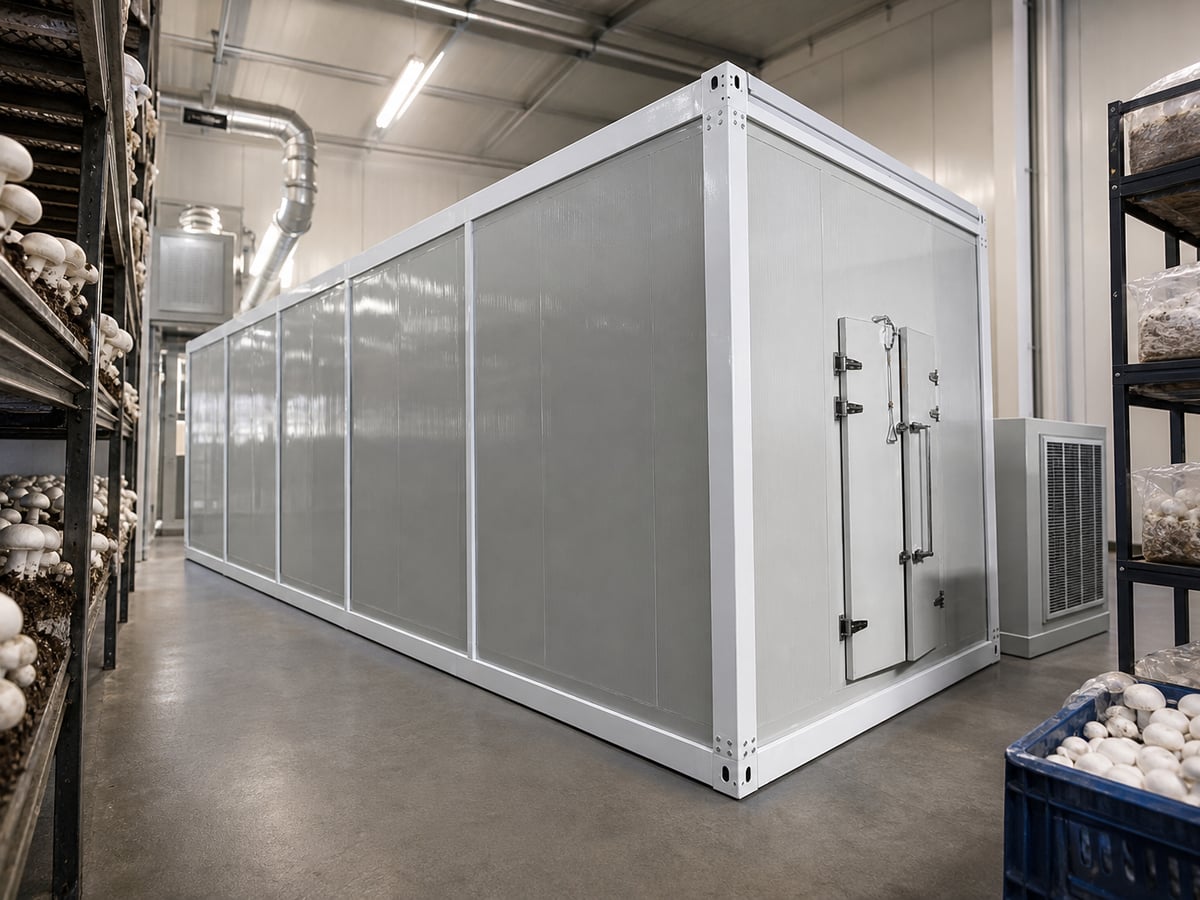
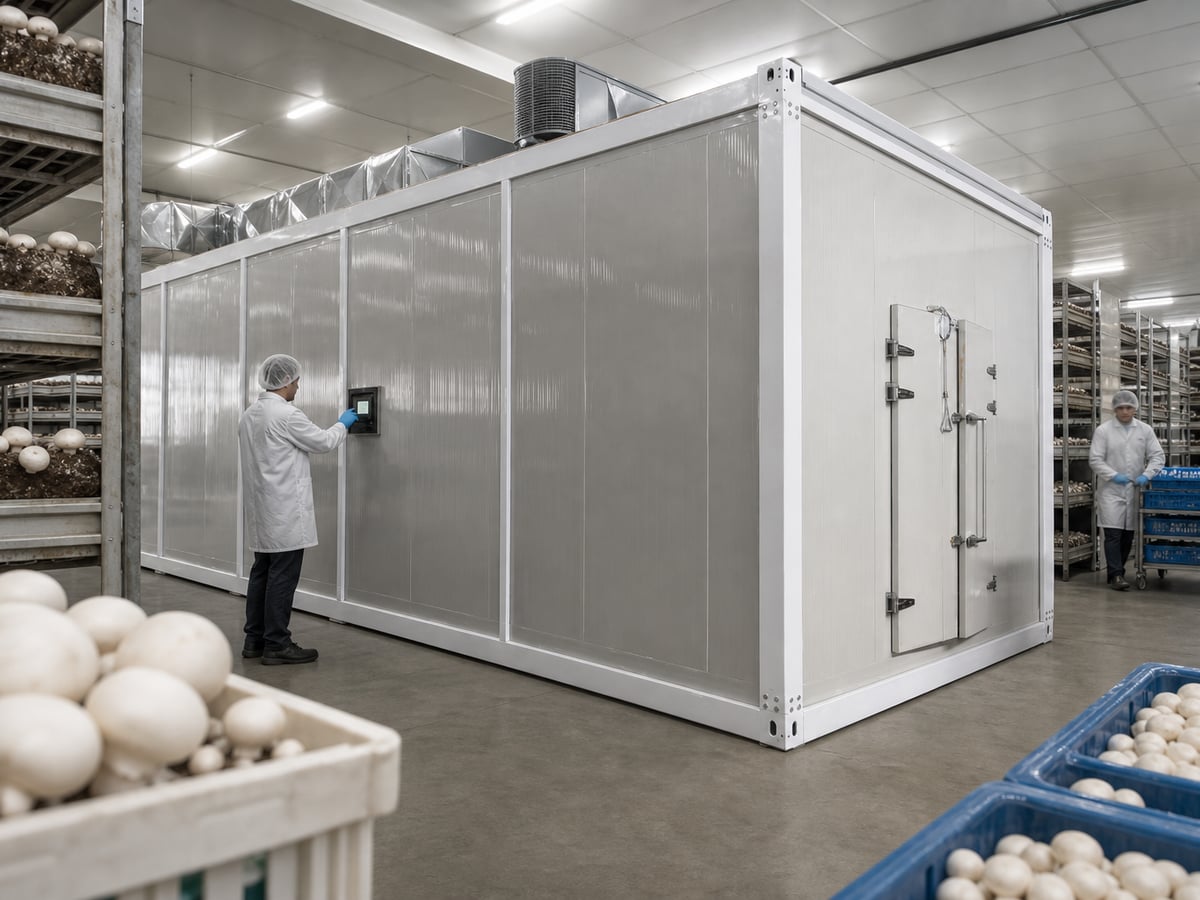
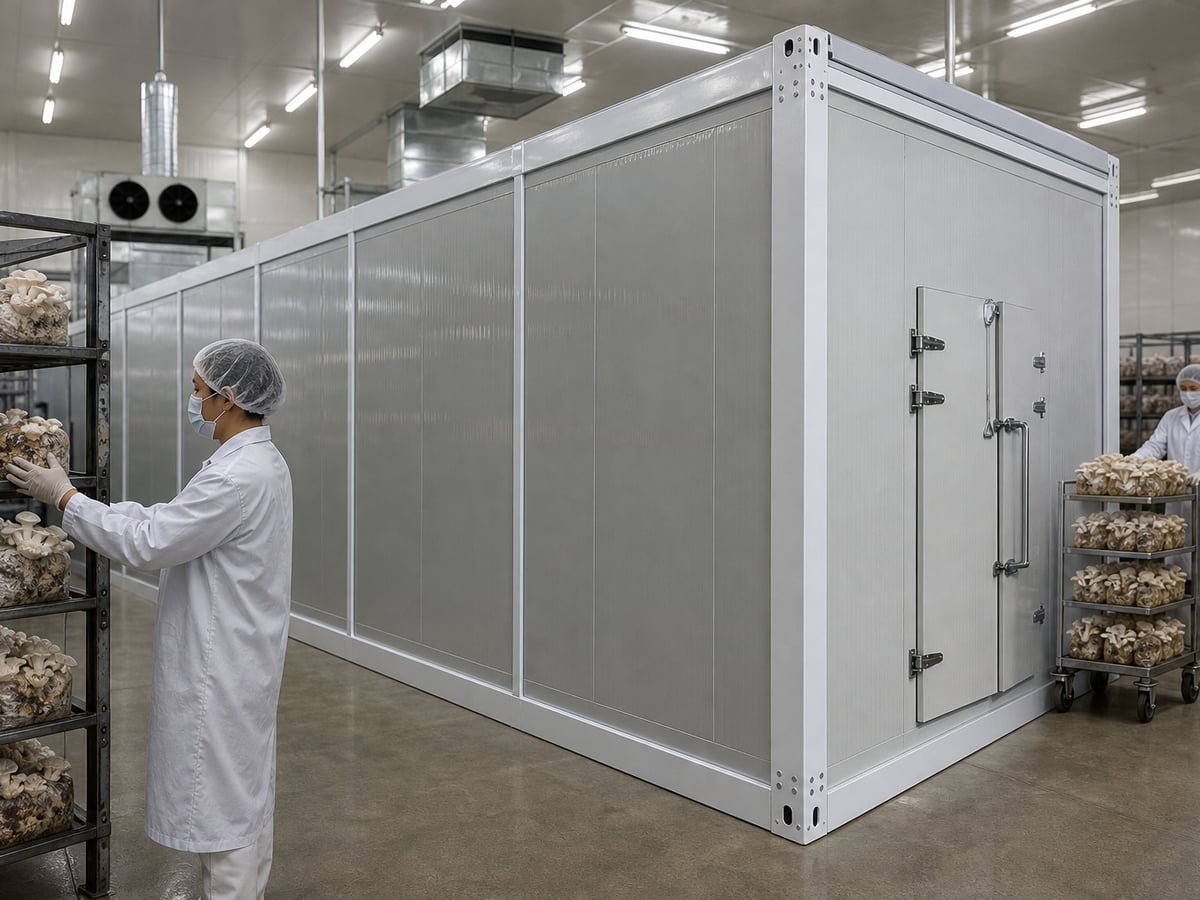
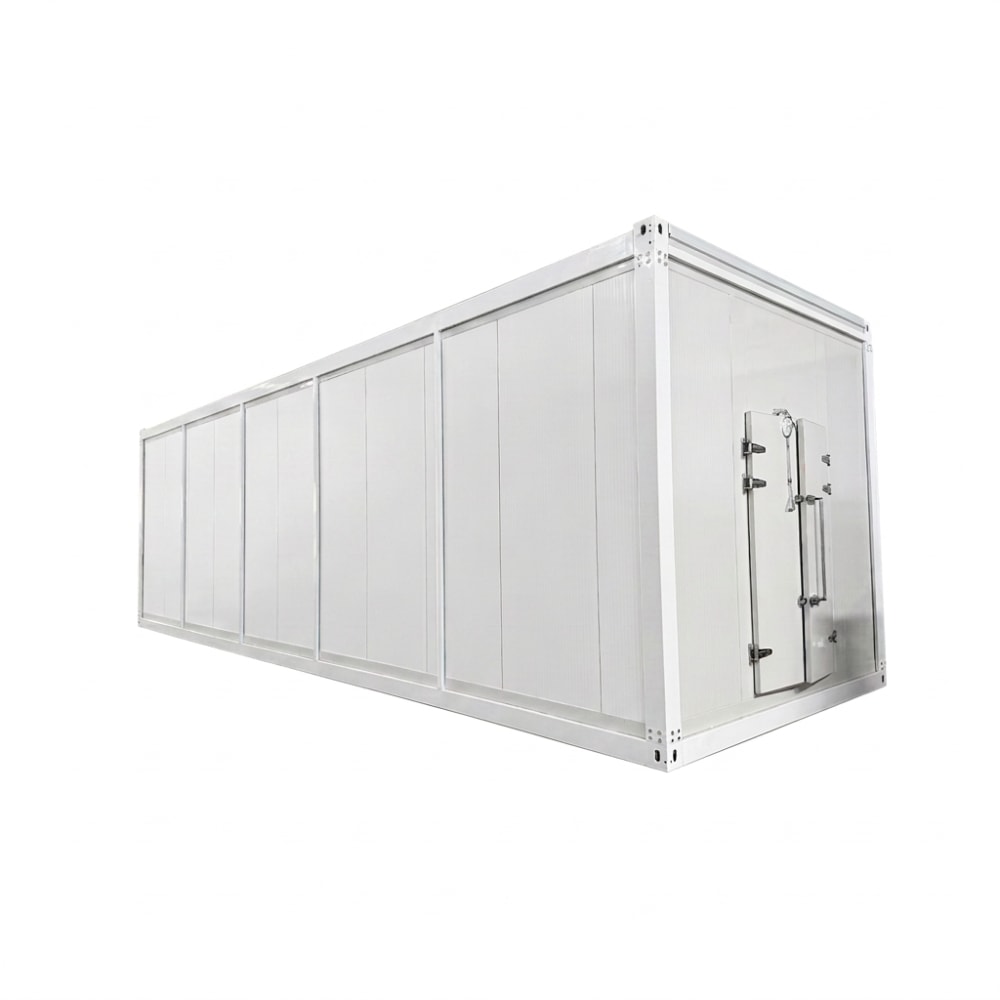
Smart Mushroom Cultivation Container
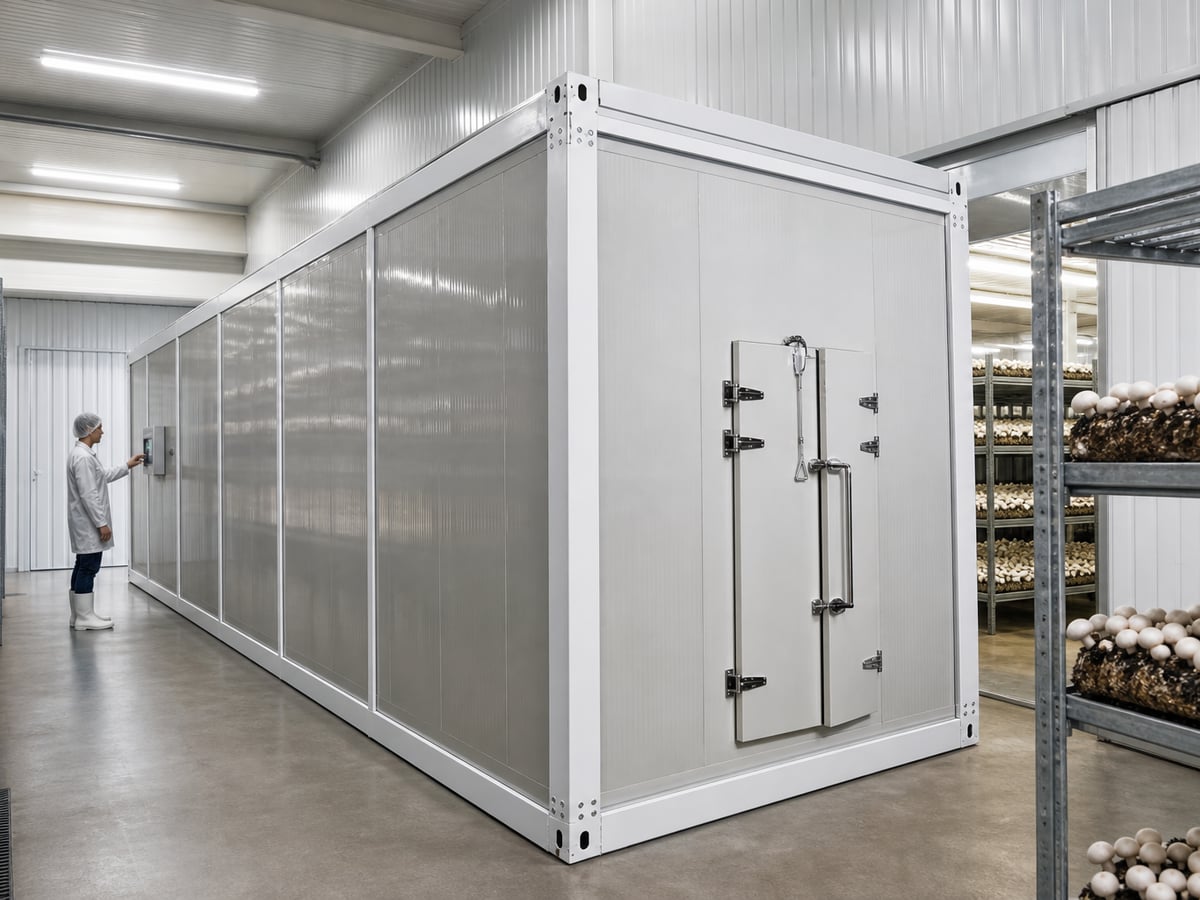
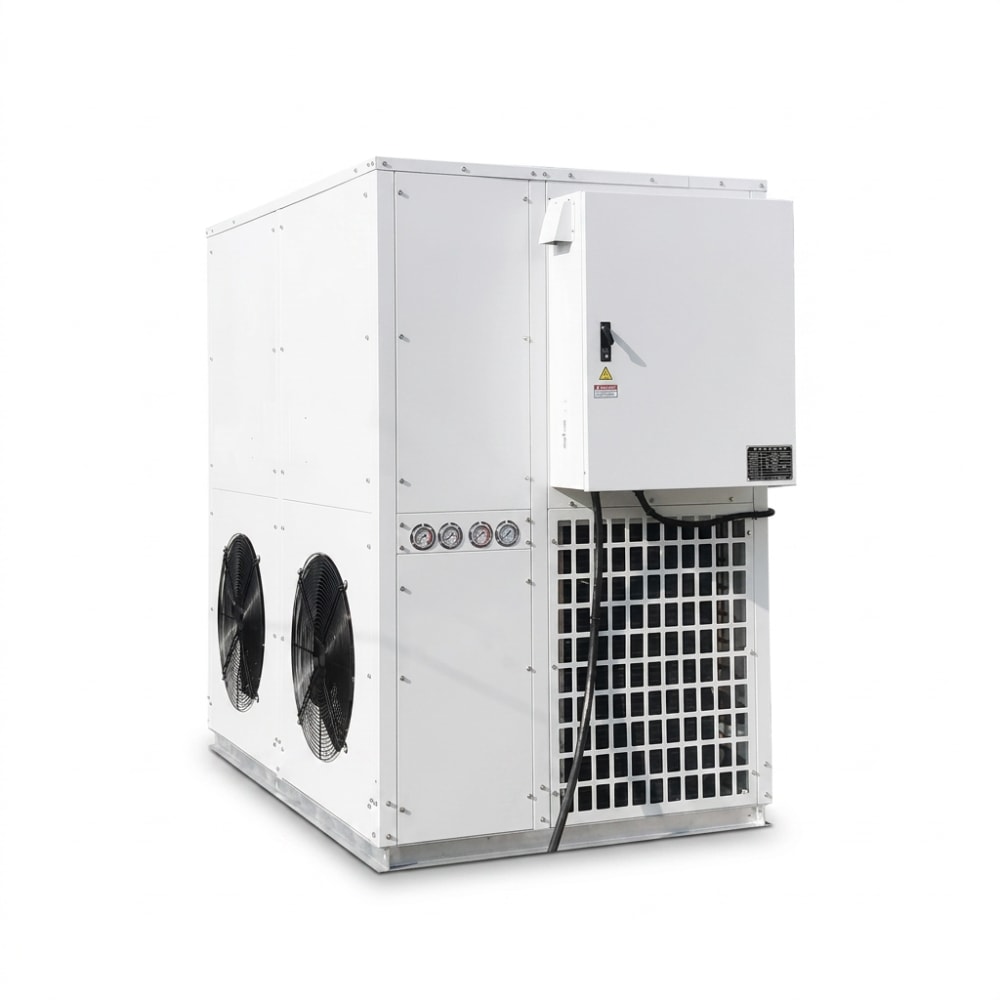
Smart Mushroom Climate Controller
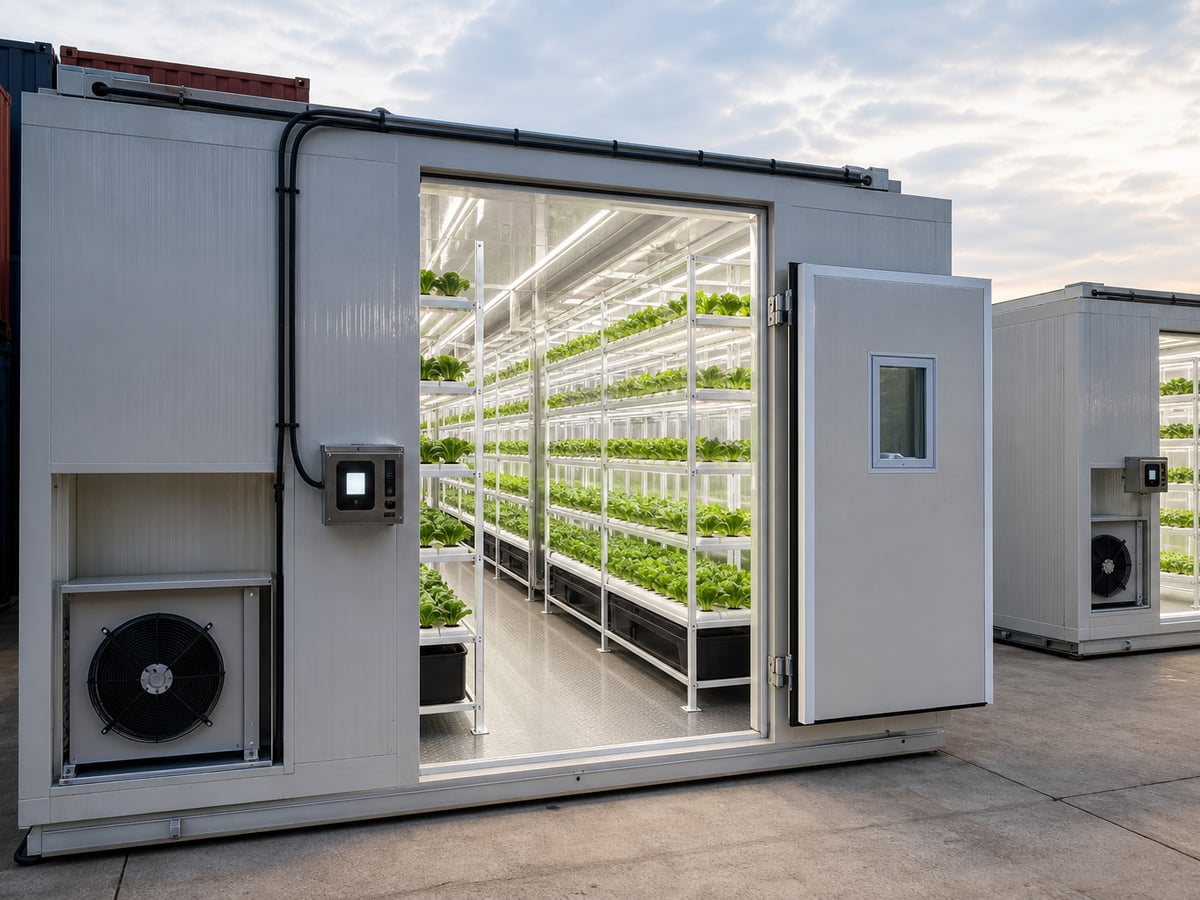
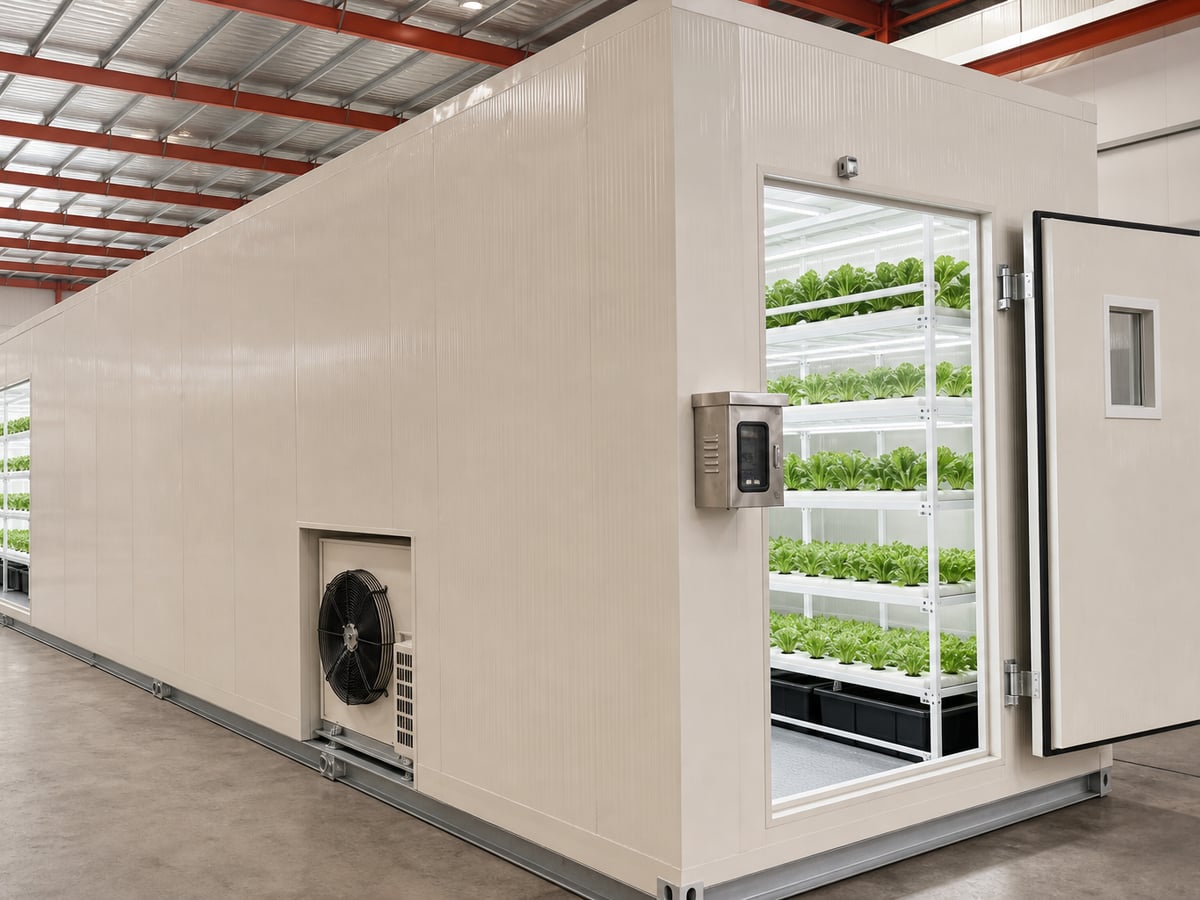
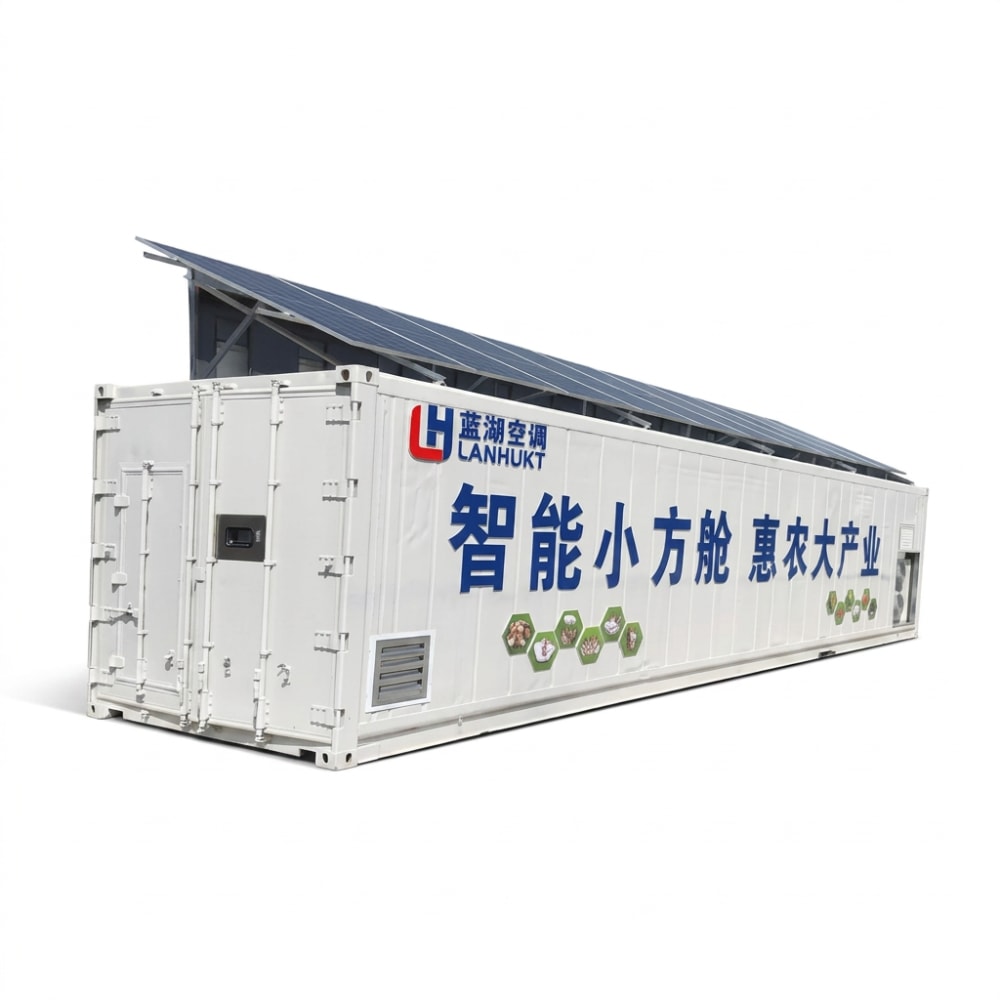
Smart Hydroponic Plant Container
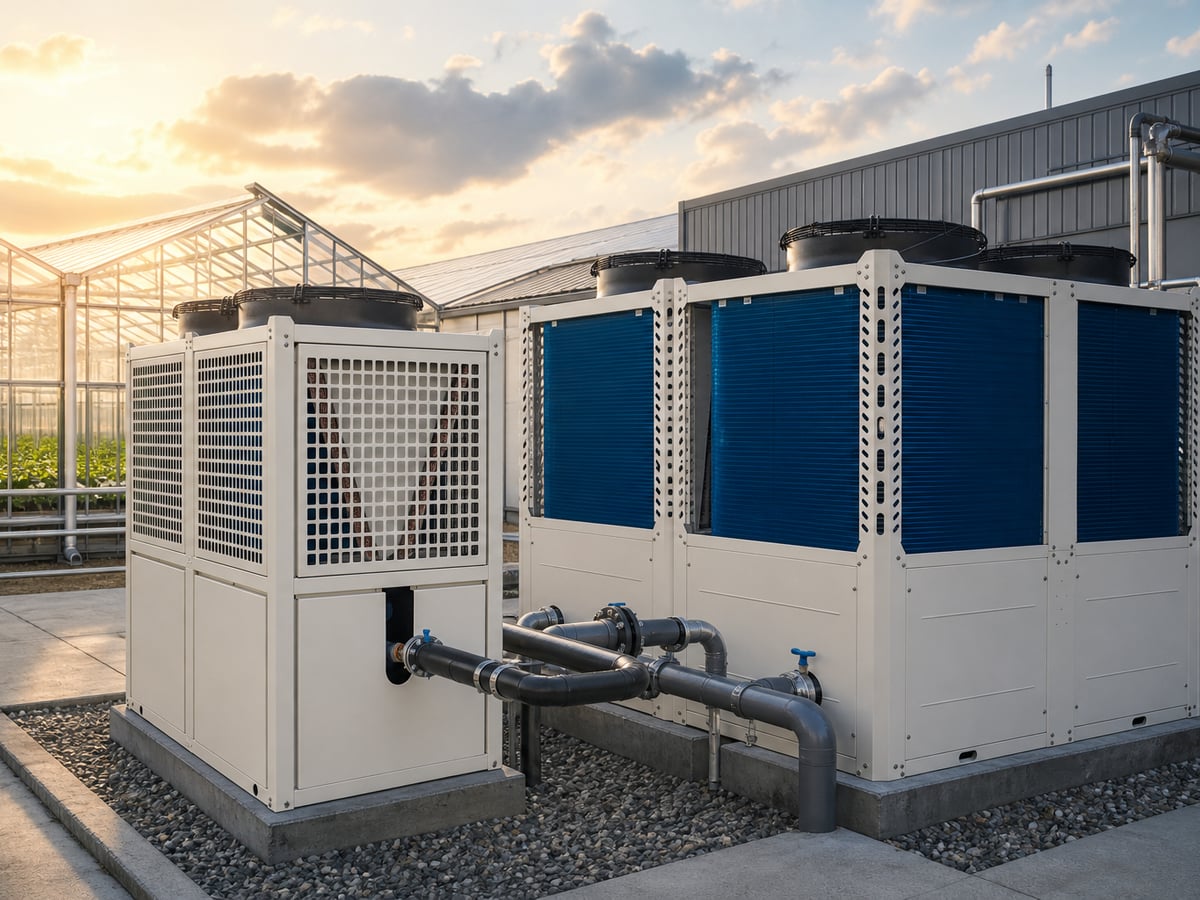
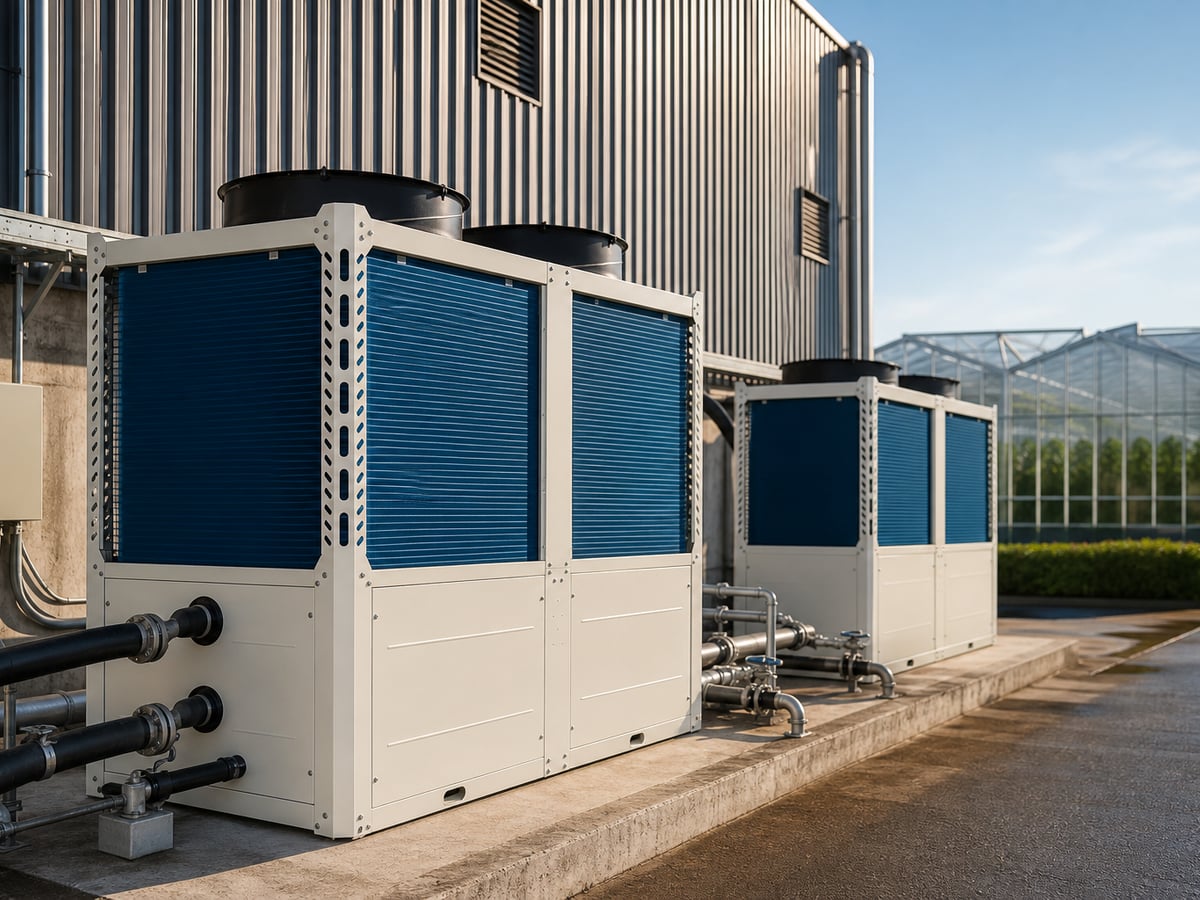
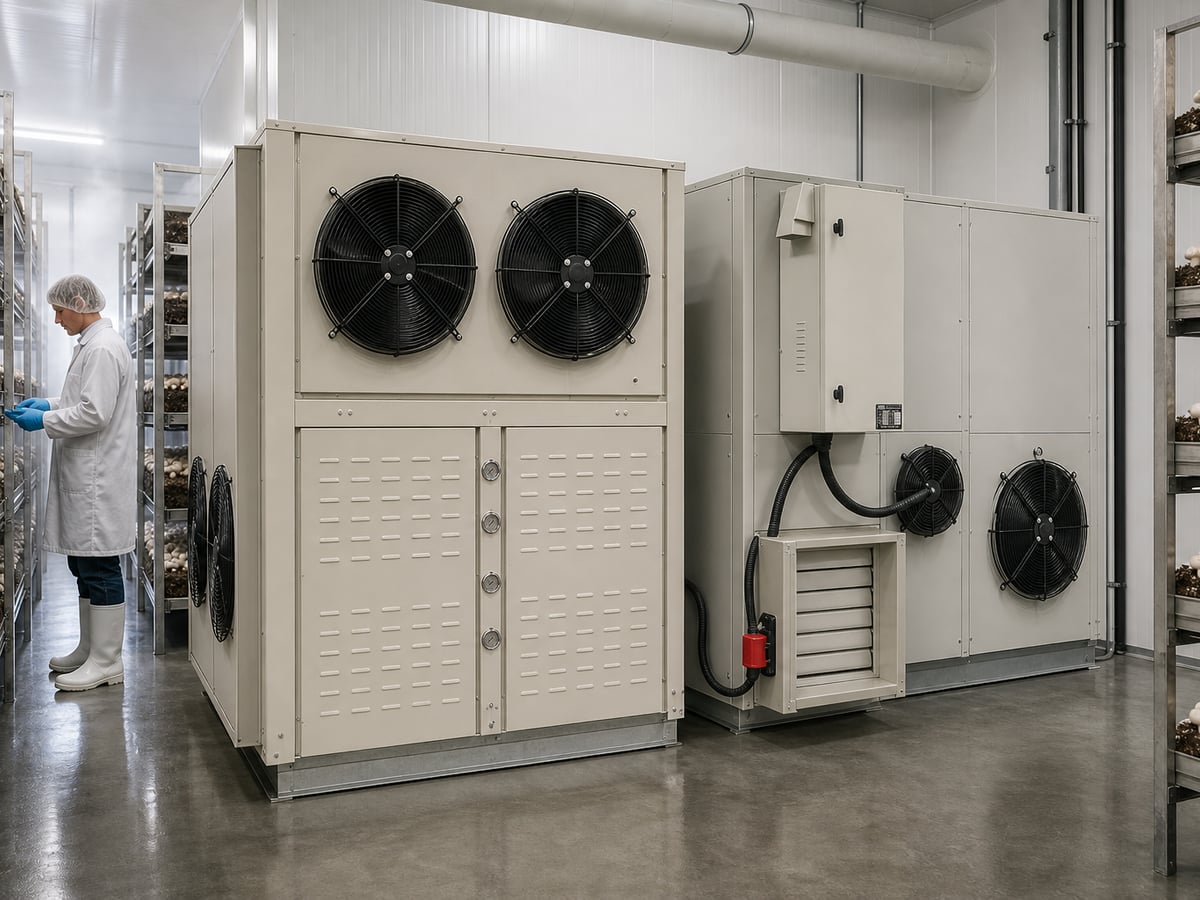
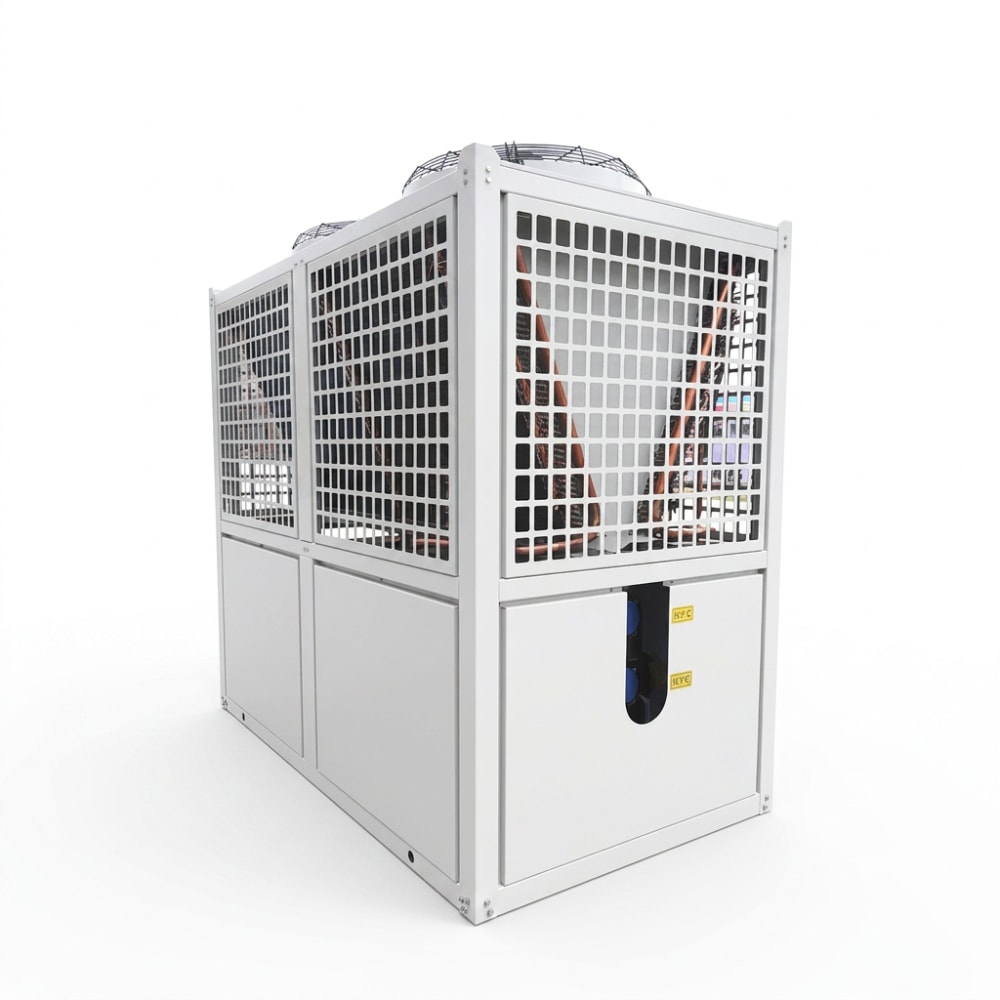
Air Source Heat Pump
Global Market Mushroom Growing Rooms: Commercial Guide
A mushroom growing room is a controlled cultivation space designed to maintain the temperature, relative humidity, carbon dioxide concentration, fresh-air exchange, airflow pattern, lighting, and sanitation conditions needed for commercial mushroom production. It can be a purpose-built insulated room inside a farm building, a modular panel room, or a containerized cultivation unit.For the Global Market, a commercial mushroom growing room is commonly used to produce oyster mushrooms, shiitake, button mushrooms, king oyster mushrooms, enoki mushrooms, lion’s mane, wood ear mushrooms, and other high-value specialty varieties. Compared with conventional rooms that rely on manual ventilation and seasonal weather, a controlled mushroom room helps growers achieve more predictable crop cycles, reduce labor, protect substrate quality, and plan harvests for wholesale, retail, foodservice, and export channels.The correct solution is not simply the largest room or the highest-capacity HVAC system. A suitable design begins with the mushroom species, substrate loading, shelf layout, local climate, utility availability, target crop cycle, biosecurity procedures, and production goals. In hot and humid regions, dehumidification and cooling capacity may be critical. In cold climates, heating, insulation, humidification, and frost protection can become the main design priorities.Shandong Lanhu Air Conditioning Equipment Co., Ltd. supplies modular cultivation solutions, climate equipment, and engineering support for growers, distributors, and agricultural contractors worldwide. Buyers comparing a room-based project with a ready-to-deploy unit may also review Lanhu’s smart mushroom cultivation container solutions.Growing Room TypeTypical ScaleBest-Fit UserMain BenefitKey ConsiderationRetrofit farm roomSmall to mediumExisting farmsUses available building spaceExisting insulation and drainage must be assessedInsulated panel growing roomMedium to largeCommercial farmsFlexible dimensions and clean interior finishRequires prepared building or structural enclosureContainerized mushroom roomCompact modular scaleStartups, remote projects, pilotsFast deployment and integrated systemsInternal layout is limited by container dimensionsMulti-room mushroom farmLarge commercial scaleDedicated producersSeparate incubation, fruiting, and packing flowsNeeds professional process and utility planningResearch cultivation roomSmall controlled scaleUniversities and labsPrecise environmental trialsMay require higher sensor and data requirementsWholesale supply roomMedium to largeRegional distributorsSupports consistent scheduled harvestsMust align output with cold chain and sales demandThe table above shows why “mushroom growing room” is a broad term. The best option depends on whether the operation needs a single fruiting room, a complete farm process line, a mobile module, or a climate upgrade for an existing facility.A commercial mushroom growing room is an enclosed agricultural environment where cultivation conditions are engineered rather than left to outdoor weather. The room normally contains insulated walls and ceiling panels, washable surfaces, shelving or hanging systems, climate equipment, airflow distribution components, drainage provisions, electrical systems, and a controller. Depending on the project scope, it may also include a pre-treatment area, incubation room, inoculation area, substrate handling area, cold storage, packing room, and utility room.Growing rooms are used across the Global Market in urban farms, rural agricultural parks, food-processing zones, greenhouse complexes, research facilities, hospitality farms, cooperative production bases, and export-oriented mushroom projects. In humid tropical regions, growers may use them to avoid overheating, disease pressure, and uncontrolled condensation. In dry climates, they help maintain humidity and limit moisture loss from fruiting bodies. In temperate regions, they provide year-round production beyond the natural mushroom season.Common commercial locations include agricultural supply corridors near Rotterdam and Hamburg in Europe, food distribution networks around Dubai and Jebel Ali in the Middle East, regional farm hubs near Singapore and Johor Bahru in Southeast Asia, and large urban consumption areas such as Toronto, Sydney, São Paulo, Johannesburg, and Los Angeles. The room itself can be installed close to substrate suppliers, wholesale markets, cold-chain warehouses, restaurants, or retail distribution centers.Applications vary by crop. Oyster mushrooms generally require reliable fresh air, humidity control, and directional airflow during fruiting. Shiitake production often benefits from stable temperature stages and careful humidity management. Button mushroom farms commonly require more specialized compost, casing, shelving, and high-volume climate handling. Specialty mushrooms may need customized lighting schedules, lower contamination risk, or isolated production zones.Industry or UserTypical ApplicationRoom RequirementOperational PriorityPotential ExpansionCommercial mushroom farmContinuous fresh mushroom productionMultiple fruiting roomsYield consistency and crop schedulingAdditional rooms and packing areaAgricultural cooperativeShared production for local marketsModular rooms with simple controlsTraining and operating simplicityRegional distribution networkFoodservice supplierFresh specialty mushroom supplyClean fruiting room and cold handlingHarvest timing and qualityPremium varieties and contractsResearch institutionVariety and climate trialsIndependent environmental zonesData accuracy and repeatabilityExperimental cultivation programsUrban agriculture projectLocal fresh-food productionCompact, efficient footprintLow noise and remote managementEducation, retail, and agritourismEquipment distributorSupply of turnkey cultivation unitsStandardized modular productReliable delivery and service supportLocal installation partner networkThis comparison explains the broad market use of controlled mushroom rooms. A regional wholesaler may prioritize stable weekly output, while a research project may prioritize environmental data, and a contractor may prioritize installation speed and repeatable system architecture.A standard mushroom growing room normally includes the controlled enclosure and the climate-control package required to operate the fruiting environment. The enclosure may use insulated sandwich panels, sealed doors, internal lighting, floor drainage interfaces, and corrosion-resistant internal surfaces. The climate package may include a heat pump or cooling source, electric or other heating option, humidification equipment, supply and return air ducts, fresh-air and exhaust dampers, circulation fans, sensors, electrical controls, and alarm functions.System boundaries should be clarified before ordering. A supplier’s standard scope may cover room panels, equipment, controller, internal wiring, factory testing, and remote commissioning guidance. Site civil works, a concrete slab, external power connection, water supply pipework, drainage piping beyond the room, warehouse construction, substrate shelving, local permits, and installation labor may be included only when specifically listed in the commercial quotation.For international projects, this distinction is important. A buyer in an inland location may need to organize local crane access, final electrical connection, water filtration, insulated utility pipes, and customs clearance. Buyers importing through Shanghai, Qingdao, Ningbo, Rotterdam, Hamburg, Jebel Ali, Durban, Santos, or Melbourne should also plan logistics timing, inland transport dimensions, and on-site unloading conditions.A practical purchase specification should identify the mushroom species, room internal dimensions, number of racks, total substrate capacity, target setpoint range, ambient design conditions, power supply, water quality, drainage route, desired control language, and whether a remote monitoring platform is required. Clear project boundaries reduce delayed installation and prevent mismatched utilities.System ElementCommon Standard ScopeUsually Confirmed SeparatelyBuyer CheckpointWhy It MattersInsulated enclosurePanels, doors, seals, trimsBuilding structure or foundationInternal size and panel thicknessControls heat gain, loss, and sanitationClimate equipmentCooling, heating, air movementExternal utility room or backup generatorLocal ambient temperatureDetermines stable crop conditionsHumidificationHumidifier and control interfaceWater treatment or water tankWater hardness and pressureProtects equipment and product qualityVentilation systemFans, dampers, duct sectionsExternal louvres and building penetrationsAir intake locationSupports CO2 removal and hygieneElectrical controlControl cabinet, sensors, wiringMain distribution board and site cablingVoltage, frequency, groundingEnsures safe and compatible operationInstallation supportManuals and remote guidanceLocal installers, lifting equipmentSite access and labor capabilityImproves commissioning efficiencyThe table above is a planning tool rather than a fixed supply list. Each project should use its approved technical proposal and commercial contract as the final definition of scope.Capacity should be calculated from usable cultivation area, rack configuration, substrate bag or block dimensions, aisle width, harvest method, and crop-management practices. A room with more shelves does not automatically produce more saleable mushrooms; airflow distribution, access for workers, sanitation, and harvest efficiency must remain adequate. Overloading a room can create stagnant zones, uneven humidity, excess carbon dioxide, and higher contamination risk.Typical modular rooms can be designed from compact pilot units to larger multi-bay commercial rooms. Internal dimensions should allow workers to load substrate, inspect crop development, clean surfaces, and remove harvested mushrooms without damaging fruiting bodies. The required ceiling height depends on rack height, duct layout, lighting, sprinkler requirements where applicable, and maintenance access.Utility planning is equally important. Electrical demand depends on cooling, heating, fans, humidification, lighting, controls, and optional refrigeration. Water consumption depends on humidification technology, cleaning procedures, and crop practices. A reliable drainage system is essential because condensation, washing, and humidifier discharge can create standing water if the floor slope and drain capacity are insufficient.Before production starts, verify local voltage and frequency, such as 380–415V/50Hz three-phase, 208–240V/60Hz, or another site-specific supply. Water should be checked for sediment, hardness, microbial quality, and pressure. In areas with unstable grids, the project may need surge protection, phase-loss protection, voltage stabilization, or a backup power strategy.Planning ItemSmall Pilot RoomMedium Commercial RoomLarge Multi-Room FarmDesign DecisionInternal floor areaTypically compactDesigned around rack blocksMultiple functional zonesMatch production plan and building spaceSubstrate loadingTrial or local supply volumeRegular batch productionStaggered harvest programAllow for aisles and airflow clearanceElectrical serviceMay use smaller connected loadThree-phase commonly preferredDedicated distribution and backup planningConfirm actual equipment nameplate dataWater supplyHumidification and cleaningHigher continuous availabilityTreatment, storage, and monitoring possibleAssess pressure and mineral contentDrainageFloor drain requiredGraded floor and serviceable drainSeparated sanitation and process drainageAvoid water accumulation and odorsAccess routePersonnel and small deliveriesPallet or trolley accessDedicated loading and packing flowPlan doors, aisles, and unloading spaceThese categories are illustrative. Lanhu engineering teams can review room loading and environmental conditions to recommend equipment capacity rather than relying on a generic square-meter estimate alone.Mushrooms respond directly to environmental conditions, but ideal values differ by variety, growth stage, substrate formulation, and farm management method. A commercial growing room should therefore be designed around adjustable operating ranges rather than one fixed temperature or humidity number. The controller should coordinate cooling, heating, humidification, ventilation, and circulation so that the environment is stable and changes are gradual enough to avoid crop stress.Temperature affects mycelial activity, pinning, fruit body formation, harvest timing, and shelf-life quality. Relative humidity influences moisture retention and cap appearance, but excessive humidity combined with poor air movement may encourage condensation and disease. Carbon dioxide is produced by the mushrooms and substrate; it needs to be managed through fresh-air exchange rather than assumed to be controlled by circulation fans alone.Airflow should be distributed across the crop without creating direct high-speed drafts that dry fruiting bodies. A good design separates supply, return, circulation, and exhaust functions where needed. Sensors should be installed in representative crop zones, not only near a cooling coil or fresh-air intake. Periodic calibration and practical crop observation remain necessary because sensor readings are only one part of environmental management.Control performance depends on room insulation, outdoor conditions, crop heat load, door-opening frequency, substrate load, equipment selection, and maintenance. Buyers should request design assumptions and confirm that quoted capacities are suitable for their peak summer and winter ambient conditions.Environmental FactorPurpose in Mushroom ProductionControl MethodOperational Risk if UnmanagedRecommended Management PracticeTemperatureSupports variety-specific growth stagesCooling, heating, insulated enclosureSlow growth, poor pinning, heat stressUse stage-based setpoints and verify sensorsRelative humidityLimits crop dehydrationHumidifier, fogging, ventilation coordinationDry caps, condensation, disease pressureBalance humidity with air movementCarbon dioxideInfluences mushroom morphology and developmentFresh-air intake and controlled exhaustElongation, reduced quality, uneven cropMonitor crop-level CO2 trendsAir circulationCreates even room conditionsFans, ducts, air distribution designDead zones and variable yieldAdjust fan operation after crop loadingFresh-air exchangeRemoves metabolic gases and heatDampers, intake filtration, exhaust fansHigh CO2 and stale airProtect intakes from dust and pestsCondensation controlMaintains clean crop surfacesInsulation, airflow, dehumidification strategyBacterial blotch and wet surfacesInspect ceilings, walls, and ducts regularlyThe table clarifies that environmental variables are interdependent. Raising ventilation may lower CO2 but also reduce humidity and increase heating or cooling demand. Effective mushroom climate control uses coordinated logic instead of isolated equipment operation.The chart is a general operational illustration, not a crop recipe. Environmental attention normally increases during pinning and fruiting, when crop uniformity, fresh-air exchange, humidity, and airflow balance have the greatest visible impact.A durable mushroom growing room combines a hygienic enclosure with reliable climate-control components. Insulated sandwich panels are often selected for walls and ceilings because they provide thermal performance, a smooth cleanable surface, and modular installation. Panel thickness and core material should be selected according to outdoor climate, room setpoints, fire requirements, and local building codes.Internal materials should resist moisture, routine cleaning, and agricultural operating conditions. Door frames, hinges, fasteners, drainage hardware, duct sections, and rack materials should be chosen with corrosion resistance in mind. In coastal markets near ports such as Jebel Ali, Rotterdam, Santos, Durban, and Manila, salt-laden air and high humidity can increase corrosion exposure, particularly where external equipment is installed.Protection features may include electrical overload protection, phase-loss protection, high- and low-pressure protection for refrigeration circuits, temperature alarms, water-shortage alarms, emergency stop functions, door seals, intake filters, insect screens, and controller password management. The required protection package should reflect local electrical quality, operating temperatures, staffing level, and insurance requirements.For food-oriented operations, interior design should support washdown and sanitation. Avoid unnecessary ledges, difficult-to-clean corners, exposed absorbent materials, and unsealed penetrations. Floor slope, drainage access, service clearance, and removable filters can influence long-term hygiene more than decorative finishes.Automation enables a mushroom growing room to run programmed climate stages with less manual switching. A controller can collect temperature, humidity, and CO2 data and activate cooling, heating, humidification, exhaust fans, circulation fans, dampers, lighting, and alarms according to configured logic. Advanced projects may include multi-room coordination, trend records, historical alarms, user permissions, recipe-based stage settings, and remote access through a computer or mobile device.Lanhu develops smart climate solutions for controlled agriculture, including the smart mushroom climate controller. Automation does not replace skilled crop management; it gives farm teams a more consistent way to apply their cultivation recipes, identify deviations, and respond before a problem affects a full harvest cycle.Customization options can include room dimensions, door positions, rack arrangement, panel thickness, climate capacity, electrical standard, control language, sensor quantity, ventilation filtration, stainless-steel components, lighting configuration, external equipment housing, and branding for OEM projects. A distributor may require private labeling and standardized documentation, while a farm operator may require a layout built around local substrate crates or shelf dimensions.By 2026, the Global Market is expected to see wider adoption of connected cultivation systems, energy-management dashboards, predictive maintenance alerts, variable-speed fan control, and data-driven crop recipes. Sustainability expectations are also increasing. Buyers are asking for better insulation, lower-energy heat-pump solutions, water-saving humidification practices, refrigerant compliance planning, and designs that reduce food miles by enabling production near consumption centers.Policy trends can influence projects as well. Energy-efficiency regulations, refrigerant rules, food traceability requirements, workplace safety standards, and water-discharge regulations vary by country. A responsible project should confirm local permitting, food handling, electrical safety, fire protection, and worker safety obligations before installation.Successful installation begins before equipment arrives. The site should have a level foundation or suitable building floor, confirmed drainage, approved electrical supply, water access, ventilation penetrations where required, safe equipment access, and sufficient space for maintenance. Modular panels should be assembled according to the layout drawing, with careful attention to panel joints, vapor sealing, door alignment, floor interfaces, and service openings.Commissioning should include an inspection of wiring, grounding, phase sequence, fan rotation, drainage, water connections, refrigeration operation, humidification output, sensor readings, controller logic, alarm functions, door seals, and air distribution. The room should be run under no-load and loaded conditions where possible because substrate and crop respiration change the room’s thermal and moisture behavior.Routine maintenance protects operating stability. Operators should inspect filters, humidifier nozzles or components, drains, coil cleanliness, fan vibration, door gaskets, sensor accuracy, electrical terminals, and alarm history. Water quality should be monitored because mineral buildup can reduce humidification efficiency. Cleaning schedules should include room surfaces, drainage channels, intake screens, and areas behind removable panels or equipment covers where permitted.Warranty terms should be stated in the sales contract and may vary by equipment type, project scope, destination, installation responsibility, and operating conditions. Buyers should retain commissioning records, maintenance logs, and photographs of any issue to support efficient technical evaluation. Lanhu can provide installation guidance, spare-parts support, international logistics coordination, and after-sales communication for qualified projects. For customized requirements, visit the OEM and ODM service page.Shandong Lanhu Air Conditioning Equipment Co., Ltd. is a Dezhou, Shandong-based manufacturer focused on agricultural climate control equipment, industrial HVAC systems, modular cultivation systems, smart mushroom cultivation containers, hydroponic plant containers, and air-source heat-pump solutions. Its experience in thermodynamic research and development supports practical environmental-control design for modern agriculture.Technological capability is built around more than 12 years of thermodynamic development experience, a portfolio of more than 45 registered patents, and integrated work in climate control, electrical control, airflow management, and agricultural automation. This allows Lanhu to support room-specific engineering discussions instead of treating every mushroom project as a standard refrigeration purchase.Manufacturing capability includes a modern facility of more than 30,000 square meters, with product design, engineering development, sheet-metal fabrication, CNC bending, insulation panel production, electrical assembly, system integration, equipment testing, and quality inspection performed within an integrated production process. Systems are subject to functional inspection, electrical verification, performance testing, and operational evaluation before shipment. The company holds ISO 9001, ISO 14001, ISO 45001, and ISO 12100 certifications.Service capability covers factory-direct supply, engineering assistance, OEM and ODM customization, export logistics support, spare-parts coordination, installation guidance, and after-sales service. Lanhu works with agricultural contractors, equipment distributors, engineering companies, and commercial farming projects across the Global Market. Prospective buyers can review selected mushroom cultivation project cases to understand possible applications, then contact the Lanhu team with site conditions, crop type, and target capacity.What information is needed to quote a mushroom growing room?Provide the mushroom species, target production capacity, substrate type and loading method, required room dimensions, location, outdoor temperature range, local voltage and frequency, water source, drainage arrangement, and preferred automation level. Photographs or drawings of the installation site are also useful.Can one mushroom room grow different mushroom species?It can, but different varieties may require different climate conditions and sanitation procedures. Separate rooms are often more efficient when growing species with significantly different temperature, humidity, CO2, or crop-cycle requirements.Does the growing room include mushroom racks?Rack systems may be included as a customized option, but the scope should be confirmed in the quotation. Rack design depends on bag size, block weight, shelf loading, aisle width, harvest method, and cleaning practices.How important is insulation in a mushroom farm?Insulation is essential because it reduces heat gain and loss, helps control condensation, lowers climate equipment load, and improves setpoint stability. The appropriate panel specification depends on climate, internal conditions, and local building requirements.Can the system be monitored remotely?Selected configurations can support remote monitoring and alarm functions. Internet availability, local network security, controller configuration, and applicable communication methods should be reviewed during project planning.What maintenance is most important?Maintain clean filters, drains, humidification components, coils, sensors, fans, door seals, and electrical connections. Regular sanitation and water-quality management are especially important in humid mushroom production environments.Can Lanhu customize a solution for local standards?Yes. Projects can be evaluated for local voltage, frequency, climate conditions, language requirements, equipment layout, room dimensions, automation needs, and transportation constraints. Final compliance with site-specific regulations should be confirmed with qualified local professionals where required.
Commercial Heat Pumps for the Global Market: Buying Guide
A commercial heat pump is an electrically driven HVAC system designed to supply heating, cooling, domestic hot water, process water, or dehumidification for large buildings and commercial operations. Instead of generating heat through combustion, it transfers heat from outdoor air, water, ground sources, or recovered process heat. This enables significantly lower energy consumption than many conventional electric-resistance or fossil-fuel heating systems.For the Global Market, commercial air source heat pumps are commonly selected because they are modular, scalable, comparatively fast to install, and suitable for locations ranging from mild coastal climates to cold inland regions. A correctly engineered system can support hotels, hospitals, agricultural facilities, commercial greenhouses, mushroom farms, food-processing plants, warehouses, schools, offices, swimming pools, and multi-unit residential buildings.The most important purchasing factors are not only nominal heating capacity. Buyers should assess local winter design temperature, required supply-water temperature, part-load efficiency, heating load profile, hydraulic configuration, electrical infrastructure, defrost behavior, refrigerant compliance, noise limits, maintenance access, and after-sales support. For agricultural and controlled-environment projects, humidity, fresh-air load, crop requirements, and operating continuity also need to be considered.In practical terms, a commercial heat pump should be selected as a complete system rather than as a standalone machine. The unit, buffer tank, circulation pumps, water treatment, controls, pipe sizing, terminal equipment, backup heating strategy, and commissioning plan must work together. Learn more about available air source heat pump solutions for commercial and agricultural climate-control applications.A commercial heat pump uses a refrigeration cycle to move thermal energy from one location to another. During heating operation, the evaporator absorbs low-grade heat from the air or another source. The compressor raises refrigerant pressure and temperature, and the condenser transfers useful heat into a water circuit or air distribution system. In cooling mode, the cycle reverses or operates through a dedicated cooling circuit to remove heat from the building or process.Commercial models are generally larger, more durable, and more controllable than domestic heat pumps. They may include multiple compressors, inverter-driven fans, plate heat exchangers, electronic expansion valves, integrated circulation pumps, remote monitoring, cascade controls, and advanced fault protection. They are intended to operate for long hours under variable demand and often support multiple temperature zones.Demand is growing across the Global Market as energy regulations tighten and businesses seek lower carbon operating models. In Europe, electrification targets and carbon-reduction policies are accelerating heat-pump adoption. In North America, commercial retrofits often replace aging boilers and packaged rooftop equipment. In the Middle East, heat pumps can provide efficient cooling and hot water. Across Southeast Asia, Africa, Latin America, and Oceania, they are used for hotels, farms, processing facilities, and distributed commercial developments.Common applications include:Space heating and cooling for offices, schools, shopping centers, hospitals, and hotels. Domestic hot water for accommodation, kitchens, laundries, gyms, and healthcare facilities. Hydronic fan coils, underfloor heating, radiators, air handling units, and chilled-water systems. Commercial agriculture, including mushroom cultivation rooms, hydroponic farms, greenhouses, hatcheries, and livestock buildings. Industrial and food-processing applications requiring moderate-temperature hot water or process cooling. Swimming-pool heating, spa facilities, sports centers, and recreation venues. Project location affects equipment selection. A hotel near Rotterdam or Hamburg may prioritize high seasonal efficiency and low noise. A facility in Toronto, Warsaw, or Ulaanbaatar may require low-ambient heating performance and reliable defrosting. A greenhouse near Dubai, São Paulo, Nairobi, or Sydney may prioritize cooling, dehumidification, and stable water temperatures. Ports and trade hubs such as Singapore, Los Angeles, Jebel Ali, Rotterdam, and Durban also benefit from equipment packages that are easy to ship, commission, and service internationally.Commercial heat pumps are available in several configurations. The right type depends on the available heat source, building load, water temperatures, installation space, climate, and budget. Air-to-water systems are among the most widely used because no boreholes, cooling towers, or groundwater permits are normally required. Water-source and ground-source systems can offer highly stable efficiency where water or geothermal resources are available, while hybrid systems provide resilience for difficult climates or high-temperature requirements.Commercial Heat Pump TypePrimary Heat SourceTypical UseMain AdvantageKey ConsiderationAir-to-water monoblocOutdoor airHeating, cooling, hot waterCompact hydronic installationWater circuit frost protection is essentialAir-to-water split systemOutdoor airCommercial buildings and farmsIndoor hydraulic module can improve freeze resilienceRequires qualified refrigerant pipe installationModular air source heat pumpOutdoor airHotels, schools, factoriesCapacity can be expanded in stagesRequires coordinated cascade controlsWater-source heat pumpLoop water, groundwater, recovered heatLarge commercial propertiesStable source temperature and high efficiencyWater quality and permits must be assessedGround-source heat pumpGround loops or boreholesLong-term low-carbon developmentsHigh seasonal efficiencyHigher civil-work investmentHigh-temperature heat pumpAir, water, or process heatRetrofit radiators and process waterCan serve higher supply temperaturesEfficiency falls as leaving-water temperature risesHeat recovery chillerSimultaneous cooling loadHotels, food plants, data centersProduces cooling and useful hot water togetherBest when heating and cooling overlapThe table shows why a capacity number alone is not enough for comparison. For example, a 100 kW air-to-water machine and a 100 kW water-source machine can have very different seasonal energy use, installation cost, operating limits, and maintenance needs. A modular air source design is particularly practical for phased projects because additional units can be added as occupancy, crop area, production volume, or hot-water demand increases.For commercial cultivation, air source units are often combined with air handlers, fan coils, ducted dehumidification equipment, hot-water coils, chilled-water coils, and intelligent climate controllers. Mushroom production facilities may use heat pumps to stabilize room temperature while dedicated fresh-air and humidity systems manage CO2, moisture, and crop-specific environmental targets. Hydroponic containers may use the same hydronic source for air conditioning, nutrient-water temperature management, and humidity control.Heating capacity is the useful heat delivered by the unit under stated test conditions, usually expressed in kW. Cooling capacity is the useful amount of heat removed from the conditioned space or water loop. Manufacturers must state conditions clearly because capacity changes substantially with outdoor air temperature, entering-water temperature, leaving-water temperature, flow rate, and defrost operation.COP, or coefficient of performance, is the ratio of heating output to electrical input at one defined operating point. A COP of 4.0 means the machine delivers approximately 4 kW of heat for each 1 kW of electrical energy consumed under those conditions. SCOP, or seasonal coefficient of performance, estimates performance across a representative heating season with part-load operation and changing ambient temperatures. For cooling, EER and SEER-type indicators may be used depending on the applicable standard and market.Performance IndicatorWhat It MeasuresWhy It MattersBuyer CheckpointHeating capacityHeat output in kWDetermines whether design load can be coveredCompare at the actual winter design conditionCooling capacityCooling output in kWSupports summer comfort and process coolingReview at required chilled-water temperatureCOPPoint heating efficiencyUseful for like-for-like operating comparisonsConfirm ambient and water test conditionsSCOPSeasonal heating efficiencyBetter indication of annual energy useCheck climate zone and declaration standardEERPoint cooling efficiencyShows cooling electrical demandVerify full-load and part-load valuesOperating ambient rangeAllowed outdoor temperature rangeIndicates climate suitabilityCheck heating capacity at low ambient temperaturesMaximum leaving-water temperatureHighest supply-water temperatureImportant for radiators and hot-water applicationsEvaluate capacity and COP at that temperatureAs outdoor temperature drops, an air source heat pump has less available heat to absorb and must work against a higher temperature lift. Capacity and COP therefore tend to decrease. Defrost cycles also affect net delivered heat in cold, humid weather. Buyers should request a performance map rather than relying on a single headline rating. The map should show output and input power at several ambient conditions, such as 7°C, 2°C, -7°C, and lower if relevant.For example, a project in Milan may be designed around moderate winter conditions, while a warehouse in Chicago or a cultivation facility in northern China may require a larger unit, a cascade arrangement, thermal storage, or auxiliary backup. In warmer climates, cooling load and hot-water demand may occur simultaneously. A heat recovery solution can then use rejected cooling heat to produce domestic hot water efficiently.By 2026, the market is expected to place more emphasis on transparent seasonal performance data, low-global-warming-potential refrigerants, smart-grid readiness, demand-response capability, and carbon reporting. Procurement teams should consider lifecycle electricity use and local tariff structures rather than focusing solely on first cost.Hydraulic design determines whether a commercial heat-pump system operates quietly, efficiently, and reliably. Supply-water temperature is one of the most important variables. Lower water temperatures generally improve COP because the compressor does not need to create as large a temperature difference. Underfloor heating may operate at 30–40°C, fan coils commonly use moderate water temperatures, and conventional radiator systems may require 45–60°C or more depending on their size and the local climate.Designers should avoid overspecifying leaving-water temperature. If existing radiators can be enlarged, additional fan coils can be installed, or building insulation can be improved, a lower-temperature heat pump design may reduce operating costs significantly. In agricultural applications, water temperature should be matched to coil design, room conditions, crop requirements, and latent-load management rather than selected according to a generic HVAC rule.Hydraulic ItemRecommended Design PurposeRisk If Incorrectly SelectedPractical Commercial SolutionSupply-water temperatureMatch terminal and process demandLow efficiency or insufficient heatingUse weather compensation and temperature zoningWater flow rateCarry design heating or cooling loadFlow alarms, poor exchange, high pumping powerCalculate from capacity and design delta-TBuffer tankAdd thermal mass and stabilize cyclingShort cycling and unstable defrost operationSize according to unit control logic and load variationPrimary pumpMaintain evaporator or condenser water flowFreeze protection trips or exchanger faultsUse variable-speed pump with verified duty pointExpansion vesselAbsorb water-volume expansionPressure relief discharge and pressure instabilitySize for total volume and temperature rangeAir separator and ventingRemove trapped air from the loopNoise, corrosion, poor circulationInstall at high points and low-velocity zonesWater filter or strainerProtect pumps and heat exchangersBlockage and reduced heat transferProvide serviceable strainers and monitoring pointsA common simplified relationship is that water flow depends on heating capacity and the selected temperature difference between supply and return water. A smaller temperature difference requires higher flow, larger pipes, and more pump power. A larger temperature difference reduces flow but can affect terminal capacity and control stability. The appropriate design must be confirmed by the system engineer.Commercial hydraulic systems should normally include isolation valves, pressure gauges, temperature sensors, drain points, air vents, water filters, flexible connections where appropriate, and access for maintenance. Glycol may be required in exposed outdoor pipework or monobloc systems subject to freezing conditions, but excessive glycol concentration reduces heat-transfer performance and increases pumping energy. Water quality should be controlled to prevent scaling, corrosion, and exchanger fouling.Commercial heat-pump reliability depends on component selection and system integration. The compressor is the core component, while refrigerant, heat exchangers, fans, pumps, electronic valves, sensors, and controls determine real operating performance. Buyers should request a clear component list, technical data sheet, wiring diagram, hydraulic diagram, and documentation covering protection logic.Scroll compressors are widely used in light and medium commercial systems because of their dependable operation and compact design. Larger systems may use multiple scroll compressors, rotary compressors, screw compressors, or other configurations depending on capacity and operating temperature. Multiple-compressor arrangements provide redundancy and allow staged capacity control.ComponentPrimary FunctionCommercial Buying ConsiderationMaintenance FocusCompressorRaises refrigerant pressure and temperatureCheck capacity modulation and low-ambient capabilityMonitor current, vibration, oil condition, alarmsRefrigerantTransfers heat through the refrigeration cycleReview local regulations and environmental profileLeak checks and certified handling proceduresPlate heat exchangerTransfers heat between refrigerant and waterConfirm material and flow requirementsProtect from scale, freezing, and debrisFin-and-tube coilExchanges heat with outdoor airConsider corrosion resistance in coastal areasClean fins and inspect for damageEC or inverter fanMoves air through outdoor coilAssess noise, static pressure, and speed controlInspect motor, blade balance, and guardsCirculation pumpMoves water through the hydraulic loopConfirm available head at design flowCheck strainers, seals, pressure, and control responseElectronic expansion valveControls refrigerant flow and superheatSupports variable-load efficiencyVerify sensor integrity and fault codesRefrigerant choice is increasingly important. Regulations differ by region, and many buyers are evaluating lower-GWP alternatives as part of sustainability plans. The safest selection is one that complies with the destination country’s current requirements, can be serviced locally by qualified technicians, and is supported by suitable safety design. Equipment rooms, ventilation, leak detection, electrical classification, and service procedures may need adjustment depending on refrigerant type and charge size.For coastal locations such as Busan, Rotterdam, Santos, Casablanca, or Auckland, outdoor coils should be evaluated for corrosion protection. Salt-laden air can shorten coil life if units are poorly positioned or inadequately protected. Installation away from direct sea spray, with sufficient airflow and periodic coil cleaning, is often as important as the coating specification.Technological capability is especially relevant when selecting equipment for demanding environments. Advanced commercial units use coordinated compressor-speed control, fan-speed control, electronic expansion valves, multiple temperature sensors, and hydraulic feedback to maintain stable operation. This level of control is valuable in mushroom rooms and hydroponic facilities, where rapid temperature swings can affect crop quality, energy use, and production consistency.Inverter-driven control enables the compressor and fan motors to adjust capacity according to actual demand. Rather than repeatedly switching on and off at full output, an inverter heat pump can reduce speed during low-load periods and increase speed when demand rises. Benefits often include improved part-load efficiency, quieter operation, more stable leaving-water temperature, and less mechanical stress from frequent starts.Enhanced vapor injection, commonly called EVI, is used in some low-ambient heat pumps to improve heating capacity and operational stability in cold conditions. EVI can support higher compression ratios by injecting intermediate-pressure refrigerant vapor into the compression process. It is not a substitute for correct sizing, but it can be valuable for cold-region projects that require dependable heating output.Control or Protection FeatureOperational BenefitWhy It Matters for Commercial ProjectsInverter compressor controlMatches output to changing loadReduces cycling and improves part-load performanceWeather compensationAdjusts water temperature by outdoor conditionsLowers energy consumption during mild weatherCascade sequencingCoordinates multiple modular unitsProvides scalable capacity and partial redundancyEVI technologySupports low-ambient heating performanceUseful in cold climates and high-temperature applicationsAutomatic defrostRemoves frost from outdoor coilMaintains airflow and heating efficiencyHigh and low pressure protectionProtects refrigeration circuitHelps prevent compressor damage and unsafe conditionsWater-flow protectionDetects insufficient hydraulic circulationProtects plate heat exchanger from freezing or overheatingPhase-loss and overload protectionProtects electrical componentsImportant for three-phase commercial installationsDefrosting deserves special attention in humid, near-freezing weather. Frost forms on the outdoor evaporator when the coil temperature falls below freezing and moisture condenses from the air. A heat pump must periodically reverse or otherwise manage the cycle to remove frost. During defrost, useful heating output may temporarily reduce, so the hydraulic system should include adequate water volume and control logic to prevent discomfort or process instability.For a commercial buyer, the best question is not “Does the heat pump have defrost?” but “How does the defrost strategy perform under our local weather, load profile, and hydraulic design?” Units installed in London, Seattle, Bergen, or other cool humid areas may experience different defrost conditions than units installed in dry continental climates.Modern remote controls can provide operating data, alarm history, water temperatures, compressor status, energy consumption, and service reminders. For multi-site operators, centralized monitoring can improve maintenance response and help identify abnormal energy use before it develops into a major failure.Commercial heat-pump performance depends heavily on installation quality. The equipment should be located on a stable base with sufficient clearance for airflow, coil service, condensate drainage, and fan discharge. Avoid narrow enclosed corners, areas exposed to snow accumulation, locations beside bedroom windows, and positions where warm discharge air can recirculate into the coil.Electrical supply must match the unit’s voltage, phase, frequency, breaker size, cable specification, grounding requirements, and local code. Hydronic pipework should be insulated, pressure-tested, cleaned, and supported correctly. For split systems, refrigerant piping, pressure testing, evacuation, charging, and leak testing must be completed by qualified refrigeration personnel.Commissioning should include verification of water flow, pressure, pump direction, sensor readings, valve positions, electrical phase sequence, refrigerant circuit operating values, compressor current, fan operation, defrost function, leaving-water temperature, safety alarms, and control setpoints. The installer should also confirm that backup heat, buffer tank logic, cascade sequencing, and remote communication operate as intended.Routine maintenance normally includes coil cleaning, filter and strainer cleaning, water-pressure checks, electrical terminal inspection, pump verification, refrigerant leak inspection, drainage inspection, safety-control testing, and review of operating logs. Maintenance intervals depend on location and application. Dusty industrial environments, agricultural sites, coastal areas, and high-runtime facilities generally need more frequent checks.Service capability should be part of the purchasing decision. International projects benefit from clear manuals, commissioning support, spare-parts identification, electrical and hydraulic drawings, remote technical assistance, and practical training for local contractors. Before ordering, buyers should review the supplier’s warranty scope, exclusions, response process, spare-parts availability, and local responsibility for labor and transport. Detailed support information is available through the warranty and after-sales service page.A buyer should also verify local supplier readiness. In major markets, seek HVAC contractors familiar with hydronic systems, three-phase power, commercial controls, and applicable refrigerant regulations. For international shipments through Shanghai, Ningbo, Qingdao, Singapore, Rotterdam, or Jebel Ali, confirm packaging, container loading, customs documents, voltage requirements, and the availability of installation tools at the destination.Shandong Lanhu Air Conditioning Equipment Co., Ltd. supports commercial agricultural and industrial climate-control projects from Dezhou, Shandong, China. The company supplies air source heat pumps alongside smart mushroom cultivation containers, mushroom climate controllers, hydroponic plant containers, and integrated environmental-control solutions for customers worldwide.Its manufacturing capability is based on a modern production facility exceeding 30,000 square meters. Internal processes include product design support, engineering development, sheet-metal fabrication, CNC bending, insulation-panel production, electrical assembly, system integration, equipment testing, and quality inspection. This integrated approach helps maintain control over enclosure quality, electrical configuration, component integration, and finished-system verification.Lanhu’s technical development experience includes more than 12 years of thermodynamic research and more than 45 registered patents. Each system undergoes functional inspection, electrical verification, performance testing, and operational evaluation before shipment. The company’s management and operational systems include ISO 9001, ISO 14001, ISO 45001, and ISO 12100 certifications.For project service capability, Lanhu offers factory-direct supply, OEM and ODM customization, engineering assistance, international logistics coordination, spare-parts support, installation guidance, and after-sales communication. This is particularly useful for distributors, agricultural contractors, engineering companies, and commercial farming investors that need a supplier able to adapt equipment configuration to regional electrical standards, climate conditions, room layouts, and control requirements. For customized project discussions, review the OEM and ODM service options or contact the project team.When evaluating a manufacturer, ask for load calculations, performance conditions, component specifications, hydraulic diagrams, wiring diagrams, quality-control procedures, lead-time information, shipment terms, commissioning guidance, and warranty documentation. A professional supplier should be transparent about operating limits and should help align the selected commercial heat pump with the actual project conditions.What size commercial heat pump do I need?Correct capacity depends on the building or process heat-loss calculation, domestic hot-water demand, cooling load, design outdoor temperature, ventilation rate, operating schedule, insulation level, and backup strategy. Do not select only from floor area. A qualified engineer should calculate peak load and annual load profile.Can a commercial air source heat pump operate in cold weather?Yes. Cold-climate models can operate at low outdoor temperatures, but heating capacity and efficiency decline as ambient temperature falls. Review low-ambient performance tables, EVI availability, defrost behavior, buffer tank design, and whether supplementary heat is needed during extreme weather.What supply-water temperature is best?The lowest temperature that reliably meets the load is generally the most efficient choice. Underfloor systems often use lower water temperatures, while existing radiators or high-temperature process applications may require higher temperatures. Use weather compensation and properly sized terminal units whenever possible.Is a buffer tank always required?Not always, but it is often beneficial in commercial hydronic systems. A buffer tank can stabilize water temperature, prevent short cycling, provide minimum system volume, support defrosting, and help coordinate multiple heat-pump modules. The required size should follow manufacturer and engineering guidance.Can one heat pump provide both heating and cooling?Many commercial heat pumps can provide both, either seasonally or through dedicated configurations. If a site has simultaneous cooling and hot-water demand, a heat recovery chiller may provide additional energy savings by recovering rejected heat.How often should commercial heat pumps be serviced?Most systems should receive at least annual professional maintenance, while high-runtime, agricultural, coastal, dusty, or process-critical installations may require more frequent inspections. Regular monitoring of water flow, coil cleanliness, electrical connections, pressure, and alarm records is recommended.What information should I send when requesting a quotation?Provide project location, winter and summer temperatures, required heating and cooling capacity, supply-water temperature, flow requirement, building use, electrical supply, installation area, noise limitations, target delivery port, and any need for OEM branding or customized controls. For more common technical questions, visit the commercial HVAC and heat pump FAQ page.
Air-to-Water Heat Pumps for the Global Market: Buyer Guide
An air-to-water heat pump transfers energy from outdoor air into water for space heating, domestic hot water, process heating, and, in reversible models, chilled-water cooling. It uses electricity to operate a refrigeration circuit rather than generating all heat through direct electric resistance or combustion. For commercial users in the global market, this can reduce energy consumption, support decarbonization plans, and provide a flexible heating and cooling platform for buildings, farms, food facilities, greenhouses, accommodation projects, and light industrial sites.A commercial air-to-water heat pump normally consists of an outdoor refrigeration unit, hydraulic components, water pipes, buffer or storage tanks, circulation pumps, valves, controls, and terminal equipment such as fan coils, radiant floor loops, air handlers, unit heaters, plate heat exchangers, or process-water tanks. The correct system is selected by heating load, cooling load, design outdoor temperature, required leaving-water temperature, local electrical supply, hydraulic conditions, acoustic limits, and operational schedule—not simply by nameplate capacity.For projects from Rotterdam and Hamburg to Dubai, Singapore, Sydney, São Paulo, Johannesburg, and Los Angeles, buyers should verify published performance at the actual operating point. A unit rated at 50 kW under mild ambient conditions may produce substantially less heat at low outdoor temperature and high supply-water temperature. The practical question is therefore: how much usable capacity and efficiency will the system deliver at the project’s winter design condition, flow temperature, and flow rate?Commercial heat pumps are often applied in cascade systems. Multiple modules can provide staged capacity, redundancy, easier transport, and a more stable part-load operation. A well-designed system may combine heat pumps with thermal storage, electric backup, boilers, solar thermal equipment, photovoltaic power, or heat recovery depending on climate, energy tariffs, site constraints, and local regulations.An air-to-water heat pump extracts low-grade thermal energy from ambient air and upgrades it through a vapor-compression cycle. Refrigerant absorbs heat in the outdoor coil, the compressor raises refrigerant pressure and temperature, and a water-side heat exchanger transfers that heat into the hydronic circuit. In cooling mode, the cycle reverses or uses a dedicated cooling arrangement to remove heat from water and reject it outdoors.Unlike air-to-air systems, which supply conditioned air directly to occupied spaces, air-to-water heat pumps distribute thermal energy through water. Water enables long-distance distribution, zoning, storage, process integration, and connection with many terminal types. This makes air-source hydronic heat pumps particularly relevant for commercial buildings and agricultural projects where heating zones have different schedules or humidity-control requirements.Typical applications include hotels, office buildings, schools, retail centers, worker accommodation, villas, hospitals, swimming pools, poultry houses, mushroom farms, hydroponic facilities, greenhouses, food processing rooms, warehouses, wash-down areas, and low-temperature industrial processes. In agriculture, the heat pump can serve a buffer tank and climate-control coils while separate ventilation and dehumidification equipment maintains crop-specific humidity.In colder regions, the unit may operate as the primary heat source down to its certified ambient limit and then receive support from electric heaters, a boiler, or a hybrid plant. In mild coastal climates such as Lisbon, Auckland, Istanbul, Barcelona, Cape Town, and Vancouver, well-designed low-temperature hydronic systems can often rely predominantly on heat pump capacity throughout the heating season.ApplicationTypical Water TemperatureHeat Pump RoleImportant Design ConsiderationRadiant floor heating30–45°CPrimary heating sourceLow water temperature supports high seasonal efficiencyFan-coil heating and cooling35–50°C heating; 7–18°C coolingReversible comfort conditioningCondensate drainage and humidity control are required in coolingDomestic hot-water production45–60°CTank heating or preheatingStorage volume, peak draw profile, and hygiene strategy matterSwimming pools26–32°CContinuous low-temperature heatingCorrosion-resistant heat exchanger and evaporation managementGreenhouses and cultivation rooms30–55°CClimate and root-zone heatingLoad changes with ventilation, humidity, and solar radiationFood and light industrial processes35–70°CProcess-water or wash-water heatingConfirm duty cycle, sanitation requirements, and backup capacityThe table shows why temperature requirement is central to selection. Systems requiring 35°C water generally achieve higher efficiency than systems requiring 60°C water. A commercial buyer should first reduce the water-temperature requirement through larger heat emitters, improved insulation, better controls, or process optimization before purchasing a higher-temperature heat pump.Air-to-water heat pumps are available as monobloc units, split systems, packaged rooftop-style hydronic units, modular chillers, high-temperature heat pumps, and integrated hot-water systems. Each format has operational and installation implications. The best choice depends on climate, project scale, service access, water-side freeze risk, refrigerant regulations, transportation limits, and local installer capability.A monobloc heat pump contains the refrigeration circuit within the outdoor unit. Water or water-glycol travels between the unit and indoor hydraulic system. This can simplify refrigeration installation because field refrigerant piping may not be required, but freeze protection must be designed carefully in cold climates. A split system places the refrigerant circuit between outdoor and indoor sections, reducing outdoor water exposure but requiring qualified refrigerant installation, pressure testing, evacuation, and charging procedures.Modular commercial units are suitable for hotels, farm clusters, factories, and large buildings. Multiple modules can be hydraulically connected in parallel and controlled in rotation. This approach helps match partial loads, supports maintenance without complete shutdown, and allows phased capacity expansion. For projects near busy logistics corridors such as the Port of Shanghai, Jebel Ali, Port of Rotterdam, Port of Santos, or Long Beach, modular equipment can also be easier to ship and position than one large centralized chiller.Unit TypeBest-Fit ProjectsMain AdvantagesSelection CautionMonobloc heat pumpSmall and medium commercial sitesFactory-sealed refrigerant circuit; straightforward placementProtect outdoor water pipes against freezingSplit heat pumpCold-climate and retrofit projectsReduced outdoor hydronic exposureNeeds certified refrigerant piping work on siteModular air-source heat pumpHotels, campuses, agricultural clustersScalable capacity and N+1 redundancy optionsRequires balanced hydraulic headers and sequencing controlsHigh-temperature heat pumpRetrofit radiators and process heatingCan serve higher supply-water needsEfficiency may be lower at elevated water temperaturesHeat pump chillerOffices, retail, data support spacesHeating and chilled-water cooling capabilityConfirm simultaneous-load and heat-recovery requirementsIntegrated hot-water heat pumpHotels, dormitories, gyms, kitchensDedicated tank and domestic hot-water controlSize for peak-hour demand, not daily average aloneCommercial applications should be assessed by load diversity. A hotel may have domestic hot-water demand early in the morning and late in the evening, while a greenhouse may have highest heating demand overnight. A mushroom cultivation facility may require stable temperature control around the clock, but its ventilation and dehumidification loads can change rapidly with crop stage. In such cases, the heat pump should be integrated into a complete climate strategy rather than viewed as an isolated heat generator.For commercial buyers, a supplier should provide a technical selection sheet showing capacity, power input, COP, flow rate, pressure drop, sound level, refrigerant, electrical requirement, operating range, dimensions, weight, and recommended hydraulic diagram. Buyers can review Lanhu air-source heat pump solutions when comparing equipment configurations for agriculture and commercial climate-control projects.Heating capacity is the useful heat delivered to water, usually expressed in kilowatts. Cooling capacity is the heat removed from chilled water. Electrical input is the power consumed by compressors, fans, pumps, control components, crankcase heaters, and auxiliary devices, depending on the test method. COP, or coefficient of performance, is calculated as heating capacity divided by electrical power input at a specified test condition. A COP of 4.0 means that the unit delivers approximately 4 kW of heat for each 1 kW of electrical input under that stated condition.COP is not a fixed property. It changes with ambient temperature, humidity, supply-water temperature, water flow, compressor speed, defrost activity, and system cleanliness. SCOP, or seasonal coefficient of performance, estimates efficiency over a heating season using part-load performance and climate-bin conditions. It is useful for broad comparison, but project engineers should still evaluate detailed performance data at the expected design points.For example, A7/W35 commonly indicates 7°C outdoor air and 35°C leaving-water temperature. This is a favorable heating condition. A unit running at A-7/W55 faces a much larger temperature lift and will normally have lower capacity and COP. Asking only for “a 30 kW heat pump” is therefore incomplete; the buyer should specify both the outdoor and water-side conditions.Performance ItemWhat It MeansWhy It Matters to BuyersRecommended VerificationRated heating capacityHeat output at a named test pointShows nominal size onlyRequest output at design winter ambient and target water temperatureRated cooling capacityHeat removal from chilled waterDetermines summer comfort or process suitabilityCheck chilled-water supply and return temperaturesCOPHeating output divided by electric inputIndicates point efficiencyCompare only under identical test conditionsSCOPSeasonal heating efficiency estimateSupports annual energy analysisMatch the declared climate class to the project regionOperating ambient rangePermitted outdoor temperature rangeDefines cold-weather and hot-weather suitabilityConfirm heating, cooling, and standby limits separatelySound pressure levelNoise measured at a specified distanceImportant near residences and hospitality sitesReview distance, installation environment, and night-mode dataA proper energy model should use local weather data and operating hours. Winter conditions in Warsaw, Toronto, Harbin, Seoul, and northern Japan require different capacity and defrost assumptions from conditions in Nairobi, Mexico City, Athens, or the Gulf region. Likewise, cooling design in Bangkok, Miami, Manila, and Doha must account for high wet-bulb conditions, not just dry-bulb temperature.Capacity selection should also include a margin for pipe losses, tank recovery, fouling allowance where relevant, future expansion, and simultaneous loads. However, excessive oversizing can cause short cycling, reduced efficiency, unstable water temperature, and higher first cost. Variable-speed compressors and multiple modules reduce this risk, but they do not eliminate the need for a sound load calculation.Hydraulic design is one of the most important factors in commercial heat-pump reliability. The heat pump needs a specified water flow rate to transfer heat efficiently and protect the heat exchanger. Insufficient flow can cause high-pressure trips in heating, freezing risk in cooling, excessive temperature difference, unstable operation, or frequent alarms. Excessive flow can create unnecessary pump energy consumption, noise, erosion, and poor hydraulic balance.The required flow rate can be estimated from capacity and design temperature difference. In metric practice, water flow in cubic meters per hour is approximately heating capacity in kW divided by 1.163 and divided by the design water temperature difference in °C. For a 60 kW load with a 5°C temperature difference, the approximate flow requirement is 10.3 m³/h. The final design must follow the manufacturer’s minimum and maximum flow requirements and account for glycol concentration.Most commercial systems benefit from a buffer tank, especially where zones open and close frequently or the heat pump has a minimum run-time requirement. The buffer volume helps stabilize water temperature and reduce compressor cycling. Primary-secondary piping may be needed where the heat-pump flow differs from distribution flow. Low-loss headers, hydraulic separators, differential-pressure bypass valves, and variable-speed pumps should be applied carefully, based on the actual control sequence.Hydraulic ComponentPrimary FunctionCommercial BenefitCommon Error to AvoidBuffer tankAdds thermal massReduces short cycling and supports defrost recoveryUsing an undersized tank without reviewing minimum system volumeExpansion vesselAbsorbs water-volume expansionMaintains stable pressure and protects relief componentsIncorrect pre-charge or insufficient vessel volumeAir separatorRemoves entrained airReduces corrosion, noise, and pump cavitation riskInstalling it away from the hottest or lowest-pressure pointDirt separator or strainerCaptures debrisProtects pumps, valves, and plate heat exchangersFailing to clean it after commissioningVariable-speed circulation pumpMatches flow to demandReduces pump electricity and improves controlOperating below the heat pump’s required minimum flowGlycol protection loopPrevents freezing in exposed circuitsImproves cold-climate resilienceUsing excessive glycol concentration that reduces heat transferSupply-water temperature should be reset according to outdoor temperature where possible. During mild weather, a lower leaving-water setpoint can significantly improve COP. For example, a fan-coil system may operate at 45°C during the coldest hours but only require 35–40°C during much of the season. Weather compensation, zone valves, room sensors, and demand-based pump control can work together to maintain comfort while reducing energy use.For cooling, designers must consider condensation. Chilled-water pipes, valves, buffer tanks, and fan coils require vapor-tight insulation. Water temperature must remain above the dew point if the system is not designed for condensation management. In crop rooms and food facilities, humidity control may be as important as sensible cooling, so dedicated dehumidification or air-handling equipment may be required.The compressor is the central energy-conversion component of an air-to-water heat pump. Commercial models may use rotary, scroll, twin-rotary, or other compressor technologies. Inverter-driven scroll and rotary compressors are common because they can adjust capacity to match demand, improve part-load efficiency, reduce starting current, and maintain steadier water temperature.Refrigerant selection affects performance, system pressure, safety classification, environmental compliance, service practice, and future availability. Commercial buyers should ask which refrigerant is used, its global warming potential, applicable transport and installation requirements, and the supplier’s spare-parts and technical-support plan. The appropriate refrigerant depends on equipment design and local regulations; it should not be selected only by marketing claims.On the air side, fin-and-tube coils transfer heat between refrigerant and outdoor air. Coil area, fin geometry, corrosion coating, fan design, and air-path management affect efficiency and defrost behavior. In coastal locations such as Busan, Marseille, Valparaíso, Durban, and Manila, salt-laden air can accelerate corrosion. Protective coil coatings, suitable cabinet materials, correct drainage, and regular cleaning become particularly important.On the water side, plate heat exchangers are compact and efficient, while shell-and-tube heat exchangers may be used for certain process or pool applications. Water quality should be evaluated before commissioning. Hard water, suspended solids, high chloride content, or untreated process water can damage heat-transfer surfaces and reduce capacity. A secondary loop with a suitable heat exchanger may be advisable when the process fluid is not clean or chemically controlled.Fans should provide sufficient airflow at low sound levels. EC or inverter-controlled fans can modulate with compressor capacity and ambient conditions. Pumps may be integrated or externally selected. For larger plants, external pumps often provide greater flexibility for head pressure, redundancy, and staged control. The pump curve should be checked against pipe resistance, terminal resistance, filter pressure drop, control-valve authority, and future fouling allowance.Inverter control allows the compressor and often the fans to vary speed instead of switching only between full load and off. This helps the heat pump follow real demand, maintain more stable leaving-water temperatures, lower start-stop frequency, and improve seasonal performance. In a modular system, the controller can stage units, rotate lead operation, limit peak electrical demand, prioritize hot-water recovery, and maintain redundancy.Enhanced vapor injection, commonly called EVI, is a vapor-compression enhancement used in some low-ambient and high-temperature applications. It can improve heating capacity and operating stability at more demanding conditions by injecting intermediate-pressure vapor into the compression process. EVI does not remove the physical effect of cold weather, but it can help certain units maintain useful performance when standard cycles would experience a larger capacity reduction.Defrosting is essential when outdoor coils operate below freezing while moisture in the air forms frost. Frost reduces airflow and heat transfer. Most air-source heat pumps periodically reverse the refrigeration cycle or use another controlled method to melt frost. Defrost frequency and duration depend on ambient temperature, humidity, coil design, airflow, control logic, water temperature, and system load. Defrost energy should be considered in cold, humid climates.Control or Protection FeaturePurposeValue for Commercial OperationBuyer Review PointVariable-speed inverterModulates capacityImproves part-load efficiency and temperature stabilityCheck modulation range and minimum stable capacityWeather compensationAdjusts water setpoint by outdoor conditionReduces unnecessary high-temperature operationConfirm controller supports adjustable curvesEVI cycleSupports demanding heating conditionsCan improve low-ambient performanceReview data at the exact design pointAutomatic defrostRemoves frost from outdoor coilMaintains airflow and heating reliabilityProvide drainage and account for temporary output reductionHigh/low pressure protectionProtects refrigeration circuitReduces risk from abnormal operating conditionsEnsure fault history is accessible to service techniciansFlow switch and freeze protectionProtects water-side heat exchangerPrevents damage from low flow or freezingDo not rely on controls alone where exposed pipes can freezeModern commercial controllers can support remote monitoring through wired or networked communication. This is valuable for multi-site operators, distributors, and agricultural managers who need to review water temperatures, alarms, run hours, compressor status, defrost activity, and energy trends. Remote access should supplement—not replace—local safety devices, trained maintenance staff, and periodic physical inspection.Future trends through 2026 include wider use of lower-global-warming-potential refrigerants, smarter demand-response controls, tighter integration with photovoltaic systems and battery storage, heat-pump cascades with thermal storage, and digital fault detection. Policies in many markets increasingly favor electrification, energy efficiency, renewable integration, and reduced fossil-fuel use. Project teams should assess local incentives, electrical tariffs, refrigerant rules, building codes, noise limits, and grid capacity early in the design process.Successful installation begins with location planning. The outdoor unit needs unobstructed airflow, adequate service clearance, stable foundation support, drainage, vibration isolation, and sufficient distance from windows, walkways, property boundaries, and noise-sensitive areas. Avoid narrow enclosed corners, exhaust-air recirculation, roof areas with poor structural capacity, and locations where snow, leaves, dust, cooking grease, or agricultural debris can block the coil.In cold climates, defrost water must drain safely without creating ice hazards. The base should be raised appropriately, and condensate drainage must not freeze. In hot climates, ensure that discharged air cannot recirculate into the intake side. In high-wind areas, mounting design should account for local wind loads. Electrical work should include correctly sized cabling, isolators, grounding, overcurrent protection, phase-sequence checks for three-phase units, and surge protection where appropriate.Commissioning is not simply switching on the unit. It should confirm pipe flushing, water quality, air removal, expansion-vessel pressure, valve positions, flow rate, pump rotation, electrical voltage, insulation integrity, sensor readings, safety devices, control parameters, communication functions, and heating or cooling performance. A documented commissioning record gives owners a baseline for future service.Routine maintenance normally includes cleaning outdoor coils, checking fan condition, inspecting drainage, cleaning strainers, confirming system pressure, checking glycol concentration where used, reviewing alarm history, verifying pump operation, inspecting electrical terminals, and confirming water-treatment conditions. Maintenance frequency depends on environment. Dusty industrial zones, farms, coastal sites, and locations near busy roads may require more frequent coil inspection than clean urban installations.Warranty terms should be reviewed before purchase, including coverage period, labor policy, freight responsibility, excluded conditions, required maintenance, approved installation standards, spare-parts availability, and claim procedure. Buyers should retain commissioning documents, serial numbers, photographs, water-treatment records, and maintenance logs. Detailed support information is available through the warranty and after-sales service page.Shandong Lanhu Air Conditioning Equipment Co., Ltd. supplies air-source heat pumps and integrated climate-control equipment for commercial agriculture, controlled-environment cultivation, and industrial HVAC projects. The company serves global customers including agricultural contractors, equipment distributors, engineering companies, commercial farming operators, and project developers seeking factory-direct equipment and practical technical coordination.From a technological perspective, Lanhu draws on more than 12 years of thermodynamic research and development experience and holds over 45 registered patents. Its product engineering focuses on climate control, thermal management, system matching, and application-specific integration. For mushroom cultivation containers, hydroponic plant containers, and agricultural facilities, heat-pump selection can be coordinated with ventilation, temperature control, humidity management, insulation performance, and operational automation rather than treated as a standalone purchase.From a manufacturing perspective, Lanhu operates a modern production facility exceeding 30,000 square meters in Dezhou, Shandong, China. Internal capabilities include product design, engineering development, sheet-metal fabrication, CNC bending, insulation-panel production, electrical assembly, system integration, equipment testing, and quality inspection. Systems undergo functional inspection, electrical verification, performance testing, and operational evaluation before shipment. The company maintains ISO 9001, ISO 14001, ISO 45001, and ISO 12100 certifications alongside patent and enterprise credential documentation.From a service perspective, Lanhu provides OEM and ODM customization, engineering assistance, international logistics coordination, spare-parts support, installation guidance, and after-sales service. This can assist buyers arranging deliveries through international trade routes connecting China with regional hubs such as Dubai, Rotterdam, Singapore, Durban, and Santos. For customized configurations, buyers may review the OEM and ODM service options; for project discussions, technical requests, and commercial quotations, they can contact the Lanhu team.A practical purchasing process starts with project data: location, winter and summer design temperatures, required heating and cooling loads, desired supply-water temperature, terminal type, water quality, electrical details, installation space, noise restrictions, operating schedule, and any need for modular redundancy. Providing these details enables a more accurate proposal and reduces the risk of oversizing, undersizing, or incompatible hydraulic design.What is the main difference between an air-to-water heat pump and a boiler? A boiler usually creates heat through combustion or electric resistance, while an air-to-water heat pump moves available heat from outdoor air into a water circuit. Its efficiency can be significantly higher than direct electric heating when operating under suitable conditions, particularly with low-temperature heat emitters.Can an air-to-water heat pump provide both heating and cooling? Yes. Reversible models can supply hot water for heating and chilled water for cooling. The building or process system must be designed for cooling, including insulated pipes, condensate drainage, suitable fan coils or air handlers, and humidity management where required.How do I choose the correct commercial heat-pump capacity? Start with a professional heating and cooling load calculation. Then confirm performance at the actual design ambient temperature and required leaving-water temperature. Include domestic hot-water recovery, process loads, defrost impact, building expansion, operational diversity, and redundancy requirements.Does a heat pump work in freezing weather? Many commercial models operate below 0°C, but available capacity and COP decline as outdoor temperature falls and supply-water temperature rises. Low-ambient designs, EVI technology, thermal storage, cascade systems, and properly sized backup heat can improve cold-climate reliability.What water temperature gives the best efficiency? Lower supply-water temperatures generally produce better efficiency. Radiant heating systems commonly operate around 30–45°C and are highly compatible with heat pumps. Existing radiator systems may require higher temperatures, so emitter upgrades or weather-compensated control should be evaluated.Is a buffer tank always necessary? Not always, but it is frequently beneficial in commercial systems. A buffer tank can improve minimum water volume, reduce compressor cycling, stabilize zoning changes, and support defrost operation. The required volume should be determined from the unit’s requirements and hydraulic design.What maintenance does an air-source heat pump need? Typical maintenance includes outdoor-coil cleaning, strainer cleaning, pressure checks, electrical inspection, drainage checks, pump verification, alarm review, and water-quality management. Sites exposed to dust, salt air, agricultural particles, or pollution should be inspected more often.Can Lanhu customize equipment for an agricultural or commercial project? Yes. Lanhu provides factory-direct supply and can support OEM and ODM requirements, project engineering coordination, climate-control integration, logistics support, installation guidance, spare parts, and after-sales service. Additional common questions can be found in the heat pump and equipment FAQ section.
Container Farms for the Global Market: 2026 Buyer Guide
A container farm is a controlled-environment growing system built inside a modified shipping container. It combines insulated panels, vertical racks, LED grow lights, irrigation, nutrient dosing, HVAC, humidity control, sensors, and automation into a compact production unit. For the Global Market, container farming is especially useful where land is limited, weather is unpredictable, fresh produce supply is inconsistent, or year-round production is required.Commercial container farms are commonly used for leafy greens, herbs, microgreens, seedlings, edible flowers, fodder, specialty vegetables, and selected medicinal or research crops. A properly engineered unit can operate near urban consumption centers, remote resorts, islands, mining camps, logistics hubs, military facilities, supermarkets, universities, food-service businesses, and agricultural demonstration projects.Buyers should evaluate a container farm as an integrated production system rather than simply a shipping container with shelves. The most important decisions include crop selection, usable grow area, rack density, water quality, electricity supply, climate design, grow-light efficiency, service access, control software, local import requirements, and long-term technical support. The right system should match the farm’s market price, labor capacity, climate conditions, and expected sales channel.Buyer QuestionWhy It MattersRecommended Starting PointWhich crops will be sold?Crop biology determines lighting, humidity, nutrient, and harvest requirements.Begin with lettuce, basil, kale, arugula, mint, or microgreens.Where will the unit be installed?Ambient temperature, sun exposure, wind, water, and grid stability affect design.Confirm site climate and utilities before ordering.What is the sales channel?Restaurants, retailers, distributors, and direct customers need different pack sizes.Secure off-take discussions before commissioning.How much labor is available?Seeding, transplanting, harvesting, cleaning, and packing still require people.Assign trained operators and clear daily routines.What water quality is available?Hard water, salinity, iron, and bacteria can disrupt nutrient management.Test source water and select suitable filtration.What is the electricity cost?Lighting and HVAC are significant operating costs.Compare tariff structure, peak demand, and backup power options.The table above shows why a commercial container farm must be planned around operating conditions, not only purchase price. A lower initial price can create higher costs later if the system lacks efficient climate control, reliable electrical protection, water treatment, accessible maintenance points, or local technical support.A container farm is a modular indoor farm installed within a 20-foot, 40-foot, or customized insulated container structure. Unlike a conventional greenhouse, it does not rely primarily on sunlight. Plants receive controlled LED lighting and are grown in a managed indoor environment. This enables growers to set photoperiod, temperature, humidity, carbon dioxide levels, irrigation intervals, nutrient concentration, and airflow according to the crop recipe.In the Global Market, container farms are used by commercial growers seeking premium local produce, agricultural contractors delivering turnkey projects, equipment distributors, food-security programs, hospitality groups, research institutes, city farms, and entrepreneurs developing branded fresh-food businesses. They are also increasingly installed near airports, ports, cold-chain centers, and dense metropolitan regions where land prices or transport costs make traditional cultivation difficult.For example, a container farm can support local leafy-green supply in Dubai, Singapore, Rotterdam, Los Angeles, London, Sydney, Nairobi, São Paulo, Riyadh, Cape Town, or Vancouver. It can also serve remote locations where long-distance transport leads to high prices, poor freshness, and supply disruptions. Units near major trade routes, including the Port of Rotterdam, Jebel Ali Port, Port of Singapore, Port of Santos, and Port of Durban, can be attractive for distributors and project developers serving regional food markets.Container agriculture is not a replacement for all field farming. Grain, potatoes, large fruit trees, and low-value commodity crops are usually not economically suitable for this format. The strongest business case is typically high-value, perishable, compact, fast-growing crops that benefit from predictable quality, clean production, and short harvest-to-customer time.User GroupTypical ObjectiveContainer Farm BenefitCommercial growersProduce premium greens year-round.Reliable crop scheduling and protected growing conditions.Restaurants and hotelsServe fresh herbs and specialty greens.Very short supply chain and menu differentiation.SupermarketsImprove freshness and reduce shrinkage.Consistent local supply close to retail distribution.Remote communitiesReduce dependence on imported produce.Production in challenging climates or isolated locations.Research institutionsRun repeatable crop trials.Stable environmental settings and recorded data.Agricultural contractorsDeliver modular food-production projects.Fast deployment and scalable standardization.As shown above, the same container can support different business models. However, the crop plan, processing workflow, technical specifications, and rack arrangement should be tailored to the intended customer. A restaurant-focused farm may prioritize herbs and edible flowers, while a retail supplier may prefer predictable volumes of lettuce and baby-leaf greens.A standard commercial layout usually includes an insulated grow room, entry area, electrical control cabinet, HVAC equipment, nutrient mixing tank, irrigation pumps, drainage system, vertical cultivation racks, LED fixtures, ventilation ducts, and sensor locations. Some projects also include a small processing zone, germination room, seedling area, water-treatment skid, backup generator connection, or external packing room.Most indoor container farms use vertical hydroponic growing methods. Common choices include nutrient film technique channels, deep-water culture rafts, drip irrigation, ebb-and-flow trays, substrate-based cultivation, and microgreen trays. The best method depends on crop roots, harvest style, desired density, operator experience, sanitation needs, and water recirculation strategy.Leafy greens such as lettuce, bok choy, kale, spinach, Swiss chard, arugula, mustard greens, and pak choi are widely suitable because they have rapid crop cycles and moderate plant height. Herbs including basil, mint, cilantro, parsley, dill, chives, oregano, thyme, and sage can achieve strong margins where local buyers value freshness. Microgreens are compact, fast-growing, and suitable for premium restaurants, meal-kit companies, and health-food retailers.For operators who want a ready-developed hydroponic solution, Lanhu provides smart hydroponic plant containers designed around controlled cultivation, vertical rack systems, environmental management, and project-specific customization.Crop CategoryTypical Growing MethodApproximate CycleCommercial SuitabilityButterhead lettuceNutrient film technique or deep-water culture28–40 daysHigh-volume retail and food-service crop.BasilChannels, rafts, or substrate drip systems30–45 daysHigh-value herb for restaurants and supermarkets.ArugulaChannels or shallow tray production21–35 daysFast crop with premium salad demand.MicrogreensTray-based substrate or mat cultivation7–18 daysStrong for local premium and direct sales.MintHydroponic channels or substrate systems35–55 daysSuitable for hospitality and beverage markets.SeedlingsPropagation trays with controlled irrigation14–35 daysUseful for nurseries and greenhouse operators.The crop comparison helps buyers avoid overloading a first project with too many varieties. A new operation should normally begin with a limited number of compatible crops, establish stable climate recipes, build reliable sales, and then add varieties after labor routines and food-safety procedures are proven.Production capacity depends on the internal container dimensions, number of rack layers, tray or channel size, crop spacing, crop cycle, germination capacity, harvest rate, and loss rate. Marketing claims should always be checked against the actual usable canopy area rather than the external container footprint. A 40-foot container can hold multiple vertical rack levels, but the crop density must still allow uniform airflow, worker access, sanitation, and light distribution.For leafy greens, production is often measured in plant sites, kilograms per month, or harvest heads per week. For herbs, cut weight and bunch volume may be more relevant. For microgreens, tray count and weekly harvest weight are normally used. Capacity estimates should include a practical allowance for crop losses, maintenance downtime, seedling space, cleaning cycles, and seasonal ambient-temperature impacts.Utilities should be confirmed at the site before shipping. The project needs adequate electrical capacity for LEDs, HVAC, pumps, dosing equipment, fans, controllers, and optional water treatment. It also needs a clean water source, drainage or wastewater plan, internet access for remote monitoring where required, stable foundation support, and safe delivery access for a truck and crane.Utility or Site ItemPurposeBuyer VerificationElectrical supplyPowers lights, HVAC, irrigation, and controls.Confirm voltage, phase, frequency, breaker size, and grounding.Water connectionSupports nutrient mixing, cleaning, and irrigation.Provide water test results for treatment selection.DrainageHandles cleaning water and maintenance discharge.Confirm local discharge rules and drainage slope.Internet connectionEnables app control, reports, and remote alarms.Check signal coverage or wired network availability.Foundation padSupports the container safely and levelly.Use engineered concrete, compacted base, or approved supports.Delivery accessAllows transport, crane lifting, and future service.Measure road width, turning radius, gates, and overhead clearance.This utility checklist reduces installation delays. In many international projects, the most common problems are not inside the container; they are inadequate site power, poor water quality, insufficient drainage, difficult transport access, or missing permits. Early coordination with local electricians, plumbers, civil contractors, and import agents is essential.LED grow lights are one of the most important operating components because they influence plant growth, quality, electricity consumption, and crop consistency. Commercial systems should provide appropriate photon output, spectrum, dimming capability, heat management, fixture protection, and service access. Light recipes should be selected according to crop type, growth stage, photoperiod, and target morphology rather than relying on a single setting for all plants.For most leafy greens, stable lighting is more valuable than extremely high intensity. Excessive light can raise leaf temperature, increase electricity use, and create quality defects if climate and nutrition do not keep pace. Herbs may require a different light recipe from lettuce, while microgreens may be managed with lower or shorter-duration lighting depending on the variety and market requirement.Nutrient dosing systems generally monitor electrical conductivity and pH, then inject fertilizer concentrates and acid or alkali as needed. A well-designed system includes separate stock tanks, accurate dosing pumps, mixing circulation, calibration procedures, level alarms, and easy access for cleaning. Growers should use crop-specific nutrient programs, but they should also validate recipes against local water chemistry and cultivar performance.Irrigation may be recirculating or partially drained depending on the system and food-safety plan. Recirculation can reduce water use, but it requires filtration, sanitation, regular testing, and disciplined cleaning. Water treatment may include sediment filtration, activated carbon, softening, ultraviolet treatment, reverse osmosis, or other methods selected after source-water testing.Water efficiency is a major advantage of controlled hydroponic cultivation, but water quality cannot be ignored. High sodium, bicarbonates, iron, chlorine, pathogens, or suspended solids can interfere with nutrient balance and irrigation equipment. The system should include a documented water-management plan from intake through filtration, nutrient mixing, crop delivery, drain handling, and periodic cleaning.Climate control determines whether a container farm produces stable crops or recurring disease, tip burn, root problems, and uneven growth. The HVAC system must manage heat from LED lights, humidity released by plants, ambient conditions outside the container, and the heat load created when workers enter. In hot and humid locations such as Southeast Asia, the Gulf region, tropical Africa, or coastal Latin America, dehumidification and insulation design are particularly important.Temperature targets vary by crop, but the system should maintain a stable day-and-night strategy rather than large uncontrolled swings. Relative humidity must be controlled together with temperature because plants respond to vapor pressure deficit, transpiration, and leaf-surface conditions. Excess humidity can increase disease pressure and condensation, while overly dry air can cause stress and excessive water demand.Carbon dioxide supplementation can increase photosynthetic performance when lighting, nutrition, temperature, and airflow are already properly managed. It should not be treated as a substitute for basic environmental control. CO2 equipment should include safe placement, accurate monitoring, interlocks, ventilation logic, and operating procedures for staff.Airflow should move evenly across all rack levels without creating damaging drafts. Fans, ducts, return-air paths, and rack spacing should be designed to avoid dead zones. Condensation control is equally important. Moisture accumulating on ceilings, wall joints, lights, ducts, or panel seams can damage equipment and create hygiene risks. Good insulation, vapor barriers, drainage design, and dehumidification capacity help prevent this problem.For projects needing efficient thermal equipment, Lanhu also offers air source heat pump solutions that can be evaluated as part of an integrated agricultural climate-control strategy. Final equipment selection should always consider local ambient temperatures, electricity tariffs, maintenance conditions, and crop load.A modern container farm should record the environmental conditions that influence crop performance. Typical sensors measure air temperature, relative humidity, carbon dioxide, water temperature, pH, electrical conductivity, tank level, flow, leakage, door status, and equipment operation. Data allows operators to identify trends before they become crop losses.App control and remote monitoring are valuable for operators managing multiple sites or working across long distances. A grower in Rotterdam may want to monitor a unit in the Middle East, while a distributor in Australia may need remote technical support for a farm in the Pacific. Remote access can provide dashboard visibility, recipe adjustment, historical charts, alarm acknowledgment, and maintenance reminders.Automation should simplify repeatable tasks, not make the farm impossible to operate without specialists. Good controls provide clear manual override options, labeled electrical components, local display access, alarm history, sensor calibration prompts, and secure user permissions. Alarm systems should notify the responsible team for power failure, high temperature, low water level, pump faults, abnormal pH or EC, excessive humidity, and communication loss.The chart is a practical planning illustration rather than a universal cost model. Lighting and HVAC usually deserve the highest technical attention because they have a direct impact on crop growth, climate stability, and energy use. Maintenance and automation are also critical because downtime in a sealed growing environment can rapidly affect plant quality.Container-farm installation begins before the equipment arrives. The site should be prepared with a level base, electrical connection, water point, drainage, safe lifting area, access route, and local approvals where applicable. For international shipments, buyers should coordinate container unloading, customs documentation, electrical standards, connection fittings, and local contractor availability in advance.After placement, commissioning usually includes electrical verification, water-system flushing, sensor checks, climate testing, irrigation testing, lighting inspection, control configuration, and trial operation. The first crop cycle should be treated as an operational learning period. Operators should record environmental settings, germination rates, nutrient use, crop quality, labor time, and harvest weight so recipes can be improved.Training should cover seeding, transplanting, crop-spacing rules, nutrient preparation, pH and EC calibration, routine cleaning, pest prevention, harvesting, packaging, food-safety practices, alarm response, and basic troubleshooting. A container farm is a technical asset, but its commercial performance depends on disciplined daily management.Maintenance TaskSuggested FrequencyPurposeInspect water levels and pump performanceDailyPrevents irrigation interruption and root-zone stress.Check pH and EC calibrationWeekly or according to useMaintains nutrient accuracy and crop consistency.Clean filters and inspect drainsWeeklyReduces clogging, overflow, and sanitation risks.Inspect HVAC filters and airflowMonthlySupports efficient cooling, heating, and dehumidification.Check LED fixtures and electrical connectionsMonthlyIdentifies failures before uneven crop growth occurs.Deep-clean grow zones and tanksBetween crop cycles or scheduled intervalsControls biofilm, algae, pathogens, and residue buildup.The maintenance schedule above should be adapted to crop intensity, water quality, local dust levels, and operating hours. Before purchase, buyers should ask for warranty scope, excluded consumables, spare-parts availability, response procedures, wiring diagrams, control documentation, recommended service intervals, and remote support terms.Shandong Lanhu Air Conditioning Equipment Co., Ltd. supports commercial cultivation projects with integrated climate-control and modular farming equipment. Its technological capability is built on more than 12 years of thermodynamic research and development experience, supported by more than 45 registered patents. This background is relevant for projects that require reliable temperature, humidity, airflow, and energy-management solutions rather than simple standalone equipment.From a manufacturing perspective, Lanhu operates a modern production facility of more than 30,000 square meters in Dezhou, Shandong, China. Its capabilities include product design, engineering development, sheet metal fabrication, CNC bending, insulation-panel production, electrical assembly, system integration, equipment testing, and quality inspection. Systems undergo functional inspection, electrical verification, performance testing, and operational evaluation before shipment. The company’s management and safety credentials include ISO 9001, ISO 14001, ISO 45001, and ISO 12100 certifications.For service capability, Lanhu provides factory-direct supply, OEM and ODM customization, engineering support, international logistics coordination, spare-parts assistance, installation guidance, and after-sales service. This is important for global buyers who need equipment adapted to local voltage, climate conditions, crop plans, transport constraints, or project branding. Agricultural contractors, distributors, engineering companies, and commercial growers can review the company’s OEM and ODM customization services when planning tailored modular cultivation systems.Lanhu’s product range also includes smart mushroom cultivation containers and mushroom climate controllers, giving the company broader experience in humidity-sensitive agricultural environments. Prospective buyers can explore selected project examples through the container farming case studies section and discuss technical requirements through the project consultation channel.Looking toward 2026 and beyond, container farming will increasingly be shaped by energy-efficient LEDs, heat recovery, intelligent dehumidification, predictive maintenance, AI-supported crop recipes, renewable-energy integration, water recycling, traceability systems, and more localized food-security policies. Sustainability requirements are likely to become more important as buyers assess energy consumption, packaging reduction, water stewardship, transport emissions, refrigerant choices, and food-resilience benefits. The strongest projects will combine efficient equipment with realistic crop economics and disciplined operational management.A 40-foot container requires enough space for the container footprint, access doors, maintenance clearance, crane placement, delivery truck turning, electrical equipment, and water connections. The final site layout should include safe space around HVAC components and any external treatment or storage equipment.Leaf lettuce, basil, arugula, kale, mint, and microgreens are common starting crops because they grow quickly and have established markets. The best choice depends on local pricing, customer demand, labor skills, and the selected growing system.Yes, but the climate-control design must match local conditions. Hot regions require adequate cooling and dehumidification, while cold regions need efficient heating, insulation, and condensation management. Site climate should be provided during equipment selection.Electricity use depends on lighting hours, LED power, HVAC load, outside climate, insulation quality, crop density, and automation equipment. Buyers should request a project-specific electrical load estimate and review local utility tariffs before calculating profitability.Many systems recirculate nutrient solution to reduce water consumption. However, recirculation requires filtration, sanitation, regular monitoring, and cleaning. The appropriate system depends on crop type, water quality, food-safety requirements, and operator practices.A complete quotation should identify container dimensions, insulation, rack count, growing method, LED specifications, HVAC capacity, control system, nutrient dosing, water treatment, delivery terms, installation support, training, spare parts, warranty, and exclusions. It should also clarify the buyer’s responsibility for site work and utilities.
Hydroponic Container Farms for the Global Market Guide
A hydroponic container farm is a climate-controlled growing system built inside a shipping container or modular insulated cabin. It uses water-based nutrient solutions instead of soil, together with LED lighting, ventilation, cooling, dehumidification, irrigation, sensors, and automation. For the Global Market, it offers a compact way to produce leafy greens, herbs, seedlings, and selected specialty crops close to consumers throughout the year.Commercial container farms are used by urban agriculture companies, restaurant groups, food distributors, schools, hotels, mining camps, island communities, agricultural contractors, research institutions, and fresh-produce entrepreneurs. They can be installed near city markets in Dubai, Singapore, Rotterdam, Los Angeles, Nairobi, Sydney, São Paulo, or Hamburg, reducing transport distance and improving supply continuity.The right system is not simply the container with the highest number of growing racks. Buyers should compare usable cultivation area, crop cycle, climate capacity, electricity demand, water quality, labor workflow, sanitation design, spare-parts availability, and local service capability. A well-designed hydroponic container farm creates stable conditions for plant growth; an under-sized HVAC or water-treatment system can limit yield even when lighting and racks appear impressive.Buyer ObjectiveRecommended Container Farm ApproachTypical PriorityUrban retail greens40-foot farm with multi-layer NFT or DWC racksConsistent weekly harvests and attractive crop varietyRestaurant or hotel supplyCompact herb-focused container near the kitchen or warehouseFreshness, flavor, and menu differentiationRemote communitiesInsulated container with robust water and power backup planningFood security and reduced logistics dependencePlant nursery productionPropagation-oriented shelves with adjustable light levelsUniform transplants and predictable schedulesEducation and researchVisible grow area with data logging and flexible recipesLearning, trials, and demonstrable resultsCommercial farm expansionMultiple standardized modular containersRepeatable operating procedures and scalable outputThis comparison shows why the intended business model should define the equipment specification. A restaurant may value a wide herb assortment more than maximum kilograms per square meter, while a distributor may require standardized lettuce volume, food-safety records, and year-round supply contracts.A hydroponic container farm is a self-contained controlled-environment agriculture unit. The structure is generally based on a 20-foot or 40-foot container chassis, or a purpose-built modular cabin with insulated panels. Inside, growers find vertical cultivation racks, crop channels or beds, nutrient reservoirs, pumps, LED fixtures, air handling equipment, water filtration, electrical distribution, and a control cabinet.The main commercial advantage is environmental control. Outdoor production depends on rainfall, heat, frost, pests, wind, and seasonal daylight. A container farm manages plant-zone temperature, relative humidity, irrigation frequency, nutrient electrical conductivity, pH, air circulation, and photoperiod. This makes production feasible in difficult climates, including hot Gulf regions, cold Northern European locations, humid tropical ports, and land-constrained metropolitan districts.Users range from first-time growers to professional agricultural operators. In the Global Market, container farms are especially relevant where imported fresh vegetables are expensive, urban land is scarce, or demand for traceable local produce is increasing. Locations near Jebel Ali Port, Port of Rotterdam, Port of Singapore, Durban, Long Beach, and Santos may benefit from modular agriculture because containers and equipment can be transported through established logistics corridors.Typical products include loose-leaf lettuce, romaine lettuce, butterhead lettuce, basil, mint, coriander, parsley, arugula, kale, bok choy, mustard greens, microgreens, and seedlings. Fruiting crops such as tomatoes, peppers, cucumbers, and strawberries can be grown in some designs, but they usually require taller crop zones, different lighting strategies, stronger trellising, and greater climate capacity. Buyers should not assume that a leafy-green container is automatically suitable for fruiting plants.The internal layout determines productivity, cleaning access, worker safety, and maintenance convenience. A practical 40-foot hydroponic container usually includes an entry zone, central aisle, vertical grow racks on one or both sides, a nutrient and filtration room, HVAC components, electrical panels, and drainage provisions. Some layouts add a small germination area, while larger operations may use a separate nursery container for seedlings and a dedicated harvest-and-pack room.Common growing methods include nutrient film technique (NFT), deep water culture (DWC), ebb-and-flow benches, drip irrigation in coco coir or other substrates, and vertical tower systems. NFT is widely used for leafy greens because roots receive a thin flowing nutrient film and channels can be arranged efficiently. DWC can provide stable root-zone conditions for lettuce but requires careful water-temperature and sanitation management. Drip systems are often better suited to herbs, strawberries, and fruiting crops.Growing MethodBest-Suited CropsKey BenefitBuyer ConsiderationNutrient Film TechniqueLettuce, arugula, basil, bok choyEfficient water use and high rack densityChannels must maintain even slope and flowDeep Water CultureLettuce, leafy greens, herbsStable root access to nutrient solutionReservoir temperature and dissolved oxygen matterEbb-and-FlowSeedlings, herbs, specialty greensFlexible tray-based productionRegular cleaning prevents algae and root debris buildupDrip Substrate SystemStrawberries, tomatoes, peppers, cucumbersIndividual irrigation controlNeeds drainage strategy and crop support structureVertical Tower SystemHerbs, leafy greens, ornamental ediblesStrong visual presentation in limited footprintUniform light and irrigation can be harder to maintainPropagation BenchesMicrogreens, plugs, young plantsFast turnover and adaptable crop recipesRequires precise humidity and sanitation managementThe table highlights that crop selection must be linked to system geometry. For example, basil can generate a higher sales value than lettuce but needs pruning, harvest planning, and labor management. Microgreens have short cycles and may improve cash flow, yet frequent seeding, tray washing, and packaging require additional operating discipline.Before ordering, buyers should request a layout drawing showing clear aisle width, rack dimensions, door swing, floor drain location, reservoir placement, maintenance access, electrical cabinet position, and air-supply direction. This is particularly important for imported projects, where modifications after delivery may increase cost and delay commissioning.Production capacity should be expressed as a crop-specific estimate rather than a single marketing number. Yield depends on cultivar, plant spacing, germination rate, crop cycle, harvest style, lighting intensity, climate stability, operator skill, and local ambient conditions. A container with many tiers may have high theoretical plant capacity but lower usable productivity if workers cannot access crops safely or airflow is blocked.For leafy greens, a 40-foot commercial container can often support hundreds to several thousand planting sites, depending on rack layers and spacing. Weekly output may range widely because baby leaf, full-head lettuce, herbs, and microgreens have very different growth cycles and weight per plant. Buyers should ask suppliers for a production model that identifies plants per level, levels per rack, crop days, expected survival rate, and realistic harvest weight.Specification AreaTypical Commercial Planning RangeWhy It MattersContainer format20-foot, 40-foot, or modular cabinDefines transport, cultivation area, and equipment room spaceRack layers3 to 8 levels, depending on crop and ceiling heightAffects planting density, light distance, and labor accessElectrical supplyThree-phase supply is preferred for commercial unitsSupports lighting, pumps, HVAC, dehumidification, and controlsWater connectionPotable or treated source with adequate pressureRequired for nutrient mixing, cleaning, and reservoir top-upDrainage connectionFloor drain or managed wastewater collectionEssential for washdown, condensate, and maintenance safetyInternet connectionEthernet, Wi-Fi, or cellular gatewayEnables remote monitoring, alarms, and service supportThis utility overview should be reviewed with a local electrician, plumber, and site contractor before shipment. Voltage, frequency, plug standard, water hardness, outdoor temperature, wind exposure, and drainage regulations vary substantially between countries. A farm installed in Riyadh may need stronger cooling and dust protection, while a project in Oslo may require enhanced insulation and heating design.Electrical capacity is often the most important site requirement. LED lighting, compressors, circulation fans, water pumps, ultraviolet treatment, dehumidifiers, and controllers can create significant peak loads. Buyers should request a load schedule showing connected load, estimated operating load, starting current, recommended breaker size, cable requirements, and backup-power considerations.LED lighting replaces sunlight in most indoor hydroponic container farms. Quality fixtures should deliver a crop-appropriate spectrum, stable output, suitable photosynthetic photon flux density, and heat management appropriate for the rack design. Adjustable dimming is useful because seedlings, lettuce, herbs, and mature plants may require different light levels. A lighting recipe should also define photoperiod, dawn-and-dusk transitions if used, and fixture height.Nutrient dosing systems measure and adjust fertilizer concentration through electrical conductivity and pH control. Commercial systems may use separate stock tanks for concentrated fertilizers, acid or alkali adjustment, and automatic dosing pumps. Manual mixing is possible for smaller operations, but automation improves repeatability when operators follow correct calibration and cleaning procedures.Irrigation should deliver uniform nutrient solution to every channel, tray, or dripper. Uneven flow can create inconsistent crop size, root stress, and losses. A properly designed system includes circulation pumps, filters, valves, return lines, overflow protection, water-level sensors, and accessible points for flushing. Food-contact materials should be selected carefully, and all plumbing should be easy to inspect and sanitize.Water and Irrigation ComponentOperational FunctionMaintenance FocusSediment filterRemoves particles from incoming waterReplace cartridges according to pressure drop and water qualityCarbon filterReduces chlorine and selected impuritiesMonitor service life to protect roots and beneficial treatment stagesReverse osmosis unitProduces lower-mineral water where source water is hard or salineCheck membrane performance and reject-water managementUltraviolet treatmentHelps reduce microbial load in recirculating waterClean sleeve and replace lamp at scheduled intervalsEC and pH dosing pumpsMaintain nutrient concentration and acidity targetsCalibrate probes and inspect dosing lines regularlyRecirculation pumpMoves nutrient solution through the crop systemClean filters, check seals, and keep backup parts availableThis equipment list explains why water analysis should be completed before final design. High bicarbonate levels, chlorine, iron, manganese, salinity, and biological contamination can change the recommended treatment arrangement. In coastal regions near major trade hubs, source water may be more saline; in some inland cities, hard water may require reverse osmosis or nutrient recipe adjustment.Water-saving performance is one of the key benefits of recirculating hydroponics, but water reuse does not eliminate the need for sanitation. Operators should maintain cleaning schedules, check roots and channels, remove plant debris, manage reservoir temperatures, and record dosing activity. Production hygiene is as important as automation.Climate equipment is the core of a dependable hydroponic container farm. Plants transpire continuously, especially under LED lighting. Without adequate cooling, dehumidification, and airflow, the container can become hot and humid, increasing risks of condensation, tip burn, fungal pressure, uneven growth, and electrical corrosion.HVAC design should be based on local climate, container insulation, LED heat load, number of plant layers, crop transpiration, door-opening frequency, and the desired temperature and humidity range. In tropical cities such as Jakarta, Manila, and Lagos, latent moisture removal can be as important as cooling. In desert markets such as Abu Dhabi or Doha, high outdoor heat and dust require robust cooling, filtration, and sealed construction. In cold-climate markets, heating and condensation prevention become priorities.Airflow must reach all plant levels. Fans should move conditioned air through rack aisles without causing excessive leaf movement or drying. Air distribution should avoid stagnant corners, particularly around the lowest and highest shelves. Good designs use supply and return positions that complement rack geometry, not simply the easiest location for installation.Carbon dioxide supplementation may improve growth when the container is sealed and lighting levels are high. However, CO2 should not be added without proper sensors, ventilation logic, operator safety procedures, and crop-specific targets. In many entry-level systems, stable temperature, humidity, nutrition, sanitation, and airflow should be optimized before adding CO2 enrichment.Climate Control FactorPurpose in a Container FarmCommon Warning SignTemperature controlMaintains crop-specific growth conditionsSlow growth, bolting, or leaf-edge damageHumidity controlBalances transpiration and disease preventionCondensation, soft leaves, or fungal developmentAir circulationReduces stagnant zones and improves uniformityUneven crop size across rack levelsFresh-air exchangeSupports air quality and pressure managementPersistent odors or unstable climate readingsCO2 monitoringVerifies safe and productive concentration levelsGrowth inconsistency or unnecessary gas consumptionCondensate drainageRemoves moisture from cooling and dehumidification equipmentWater on floors, corrosion, or microbial growthThe practical lesson is that climate control should be engineered as a complete system. Cooling without dehumidification may still leave excessive humidity. Strong fans without proper supply-air temperature can distribute stress instead of solving it. A buyer should request design conditions for maximum summer temperature, minimum winter temperature, local humidity, and expected internal heat load.Modern hydroponic container farms can use a central controller to collect data from temperature, humidity, water level, EC, pH, light, CO2, flow, pressure, and door sensors. The controller can operate lights, pumps, dosing equipment, ventilation fans, HVAC units, valves, alarms, and scheduled crop recipes. Automation reduces repetitive work, but it should be transparent enough for the operator to understand and verify.A useful app or web dashboard provides live status, historical trends, setpoint adjustment permissions, alarm records, and device status. Remote access is valuable for multi-site operators in the Global Market because technical teams may supervise farms across different time zones. For example, a distributor managing units in Rotterdam, Dubai, and Kuala Lumpur can identify abnormal temperature or low-water alarms before crops are severely affected.Remote alarms should be configured for high and low temperature, high humidity, water leak detection, reservoir low level, pump failure, power loss, dosing deviation, door-open duration, and communication interruption. Alerts can be sent by app notification, email, text message, or integrated building-management platform depending on the control architecture.Automation does not replace standard operating procedures. Sensors must be calibrated, backup components must be stocked, and operators must inspect crops daily. A pH probe can drift, a filter can clog, and a pump can fail even in an advanced system. Successful farms combine digital monitoring with visual crop assessment and disciplined record keeping.Installation begins with site preparation. The foundation should be level, accessible to delivery vehicles, and designed to support the container weight. The location needs sufficient clearance for doors, maintenance panels, condensers, and forklift or crane handling. Before delivery, the buyer should confirm utility points, electrical protection, water supply, drainage, internet connectivity, security, and local permits.International projects require careful shipping coordination. Container farms can be dispatched through ports such as Qingdao, Shanghai, Ningbo, Shenzhen, Rotterdam, Antwerp, Jebel Ali, and Long Beach. Buyers should clarify shipment terms, inland transport responsibilities, customs documentation, destination voltage, and whether local certification or inspection is required before ordering.Training should cover crop seeding, transplanting, nutrient mixing, EC and pH calibration, harvesting, cleaning, HVAC operation, alarm response, basic troubleshooting, food safety, and record management. A supplier should provide manuals, wiring diagrams, maintenance schedules, spare-parts lists, and remote technical guidance where applicable.Preventive maintenance protects both yield and equipment lifespan. Filters, pumps, fans, sensors, lights, dosing tubes, drain lines, door seals, and electrical connections should be inspected according to a documented schedule. Refrigeration and HVAC equipment should be serviced by qualified local technicians familiar with applicable refrigerants and electrical codes.Warranty terms should clearly identify covered equipment, warranty duration, excluded consumables, response procedures, remote-support scope, spare-parts availability, and responsibilities for installation quality. A low purchase price can become costly if components are difficult to replace in the destination country.Shandong Lanhu Air Conditioning Equipment Co., Ltd. supports hydroponic container farm projects for customers in the Global Market from its manufacturing base in Dezhou, Shandong, China. The company works with agricultural contractors, equipment distributors, engineering firms, commercial farms, and modular cultivation projects seeking integrated climate and growing solutions.Lanhu applies more than 12 years of thermodynamic research and development experience to agricultural climate control, industrial HVAC systems, smart hydroponic plant containers, mushroom cultivation containers, mushroom climate controllers, and air source heat pumps. Its engineering focus includes temperature management, humidity control, airflow distribution, insulation performance, control integration, and operational stability for demanding cultivation environments. With more than 45 registered patents, the company develops configurable systems that can be adapted to crop requirements, climate zones, and project layouts. Buyers can also explore Lanhu’s smart hydroponic plant container solutions for modular controlled-environment production.The company operates a modern facility exceeding 30,000 square meters and integrates product design, engineering development, sheet-metal fabrication, CNC bending, insulation-panel production, electrical assembly, system integration, equipment testing, and quality inspection. This integrated workflow supports greater control over component matching and project consistency. Each system undergoes functional inspection, electrical verification, performance testing, and operational evaluation before shipment. Lanhu holds ISO 9001, ISO 14001, ISO 45001, and ISO 12100 certifications, supporting structured quality, environmental, occupational safety, and machinery safety practices.Lanhu offers factory-direct supply, OEM and ODM customization, engineering assistance, international logistics support, spare-parts planning, installation guidance, and after-sales support. For projects requiring integrated energy solutions, buyers may review the company’s air source heat pump equipment. Customers can also examine practical project references through the case study collection, discuss private-label or project-specific configurations via OEM and ODM services, or request a technical consultation through the contact page.Profitability depends on local selling price, labor, energy cost, crop cycle, and market access. Lettuce, basil, mint, coriander, arugula, microgreens, and specialty herbs are common starting crops because they grow quickly and can be sold fresh to restaurants, retailers, and distributors.Yes, but the HVAC, insulation, electrical capacity, and condensation-control design must match the local climate. A system for Dubai should not be specified exactly the same way as a unit for Helsinki, Toronto, or Cape Town.Recirculating systems generally use substantially less water than conventional field production because unused nutrient solution can be returned to the reservoir. Actual use depends on crop transpiration, cleaning, water quality, drainage practices, and whether reverse osmosis is installed.Three-phase power is usually preferred for commercial 40-foot container farms because it supports HVAC equipment, LED lighting, pumps, and controls more efficiently. Smaller units may be designed for other power supplies, subject to the equipment load and local electrical standard.Yes. With suitable sensors, controller hardware, and internet access, operators can monitor climate, nutrient conditions, alarms, and equipment status remotely. Remote monitoring should support daily management, not replace physical crop inspections.Review the supplier’s engineering drawings, HVAC capacity calculations, electrical load schedule, water-treatment plan, control features, manufacturing process, testing procedure, warranty terms, spare-parts support, shipping experience, and evidence of installed projects.In 2026, buyers are expected to place greater emphasis on energy-efficient LEDs, heat recovery, high-performance insulation, smart climate algorithms, predictive maintenance, water recycling, traceability, local food security, and lower-carbon logistics. Sustainability requirements, urban food policies, and demand for resilient regional supply chains are likely to encourage modular production near major cities and distribution hubs.
Global Market Mushroom Farm Design Climate Guide
Mushroom farm design should begin with a defined production target, mushroom species, substrate system, harvest rhythm, local climate data, and operating budget. A successful commercial farm is not simply a group of insulated rooms: it is an integrated cultivation environment where clean material flow, climate stability, moisture control, energy efficiency, sanitation, and labor movement work together.For the Global Market, the most reliable approach is to separate receiving, incubation, fruiting, packing, cleaning, and waste handling into controlled zones. Design fruiting rooms around crop-specific temperature, humidity, carbon dioxide, airflow, and fresh-air requirements. Select washable insulation panels, sloped floors, protected drains, adequate electrical capacity, treated water, automated controls, and backup power before construction begins.For small and medium growers, a modular smart mushroom cultivation container can reduce construction time and provide a standardized production unit. For larger farms, purpose-built insulated growing rooms with centralized or distributed climate systems can support phased expansion, better labor planning, and lower cost per kilogram when properly engineered.The essential rule is simple: calculate loads from the crop and the building, then size the equipment with realistic safety margins. Oversized equipment can cause short cycling and unstable humidity, while undersized equipment can create poor pinning, long crop cycles, disease pressure, and inconsistent yield.Every cultivation project should start with a design brief. This document translates a business objective into room numbers, shelf area, utility loads, equipment selection, and operating procedures. A farm producing oyster mushrooms for local wholesale markets has different requirements from a shiitake farm supplying restaurants, a button mushroom tunnel system, or a high-value medicinal mushroom facility.Set production targets in sellable kilograms per week rather than only annual output. Weekly targets make it easier to calculate room turnover, substrate loading, harvest labor, cold storage capacity, packaging needs, and delivery schedules. A grower serving Dubai, Rotterdam, Los Angeles, Singapore, or São Paulo may also need to consider freight schedules, retailer specifications, traceability, and local import rules for equipment and spare parts.Design inputWhy it mattersTypical planning questionMushroom speciesDetermines the climate recipe, cropping cycle, and shelving method.Will the farm grow oyster, shiitake, lion’s mane, enoki, or button mushrooms?Weekly sales targetDefines substrate volume, harvest area, labor, packaging, and cold storage.How many kilograms must be shipped each week?Substrate formatAffects handling equipment, room loading, and contamination controls.Will production use bags, blocks, bottles, trays, or bulk compost?Climate zoneInfluences cooling, heating, dehumidification, insulation, and backup capacity.What are the hottest, coldest, and most humid outdoor design conditions?Market channelChanges pack-house flow, storage time, quality standards, and product grading.Will mushrooms be sold fresh, dried, processed, wholesale, or direct-to-consumer?Expansion strategyPrevents utility and circulation bottlenecks in later phases.Can future rooms connect to the same power, water, and drainage backbone?The table above should be reviewed before any building drawings are finalized. It helps investors avoid a frequent mistake: selecting a room size first and only later attempting to fit production targets into it. The crop plan should shape the building, not the other way around.Start with the expected biological efficiency or yield per kilogram of substrate, then apply a conservative commercial allowance for variation, contamination, and grading losses. Divide the planned weekly mushroom output by average yield per block or bag to estimate weekly loading. Multiply this loading by the fruiting duration to estimate the number of blocks simultaneously occupying fruiting rooms.For example, if a farm needs 2,000 kg of fresh oyster mushrooms per week, the design team should estimate the number of substrate blocks required per week, their average weight, the fruiting period, flush pattern, harvest window, and expected reject rate. This calculation determines rack area, aisle length, loading doors, humidification capacity, drainage volume, and labor demand more accurately than a generic “room per ton” rule.Seasonality should also be included. Fresh mushroom demand may rise during holidays, restaurant seasons, or regional festivals. Farms serving major trade hubs such as Hamburg, Jebel Ali, Shenzhen, Antwerp, and Melbourne should plan buffer capacity for logistics delays, peak orders, and local temperature extremes during transport.A mushroom farm should move people, materials, and air from cleaner activities toward less clean activities whenever possible. The objective is to reduce cross-contamination between incoming substrate, incubation material, fruiting rooms, harvesting activities, packaging areas, and waste. A clear process flow also reduces walking time and makes daily sanitation easier to supervise.For farms purchasing fully colonized blocks, the main flow may be receiving, quarantine, incubation equalization if needed, fruiting, harvesting, pre-cooling, packing, dispatch, cleaning, and waste removal. Farms producing their own substrate need additional zones for raw-material receiving, mixing, sterilization or pasteurization, inoculation, incubation, and laboratory work. These operations must be more carefully separated because inoculation is highly sensitive to contamination.ZonePrimary functionBiosecurity requirementReceiving areaAccepts substrate, packaging, tools, and maintenance supplies.Inspect incoming materials and keep pallets outside clean growing areas.Clean entry and changing roomControls staff access to cultivation zones.Provide handwashing, footwear change, protective clothing, and visitor records.Incubation zoneHolds colonizing substrate under stable conditions.Separate from fruiting rooms and control unnecessary traffic.Fruiting zoneSupports pinning, growth, harvesting, and crop monitoring.Use room-specific tools, washable surfaces, and controlled air exchange.Harvest and packing zoneSorts, weighs, packs, labels, and pre-cools mushrooms.Maintain food-grade hygiene and keep product away from waste flow.Waste and wash-down zoneHandles spent substrate, damaged product, and cleaning wastewater.Locate downstream and prevent return movement into clean areas.This zoning model is particularly important when the site is near humid coastal regions, industrial estates, livestock operations, or dusty agricultural areas. Outdoor air may carry spores, insects, pollutants, and microorganisms. Filter selection, intake placement, positive-pressure strategies for clean zones, and door discipline should therefore be part of the engineering plan.Workers should enter through a controlled personnel route rather than through loading doors. Clean uniforms, footwear sanitation, handwashing stations, and room-entry records create a practical management system without slowing daily operations excessively. Visitors, contractors, and maintenance personnel should receive clear access instructions.Harvested mushrooms should move directly toward weighing, packing, and cold storage. Spent blocks should leave through a separate route whenever possible. If the same corridor must serve both functions, schedule waste removal after harvest and sanitize the route before fresh product movement resumes. Dedicated carts for clean product and spent substrate are a low-cost but valuable control measure.Air movement should not carry unfiltered air from waste handling or packing areas into fruiting rooms. Room pressure, exhaust placement, and duct routing matter. In multi-room farms, each room should have enough control independence to avoid one crop cycle disturbing another.Commercial mushroom climate engineering supports fresh produce farms, urban agriculture projects, food distributors, hospitality suppliers, supermarket programs, agricultural cooperatives, research centers, medicinal mushroom processors, and containerized farming operators. Modular units are especially useful for remote mining camps, islands, resort kitchens, arid regions, educational farms, and markets where dependable fresh produce is difficult to source.Room dimensions should support crop access, airflow distribution, cleaning, and safe material handling. The highest theoretical number of shelves is not always the most profitable arrangement. Excessively narrow aisles reduce harvest speed, block air circulation, make sanitation difficult, and increase the risk of damaging substrate blocks or racks.Rack selection depends on crop format. Bag-grown oyster mushrooms often use multi-tier shelving with horizontal or vertical block placement. Bottle systems need specialized conveyors and automated handling. Tray systems and bulk substrate require different floor loads, equipment clearances, and harvesting positions. Stainless steel is durable but costly; hot-dip galvanized steel, aluminum, or coated steel may be appropriate where corrosion protection and cleaning chemistry have been evaluated.Layout elementRecommended design principleOperational benefitRoom widthMatch width to rack rows, central aisle, and supply-air distribution.Improves access and avoids dead-air zones.Clear aisle widthAllow safe passage for workers, carts, and cleaning equipment.Supports faster harvest and lower injury risk.Rack heightLimit top shelf height to practical harvesting and cleaning reach.Maintains labor productivity and crop visibility.Rack spacingLeave sufficient gaps for airflow around blocks and shelves.Reduces localized carbon dioxide accumulation and uneven growth.Door openingSize doors for carts, pallet jacks, and equipment replacement.Prevents costly alterations during expansion or repairs.Floor loadingCalculate for wet racks, substrate, workers, carts, and water.Protects structural safety and reduces cracking.The table provides planning principles rather than universal dimensions because each species, substrate system, local safety code, and handling method differs. A project using manual carts may require different aisle geometry from one using electric pallet trucks or automated guided equipment. The best layout balances usable growing area with travel efficiency and service access.For a compact farm, manual trolleys and washable food-grade carts are often sufficient. Medium-scale facilities may use pallet jacks, rail carts, mobile racks, lifting tables, or roller conveyors. Large operations can consider automated block loading, sensor-based inventory tracking, barcode systems, and programmable harvest scheduling.Design material handling around the heaviest and widest item that must pass through the facility. Include turning radii at corridor intersections and provide protected wall corners near doors. Storage for empty trays, packaging cartons, cleaning tools, and replacement filters should be allocated early; otherwise, these items frequently migrate into corridors and reduce hygiene performance.Climate engineering is the core of mushroom farm design. Fruiting mushrooms release moisture, heat, and carbon dioxide as they grow. The building also gains or loses heat through walls, roof, floor, doors, lighting, people, equipment, and ventilation air. HVAC equipment must manage these interacting loads while maintaining the crop’s required climate recipe.Cooling capacity should be calculated from envelope transmission, solar exposure, outdoor air exchange, product respiration, lighting, fan motors, workers, and process equipment. In tropical or desert locations, outdoor air treatment can become a major cooling and dehumidification load. In cold continental climates, heating and humidification demand may dominate during winter.Climate factorDesign considerationRisk if poorly controlledTemperatureUse species- and growth-stage-specific setpoints with calibrated sensors.Slow growth, malformed mushrooms, low yield, or poor pin formation.Relative humidityControl moisture without soaking caps, walls, or floor surfaces.Drying, cracking, bacterial blotch, condensation, and mold pressure.Carbon dioxideMeasure CO2 at representative crop level and provide managed fresh air.Long stems, small caps, distorted growth, and uneven flushes.AirflowDistribute low-velocity conditioned air uniformly through rack zones.Dry edges, stagnant pockets, excessive evaporation, and uneven crops.Fresh-air filtrationSelect filtration appropriate to outdoor dust, insects, and local contamination risk.Higher disease pressure and dirty coils or ducts.DehumidificationAccount for latent crop load, outside air moisture, and wash-down recovery.Condensation, slippery floors, corrosion, and unstable humidity.The climate factors above are interdependent. Increasing fresh-air volume can reduce CO2 but may introduce heat and moisture loads. More humidification can protect developing mushrooms but may create condensation if the room surfaces are too cold. Stronger airflow can improve mixing but may dry fruit bodies. Automated controls should therefore coordinate equipment rather than operate every device independently.Supply air should reach all rack levels without blowing directly onto sensitive mushroom caps. Perforated ducts, fabric ducts, carefully designed plenums, sidewall distribution, or ceiling diffusers may be suitable depending on room geometry. Return-air locations should draw air evenly across the crop rather than short-circuiting supply air near the ceiling.Install temperature and humidity sensors at representative crop height, not only near the air handler. CO2 sensors should be protected from direct mist and positioned where workers can service and calibrate them. Use multiple sensors in larger rooms to identify gradients. Trend logging is valuable because it reveals recurring issues during defrost cycles, loading events, door openings, and peak outdoor conditions.In 2026, mushroom farms are increasingly adopting variable-speed compressors, EC fans, heat recovery, inverter heat pumps, predictive controls, remote alarms, and crop-room data logging. AI-assisted models can identify climate drift, estimate harvest timing, and flag abnormal CO2 or humidity patterns before quality losses become visible.Sustainability policy is also influencing project design. Energy codes, refrigerant regulations, water-use expectations, food traceability rules, and carbon reporting are becoming more relevant across the Global Market. Projects that use high-performance insulation, low-global-warming-potential refrigerants where locally permitted, condensate recovery, LED lighting, solar-ready electrical infrastructure, and spent-substrate reuse pathways can improve both compliance readiness and long-term operating resilience.Mushroom rooms operate under humid conditions, often with temperature differences between indoor and outdoor environments. Insulation and vapor control are therefore essential structural components, not cosmetic finishes. Poorly sealed panels can allow moisture migration into walls or ceilings, leading to mold, corrosion, insulation degradation, energy loss, and difficult-to-detect hygiene problems.Use insulated panels with suitable thermal performance, corrosion-resistant skins, sealed joints, hygienic trims, and durable fasteners. The correct insulation thickness depends on the local climate, room temperature, energy cost, and building orientation. Tropical regions require strong protection against solar gain and hot, humid infiltration. Cold climates require attention to vapor migration, thermal bridging, and freeze protection.Building featurePreferred approachReason for inclusionInsulated wall panelsUse sealed, washable panels with appropriate thermal resistance.Stabilizes climate and reduces energy use.Vapor barrier continuitySeal penetrations, joints, corners, and service openings.Prevents moisture intrusion into the building envelope.Floor finishUse durable, non-slip, water-resistant surfaces.Improves worker safety and wash-down durability.Floor slopeSlope toward accessible trapped drains without standing-water pockets.Supports sanitation and protects against bacterial growth.Wall-to-floor coveInstall rounded hygienic transitions where practical.Eliminates difficult-to-clean sharp corners.Service penetrationsUse sealed sleeves and removable access details.Allows maintenance without damaging the vapor seal.These construction details are central to cleanability. A room may have excellent refrigeration equipment but still fail operationally if water pools beneath racks, wall joints open after repeated washing, or ceilings develop condensation. Drainage must be sized for cleaning water and condensate, not only for normal humidity operation.Install hose points where cleaning is required, but avoid uncontrolled spraying near electrical enclosures, sensor cables, or unprotected air-handling components. Use backflow prevention where required by local code. Consider water treatment if the local supply has high mineral content, hardness, iron, or microbial concerns, especially where ultrasonic humidifiers, high-pressure fogging, or evaporative equipment are used.Separate potable water, process water, condensate, and wastewater routes according to applicable regulations. Spent substrate may have value as compost feedstock, soil conditioner, animal-feed ingredient where legally approved, or anaerobic digestion feedstock. The waste plan should be evaluated early because its collection point, vehicle access, and odor control influence farm layout.Utilities should be designed as a production-critical system. A short power outage can rapidly affect temperature, humidity, CO2 concentration, and airflow. The economic impact may be significant during pinning, peak fruiting, heat waves, or cold spells. Electrical, water, controls, communications, and emergency systems must be aligned with the farm’s crop value and local reliability conditions.Calculate electrical demand for refrigeration or heat pumps, fans, humidifiers, pumps, lighting, packaging machines, cold storage, sterilization equipment, air compressors, office loads, and future expansion. Include starting current, diversity factors, local voltage standards, phase balance, cable routes, disconnects, surge protection, and safe wash-down-rated enclosures.A modern mushroom farm benefits from centralized controls with room-level setpoints, sensor alarms, historical trends, user permissions, and remote monitoring. A smart mushroom climate controller can coordinate cooling, heating, humidification, fresh-air dampers, exhaust fans, circulation fans, and alarms according to programmed cultivation stages.Backup design should prioritize the functions that protect crop survival: ventilation, circulation, cooling or heating where climate risk is high, controls, communications, emergency lighting, and critical pumps. A generator should be tested under load, and fuel autonomy should reflect local service response times. In areas with unstable grids, consider automatic transfer switching, surge protection, voltage monitoring, and battery backup for controllers and internet gateways.Compare suppliers based on performance data, engineering scope, material specifications, service availability, control capability, warranty terms, spare-parts lead time, and willingness to support commissioning. Do not choose climate equipment solely by nominal cooling capacity. Ask how the supplier calculated latent load, outdoor-air load, crop respiration, room infiltration, and defrost requirements.For international buyers, confirm container loading plans, electrical standards, packaging protection, import documentation, installation responsibilities, remote support method, and availability of regional technicians. Projects moving through ports such as Ningbo, Qingdao, Rotterdam, Mombasa, Santos, and Long Beach benefit from clearly documented shipping dimensions and spare-parts lists.Businesses seeking branded or project-specific equipment can review OEM and ODM cultivation equipment services for customized layouts, control functions, panel finishes, branding, and technical configurations.Commissioning converts installed equipment into a reliable production system. It should occur before the first commercial crop is loaded. The process verifies that every room can maintain required conditions, alarms operate correctly, drainage works, doors seal, sensors agree with reference instruments, and controls respond properly to changing load conditions.Acceptance testMethodExpected resultTemperature stability testLog room temperature through representative operating cycles.Setpoint is maintained within agreed tolerance across crop zones.Humidity uniformity testMeasure humidity at multiple rack levels and room locations.No persistent dry or over-wet areas affect the crop.CO2 response testSimulate or observe CO2 rise and verify ventilation response.Controller restores target range without excessive cycling.Airflow verificationCheck supply and return distribution with approved field methods.Air reaches all intended rack zones without damaging drafts.Drainage and wash-down testRun water across floor areas and inspect all drains.Water drains freely with no pooling or leakage.Backup power testSimulate utility loss and verify automatic transfer and alarms.Critical loads restart safely within the agreed response time.The commissioning table should be included in the project handover file. Each test needs documented results, corrective actions, equipment settings, wiring diagrams, maintenance schedules, and operator training records. A farm should also conduct a trial crop because biological response is the final validation of climate performance.Track room temperature, relative humidity, CO2, fresh-air position, equipment runtime, energy consumption, irrigation or humidification cycles, contamination observations, pinning uniformity, harvest weight, and grade-out rate. Compare these records with the crop plan. If yield or morphology is inconsistent, investigate airflow, sensor placement, substrate quality, loading density, hygiene, and harvest timing before changing all climate setpoints at once.Good commissioning is especially valuable for farms operating across different climates. A unit commissioned in northern Europe may need different defrost behavior from one operating in Southeast Asia, the Gulf region, southern Africa, or inland Australia. Local outdoor design conditions must be reflected in the final control logic.Shandong Lanhu Air Conditioning Equipment Co., Ltd. supports commercial cultivation projects across the Global Market with integrated agricultural climate-control and modular growing solutions. The company serves agricultural contractors, distributors, engineering firms, and commercial farm operators that require practical climate engineering, configurable equipment, and export-oriented project support.Lanhu applies more than 12 years of thermodynamic research and development experience to mushroom climate management, air-source heat pump systems, containerized cultivation environments, and control integration. Its development work supports coordinated temperature, humidity, CO2, ventilation, and airflow control for different mushroom production methods. With more than 45 registered patents, the company focuses on solutions that combine crop requirements with practical energy and maintenance considerations.Clients can explore project examples and operating configurations through the company’s mushroom cultivation case studies. These examples help buyers evaluate modular farm applications, climate-control concepts, and the suitability of containerized or room-based solutions for their own locations.Based in Dezhou, Shandong, China, Lanhu operates a modern manufacturing facility exceeding 30,000 square meters. Its integrated production process includes product design, engineering development, sheet metal fabrication, CNC bending, insulation-panel production, electrical assembly, system integration, equipment testing, and quality inspection. This vertical capability helps maintain coordination between enclosure design, refrigeration components, electrical systems, and control hardware.Each system undergoes functional inspection, electrical verification, performance testing, and operational evaluation before shipment. The company’s management and product credentials include ISO 9001, ISO 14001, ISO 45001, ISO 12100, patent certificates, and enterprise credibility documentation.Lanhu provides factory-direct supply, customization support, engineering assistance, international logistics coordination, installation guidance, spare-parts support, and after-sales service. For buyers planning a new mushroom farm, support can include equipment configuration discussions, modular cultivation solutions, climate-control recommendations, and coordination for OEM or ODM requirements.To discuss a project target, site climate, preferred mushroom species, room dimensions, or export destination, contact the team through the mushroom farm equipment inquiry page. Early technical communication is the best way to align farm capacity, energy strategy, utility requirements, and future expansion plans.Define the mushroom species, weekly production target, substrate format, market channel, site climate, and available utilities. These inputs determine room count, rack area, HVAC capacity, workflow, and budget.Yes. Separate rooms provide better environmental control, lower cross-contamination risk, and more flexible production scheduling. Incubation usually requires different temperature, air exchange, and lighting conditions from fruiting.CO2 control is critical. Excessive CO2 can cause elongated stems, reduced cap development, uneven morphology, and lower market quality. Sensors, fresh-air control, and balanced circulation should be designed together.Yes, provided the building envelope and climate system are engineered for local design conditions. Hot climates need effective cooling, dehumidification, and solar protection; cold climates need insulation, heating capacity, vapor control, and freeze protection.It can be suitable for pilot farms, distributed production, remote locations, specialty mushrooms, phased expansion, and standardized crop rooms. Larger projects may combine multiple containers or use insulated buildings with similar climate-control principles.Regularly inspect filters, coils, drains, humidification equipment, fan motors, sensors, electrical connections, seals, and control alarms. Cleanliness and calibration are essential because humidity and organic matter can accelerate corrosion and affect sensor accuracy.Use appropriate insulation, sealed doors, variable-speed fans, efficient heat pumps or refrigeration systems, heat recovery where practical, staged controls, preventive maintenance, and accurate sensor feedback. Avoid unnecessary fresh-air volume and uncontrolled infiltration.A complete quotation should state equipment models, capacities, electrical requirements, control scope, panel specifications, exclusions, shipping dimensions, installation support, warranty terms, spare-parts recommendations, and performance assumptions.
Global Market Mushroom Climate Control Systems Guide
A mushroom climate control system is an integrated environmental management solution designed to maintain stable temperature, relative humidity, carbon dioxide concentration, fresh-air exchange, airflow, and hygiene conditions inside mushroom growing rooms, cultivation containers, tunnels, and modular farms. It helps growers create repeatable fruiting conditions for species such as oyster mushrooms, shiitake, button mushrooms, enoki, lion’s mane, king oyster mushrooms, and other specialty fungi.For the Global Market, a commercial mushroom environmental control system commonly combines cooling, heating, humidification, dehumidification, ventilation, filtration, sensors, electrical controls, and automated operating logic. Instead of operating separate fans, air conditioners, humidifiers, and exhaust equipment manually, the system coordinates these functions according to programmed growing recipes and real-time sensor feedback.The most suitable configuration depends on crop variety, room insulation, substrate load, outside climate, cultivation phase, production target, local electricity standards, and sanitary requirements. A properly engineered system can improve yield consistency, reduce labor dependence, lower climate-related losses, and give farm managers better visibility over operating data.Shandong Lanhu Air Conditioning Equipment Co., Ltd. supplies climate solutions for commercial growers, agricultural contractors, distributors, and engineering companies. Its equipment range includes smart mushroom cultivation containers and mushroom climate controllers designed for projects requiring controlled production conditions and scalable operation.Mushroom cultivation is highly sensitive to environmental change. A room may have adequate moisture but insufficient fresh air, resulting in excessive carbon dioxide and elongated stems. Another room may have the correct temperature but unstable airflow, leading to uneven pinning and different mushroom sizes across shelves. The purpose of a mushroom climate control system is to manage these variables as one coordinated process rather than as independent pieces of equipment.Typical applications include indoor mushroom farms, converted warehouses, insulated growing chambers, container farms, agricultural research facilities, spawn-running rooms, fruiting rooms, harvest staging areas, and specialty mushroom demonstration projects. In dense urban markets, modular systems can support local production near consumption centers such as Rotterdam, Dubai, Singapore, Los Angeles, Hamburg, Sydney, São Paulo, Johannesburg, and Istanbul.Commercial farms often divide their facilities into multiple zones. Incubation or spawn-running rooms generally require different settings from fruiting rooms. Button mushroom compost tunnels, oyster mushroom bag rooms, and shiitake block cultivation areas also have distinct requirements. A flexible controller allows the operator to save separate climate recipes for each room and production stage.The equipment is used by fresh mushroom farms, food distributors with integrated production sites, agricultural cooperatives, research institutions, food-security projects, hotel farms, container farming operators, and rural development programs. In regions with hot summers, cold winters, coastal humidity, or strong daily temperature variation, environmental control becomes especially important for year-round output.Application AreaTypical Mushroom TypePrimary Climate NeedRecommended System ApproachFruiting roomOyster mushroomHumidity, fresh air, balanced airflowIntegrated cooling, humidification, CO2 controlBlock cultivation roomShiitakeStable temperature and staged recipesMulti-stage programmable controllerContainer farmSpecialty mushroomsCompact, insulated, remote operationContainer HVAC with integrated sensorsCompost tunnelButton mushroomVentilation and temperature uniformityHigh-air-volume handling equipmentResearch facilityLion’s mane and trialsPrecise data logging and alarmsAdvanced PLC or smart controllerUrban vertical farmPremium fresh mushroomsLow footprint, sanitation, traceabilityModular climate zone solutionThe table shows why mushroom environmental systems should not be selected solely by room size. Species, production method, operational objectives, and stage-specific environmental targets all influence equipment design.A standard commercial system usually includes an air-conditioning or heat-pump section, supply and return air paths, circulation fans, fresh-air and exhaust dampers, humidification equipment, sensors, electrical control cabinet, and safety devices. Depending on the project, dehumidification, heat recovery, UV treatment, air filtration, ducting, drainage, insulated panels, shelving, and remote monitoring may be added.The system boundary should be clearly defined before ordering. Suppliers may provide only the climate machine and controller, or they may provide a complete cultivation-room package including insulated enclosure panels, electrical accessories, ductwork, installation drawings, and commissioning support. For international projects, buyers should also confirm whether the quotation includes export packing, shipping terms, spare parts, local installation labor, and site utilities.A packaged mushroom climate unit is suitable for many standard rooms because it reduces on-site assembly. Larger facilities may use multiple units, centralized chilled-water systems, air-source heat pumps, or dedicated air handling equipment. Modular designs are often preferred where farms expect future expansion because additional rooms can be equipped with matching units and connected to the same monitoring platform.Lanhu supports both standard and tailored system planning. Its engineering team can evaluate room dimensions, insulation level, cultivation density, local ambient temperature, power supply, and mushroom variety to recommend a practical configuration. For projects requiring branded panels, special controls, customized dimensions, or distributor labeling, OEM and ODM climate-control services can be considered.ComponentStandard FunctionBuyer Confirmation PointOptional UpgradeCooling and heating moduleMaintains room temperatureCooling load, heating capacity, ambient design conditionAir-source heat pump configurationHumidification unitRaises relative humidityWater quality, mist volume, drainage arrangementHigh-pressure or ultrasonic humidificationFresh-air damperIntroduces outside airAir intake location and insect protectionMotorized proportional damperExhaust fanRemoves CO2 and stale airAirflow rate and discharge routeVariable-speed exhaust controlClimate controllerCoordinates system operationLanguage, power standard, recipe capacityCloud monitoring and remote alarmsSensor setMeasures climate conditionsSensor accuracy and calibration accessAdditional CO2 and differential-pressure sensorsElectrical cabinetProtects and controls electrical circuitsVoltage, frequency, enclosure ratingSurge protection and emergency-stop optionsBuyers should request a system boundary list with every quotation. This prevents uncertainty about whether items such as ducting, humidifier piping, drains, installation materials, room lights, shelves, insulated panels, or local electrical wiring are included.There is no universal capacity rating for a mushroom climate control system because heat and moisture loads vary significantly. The same 100 square meter room may require different equipment when used for oyster mushrooms in tropical Kuala Lumpur, shiitake in northern Europe, or button mushrooms in a high-density production facility near Mexico City. Crop respiration, substrate moisture, lighting, personnel, outside temperature, insulation performance, and air leakage all affect sizing.As a planning reference, small units may serve compact rooms or containers, while larger modular systems can support multiple fruiting rooms. Commercial buyers should provide the internal room length, width, height, insulation thickness, rack layout, substrate quantity, target production cycle, and local weather data. A supplier can then estimate cooling, heating, humidification, ventilation, and electrical demand more accurately.Utility planning is equally important. The site must normally provide a stable electrical supply, water source for humidification, drainage point, fresh-air intake location, safe exhaust route, and adequate service access. Water treatment may be advisable where mineral content is high, because scale can reduce humidifier performance. For coastal regions or areas with unstable grid supply, corrosion protection and voltage-stabilization options should be reviewed.Planning ItemTypical RequirementWhy It MattersInformation Needed for QuotationRoom volumeLength × width × heightDetermines air volume and distribution needsInternal dimensions in metersInsulationPU, PIR, EPS, or existing structureInfluences cooling and heating lossesPanel thickness and wall constructionOutdoor climateSummer high and winter low temperaturesDefines equipment design capacityProject city and seasonal conditionsElectrical powerSingle-phase or three-phase supplyDetermines motor and controller specificationVoltage, frequency, available amperageWater supplyClean water for humidificationSupports stable mist generationWater pressure and quality detailsDrainageFloor drain or condensate connectionPrevents standing water and hygiene issuesDrain location and slope conditionAccess spaceMaintenance clearance around equipmentAllows cleaning and repairDoor size and equipment placement planFor container projects, dimensions are often based on 20-foot or 40-foot structures, but internal layout must account for insulation, air channels, racks, access aisle width, and equipment location. A complete mushroom cultivation container solution can simplify transport and site preparation, particularly for remote farms, island projects, demonstration centers, and new market pilots.Climate performance must be evaluated as a balanced system. Temperature influences mycelial activity and fruiting development. Relative humidity helps prevent drying and supports pin formation. Carbon dioxide concentration affects stem length, cap development, and morphology. Airflow distributes conditioned air but should not create excessive direct draft across mushrooms. Fresh-air exchange is needed to manage CO2, odors, and heat, while filtration supports cleaner air intake.Exact setpoints depend on mushroom species and production phase. Oyster mushroom fruiting commonly requires cool, humid, fresh-air-rich conditions, but the preferred range differs among warm-weather and cold-weather strains. Shiitake, king oyster, enoki, and lion’s mane each require their own environmental recipes. Buyers should avoid using generic settings without consultation from an experienced grower or cultivation specialist.Commercial controllers can use sensor feedback to start cooling, heating, humidification, ventilation, and exhaust equipment automatically. Better systems use staged or variable-speed logic to reduce temperature swings and avoid repeated on-off cycling. CO2-based ventilation control can improve air quality while preventing unnecessary loss of cooled or heated air.Climate VariableOperational PurposeCommon Control MethodRisk of Poor ControlTemperatureSupports species-specific growth stagesCooling, heating, heat-pump modulationSlow growth, low yield, crop stressRelative humidityProtects pins and fruit body moistureHumidifier with humidity sensorDry caps, poor pinning, surface defectsCO2 concentrationMaintains mushroom morphology and respiration balanceFresh-air damper and exhaust fanLong stems, small caps, uneven developmentAirflowDistributes climate evenly through racksCirculation fans and duct designHot spots, wet spots, inconsistent cropFresh-air exchangeIntroduces oxygen-rich air and removes stale airTimed or sensor-driven ventilationHigh CO2, odors, condensation issuesPressure balanceHelps manage airflow direction and contamination riskDampers and fan balancingUncontrolled infiltration and air leakagePerformance verification should include testing sensor readings, comparing room conditions at different rack levels, observing air distribution, confirming humidifier operation, checking condensate drainage, and verifying alarm functions. A single sensor reading near the machine does not prove that the whole room is uniform. For larger rooms, multiple sensors and well-designed supply-return paths are recommended.The durability of agricultural HVAC equipment depends on materials, manufacturing quality, electrical safety, moisture resistance, and ease of cleaning. Mushroom rooms are humid environments, so corrosion resistance and drainage design deserve special attention. Galvanized sheet steel, coated metal surfaces, stainless-steel components in wet zones, insulated panels, sealed electrical enclosures, and protected wiring can all improve long-term reliability.A typical system includes refrigeration components, heat exchangers, fans, compressors, humidification assemblies, water lines, drainage trays, filters, temperature and humidity sensors, CO2 sensors, relays, contactors, circuit breakers, and a programmable control interface. Depending on design, it may also include inverter drives, electronic expansion valves, UV sterilization modules, heat recovery sections, and cloud communication hardware.Lanhu’s technological capabilities are supported by more than 12 years of thermodynamic research and development experience and a portfolio of more than 45 registered patents. The company develops integrated environmental-control solutions for agricultural and industrial applications, with functional testing focused on operational stability before shipment. Its system design process can incorporate crop conditions, room layout, and local climate differences rather than relying solely on a generic machine selection.Protection features should include overload protection, phase-loss protection where applicable, short-circuit protection, motor protection, high- and low-pressure refrigeration safety functions, water shortage protection for humidification equipment, sensor fault alerts, and emergency shutdown options. Buyers in hot climates, high-altitude locations, and areas with frequent grid fluctuation should ask for project-specific electrical and refrigeration safeguards.Automation allows growers to maintain environmental conditions with less manual intervention. A smart mushroom controller can store climate recipes, switch between incubation and fruiting programs, display live readings, log historical data, manage alarms, and coordinate fans, dampers, humidifiers, cooling, heating, and exhaust equipment. For farms operating several rooms, centralized monitoring can improve management efficiency and support faster troubleshooting.Remote monitoring is particularly valuable for projects where owners manage farms from another city or country. A distributor in Rotterdam, an investor in Dubai, or a farm manager supervising multiple facilities around Nairobi can review status data and receive alarms when temperature, humidity, CO2, water supply, or electrical conditions move outside the target range. Remote access does not replace daily crop inspection, but it provides an additional layer of operational control.Customization options may include multilingual controller interfaces, voltage and frequency adaptation, left- or right-side equipment layout, special panel colors, branded control screens, high-humidity coating, different air duct arrangements, water filtration packages, remote communications, and custom room dimensions. Integration with existing farm management software may also be available for larger engineering projects.Lanhu’s manufacturing capabilities include product design, engineering development, sheet-metal fabrication, CNC bending, insulation panel production, electrical assembly, system integration, equipment testing, and quality inspection within its manufacturing base in Dezhou, Shandong. This integrated approach supports consistency between enclosure construction, HVAC equipment, electrical controls, and final system testing.The 2026 trend is toward more sensor-driven cultivation. Farms are increasingly using recipe libraries, mobile alarms, variable-speed fans, energy monitoring, predictive maintenance alerts, and crop-batch traceability. Sustainability targets are also encouraging higher-efficiency compressors, heat-pump heating, improved insulation, reduced water waste, optimized ventilation schedules, and lower-GWP refrigerant selection where permitted by local regulations.Correct installation strongly affects climate-control performance. The equipment must be positioned to allow service access and appropriate air circulation. Fresh-air intake should avoid contamination sources, exhaust air should be discharged safely, and condensate should drain freely. Duct connections, panel joints, electrical wiring, water lines, and sensor locations should follow approved drawings and local codes.Commissioning should include electrical verification, fan rotation confirmation, refrigeration checks, humidifier testing, drain inspection, sensor calibration review, damper operation, controller programming, alarm testing, and room-temperature stabilization. The operator should receive basic training on setpoint adjustment, recipe selection, cleaning, alarm response, and routine inspections. Before loading a full crop, many growers perform an empty-room test to confirm stable operation.Routine maintenance usually includes cleaning filters, checking humidifier nozzles or mist components, inspecting drainage, tightening electrical terminals, checking fan motors, cleaning heat exchangers, reviewing sensor readings, and verifying refrigerant-system condition according to service requirements. Maintenance frequency depends on water quality, dust exposure, operating hours, and local climate.Lanhu provides service capabilities including factory-direct supply, engineering assistance, export logistics support, spare-parts support, installation guidance, and after-sales communication for international projects. Buyers can review mushroom cultivation project cases to understand possible applications, then submit their room data through the project inquiry channel for a technical recommendation.Maintenance ItemSuggested Check IntervalPurposeOperational NoteAir filtersWeekly to monthlyMaintain airflow and air cleanlinessIncrease frequency in dusty areasHumidifier componentsWeeklyPrevent scaling and blocked mist outputUse treated water if mineral content is highDrainage systemWeeklyPrevent overflow and standing waterClean drain traps and confirm slopeTemperature and humidity sensorsMonthly or as requiredMaintain reliable environmental readingsCompare with calibrated reference deviceCO2 sensorAccording to sensor specificationSupport accurate ventilation controlCheck calibration and placementElectrical cabinetQuarterlyIdentify loose connections or heat damageService only by qualified personnelHeat exchanger and fan sectionSeasonallyPreserve cooling and heating efficiencyClean carefully without damaging finsWarranty scope should be confirmed in writing before purchase. Clarify the warranty period, covered components, excluded consumables, remote troubleshooting process, spare-parts availability, response procedure, and whether on-site service is included or arranged locally. A good commercial quotation should distinguish equipment warranty from installation workmanship warranty.A detailed request for quotation helps suppliers calculate capacity and propose appropriate equipment. Rather than asking only for “a mushroom air conditioner,” provide the crop type, room information, project location, desired output, and site utilities. This enables a more realistic engineering response and makes quotations easier to compare.For the Global Market, shipping and compliance should be planned early. Buyers importing through ports such as Rotterdam, Hamburg, Jebel Ali, Durban, Santos, Long Beach, Melbourne, or Singapore should confirm container loading dimensions, packing method, required certificates, customs documentation, destination power standard, and local installation rules. Contractors should also review whether the project requires CE-related documentation, electrical conformity documents, sanitation records, or local refrigeration compliance.RFQ ItemWhat to ProvideWhy the Supplier Needs ItBuyer Decision SupportedProject locationCountry, city, altitude, local weatherCalculates outdoor design conditionsCooling and heating capacityMushroom varietySpecies and strain where knownDefines climate recipe needsController programming and system typeRoom drawingsDimensions, doors, racks, ceiling heightPlans airflow and equipment placementLayout and duct configurationSubstrate loadingBag count, block weight, compost quantityEstimates biological heat and moisture loadCapacity selectionInsulation detailsPanel type and thicknessCalculates heat gain and lossEnergy performance planningElectrical supplyVoltage, frequency, phase, available powerMatches motors and electrical cabinetCompatibility and installation costRequired scopeMachine only, full room, container, controlsDefines quotation boundaryBudget comparisonAutomation expectationLocal screen, remote app, data logging, alarmsConfigures control levelManagement and labor strategyWhen comparing suppliers, assess more than the initial price. Consider climate design capability, manufacturing control, component specification, electrical safety, insulation quality, test procedures, spare-parts planning, documentation, project communication, and after-sales support. A low-cost unit that is incorrectly sized or difficult to service can create larger losses than a correctly engineered solution.For buyers seeking a manufacturer with agricultural climate-control experience, Lanhu operates a modern production facility exceeding 30,000 square meters and maintains quality-management, environmental-management, occupational-health, and machinery-safety certifications including ISO 9001, ISO 14001, ISO 45001, and ISO 12100. Its service model supports equipment distributors, commercial growers, agricultural contractors, and engineered farm developments.Local suppliers can be useful for installation labor, electrical connections, refrigerant service, and emergency response. However, buyers should verify whether the local provider understands mushroom-specific climate control rather than general building HVAC only. The preferred approach is often a coordinated model: specialized equipment engineering from the manufacturer combined with qualified local installation and maintenance support.What is the main purpose of a mushroom climate control system?Its purpose is to maintain suitable temperature, humidity, CO2 concentration, fresh-air exchange, and airflow for each cultivation stage. This helps create more stable crop quality and reduces dependence on manual climate adjustment.Can one system be used for different mushroom varieties?Yes, if the controller can store different recipes and the equipment has sufficient capacity. Each species may require distinct temperature, humidity, and CO2 targets, so the system should be configured with separate programs for each crop and stage.How do I determine the correct equipment capacity?Provide the room dimensions, insulation information, local climate, mushroom type, substrate load, rack arrangement, and power supply. The supplier should calculate cooling, heating, ventilation, and humidification needs based on these project conditions.Is remote monitoring necessary for a small farm?It is not mandatory, but it can be valuable. Remote alarms can notify the grower of temperature, humidity, CO2, water, or electrical problems before they become severe. It is especially useful for farms with multiple rooms or limited on-site staffing.What utilities are normally required?Most systems require electrical power, clean water for humidification, drainage, fresh-air intake, exhaust routing, and sufficient service access. Exact requirements depend on the system type and project scale.How often should a mushroom climate system be maintained?Filters, humidification components, drainage, sensors, fans, and electrical connections should be inspected regularly. The maintenance schedule should reflect local water quality, dust levels, operating hours, and the manufacturer’s recommendations.Can a system be customized for a shipping container farm?Yes. Container projects can be designed with integrated insulation, racks, lighting, climate equipment, water connections, drainage, remote control, and project-specific voltage options. This is suitable for modular production and phased expansion.What should be included in a commercial quotation?The quotation should state equipment capacity, components, dimensions, power requirements, automation functions, system boundaries, optional items, delivery terms, warranty, commissioning scope, packing details, and spare-parts recommendations.What trends will influence mushroom climate control in 2026?Key trends include energy-efficient heat pumps, variable-speed airflow, IoT-based monitoring, predictive maintenance, lower water consumption, improved insulation, data-driven crop recipes, and compliance with evolving energy and refrigerant policies. Growers are increasingly seeking systems that balance yield consistency with lower operating costs and sustainability goals.
Global Market Guide to Commercial Mushroom Farm Systems
Commercial mushroom farm equipment is an integrated set of environmental, structural, electrical, and control systems designed to create stable growing conditions for mushrooms. Rather than being a single machine, a mushroom farming system may combine insulated growing rooms or containers, shelving, refrigeration, heating, humidification, fresh-air ventilation, exhaust fans, carbon dioxide monitoring, lighting, electrical panels, sensors, and a climate control platform.For the Global Market, the practical purpose of mushroom cultivation equipment is to help growers manage the critical variables that affect mycelium growth, pinning, fruiting, quality, yield consistency, and crop-cycle timing. The correct configuration depends on mushroom species, substrate type, production scale, local climate, building conditions, labor availability, utility cost, and local food-safety requirements.Modern systems are widely used for oyster mushrooms, shiitake, king oyster mushrooms, enoki, button mushrooms, lion’s mane, reishi, and specialty medicinal mushrooms. Small farms may use a compact climate-controlled room, while commercial operators may select modular cultivation containers, multiple fruiting chambers, or facility-wide HVAC and automation systems.A well-designed system is not simply “cold storage with humidity.” Mushroom rooms require balanced air distribution, responsive temperature management, high humidity without excessive condensation, staged fresh-air exchange, and controls that can coordinate several pieces of equipment. Growers should therefore buy equipment based on measurable environmental performance and system boundaries rather than on a low initial machine price alone.Production NeedTypical Equipment CategoryPrimary FunctionCommon UserSmall trial productionCompact grow room controllerControls temperature, humidity, ventilation, and timingStartup growers and research farmsContainer farmingSmart mushroom cultivation containerProvides an insulated, integrated fruiting environmentUrban farms and distributed production projectsMulti-room cultivationCentralized HVAC and climate control systemManages several zones with coordinated operationCommercial mushroom farmsHigh-humidity productionHumidification and fogging equipmentMaintains crop-specific relative humidityOyster, shiitake, and specialty mushroom growersCO2-sensitive fruitingFresh-air and exhaust systemControls CO2 concentration and air renewalHigh-density bag and shelf farmsRemote farm managementInternet-enabled controllerProvides alarms, records, and remote accessOperators managing multiple sitesThe table above shows why commercial mushroom equipment should be specified as a working system. A controller alone cannot compensate for undersized refrigeration, poor insulation, insufficient outside-air capacity, or badly arranged racks. Similarly, a large container is not necessarily productive if airflow does not reach each cultivation level evenly.Mushroom farm equipment refers to the equipment used to condition, circulate, monitor, and protect the growing environment from incubation through harvest. Depending on the project scope, it may also include container structures, insulated wall panels, doors, drainage provisions, rack systems, electrical distribution, water treatment, pre-cooling, packaging-room climate equipment, and air source heat pumps.It is used in rural mushroom production bases, peri-urban farms, food-processing zones, agricultural cooperatives, universities, research institutes, supermarkets with local-growing concepts, hotel and restaurant supply projects, and controlled-environment agriculture initiatives. In regions with hot summers, cold winters, high humidity, dusty conditions, or unstable seasonal weather, climate-controlled equipment helps reduce dependence on outdoor conditions.In the Global Market, demand is shaped by different supply-chain realities. Farms near Rotterdam and Hamburg may prioritize reliable year-round delivery to wholesale markets. Projects serving Dubai, Doha, or Riyadh may focus on cooling efficiency and heat resistance. Facilities near Singapore, Jakarta, and Ho Chi Minh City often need corrosion-aware materials and strong moisture management. Growers in Toronto, Chicago, Warsaw, and Seoul may need dependable heating capacity and freeze-protection planning during winter operation.Commercial users can choose between purpose-built mushroom buildings and modular units. A smart mushroom cultivation container can be suitable for rapid deployment, pilot projects, contract farming networks, and sites where conventional construction is slow or expensive. A permanent building system can be more appropriate when the farm needs many fruiting rooms, central utilities, material flow separation, and large-scale daily harvesting.Fresh mushroom farms supplying supermarkets, restaurants, and wholesale produce channels. Specialty mushroom producers growing gourmet and medicinal varieties. Spawn and substrate operators needing controlled incubation and fruiting areas. Agricultural demonstration projects, vocational schools, and research facilities. Containerized urban agriculture projects close to consumers in major cities. Food-security and rural-development programs requiring modular deployment. Export-oriented farms seeking more consistent quality and harvest scheduling. Equipment selection should consider the entire process. Fruiting rooms have different needs from incubation rooms; clean work areas differ from bag-opening areas; and packing rooms may need lower humidity than grow rooms. Separating zones where practical can improve hygiene, product quality, and energy control.A standard commercial mushroom climate package usually covers the equipment needed to maintain the fruiting-room environment. However, the exact boundary of supply must be stated in the quotation. Buyers should distinguish between the equipment manufacturer’s supply, the contractor’s installation work, and the farm owner’s site responsibilities.A basic package may include a climate controller, temperature and humidity sensors, CO2 sensor, air handling equipment, heating or cooling source, humidification device, supply fan, exhaust fan, electrical control cabinet, cables within the system boundary, and operating logic. A more complete package may add insulated panels, a container body, doors, racks, lighting, drainage, water filtration, remote monitoring, and power distribution.System ItemUsually Included in an Integrated PackageOften Site-Supplied or OptionalBuyer Verification PointClimate controllerYesCloud subscription may be optionalConfirm sensor quantity and control pointsCooling and heating equipmentUsually included when specifiedExternal boiler or backup generator may be excludedConfirm design ambient temperaturesHumidification systemUsually includedWater softener or reverse-osmosis system may be optionalConfirm water quality requirementsVentilation fans and ductsOften includedBuilding-side duct extensions may be excludedConfirm airflow path and installation locationInsulated room or container shellIncluded only in turnkey modular scopeConcrete building and foundations are commonly local workConfirm panel thickness and floor loadingRacks and growing shelvesOptional or project-specificCan be locally fabricatedConfirm tier count, aisle width, and corrosion resistanceElectrical connectionInternal control wiring may be includedExternal mains cable, transformer, and utility connection are often localConfirm voltage, phase, frequency, and protection deviceThe boundary table is important because apparently similar offers can contain very different scopes. One supplier may quote only the climate equipment, while another may include the insulated enclosure, internal wiring, and racks. Comparing unit price without comparing scope can lead to unexpected installation costs.For modular projects, buyers should ask whether transport dimensions, lifting points, container floor construction, drainage slope, door configuration, and pre-shipment testing are included. For building-based projects, ask whether the system is designed for an existing room or for a new construction layout.Shandong Lanhu Air Conditioning Equipment Co., Ltd. develops agricultural climate control systems, industrial HVAC equipment, modular cultivation solutions, mushroom climate controllers, hydroponic plant containers, and air source heat pumps. With more than 12 years of thermodynamic research and development experience and over 45 registered patents, the company can support equipment selection around environmental control logic rather than supplying isolated components only.For farms that require a defined cultivation environment, a smart mushroom climate controller can coordinate setpoints, sensor feedback, ventilation stages, alarms, and operating schedules. The best control strategy remains crop-specific: growers should set target bands according to the species, strain, substrate, crop stage, and local operating conditions.Capacity should be calculated from usable growing area and crop loading, not only from the outside dimensions of a room or container. A long container with narrow aisles and low rack spacing may provide less usable production space than a carefully designed smaller room. Capacity planning should include bag diameter, substrate block size, shelf levels, working clearance, harvest access, air distribution space, and sanitation access.Commercial systems are commonly customized around 20-foot or 40-foot modular structures, insulated rooms of different lengths and widths, or multi-chamber buildings. Exact dimensions should be determined after the supplier knows the mushroom type, the number of bags or blocks per cycle, expected turnover, local shipping restrictions, and whether forklifts or manual handling will be used.Planning ParameterWhy It MattersInformation Needed for DesignTypical Risk if IgnoredGrowing areaDetermines rack layout and crop loadingRoom length, width, height, and aisle needsOvercrowded shelves and poor accessSubstrate loadingInfluences cooling load and air circulation needsBag count, bag weight, and crop cycleInsufficient environmental capacityOutdoor climateDetermines heating and cooling design conditionSeasonal maximum and minimum temperaturesUnstable room conditions in extreme weatherElectrical supplySets motor and controller compatibilityVoltage, phase, frequency, and available kWEquipment mismatch or nuisance tripsWater supplySupports humidification and cleaningPressure, flow, hardness, and water qualityNozzle blockage, scale, or poor humidity outputDrainageRemoves condensate and wash-down waterDrain position, slope, and wastewater rulesStanding water and hygiene issuesInternet signalEnables remote monitoring where selectedNetwork type, router location, and access policyLoss of remote alarms or data accessThe planning table should be completed before a final quotation. A supplier may request floor plans, local climate data, photos of the installation site, utility information, desired harvest volume, and the target mushroom species. For overseas projects shipped through Qingdao, Shanghai, Ningbo, Rotterdam, Los Angeles, Jebel Ali, or other trade hubs, buyers should also confirm delivery access, unloading equipment, container handling rules, and local electrical code requirements.Energy consumption is affected by insulation quality, outside weather, door-opening frequency, fresh-air demand, internal crop heat, lighting, fan operation, and setpoint discipline. It should not be estimated from floor area alone. Request an operating-load discussion based on actual design conditions, while recognizing that farm practices and weather can materially change energy use.Mushroom quality depends on a balanced microclimate. Temperature influences metabolic activity and crop development. Humidity affects evaporation, cap formation, surface moisture, and yield appearance. CO2 affects stem length, cap development, and morphology for many species. Airflow distributes conditioned air, removes excess heat and moisture, and helps prevent stagnant zones. Control performance is therefore the combined result of equipment sizing, sensor placement, air pattern, automation logic, and operator practice.Each mushroom type has different environmental requirements. Oyster mushrooms often require different fresh-air management from shiitake, while enoki production may demand a more specialized low-temperature approach. Buyers should not use a single generic setpoint range as a design guarantee. Instead, the supplier and grower should agree on crop stages, target environmental bands, allowable deviations, room loading, and test conditions.Environmental VariableControl ObjectiveEquipment UsedCommissioning CheckTemperatureMaintain crop-stage conditions with minimal fluctuationCooling, heating, heat pump, sensors, controllerCheck readings at several rack locationsRelative humidityMaintain moisture without excessive wettingFogging, humidifier, water controls, sensorsCheck uniformity and condensation pointsCO2 concentrationProvide appropriate fresh-air exchange for morphology and growthCO2 sensor, supply fan, exhaust fan, dampersVerify response after ventilation stages operateAirflowDistribute air across all growing levelsFans, ducts, diffusers, return-air pathwayCheck dead zones and direct draftsPressure balanceSupport cleaner airflow direction where requiredFan balancing, dampers, door sealsObserve door behavior and air leakageAlarm responseWarn operators of out-of-range conditionsController, notification settings, backup logicTest high/low alarm simulationThe table identifies the key verification tasks during commissioning. A room may reach the correct temperature at one wall-mounted sensor while racks in the far corner experience different conditions. For this reason, good commissioning uses multiple measurement locations and tests at representative crop loading where possible.Airflow must be gentle enough to avoid drying mushroom surfaces yet sufficient to prevent stale humid air from collecting between bags or shelves. Excessive direct airflow can cause surface drying and quality losses. Inadequate airflow can lead to uneven CO2, condensation, localized disease pressure, and inconsistent pinning. Duct position, fan capacity, air-return path, rack geometry, and room length should be designed together.Control performance also depends on sensor care. CO2 sensors require suitable placement away from direct supply air and water spray. Humidity sensors should be protected from direct fog exposure. Temperature probes should not be installed next to heat sources, doors, or evaporator discharge points. A maintenance schedule should include calibration checks or replacement according to the device manufacturer’s recommendations.The core components of a commercial mushroom system should be selected for a wet, biologically active, and frequently cleaned environment. Material choices have a direct impact on corrosion resistance, cleanability, service life, and operational safety. The preferred configuration varies by site, but buyers should understand the purpose of each component.Insulated enclosure: Helps reduce heat gain or loss and limits outside moisture infiltration. Cooling and heating source: Maintains the required thermal condition across seasonal changes. Humidification equipment: Adds moisture through fogging, atomization, or other selected methods. Supply and exhaust fans: Move fresh air and maintain circulation. CO2, temperature, and humidity sensors: Supply data for control decisions and alarms. Electrical cabinet: Houses protection devices, control hardware, terminals, and operator interface. Racks or shelves: Support bags, blocks, trays, or bottles while allowing airflow and harvesting access. Drainage and waterproofing details: Help manage condensate, cleaning water, and wet-floor conditions. Galvanized steel, coated sheet metal, stainless steel, aluminum components, insulated sandwich panels, moisture-resistant wiring methods, and sealed electrical enclosures may be considered according to the equipment location and local environment. In coastal areas such as Manila, Mombasa, Lagos, or Cartagena, corrosion exposure can be higher, so material protection deserves particular attention. In cold regions, insulation continuity and door sealing become especially important.Protection features may include overload protection, phase-loss protection where applicable, circuit breakers, emergency stop provisions, high- and low-limit alarms, fan interlocks, compressor protection logic, drainage design, and electrical enclosure ratings suitable for the installation environment. Final electrical installation should always comply with applicable local codes and be completed by qualified personnel.Lanhu operates a manufacturing facility of more than 30,000 square meters in Dezhou, Shandong, China. Its integrated production capability includes product design, engineering development, sheet metal fabrication, CNC bending, insulation panel production, electrical assembly, system integration, equipment testing, and quality inspection. This integrated approach can help align the structural enclosure, climate equipment, wiring, and controls within one project scope.Before shipment, systems undergo functional inspection, electrical verification, performance testing, and operational evaluation. The company holds ISO 9001, ISO 14001, ISO 45001, and ISO 12100 certifications, alongside patent certificates and enterprise credibility credentials. Buyers should still review the project-specific technical proposal, drawings, components list, and acceptance criteria because final configuration depends on the order.Automation can reduce routine manual adjustment and provide a clearer record of environmental performance. In a commercial farm, the controller can use sensor feedback and programmed logic to operate cooling, heating, humidification, ventilation, exhaust, lighting, and alarms. The operator sets crop-specific targets, while the system responds within the configured control sequence.Remote monitoring is useful for farms with several rooms, multiple container sites, or management teams that travel frequently. Depending on the selected configuration and network availability, operators may review environmental data, receive abnormal-condition alarms, adjust authorized setpoints, and compare room performance. Remote access should be managed with user permissions, secure passwords, and a defined responsibility for alarm response.Customization options can include container dimensions, room layout, rack configuration, door location, panel thickness, voltage and frequency, language settings, control interface, humidification type, fresh-air arrangement, air source heat pump integration, and exterior branding. OEM and ODM projects may also require customized product appearance, control functions, or equipment combinations. Learn more about available OEM and ODM cultivation equipment services when preparing a project-specific design.For 2026 and beyond, mushroom farm equipment is moving toward more data-driven, resource-efficient operation. Important trends include variable-speed fan control, higher-efficiency heat pump integration, sensor-based ventilation, predictive maintenance alerts, batch-level traceability, remote diagnostics, and energy reporting. Sustainability requirements are also increasing in many markets, particularly around refrigerant management, energy efficiency, water use, recyclable packaging, worker safety, and environmental documentation.Policy direction varies by country, but buyers should anticipate stronger expectations for electrical compliance, food-production hygiene, water discharge management, occupational safety, and energy performance. A future-ready project should allow room for additional sensors, software upgrades, expansion modules, and replacement parts. It should also avoid control systems that depend on a single unserviceable proprietary component.Successful mushroom equipment installation begins with site preparation. The foundation or floor must be level and able to support the equipment and crop load. The site needs suitable electrical capacity, water supply, drainage, access for unloading, ventilation clearance, and adequate maintenance space. For container systems, lifting equipment and transport access should be confirmed before delivery.Installation commonly includes positioning the container or enclosure, assembling panels where required, connecting ducts and fans, installing racks, connecting water lines, completing electrical wiring, testing safety devices, configuring the controller, and checking drainage. International projects may combine factory guidance with local contractors, depending on the agreed service scope and local regulations.Verify the mechanical installation, door seals, drainage, electrical grounding, and correct utility connections. Confirm sensor installation locations and compare displayed values with verification instruments. Test cooling, heating, humidification, supply air, exhaust air, lighting, and alarm functions. Run the room under representative operating conditions before full crop loading. Check airflow at different rack levels and adjust dampers, fan settings, or operational logic as required. Train operators on setpoints, alarms, cleaning, water management, inspection, and emergency procedures. Routine maintenance protects environmental stability and reduces unexpected downtime. A daily walk-through should check room conditions, abnormal noise, visible leaks, water supply, fan operation, door closure, and alarm status. Weekly tasks may include cleaning filters, inspecting nozzles, checking drains, and reviewing records. Seasonal maintenance should inspect refrigeration components, electrical terminals, motors, sensor condition, and enclosure seals.Warranty terms should be stated in the commercial contract. Buyers should request the warranty period, covered components, exclusions, response process, spare-parts availability, remote support conditions, and responsibilities for labor and travel. Consumable parts, water-related blockage, damage caused by poor local power quality, improper operation, and unauthorized modification may have different coverage conditions, so written clarification is essential.Lanhu provides factory-direct supply, engineering assistance, international logistics support, spare-parts support, installation guidance, and after-sales service for agricultural contractors, distributors, engineering companies, and commercial farms worldwide. This service model can support projects from early equipment selection through shipment coordination and operational handover.For buyers evaluating deployment results, the company’s mushroom cultivation project cases provide useful examples of application formats. Project discussions should remain specific: a successful case in one climate or mushroom type does not replace capacity calculations for another location.A clear request for quotation, or RFQ, helps suppliers provide comparable technical and commercial proposals. The buyer should describe the crop, capacity objective, location, utilities, room type, desired automation level, and delivery scope. Sending only a request for “mushroom equipment price” normally produces an incomplete comparison because the equipment could range from a controller to a turnkey container farm.RFQ ItemWhat the Buyer Should ProvideWhy It Improves the QuotationMushroom speciesOyster, shiitake, button, enoki, lion’s mane, or another typeDetermines environmental and layout requirementsProduction targetBag count, block count, growing area, or expected harvest volumeSupports capacity and rack calculationsProject locationCountry, city, indoor or outdoor installation, and local climateSupports heating, cooling, material, and logistics planningBuilding formatExisting room, new building, 20-foot container, 40-foot container, or custom moduleDefines system boundaries and physical designElectrical supplyVoltage, phase, frequency, available power, and backup power statusPrevents electrical incompatibilityWater and drainageWater source, pressure, hardness, filtration, and drain arrangementSupports humidification and hygiene designAutomation requirementLocal control only, remote monitoring, alarms, history, or multi-site managementMatches controller and communication scopeCommercial termsTarget delivery date, destination port, Incoterms preference, and installation scopeImproves freight and service planningAfter receiving proposals, compare more than price. Review cooling and heating design conditions, humidification method, sensor brands or specifications where relevant, airflow capacity, electrical component protection, insulation construction, rack material, remote functions, shipment packaging, commissioning support, warranty, and spare-parts recommendations.Ask each supplier to identify assumptions. For example, does the quoted system assume a fully insulated room? Does it include racks? Is the cooling capacity calculated for the site’s hottest month? Is the unit intended for incubation, fruiting, or both? Is installation included? Are local taxes, customs clearance, foundation work, and external utility connections excluded? Transparent answers make commercial comparisons more reliable.For a tailored proposal, buyers can share their crop plan, facility drawing, target city, and utility details through the Lanhu project inquiry channel. Including photos and a short description of intended workflow can help the engineering team recommend an appropriate system scope.Yes. Small operations may use a compact controlled room or modular unit, while larger farms may use multiple rooms with centralized climate management. The essential difference is capacity, zoning, redundancy, automation level, and site infrastructure.Provide the mushroom species, target production capacity, project location, room or container dimensions, local climate, available electrical supply, water quality, drainage arrangement, desired automation level, destination port or delivery address, and installation expectations.It can, but it is usually more effective to group crops with similar environmental requirements. Different species and growth stages may require different temperature, humidity, CO2, and fresh-air conditions. Separate rooms or independent zones provide better control and scheduling flexibility.CO2 concentration can strongly influence mushroom shape, stem length, cap development, and overall crop quality. Accurate sensing and appropriate fresh-air exchange help the farm maintain a crop-specific environment while avoiding unnecessary energy loss from over-ventilation.No. Remote monitoring improves visibility, alarm response, and record keeping, but on-site operators are still needed for crop inspection, harvesting, sanitation, water management, maintenance, and responding to physical issues such as blocked drains or damaged equipment.Confirm warranty duration, covered components, exclusions, claim procedure, spare-parts availability, technical support method, remote diagnostic support, labor responsibility, and whether freight or travel costs are covered. These details should be written into the final commercial agreement.Yes, subject to container dimensions, shipping route, destination regulations, unloading access, and the agreed delivery terms. Buyers should confirm port handling, inland transport, lifting equipment, utility connection requirements, and any import documentation before shipment.Prioritize effective insulation, efficient cooling and heating selection, variable-speed ventilation where appropriate, water filtration and maintenance, reliable drainage, operational data logging, safe electrical design, and a serviceable system with available spare parts. These choices can support lower resource waste and more resilient long-term operation.
Global Market Indoor Mushroom Farming Operations Guide
Indoor mushroom farming is a controlled-environment production system that uses insulated rooms, containers, climate equipment, shelving, substrate handling, and disciplined sanitation to produce mushrooms consistently throughout the year. For commercial operators in the Global Market, success depends less on the building alone than on maintaining stable temperature, humidity, fresh-air exchange, carbon dioxide concentration, airflow distribution, hygiene, and crop scheduling.The most practical starting point is to match the facility design to the selected mushroom species, intended production volume, local energy conditions, labor availability, and sales channel. Oyster mushrooms, shiitake, button mushrooms, lion’s mane, enoki, and specialty varieties have different climate requirements, crop cycles, substrate formats, and market values. A small climate error during pinning or fruiting can reduce yield, deform mushrooms, increase contamination, shorten shelf life, or create uneven harvest labor.Commercial projects should therefore treat indoor mushroom cultivation as an integrated operational system: clean substrate in, controlled incubation, controlled fruiting, fast harvesting, rapid cold-chain handling, and repeatable room sanitation. Modular systems can reduce project risk because they combine insulated panels, climate control, electrical systems, shelving layouts, drainage, and control logic in a standardized package.Commercial objectivePrimary operational focusTypical risk if neglectedRecommended responseStable weekly supplyStaggered crop schedulingHarvest peaks and supply gapsUse multiple rooms or batchesHigh biological efficiencySubstrate quality and climate stabilityLow yield per kilogram of substrateTrack batch yield and room conditionsPremium qualityFresh air, humidity, cold chainLong stems, wet caps, short shelf lifeOptimize airflow and post-harvest coolingLow contamination rateSanitation and zoningMold outbreaks and product lossSeparate clean and dirty workflowsEfficient labor useErgonomic shelving and harvest planningHigh picking cost and damageDesign aisles and harvest stations earlyControlled utility costInsulation and load managementExcess electricity and water useSpecify efficient HVAC and controlsThis table shows why commercial mushroom farms should be designed around operational outcomes rather than only equipment price. The lowest initial-cost facility may become the most expensive option if it causes unstable climate control, frequent crop losses, high labor use, or excessive energy consumption.Indoor mushroom cultivation is expanding across the Global Market because urban food demand, hotel and restaurant supply chains, specialty grocery retail, meal-kit brands, and health-oriented consumers increasingly require dependable, traceable, locally available fungi. Cities such as Dubai, Singapore, Rotterdam, Los Angeles, Melbourne, Johannesburg, São Paulo, and Riyadh have strong demand for year-round fresh produce where weather, water limitations, land costs, or logistics can make conventional seasonal production less predictable.Unlike leafy greens, mushrooms do not need sunlight for fruiting. They require a well-managed biological environment. The crop responds directly to carbon dioxide, moisture, temperature, fresh-air volume, air movement, and substrate condition. This makes mushroom farming suitable for insulated rooms, warehouses, agricultural buildings, converted cold stores, and purpose-built cultivation containers.Commercial operators should decide early whether they will purchase ready-to-fruit blocks, produce substrate internally, or operate a fully integrated spawn-to-harvest farm. Ready-to-fruit blocks reduce technical complexity and permit faster market entry. In-house substrate production can improve long-term margin and supply independence, but it requires additional equipment, steam or heat treatment, mixing capacity, inoculation hygiene, laboratory procedures, and stronger quality control.Product selection also determines the commercial model. Oyster mushrooms are generally fast-growing and adaptable. Shiitake can command a stronger specialty price but requires longer crop planning. Lion’s mane appeals to premium culinary and wellness markets. Button mushroom systems require composting, casing, and more specialized infrastructure. Enoki is technically demanding and usually best suited to advanced controlled-environment operations.Mushroom typeCommercial strengthTypical production complexityPreferred market channelOyster mushroomFast cycle and broad consumer acceptanceModerateRetail, foodservice, wholesaleShiitakePremium flavor and strong restaurant demandModerate to highSpecialty retail and restaurantsLion’s maneHigh-value specialty positioningModerateGourmet, wellness, direct salesKing oysterDense texture and export potentialHighAsian retail and foodserviceButton mushroomHigh-volume mainstream demandHighSupermarkets and processorsEnokiDistinctive premium productHighSpecialty distributors and restaurantsThe table provides a practical product-selection framework. Operators should validate local demand before choosing a species. For example, a premium lion’s mane crop may offer attractive selling prices in London, Toronto, Seoul, or Sydney, but only when buyers understand the product and distributors can maintain a cold chain. Oyster mushrooms may be easier to sell in high-volume fresh markets, but margins can be compressed where local suppliers are numerous.Mushrooms are highly responsive to environmental changes. The correct climate encourages uniform pin formation, balanced cap development, desirable texture, and predictable harvest timing. Incorrect climate conditions can produce elongated stems, undersized caps, excessive moisture, cracked surfaces, yellowing, bacterial blotch, slow fruiting, or incomplete flushes.Yield risk is often caused by a combination of small operational weaknesses rather than a single major failure. For example, insufficient fresh air may raise carbon dioxide and create poor morphology. Excessive humidity may leave water on caps and increase disease pressure. Uneven airflow can make the crop on upper shelves behave differently from the crop on lower shelves. Poor room cleaning may transfer contamination from one batch to the next.Quality affects market access. Retail buyers often require consistent pack weight, color, cleanliness, shelf life, traceability, and delivery schedules. Restaurants value flavor, visual uniformity, and reliability. Processors may prioritize volume, size specification, and cost. A production room that delivers only one good flush before declining may not meet weekly customer commitments.Operating risk includes energy volatility, water quality, equipment downtime, raw material inconsistency, labor shortages, and seasonal heat load. In hot climates such as the Gulf region, Southeast Asia, parts of Africa, and inland Australia, cooling capacity and insulation quality are especially important. In colder regions, humidification, condensation control, heat recovery, and winter ventilation design can have a greater effect on utility costs.Before purchasing a cultivation system, define the crop species, target weekly harvest, number of production rooms, substrate block size, shelf loading, local ambient design conditions, electrical supply, water source, drainage route, and sales plan. Climate design should be based on heat loads from respiration, lighting, personnel, fans, equipment, outdoor weather, and fresh-air exchange.Temperature and humidity targets vary by species and crop stage. Carbon dioxide should be measured rather than estimated because concentrations can change rapidly inside dense fruiting rooms. Room sensors should be located where they represent crop conditions, not only near supply air outlets. In larger rooms, multiple sensor points are advisable.ParameterWhy it is measuredTypical commercial control approachDesign considerationAir temperatureControls crop development rateCooling, heating, staged controlAccount for outdoor peak conditionsRelative humiditySupports pinning and cap qualityHigh-pressure fog, ultrasonic or evaporative systemsAvoid standing water and condensationCarbon dioxideInfluences morphology and respirationFresh-air dampers and exhaust fansUse calibrated sensorsAirflow velocityBalances temperature and moistureDucts, circulation fans, diffusersPrevent direct drying on capsSubstrate temperatureIndicates biological heat generationProbe checks and batch monitoringUseful during incubation and peak fruitingWater qualityProtects humidification equipment and crop hygieneFiltration, treatment, testingConsider hardness and microbial qualityThis measurement matrix should be translated into a written operating standard. Each room needs target ranges, alarm limits, recording intervals, corrective actions, and responsibility assignments. For example, a carbon dioxide alarm should not only send a notification; the team should know whether to inspect filters, fan direction, dampers, exhaust operation, block density, or controller settings.Design assumptions should also include aisle width, harvest cart movement, rack loading, washable wall surfaces, floor slope, drain capacity, door opening frequency, and loading-zone hygiene. A cultivation room can perform well technically but still lose money if workers cannot safely harvest, clean, or move product efficiently.A commercial indoor mushroom farm usually requires insulated cultivation rooms or containers, refrigeration and heating equipment, humidification, fresh-air intake and exhaust, air circulation fans, ducts or air distribution channels, climate sensors, controllers, shelving, drainage, washable wall and ceiling surfaces, electrical distribution, water filtration, packaging space, and cold storage.For projects that need rapid deployment, a smart mushroom cultivation container can combine many of these elements in a transportable, factory-integrated format. This approach can be particularly suitable for farms near logistics hubs such as Jebel Ali, Rotterdam, Durban, Santos, Felixstowe, or Singapore, where modular delivery and phased expansion can reduce construction uncertainty.Climate control should be specified for the actual crop load and local climate, not simply room volume. A room full of actively fruiting blocks generates moisture and heat. Fresh air must be conditioned when outside air is hot, cold, dry, or humid. Equipment should also be accessible for filter replacement, cleaning, maintenance, and electrical inspection.Equipment categoryMain functionSpecification priorityOperational noteInsulated panelsReduce heat gain and moisture migrationPanel thickness, vapor sealing, fire requirementsSeal joints carefullyCooling and heating systemMaintains temperature setpointsCapacity under local extremesInclude redundancy for critical roomsHumidification unitMaintains crop moisture environmentDroplet size and water quality compatibilityClean routinely to prevent biofilmFresh-air systemControls carbon dioxide and oxygen balanceAir volume, filtration, damper responseCoordinate with exhaust systemClimate controllerAutomates room conditions and alarmsSensor accuracy and data loggingUse remote access where practicalRacking and shelvingMaximizes productive floor areaLoad rating, corrosion resistance, accessAllow cleaning clearanceFor more detailed automation options, operators can review a smart mushroom climate controller designed to coordinate temperature, humidity, carbon dioxide, ventilation, and alarm management. The value of automation is not merely convenience; it helps create traceable climate records and reduces dependence on constant manual adjustments.A reliable workflow begins with clean receiving and ends with documented sanitation. The facility should separate incoming substrate, incubation, fruiting, harvesting, packing, cold storage, waste handling, and cleaning activities as far as the project scale allows. Workers should move from cleaner zones to dirtier zones, not the reverse.Receive substrate blocks or raw materials and inspect for damage, contamination, age, and supplier documentation. Label each batch with species, block date, supplier or production lot, room allocation, and expected harvest window. Move blocks into incubation or fruiting according to the crop schedule. Confirm room setpoints, sensor status, water supply, drainage, ventilation, and door seals before loading. Monitor climate readings, crop appearance, contamination signs, and pin development at scheduled intervals. Harvest at the required maturity stage using sanitized tools and clean containers. Move harvested mushrooms promptly to packing and cold storage. Record yield, defects, labor hours, waste, customer shipment volume, and room cleaning completion. Standard operating procedures should include opening and closing checks, daily walk-through inspections, weekly equipment maintenance, calibration schedules, cleaning chemical instructions, personal hygiene rules, pest control, waste removal, and emergency response. It is useful to photograph representative crop conditions by batch because visual records help identify recurring problems.In multi-room farms, staggered loading is essential. Loading all rooms on the same day may simplify initial work but creates a harvest peak followed by idle periods. Weekly batch scheduling smooths labor, packaging demand, cooling load, and customer deliveries.Capacity should be planned from expected saleable kilograms per week, not from the number of rooms alone. Start with confirmed buyer demand, then work backward through crop cycle, expected biological efficiency, block weight, flush pattern, room turnover time, and acceptable loss allowance. Include capacity for cleaning, maintenance, and crop separation.Energy costs vary widely across the Global Market. Electricity-intensive cooling can be a major cost in Dubai, Manila, Bangkok, Lagos, and Mexico City during warm periods. In colder climates such as northern Europe, Canada, or inland China, heating and humidification may become more important. High insulation performance, correctly sized equipment, variable-speed fans, timed ventilation, quality door seals, and data-based setpoint adjustments can reduce avoidable consumption.Cost categoryMain cost driverHow to manage itPlanning warning signSubstrate or blocksSupplier price, freight, yield consistencyQualify multiple suppliers and test lotsLow price with inconsistent performanceElectricityCooling, heating, fans, humidificationImprove insulation and automate controlsEquipment runs continuously without data reviewLaborHarvesting, cleaning, packing, movementUse ergonomic layout and staggered batchesHarvest requires overtime every weekPackagingRetail format, labeling, product protectionStandardize pack sizes and forecast demandHigh damage or condensation in packsMaintenanceFilters, pumps, refrigeration, sensorsSchedule preventive service and keep sparesFrequent emergency repairsLogisticsCold transport and delivery distancePlan delivery routes and order cutoffsProduct sits warm before dispatchThe table highlights that profitability is managed through systems, not only by increasing production. A farm that tracks cost per saleable kilogram, labor minutes per kilogram, energy per kilogram, contamination loss, and rejected-pack rate can make informed improvements. A farm that records only total harvest cannot see why margin changes.Labor requirements depend on crop type, shelf density, packing format, and the number of harvest days. Operators should budget for supervisors who understand crop physiology, not only general maintenance staff. Skilled observation is one of the strongest protections against yield loss.The most common commercial mistake is installing equipment before defining crop requirements and operating procedures. A room may have cooling equipment, humidification, and fans, yet still fail because air is poorly distributed, sensors are incorrectly placed, drainage is inadequate, or staff have no response plan for alarms.Another common failure is overloading rooms. Excessive block density can restrict air movement, increase carbon dioxide, create uneven temperature zones, and make harvesting difficult. More blocks do not always mean more saleable mushrooms.Failure modeLikely causeVisible symptomCorrective actionLong stems or poor cap formationHigh carbon dioxide or weak fresh airDeformed mushroom shapeVerify ventilation volume and sensor calibrationWet caps and bacterial issuesOver-humidification or condensationWater droplets and soft spotsAdjust humidification cycle and airflowUneven shelf performanceAir distribution imbalanceDifferent crop stages in one roomRebalance ducts, fans, and rack spacingSlow pinningIncorrect temperature, humidity, or fresh airDelayed harvest windowReview crop recipe and batch conditionRecurring contaminationInadequate cleaning or infected incoming blocksMold patches and crop declineImprove zoning, sanitation, and supplier inspectionHigh energy billsLow insulation or uncontrolled door openingLong compressor runtimeRepair seals, review controls, reduce infiltrationCorrective action should always include verification. If ventilation is increased to correct high carbon dioxide, confirm the change with data, crop appearance, and subsequent yield. If contamination occurs, identify whether it originated from substrate, handling, room surfaces, water, tools, or air intake. Treating symptoms without tracing the source often leads to repeated losses.A commercial project should begin with a feasibility review that includes market demand, product selection, buyer specifications, site utilities, local regulations, financial assumptions, logistics, and technical support. Food safety, worker safety, electrical standards, refrigerant rules, wastewater disposal, and building permits vary by country and municipality. Operators should check requirements before importing or installing equipment.Confirm weekly sales volume, customer types, expected pack sizes, and delivery radius. Select mushroom species based on local demand, technical capability, and gross-margin potential. Choose whether to buy ready-to-fruit blocks or install substrate production capacity. Measure site power, water pressure, drainage, access roads, and climate conditions. Plan clean and dirty workflow zones, staff changing areas, packing, cold storage, and waste handling. Specify room dimensions, shelf layout, crop loading, climate setpoints, and expansion capacity. Request equipment drawings, electrical schedules, utility requirements, and control logic. Prepare commissioning tests, operator training, spare-parts inventory, and maintenance schedules. Run pilot batches before committing to full production volume. Track yield, defect rate, energy, labor, and customer feedback from the first harvest. Lanhu can support this process through technological, manufacturing, and service capabilities. Technologically, the company applies more than 12 years of thermodynamic research experience to controlled agricultural environments, including climate management for mushroom rooms and modular cultivation units. Its systems are designed to integrate temperature, humidity, ventilation, and carbon dioxide management into an operational control strategy.From a manufacturing perspective, Shandong Lanhu Air Conditioning Equipment Co., Ltd. operates a production facility of more than 30,000 square meters in Dezhou, Shandong. Integrated capabilities include engineering development, sheet metal fabrication, CNC bending, insulation-panel production, electrical assembly, system integration, testing, and quality inspection. This in-house approach supports consistency across modular farming equipment, industrial HVAC components, and cultivation-room projects.For international customers, service capability matters as much as hardware. Lanhu provides factory-direct supply, OEM and ODM customization, engineering assistance, installation guidance, international logistics support, spare-parts support, and after-sales service. Commercial buyers can explore OEM and ODM cultivation solutions when their projects require custom dimensions, branding, electrical standards, or crop layouts. Operators can also review practical deployment examples in the company’s commercial cultivation project cases.How much space is needed for a commercial indoor mushroom farm?Required space depends on species, substrate type, rack height, harvest volume, packing area, cold storage, and whether substrate is produced onsite. A modular container can support pilot-scale production, while a multi-room warehouse model is more suitable for larger weekly contracts.Which mushroom is best for a new commercial operator?Oyster mushrooms are often a practical starting point because they have relatively fast cycles and broad market acceptance. However, the best choice depends on local buyer demand, available substrate, climate conditions, and technical support.Can indoor mushroom farming operate in hot countries?Yes. Insulation, correctly sized cooling, humidity control, fresh-air management, and reliable power are critical in hot regions. Projects in locations such as Dubai, Nairobi, Jakarta, or Doha should pay particular attention to peak ambient temperature and refrigeration redundancy.How important is carbon dioxide control?It is essential. High carbon dioxide can significantly affect mushroom shape, growth, and uniformity. Commercial farms should use reliable sensors and balance fresh-air intake with cooling, humidity, and energy requirements.Should a new farm buy substrate blocks or make its own?Buying blocks usually lowers startup complexity and allows faster market testing. In-house substrate production may improve long-term control and margin, but it requires stronger sanitation systems, equipment, labor skills, and process management.What trends will shape indoor mushroom farming in 2026?Key trends include remote climate monitoring, predictive maintenance, energy-efficient heat pumps, variable-speed ventilation, water-saving humidification, modular expansion, traceability software, biodegradable packaging, and stronger food-safety documentation. Sustainability policies and carbon reporting expectations are also increasing interest in efficient insulation, renewable-energy integration, lower-waste substrate sourcing, and locally distributed production.How can buyers evaluate a mushroom cultivation equipment supplier?Ask for technical drawings, load calculations, control specifications, manufacturing quality procedures, commissioning support, spare-parts plans, case examples, warranty terms, and export experience. Confirm that the supplier understands your crop, climate, local voltage, and workflow rather than offering a generic room design.How can a commercial operator request project support?For equipment selection, custom container dimensions, climate-control configuration, or phased commercial planning, contact the team through the mushroom farming project inquiry page.
Global Market Commercial Mushroom Farming Operations Guide
Commercial mushroom farming is a controlled-environment food production business that converts prepared substrate into fresh mushrooms through tightly managed incubation, fruiting, harvesting, cooling, and distribution. For Global Market operators, profitability depends less on simply growing mushrooms and more on maintaining repeatable climate conditions, clean workflows, reliable substrate supply, disciplined labor planning, and cold-chain execution.A commercially viable mushroom operation normally requires separate functional zones for substrate handling, inoculation or block receiving, incubation, fruiting, harvesting, packing, refrigeration, cleaning, and waste management. Oyster mushrooms, shiitake, lion’s mane, button mushrooms, and specialty varieties each require different humidity, temperature, carbon dioxide, airflow, light, and cropping-cycle settings. A facility that cannot control these variables consistently will experience reduced biological efficiency, uneven flushes, contamination, poor shelf life, and unstable operating costs.For many new projects, a modular solution can reduce construction uncertainty and shorten commissioning time. A smart mushroom cultivation container can provide an integrated growing room for pilot production, decentralized farming, remote-site projects, or phased capacity expansion. Larger farms may use insulated panel rooms with centralized HVAC, while multi-site operators often standardize climate controls and operating procedures across locations.The practical priority is straightforward: design production capacity around market demand, then size incubation volume, fruiting area, refrigeration, labor, utilities, and substrate supply accordingly. Do not start with the number of grow rooms alone. Start with weekly sales volume, target species, pack format, customer delivery requirements, and acceptable product-loss rate.Commercial mushroom farming is a biological manufacturing process. Inputs such as substrate, spawn, water, electricity, labor, packaging, sanitation materials, and equipment capacity must be converted into saleable kilograms with predictable quality. Unlike field crops, mushrooms can be produced year-round, but this advantage is only realized when climate management and hygiene are reliable every day.Global Market demand is increasingly divided between high-volume fresh mushrooms, premium specialty mushrooms, dried mushrooms, medicinal or functional ingredients, and locally grown products sold with short transport distances. Major consumption and distribution centers include Rotterdam, Dubai, Singapore, Los Angeles, Toronto, São Paulo, Johannesburg, Sydney, Hamburg, and Tokyo. Producers supplying these markets must consider not only cultivation performance but also packaging standards, traceability, refrigeration, food safety documentation, and retailer consistency.There are several broad commercial production models:Fresh specialty mushroom farms: Usually oyster, shiitake, lion’s mane, king oyster, chestnut, enoki, or mixed gourmet species sold to restaurants, retailers, meal-kit companies, and wholesalers. Button mushroom facilities: Large-scale production based on compost, casing soil, tunnel systems, and dedicated harvesting labor. Block-fruiting operations: Farms purchase colonized blocks from a substrate supplier and focus on fruiting, harvesting, packing, and sales. Integrated substrate-to-market farms: Operators prepare substrate, sterilize or pasteurize, inoculate, incubate, fruit, pack, and distribute from one controlled facility. Containerized farms: Compact units used for local production, demonstrations, remote projects, supermarkets, hospitality sites, research, or staged commercial expansion. Hybrid farms: Centralized substrate production combined with satellite fruiting rooms near urban markets. The best model depends on market access and management capacity. A startup near a large city may reduce technical risk by buying colonized blocks initially. An experienced operator with secure demand and trained technical staff may gain better long-term control by integrating substrate production. In either case, the farm should calculate contribution margin per kilogram after substrate, labor, packaging, cold storage, delivery, spoilage, and overheads.Production ModelMain ProductCapital RequirementTechnical ComplexityTypical Commercial BenefitBlock-fruiting farmFresh specialty mushroomsModerateModerateFast entry with fewer substrate-processing risksIntegrated bag farmOyster, shiitake, lion’s maneMedium to highHighGreater control of supply and unit economicsButton mushroom facilityAgaricus mushroomsHighHighLarge-volume retail and wholesale productionContainer farmSpecialty and local fresh mushroomsModerateModerateRapid deployment and modular expansionSatellite fruiting siteFresh mushrooms near citiesModerateModerateLower delivery time and fresher local productResearch or demonstration unitTrial crops and trainingLow to moderateLow to moderateTesting varieties, procedures, and local demandThis comparison shows why commercial planning must match the operating model to the available technical team, investment budget, and route to market. A highly integrated facility is not automatically better if demand is uncertain or if substrate-quality control cannot be maintained.Mushrooms respond quickly to environmental imbalance. Excess carbon dioxide can cause long stems, small caps, distorted clusters, and slower growth. Insufficient humidity can produce dry caps, cracked edges, low weight, and poor visual quality. Excess humidity combined with weak airflow can create condensation, bacterial blotch, soft tissue, and surface contamination. Temperature swings may delay pinning, compress the harvesting window, or trigger uneven flushes.Yield is commonly evaluated through biological efficiency, kilograms harvested per kilogram of dry substrate, crop conversion performance, and saleable yield after grading losses. However, a high gross yield is not enough. Commercial growers should monitor saleable pack-out, first-grade percentage, average harvest weight, labor minutes per kilogram, spoilage before dispatch, and returns from customers. These indicators show whether the climate system and workflow are producing marketable output rather than merely biomass.Operating risk is also linked to crop concentration. If every room is loaded on the same day, harvesting peaks can overwhelm labor and cooling capacity, followed by periods of low output. Staggered loading spreads production through the week, improves delivery consistency, and makes labor scheduling more efficient. This is particularly important for supermarket programs, foodservice distributors, and export customers operating through trade hubs such as Rotterdam, Jebel Ali, Singapore, and Los Angeles.Risk FactorLikely CauseCommercial ImpactEarly Warning SignCorrective PriorityHigh carbon dioxideInsufficient fresh-air exchangeDeformed mushrooms and lower gradeLong stems and small capsCheck sensors, dampers, fan capacitySurface dryingLow humidity or excessive air speedWeight loss and poor appearanceCracked caps and dry edgesAdjust humidification and airflow directionCondensationCold surfaces and poor air mixingBacterial risk and crop damageWater droplets on walls or capsImprove insulation, airflow, and dew-point controlContaminationWeak sanitation or poor substrate qualityReduced yield and spread between roomsGreen mold, sour odor, abnormal growthIsolate affected material and review hygieneUneven flushingInconsistent room climateLabor peaks and irregular deliveriesDifferent maturity across shelvesBalance airflow and recalibrate controlsWarm product after harvestSlow cooling or overloaded cold roomShort shelf life and customer complaintsSoft texture and condensation in packsPre-cool immediately and verify cold-chain capacityThe table illustrates that most costly failures develop before harvest. Routine monitoring, staff training, room segregation, and fast corrective action protect both crop yield and customer relationships.Commercial design should begin with a production specification. Define species, substrate format, weekly block loading, incubation duration, fruiting duration, expected flush pattern, target kilograms per block, harvest days per week, pack sizes, and delivery frequency. These figures determine room count, rack area, cooling load, ventilation demand, water use, labor requirements, and storage capacity.Typical fruiting conditions vary by species and strain, so operators must validate settings with their spawn supplier and local trials. Oyster mushrooms often fruit in cooler, humid, fresh-air-rich environments; shiitake requires a longer development cycle and careful humidity control; lion’s mane is sensitive to carbon dioxide and airflow patterns; button mushrooms require separate composting, casing, and crop-management protocols. Use room-level setpoints as operating baselines, not universal guarantees.Measure conditions at crop level, not only at the controller location. A sensor near the evaporator coil or supply duct may not represent the climate inside dense racks. Place temperature, relative humidity, and carbon dioxide sensors where mushrooms grow, and verify readings with calibrated handheld instruments. Record trends every day, especially during changes in weather, loading, harvest peaks, and equipment maintenance.ParameterWhy It Is MeasuredTypical Operational GoalMeasurement LocationManagement ActionAir temperatureControls growth rate and pinning responseSpecies-specific stable rangeCrop zone and return airAdjust heating, cooling, and air mixingRelative humidityMaintains crop moisture and weightHigh but non-condensing conditionCrop zone away from mist outletBalance humidification and ventilationCarbon dioxideInfluences morphology and respirationSpecies-specific ceilingAt rack height in dense crop areasIncrease fresh air or optimize exhaustAir velocityPrevents stagnant zones without drying capsGentle, uniform circulationMultiple rack positionsRedirect diffusers and balance fansSubstrate temperatureShows biological heat and crop conditionWithin safe strain rangeRepresentative bags, blocks, or bedsModify room temperature and loading densityRoom pressureSupports hygiene zoningControlled directional airflowDoorways and adjacent roomsReview fan balance and door disciplineFor design assumptions, include the highest expected outdoor temperature, lowest seasonal temperature, local humidity, electricity quality, water availability, drainage conditions, and freight access. A farm in Dubai requires different cooling and dehumidification logic than a farm in Hamburg, Nairobi, Jakarta, or Vancouver. Global Market projects should also consider the availability of replacement parts, refrigerant regulations, generator backup, and local technician support.A commercial mushroom facility needs more than shelves and humidifiers. It requires a coordinated system that delivers stable climate conditions while allowing easy cleaning, safe access, and consistent data collection. The core growing-room components are insulated walls and ceilings, washable surfaces, racking, air handling, cooling and heating equipment, humidification, fresh-air and exhaust systems, drainage, lighting, sensors, controllers, and electrical protection.A dedicated smart mushroom climate controller helps operators automate temperature, humidity, carbon dioxide, ventilation, lighting, alarms, and historical data review. Automation does not replace trained staff, but it reduces dependence on manual switching and gives managers better visibility across rooms, shifts, and sites.Infrastructure should separate clean and dirty traffic. Raw agricultural materials, spent substrate, cleaning tools, harvested mushrooms, packaging, and staff changing areas should not share uncontrolled routes. Provide handwashing points, boot sanitation where appropriate, washable carts, pest exclusion, floor drains, and a clear waste path. A refrigerated packing room or rapid pre-cooling area is strongly recommended when supplying retail or long-distance customers.Technological capability matters when selecting a supplier. Shandong Lanhu Air Conditioning Equipment Co., Ltd. applies more than 12 years of thermodynamic research and development to agricultural climate control, including smart cultivation environments, air source heat pumps, and integrated climate-management systems. Its equipment approach supports monitored temperature, humidity, ventilation, and crop-room operation for standardized mushroom production.Manufacturing capability should also be assessed. Lanhu operates a manufacturing facility of more than 30,000 square meters in Dezhou, Shandong, with integrated engineering, sheet-metal fabrication, CNC bending, insulation panel production, electrical assembly, testing, and quality inspection. This integrated process can help commercial buyers maintain consistency when specifying modular rooms, container farms, or customized equipment packages for international projects.System or EquipmentPrimary FunctionCommercial Selection ConsiderationMaintenance FocusInsulated room panelsReduce heat gain, heat loss, and condensationPanel thickness, joints, washable finish, fire complianceSeal inspection and surface cleaningCooling and heating unitMaintains crop temperatureClimate design load, redundancy, energy efficiencyCoils, refrigerant circuit, filtersHumidification systemMaintains crop moisture conditionsDroplet size, water quality, room coverageNozzles, water treatment, sanitationFresh-air and exhaust fansControls carbon dioxide and air renewalAirflow capacity, filtration, variable-speed controlBelts, motors, dampers, screensRacks and shelvingMaximizes productive growing areaLoad capacity, airflow gaps, corrosion resistanceCleaning and structural checksCold storage and packing areaProtects shelf life after harvestPeak harvest volume and dispatch scheduleDoor seals, temperature records, sanitationThe correct equipment package is not necessarily the largest package. It is the system sized for the crop load, room volume, outdoor design conditions, local energy cost, and required uptime. Oversized cooling can create rapid cycling and condensation; undersized ventilation can compromise mushroom shape and quality.A reliable workflow reduces contamination, crop losses, and labor confusion. The process should be documented through standard operating procedures, daily checklists, cleaning schedules, harvest specifications, and escalation rules. Every employee should understand which areas are clean, which are dirty, which room doors must remain closed, how product is handled, and when abnormal crop conditions must be reported.Receive and inspect substrate or raw materials: Check supplier batch, appearance, temperature, odor, moisture, packaging integrity, and delivery documentation. Inoculate or receive colonized blocks: If inoculating in-house, maintain clean-room discipline. If buying blocks, quarantine suspect deliveries before introducing them to the farm. Incubate: Maintain appropriate temperature and airflow for full colonization. Track batch age, room location, and expected transfer date. Transfer to fruiting rooms: Schedule loading in small, regular batches to smooth weekly production. Initiate fruiting: Apply the verified species-specific climate transition, including temperature, humidity, fresh air, lighting, and carbon dioxide adjustment. Monitor crop development: Inspect at least daily for pinning uniformity, crop density, abnormal morphology, pests, contamination, and water management. Harvest and grade: Harvest at the agreed maturity stage. Keep product off the floor and minimize handling damage. Pre-cool, pack, and dispatch: Remove field heat rapidly, record batch details, and maintain refrigeration through delivery. Clean and reset: Remove spent material, wash and disinfect surfaces, inspect equipment, and confirm room readiness before the next load. Service capability is important during implementation and operation. Lanhu offers factory-direct supply, OEM and ODM customization, engineering assistance, international logistics support, spare-parts support, installation guidance, and after-sales service. For projects in ports and inland logistics corridors, this can assist buyers coordinating shipments from China through Qingdao, Shanghai, Ningbo, Rotterdam, Jebel Ali, Durban, or regional distribution networks.Operators can review practical project configurations through the supplier’s commercial mushroom farming project cases. Case-based evaluation is useful because it reveals how room size, climatic conditions, crop type, local power supply, and installation constraints affect final equipment selection.Capacity planning should work backward from confirmed sales. For example, if a farm intends to supply 5,000 kilograms per week, it must calculate the number of blocks or beds entering fruiting each week, expected yield per unit, crop-cycle duration, harvest profile, rejection rate, and buffer inventory. The farm must then confirm that packing, refrigeration, vehicles, labor, and customer orders can absorb the peak daily harvest.Energy is often one of the largest controllable costs. Cooling, heating, humidification, ventilation, refrigeration, lighting, and substrate sterilization can create substantial demand. Energy consumption depends on outdoor conditions, insulation quality, room loading, air leakage, equipment efficiency, operating setpoints, and maintenance. Heat recovery, variable-speed fans, high-performance insulated panels, efficient heat pumps, night-time operating strategies, and precise climate controls can lower utility consumption without compromising crop quality.Labor is another major cost. Harvesting is often labor-intensive because mushrooms must be selected by maturity and handled gently. Farms should measure labor minutes per kilogram for loading, moving, harvesting, trimming, packing, cleaning, and dispatch. If labor productivity declines, investigate crop uniformity, rack layout, crate flow, pack design, room scheduling, and harvesting standards before simply adding workers.Cost CategoryMain Cost DriverControl MethodCommercial MetricSubstrate and spawnSupplier pricing, yield quality, freightBatch testing and multi-supplier planningCost per saleable kilogramElectricityCooling, heating, ventilation, refrigerationInsulation, controls, efficient equipmentkWh per kilogram producedLaborHarvesting, packing, cleaningStaggered production and ergonomic layoutLabor hours per kilogramPackagingRetail specification and product protectionRight-size packs and reduce damagePackaging cost per kilogramProduct lossOvermaturity, poor cooling, rejectionHarvest discipline and cold-chain controlPercentage of non-saleable outputMaintenanceFans, coils, sensors, humidificationPreventive maintenance calendarMaintenance cost per operating hourThe table should be converted into a monthly management dashboard. Comparing costs per kilogram by room, crop, customer, and season helps management identify whether losses come from biological performance, operational inefficiency, or commercial pricing.Capital expenditure should include site preparation, building works, electrical upgrades, drainage, water treatment, climate equipment, racks, cold storage, packing equipment, backup power, installation, commissioning, and working capital. Buyers seeking customized dimensions, branding, crop configurations, or project engineering can explore OEM and ODM mushroom cultivation solutions before finalizing equipment specifications.A common mistake is treating climate setpoints as fixed numbers rather than crop responses. If mushrooms show long stems, dry edges, weak caps, or uneven clusters, the answer may not be a single humidity or carbon dioxide adjustment. Operators must examine airflow pattern, sensor position, fresh-air volume, loading density, substrate temperature, crop age, and the interaction between room conditions and outdoor weather.Another frequent failure is underestimating post-harvest handling. Mushrooms can look acceptable at harvest but lose quality quickly if they remain in a warm room, are packed wet, or enter a cold room that is too small for peak production. Retail customers often judge suppliers by shelf life and appearance after delivery, not by how the crop looked inside the growing room.New projects also fail when they build production capacity before securing commercial channels. A farm should have a realistic mix of wholesale, retail, foodservice, direct-to-consumer, processing, or export buyers. Selling only to restaurants may create demand volatility; selling only to a single distributor may create pricing risk. Diversified channels and clear specifications protect revenue.Mistake: One large fruiting room loaded at once. Correction: Divide capacity into smaller batches and stagger weekly loading. Mistake: No backup plan for power interruptions. Correction: Provide generator capacity, alarms, emergency ventilation procedures, and temperature-response plans. Mistake: Sensors installed in one convenient location. Correction: Validate multiple crop-zone positions and recalibrate regularly. Mistake: Excessive misting to solve dryness. Correction: Review air velocity, supply-air temperature, room leakage, and humidification distribution. Mistake: Mixed clean and dirty equipment routes. Correction: Establish color-coded tools, sanitation stations, and controlled traffic flow. Mistake: Choosing equipment only by purchase price. Correction: Compare lifecycle energy use, spare-parts availability, automation, service response, and expected uptime. By 2026, commercial mushroom farming will increasingly reward farms that combine biological discipline with digital management. Market trends include remote climate monitoring, automated alarm systems, energy optimization algorithms, heat-pump integration, water-saving humidification, recyclable packaging, spent-substrate valorization, and traceability records. Policy trends in many Global Market regions are also favoring lower-emission food systems, reduced food waste, energy efficiency, responsible water use, and clearer food-safety documentation.A commercial mushroom project should move through defined decision gates. The first gate is market validation: identify customer segments, volume, species, pack sizes, price expectations, payment terms, and delivery radius. The second gate is technical feasibility: assess site conditions, climate, electricity, water, drainage, labor, substrate supply, logistics, and permits. The third gate is financial viability: calculate investment, working capital, operating cost, expected yield, sales margin, and downside scenarios.Define target mushroom species and weekly sales volume. Confirm substrate, spawn, packaging, and cold-chain suppliers. Choose integrated, block-fruiting, containerized, or hybrid production model. Map clean and dirty zones before purchasing equipment. Size incubation, fruiting, packing, and cold-storage capacity from weekly output. Specify climate setpoints, sensor locations, alarm thresholds, and data logging. Assess site utility capacity, drainage, water quality, insulation, and backup power. Create standard operating procedures for hygiene, harvesting, packing, cleaning, and maintenance. Train supervisors to identify crop stress and contamination early. Plan staggered production schedules for stable weekly deliveries. Set quality standards for maturity, weight, appearance, shelf life, and packaging. Establish preventive maintenance and critical spare-parts inventory. When requesting proposals, provide suppliers with the crop type, target output, local climate, indoor dimensions, power supply, preferred voltage, installation country, available water, drainage plan, and desired level of automation. This allows equipment suppliers to design a more accurate solution rather than offering a generic room package. For tailored project consultation, operators can contact the mushroom cultivation equipment team with layout drawings, capacity targets, and local operating conditions.For Global Market projects, consider local compliance early. Requirements may cover building approvals, electrical codes, refrigeration standards, food handling, worker safety, wastewater discharge, packaging labeling, import procedures, and fire safety. Early coordination avoids expensive redesign after equipment arrives on site.The most important factor is consistency. Stable climate control, clean handling, reliable substrate quality, staggered production, and rapid post-harvest cooling together create predictable saleable yield.Oyster mushrooms are often chosen for early commercial projects because of relatively fast cropping cycles and broad market acceptance. Shiitake, lion’s mane, king oyster, and other specialty mushrooms may offer premium pricing but require reliable technical control and established buyers.Not always. Purchasing colonized blocks can reduce early technical complexity and allow management to focus on fruiting and sales. In-house substrate production may become attractive once demand, staff skills, and quality-control systems are established.The number depends on weekly sales, crop cycle, room size, species, and desired production stability. Multiple smaller rooms generally provide better scheduling flexibility and lower risk than one large room.Use strong insulation, efficient cooling and heating equipment, variable-speed fans, calibrated sensors, well-sealed doors, preventive maintenance, and crop-specific setpoints. Track energy use per kilogram rather than total monthly electricity alone.Carbon dioxide strongly affects mushroom form, growth rate, and grade. Excessive levels can lead to elongated stems, small caps, dense clusters, and inconsistent quality, particularly in many specialty mushroom species.Include product mix, customer channels, production model, crop schedule, yield assumptions, equipment list, labor plan, energy estimate, substrate supply, cold-chain plan, capital budget, working capital, risk management, and quality-control procedures.Important trends include automation, remote climate management, energy-efficient heat-pump systems, modular farms near cities, traceability, lower-waste packaging, circular use of spent substrate, and demand for premium functional mushrooms with reliable food-safety records.
Mushroom Growing Equipment for the Global Market: Buyer Guide
Mushroom growing equipment is a controlled-environment system designed to create stable fruiting conditions for commercial mushroom production. Depending on the farm scale, it may include insulated grow rooms, cultivation containers, shelving, humidifiers, fresh-air systems, cooling and heating equipment, CO2 sensors, circulation fans, climate controllers, lighting, drainage, and remote monitoring platforms.For the Global Market, the right mushroom cultivation equipment is not simply a refrigerated room or a humidification unit. It is an integrated system that balances temperature, relative humidity, CO2 concentration, air movement, hygiene, and operational costs for a specific mushroom species. Oyster mushrooms, shiitake, button mushrooms, enoki, lion’s mane, king oyster, and medicinal mushrooms each require different environmental recipes during incubation, pinning, fruiting, harvesting, and room sanitation.Commercial buyers should evaluate equipment based on usable growing area, expected substrate capacity, local ambient climate, electrical standards, water quality, labor availability, site access, service requirements, and expansion plans. A modular mushroom growing container can be a practical option for rapid deployment, while larger farms may require purpose-built insulated growing rooms with centralized HVAC and automation.Lanhu supplies integrated climate-controlled cultivation solutions for agricultural contractors, distributors, engineering companies, and mushroom farms. Buyers can review its smart mushroom cultivation containers when comparing compact, modular production systems for export projects and commercial farms.Mushroom growing equipment refers to machinery, structures, environmental controls, and support systems used to cultivate fungi under managed conditions. The equipment creates a repeatable microclimate that supports mycelium development and mushroom fruiting while reducing contamination risks and minimizing dependence on outdoor weather.It is used in commercial mushroom farms, agricultural cooperatives, urban farming projects, food-security programs, research centers, hotel and restaurant supply farms, specialty mushroom businesses, pharmaceutical raw-material cultivation facilities, and containerized farms serving remote locations. In major trade and logistics hubs such as Rotterdam, Dubai, Singapore, Los Angeles, São Paulo, Johannesburg, and Melbourne, modular cultivation systems are often considered because they can be shipped, installed, and expanded with fewer civil works than conventional agricultural buildings.In colder regions, mushroom farm equipment may require higher heating capacity, frost protection, insulated wall panels, and heat recovery. In tropical regions such as Southeast Asia, East Africa, Central America, and coastal South America, the priorities are usually high-efficiency cooling, moisture management, corrosion protection, and adequate fresh-air exchange. In dry inland climates, water-saving humidification and accurate humidity control can be especially important.The commercial market generally includes the following product categories:Equipment TypePrimary FunctionTypical UserCommon ApplicationSmart cultivation containerIntegrated mobile growing environmentStart-up farms and distributed growersOyster, shiitake, lion’s maneInsulated mushroom grow roomLarge-scale controlled fruiting spaceCommercial farmsMultiple production roomsClimate controllerCoordinates temperature, humidity, CO2, and ventilationExisting farm upgradesAutomation retrofitHumidification systemMaintains target moisture levelsGrow rooms and container farmsPinning and fruiting stagesAir handling and ventilation unitSupplies fresh air and manages air circulationMedium and large facilitiesCO2 reduction and uniformityRack and shelving systemOrganizes substrate bags or blocks verticallyAll production scalesSpace-efficient cultivationThis classification helps buyers distinguish between standalone equipment and complete systems. A single humidifier may improve a room temporarily, but commercial consistency normally requires coordinated refrigeration, heating, ventilation, sensing, airflow distribution, and control logic.A standard mushroom growing equipment package should be defined clearly before quotation. This avoids confusion between what is included in the supply scope and what remains the responsibility of the buyer, local contractor, or installation team.For a containerized mushroom farm, the standard configuration commonly includes an insulated container body, internal wall and ceiling panels, access doors, refrigeration or heat-pump equipment, humidification, air circulation fans, fresh-air intake and exhaust components, electrical control cabinet, environmental sensors, lighting, drainage provisions, cultivation racks, and a programmable controller. Optional features may include remote monitoring, automatic misting zones, ultraviolet or ozone sanitation modules, backup power interfaces, water filtration, and custom rack spacing.For a fixed grow room, the boundaries are broader. The supplier may provide the HVAC system, panels, climate controller, sensors, ductwork, racks, and installation guidance. Civil foundations, main electrical supply, building permits, water connection, wastewater discharge, local fire approvals, and external drainage are often handled by the project owner unless specifically included in the contract.System ElementUsually IncludedOften OptionalBuyer Responsibility to ConfirmInsulated enclosurePanels, doors, internal finishCustom exterior claddingFoundation and site levelingClimate controlCooling, heating, fans, sensorsHeat recovery or redundant unitsElectrical supply capacityHumidity controlFogging or humidification equipmentWater treatment moduleWater pressure and water qualityVentilationFresh-air inlet and exhaust fansFiltration upgradesExternal discharge locationAutomationLocal control panel and operating modesCloud platform and alarm notificationsInternet or SIM connectivityCultivation hardwareBasic racks or hanging provisionsCustom tray or bag systemsSubstrate format and loading methodA detailed scope sheet should state equipment quantities, brands where required, design conditions, control tolerances, electrical specifications, piping interfaces, shipping method, commissioning support, spare parts, training, and warranty limits. This is particularly important for international shipments through ports such as Qingdao, Shanghai, Jebel Ali, Hamburg, Felixstowe, Mombasa, and Santos.Lanhu can support OEM and ODM development for customers who need branded control panels, different external finishes, custom layouts, regional electrical configurations, or project-specific operating logic. Its OEM and ODM service is relevant for distributors and engineering partners building localized mushroom farm product lines.Capacity should not be selected only by container length or room floor area. The practical output depends on the mushroom species, substrate block size, shelf spacing, rack levels, crop cycle length, harvest target, loading pattern, labor process, and environmental stability. A room with more racks is not necessarily more profitable if airflow becomes uneven or harvesting access is restricted.Typical modular mushroom cultivation containers may be based on 20-foot or 40-foot shipping-container dimensions, while custom projects can use expanded modules, connected containers, or insulated room panels. The usable internal area is lower than the external container dimension because wall insulation, equipment space, doors, service channels, and rack clearances must be considered.Project ScaleTypical LayoutApproximate UseElectrical RequirementWater RequirementPilot productionSmall insulated roomTrial crops and trainingSingle-phase or light three-phaseBasic potable or filtered waterContainer farm20-foot cultivation moduleSpecialty mushroom productionThree-phase preferredHumidification and cleaning supplyExpanded container farm40-foot moduleRegular local distributionThree-phase commercial supplyStable pressure and drainageMedium farmSeveral grow roomsWholesale productionDedicated distribution boardWater storage and treatment recommendedLarge production siteCentralized rooms and corridorsRetail, export, and processing supplyIndustrial three-phase serviceCentral water and wastewater designMulti-site networkMultiple modular unitsRegional distributed farmingSite-specific electrical designStandardized local utility connectionElectrical supply must be checked early. Global projects commonly require 220V, 380V, 400V, 415V, 50Hz, or 60Hz configurations depending on destination. Buyers should provide voltage, frequency, phase, available power, grounding arrangement, and any local electrical-code requirements. Incorrect utility assumptions can delay installation or require expensive changes after arrival.Water quality affects humidifier performance, nozzles, fogging pipes, and hygiene. High mineral content can cause scaling, while untreated water may introduce microbial risks. Where necessary, sediment filtration, softening, reverse osmosis, ultraviolet treatment, or periodic flushing procedures should be evaluated. Drainage is equally important because washdown water, condensate, and excess humidity must leave the cultivation area safely.For large mushroom farms, energy consumption should be estimated using local summer and winter design temperatures rather than generic assumptions. A project in Riyadh, Nairobi, Vancouver, Warsaw, or Jakarta will have very different cooling and heating loads. Requesting capacity calculations based on the actual site climate improves equipment selection and operating-cost planning.The value of mushroom cultivation equipment comes from its ability to maintain stable growing conditions. Temperature affects crop metabolism and fruiting speed; humidity affects pin formation, cap development, and weight; CO2 affects stem length and cap shape; airflow influences evaporation and fresh-air distribution. These parameters must work together rather than independently.Exact setpoints depend on species and strain. Oyster mushrooms may fruit successfully across several temperature ranges depending on variety, while shiitake generally requires a different fruiting profile and button mushrooms follow another production process. A supplier should therefore avoid presenting one universal recipe as suitable for every crop.Control ParameterWhy It MattersTypical Equipment UsedBuyer Evaluation PointTemperatureSupports stage-specific crop developmentHeat pump, refrigeration, heaterCooling and heating capacity at site conditionsRelative humidityPrevents drying and supports fruit body qualityFogger, ultrasonic humidifier, nozzlesUniformity without surface water buildupCO2 concentrationInfluences morphology and fresh-air demandCO2 sensor, intake fan, exhaust fanSensor location and ventilation responseAir velocityControls evaporation and room uniformityCirculation fans and ductworkNo direct drafts on mushroom clustersFresh-air volumeRemoves excess CO2 and odorsDampers, fans, air handling unitAdjustable exchange rate and filtrationAlarm performanceProtects crops during equipment faultsController, sensors, communication moduleHigh/low alarm limits and notification methodGood control performance is more than a controller display showing target numbers. Sensors must be positioned properly, calibrated periodically, protected from direct mist, and connected to practical control logic. For example, a CO2 sensor placed directly beside an air inlet may show a lower reading than the crop zone. Similarly, a humidity sensor mounted in the path of a fogger may overstate actual room humidity.Airflow design should deliver fresh air evenly across all rack levels. Poor airflow can create warm upper shelves, wet lower shelves, high-CO2 corners, uneven pinning, and inconsistent harvest quality. Duct placement, fan direction, return-air routing, and rack arrangement should therefore be reviewed as part of the equipment design.For critical commercial operations, buyers may request independent temperature and humidity data logging, backup alarm contacts, spare sensors, and remote notification. These features can reduce crop-loss exposure when production rooms are unattended overnight or located far from the farm office.Lanhu’s smart mushroom climate controller is designed to coordinate environmental inputs in one control platform, helping growers manage different cultivation stages with programmed settings and operational visibility.Commercial mushroom growing environments are continuously exposed to high humidity, condensation, organic debris, cleaning chemicals, and temperature changes. Materials and protection features should therefore be considered as seriously as cooling capacity. Low-quality finishes may corrode, trap contaminants, lose insulation performance, or become difficult to clean.Typical enclosure materials include color-coated steel, galvanized steel, stainless steel in high-hygiene zones, polyurethane insulated panels, and sealed aluminum or stainless trim. The appropriate material selection depends on the farm’s sanitation program, humidity level, budget, location, and expected service life.ComponentRecommended FeatureCommercial BenefitInspection QuestionWall panelsInsulated, sealed, washable surfaceLower heat transfer and easier sanitationWhat is the insulation thickness and core material?DoorsInsulated, corrosion-resistant, gasketedReduces air leakage and condensationHow is the door seal maintained?RacksGalvanized or stainless constructionSupports repeated loading and cleaningWhat is the load rating per shelf?Electrical cabinetProtected enclosure and labeled wiringImproves safety and service accessWhat ingress-protection level is provided?Fans and motorsMoisture-resistant constructionImproves reliability in humid roomsCan motors be serviced locally?Drainage systemSloped floor and accessible drain pointsReduces standing water and hygiene risksHow are condensate and washdown water managed?Protection features may include overload protection, phase-loss protection, high-pressure and low-pressure refrigeration protection, automatic defrosting, emergency stop functions, leakage protection, water-level alarms, compressor delay functions, and high-temperature alerts. Projects shipped to coastal locations should consider additional anti-corrosion treatments because salt-laden air can shorten equipment life.Lanhu operates an integrated manufacturing process in Dezhou, Shandong, covering product design, engineering development, sheet-metal fabrication, CNC bending, insulation-panel production, electrical assembly, system integration, testing, and quality inspection. This production structure supports more consistent interfaces between enclosure, mechanical, and control components than a project assembled from unrelated suppliers.Before shipment, functional inspection, electrical verification, performance testing, and operating evaluation are important quality-control steps. Buyers should request a pre-shipment checklist, photographs or videos of testing where appropriate, packing details, and clear identification of replacement parts.Automation helps growers standardize environmental conditions, reduce manual adjustment, improve response speed, and create production records. A basic automated system may control fans, humidification, cooling, heating, and alarms. Advanced systems may provide multi-stage recipes, remote access, historical charts, user permissions, energy tracking, maintenance reminders, and mobile notifications.Remote monitoring is especially valuable for container farms located near distribution centers, remote agricultural sites, universities, hotels, or regional food hubs. A farm operator in Dubai may need to monitor a modular unit in a desert-edge agricultural zone, while a distributor in Europe may need to support several customer installations across different countries.Customization options should be selected according to operational need rather than added simply because they are available. Common options include:Custom container length, connected modules, or insulated room dimensions. Rack spacing based on substrate bags, bottles, trays, blocks, or hanging systems. Voltage, frequency, plug type, and electrical certification adaptation. Different cooling and heating solutions for hot, cold, humid, or dry climates. Remote monitoring through Wi-Fi, Ethernet, cellular connection, or local network integration. Private-label control panels and branding for distributors. Water filtration, automatic flushing, ultraviolet treatment, or enhanced sanitation features. Additional access doors, loading areas, service corridors, windows, or observation panels. Future trends for 2026 include AI-assisted climate optimization, predictive maintenance alerts, cloud-based multi-farm dashboards, energy-use benchmarking, sensor redundancy, and more precise vapor-pressure-deficit management. Sustainability expectations are also increasing. Buyers are seeking heat-pump-based systems, improved insulation, lower-water humidification methods, recyclable packaging, solar-ready electrical design, and better recovery of condensate where local regulations allow.Policy and food-security programs in many regions are likely to encourage localized fresh-food production, reduced transport distances, water efficiency, and controlled-environment agriculture. However, buyers should verify local building, electrical, sanitation, refrigerant, food-processing, and import requirements before ordering. A technically advanced system still needs to comply with local rules in the destination market.Successful installation begins before equipment arrives. The site should be level, accessible to delivery vehicles, protected from flooding, close to electrical and water connections, and designed with safe drainage. Container systems also require adequate clearance for doors, condenser airflow, maintenance access, and loading operations.For international projects, installation planning should account for customs clearance, inland transport, crane or forklift availability, port-to-site distance, local contractor coordination, and seasonal weather. A container delivered through Rotterdam or Jebel Ali may require a different inland handling plan than one delivered to a rural site from Mombasa, Durban, or Callao.Commissioning normally includes inspection of electrical connections, pressure testing where applicable, drainage verification, sensor checks, controller setup, fan direction checks, humidification tests, alarm testing, and trial operation under target conditions. The grower should receive operating guidance covering daily inspections, setpoint changes, sanitation, water management, filter cleaning, defrost observation, and fault reporting.Preventive maintenance protects both crop quality and equipment life. A practical maintenance schedule includes cleaning humidifier nozzles, checking filters, inspecting drain lines, tightening electrical connections, cleaning condenser coils, reviewing door gaskets, checking fan noise and vibration, calibrating sensors, and recording compressor operating conditions.Warranty terms should identify covered components, duration, excluded conditions, labor responsibility, shipping responsibility for parts, response process, and documentation required for a claim. Buyers should also ask whether spare parts can be shipped internationally and whether local technicians can be trained to perform routine service.Lanhu provides factory-direct supply, engineering assistance, international logistics support, spare-parts support, installation guidance, and after-sales service. Its technical background includes more than 12 years of thermodynamic research and development experience, while its certifications include ISO 9001, ISO 14001, ISO 45001, and ISO 12100. These capabilities are relevant when buyers need one supplier to coordinate equipment design, manufacturing, testing, and export support.For examples of system deployment and project concepts, buyers can review Lanhu’s mushroom cultivation project cases and compare layouts suited to different farm scales.A complete request for quotation should give suppliers enough information to design the right equipment, not merely provide a generic price. The clearer the RFQ, the easier it is to compare offers based on real technical value rather than headline cost.RFQ ItemInformation to ProvideWhy It Is ImportantMushroom speciesOyster, shiitake, button, enoki, or specialty typeDetermines environmental control designProduction targetSubstrate quantity, harvest volume, or room capacityDefines room size and rack layoutInstallation locationCountry, city, ambient climate, altitudeSupports cooling and heating calculationsUtility dataVoltage, frequency, phase, water source, drainagePrevents compatibility problemsPreferred system typeContainer, grow room, controller retrofit, or turnkey farmClarifies scope and budget directionAutomation levelManual, programmable, remote monitoring, multi-site controlDefines controller and communication requirementsDelivery requirementDestination port, delivery address, Incoterm preferenceSupports logistics planning and cost estimationBuyers should request a commercial quotation that separates equipment price, optional equipment, packing, shipping terms, installation scope, commissioning support, spare parts, warranty, and lead time. If comparing multiple suppliers, use the same RFQ document for each one. This reduces the risk of comparing a complete system with a partial offer.Important buying questions include:What mushroom species and climate recipe has the system been designed for? What is the usable growing capacity after accounting for equipment and service space? What temperature, humidity, CO2, and airflow control range can be expected? What electrical and water requirements apply at the installation site? Which items are included, optional, or excluded from the supply boundary? How are sensors protected, calibrated, and replaced? What testing is completed before shipment? What commissioning, training, technical support, and spare-parts service are available? Can the system be upgraded or expanded after the first production phase? For a project-specific quotation, technical discussion, or export inquiry, buyers can contact Lanhu’s mushroom cultivation equipment team with their target species, location, capacity, utility details, and preferred delivery terms.The best option depends on production scale, crop type, climate, budget, and site conditions. A smart mushroom cultivation container is often suitable for pilot projects, specialty production, remote farms, and fast deployment. Larger farms may benefit from insulated multi-room facilities with centralized climate control and separate incubation, fruiting, packing, and sanitation areas.It can, but it is not always efficient. Different species and strains may require different temperature, humidity, CO2, fresh-air, and lighting conditions. Growing multiple species in the same room can reduce consistency unless their environmental requirements are closely matched. Separate rooms or separate production schedules are usually better for commercial quality control.Electricity use depends on room size, insulation, outdoor climate, crop setpoints, cooling demand, heating demand, ventilation volume, humidification method, and operating hours. Hot climates generally require more cooling energy, while cold climates may require more heating. Request a site-specific load estimate rather than relying on a generic consumption figure.Not every project needs advanced treatment, but water quality should always be tested or reviewed. High mineral content can block humidification nozzles and create scale. Water with biological contamination concerns may require filtration or disinfection. The required solution depends on the local water source and humidification technology.Yes. Modular containers, climate controllers, grow-room components, racks, and packaged HVAC systems can be prepared for international shipment. Buyers should confirm destination port, import regulations, electrical requirements, local unloading capability, and whether they need sea freight, inland delivery, insurance, customs support, or installation guidance.Routine maintenance includes cleaning filters, inspecting fans, cleaning heat-exchanger surfaces, checking drain lines, servicing humidification components, reviewing electrical connections, checking door seals, and calibrating sensors. A written maintenance schedule helps prevent sudden failures and supports stable crop conditions.A commercial warranty should identify the warranty period, covered components, exclusions, fault-reporting process, replacement-parts procedure, shipping responsibilities, and available remote support. Buyers should also ask about recommended spare parts for their location, especially when the project is far from major service centers.
Commercial Mushroom Cultivation Guide for Global Markets
Commercial mushroom cultivation is a controlled-environment production system in which substrate quality, sanitation, temperature, humidity, fresh-air exchange, carbon dioxide concentration, lighting, harvesting discipline, and cold-chain handling must work together. For Global Market operators, the most dependable route is to standardize one or two species first, document every production batch, and invest in climate control before expanding grow-room capacity.Whether producing oyster mushrooms, shiitake, lion’s mane, button mushrooms, enoki, or specialty medicinal varieties, profitability depends less on simply adding more bags or shelves and more on maintaining repeatable fruiting conditions. A well-designed farm separates clean and dirty workflows, keeps incubation and fruiting environments independent, uses measured rather than estimated climate settings, and reacts quickly to contamination or equipment alarms.Commercial growers should begin with a defined production target: kilograms harvested per week, target customer channels, available utility capacity, labor availability, and acceptable operating risk. Modular systems can reduce construction time and simplify expansion. For example, a smart mushroom cultivation container can combine insulation, shelving, air treatment, cooling, heating, humidification, ventilation, and monitoring in a compact production unit.The practical rule is simple: stabilize biology first, then scale capacity. A farm that produces consistent quality from a small number of controlled rooms generally has a stronger foundation than a larger facility with mixed climate zones, unmeasured CO₂ levels, inconsistent substrate, and unclear sanitation practices.Commercial PriorityWhy It MattersBasic Operating TargetManagement ActionSubstrate qualityDetermines nutrient availability and contamination riskUniform moisture, formulation, and pasteurization or sterilizationApprove suppliers and record each batchTemperature controlInfluences colonization speed, pinning, and fruit body qualitySpecies-specific setpoints with narrow variationUse calibrated sensors and alarm thresholdsHumidity controlPrevents drying, cracking, poor pinning, or excess condensationStable relative humidity without surface wetnessBalance humidification with airflowCO₂ managementAffects stem length, cap shape, density, and yieldMeasured ventilation response by crop stageInstall dependable CO₂ sensorsSanitationLimits mold, bacteria, insects, and cross-contaminationDocumented cleaning between cyclesSeparate personnel and material routesCold-chain handlingProtects shelf life and customer satisfactionRapid cooling after harvestPlan packing and dispatch windowsThis summary table shows why mushroom production should be treated as a managed biological process rather than a simple indoor farming activity. Every variable affects the others. For example, adding humidity without sufficient airflow can produce wet caps and disease pressure, while adding fresh air without humidity compensation can dry young pins.The Global Market for fresh and dried mushrooms includes wholesale distributors, supermarkets, hotels, restaurants, food processors, health-food brands, meal-kit suppliers, pharmaceutical ingredient buyers, and direct-to-consumer channels. Demand patterns vary by region. Oyster mushrooms are widely accepted in urban foodservice markets; shiitake has strong retail and Asian cuisine demand; lion’s mane is increasingly positioned in premium culinary and wellness categories; button mushrooms remain a high-volume staple where compost-based production infrastructure is available.Commercial operators should select species based on customer demand, local logistics, available substrate, climate requirements, shelf life, and crop-cycle complexity. A grower near Rotterdam, Hamburg, Dubai, Singapore, Los Angeles, São Paulo, Johannesburg, Mumbai, or Sydney may have access to different wholesale channels, import competition, labor costs, energy tariffs, and consumer preferences. Export-oriented farms also need to consider packaging standards, phytosanitary requirements where applicable, product traceability, and reliable refrigerated transport.There are several broad commercial production formats. Bag cultivation is common for oyster mushrooms, lion’s mane, shiitake, reishi, and many specialty species. Bottle cultivation is highly automated and frequently used for enoki and shimeji in large industrial operations. Tray, shelf, and bed systems are common in button mushroom facilities. Containerized cultivation can suit pilot projects, remote sites, urban farms, research programs, hospitality groups, and growers seeking modular expansion.The right business model is often determined before the first crop is inoculated. A farm serving local restaurants may prioritize flavor, freshness, and frequent delivery. A supplier selling through retail chains may require standardized pack weights, barcode labeling, food-safety documentation, and consistent weekly volumes. A dried mushroom or powder producer can tolerate different fresh-grade specifications but must manage dehydration, moisture testing, and storage carefully.Production FormatTypical Crop SuitabilityCommercial StrengthMain LimitationBag cultivationOyster, shiitake, lion’s mane, reishiFlexible, scalable, relatively accessibleHigh manual handling if not organizedBottle cultivationEnoki, shimeji, specialty varietiesHigh automation potential and uniformityHigher capital and engineering requirementsCompost shelf systemButton, cremini, portobelloHigh-volume production potentialComplex compost and casing managementContainer farmOyster, lion’s mane, shiitake trialsFast deployment and climate integrationSpace must be planned carefullyWarehouse grow roomsMultiple species and larger regional farmsCustom capacity and workflow designRequires coordinated HVAC and hygiene zoningHybrid farmSpawn, incubation, fruiting, packingCan balance internal production and purchased blocksMore complex supply-chain coordinationFor a new project, purchased colonized substrate blocks can reduce the initial technical burden. This approach allows the operator to focus on fruiting-room management, harvesting, sales, and customer development. Once production is stable, the farm may add substrate preparation, sterilization, inoculation, and incubation. Fully integrated production offers greater control but also introduces additional contamination risk, steam demand, labor requirements, and quality-control responsibilities.Mushroom crops respond quickly to environmental instability. A few hours of excessive heat, low humidity, inadequate ventilation, or water accumulation can reduce quality during sensitive pinning and fruiting stages. In commercial operations, the loss is not only biological. A failed room can disrupt contractual deliveries, overload packing labor on later harvest days, increase waste, and reduce buyer confidence.Yield is usually evaluated through biological efficiency, kilograms harvested per square meter, kilograms per block, crop-cycle duration, grade-out percentage, and saleable yield. Quality is assessed through cap formation, stem length, color, firmness, cleanliness, uniformity, moisture condition, absence of pests, and shelf life. Operators should distinguish gross harvest from saleable packed product because damaged, overmature, contaminated, or poorly shaped mushrooms may not meet the intended sales channel.Operating risk is strongly connected to room segregation. Incubation generates heat from mycelial metabolism and often requires different fresh-air levels than fruiting. Fruiting rooms need more controlled ventilation, humidification, and crop observation. Mixing these functions can create unstable conditions and make contamination tracing difficult. Dedicated loading areas, cleaning stations, staff changing points, and waste routes are valuable even in compact facilities.Climate equipment should be sized for actual heat load, moisture load, external weather, lighting, people, refrigeration losses, and the heat generated by colonizing substrate. Operators in hot-humid ports such as Singapore, Manila, Mombasa, or Santos may need strong dehumidification and cooling strategies. Farms in colder locations such as Toronto, Warsaw, Helsinki, or inland northern China may need reliable heating, insulation, frost protection, and heat-recovery planning.Risk EventLikely CauseYield or Quality ImpactEarly Warning IndicatorLong stems and small capsHigh CO₂ or inadequate air distributionLower visual grade and market valueStretching within early flush developmentDry, cracked capsLow humidity or excessive direct airflowWeight loss and poor shelf appearancePin drying and edge crackingWet caps and bacterial pressureCondensation or over-humidificationReduced shelf life and higher rejectionWater droplets on caps or wallsSlow colonizationIncorrect incubation temperature or weak spawnLonger cycle and contamination exposureUneven mycelial coverageGreen mold outbreaksInsufficient sanitation or contaminated substrateCrop loss and cross-room spreadLocalized discoloration and odor changesHarvest inconsistencyPoor scheduling or variable block ageLabor bottlenecks and missed sales ordersUneven pin sets across shelvesThe table highlights why growers need objective measurements. Visual observation remains essential, but it should be supported by logged room temperature, relative humidity, CO₂, equipment runtime, water use, and batch records. Data allows managers to identify whether a recurring problem is related to one substrate supplier, one room, one shift, one climate setting, or one stage of the crop cycle.Commercial design begins with crop biology, not equipment catalogs. Temperature, humidity, CO₂, light, airflow, substrate moisture, and sanitation requirements differ by species and strain. Operators should obtain crop instructions from their spawn supplier and validate those targets through controlled trials before committing to large-scale expansion.For many oyster mushroom varieties, fruiting commonly occurs in relatively cool, humid, well-ventilated conditions, while incubation may require warmer conditions. Lion’s mane often requires high humidity and careful fresh-air management to avoid distorted fruit bodies. Shiitake production is affected by block maturation, induction practices, temperature, and flush management. Button mushroom production depends on compost quality, casing moisture, room climate, and disciplined crop steering.Design assumptions should include the maximum number of substrate blocks or beds in each room, average substrate weight, expected yield, number of flushes, crop duration, harvest pattern, target temperature range, outdoor design conditions, electrical service, water quality, drainage capacity, refrigeration requirements, and planned future expansion. It is a mistake to size a climate system based only on room volume. Crop load, insulation quality, local weather, and ventilation rates are equally important.ParameterWhat to MeasureRecommended InstrumentOperational UseAir temperatureRoom air at crop level and supply airCalibrated digital probeControls heating and cooling responseRelative humidityRoom humidity and stability over timeIndustrial RH sensorGuides humidification and dehumidificationCarbon dioxideCO₂ concentration by room and crop stageNDIR CO₂ sensorControls fresh-air exchangeSurface conditionCondensation, dryness, cap moistureVisual inspection and recordsConfirms airflow and fogging balanceSubstrate temperatureInternal block or compost temperatureStainless temperature probeDetects metabolic heat and overheatingWater qualityHardness, solids, pH, microbial conditionLaboratory or field test kitProtects humidifiers and crop hygieneEnergy consumptionElectricity use by room and equipmentSubmetering systemSupports cost control and equipment sizingMeasurements should be reviewed daily by the production manager and summarized weekly. A single displayed room value is not enough when shelving is dense or airflow paths are complex. Sensors should be located where they represent crop conditions, while periodic handheld checks should confirm whether upper racks, lower racks, doorway zones, and distant corners are operating consistently.A commercial mushroom facility normally requires insulated rooms or modules, racking or shelving, heating and cooling equipment, humidification, ventilation fans, air distribution ducting, filtered air in appropriate areas, drainage, washable interior surfaces, lighting, electrical distribution, water treatment where needed, and monitoring controls. Depending on the production model, additional equipment may include substrate mixers, bagging machines, sterilizers, boilers, autoclaves, inoculation benches, clean rooms, refrigeration units, packing equipment, and waste-handling systems.Climate control is the operating core of the fruiting room. A properly selected system must respond to cooling, heating, humidification, ventilation, and dehumidification needs without producing damaging direct drafts or temperature swings. A smart mushroom climate controller can consolidate sensor inputs and automate coordinated responses for temperature, humidity, CO₂, fans, fresh-air dampers, alarms, and scheduled crop stages.Lanhu’s technological capability is relevant to projects that need integrated agricultural climate management. The company applies more than 12 years of thermodynamic research and development experience to controlled cultivation equipment, including climate controllers, modular mushroom systems, hydroponic containers, and air-source heat pump solutions. For commercial farms, the value is not simply automation; it is the ability to coordinate multiple environmental variables through a practical operating interface.Infrastructure must also support hygiene. Floors should drain effectively. Walls and ceilings should resist moisture and allow cleaning. Electrical equipment should be suitable for humid environments. Doors should seal while allowing safe movement of carts. Intake and exhaust locations should minimize re-entry of contaminated air. Reliable backup procedures are essential in locations with unstable utility supply.Infrastructure ElementPrimary FunctionSelection ConsiderationFailure Prevention BenefitInsulated panelsReduce heat gain and lossPanel thickness, joints, moisture resistanceImproves climate stability and energy efficiencyHVAC and heat pump systemCooling and heatingLocal weather, crop heat load, redundancyLimits temperature excursionsHumidification systemMaintains crop moisture environmentDroplet size, water quality, maintenance accessReduces drying and uneven pinningFresh-air and exhaust systemControls CO₂ and air freshnessAirflow pattern, filtration, fan capacityPrevents poor morphology from stagnant airRacking systemUses vertical growing spaceLoad rating, aisle width, cleanabilitySupports safe and efficient harvestingDrainage and washable surfacesSupports sanitationSlope, drain capacity, material durabilityReduces standing water and microbial buildupMonitoring and alarmsDetects deviations earlyRemote access, data logging, sensor calibrationShortens response time during faultsManufacturing capability matters when equipment must fit site restrictions, container dimensions, local voltage, room layout, shelving density, or climate load. Shandong Lanhu Air Conditioning Equipment Co., Ltd. operates a modern manufacturing facility in Dezhou, Shandong, with integrated capabilities covering product design, engineering development, sheet-metal fabrication, CNC bending, insulation panel production, electrical assembly, system integration, testing, and quality inspection. This integrated approach can help reduce coordination gaps between structure, climate equipment, and controls.A reliable workflow separates incoming materials, clean production, fruiting, harvesting, packing, waste removal, and cleaning. The exact sequence depends on whether the farm purchases ready-to-fruit blocks or produces its own substrate. In either case, each batch should have a unique identification code showing species, strain, substrate source, inoculation date, incubation date, fruiting-room entry date, harvest dates, and observed issues.For farms purchasing colonized blocks, the workflow begins with supplier verification and receiving inspection. Check block condition, visible contamination, moisture balance, packaging integrity, and batch age. Move blocks into designated staging or incubation areas, then introduce them to fruiting rooms according to a schedule that smooths weekly harvest volume. Avoid filling an entire room with blocks of mixed ages unless the crop plan specifically supports this approach.For integrated farms, substrate preparation and inoculation require more stringent hygiene. Raw materials should be stored dry and protected from pests. Pasteurization or sterilization should be validated. Inoculation should occur in a clean, controlled area using trained personnel and sanitized tools. Incubation rooms should be monitored for overheating because mycelial metabolism can raise internal substrate temperatures above room air temperature.Confirm customer orders, target harvest dates, and expected weekly volume. Inspect spawn or colonized substrate and record lot numbers. Clean and verify the assigned incubation or fruiting room before loading. Set crop-stage climate recipes and confirm sensor operation. Load blocks or trays using a defined shelf map and batch sequence. Inspect crops at least once daily for pins, surface moisture, contaminants, and morphology. Harvest at the agreed maturity stage, sort immediately, and move product to cooling. Clean tools, remove waste, review climate data, and close the batch record. Harvesting should be timed for market specifications rather than maximum size alone. Restaurant buyers may prefer clustered oyster mushrooms with a particular cap opening. Retail packs may require more uniform individual pieces. Specialty mushroom customers may pay for premium appearance, but they also expect product that is clean, dry enough for packaging, and cooled promptly.After each crop cycle, remove all residual material, wash room surfaces, clean racks, inspect drains, sanitize as appropriate, and allow time for drying. Equipment filters, humidification nozzles, fan belts, drain traps, and sensor housings should be included in preventive maintenance routines. A facility that is cleaned only after visible contamination appears is already operating behind the risk curve.Commercial capacity should be calculated from saleable output, not nominal room size. A rack system may hold a certain number of blocks, but actual weekly sales depend on crop cycle duration, flush pattern, expected yield, cull rate, harvest labor, packing capacity, and order consistency. Expansion should be staged so that sales, labor, and cold storage grow with production.Energy costs are strongly affected by local climate, insulation, room loading, fresh-air requirements, humidity strategy, equipment efficiency, and operating discipline. In hot locations, cooling and moisture removal can dominate. In cold climates, heating and ventilation heat loss may be significant. In all regions, poor door discipline, air leakage, dirty coils, scaled humidifiers, and weak insulation increase utility costs.Labor often becomes the limiting factor before room capacity does. Harvesting, trimming, sorting, packing, sanitation, delivery preparation, and recordkeeping require predictable staffing. Farms should identify peak harvest days and avoid crop schedules that create unmanageable labor spikes. Standardized tray sizes, cart routes, rack layouts, labels, and packing procedures reduce time per kilogram.Cost CategoryTypical Cost DriverControl MethodExpansion TriggerSubstrate or blocksSupplier price, freight, loss rateBenchmark yield by supplier and batchStable demand and proven crop performanceEnergyCooling, heating, ventilation, humidificationSubmetering, insulation, preventive maintenanceUtility capacity review before adding roomsLaborHarvest peaks, packing, cleaningStaggered loading and standard work instructionsWhen labor utilization remains consistently highPackagingPack format, labeling, retail requirementsMatch packaging to shelf-life needsWhen larger buyers require standardized packsFreight and deliveryDistance, temperature control, order frequencyRoute planning and local distribution partnershipsWhen delivery cost per kilogram declinesMaintenanceFilters, sensors, water systems, fansScheduled inspection and spare parts stockBefore equipment utilization becomes criticalCompliance and testingFood safety, labeling, local permitsDocumented procedures and traceabilityBefore entering regulated retail channelsThe table should be used as a planning framework rather than a fixed budget. Equipment prices, energy tariffs, labor rates, import duties, and construction costs vary substantially between countries. Projects near major trade hubs such as Jebel Ali, Antwerp, Shanghai, Durban, Houston, or Melbourne should also assess freight access, local technical support, spare-part lead times, and the availability of food-grade packaging supplies.This illustrative chart is not a universal budget. It demonstrates why commercial operators should measure costs by production batch and sales channel. A high-value local restaurant market may justify more labor and packaging, while a wholesale model may require lower unit costs and higher throughput.The most common commercial mistake is expanding production before repeatable climate control and sanitation are established. Operators may see strong early demand, fill every available shelf, and then discover that labor, cooling, packing, or delivery capacity cannot support harvest peaks. The result is missed harvest windows, reduced quality, and unnecessary waste.Another common failure is controlling rooms by intuition alone. A grower may raise humidity whenever caps appear dry, but the actual issue may be excessive fresh air, warm supply air, poor rack airflow, or an inaccurate sensor. Likewise, increasing ventilation to reduce CO₂ can unintentionally dry the crop if the moisture load is not compensated. Corrective actions should be based on measured conditions and crop observations together.Contamination events require disciplined response. Isolate affected blocks or trays immediately, photograph and record the issue, inspect neighboring batches, review supplier and room records, and clean the affected zone. Do not move contaminated material through clean areas. Repeated outbreaks should trigger a root-cause review covering substrate, inoculation hygiene, water, ventilation, drainage, room cleaning, worker movement, and waste handling.Equipment neglect is also expensive. CO₂ sensors drift, filters clog, drain pans accumulate biofilm, humidifier nozzles scale, and fans lose performance. Preventive maintenance is less costly than responding to an alarm during a critical fruiting period. Keep essential spare parts, define escalation contacts, and test alarm notifications before peak production periods.Common MistakeTypical ResultCorrective ActionPreventive PracticeMixing crop stages in one roomConflicting climate requirementsSeparate batches and create stage zonesPlan dedicated incubation and fruiting capacityIgnoring CO₂ measurementPoor shape and inconsistent crop qualityInstall and calibrate sensorsReview daily CO₂ trendsOver-fogging the roomCondensation, disease, wet productReduce fogging and improve airflow balanceUse humidity control logic, not manual guessingPoor drain cleaningOdors, insects, microbial buildupClean, flush, and inspect drainageInclude drains in sanitation checklistsScaling without market contractsUnsold fresh product and price pressureBuild diversified customer channelsMatch room loading to confirmed demandNo batch recordsCannot identify causes of poor performanceIntroduce lot tracking immediatelyUse standardized production logsBuying equipment only by priceInsufficient capacity or unreliable controlReassess load calculations and service supportCompare lifecycle cost and technical suitabilityThe corrective-action table is most effective when it becomes part of staff training. Supervisors should review recurring deviations during weekly production meetings and assign a clear owner, deadline, and verification method for each corrective action.A commercial mushroom project should move through feasibility, engineering, procurement, commissioning, trial production, and controlled scale-up. Start by confirming the customer and product strategy. Decide whether the farm will serve nearby restaurants, regional distributors, retail chains, processors, exporters, or a mix of channels. Then choose species and production format based on the required quality, volume, and shelf life.Define target species, pack formats, weekly sales volume, and customer segments. Assess the local market, competitor supply, freight routes, and available cold-chain services. Confirm site utilities, drainage, water quality, electrical capacity, and backup power options. Prepare room layout drawings with separate clean, fruiting, packing, storage, and waste routes. Calculate climate loads using crop density, insulation, outdoor weather, and ventilation requirements. Select controls with temperature, humidity, CO₂, alarm, and data-logging functions. Develop written sanitation, harvesting, packing, maintenance, and traceability procedures. Run pilot batches before committing to full-capacity customer contracts. Measure yield, grade-out, energy use, labor hours, and customer complaints by batch. Expand only after the first production module achieves consistent performance. Lanhu’s manufacturing strength supports projects requiring factory-integrated modular cultivation systems. Its production processes include engineering design, metal fabrication, insulation-panel production, electrical assembly, system integration, functional inspection, electrical verification, performance testing, and operational evaluation before shipment. The company holds ISO 9001, ISO 14001, ISO 45001, and ISO 12100 certifications, supporting a structured approach to quality, environmental management, occupational safety, and machine safety.For buyers who need project-specific configurations, service capability is equally important. Lanhu provides factory-direct supply, OEM and ODM customization, engineering assistance, international logistics support, spare-parts support, installation guidance, and after-sales service for agricultural contractors, distributors, engineering firms, and commercial farms. Operators can review suitable configurations through the company’s commercial cultivation project cases, discuss private-label or tailored systems through its OEM and ODM service, or request project communication through the commercial project contact page.Looking toward 2026 and beyond, commercial mushroom cultivation will increasingly combine remote monitoring, predictive maintenance, recipe-based climate automation, energy-efficient heat pumps, water-saving humidification, renewable-energy integration, traceable batch records, and lower-waste substrate strategies. Sustainability requirements are also likely to influence buyer decisions, particularly in markets where retailers and foodservice groups request evidence of energy management, packaging reduction, local production, worker safety, and responsible disposal or reuse of spent mushroom substrate.Oyster mushrooms are often suitable for first-stage commercial projects because they have broad culinary demand, relatively short crop cycles, and compatibility with bag or block production. However, the best choice depends on local buyers, available substrate, climate conditions, and the operator’s sales strategy. Start with species that customers already understand and purchase consistently.Buying colonized blocks reduces initial process complexity and can speed up market entry. Producing substrate internally may improve long-term control and margins at scale, but it requires more equipment, sanitation discipline, technical knowledge, and labor. Many successful operators begin with purchased blocks and integrate upstream production later.CO₂ is a direct indicator of ventilation demand and strongly affects mushroom shape and development. Excess CO₂ can cause long stems, smaller caps, dense clusters, and inconsistent morphology. The correct target varies by species and crop stage, so growers should use calibrated sensors and follow validated crop recipes.Yes. An insulated, properly engineered container can be an effective solution for pilot farms, urban production, remote agricultural sites, hospitality projects, and phased commercial expansion. It must include sufficient cooling, heating, humidification, airflow distribution, drainage, racking, controls, and access for cleaning and harvesting.Common causes include contaminated substrate, weak spawn, poor pasteurization or sterilization, inadequate cleaning, standing water, dirty tools, unfiltered or poorly managed airflow, pest entry, and improper worker movement between dirty and clean areas. Batch records are essential for identifying repeated sources.Use high-quality insulation, correctly sized climate equipment, efficient heat pumps where suitable, well-sealed doors, preventive maintenance, submetering, balanced ventilation, and climate recipes that avoid excessive simultaneous heating, cooling, humidification, and exhaust. Energy efficiency should be evaluated alongside crop quality, not as an isolated objective.Ask for climate-load assumptions, equipment capacity, control functions, insulation specifications, electrical requirements, maintenance access, sensor types, spare-part availability, installation support, warranty terms, shipping arrangement, and examples of similar projects. Buyers should also confirm how the system will perform under their local outdoor climate and intended crop density.
Start Your Project With Lanhu
We are ready to assist you. Consult directly with our engineers to finalize custom equipment dimensions, energy coefficients, or regional wholesale supply models.