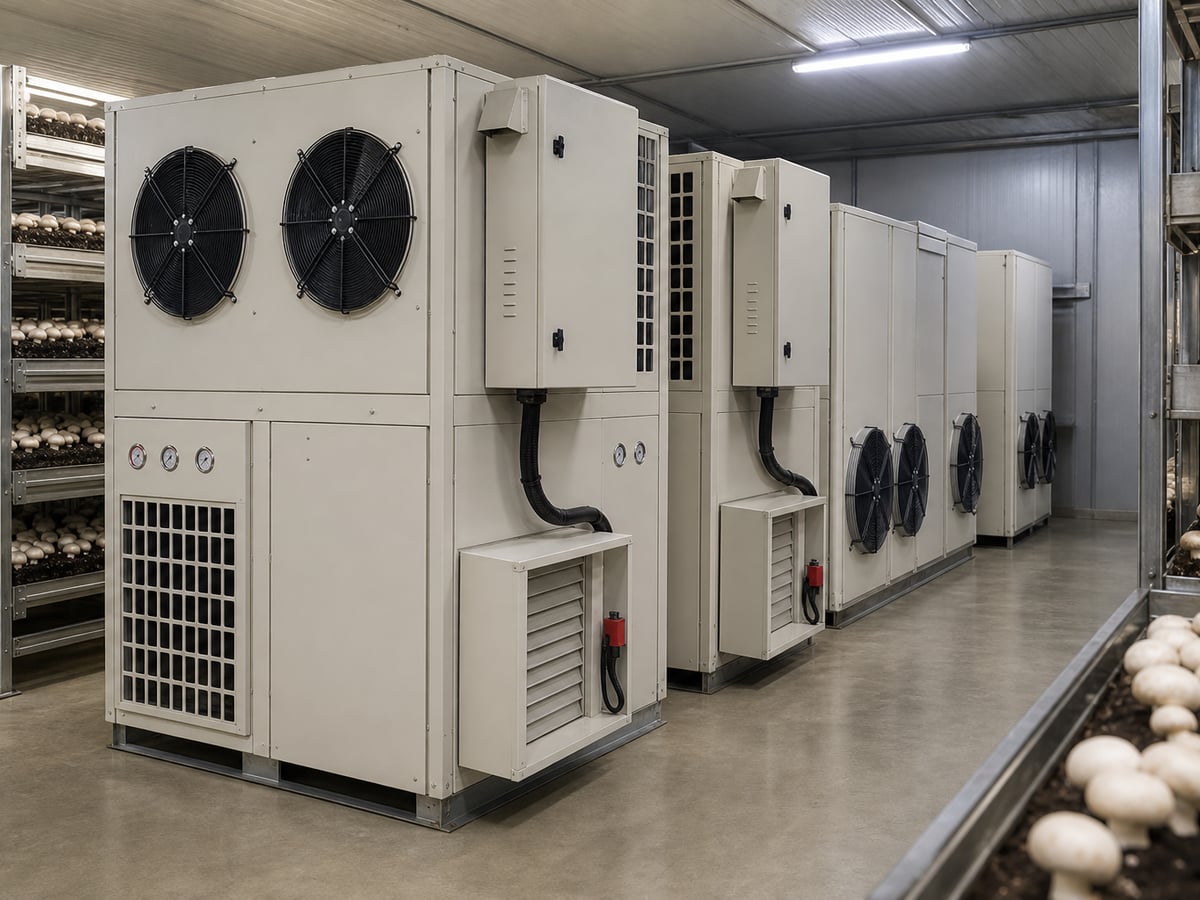
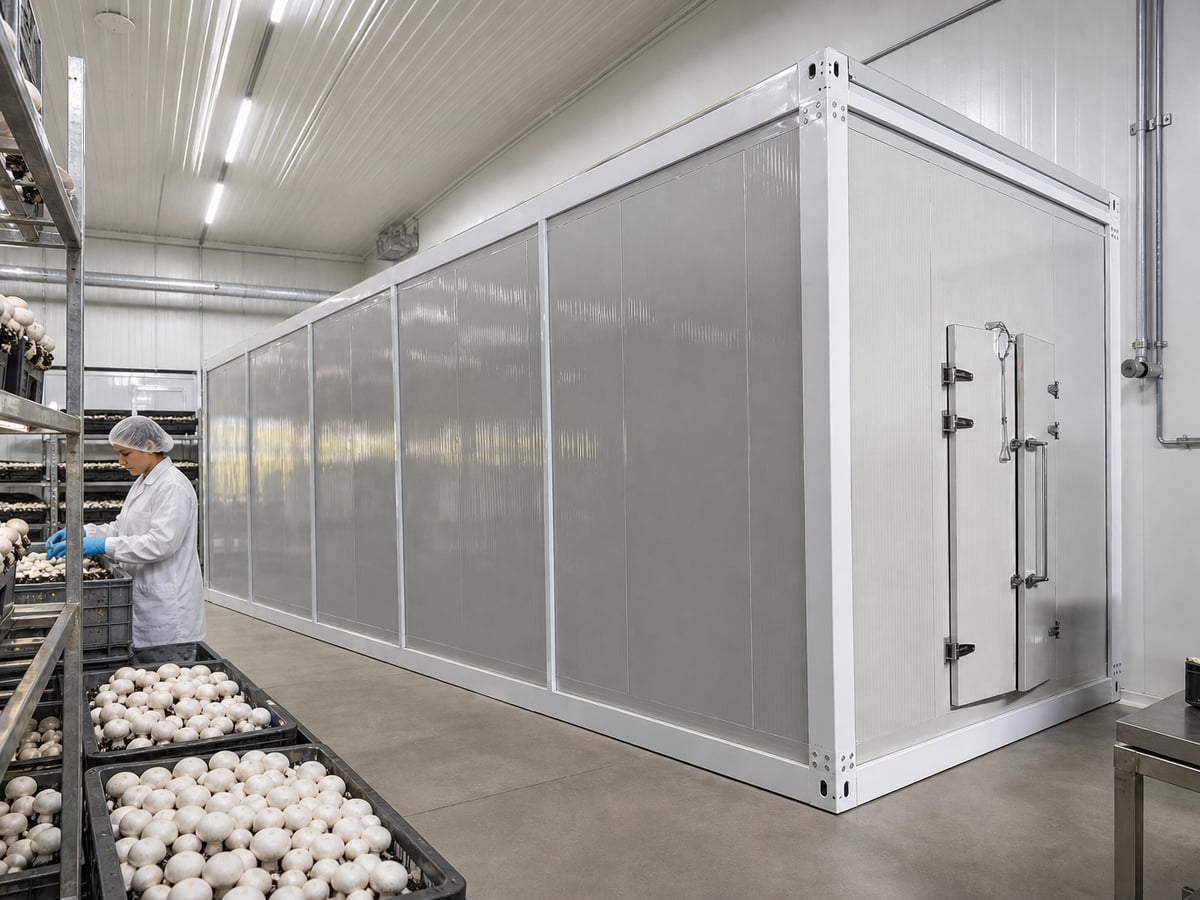
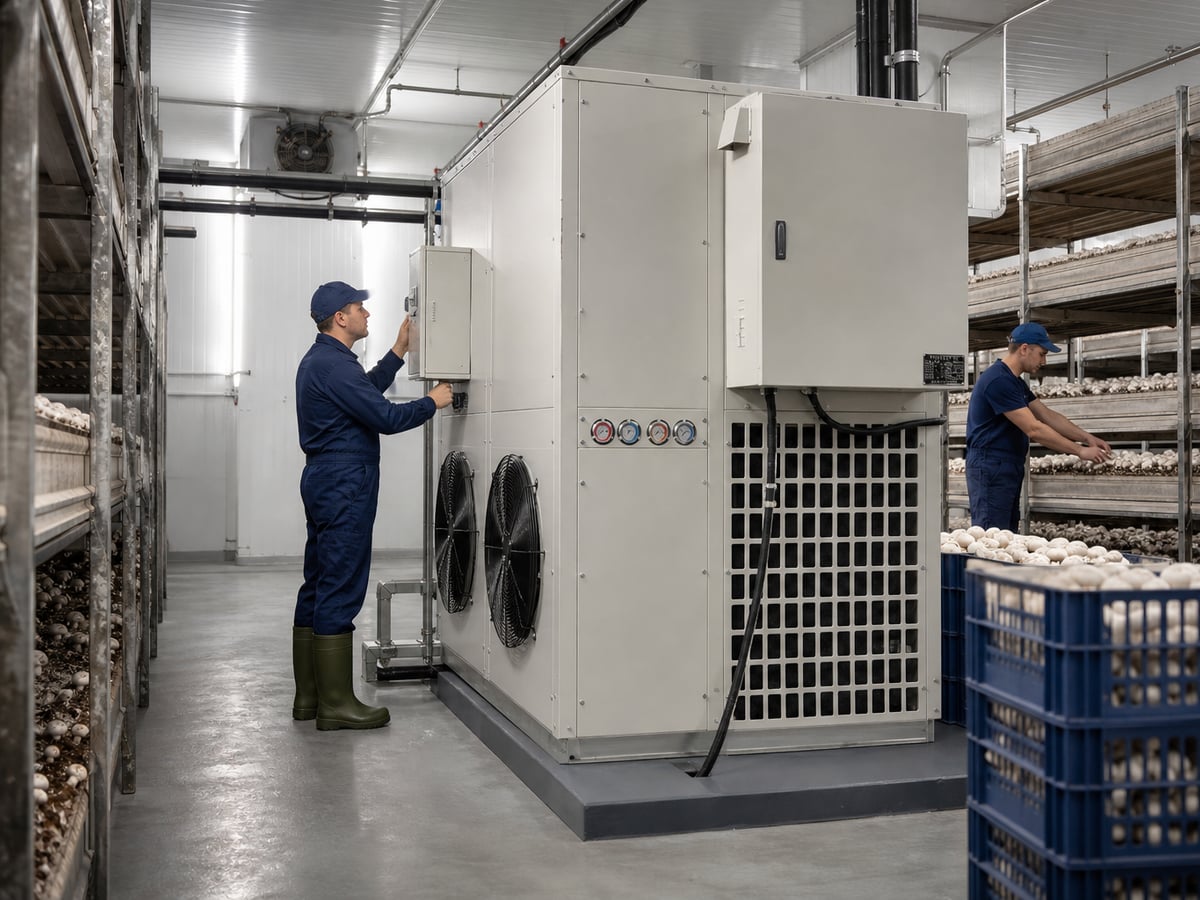
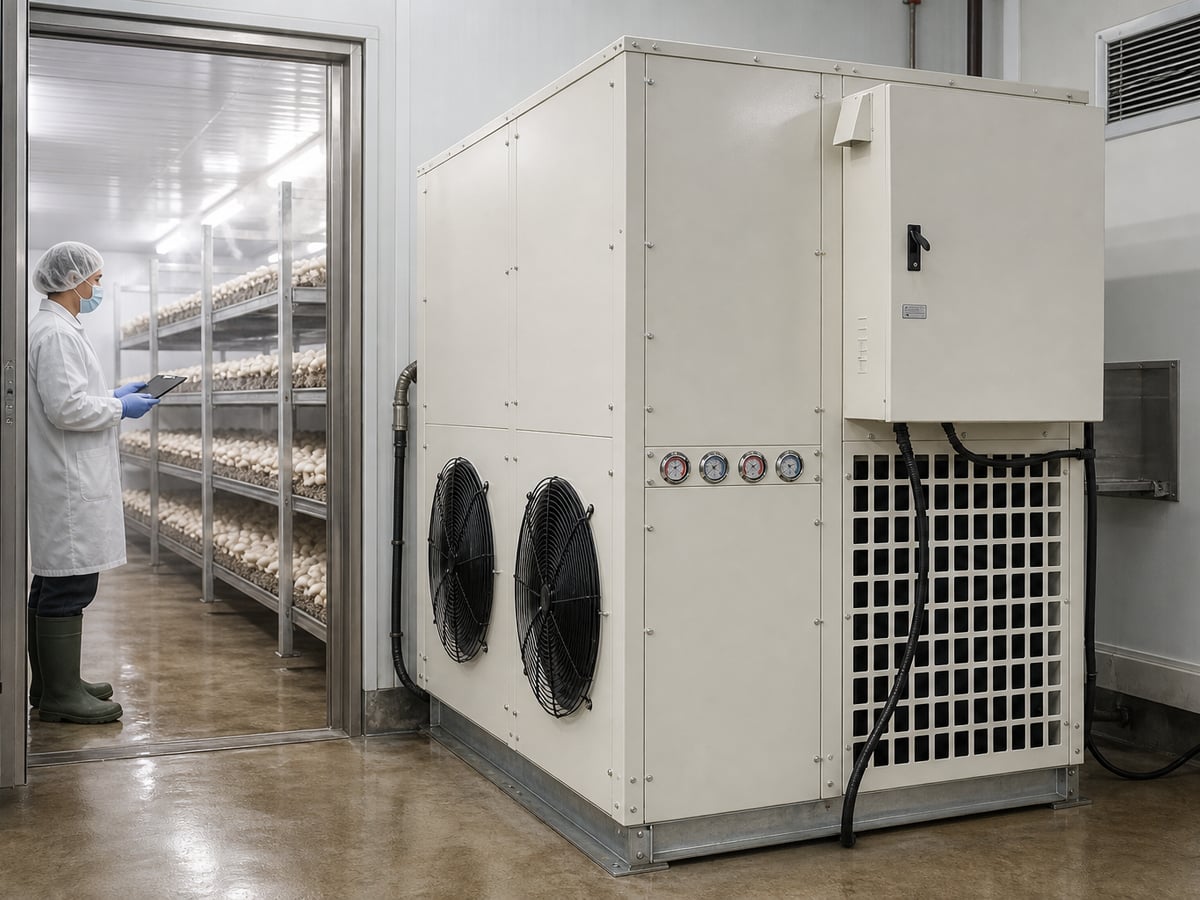
Explore the latest technologies, trends, and solutions in controlled environment agriculture and energy-efficient HVAC systems.
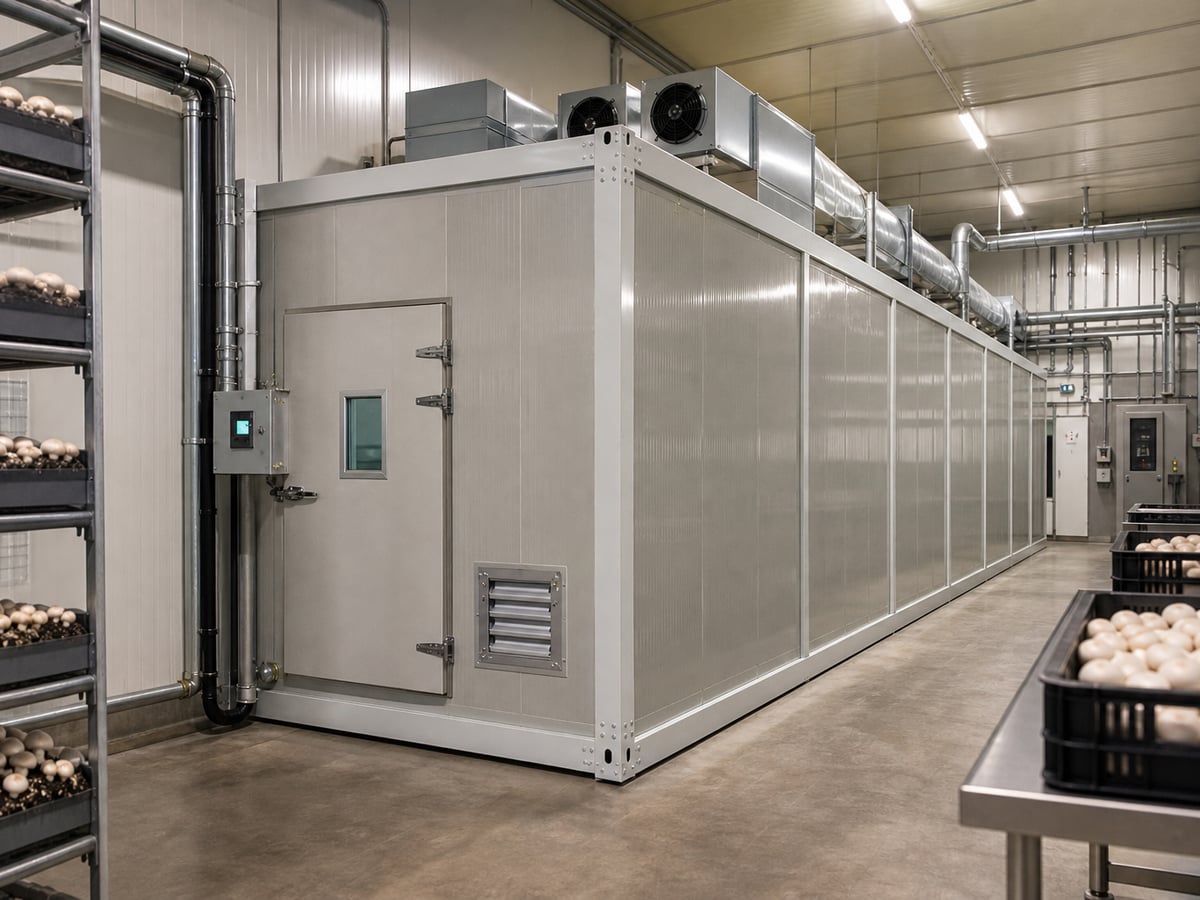
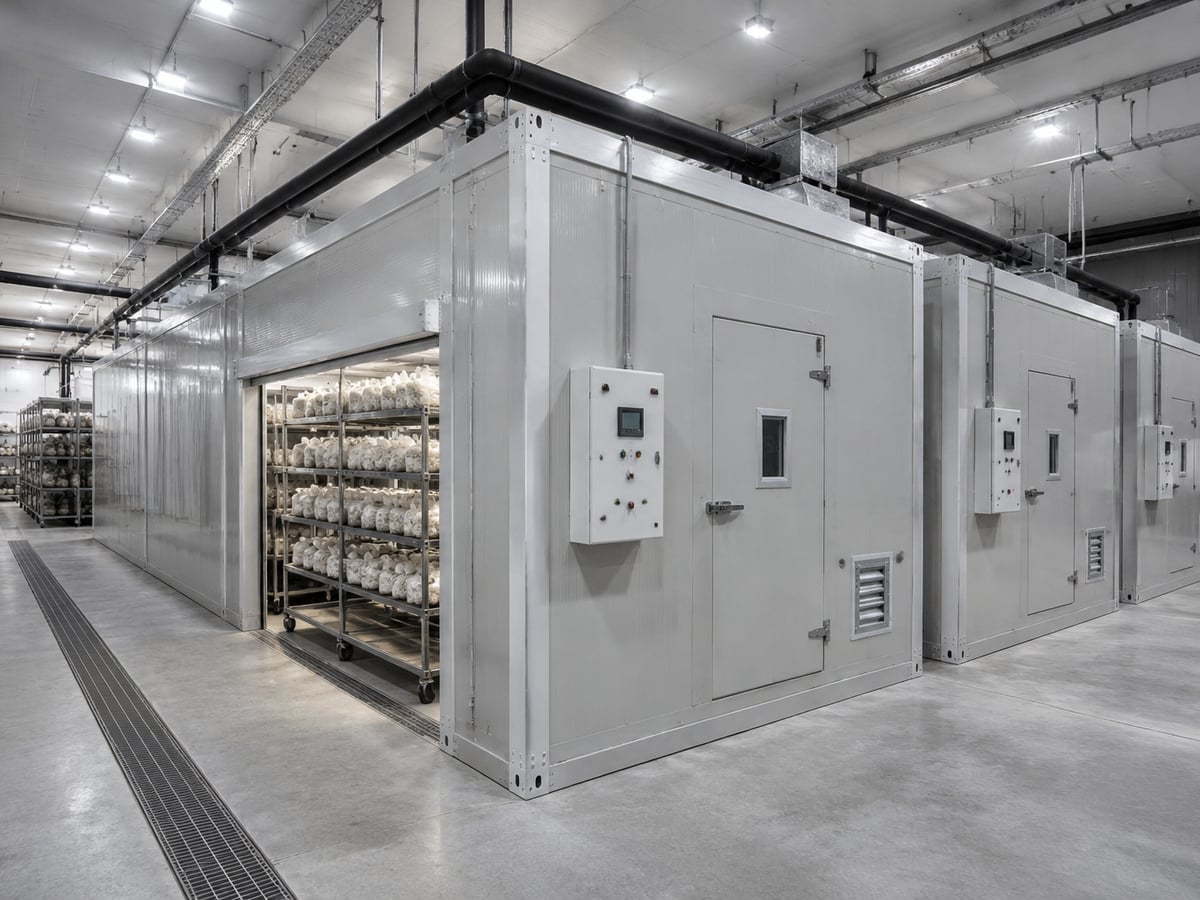
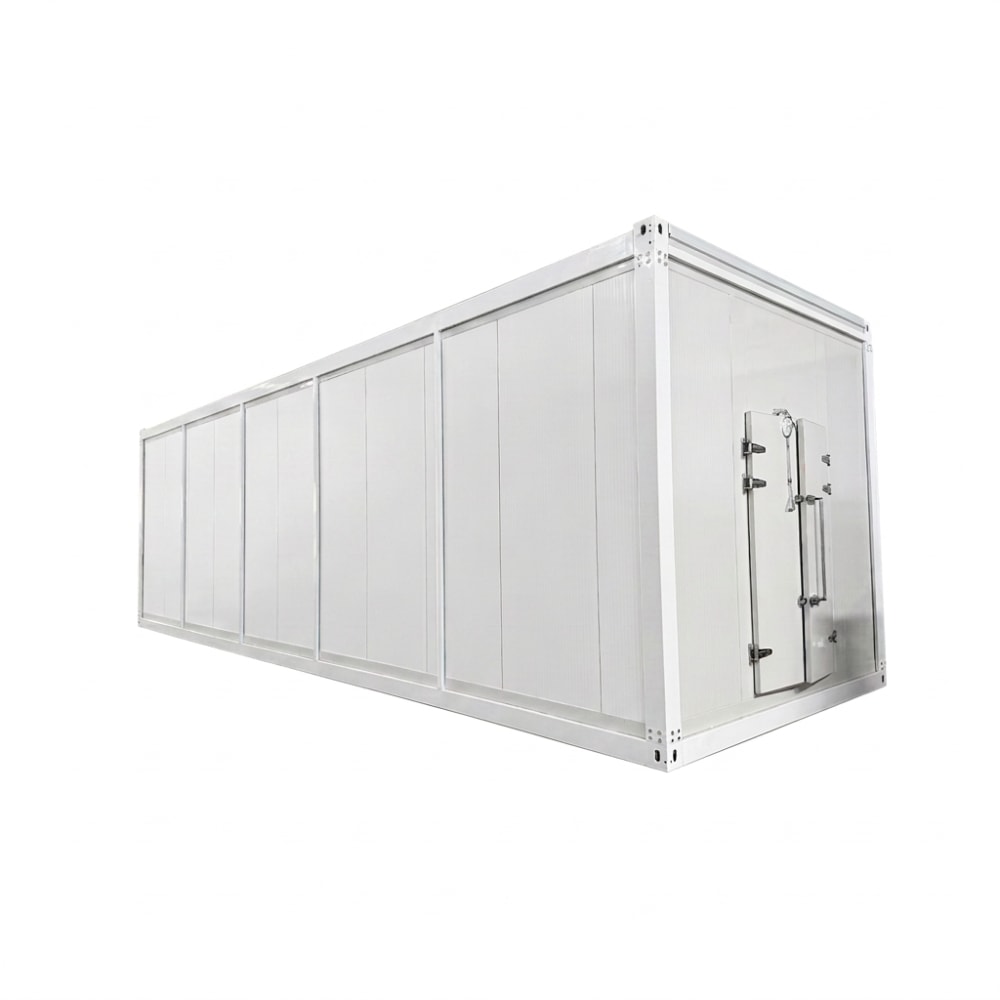
Smart Mushroom Cultivation Container
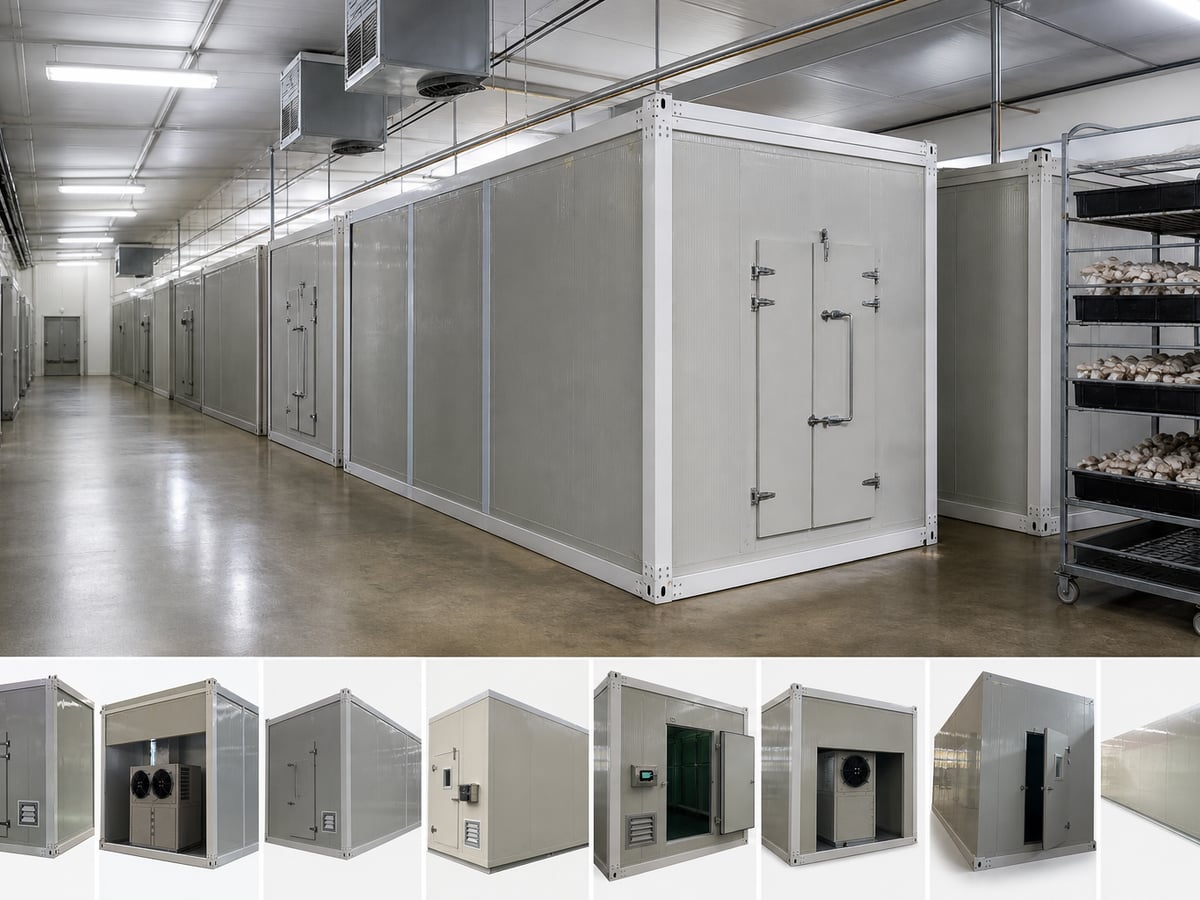
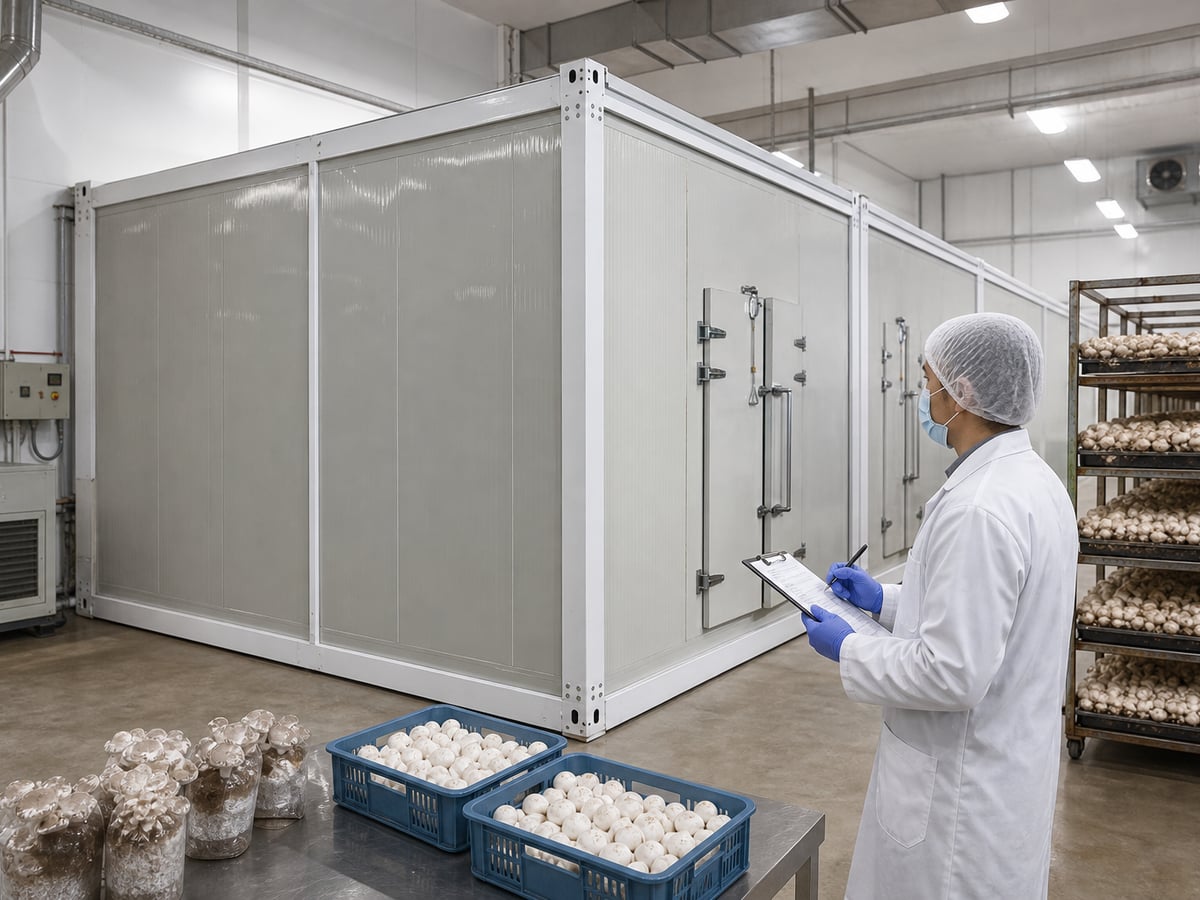
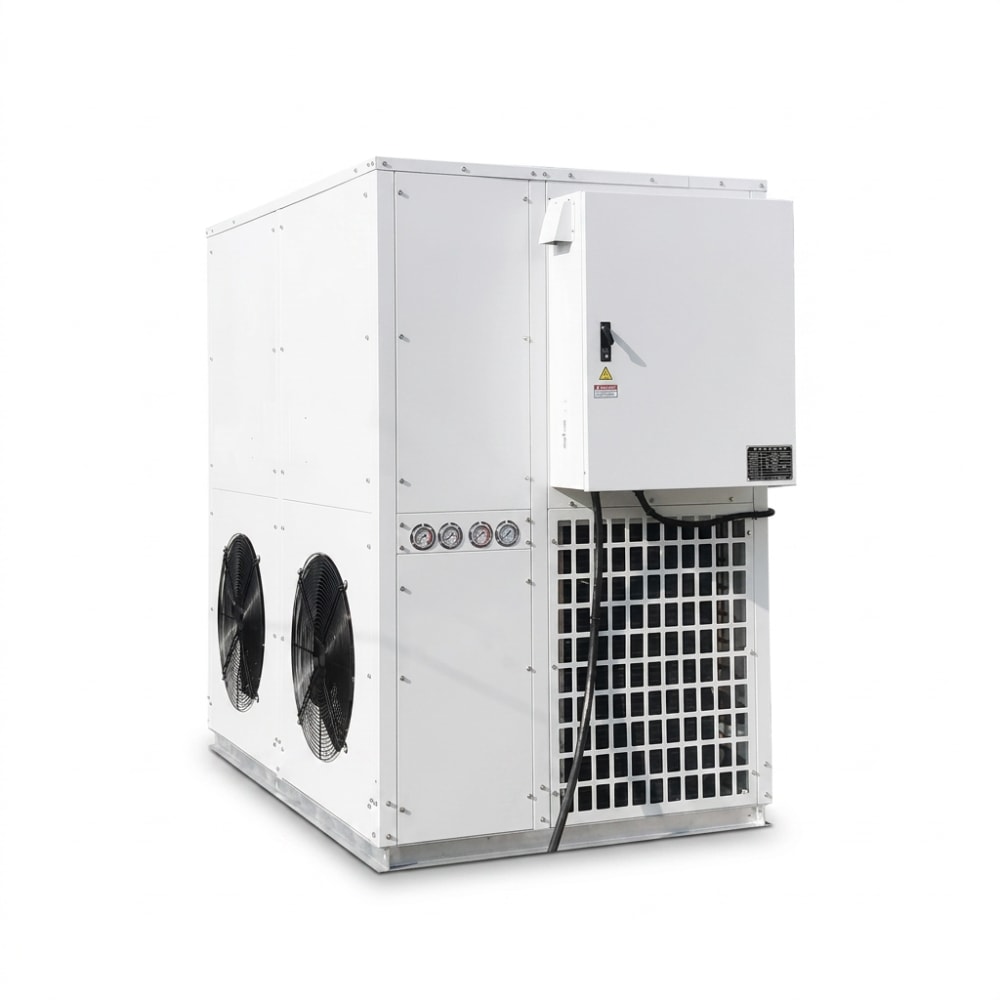
Smart Mushroom Climate Controller
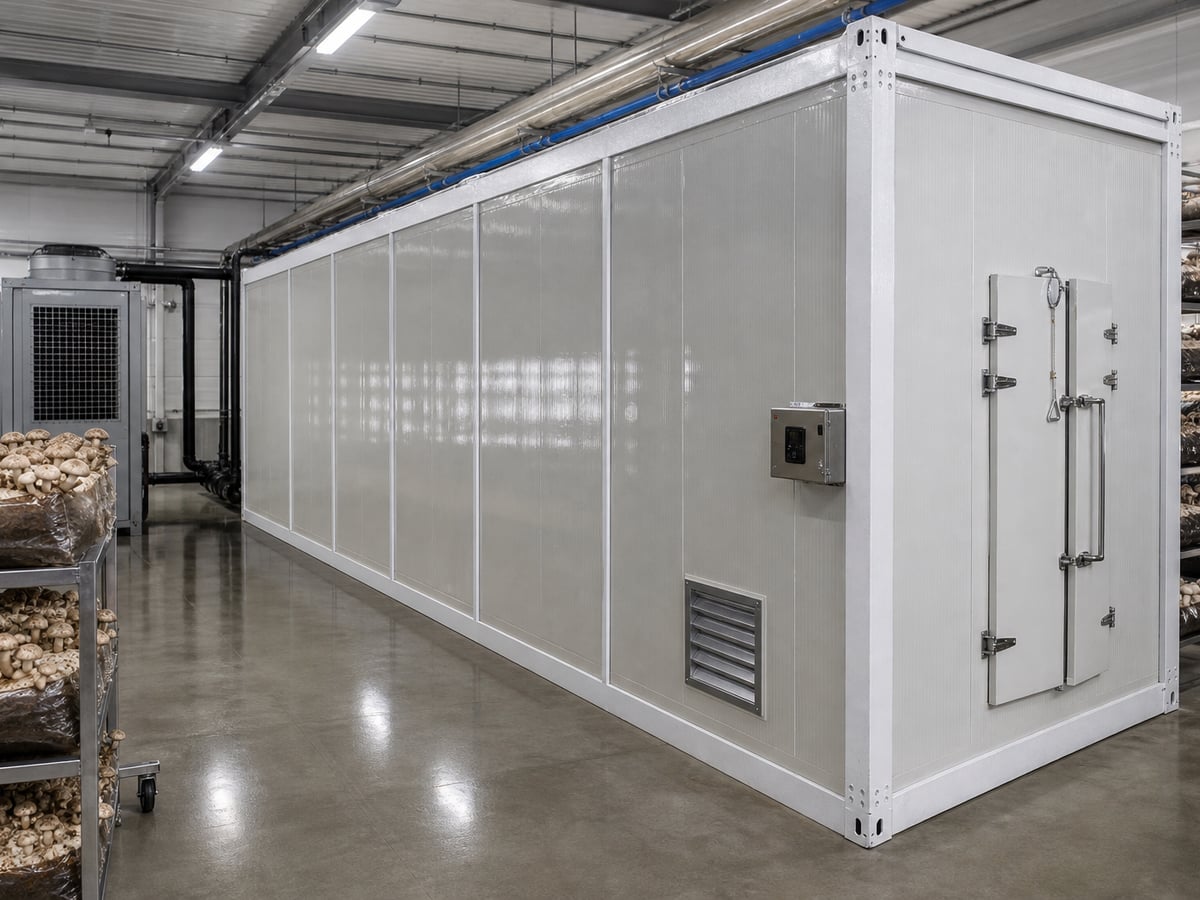
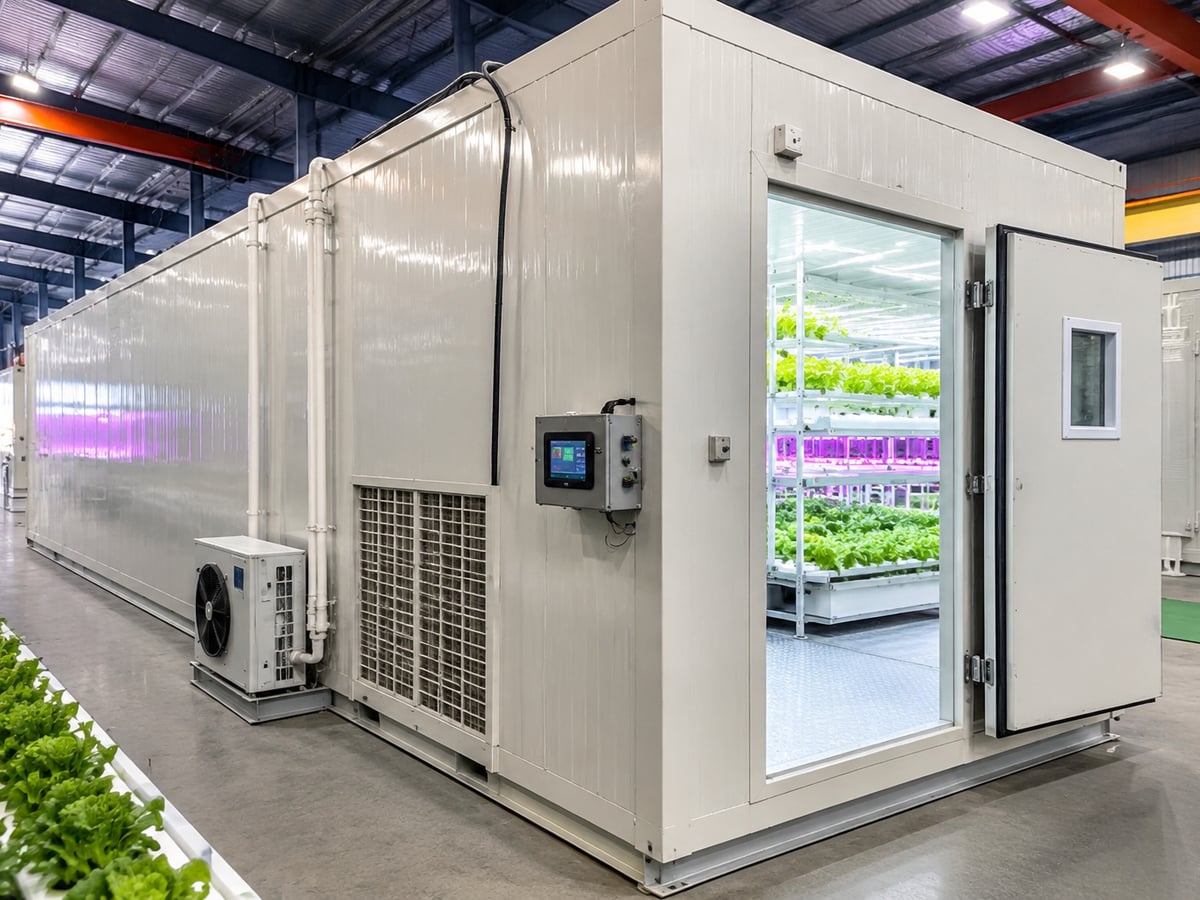
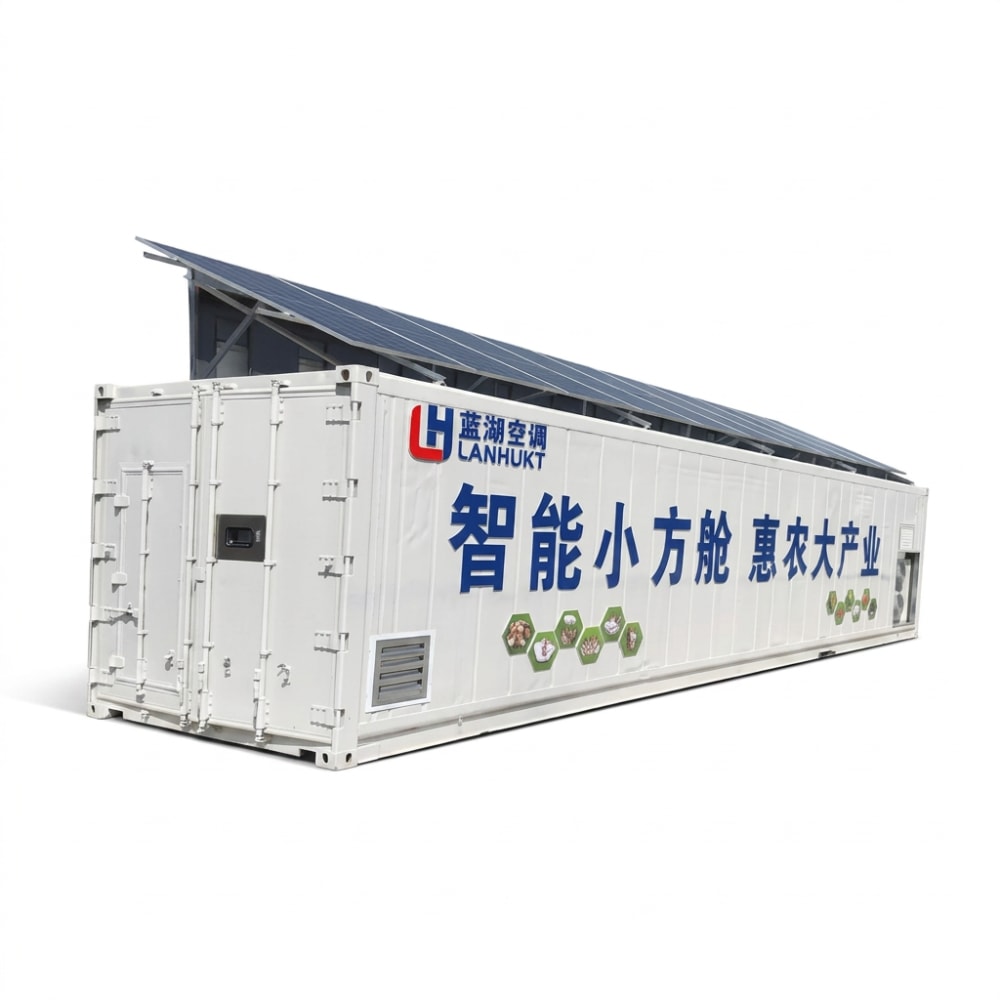
Smart Hydroponic Plant Container
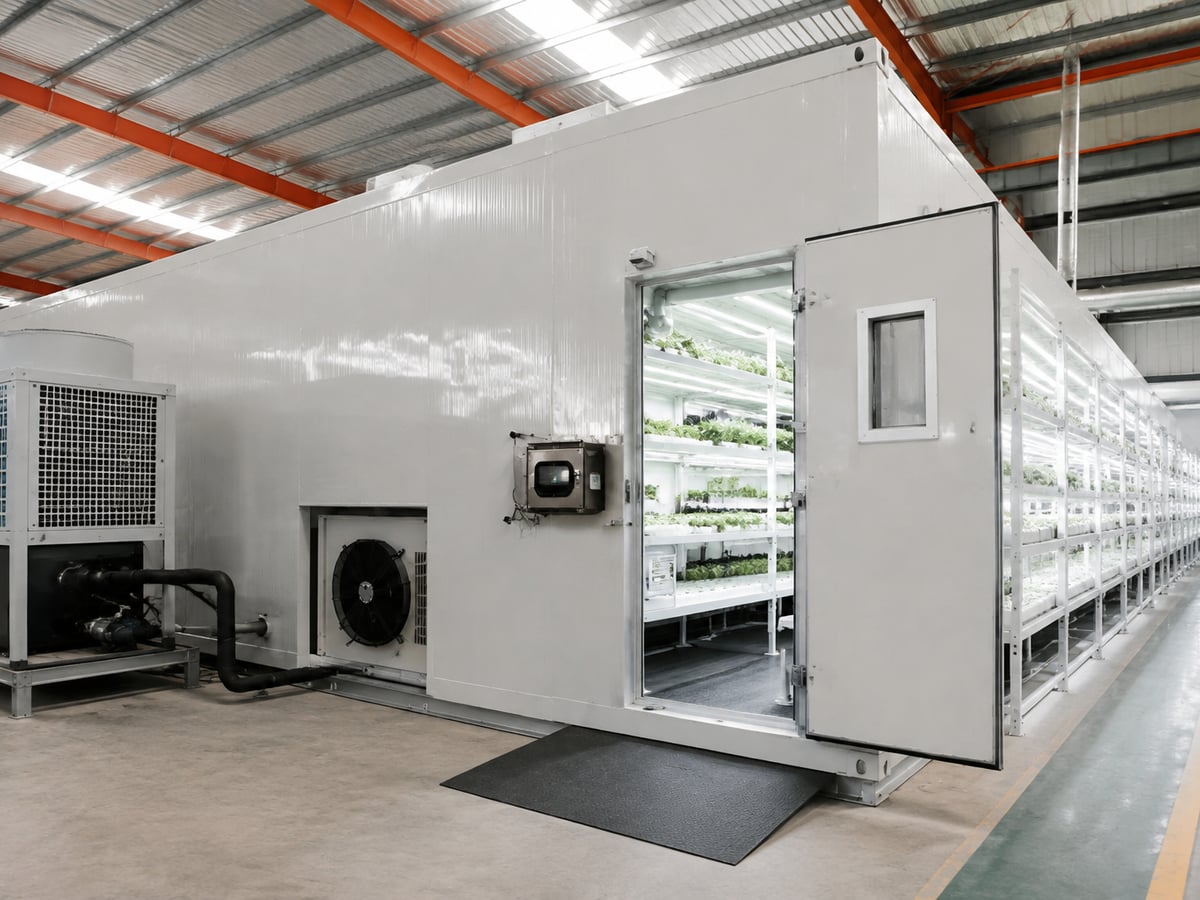
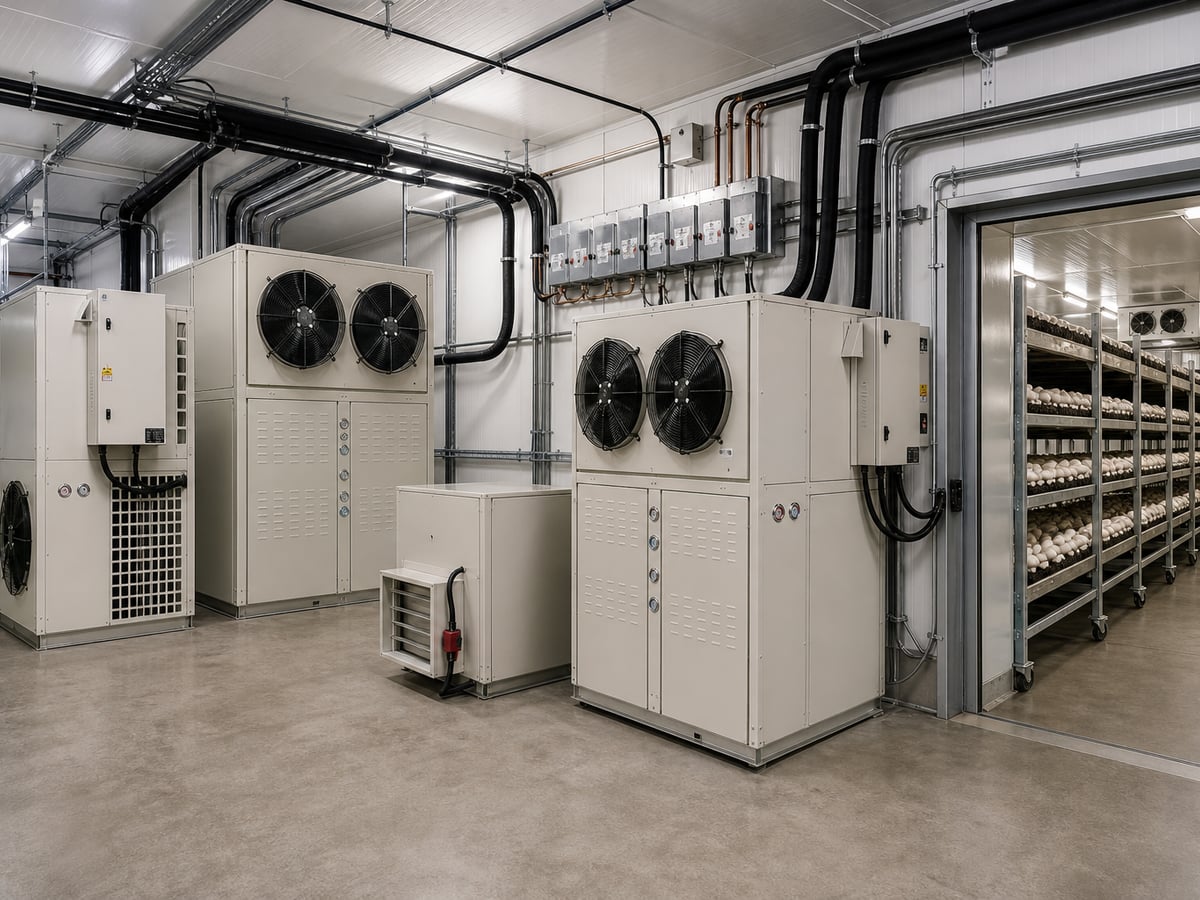
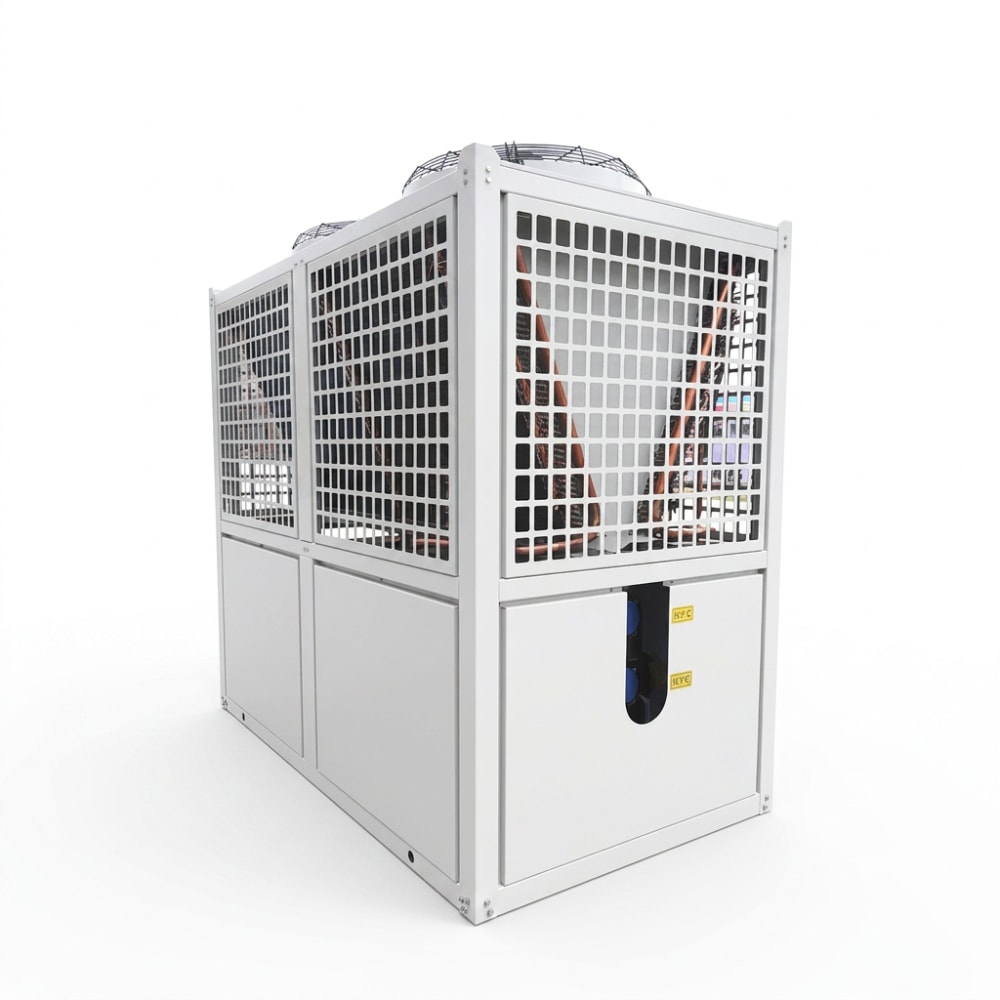
Air Source Heat Pump
Global Market Mushroom Farm Profitability Cost & ROI Guide
Mushroom farm profitability in the Global Market depends on three connected factors: installed production capacity, biological yield consistency, and the selling price achieved through local or export channels. A small commercial operation can be profitable, but only when climate control, substrate supply, labor planning, contamination management, and sales routes are designed together.For many commercial farms, the largest initial investment is not the mushroom shelves alone. CAPEX usually includes insulated growing rooms or modular containers, refrigeration, humidification, ventilation, controls, electrical distribution, water treatment, shelving, harvesting tools, packing areas, and commissioning. OPEX is dominated by labor, energy, substrate or grow bags, spawn, packaging, transport, repairs, and crop-loss allowances.A practical planning range for fresh mushroom production is often 20–35 kg per m² of growing shelf area per crop for oyster mushrooms, while premium varieties such as shiitake, lion’s mane, king oyster, and specialty medicinal mushrooms can have different cycle lengths, yields, and market prices. The strongest projects do not rely on the highest theoretical yield; they budget for normal operating losses and build stable sales contracts.For growers seeking a controlled, compact entry point, a smart mushroom cultivation container can reduce construction uncertainty by integrating insulation, air handling, humidity control, lighting, shelving, and digital monitoring into one engineered system. It is particularly suitable for urban farms, remote sites, distributors, restaurants, agricultural demonstration projects, and phased expansion plans.Farm TypeTypical ScalePrimary Investment FocusTypical CropProfitability DriverMain RiskMicro commercial farm50–150 m²Basic rooms, racks, humidificationOyster mushroomDirect local salesOwner labor dependencyContainer farm1–10 modular unitsIntegrated climate controlOyster, shiitake, lion’s maneConsistent year-round supplyElectricity price volatilityRegional fresh mushroom farm500–2,000 m²Growing rooms and packing lineOyster, button, king oysterWholesale volumeDistribution pressureSpecialty mushroom farm200–1,500 m²Precision environmental controlLion’s mane, reishi, shiitakePremium retail pricingDemand uncertaintySubstrate-integrated farm1,000 m² and abovePasteurization and bagging equipmentMultiple speciesLower unit substrate costHigher process complexityIndustrial mushroom facility5,000 m² and aboveAutomation and cold chainButton and high-volume varietiesScale efficiencyLarge fixed-cost exposureThe table shows why there is no single “mushroom farm cost” for every project. A container farm may have a higher cost per m² than a basic converted building, yet it can shorten installation time, improve crop consistency, and reduce the risks associated with poor insulation, incorrect airflow, or incomplete electrical design.Commercial mushroom farming is a controlled-environment food production business. Its economics should be measured by production batches, crop cycles, kilograms sold, and contribution margin rather than by room size alone. The cost structure varies by species, climate zone, labor cost, local energy tariff, available substrate materials, and distance to market.In the Global Market, farms near major consumption centers frequently focus on freshness and short delivery times. Producers serving Dubai, Singapore, London, Los Angeles, Tokyo, Sydney, Rotterdam, Johannesburg, São Paulo, and major Gulf cities may receive better prices for premium fresh mushrooms than farms supplying low-margin commodity channels. However, urban land costs, wages, and electricity can be substantially higher.For an investor, the most useful planning sequence is: define target buyers, select mushroom species, set annual sales volume, calculate required growing area, estimate biological inputs, size the climate-control system, and then test the project against conservative yield and price assumptions. This approach avoids purchasing equipment that is technically impressive but mismatched to the local market.Cost CategoryTypical Share of Total CostWhat It IncludesHow It Changes by RegionControl MethodPlanning PriorityBuilding and insulation15–35%Rooms, panels, doors, drainageHigher in urban and cold regionsUse insulated modular constructionHighClimate-control equipment20–35%Cooling, heating, humidity, fansHigher in hot or humid climatesCorrect load calculationHighShelving and handling8–15%Racks, trolleys, harvest toolsDepends on material and automationOptimize aisle and shelf layoutMediumElectrical and controls8–15%Panels, sensors, wiring, alarmsHigher where grid standards are strictUse integrated control systemsHighLabor20–45% of OPEXLoading, harvesting, packing, cleaningHighest in developed labor marketsWorkflow design and trainingHighSubstrate and spawn15–35% of OPEXGrow bags, compost, spawn, additivesVaries with agricultural residuesMulti-supplier sourcingHighEnergy and water10–30% of OPEXCooling, heating, fans, humidificationStrongly climate and tariff dependentEfficiency monitoringHighFor a realistic profitability model, separate fixed expenses from variable expenses. Building rent, insurance, management salaries, loan payments, licenses, and depreciation are usually fixed or semi-fixed. Grow bags, spawn, packaging, transport commissions, and harvest labor usually rise with production volume. This distinction is essential when calculating break-even output.CAPEX is the investment required before commercial production begins. It should include equipment cost, logistics, import duties where applicable, civil works, installation, spare parts, test runs, training, and working capital for the first operating cycles. Buyers often underestimate the final 10–20% of project cost because they focus only on the quoted equipment price.A commercial facility generally needs a cleanable insulated structure, air circulation, cooling or heating capacity, humidification, fresh-air control, carbon dioxide management, drainage, lighting, water supply, electrical protection, racking, and packing capability. In hot climates such as the Middle East, India, Southeast Asia, northern Australia, and many African regions, cooling load and dehumidification strategy deserve special attention. In cold regions such as Canada, Northern Europe, Central Asia, and northern China, heating and freeze protection may be more significant.A modular solution can simplify early-stage CAPEX. Lanhu designs cultivation systems around insulated panels, airflow management, automated temperature and humidity control, and crop-specific operating logic. A mushroom climate controller can help growers monitor temperature, humidity, carbon dioxide, ventilation status, alarms, and equipment performance from a centralized interface.CAPEX ItemPurposeCost SensitivityCommon Specification ChoicesPotential Hidden AdditionBuyer CheckpointInsulated building or containerStable growing environmentHighPanel thickness, floor type, doorsFoundation and drainageConfirm local wind and temperature conditionsCooling and heating systemTemperature controlHighAir source heat pump, refrigeration unitElectrical cable upgradeVerify design ambient temperatureHumidity and ventilationCrop moisture and fresh airMedium to highUltrasonic, high-pressure mist, fansWater filtration and ductingCheck droplet size and cleaning accessRacks and shelvesMaximize growing areaMediumGalvanized steel, stainless steelAssembly laborMeasure aisle width and loading methodElectrical controlsAutomated operationMediumPLC, sensors, remote monitoringLocal compliance documentationRequire wiring diagrams and alarm logicWater and drainageHumidification and sanitationMediumFilters, UV, tanks, floor drainsWastewater connectionTest water quality before orderingPacking and cold storagePreserve fresh qualityMedium to highCold room, scales, sealing equipmentFood-grade room finishesSize according to daily dispatch volumeWhen comparing quotations, ask whether the price includes delivery to a named port such as Rotterdam, Jebel Ali, Singapore, Santos, Durban, Mombasa, or Los Angeles. Clarify Incoterms, container loading, inland transport, customs documentation, commissioning scope, wiring requirements, and local installation support. A lower factory price can become more expensive if essential site work is excluded.Operating expenses determine whether a mushroom farm remains viable after installation. Fresh mushrooms are perishable, crop cycles are continuous, and growing rooms must be cleaned, loaded, monitored, harvested, and reset on schedule. The best climate-control system cannot compensate for poor sanitation, inconsistent substrate, delayed harvesting, or weak sales planning.Energy use is affected by ambient temperature, insulation quality, room loading density, ventilation rate, heat generated by substrate, equipment efficiency, and operating discipline. Farms in tropical climates may need more cooling and dehumidification. Farms in dry regions may consume more water for humidification. Farms with expensive electricity should prioritize high-efficiency fans, insulated doors, staged cooling, heat recovery where practical, and accurate sensors.Labor is often the largest recurring cost after substrate. Harvesting is especially labor-intensive because mushrooms need to be picked at the correct maturity stage, sorted, packed, and cooled quickly. Labor savings can come from better rack design, trolleys, batch scheduling, standard operating procedures, and clear crop-room labeling rather than from automation alone.OPEX ItemTypical MeasurementCost Reduction OpportunityQuality Risk if UnderfundedMonitoring FrequencySuggested AllowanceElectricitykWh per crop or kg soldInsulation, efficient controls, maintenanceTemperature instabilityDaily5–15% contingencyWaterm³ per monthFiltration, leak control, optimized mistingContamination or poor humidificationWeekly3–8% contingencyLaborHours per kg harvestedTraining, workflow, rack layoutLate harvest and packing lossesDaily10–20% seasonal allowanceSubstrate and grow bagsCost per bag or tonneSupplier contracts and quality inspectionLow yield or contaminationEvery batch5–10% waste allowanceSpawn and supplementsCost per batchReliable sourcing and storage controlPoor colonizationEvery delivery5% backup stockPackagingCost per kg soldVolume purchasing and right-sized packsShorter shelf lifeWeekly3–8% price varianceMaintenance and sanitationMonthly budgetPreventive inspection scheduleBreakdowns and cross-contaminationWeekly2–5% of equipment value annuallyWater quality deserves specific attention. Minerals, biological contamination, iron content, and hardness can affect fogging nozzles, ultrasonic units, drainage, cleaning effectiveness, and crop hygiene. A water analysis before installation can prevent premature equipment wear and avoid costly redesigns after the farm is running.Capacity should be measured in usable growing shelf area, not simply floor area. A room with multi-tier racks can hold several times more growing surface than a floor-based layout, but it also requires enough airflow, cooling capacity, access space, and harvesting labor. Overloaded rooms can develop uneven temperature, high carbon dioxide zones, weak pinning, and inconsistent quality.A basic production model needs the following assumptions: number of shelves, shelf area, bags or blocks per shelf, average bag weight, biological efficiency or expected yield, crop cycle length, number of cycles per year, expected grade distribution, saleable percentage, and average selling price. Use conservative assumptions for the first year while the team learns the production process.For example, if a farm operates 500 m² of usable shelf area and achieves 25 kg/m² per crop across six annual crop turns, gross annual output could reach approximately 75,000 kg before accounting for losses, grading, and rejected mushrooms. If 8% is not saleable, net sales volume becomes 69,000 kg. The actual result will depend heavily on substrate quality, crop variety, management skill, and environmental stability.The chart is illustrative rather than a forecast. It shows why pricing and yield improvements can significantly improve margin, while energy and labor inflation can quickly reduce profitability. Every project should use local utility bills, wage rates, substrate quotes, and actual buyer price indications.Mushroom farm pricing changes when the project specification changes. A basic growing room designed for mild weather and oyster mushrooms is not equivalent to a high-performance, multi-zone facility designed for hot climates, premium varieties, remote monitoring, cold storage, and export-grade packing.Important customization variables include external dimensions, panel thickness, floor insulation, refrigeration capacity, heating method, humidity system, fresh-air rate, carbon dioxide control, rack material, number of tiers, electrical standard, local voltage, language of the interface, remote access, backup power compatibility, water treatment, and packaging area configuration.Buyers should define the intended crop before finalizing equipment. Oyster mushrooms generally tolerate a broader operating range than some specialty mushrooms, while shiitake, king oyster, lion’s mane, and medicinal varieties may require more precise management of temperature, humidity, fresh air, and fruiting timing. The lowest equipment price may not deliver the reliability needed for a premium product strategy.Lanhu supports OEM and ODM projects for distributors, engineering companies, and commercial farms that need branded housings, customized dimensions, crop-specific climate settings, local electrical configurations, and integrated systems. Buyers can review the available OEM and ODM customization options when planning a differentiated modular farming offer.Revenue equals saleable kilograms multiplied by the average realized selling price. The realized price is often lower than the advertised retail price because farms may sell through wholesalers, distributors, restaurants, retailers, online channels, or market agents. Packaging, spoilage, promotional discounts, delivery, and commissions should be deducted before calculating net revenue.Break-even occurs when gross margin covers fixed costs. A farm selling premium lion’s mane directly to restaurants may break even at lower volume than a farm selling commodity oyster mushrooms to a wholesaler, but the specialty farm may also face more demand risk. Product diversification can reduce exposure when one buyer segment weakens.ScenarioSaleable YieldAverage Selling PriceRevenue PotentialMargin OutlookManagement RequirementLow-yield wholesaleBelow targetLowLimitedOften weakUrgent crop and sales correctionStable wholesaleExpected rangeModeratePredictableModerateStrong cost disciplineDirect retail oyster mushroomExpected rangeHigherImprovedGood potentialBranding and delivery capabilityRestaurant-focused specialty cropModerate to highPremiumHigh per kgPotentially strongQuality consistency and chef relationshipsMixed crop portfolioDiversifiedBlendedBalancedResilientMore complex production planningContracted institutional supplyStableModerateReliableModerate to goodCompliance and delivery disciplineA sensible break-even calculation should include loan interest or lease expense, depreciation, rent, management payroll, local taxes, insurance, audit costs, product certification, marketing, sampling, waste disposal, and a reserve for crop failures. Farms that exclude these costs may appear profitable on paper while generating insufficient cash flow in practice.Hidden costs commonly appear after equipment is ordered. They can include site leveling, concrete pads, drainage, utility upgrades, transformers, backup generators, import duties, customs handling, forklift rental, local permits, food safety certification, laboratory testing, initial packaging stock, staff accommodation, replacement sensors, cleaning chemicals, and working capital.Risk allowances should be included in both CAPEX and OPEX. A first-time commercial farm should not plan on perfect biological efficiency from the first crop. It should also assume that at least one supplier delivery, equipment setting, market forecast, or logistics schedule will need adjustment.Sensitivity analysis is particularly valuable in the Global Market because exchange rates, shipping costs, electricity prices, fuel costs, wages, and buyer prices can change quickly. Test the project under several conditions: yield down by 10–20%, energy cost up by 20%, selling price down by 10%, labor cost up by 15%, or a delayed project launch. If the farm only works in the best-case scenario, the investment should be redesigned.For equipment sourcing, growers should request detailed technical drawings, utility requirements, production assumptions, warranty terms, spare-parts lists, and commissioning responsibilities. Reviewing completed cultivation projects can also help buyers evaluate practical performance; examples are available through Lanhu’s mushroom cultivation project cases.Looking toward 2026, the most competitive farms are expected to adopt more sensor-driven growing management, remote fault alarms, energy-efficient heat pump systems, water reuse strategies where regulations permit, recyclable or lower-impact packaging, and traceability records for food buyers. Sustainability requirements are increasing in Europe, North America, the Gulf region, and major Asian retail markets. Farms that measure energy, water, crop waste, and yield per batch will be better positioned for future compliance and buyer audits.Shandong Lanhu Air Conditioning Equipment Co., Ltd. supports commercial growers, agricultural contractors, equipment distributors, and controlled-environment agriculture projects in the Global Market. The company focuses on climate-controlled cultivation equipment, modular mushroom production solutions, agricultural HVAC systems, hydroponic plant containers, and air source heat pump applications.Technological capability is based on more than 12 years of thermodynamic research and development experience. Lanhu develops integrated environmental solutions that combine temperature management, humidity control, ventilation, carbon dioxide management, electrical controls, sensor feedback, and operating alarms. This engineering approach is designed to help growers maintain stable crop conditions instead of relying on manual adjustments alone.Manufacturing capability includes a modern production facility of more than 30,000 square meters in Dezhou, Shandong, China. The company integrates design, engineering development, sheet metal fabrication, CNC bending, insulated panel production, electrical assembly, system integration, testing, and quality inspection. Functional inspection, electrical verification, performance testing, and operational evaluation are completed before shipment.Service capability includes factory-direct supply, project communication, OEM and ODM customization, engineering assistance, international logistics coordination, spare-parts support, installation guidance, and after-sales support. Lanhu holds ISO 9001, ISO 14001, ISO 45001, and ISO 12100 certifications, together with multiple patents and enterprise credentials. For a crop plan, technical discussion, or quotation request, growers can contact the Lanhu project team.How much does a commercial mushroom farm cost?Cost depends on capacity, country, crop type, building condition, utility requirements, automation level, and whether substrate production is included. A small modular farm may require a lower total investment than a large conventional facility, but cost per kilogram should be evaluated over several crop cycles.Which mushrooms are usually most profitable?Profitability depends on local demand. Oyster mushrooms can provide fast turnover and broad acceptance, while shiitake, lion’s mane, king oyster, and medicinal mushrooms may command higher prices in specialty markets. The best crop is the one with reliable buyers, suitable climate settings, and manageable production risk.How long does it take to reach break-even?Break-even can range from under two years to several years depending on sales price, utilization rate, financing cost, crop yield, energy expenses, and market access. A detailed cash-flow model is more useful than a generic payback claim.Can a mushroom container operate in hot climates?Yes, provided that cooling capacity, insulation, ventilation, humidity control, and electrical infrastructure are correctly sized for the local design temperature. Hot and humid regions require especially careful load calculations.What is the biggest operating risk in mushroom farming?The largest risks are often contamination, unstable substrate quality, weak sales channels, inadequate climate control, high energy costs, and insufficient trained labor. Risk can be reduced through standard operating procedures, preventive maintenance, diversified suppliers, and conservative financial planning.Should a new farm produce its own substrate?Not always. Purchasing reliable prepared grow bags or blocks can simplify startup and reduce process complexity. Larger farms may later integrate substrate production when volume, local raw materials, technical staff, and quality-control systems justify the investment.
Global Market Mushroom Container Cost and ROI Guide 2026
For the Global Market, a commercial mushroom growing container typically costs from approximately US$25,000 to US$120,000+ per unit before local land, civil works, permits, freight, and operating capital. A basic insulated container with shelving and simple environmental equipment sits at the lower end. A fully integrated smart cultivation container with HVAC, humidification, fresh-air exchange, CO₂ control, automation, remote monitoring, electrical panels, and customized racks is usually positioned in the mid-to-upper range.The real mushroom growing container cost is not only the purchase price. A reliable investment estimate must include capital expenditure for the container, climate equipment, electrical connection, water treatment, commissioning, and site preparation; plus operating expenditure for labor, energy, substrate or blocks, water, packaging, maintenance, logistics, and crop-loss allowances. For oyster mushroom production, a properly managed 40-foot container may produce roughly 1.5 to 4.5 tonnes of fresh mushrooms per year depending on the growing method, crop cycle, climate setting, number of rooms, and local operator capability.For buyers in Dubai, Rotterdam, Los Angeles, Singapore, São Paulo, Johannesburg, Mumbai, and other food-distribution hubs, modular containers can shorten project timelines compared with constructing permanent grow rooms. However, the best purchasing decision depends on local electricity pricing, market sales channels, species selection, labor availability, import conditions, sanitation standards, and service access. A lower initial quotation can become expensive if insulation, controls, airflow design, drainage, or after-sales support are inadequate.As a practical rule, buyers should budget an additional 15% to 35% above the ex-factory equipment price for project-specific expenses. This contingency is especially important for first-time farms, remote locations, hot climates, cold climates, and projects that require local construction, certification, or custom power supplies.Commercial container levelTypical ex-factory costBest-fit useCore inclusionsBuyer considerationBasic growing containerUS$25,000–45,000Small farm trials and local supplyInsulation, racks, lighting, basic ventilationOften needs added automation and utility workStandard climate-controlled unitUS$45,000–70,000Commercial oyster or shiitake productionHVAC, humidification, sensors, control panelConfirm cooling capacity for local summer conditionsSmart cultivation containerUS$65,000–95,000Year-round production and distributorsIntegrated controls, CO₂ management, remote alarmsSuitable where consistent quality has a price premiumMulti-zone or dual-room systemUS$80,000–120,000+Staggered harvests and multiple crop stagesSeparate climate zones, enhanced racks, automationHigher upfront cost but better production continuityCustomized export projectUS$100,000–180,000+Large farms, institutions, harsh climatesCustom electrical, filtration, heat pump, brandingRequires detailed engineering and site dataContainer farm clusterUS$200,000–1,000,000+Regional production hubsSeveral containers, utility hub, packing areaPlan central workflow, cold chain, and managementThe ranges above are planning figures rather than universal quotations. Container dimensions, mushroom species, indoor design temperature, electrical standards, shipment route, and optional equipment can materially change the final budget. Buyers should request a technical scope that defines exactly what is included and excluded.A commercial container farm is a packaged environmental-control system, not merely a shipping container fitted with shelves. The largest cost categories are the insulated structure, refrigeration or heat-pump capacity, humidity and fresh-air systems, air distribution, cultivation racks, electrical control, sensors, plumbing, drainage, and factory testing. Cost also changes according to whether the unit is designed for fruiting only, incubation only, or a multi-stage growing workflow.In Global Market projects, delivered cost may differ sharply between ports. A shipment from China to Jebel Ali in Dubai, Rotterdam in the Netherlands, Long Beach in the United States, Santos in Brazil, Durban in South Africa, or Singapore can involve different sea freight, inland delivery, customs, crane handling, and clearance charges. An ex-factory price should therefore never be compared directly with a local turnkey installation price.Cost categoryTypical share of equipment CAPEXWhat it coversWhy it mattersContainer body and insulation15%–25%Steel frame, insulated panels, doors, floor finishControls heat gain, condensation, hygiene, and energy useClimate-control equipment20%–35%Cooling, heating, heat pumps, evaporators, fansDetermines stable temperature through changing weatherHumidity and ventilation8%–15%Fogging, fresh air, dampers, ducts, filtrationSupports pinning, crop quality, and CO₂ removalRacks and cultivation layout10%–18%Galvanized or stainless racks, trays, hanging systemsSets usable growing area and sanitation accessControls and electrical systems10%–18%PLC, sensors, VFDs, alarms, wiring, lightingReduces operator error and improves traceabilityFreight, site work, and commissioning15%–35% of total project costTransport, foundations, utilities, installation, trainingOften omitted from initial equipment comparisonsA transparent supplier quotation should identify the container size, insulation thickness, compressor brand or performance rating, cooling and heating capacity, humidification method, ventilation rate, rack material, electrical input, controller functions, warranty terms, and packing method. Without this detail, two quotations that appear similar may represent fundamentally different systems.For a modular starting point, buyers can review a smart mushroom cultivation container configuration and compare its environmental-control scope with local construction alternatives. The correct comparison is total installed cost per kilogram of saleable mushrooms, not only cost per container.Capital expenditure includes all one-time investments required before regular commercial production begins. For a single container project, CAPEX normally starts with the equipment purchase but should extend through delivery, installation, utility connection, sanitation infrastructure, initial crop loading, and working capital. A project that only budgets for the container can face avoidable delays after arrival.Site costs vary widely. A level concrete pad may be sufficient for a small unit, while a multi-container farm may require drainage channels, a loading area, staff changing facilities, a packing room, cold storage, and a backup power arrangement. In tropical locations near Jakarta, Lagos, Manila, or Mombasa, high ambient temperatures may justify larger cooling capacity, sun shading, and better roof insulation. In colder markets such as Toronto, Warsaw, or northern China, heating loads and freeze protection require greater attention.CAPEX itemPlanning rangeUsually included in container quote?Procurement adviceContainer cultivation systemUS$25,000–120,000+UsuallyVerify technical scope and performance conditionsConcrete pad and drainageUS$2,000–15,000Usually notDesign for cleaning water and forklift or trolley accessElectrical connection and distributionUS$2,000–25,000PartlyConfirm voltage, frequency, breaker size, and cable distanceWater storage and filtrationUS$500–8,000Usually notTest hardness, chlorine, sediment, and microbial qualityBackup generator or battery systemUS$3,000–40,000Usually notImportant where grid reliability affects crop survivalPacking, cold storage, and toolsUS$2,000–30,000Usually notMatch capacity to harvest peaks and delivery scheduleInitial substrate, spawn, and packagingUS$1,000–12,000NoKeep reserve stock while local supply is qualifiedControls deserve special attention because they influence both product quality and labor demand. A capable controller should manage temperature, relative humidity, fresh-air exchange, CO₂ concentration, fan operation, alarms, schedules, and data records. Remote access can be valuable for franchise farms, distributor-managed installations, and sites where experienced mushroom growers are not continuously present. Buyers evaluating automation can review a smart mushroom climate controller as part of the overall equipment specification.Technological capability is particularly important when a container must operate across a wide ambient-temperature range. Lanhu applies thermodynamic research and climate-control engineering to modular agricultural systems, allowing parameters such as cooling duty, humidity control, airflow, fresh-air ratio, and control logic to be adapted to the intended region and mushroom variety.Operating expenditure determines whether a mushroom container is financially sustainable after installation. In most commercial operations, substrate or purchased grow blocks, labor, electricity, packaging, and distribution account for the majority of monthly cost. The exact percentage differs by business model. A farm that buys ready-to-fruit blocks has lower technical complexity but higher variable input cost. A farm that makes its own substrate has more control over inputs but needs sterilization, mixing, inoculation, incubation, labor, and biosecurity infrastructure.Electricity is highly location-dependent. Cooling demand can dominate in hot climates, while heating can be material in colder regions. Humidity equipment, circulation fans, lighting, pumps, exhaust fans, and controllers add smaller but continuous loads. For planning, use local commercial electricity tariffs rather than national averages, and model seasonal peaks.OPEX categoryTypical share of operating costMain driversCost-control measureSubstrate or grow blocks25%–45%Species, supplier distance, biological efficiencyQualify multiple suppliers and measure yield by batchLabor15%–35%Harvest frequency, packing, cleaning, skillsUse ergonomic racks, SOPs, and staggered crop loadingElectricity10%–25%Climate, insulation, tariff, setpointsUse high-efficiency systems and avoid unnecessary air exchangePackaging and labels5%–12%Retail format, branding, food complianceStandardize pack sizes and reduce rejected packagingWater and treatment1%–5%Humidification, cleaning, local water qualityInstall suitable filtration and repair leaks quicklyMaintenance and spare parts3%–8%Fans, pumps, filters, sensors, refrigeration serviceMaintain preventive-service schedules and critical sparesTransport and sales distribution5%–20%Distance to buyers, cold chain, delivery frequencyLocate close to food hubs and consolidate deliveriesWater use is usually modest compared with field agriculture, but water quality matters greatly. Hard water can block fogging nozzles, and untreated water can introduce contaminants. Operations should monitor filters, clean humidification lines, keep drains free-flowing, and separate clean harvest areas from dirty waste-handling zones.Maintenance should not be postponed until a breakdown occurs. Monthly inspection of filters, evaporator coils, drains, door seals, fans, sensors, electrical connections, and humidification equipment helps protect crop continuity. A container farm without a spare sensor, fan motor, relay, or service contact can lose an entire flush during an avoidable equipment failure.Container capacity must be calculated from actual usable cultivation area rather than exterior length alone. A 20-foot or 40-foot container may be fitted with different rack layouts, aisle widths, shelving levels, and crop systems. The number of grow blocks loaded per week, growing cycle duration, biological efficiency, contamination rate, and harvest grading all affect annual output.For oyster mushrooms, a practical planning model may assume staggered loading, multiple harvest flushes, and a saleable yield allowance after losses. Shiitake, lion’s mane, enoki, and specialty mushrooms can have different temperature requirements, crop durations, block volumes, labor needs, and market prices. High-value mushrooms may produce fewer kilograms but deliver stronger gross margins if local chefs, retailers, wellness brands, or premium grocery channels support pricing.Production assumptionConservative caseBase caseOptimized caseContainer format20-foot unit40-foot standard unit40-foot multi-zone unitLoaded grow blocks per cycle500–9001,000–1,8001,800–2,800Saleable fresh yield per block0.5–0.8 kg0.8–1.2 kg1.1–1.5 kgAnnual crop turns or equivalent loading3–55–87–10Annual saleable output1.0–2.0 tonnes2.0–4.5 tonnes4.5–8.0 tonnesCrop-loss allowance15%–25%8%–15%5%–10%These figures are illustrative. They should be replaced by a crop plan based on the intended mushroom species, substrate supplier’s verified performance, rack design, ambient climate, and operating SOPs. The first six months of a new farm should normally use conservative yield and loss assumptions. A farm can improve results through data collection, sanitation discipline, disciplined harvesting, and stable environmental settings.Production consistency also benefits from learning from operating installations. Buyers can review relevant mushroom container project cases to understand how equipment configuration, climate, and workflow affect real project design.Customization can make a container more productive and more suitable for local conditions, but every option should have a measurable commercial purpose. The most important price variables are container size, panel insulation value, target indoor temperature, ambient design temperature, number of climate zones, rack material, humidity system, fresh-air treatment, control level, electrical standard, and export packaging requirements.For example, a farm in Riyadh may need stronger cooling, solar-load protection, and dust filtration. A project in Norway may need more heating capacity and low-temperature component protection. A food retailer in London or Sydney may request stainless-steel surfaces, enhanced sanitation details, traceability records, and branded packing workflow. A university research project may need independent setpoint control and data export. These requirements increase cost, but may reduce operational risk or create access to better sales channels.Specification choiceEffect on initial costEffect on operationWhen it is justifiedThicker insulation panelsModerate increaseLower cooling and heating lossesHot, cold, or high-energy-cost locationsAir-source heat pumpModerate to high increaseCan improve heating efficiencyYear-round production in mixed or cold climatesCO₂ sensors and automationModerate increaseImproves airflow decisions and repeatabilityCommercial farms with limited skilled laborRemote monitoring and alarmsLow to moderate increaseReduces response time during failuresRemote sites and multi-location operationsStainless steel racksHigh increaseBetter corrosion resistance and cleanabilityPremium food projects or humid environmentsMulti-zone internal layoutHigh increaseSupports staged production and harvest continuityFarms serving weekly retail or restaurant ordersHEPA or advanced filtrationModerate increaseMay improve biosecurity but adds maintenanceHigh-value strains or challenging contamination conditionsManufacturing capability influences how successfully these choices are integrated. Shandong Lanhu Air Conditioning Equipment Co., Ltd. operates an integrated manufacturing facility in Dezhou, Shandong, with capabilities covering engineering development, sheet-metal fabrication, CNC bending, insulation-panel production, electrical assembly, system integration, and equipment testing. This integrated approach helps maintain control over fitment, wiring, insulation, and climate-system coordination rather than treating the container as a collection of unrelated components.For branded equipment programs, local voltage standards, special dimensions, and distinctive crop requirements, buyers can explore OEM and ODM customization services. A good customization process begins with a site questionnaire and ends with documented testing rather than assumptions.Revenue is calculated from saleable yield multiplied by the actual net sales price. The key word is “net.” Wholesale price, retailer deductions, delivery cost, damaged-product returns, promotional discounts, and packaging expense must be deducted from headline shelf prices. Restaurants may pay a premium for freshness and specialty varieties, but demand can be variable. Supermarkets may provide volume but require consistent supply, barcodes, labels, food-safety compliance, and reliable delivery windows.A base-case 40-foot oyster mushroom container producing 3,000 kg of saleable mushrooms annually and selling at US$5.00/kg generates US$15,000 in gross annual revenue. At US$9.00/kg through premium direct sales, gross revenue becomes US$27,000. Whether this supports a profitable operation depends on substrate, labor, energy, rent, finance cost, and delivery expense. One container is often best viewed as a pilot, premium local-sales unit, training platform, or component within a wider farm cluster rather than an automatic standalone high-profit business.ScenarioAnnual yieldAverage net selling priceAnnual revenueIndicative resultLow-yield wholesale2,000 kgUS$4.00/kgUS$8,000Weak for a standalone imported unitBase wholesale3,000 kgUS$5.00/kgUS$15,000Requires tight operating-cost controlStrong local retail3,500 kgUS$7.00/kgUS$24,500More viable with direct distributionPremium specialty crop2,200 kgUS$11.00/kgUS$24,200Depends on reliable premium demandOptimized direct sales4,500 kgUS$8.00/kgUS$36,000Can support improved payback potentialMulti-container cluster15,000 kgUS$6.50/kgUS$97,500Benefits from shared labor and packing costsBreak-even should be modeled at three levels: operating break-even, cash-flow break-even, and full investment payback. Operating break-even asks whether sales cover direct monthly costs. Cash-flow break-even includes debt repayments and owner salary. Full investment payback includes the original equipment, installation, site costs, and working capital. For many projects, realistic payback can range from three to seven years, but outcomes outside this range are possible when yield, energy costs, or market price differ from plan.Hidden costs are often more damaging than visible equipment costs because they emerge after the investment decision has been made. Common examples include import duties, local certification, customs storage, port delays, crane rental, electrical upgrades, water treatment, air-conditioning service, replacement parts, food-safety testing, crop insurance, staff training, packaging artwork, waste disposal, rent, and working capital during crop establishment.A sound sensitivity analysis changes one variable at a time. Test a 20% reduction in selling price, a 20% increase in electricity cost, a 15% yield reduction, a one-month commissioning delay, and a higher contamination rate. If the project only works under perfect conditions, it is not yet investment-ready. Strong projects remain manageable under conservative assumptions.Risk allowances should be higher when shipping to remote inland sites, when using a new substrate supplier, when operating in extreme climates, or when depending on a single customer. Farms can reduce risk by establishing off-take discussions before installation, training more than one operator, holding critical spare parts, documenting hygiene procedures, and installing remote alarm notifications.By 2026, mushroom container projects are increasingly shaped by energy efficiency, digital farming, local-food policies, reduced food miles, water stewardship, and traceability expectations. Future-ready systems are likely to use more efficient heat pumps, variable-speed fans, better insulation, connected sensors, predictive maintenance alerts, and more detailed crop records. In regions with renewable-energy incentives, solar integration and demand-managed operation may improve economics. Sustainability claims should still be measured carefully: a container farm’s environmental benefit depends on electricity source, local logistics, crop losses, and how effectively the equipment is operated.Shandong Lanhu Air Conditioning Equipment Co., Ltd. supports Global Market customers with modular cultivation and agricultural climate-control solutions. The company’s work is focused on smart mushroom cultivation containers, mushroom climate controllers, hydroponic plant containers, and air-source heat pumps for commercial agricultural applications.From a technology perspective, Lanhu combines more than 12 years of thermodynamic research and development experience with environmental-control design for cultivation spaces. Smart control functions can help operators manage temperature, humidity, ventilation, CO₂ conditions, and alarms with greater repeatability. This is especially useful for projects where local growers are scaling from manual rooms to controlled-environment production.From a manufacturing perspective, the company operates a modern facility of more than 30,000 square meters and applies integrated fabrication, assembly, inspection, and performance testing processes. Functional inspection, electrical verification, performance testing, and operational evaluation are completed before shipment. ISO 9001, ISO 14001, ISO 45001, ISO 12100, and multiple patent-related credentials support its quality and engineering framework.From a service perspective, Lanhu provides factory-direct supply, project engineering assistance, OEM and ODM support, international logistics coordination, installation guidance, spare-parts support, and after-sales service. This can help agricultural contractors, distributors, engineering companies, and commercial farms manage technical details from specification to delivery. For a project discussion, quotation request, or site-specific consultation, buyers can contact the Lanhu team with their location, target mushroom species, expected output, utility conditions, and preferred container size.A commercial system generally ranges from US$25,000 to US$120,000+ for the container equipment itself. Delivered project cost can be substantially higher after freight, customs, foundations, electrical work, water systems, installation, and working capital are included.A 20-foot container can suit trials, urban sites, education, and limited production. A 40-foot container generally offers better usable growing area and a more favorable cost per kilogram, but it needs more site space, power capacity, and working capital. The choice should follow the crop plan and sales channel.Common options include oyster mushrooms, shiitake, lion’s mane, king oyster, enoki, and other specialty varieties. Each species requires different temperature, humidity, CO₂, light, substrate, and crop-cycle conditions. Equipment should be specified around the selected species rather than using a generic climate setting.For farms buying ready-to-fruit blocks, substrate or grow blocks are often the largest variable cost. Labor and electricity may also be major expenses, especially in regions with high wages, hot summers, cold winters, or expensive commercial power tariffs.Factory-built units can be deployed more quickly than conventional construction once the site is prepared. Typical timing depends on production lead time, ocean shipping, customs clearance, local delivery, utility connection, commissioning, and training. Site preparation should begin before the unit arrives.Yes, but the system must be designed for local ambient conditions. Hot climates may require stronger cooling, shading, and insulation, while cold climates may require heating capacity, freeze protection, and appropriate drainage design. Buyers should provide the expected highest and lowest outdoor temperatures.Useful information includes project country and city, mushroom species, container size, production target, local voltage and frequency, highest and lowest ambient temperatures, water quality, installation site, preferred automation level, required delivery date, and whether the project needs OEM branding or local certification support.
Global Market Commercial Mushroom Farm Cost Guide 2026
The cost of a commercial mushroom farm in the Global Market can range from approximately US$80,000 for a small controlled-environment operation to more than US$2 million for a highly automated, multi-room production facility. A practical budget depends on species, capacity, site conditions, local construction prices, labor availability, energy tariffs, cooling requirements, production method, and food-safety expectations.For many buyers, the core investment is not simply a growing room. A profitable mushroom project requires an integrated system: insulated cultivation rooms or containers, climate control, humidification, fresh-air exchange, cooling or heating, racks, lighting, electrical distribution, water treatment, sanitation zones, packing space, monitoring hardware, and a reliable supply of substrate or compost. The lowest purchase price may not deliver the lowest long-term farming cost.As a general planning benchmark, a containerized oyster mushroom or specialty mushroom unit may require US$35,000 to US$120,000 per production module, depending on dimensions, automation, climate zone, and included equipment. A conventional indoor farm using insulated panels may range from US$300 to US$1,100 per square meter of production area before land acquisition, depending on regional building requirements and level of environmental control.Commercial farms near logistics centers such as Rotterdam, Dubai, Singapore, Los Angeles, Hamburg, Durban, São Paulo, Mumbai, and Melbourne may benefit from stronger buyer access but can face higher land, labor, utility, and compliance costs. Projects in lower-cost industrial areas can reduce initial investment, yet operators must still ensure dependable cold-chain access and routes to wholesale markets.For a customized estimate, buyers should define the target species, weekly output, fresh or dried sales format, climate conditions, available utilities, local regulatory requirements, and preferred level of automation before comparing quotations.Farm ScaleTypical Output RangeIndicative InvestmentSuitable ModelMain Buyer TypePilot farm100–300 kg/weekUS$80,000–US$180,000One to two controlled rooms or containersRestaurants, local retailers, farm shopsSmall commercial farm300–1,000 kg/weekUS$180,000–US$600,000Multiple fruiting rooms with packing areaDistributors, supermarkets, food serviceRegional producer1–5 tonnes/weekUS$600,000–US$2 millionMulti-room facility with cold storageWholesale markets and chain storesIndustrial operation5–20 tonnes/weekUS$2–8 million+Automated rooms and high-volume logisticsNational retailers and processorsSpecialty medicinal farmVariable by product formatUS$150,000–US$1.5 million+Controlled grow, drying, extraction supportNutraceutical and wellness brandsCompost-to-harvest farmLarge-scale volumeUS$3 million+Full substrate, growing, packing operationIntegrated distributors and retailersThis table is a planning guide rather than a fixed quotation. The estimate changes substantially when a project includes composting, sterilization, substrate bagging, cold storage, grading, processing, solar power, backup generation, or automated harvesting systems.A commercial mushroom farm budget should separate capital expenditure from operating expenditure. CAPEX covers durable assets purchased before production starts, while OPEX covers recurring expenses needed to grow, harvest, pack, sell, and maintain the crop. This distinction is important because a low initial equipment budget can create higher recurring costs through inefficient cooling, poor humidity control, labor-intensive workflows, or increased crop loss.In a typical controlled-environment mushroom project, building and room preparation account for 20% to 40% of investment, climate equipment and controls represent 20% to 35%, racking and cultivation infrastructure represent 10% to 20%, and electrical, plumbing, commissioning, freight, and contingency make up the balance. In regions with strict construction standards, fire systems, drainage requirements, food-grade finishes, or high connection fees, the site-related portion may be substantially higher.For container-based farms, the allocation differs. The insulated container shell, refrigeration or heat pump equipment, ventilation system, humidification, climate controller, racks, electrical cabinet, sensors, and factory testing form the main equipment package. This approach can shorten installation time, reduce on-site construction work, and make capacity expansion more modular.Cost CategoryTypical Share of CAPEXExamplesCost Control ApproachSite and civil works10%–30%Concrete, drainage, access roads, foundationsUse existing industrial buildings where appropriateBuilding envelope15%–30%Insulated panels, doors, hygiene finishesSpecify insulation for local climate conditionsClimate control equipment20%–35%Cooling, heating, air handling, humidificationSelect energy-efficient integrated systemsCultivation equipment10%–20%Racks, trays, hanging systems, cartsMatch layout to crop handling methodUtilities and controls8%–18%Electrical panels, sensors, piping, controllersAllow spare electrical and control capacityLogistics and contingency5%–15%Freight, import duty, installation, trainingInclude a realistic risk allowance earlyBuyers should request an itemized proposal that clearly identifies what is included and excluded. For example, a quoted price may cover climate equipment but exclude shipping, local taxes, civil work, power connection upgrades, cranes, installation labor, substrate equipment, and post-harvest refrigeration. Transparent scope definition helps prevent budget gaps.CAPEX is the investment required to create a farm capable of consistent production. The largest technical decisions are usually the type of growing structure, cooling and heating strategy, air distribution design, humidity generation method, room zoning, racking density, and level of automation. These decisions should be based on local weather data, not only on average annual temperature.In hot and humid climates, farms often need stronger dehumidification, insulation, airflow management, and cooling capacity. In cold regions, heating and heat recovery may have greater importance. In dry climates, humidification water demand can increase. Coastal sites near ports such as Jebel Ali, Rotterdam, Santos, Long Beach, or Singapore should also consider corrosion resistance, electrical protection, and reliable service access.A well-designed mushroom growing environment typically manages temperature, relative humidity, fresh-air intake, carbon dioxide concentration, airflow velocity, and lighting cycles. Oyster mushrooms, shiitake, lion’s mane, enoki, button mushrooms, and medicinal varieties have different environmental requirements. A controller must support programmable recipes and alarm logic rather than operate only as a basic thermostat.For modular projects, a smart mushroom cultivation container can combine insulation, cultivation racks, climate management, electrical systems, and operational monitoring in one factory-built unit. This is especially useful for new market entrants, remote agricultural projects, urban farms, research centers, and distributors seeking repeatable deployment.CAPEX ItemWhy It MattersTypical Specification ChoicePotential Risk if UndersizedInsulated structureLimits heat gain, heat loss, and condensationFood-grade insulated sandwich panelsHigh energy use and unstable climateCooling and heating systemMaintains crop temperature year-roundHeat pump or refrigeration-based systemSeasonal production lossesFresh-air ventilationControls CO2 and removes excess heatVariable-speed fans with filtered intakeLong stems, poor caps, low yieldHumidification systemSupports pinning and crop qualityHigh-pressure mist or ultrasonic humidificationDrying, cracking, or bacterial riskClimate controllerCoordinates all environmental equipmentRecipe-based smart controller with alarmsManual errors and inconsistent batchesRacks and handling toolsDetermines usable growing area and labor flowGalvanized or stainless cultivation racksLow room utilization and difficult cleaningCold room and packing zoneProtects shelf life after harvestPre-cooling and refrigerated storageHigh shrinkage and rejected deliveriesUtilities deserve detailed attention. A farm may require three-phase electricity, stable water pressure, drainage, internet connectivity, ventilation discharge routes, and emergency power arrangements. In regions with unreliable grids, a generator, battery storage, or hybrid solar system may be financially justified because several hours of climate failure during a heat event can damage an entire crop cycle.Controls are increasingly central to farm value. A smart mushroom climate controller can collect sensor readings, automate equipment responses, maintain crop recipes, provide remote access, and trigger alarms for temperature, humidity, CO2, fan faults, or water shortages. Better data supports more disciplined crop management and more accurate future capacity planning.Operating expenses determine whether a farm can remain profitable after the initial investment. For most commercial mushroom businesses, substrate or compost, labor, energy, packaging, logistics, and crop losses are the most important recurring cost drivers. The exact ranking varies by mushroom species and country.Energy can be particularly significant for farms in tropical, desert, continental, or high-humidity regions. Cooling demand rises during hot periods, while ventilation and humidity control can run continuously. High-efficiency fans, insulated panels, inverter-driven compressors, heat pumps, variable-speed equipment, properly sized ducts, and intelligent control sequences can reduce avoidable consumption.Labor includes receiving substrate, loading rooms, harvesting, trimming, weighing, packing, cleaning, monitoring crops, maintaining equipment, and managing sales. The farm layout should minimize walking distances and repeated handling. High-density racks may increase output per square meter, but only if safe access, airflow, cleaning procedures, and harvesting ergonomics are maintained.OPEX CategoryTypical Cost InfluenceWhat Drives ItManagement MethodSubstrate or compostVery highSpecies, supplier distance, contamination rateUse qualified suppliers and incoming checksElectricity and fuelHighClimate, insulation, tariff structure, equipment efficiencyMonitor kWh per kg harvestedLaborHighHarvest frequency, packing format, wage levelImprove workflow and standard operating proceduresWater and treatmentLow to mediumHumidification method and water qualityFilter water and prevent nozzle blockagePackagingMediumRetail format, labeling, food safety requirementsStandardize pack sizes and reduce wasteMaintenance and spare partsMediumOperating hours, dust, corrosion, service accessSchedule preventive maintenanceSales and distributionMedium to highDelivery radius, cold chain, customer termsConsolidate routes and plan harvest to ordersWater is often underestimated. Although mushrooms do not consume water in the same way as hydroponic crops, farms still need water for humidification, cleaning, sanitation, cooling systems, and staff welfare. Water with high mineral content can block misting nozzles and reduce humidification efficiency. Testing the water supply before final equipment selection is advisable.Preventive maintenance should include filter replacement, drain inspection, sensor calibration, fan checks, humidifier cleaning, electrical tightening, refrigeration service, door seal inspection, rack repairs, and cleaning of evaporator and condenser coils. A maintenance budget is far lower than the cost of unexpected production downtime.Cost estimates are only useful when the production assumptions are realistic. Buyers should avoid calculating revenue from the maximum theoretical rack capacity. Actual output depends on substrate quality, biological efficiency, crop recipe, growing density, flush count, contamination level, labor quality, harvest timing, and post-harvest rejection rates.A production model should define the number of rooms, usable rack area, loading frequency, incubation period, fruiting duration, crop turnover days, expected yield per bag or block, harvest grade, and loss allowance. For example, a farm targeting 1 tonne per week should normally plan more than 1 tonne of gross biological capacity because some product will be lower grade, delayed, contaminated, or unsold.Modular farms can scale in stages. A producer may start with one or two units to validate local demand, establish substrate supply, train staff, and build a customer base. Once sales and operating data are stable, additional units can be installed. This phased approach can reduce financial risk compared with building a large facility before market demand is confirmed.Production AssumptionExample Planning RangeEffect on Financial ModelVerification MethodRoom utilization70%–90% of design capacityChanges annual output directlyReview loading and empty-room timeYield per substrate unitSpecies and substrate dependentDetermines crop revenue per cycleRun pilot batches and keep recordsCrop cycle durationSeveral weeks to several monthsSets turnover and cash conversion timingUse supplier and farm trial dataFirst-grade packout75%–95%Influences average selling priceTrack grading and customer returnsContamination loss2%–15% or more during poor controlCan eliminate projected marginMonitor hygiene and substrate qualityWeekly sales capacityBased on contracted demandPrevents oversupply and wasteSecure buyer commitments earlyThe best planning method combines biological data with commercial data. A high-yield crop has limited value if the local market only accepts low prices. Conversely, premium restaurants and specialty retailers may pay more for consistent freshness, traceability, unique varieties, or pesticide-free production, but they usually require reliable delivery and attractive packaging.Commercial mushroom farm pricing changes when buyers request customized dimensions, higher insulation values, different electrical standards, special corrosion protection, remote monitoring, additional racks, stainless steel components, multi-zone controls, cold storage, automated doors, solar integration, or specialized equipment for a particular mushroom species.Customization is often valuable when it solves a real operational problem. For example, a farm in Riyadh may prioritize high cooling capacity and solar-load protection. A project in Northern Europe may need stronger heating performance and heat recovery. A coastal farm in Southeast Asia may need anti-corrosion materials. A remote African project may require generator-ready electrical design and simplified service access.Buyers should distinguish between essential customization and decorative complexity. Essential customization improves yield, efficiency, compliance, durability, or safety. Nonessential additions may increase CAPEX without generating measurable commercial value. Ask suppliers to explain how each option affects production, maintenance, power consumption, and replacement-part availability.Lanhu supports project-specific configurations through its OEM and ODM customization service. The company can adapt modular cultivation solutions, controllers, air handling components, electrical configurations, and internal layouts for contractors, distributors, engineering companies, and commercial growers.A farm’s financial performance should be evaluated using contribution margin, not sales revenue alone. Revenue equals saleable kilograms multiplied by the average realized selling price. From this amount, operators deduct substrate, packaging, direct labor, utilities, freight, sales commissions, and crop waste. The remaining contribution must cover administration, repairs, financing, depreciation, rent, taxes, and profit.Break-even analysis should include conservative scenarios. A robust project can continue operating if yield falls by 10%, energy costs rise by 20%, or selling price declines due to seasonal supply. Projects that only work under perfect assumptions may struggle when market conditions change.ScenarioYield PerformanceAverage Selling PriceOPEX ConditionLikely Financial ResultConservativeBelow target by 10%–15%Lower wholesale priceEnergy and labor above budgetSlow payback; focus on cost correctionBase caseNear validated targetMixed wholesale and retail salesBudgeted cost levelStable operating marginOptimized caseConsistent high-grade outputPremium customer mixEfficient labor and energy useFaster payback and expansion potentialHigh-energy-risk caseTarget yield maintainedStable priceElectricity rises 25%Margin pressure; efficiency becomes criticalOversupply caseTarget yield maintainedPrice declines 15%–25%Normal operating costNeed product differentiation or processingCrop-loss caseContamination or climate failuresNormal priceHigher waste and reworkPotential loss without contingency reservePotential revenue enhancement strategies include selling several mushroom varieties, supplying chefs with specialty products, offering ready-to-cook retail packs, selling dried mushrooms, using lower-grade mushrooms in powders or sauces, and converting spent substrate into compost or soil-amendment partnerships where regulations allow.However, processing adds complexity. Drying, milling, extraction, labeling, and food-safety compliance require additional equipment, quality control, and market expertise. A fresh mushroom business should first establish reliable crop quality and customer relationships before investing heavily in downstream processing.Hidden costs can disrupt a farm budget even when the main cultivation equipment is correctly priced. Common omissions include land preparation, foundations, drainage, fire protection, permits, environmental assessments, import duty, customs clearance, local electrical work, cranes, insulation repairs, backup power, staff training, initial spare parts, packaging design, food testing, certification, product insurance, and working capital.Working capital is especially important because expenses begin before sales become regular. The farm may need to purchase substrate, pay staff, run climate systems, and fund packaging for several production cycles before customer payments are received. Wholesale buyers may also have payment terms of 30 to 60 days.A sensible risk allowance is often 10% to 15% of project CAPEX for smaller farms and may be tailored after a detailed engineering review. Projects involving international shipment, challenging sites, uncertain utility infrastructure, or specialized compliance requirements may need a larger contingency.Sensitivity analysis should test at least five variables: yield, selling price, electricity price, labor cost, and substrate cost. The management team should identify the break-even point for each variable and establish actions to take if performance falls below target. For example, if electricity costs increase, the response may include changing cooling schedules, improving insulation, adjusting fresh-air timing, adding solar capacity, or renegotiating utility tariffs.Future trends in 2026 and beyond include smart sensor networks, remote crop management, predictive maintenance, heat recovery, low-GWP refrigerants, renewable-energy integration, water-saving humidification, traceability systems, and modular production close to urban consumers. Sustainability policies are also influencing packaging choices, energy reporting, food traceability, and waste management in many Global Market regions.Producers that measure kWh per kilogram, water per kilogram, labor hours per kilogram, substrate conversion, and customer rejection rates will be better positioned to respond to new sustainability reporting requirements and buyer expectations.Shandong Lanhu Air Conditioning Equipment Co., Ltd. provides agricultural climate control equipment and modular cultivation solutions for commercial farming projects worldwide. Its approach combines cultivation environment engineering with industrial HVAC knowledge, helping customers evaluate equipment selection according to crop type, climate, capacity, and operating goals.Technological capabilities: Lanhu has more than 12 years of thermodynamic research and development experience and more than 45 registered patents. Its systems are designed to manage the critical growing parameters of mushroom production, including temperature, humidity, ventilation, CO2 control, and automated operational logic. Smart controls can help growers use standardized crop recipes, monitor conditions remotely, and receive alerts when operating values deviate from set points.Manufacturing capabilities: The company operates a manufacturing facility of more than 30,000 square meters in Dezhou, Shandong, China. Internal capabilities include product design, engineering development, sheet metal fabrication, CNC bending, insulation panel production, electrical assembly, equipment integration, testing, and quality inspection. Systems undergo functional, electrical, performance, and operational checks before shipment. Management systems include ISO 9001, ISO 14001, ISO 45001, and ISO 12100 certifications.Service capabilities: Lanhu offers factory-direct supply, OEM and ODM support, engineering assistance, international logistics coordination, spare-parts support, installation guidance, and after-sales service. The company works with agricultural contractors, equipment distributors, engineering firms, and commercial farm investors. Buyers can review practical deployment examples through the mushroom cultivation project cases and discuss site-specific requirements through the project inquiry team.For Global Market customers, the recommended starting point is a technical consultation that defines the mushroom species, target output, local climate, electricity standard, available space, water conditions, logistics route, and desired level of automation. This produces a more accurate commercial mushroom farm cost estimate than selecting equipment solely from a standard price list.Small controlled-environment farms may begin around US$80,000 to US$180,000, while larger commercial operations can require US$600,000 to several million dollars. The final budget depends on farm capacity, construction method, climate equipment, automation, and local site costs.A container can reduce on-site construction time and provide a pre-engineered climate-controlled environment. It is often attractive for phased expansion, urban farms, remote sites, and pilot projects. A larger fixed facility may offer a lower cost per kilogram at high production volume, but it usually requires more site work and longer construction planning.Substrate or compost, labor, and energy are usually the leading expenses. Their importance differs by species, local utility tariffs, climate, wage rates, and degree of automation.Payback varies widely. A well-operated farm with validated demand, stable yield, and good pricing may target several years, while a poorly matched project can take much longer or fail to reach break-even. Conservative yield and price assumptions should always be used before financing.Oyster mushrooms, shiitake, lion’s mane, enoki, button mushrooms, king oyster mushrooms, and several medicinal varieties can be produced in controlled environments. The best selection depends on local demand, substrate availability, grower expertise, and target selling price.Suppliers normally need the target mushroom species, desired weekly output, project location, outside climate, available building or land dimensions, electrical supply, water quality, preferred room or container format, automation requirements, and shipping destination.
Global Hydroponic Container Farming Guide for Buyers
A hydroponic shipping container is a factory-built, insulated growing facility installed inside a modified shipping container. It combines vertical racks, LED grow lights, nutrient dosing, irrigation, HVAC, humidity control, sensors, and automation into one controlled-environment farming unit. Instead of relying on outdoor weather or soil quality, growers produce crops in a closed, managed environment throughout the year.For the global market, containerized hydroponic farms are commonly used by commercial growers, food distributors, hotels, restaurants, universities, military bases, mining camps, island communities, agricultural contractors, and urban farming projects. They are especially valuable where farmland is limited, weather is extreme, water availability must be carefully managed, or fresh produce must travel long distances.A well-designed hydroponic shipping container can produce leafy greens, herbs, microgreens, seedlings, and selected compact fruiting crops with predictable quality. Buyers should evaluate more than the container price. Crop plans, electrical supply, water treatment, local climate, operating labor, spare parts, service access, and food-safety procedures all influence the final business result.Shandong Lanhu Air Conditioning Equipment Co., Ltd. supplies modular growing systems for international projects, including smart hydroponic plant containers designed around practical climate control, crop production, and remote management requirements.A hydroponic container farm is usually built from a 20-foot or 40-foot high-cube shipping container. The structure is fitted with thermal insulation, washable interior panels, food-grade water components, multi-layer cultivation racks, growing channels or trays, LED fixtures, ventilation equipment, air conditioning, and digital controls. The result is a compact indoor farm that can be transported by road, rail, or sea freight.Unlike a conventional greenhouse, a container farm has limited exposure to outdoor sunlight, insects, dust, rainfall, and temperature swings. The grower controls photoperiod, nutrient concentration, water temperature, airflow, humidity, and carbon dioxide strategy. This makes production more consistent, although the facility requires reliable energy and disciplined operation.Demand is increasing in global trade hubs and densely populated regions. In Singapore, Dubai, Doha, Tokyo, London, Rotterdam, Los Angeles, and Sydney, fresh greens can have high transport costs or short shelf-life challenges. Remote communities in Australia, Canada, the Middle East, Africa, and island markets can also use modular farms to reduce dependence on long supply chains.User GroupTypical NeedContainer Farm BenefitCommercial growersYear-round harvest planningControlled climate and repeatable crop cyclesHotels and resortsPremium herbs and visible food productionFresh harvest close to kitchensRestaurantsConsistent specialty greensReduced spoilage and differentiated menusDistributorsLocal supply near urban customersShorter transport routes and faster replenishmentRemote sitesReliable fresh vegetablesProduction in harsh or isolated locationsSchools and research centersEducation and crop trialsControlled, measurable growing conditionsAgricultural contractorsModular farm deploymentScalable projects for clients and communitiesThe table shows that hydroponic containers are not limited to one farming model. A restaurant may prioritize basil and microgreens, while a distributor may focus on high-volume lettuce. A remote mining camp may value resilience and low water use more than premium branding. The correct configuration should follow the customer’s market, crop mix, and operating resources.Container farms are also used as pilot units before larger vertical farming or greenhouse investments. A buyer can validate crop recipes, test local demand, train staff, and develop sales channels before expanding to multiple containers or a larger controlled-environment agriculture facility.The internal layout normally includes a personnel entrance, technical zone, nutrient tank area, cultivation room, vertical racks, drainage paths, electrical control cabinet, air handling equipment, and service access panels. A 40-foot high-cube container provides more usable growing area than a standard-height model and is frequently selected for commercial leafy-green production.Most hydroponic container systems use nutrient film technique, deep water culture, drip irrigation, ebb-and-flow trays, or hybrid methods. Nutrient film technique is common for lettuce and herbs because a thin nutrient stream passes through channels, delivering water and dissolved minerals directly to plant roots. Deep water culture supports leafy greens using rafts or channel systems with aerated nutrient solution. Drip systems are more appropriate for some fruiting crops, though these crops need more space and stronger environmental control.Growing MethodBest Crop TypesMain StrengthBuyer ConsiderationNutrient film techniqueLettuce, pak choi, basilEfficient water circulationChannels require regular cleaningDeep water cultureLeaf lettuce, kale, herbsStable root-zone moistureWater aeration is essentialDrip hydroponicsStrawberries, peppers, tomatoesIndividual plant dosingHigher crop-management complexityEbb-and-flow traysSeedlings, microgreensFlexible tray productionDrainage sanitation is importantAeroponicsSpecialty crops and researchHigh oxygen exposureRequires dependable nozzles and filtrationHybrid systemsMixed commercial crop plansDifferent zones for different cropsMore controls and operator training neededThis comparison helps buyers select an agricultural process before selecting equipment. A container intended for daily lettuce supply should not be configured in the same way as a premium herb unit or a nursery seedling facility. Crop density, seedling area, harvest access, packaging workflow, and sanitation procedures should be included in the layout discussion.Suitable crops include butterhead lettuce, romaine lettuce, oakleaf lettuce, spinach, arugula, kale, bok choy, coriander, basil, mint, parsley, dill, chives, mustard greens, edible flowers, and microgreens. These crops generally have short cycles, compact root systems, and a favorable value-to-space ratio. Seedlings for greenhouses and outdoor farms can also be profitable where local nurseries need consistent young plants.Tomatoes, cucumbers, peppers, and strawberries are possible but require careful evaluation. Their longer crop cycles, larger canopy, pollination needs, trellising requirements, and greater lighting load may reduce production efficiency inside a shipping container. For most first-time buyers, leafy greens and culinary herbs are the most practical commercial starting point.Production capacity depends on container length, internal width, rack levels, crop spacing, crop cycle, germination area, and harvest losses. Capacity claims should always be reviewed as crop-specific estimates rather than universal promises. A dense microgreen operation and a butterhead lettuce operation cannot be measured by the same plant count.In many 40-foot hydroponic containers, racks may have four to eight growing levels. More levels can increase planted area, but excessive rack density can make airflow, light uniformity, cleaning, and crop access more difficult. Buyers should request a layout drawing that shows aisle width, rack height, channel dimensions, tank locations, electrical panels, drainage, and service clearances.Specification AreaTypical Commercial RangeWhy It MattersContainer size20-foot or 40-foot high-cubeDetermines growing area and transport formatRack levels4 to 8 levelsInfluences planting density and accessCrop cycle10 to 45 days for greensDetermines harvest frequencyElectrical supplyThree-phase supply preferredSupports lighting, HVAC, pumps, and controlsWater connectionClean municipal or treated sourceProtects crops and dosing equipmentDrain connectionLocal wastewater-compliant outletSupports sanitation and maintenanceInternet connectionWired, Wi-Fi, or cellular serviceEnables remote monitoring and alarmsThe values above are planning ranges, not final engineering specifications. The actual electrical load depends heavily on local climate. A farm operating in Dubai or Riyadh may need greater cooling capacity than one operating in Rotterdam or Vancouver. Projects near tropical ports such as Jakarta, Manila, Mombasa, and Santos may need stronger dehumidification and corrosion protection because of high ambient humidity and coastal conditions.Buyers should verify voltage, frequency, plug standards, cable sizing, circuit protection, grounding requirements, and local electrical codes before shipment. In many projects, the site should be ready with a concrete pad, electrical cabinet, water source, drain arrangement, outdoor condenser location, and safe equipment access. A backup power strategy is also recommended where electricity interruptions are common.LED lighting is one of the largest operating loads in container farming. Professional fixtures should provide appropriate photosynthetic light, consistent distribution across rack levels, efficient heat management, and a programmable daily lighting schedule. Crop recipes may adjust intensity and photoperiod depending on whether the grower is producing lettuce, basil, microgreens, or seedlings.White-spectrum LEDs with supplemental red and blue wavelengths are widely used because they support plant growth while allowing workers to inspect leaf color, nutrient issues, and crop cleanliness. Dimmable fixtures can help growers adjust light output during early propagation, normal vegetative growth, or periods when energy costs are high.Nutrient dosing systems blend concentrated fertilizer stock solutions with water to achieve target electrical conductivity and pH. Automatic dosing can improve consistency, but it does not eliminate the need for routine manual verification. Operators should calibrate sensors, inspect dosing lines, monitor tank levels, and maintain accurate records of crop recipes.System ComponentPrimary FunctionRoutine CheckLED fixturesProvide crop lightingInspect output, timers, and heat conditionNutrient tanksStore fertilizer concentratesConfirm levels, labels, and cleanlinessDosing pumpsAdd nutrients and acid/base solutionCalibrate flow and check tubingCirculation pumpMove nutrient solution through the systemCheck noise, pressure, and filtersFiltration unitRemove particles from waterReplace or clean filters on scheduleUV or disinfection unitReduce waterborne contamination riskVerify lamp, flow, and maintenance statuspH and EC sensorsMeasure nutrient balanceCalibrate using approved standardsThis equipment works as a connected process. If source water has high hardness, sodium, chlorine, iron, or microbial contamination, nutrient management becomes less predictable. Depending on the location, a project may require sediment filtration, activated carbon filtration, reverse osmosis, ultraviolet treatment, or a combination of water-treatment methods.Water recirculation is one of the key sustainability advantages of hydroponics. Compared with conventional field agriculture, a recirculating system can use substantially less water for many leafy crops. However, water savings depend on leak prevention, proper drainage design, regular tank sanitation, and careful nutrient-solution replacement. Used nutrient water should be handled according to local environmental regulations rather than discharged without planning.Climate control is the most important engineering element in a hydroponic shipping container. Plants release moisture through transpiration, LEDs add heat, and the metal container shell is exposed to outdoor temperature changes. Without correctly sized HVAC and dehumidification, crop quality can decline rapidly.Temperature targets vary by crop, but many leafy greens grow well in moderately cool conditions. Relative humidity must be managed to reduce disease risk while preventing excessive plant stress. Rather than looking only at temperature and humidity separately, experienced operators monitor vapor pressure deficit, which describes the moisture relationship between air and leaves. This helps create a more stable transpiration environment.Airflow should move evenly through every rack level. Weak airflow can create stagnant humid zones, edge-to-center crop variation, tip burn, powdery mildew risk, and condensation on walls or ceilings. Properly positioned fans, supply air paths, return air paths, insulated panels, and sealed penetrations all help maintain uniform conditions.Climate FactorOperational GoalRisk If Poorly ControlledAir temperatureMaintain crop-specific growth conditionsSlow growth, bolting, or heat stressRelative humidityBalance transpiration and disease controlCondensation and fungal pressureAirflowDistribute heat and moisture evenlyUneven crop size and leaf disordersCarbon dioxideSupport photosynthesis where appropriateLimited growth or unnecessary gas useDehumidificationRemove plant-generated moistureWet surfaces and equipment corrosionInsulationReduce heat transfer and condensationHigh energy consumption and water dropletsFresh-air exchangeMaintain safe, healthy air conditionsStale air and unstable climate conditionsThe table highlights why a shipping container is not simply a rack of lights placed inside steel walls. It is a compact mechanical system. Sizing should account for summer peak temperatures, winter low temperatures, solar exposure, crop transpiration, lighting heat, door opening frequency, and site elevation.Carbon dioxide enrichment can increase growth under the right conditions, particularly when light, temperature, water, and nutrition are already well controlled. Yet it must be designed with worker safety, ventilation requirements, gas monitoring, and local regulations in mind. For new operators, stable temperature, humidity, airflow, sanitation, and crop scheduling should be mastered before implementing aggressive CO2 enrichment programs.Modern hydroponic shipping containers can include sensors for air temperature, humidity, water temperature, pH, electrical conductivity, tank level, flow rate, leak detection, door status, carbon dioxide, lighting status, and equipment faults. These measurements allow the operator to make decisions based on data rather than visual inspection alone.A cloud-connected controller or mobile app can display real-time conditions, historical trends, alarm status, and operational setpoints. Remote access is useful for growers managing multiple sites across different cities or countries. For example, a project operator may monitor a container near the Port of Rotterdam while working from another European office, or supervise units in Nairobi, Dubai, and Kuala Lumpur through a centralized dashboard.Automation can control lights, pumps, dosing, irrigation intervals, fans, HVAC equipment, alarm thresholds, and scheduled cleaning reminders. The best automation design still allows manual override. Operators must be able to respond safely if a sensor fails, internet service is interrupted, or a component requires maintenance.The chart illustrates the type of data a controller can record during a typical production day. Stable trends are usually more valuable than constantly changing setpoints. When a temperature or humidity spike occurs, remote alarms can notify the operator by app message, email, or other configured communication methods.Before purchase, ask whether the controller supports multilingual interfaces, data export, remote firmware updates, user-permission levels, alarm history, manual control, and compatibility with local network conditions. For commercial projects, the control system should simplify operations rather than create dependence on a proprietary interface that cannot be serviced locally.Installation starts before the container arrives. The project site should have stable ground, adequate drainage, vehicle access, lifting clearance, electrical infrastructure, a water connection, a wastewater plan, and a safe area for outdoor equipment. In ports and industrial zones such as Hamburg, Jebel Ali, Antwerp, Busan, and Houston, logistics planning should also consider crane scheduling, customs documentation, container delivery timing, and local site safety rules.After placement, technicians connect utilities, test equipment, check water circulation, verify lighting schedules, calibrate sensors, inspect drainage, confirm climate-control operation, and run the system before planting. A commissioning process should include no-load and loaded testing, with the latter reflecting actual light and moisture loads created by growing plants.Training should cover seed handling, germination, transplanting, nutrient management, pH and EC verification, harvesting, cleaning, pest prevention, food hygiene, alarm response, and basic maintenance. Good crop results depend on staff discipline as much as on technology.Maintenance TaskSuggested FrequencyPurposeCheck pH and EC readingsDailyMaintain nutrient accuracyInspect pumps and water flowDailyPrevent crop dehydrationReview temperature and humidity logsDailyIdentify climate instability earlyClean filters and drain pointsWeeklyMaintain flow and sanitationInspect lighting and electrical connectionsMonthlyReduce operational failuresCalibrate sensorsMonthly or as requiredProtect automated dosing decisionsDeep-clean growing channels and tanksBetween crop cyclesLower biofilm and disease riskThe maintenance schedule above should be adjusted to crop load, water quality, operating hours, and manufacturer guidance. Buyers should confirm warranty coverage for major components, response procedures for faults, recommended spare-parts lists, and whether remote technical support is available in their time zone.A practical spare-parts package often includes sensors, dosing tubes, filters, pump seals, fuses, relays, LED drivers, valves, and controller accessories. Keeping critical parts on site can prevent a minor issue from becoming a crop-loss event, especially in remote locations.Shandong Lanhu Air Conditioning Equipment Co., Ltd. serves agricultural contractors, equipment distributors, engineering companies, and commercial growers seeking modular climate-controlled cultivation solutions. The company combines hydroponic container design with expertise in agricultural climate management, industrial HVAC, mushroom cultivation systems, and air source heat pump applications.From a technological perspective, Lanhu applies more than 12 years of thermodynamic research and development experience to controlled-environment agriculture. Its engineering work focuses on the relationship between cooling, heating, dehumidification, airflow, insulation, water circulation, and digital control. This capability is important because successful container farming depends on coordinated systems rather than individual components.From a manufacturing perspective, the company operates a modern production facility of more than 30,000 square meters in Dezhou, Shandong, China. Integrated operations include engineering development, sheet-metal fabrication, CNC bending, insulation-panel production, electrical assembly, equipment integration, testing, and quality inspection. Functional inspection, electrical verification, performance testing, and operational evaluation are completed before shipment. Lanhu also holds ISO 9001, ISO 14001, ISO 45001, and ISO 12100 certifications, supported by more than 45 registered patents.From a service perspective, Lanhu provides factory-direct supply, customized OEM and ODM development, project engineering support, international logistics coordination, installation guidance, operator training assistance, spare-parts support, and after-sales service. Buyers needing custom branding, revised layouts, local voltage adaptation, or specialized climate requirements can explore the company’s OEM and ODM customization service.For projects that combine container agriculture with broader energy planning, buyers may also consider Lanhu’s air source heat pump solutions. Application examples and project references are available through the company’s container farming case studies. For quotation requests, technical drawings, and project consultation, contact the team through the international inquiry page.Looking toward 2026, global hydroponic container farming is expected to place greater emphasis on energy efficiency, low-global-warming-potential refrigerants, renewable-energy integration, water recirculation, traceability, remote diagnostics, and data-driven crop recipes. Policy trends in many markets increasingly favor resilient local food systems, reduced water consumption, and shorter supply chains. Buyers should select equipment that can be maintained, upgraded, and adapted as these requirements develop.How much does a hydroponic shipping container cost?Cost varies according to container size, insulation level, rack density, LED specification, HVAC capacity, automation, water treatment, shipping route, and customization. Buyers should compare complete delivered-system scope instead of evaluating only the base container price.Can a container farm operate in hot or cold climates?Yes, if HVAC, insulation, dehumidification, and electrical design are sized for the local climate. A container operating in desert heat, tropical humidity, or northern winter requires site-specific engineering.What crops are most profitable in a hydroponic container?Profitability depends on local selling price, energy cost, labor, packaging, and customer demand. Lettuce, basil, specialty herbs, microgreens, and seedlings are common starting crops because they have relatively short cycles and fit vertical systems well.How much water does a hydroponic container use?Recirculating systems can use far less water than open-field production for many leafy crops. Actual consumption depends on crop type, ambient climate, sanitation practices, leaks, and whether water treatment rejects a portion of the incoming supply.Does the container need three-phase electricity?Three-phase power is often preferred for commercial systems because it supports HVAC, lighting, pumps, and controls more efficiently. The required voltage and frequency should be confirmed before manufacturing.How many people are needed to operate one unit?A small container farm can often be managed by one trained operator for daily checks, seeding, transplanting, harvesting, cleaning, and recordkeeping. Labor needs increase when packing, delivery, retail sales, or multiple containers are added.Can the system be monitored remotely?Many smart hydroponic container designs support remote monitoring of temperature, humidity, pH, EC, water level, lighting, and alarms. Reliable internet access and clear alarm-response procedures are still necessary.What should buyers request before ordering?Request layout drawings, utility requirements, crop capacity assumptions, electrical load information, component lists, warranty terms, training scope, spare-parts recommendations, shipping details, and after-sales service procedures. A clear technical proposal reduces installation risks and improves long-term operating confidence.
Global Market Vertical Farm Containers: Operator Guide 2026
A vertical farming container is a climate-controlled modular growing unit designed to produce leafy greens, herbs, microgreens, seedlings, and selected specialty crops in a compact, controlled environment. For commercial operators in the Global Market, it can provide predictable cultivation conditions, short production cycles, reduced weather exposure, and flexible deployment near customers, cities, ports, resorts, retail centers, or remote worksites.The commercial value of a containerized vertical farm does not come from placing shelves and LED lights inside a shipping-container-sized enclosure. It comes from integrating insulation, airflow, cooling, dehumidification, irrigation, nutrient dosing, lighting schedules, sanitation, remote monitoring, and backup protection into one reliable operating system. A poorly balanced container can produce uneven crops, high power bills, disease pressure, condensation, and frequent maintenance interruptions. A properly engineered system can support repeatable crop quality and help operators plan deliveries more confidently.Before purchasing a vertical farming container, define the crop, expected weekly output, local electricity price, water quality, ambient climate, labor model, market channel, and food-safety requirements. Operators in humid tropical regions such as Singapore, Jakarta, Manila, and Dubai face different latent-load and corrosion challenges than growers in Rotterdam, Hamburg, Toronto, or inland Australian locations. The same container layout should not be specified identically for every climate or business model.For many commercial farms, the best starting point is one pilot module with documented yield, energy, labor, and maintenance records. After two to four successful crop cycles, the operator can decide whether to add more containers, centralize packing, connect multiple modules, or move toward a larger indoor farm. Modular deployment reduces initial uncertainty, but it does not remove the need for agronomy, preventive maintenance, and disciplined operating procedures.Commercial vertical farming containers are generally built around an insulated steel enclosure, multi-layer growing racks, full-spectrum LED fixtures, hydroponic channels or trays, water treatment equipment, HVAC and dehumidification systems, air circulation fans, sensors, and a programmable control platform. They are typically delivered as self-contained cultivation modules or as semi-integrated units requiring on-site electrical, water, drainage, and communications connections.The Global Market includes several main buyer groups: urban produce distributors, hospitality groups, food-service suppliers, agricultural contractors, universities, community food programs, remote industrial camps, supermarket chains, seedling suppliers, and specialty herb producers. Each group evaluates container farming differently. A restaurant buyer may prioritize basil aroma and consistent harvest timing. A retailer may prioritize food safety, packaging, shelf life, and year-round supply. An engineering company may prioritize structural documentation, electrical compliance, installation speed, and long-term serviceability.Container farms are particularly suitable where land is expensive, weather is unreliable, food supply routes are long, or demand is concentrated near dense populations. They can be positioned near logistics hubs such as Rotterdam Port, Jebel Ali Port, Singapore Port, Los Angeles, Hamburg, São Paulo, Melbourne, and Durban. Proximity to consumers can reduce delivery distance, but commercial success still depends on whether the crop value offsets electricity, labor, packaging, depreciation, and distribution costs.Product types vary significantly. A compact unit may focus on microgreens or seedling propagation. A standard 20-foot or 40-foot container may contain several vertical rack levels for lettuce, kale, arugula, cilantro, mint, basil, or edible flowers. Larger modular cultivation projects may use linked container units for separate germination, production, harvesting, and utility functions. Some operators also use containers as controlled nursery rooms supporting greenhouse production rather than as the final harvest location.Container Farm TypeTypical Commercial PurposeCommon CropsPrimary Buying PrioritySeedling containerReliable transplant productionLettuce, herbs, vegetable seedlingsUniform germination and hygieneLeafy-green production unitWeekly local harvest supplyLettuce, kale, arugula, pak choiStable climate and low operating costHerb-focused unitPremium food-service or retail supplyBasil, mint, cilantro, parsleyFlavor, appearance, harvest schedulingMicrogreen containerHigh-value short-cycle productionRadish, pea, sunflower, broccoliLabor flow and sanitation controlResearch and demonstration unitTraining, trials, crop developmentMultiple trial cropsFlexible controls and data recordingRemote-site food unitFresh produce near isolated operationsLeafy greens and herbsReliability, remote support, spare partsThis comparison matters because equipment selection should follow the crop and business case. A microgreen operation may need wide trays, washing space, rapid turnover, and labor-efficient handling. A lettuce unit may need deeper production channels, stronger cooling capacity, dependable nutrient recirculation, and tightly managed harvest intervals. A buyer who chooses a generic rack layout without mapping crop workflow may lose usable growing area and create avoidable labor bottlenecks.Yield in a vertical farming container is influenced by far more than the number of plant sites. Plant density, light intensity, photoperiod, nutrient temperature, root-zone oxygen, airflow, vapor pressure conditions, room temperature, relative humidity, cultivar choice, and harvest timing all interact. A container that looks productive on paper may underperform if the top rack receives more light and cooler air than the lower rack, or if humidity rises during the dark period and creates persistent leaf wetness.Quality is especially important for commercial buyers. Lettuce must be uniform, clean, compact, and free from tip burn. Basil must retain leaf integrity, color, and aroma. Microgreens must be harvested under hygienic conditions with reliable shelf-life performance. When crop quality varies between shelves or harvest days, distributors may downgrade the product, restaurants may reject deliveries, and operators may struggle to maintain pricing.Operating risk is commonly underestimated. Container farms combine water, electrical equipment, electronics, high-intensity lights, refrigeration components, drains, pumps, and biological production within a confined envelope. A failed condensate drain, sensor drift, clogged filter, failed circulation fan, or unstable electrical supply can affect every crop rack within hours or days. Commercial operators should therefore view climate control and alarm systems as production-critical infrastructure rather than optional accessories.Risk FactorLikely Business ImpactEarly Warning SignalPractical ControlHigh humidity at nightMold, leaf wetness, soft cropsCondensation on panels or leavesDehumidification and scheduled air movementUneven light distributionNon-uniform size and harvest weightRack-to-rack growth variationPPFD mapping and fixture adjustmentNutrient imbalanceSlow growth, chlorosis, tip burnEC or pH driftCalibrated dosing and daily checksCooling failureRapid crop stress and lost shelf lifeTemperature alarm or compressor cyclingPreventive HVAC maintenance and backup planWater contaminationRoot disease and food-safety exposureOdor, biofilm, turbidityFiltration, sanitation, cleaning recordsPower interruptionClimate instability and irrigation downtimeVoltage fluctuation or alarm eventGenerator, UPS, surge protectionThe table shows why a commercial unit should be designed around failure prevention. It is not enough to measure room temperature. Operators should monitor supply-air temperature, return-air temperature, humidity, nutrient solution temperature, pH, electrical conductivity, tank level, pump status, door-open duration, compressor operation, and alarm history. Trend data helps distinguish a one-time event from a repeating design problem.For high-value markets, quality assurance should also include batch identification, seed source records, nutrient logs, harvest dates, cleaning schedules, pest inspection, packaging conditions, and customer feedback. This level of documentation is useful for growers supplying supermarkets, airlines, hotel groups, premium retailers, and export-oriented distributors.A vertical farming container should be specified using measurable assumptions rather than broad claims. The most important question is not “How many plants fit inside?” but “How much marketable crop can be harvested consistently under local operating conditions?” The answer depends on cultivar, target plant weight, crop cycle length, planting density, rack count, climate design, and the percentage of product lost to quality defects or downtime.For leafy greens, operators commonly set crop-specific targets for air temperature, relative humidity, nutrient temperature, pH, EC, light intensity, and daily light integral. However, these values are not universal. A premium basil crop may use a different strategy than butterhead lettuce, while seedlings may require lower light levels and more carefully managed moisture. The supplier should provide a controllable range and explain the logic behind the selected design point.ParameterCommercial MeasurementTypical Operating ConsiderationWhy It Should Be RecordedAir temperature°C or °F by zoneDay/night crop requirementSupports growth consistency and fault detectionRelative humidityPercentage by zoneMust match temperature and transpirationControls condensation and disease riskLight intensityPPFD at canopy levelVerify every rack levelPrevents uneven biomass productionPhotoperiodHours of light per dayCrop and electricity-tariff dependentSupports repeatable schedulingNutrient ECmS/cmAdjusted by crop stage and water sourceIndicates nutrient concentration stabilityNutrient pHpH valueRequires routine calibrationProtects nutrient availabilityWater temperature°C or °F in reservoirInfluences dissolved oxygen and rootsHelps prevent root-zone stressBefore ordering, ask the supplier to state design assumptions for outdoor temperature, outdoor humidity, solar exposure, electrical frequency, voltage, maximum electrical load, water supply quality, drain location, installation clearance, and expected crop load. For example, a container placed in Riyadh, Doha, or inland Mexico may require a stronger cooling strategy than the same model installed in northern Europe. A humid coastal site such as Bangkok, Mombasa, or Miami may require more attention to dehumidification and corrosion resistance.Buyers should request rack drawings, airflow paths, equipment placement, access clearance, maintenance access, electrical single-line information, water connection details, drainage layout, and estimated utility consumption. A credible supplier will distinguish between installed power and average operating consumption. Installed power describes the maximum connected load; it does not mean the unit continuously uses that amount of electricity.Crop capacity should also be described transparently. Useful capacity metrics include plant sites, usable canopy area, seedlings started per cycle, harvest kilograms per week, and projected annual output. These figures should identify crop type and cycle assumptions. A claim based on small seedlings cannot be compared directly with finished-head lettuce production.A commercial container vertical farm needs integrated equipment rather than isolated components. The enclosure should use insulated panels suitable for the intended climate, washable interior surfaces, sealed joints, durable flooring, safe drainage, and materials that tolerate repeated cleaning. Food-growing applications benefit from finishes that resist moisture, corrosion, and microbial buildup.The HVAC system should be sized for sensible heat from LEDs and equipment, latent heat from plant transpiration, outside-air infiltration, and local ambient conditions. In many container farms, moisture management is as important as cooling. If the air-conditioning system lowers temperature but cannot maintain humidity under crop load, condensation and disease risk may increase. Air distribution must reach every shelf, not only the aisle.Lighting should provide appropriate spectrum, intensity, uniformity, dimming capacity, timer control, and service access. Hydroponic equipment usually includes tanks, filters, pumps, channels or trays, dosing pumps, pH and EC sensors, and water-level protection. The control platform should collect data, allow alarm thresholds, support remote viewing where practical, and retain operating history.System AreaEssential EquipmentCommercial RequirementMaintenance PriorityStructureInsulated enclosure, sealed doors, drainage floorThermal stability and hygienic surfacesInspect seals and corrosion monthlyClimate controlHVAC, dehumidification, circulation fansRack-level temperature and humidity consistencyClean filters and inspect coils regularlyLightingLED bars or panels, drivers, timersUniform canopy intensityCheck output and replace failed fixturesIrrigationTanks, pumps, channels, filters, valvesStable flow and clean nutrient deliveryFlush lines and inspect pumpsControlsPLC, sensors, alarms, dashboardAccurate monitoring and traceabilityCalibrate sensors and test alarmsPower protectionDistribution panel, breakers, UPS, generator optionSafe operation during grid instabilityTest backup systems quarterlyWater managementFiltration, UV option, drain and condensate linesReliable water quality and no standing waterClean filters and verify drainageInfrastructure outside the container is equally important. The site needs a level foundation, vehicle access for delivery, adequate clearance for doors and maintenance panels, electrical supply sized by a qualified electrician, potable or treated water, drainage, lighting, security, internet or mobile signal where remote monitoring is used, and a safe working area for harvest and loading.For larger projects, operators may separate the cultivation container from packing, cold storage, seed handling, and staff changing areas. This is often more hygienic and more efficient than trying to complete every task inside the growing module. A dedicated wash-and-pack zone also reduces traffic through the production room and limits the introduction of contaminants.Commercial buyers assessing modular hydroponic systems can review smart hydroponic plant container options to compare cultivation layouts, climate integration, and project configuration needs.A successful container farm operates through repeatable routines. Standard operating procedures should cover seed receiving, seed storage, sowing, germination, transplanting, nutrient preparation, climate verification, scouting, harvesting, cleaning, packaging, maintenance, and incident response. The goal is not excessive paperwork; it is ensuring that crop quality does not depend on one experienced employee remembering every step.Begin each production day by reviewing alarms, room temperature, humidity, tank level, pH, EC, water temperature, pump status, and any visible condensation. Check crop appearance at multiple rack levels, not only near the door. Inspect roots, leaf color, canopy uniformity, algae presence, clogged emitters, and fan operation. Document deviations before corrective actions are taken.During sowing and transplanting, use lot identification for seeds and labels for each crop batch. Record the cultivar, sow date, expected harvest date, rack position, nutrient program, and responsible operator. This enables accurate crop forecasting and helps identify the cause if a batch develops uneven growth.Operating StageCore TaskFrequencyVerification RecordOpening inspectionReview alarms, climate, pumps, drainageDailyDaily environment checklistNutrient managementMeasure pH, EC, tank level, solution temperatureDaily or per crop protocolNutrient logCrop scoutingCheck leaves, roots, pests, disease symptomsDailyCrop health reportSeeding and transplantingLabel batches and assign rack positionsPer production planBatch recordHarvestingHarvest, weigh, inspect, pack, coolScheduled harvest daysHarvest and rejection logCleaningSanitize tools, trays, surfaces, drainsBetween batches and as scheduledSanitation checklistPreventive maintenanceInspect filters, fans, sensors, pumps, lightsWeekly to monthlyMaintenance reportHarvest operations should be planned backward from delivery commitments. For example, a hotel in Dubai or a retailer in London may require specific packing formats, morning delivery windows, and consistent shelf-life performance. Harvesting should occur under clean conditions, followed by rapid cooling when the crop requires it. Packing material should protect the crop without trapping excess moisture.When a problem occurs, the team should first stabilize the environment, then protect the crop, then diagnose root causes. If humidity rises unexpectedly, verify doors, condensate drainage, dehumidification function, fan operation, crop density, and sensor accuracy. If EC drifts, check dosing settings, water source changes, sensor calibration, leaks, and tank refill practices. Corrective actions should be documented so the same issue can be prevented later.Commercial capacity should be calculated from saleable output, not maximum theoretical planting positions. A container may have hundreds or thousands of sites, but marketable output depends on germination percentage, crop loss, harvest weight, crop cycle length, and the percentage of each harvest that meets customer specifications. Operators should model conservative, expected, and high-performance scenarios.Energy is usually one of the largest variable costs. LEDs generate heat, and HVAC equipment must remove that heat while controlling humidity. Electricity pricing differs substantially across the Global Market. A system operating in a region with high daytime tariffs may benefit from lighting schedules that use lower-cost periods, provided crop biology and cooling capacity are considered. In hot climates, nighttime lighting can reduce cooling demand in some seasons, although humidity management must still be maintained.Labor is another major cost factor. A container farm can reduce field labor and weather-related interruptions, but it still requires sowing, transplanting, scouting, harvesting, cleaning, packaging, inventory management, and maintenance. The most efficient operations design workflows so employees do not repeatedly enter and exit the production room, search for tools, move products long distances, or handle each crop batch unnecessarily.Cost CategoryMain Cost DriversHow to Control ItCommercial Decision ImpactCapital equipmentContainer build, racks, HVAC, LEDs, controlsMatch specification to crop and climateDetermines initial investment and upgrade pathElectricityLighting hours, cooling load, dehumidificationEfficient equipment and tariff-aware schedulingStrong effect on production marginWater and nutrientsWater source, filtration, recirculation, crop demandMonitor usage and maintain dosing accuracyAffects crop consistency and resource efficiencyLaborSeeding, harvest, packing, cleaning, supervisionUse planned workflows and batch schedulingDetermines scalability of the operationMaintenanceFilters, pumps, sensors, refrigeration componentsPreventive maintenance and spare-parts planningReduces downtime and crop lossLogisticsDelivery frequency, packaging, cold chain, locationLocate near buyers and consolidate deliveriesInfluences freshness and landed costCost estimates should include site preparation, customs duties where applicable, installation, electrical work, water and drainage connection, local certification, staff training, spare parts, seed inventory, packaging, cold storage, insurance, and working capital. Buyers should avoid comparing only the factory price of the container. A lower purchase price may lead to higher utility consumption, weaker climate control, limited local serviceability, or more frequent equipment replacement.As a practical buying approach, request a commercial model showing expected output, crop assumptions, installed electrical load, average energy estimate, labor hours per week, consumables, maintenance intervals, and exclusions. Then compare the model with actual local selling prices and delivery costs. For examples of deployed modular cultivation projects, operators can review container farming project cases when evaluating project planning methods.A common mistake is buying a container before confirming the route to market. Producing fresh lettuce is not enough; the operator must know who will buy it, how often they will buy it, what pack size they require, what quality specification applies, and what price supports the production model. Pilot customers and supply agreements should be developed alongside equipment planning.Another common mistake is specifying capacity based only on plant sites. A stronger approach is to establish target harvest kilograms per week, acceptable rejection percentage, labor hours, delivery schedule, and energy budget. This makes it easier to select the correct rack configuration, lighting plan, and harvest workflow.Many failures arise from inadequate humidity control. Operators sometimes install cooling equipment that can lower air temperature but cannot handle crop transpiration at full canopy. The result may be damp surfaces, fungal growth, nutrient uptake problems, and weak shelf life. Corrective action includes checking latent-load capacity, airflow distribution, plant density, room sealing, drainage, and control setpoints.Sensor neglect is another recurring issue. pH, EC, temperature, and humidity sensors can drift. If calibration is delayed, automated dosing and climate controls may make incorrect decisions. A simple calibration schedule, reference solutions, and cross-check measurements can prevent costly crop inconsistencies.Power reliability must be considered at the site-selection stage. In regions with unstable grids, a generator, UPS for controls, surge protection, and alarm notifications may be essential. The required backup scope depends on local outage duration, outdoor conditions, crop sensitivity, and the ability of staff to respond. A backup plan should include procedures for extended outages, not merely a generator purchase.Finally, buyers should avoid designs with poor maintenance access. Filters, pumps, electrical panels, coils, dosing equipment, and drain lines need safe access. If technicians must dismantle racks or interrupt production to reach routine service components, maintenance will be delayed and operating risk will increase.Shandong Lanhu Air Conditioning Equipment Co., Ltd. supports commercial cultivation projects with an engineering focus on controlled environments, agricultural climate systems, modular growing equipment, and integrated air-conditioning solutions. For vertical farming container projects, the company’s technological capability centers on combining temperature control, humidity management, ventilation, water circulation, lighting integration, automation, and crop-room monitoring into practical operating systems.Its manufacturing capability is based in Dezhou, Shandong, China, where the company operates a modern production facility exceeding 30,000 square meters. Internal capabilities include product engineering, sheet-metal fabrication, CNC bending, insulation-panel production, electrical assembly, system integration, testing, and quality inspection. This integrated approach supports configuration control for modular hydroponic plant containers, smart mushroom cultivation containers, climate controllers, and related equipment. Functional checks, electrical verification, performance testing, and operational evaluation are carried out before shipment.Lanhu’s service capability is designed for agricultural contractors, distributors, engineering companies, and commercial growing projects across the Global Market. Support can include factory-direct supply, OEM and ODM customization, project engineering assistance, international logistics coordination, spare-parts planning, installation guidance, and after-sales service. Buyers seeking tailored equipment layouts can explore OEM and ODM cultivation equipment services for project-specific requirements.For facilities requiring coordinated heating, cooling, or energy-saving climate solutions beyond the container itself, suitable air source heat pump systems can be considered during broader site planning. Commercial operators can also contact the Lanhu project team to discuss crop targets, climate conditions, utility constraints, container dimensions, and delivery requirements.Looking toward 2026 and beyond, container farming projects are increasingly expected to include smarter automation, remote diagnostics, predictive maintenance, energy monitoring, water-use reporting, recyclable or lower-impact materials, and stronger food-safety documentation. Sustainability requirements are also expanding across major markets. Buyers may face more demand for energy transparency, responsible refrigerant selection, efficient lighting, low-water crop strategies, and traceable local production. Operators who build these capabilities into early purchasing decisions are better positioned for future retailer, investor, and regulatory expectations.Leafy greens, herbs, microgreens, seedlings, edible flowers, and selected compact specialty crops are generally the most suitable. These crops have relatively short cycles, high value per square meter, and compatibility with controlled-environment hydroponic systems. Crop selection should be based on customer demand and local selling price, not only on ease of growing.Electricity use depends on lighting intensity, lighting hours, local climate, insulation quality, cooling demand, humidity load, crop density, equipment efficiency, and operating schedule. Buyers should request both installed electrical load and an estimated average operating profile for the intended crop and location. The estimate should clearly state its assumptions.Yes, but the climate-control system must be designed for the local ambient temperature and humidity. Hot, humid regions usually require careful sizing of cooling, dehumidification, condensate drainage, insulation, air sealing, and corrosion protection. A standard temperate-climate design may not perform adequately in tropical or desert environments.It can be suitable for mining camps, island communities, resorts, research sites, military-support environments, and remote food-service operations where fresh produce is difficult to source. The project should include power reliability, water treatment, spare parts, remote alarms, staff training, and logistics planning for seeds, nutrients, packaging, and replacement components.Provide the target crop, desired weekly output, installation country and city, ambient climate, available voltage and frequency, electricity price, water source, drainage conditions, site dimensions, customer type, preferred container size, expected delivery timeline, and any local certification requirements. Better input information leads to a more accurate specification.Use documented crop protocols, maintain stable temperature and humidity, calibrate pH and EC sensors, inspect plants daily, clean tanks and channels, verify drainage, maintain airflow across all racks, test alarms, keep critical spare parts, and record incidents. Consistency in daily operation is usually more valuable than frequent changes to setpoints.Key trends include more energy-efficient LED systems, AI-assisted climate optimization, remote monitoring, predictive maintenance, heat-pump integration, water recirculation, improved crop traceability, modular expansion strategies, lower-impact materials, and greater emphasis on local food resilience. Commercial buyers are also placing more attention on operating data rather than relying only on theoretical yield claims.
Mushroom Cultivation Equipment Guide for Global Markets
Mushroom cultivation equipment is a controlled-environment system used to create stable growing conditions for edible and medicinal mushrooms. Commercial systems typically combine insulated growing rooms or containers, refrigeration or heat-pump equipment, humidification, fresh-air exchange, CO2 management, circulation fans, sensors, and automated controls. The purpose is to maintain repeatable fruiting conditions while reducing dependence on outdoor weather.For the Global Market, the right equipment depends on mushroom species, substrate type, production scale, local climate, electricity supply, water quality, labor availability, and export or food-safety requirements. Oyster mushrooms, shiitake, lion's mane, enoki, button mushrooms, reishi, and other specialty varieties may require different temperature, humidity, airflow, lighting, and CO2 strategies.A commercial buyer should evaluate more than the purchase price. Important decision factors include usable growing capacity, insulation performance, climate-control accuracy, component brands, corrosion protection, automation level, installation support, spare-parts availability, and lifecycle energy cost. A well-matched system can help growers establish consistent production in hot, cold, humid, coastal, inland, or remote operating environments.Lanhu supplies integrated solutions including smart mushroom cultivation containers, climate-control equipment, modular room systems, and customized cultivation projects for commercial growers, contractors, distributors, and agricultural engineering companies.Mushroom cultivation equipment refers to the mechanical, electrical, and structural equipment that controls a mushroom-growing environment. It may be installed in a stand-alone insulated container, a prefabricated cultivation room, a converted warehouse, a tunnel structure, or a purpose-built mushroom farm. The system is designed to regulate the indoor microclimate during incubation, pinning, fruiting, harvesting, and crop-change periods.Modern mushroom farms use controlled cultivation equipment because mushrooms are sensitive to environmental changes. Excessive CO2 can create long stems and small caps in some species. Low humidity can cause drying and cracking. Excessive humidity or poor ventilation may increase condensation and disease pressure. Temperature variation can slow crop development or reduce yield quality. Properly designed equipment addresses these risks through coordinated cooling, heating, humidification, dehumidification, ventilation, and circulation.Commercial mushroom climate systems are used in urban farms, rural cooperatives, food-processing zones, agricultural parks, research centers, hospitality projects, supermarket supply programs, and container-farming businesses. They are particularly valuable in regions with extreme summer heat, winter cold, seasonal humidity, limited agricultural land, or inconsistent outdoor conditions.Global buyers commonly deploy these systems near logistics and trade hubs where fresh mushrooms can reach customers quickly. Examples include Rotterdam and Hamburg for European distribution, Dubai and Jebel Ali for Gulf-region food supply, Singapore for high-value urban agriculture, Los Angeles for North American specialty-food markets, and Shanghai, Qingdao, and Shenzhen for Asian processing and export networks. In Africa and Latin America, containerized units can also support decentralized production near cities where cold-chain distance is a challenge.Application AreaTypical Equipment FormatMain Production GoalCommon UsersCommercial mushroom farmsInsulated rooms, tunnels, container farmsYear-round productionGrowers and farm operatorsUrban agriculture projectsModular cultivation containersLocal fresh supplyUrban farms and investorsAgricultural cooperativesMulti-room climate systemsShared production capacityFarmer groups and rural enterprisesFood-processing facilitiesControlled fruiting roomsStable raw-material supplyProcessors and packersResearch and training centersSmall programmable roomsTrial cultivation and educationUniversities and laboratoriesHospitality and retail projectsDisplay-ready growing containersFresh experiential productionHotels, restaurants, retailersThe table shows that equipment selection should begin with the production model. A high-output farm needs capacity and operating efficiency, while a restaurant or education project may prioritize compact dimensions, clean appearance, easy operation, and viewing access.A standard mushroom cultivation system normally includes the insulated enclosure, climate-control unit, supply and return air paths, circulation fans, humidification equipment, sensors, electrical cabinet, control interface, lighting where required, drainage provisions, and racks or shelving if included in the order scope. The exact configuration should be confirmed in a technical proposal because system boundaries can differ between suppliers.For example, a container solution may include the complete container body, internal insulation, refrigeration system, electrical control, fans, humidification, fresh-air dampers, sensors, and cultivation racks. However, civil foundations, external water piping, incoming power cable, on-site drainage, loading equipment, local permits, and substrate preparation facilities may be outside the standard supply scope unless specifically agreed.Buyers should request a clear equipment list, layout drawing, electrical single-line diagram, utility connection plan, operating manual, and commissioning checklist before placing an order. This avoids confusion between “equipment supply” and “turnkey farm delivery.” A transparent proposal also helps engineering teams compare quotations fairly.System ElementUsually IncludedFunctionBuyer Confirmation NeededInsulated room or container bodyYesCreates a sealed cultivation environmentSize, door type, panel thicknessCooling and heating equipmentYesMaintains target temperatureClimate design conditions and voltageHumidification systemYesMaintains crop humidity rangeWater source and filtration requirementFresh-air and exhaust systemYesControls CO2 and air renewalDuct route and outdoor installation areaCultivation racksOptional or included by modelOrganizes bags, blocks, or traysTier count, load capacity, spacingFoundation and site civil worksUsually excludedSupports stable installationLocal contractor responsibilityExternal utility connectionsUsually excludedConnects power, water, drainage, networkDistance from site connection pointThe table clarifies a practical rule: a standard configuration should be complete enough for cultivation, but the buyer should define the site interfaces early. This is especially important for overseas deliveries to ports such as Durban, Santos, Manila, Mombasa, Antwerp, or Melbourne, where local installation conditions may differ from factory assumptions.Capacity is not simply the external size of a mushroom-growing container or room. Usable production capacity depends on internal rack layout, number of tiers, aisle width, mushroom species, substrate bag dimensions, crop cycle, and the need for airflow around each growing block. A container with higher rack density may hold more substrate, but excessively dense loading can restrict circulation and create uneven fruiting.Common modular formats include 20-foot and 40-foot containers, while room-based systems can be designed from small trial rooms to multi-chamber commercial facilities. A 40-foot unit may be appropriate for demonstration production, specialty mushroom supply, or a scalable farm cluster. Larger projects may use several connected units or dedicated insulated rooms with separate incubation and fruiting zones.Project ScaleTypical FormatApproximate UsePower RequirementWater and Drainage NeedTrial or training projectSmall insulated roomSpecies testing and learningSingle-phase or three-phase, project dependentBasic clean water and floor drainRestaurant or retail farm20-foot containerFresh local specialty mushroomsUsually compact electrical loadHumidification water and drainSmall commercial grower40-foot containerRegular market supplyThree-phase commonly preferredStable water source and drainageGrowing cooperativeMultiple containersShared production and staggered harvestCentralized power planning requiredWater distribution and waste handlingRegional farmPrefabricated cultivation roomsHigher-volume productionThree-phase commercial supplyDesigned piping and drainage networkProcessing-linked farmMulti-zone facilityFresh, dried, or packaged mushroom supplyDedicated load calculation requiredWater treatment and sanitation planningBefore ordering, buyers should provide local voltage, frequency, phase configuration, ambient temperature range, altitude, water pressure, water hardness, drainage conditions, and site dimensions. Electrical systems can be adapted for common international standards, but the required specification must be finalized before production. Areas with unstable power should consider voltage protection, backup generation, or energy-storage planning to protect crops and refrigeration equipment.Utility planning also affects operating cost. In tropical climates such as Southeast Asia, the Gulf region, coastal West Africa, and northern Australia, cooling and dehumidification can be major energy loads. In colder climates such as Canada, northern Europe, Central Asia, and high-altitude regions, heating performance and insulation quality become especially important. Selecting the correct panel thickness, refrigeration capacity, and heat-pump configuration is therefore essential.The environmental setpoints for mushroom cultivation must be based on the species and crop stage. There is no single temperature or humidity target suitable for every mushroom. Oyster mushrooms often require different fruiting conditions from shiitake, lion’s mane, king oyster, enoki, or reishi. The system should allow growers to save adjustable recipes rather than rely on one fixed program.Temperature control must account for the heat produced by substrate blocks, lighting, fans, workers, and outdoor climate. Humidity control must provide sufficient moisture without creating persistent water droplets on caps, walls, or ceilings. CO2 control requires a balanced combination of fresh-air intake, exhaust air, and internal circulation. Airflow should be even, gentle, and distributed across the crop rather than directed aggressively at mushroom bodies.Control ParameterWhy It MattersPotential Issue If Too LowPotential Issue If Too HighTemperatureControls crop metabolism and development speedSlow growth or delayed pinningStress, weak fruiting, contamination riskRelative humiditySupports healthy pin formation and cap qualityDry caps, cracking, low yieldCondensation, disease pressure, poor appearanceCO2 concentrationInfluences mushroom shape and fruiting behaviorExcess ventilation energy useLong stems, small caps, irregular morphologyFresh-air volumeRemoves excess CO2 and stale airInsufficient gas exchangeTemperature and humidity instabilityAir circulationImproves uniformity around racksDead zones and uneven cropsSurface drying and physical crop damageLightingSupports species requiring light cuesWeak orientation or delayed developmentUnnecessary energy use or heat gainThe table demonstrates why climate control must be coordinated rather than handled by separate devices operating independently. For example, opening fresh-air dampers to reduce CO2 may reduce humidity and alter temperature. A properly programmed controller should recognize these interactions and sequence equipment according to priority settings.Lanhu’s smart mushroom climate controller can be configured around temperature, humidity, CO2, ventilation, circulation, lighting, and alarm logic. The appropriate control tolerance depends on room size, sensor placement, outdoor conditions, equipment capacity, loading density, and operating strategy. Buyers should ask suppliers to explain sensor quantity, sensor calibration, control logic, alarm thresholds, and the response process for high-temperature or water-supply faults.Commercial cultivation equipment operates in a humid environment, so material selection has a direct effect on durability, hygiene, and maintenance requirements. Insulated wall panels should have suitable thermal performance and sealed joints. Rack structures should resist corrosion. Electrical components should be protected from moisture. Drainage surfaces should be easy to clean. Refrigeration and air-handling components should be selected according to the project’s local climate and maintenance resources.Typical equipment may include polyurethane-insulated panels, color-coated or stainless-steel surfaces depending on requirements, galvanized or stainless-steel rack structures, corrosion-resistant fasteners, sealed doors, LED lighting, axial or centrifugal fans, atomizing humidifiers, refrigeration units, heat-pump modules, electrical enclosures, PLC or controller systems, temperature and humidity sensors, CO2 sensors, and alarm devices.ComponentPreferred FeatureBenefit to GrowerMaintenance ConsiderationInsulated panelDense insulation core and sealed jointsLower heat transfer and stable climateInspect seals and panel damageCultivation rackCorrosion-resistant metal structureSafe loading and easier sanitationCheck joints and surface corrosionHumidifierFine mist output with accessible cleaningMore even humidity distributionClean nozzles and manage water qualityCirculation fanBalanced airflow designReduced hot spots and stagnant zonesClean blades and inspect bearingsElectrical cabinetMoisture-protected enclosureImproved electrical safetyKeep dry and verify terminalsDoor and sealing systemInsulated, durable gasket designReduces air leakage and energy lossInspect hinges and replace worn sealsProtection features may include overload protection, phase-loss protection, high- and low-pressure refrigeration protection, water-shortage alarms, high-temperature alarms, sensor fault notifications, emergency stop functions, electrical leakage protection, and remote fault alerts where enabled. The exact protection package should match local electrical codes and project risk conditions.Automation helps growers reduce repetitive manual adjustments and improve consistency between crop cycles. A basic system may use programmable temperature and humidity settings. A more advanced system can include stage-based recipes, CO2 management, timed ventilation, lighting schedules, fan control, alarm history, data logging, remote access, and multi-room management.Remote monitoring is useful for farms with several containers, distributed sites, or limited on-site staffing. Managers can review current conditions, operating status, alarm records, and historical trends through a compatible monitoring platform. However, remote access should support—not replace—regular crop inspection. A sensor may show correct humidity while the grower still needs to inspect cap condition, disease symptoms, substrate moisture, and airflow distribution.Customization options can include container dimensions, panel thickness, rack layout, number of shelves, door location, internal finish, electrical standard, refrigeration configuration, heat-pump integration, humidifier type, fresh-air design, sensor package, multilingual interface, external branding, and OEM labeling. Buyers can review OEM and ODM customization services when developing private-label equipment or project-specific cultivation modules.By 2026, mushroom cultivation equipment is expected to place greater emphasis on energy management, low-GWP refrigerant selection where locally applicable, variable-speed fan control, heat recovery, water-saving humidification, predictive maintenance, sensor verification, cloud-based crop records, and integration with farm-management software. Sustainability policies, energy-efficiency incentives, food-traceability requirements, and corporate carbon-reporting expectations may increasingly influence equipment specifications in the Global Market.For buyers supplying supermarkets, hotels, processors, or export customers, digital records can support quality management by documenting operating conditions, alarm events, maintenance activity, and crop batches. This information does not replace food-safety procedures, but it can strengthen operational discipline and traceability planning.Successful installation starts with site preparation. The foundation must be level and capable of supporting the loaded weight of the container or cultivation room. The site should provide sufficient clearance for doors, maintenance access, ventilation discharge, drainage, and loading operations. Incoming power, water, drainage, and internet access for remote monitoring should be ready before commissioning.During commissioning, technicians typically verify mechanical installation, electrical connections, refrigeration operation, fan rotation, humidification output, drainage, sensor readings, alarm functions, ventilation sequence, and control settings. The grower should receive operating instructions covering setpoint adjustment, daily inspection, sanitation, harvest-cycle changes, alarm response, and basic troubleshooting.Routine maintenance is essential in high-humidity environments. Filters, humidifier nozzles, water lines, drains, fan blades, evaporator surfaces, door gaskets, electrical terminals, and sensors should be inspected according to the operating manual. Water hardness and sanitation practice can strongly affect humidification equipment. A preventive-maintenance schedule is usually less costly than emergency repairs during an active crop cycle.Warranty terms should be confirmed in the commercial contract. Buyers should understand the warranty duration, covered components, exclusions, remote troubleshooting process, spare-parts policy, response time, and responsibility for local labor or travel. International projects benefit from maintaining recommended critical spare parts on site, especially in remote locations or countries with longer import lead times.For project planning, Lanhu can provide engineering assistance, installation guidance, documentation, spare-parts support, and international logistics coordination. Buyers may also review relevant project examples in the mushroom cultivation case gallery before selecting a configuration.Shandong Lanhu Air Conditioning Equipment Co., Ltd. is a Dezhou, Shandong-based manufacturer serving the Global Market with agricultural climate-control equipment, industrial HVAC solutions, modular mushroom cultivation systems, hydroponic plant containers, climate controllers, and air source heat pumps.Technological capabilities: Lanhu draws on more than 12 years of thermodynamic research and development experience and holds more than 45 registered patents. Its engineering approach focuses on matching refrigeration, heating, humidification, airflow, insulation, sensing, and control logic to real cultivation conditions. This supports practical equipment selection for different mushroom species, production stages, climates, and operating models.Manufacturing capabilities: The company operates a modern manufacturing facility of more than 30,000 square meters. Integrated production processes include product design, engineering development, sheet-metal fabrication, CNC bending, insulation panel production, electrical assembly, system integration, equipment testing, and quality inspection. Before shipment, systems undergo functional inspection, electrical verification, performance testing, and operational evaluation. Lanhu holds ISO 9001, ISO 14001, ISO 45001, and ISO 12100 certifications.Service capabilities: Lanhu provides factory-direct supply, OEM and ODM support, project consultation, international logistics assistance, installation guidance, spare-parts support, and after-sales service. The company works with agricultural contractors, equipment distributors, engineering companies, commercial growers, and investment projects worldwide. For a project quotation or technical discussion, buyers can contact the Lanhu team with their mushroom species, target capacity, site climate, local voltage, and layout requirements.Controlled equipment can be designed for oyster mushrooms, shiitake, lion’s mane, king oyster, enoki, reishi, and many other edible or medicinal mushroom varieties. The environmental recipe, rack arrangement, fresh-air demand, and humidity strategy should be adjusted for the selected species and cultivation stage.A container farm is compact, modular, transportable, and often faster to deploy. A traditional insulated room may offer more economical capacity for large farms. The best choice depends on output target, available land, construction timeline, local permits, budget, and future expansion plan.Provide the mushroom species, intended production capacity, cultivation method, country or city, local summer and winter temperatures, voltage and frequency, available water source, drainage condition, installation area, preferred container or room size, and desired automation level.Yes, but the refrigeration, heating, insulation, and ventilation design must match the local design climate. A system intended for Dubai, Nairobi, Warsaw, Vancouver, or São Paulo should not use identical capacity assumptions. Site climate data should be evaluated before manufacturing.Daily checks should cover temperature, humidity, CO2, water supply, drainage, unusual noise, and alarms. Weekly and monthly maintenance should include cleaning and inspection of humidification components, fans, filters, drains, electrical cabinets, seals, and sensors. The exact schedule depends on operating hours and water quality.Yes. OEM and ODM options may include customized dimensions, rack layout, electrical standard, control interface, exterior color, branding, and project-specific climate configuration. Early technical communication is recommended because customization may affect design, production time, shipping, and installation requirements.
Smart Mushroom Containers for the Global Market Guide
A smart mushroom container is a factory-built, insulated cultivation room installed inside a shipping-container-style structure. It combines refrigeration or heat pump equipment, humidification, fresh-air ventilation, CO2 management, circulation fans, sensors, shelving, lighting, drainage, and a programmable controller in one modular system. Commercial growers use it to create stable fruiting conditions for oyster mushrooms, shiitake, lion’s mane, enoki, king oyster mushrooms, button mushrooms, and other specialty varieties.For the Global Market, a smart mushroom growing container is especially useful where land is limited, outdoor conditions are unreliable, farms need fast deployment, or a project requires controlled production close to consumers. It can be placed near food distribution centers, hotels, supermarkets, processing plants, agricultural estates, research facilities, and urban farms. Instead of constructing a conventional mushroom house from the ground up, buyers receive an integrated cultivation environment that can be commissioned after site preparation, utility connection, and system testing.The practical value is consistency. Mushroom production depends on narrow environmental ranges, and the target conditions change by species and growth stage. A well-designed container cultivation unit helps growers maintain temperature, humidity, airflow, fresh-air exchange, and carbon dioxide concentration with less manual adjustment. This supports improved crop uniformity, cleaner production management, reduced seasonal dependence, and easier replication across multiple sites.Smart mushroom containers are not a substitute for good substrate, hygienic handling, trained staff, and correct crop scheduling. They are controlled-environment tools that make those operating practices more predictable. Buyers should select the container size, cooling capacity, shelving layout, controller functions, and electrical configuration according to crop species, local climate, daily loading plan, and expected production cycle.A smart mushroom container is a modular controlled-environment farming solution built around an insulated container body or container-like steel structure. The system creates a separated production zone where cultivation parameters can be measured and automatically adjusted. Standard systems are commonly used as fruiting rooms, incubation rooms, spawn-running rooms, experimental cultivation units, or small-scale demonstration farms. Some projects use several containers together, with each module assigned to a different crop stage.In commercial use, one container may receive colonized substrate blocks every day or every week, while another operates as a dedicated fruiting chamber. This staggered arrangement can help farms plan harvests more evenly. For example, a grower supplying restaurants in Dubai, Singapore, Rotterdam, Los Angeles, São Paulo, or Johannesburg may value the ability to harvest fresh mushrooms close to buyers instead of depending entirely on long-distance chilled transport.Containerized mushroom farming is used across a wide range of industries and operating models:Commercial farms expanding capacity without constructing permanent buildings. Urban agriculture projects located near wholesale markets and food-service districts. Agricultural contractors delivering turnkey mushroom projects. Food distributors seeking local, traceable fresh produce sources. Hotels, resorts, culinary schools, and restaurants using premium mushrooms in farm-to-table programs. Universities, vocational colleges, and research centers conducting controlled cultivation trials. Remote sites where conventional farm construction is difficult or slow. Equipment distributors serving regional growers with standardized modular products. The container format is particularly relevant in areas with high summer temperatures, cold winters, high rainfall, water restrictions, or unpredictable weather. In tropical ports such as Jakarta, Manila, Mombasa, and Ho Chi Minh City, dehumidification, cooling, and airflow design may be a major purchasing priority. In colder regions near Hamburg, Toronto, Warsaw, or Almaty, insulation quality, heating performance, frost protection, and energy recovery may become more important.For buyers comparing systems, the product should be evaluated as a complete cultivation environment rather than simply an insulated box. The performance of the enclosure, refrigeration system, air distribution, humidification method, sensor quality, drainage design, and controller logic is closely connected. Learn more about complete smart mushroom cultivation container solutions when reviewing available configurations.A standard smart mushroom container normally includes the insulated room structure, internal shelving or hanging arrangement, climate-control equipment, electrical control cabinet, sensors, lighting, fresh-air inlet and exhaust components, drainage features, and access door. The exact arrangement varies according to container length, local voltage, mushroom species, and site climate. A 20-foot unit is often selected for pilot production and limited-space locations, while 40-foot models are commonly considered for commercial output or multi-rack layouts.It is important to define the system boundary before purchase. A supplier may provide the cultivation container and its internal operating equipment, while the customer remains responsible for site leveling, concrete pads, utility connection, incoming water treatment, external drainage, permits, unloading equipment, and local electrical compliance. Clear responsibility allocation prevents delays during installation and protects the equipment from unsuitable site conditions.System AreaTypical Included ItemsPurposeBuyer Confirmation NeededContainer enclosureSteel frame, insulated panels, interior finish, access doorCreates a clean, insulated cultivation spaceLocal wind, snow, corrosion, and transport requirementsClimate equipmentHeat pump, cooling unit, heater, evaporator, ductsMaintains crop temperatureAmbient temperature range and power supplyHumidity systemHigh-pressure misting, ultrasonic or other humidification optionsSupports required relative humidityWater quality, filtration, and drainage conditionsVentilation systemFresh-air inlet, exhaust fan, dampers, filtersControls CO2 and air freshnessOutdoor dust, insects, odor, and local air qualityControl systemPLC or intelligent controller, sensors, touchscreenAutomates setpoints and alarmsRemote access, language, and data requirementsCultivation fixturesGalvanized racks, stainless steel options, LED lightsHolds blocks or trays and supports operationsBag size, loading method, and cleaning preferenceSite-side worksFoundation, utility routing, water source, external drainageAllows safe operation after deliveryNormally arranged by buyer or local contractorThe table shows why quotations should be compared line by line. Two products described as “mushroom containers” may have very different insulation thicknesses, cooling capacities, rack materials, electrical protections, sensor quantities, and delivery scopes. A lower initial price can create higher commissioning costs if necessary ventilation, drainage, water filtration, or electrical accessories are excluded.For projects that require unique door positions, larger machinery compartments, special racks, branding, alternative panel finishes, or multiple connected rooms, OEM and ODM engineering is often more appropriate than a fixed standard model. Buyers can review OEM and ODM customization services when developing a project-specific configuration.Container capacity should be calculated from usable cultivation area, not only external container length. Rack levels, aisle width, bag dimensions, crop spacing, and the need for service access all influence the practical loading volume. Overloading can restrict airflow, increase local humidity variation, make harvesting difficult, and raise contamination risk. Therefore, the ideal number of substrate blocks should be based on the selected mushroom species and operational workflow.A 20-foot smart mushroom container may suit small commercial trials, restaurant supply, research programs, and decentralized local farming. A 40-foot unit generally provides greater rack length and more stable capacity for wholesale production. Larger projects can combine multiple modules: for example, one incubation container, two fruiting containers, one preparation room, and one cold-storage or packing zone.Container FormatTypical External LengthCommon UseIndicative Block CapacityRecommended Project Stage10-foot compact moduleAbout 3 metersTesting, education, culinary demonstrationApproximately 300–700 blocksEntry-level or research20-foot standard moduleAbout 6 metersSmall commercial fruiting roomApproximately 800–1,800 blocksStartup production40-foot high-cube moduleAbout 12 metersCommercial fruiting and staggered harvestsApproximately 2,000–4,500 blocksGrowth-stage farmDual-container farmTwo connected modulesSeparate incubation and fruitingDepends on rack and crop planProfessional operationMulti-module clusterThree or more modulesContinuous production and crop separationScalable by moduleRegional supply projectCustom insulated cabinDesigned to site dimensionsLarge farm or processing integrationSpecified by engineering layoutIndustrial-scale expansionCapacity figures are indicative because a bag of lion’s mane may require different spacing from a block of oyster mushroom. Mushroom pinning density, harvest access, and whether the farm uses bags, bottles, trays, or shelves also matter. Buyers should provide substrate package dimensions, expected crop cycle, desired weekly harvest volume, and local labor availability before finalizing the internal layout.Utility planning is equally important. Most systems require stable electrical power, a clean water source, drainage, and a prepared level foundation. Electrical supply may be single-phase or three-phase depending on equipment size and local standards. The controller and motors should be matched to the country’s voltage and frequency requirements. In regions with unstable grids, an appropriately sized generator, voltage stabilizer, surge protection, or backup power solution should be considered.UtilityTypical RequirementWhy It MattersSite Preparation GuidanceElectricitySingle-phase or three-phase supplyRuns climate equipment, fans, pumps, lights, and controlsConfirm voltage, frequency, cable size, and breaker capacityWaterClean water for humidification and cleaningSupports humidity generation and sanitationInstall filtration where mineral content is highDrainageFloor drain and external wastewater routeRemoves condensate and wash-down waterProvide slope and avoid water pooling near the containerFoundationLevel concrete pad, piers, or engineered baseSupports structure and keeps doors alignedDesign for local soil, rainfall, and wind conditionsInternet connectionWi-Fi, Ethernet, SIM, or local network where requiredEnables remote monitoring functionsCheck signal stability before relying on cloud accessAccess routeTruck and crane or forklift accessAllows delivery and positioningCheck turning radius, gate width, and unloading spaceAt ports and logistics hubs such as Rotterdam, Jebel Ali, Santos, Durban, Felixstowe, and Long Beach, buyers should coordinate container unloading, customs clearance, inland trucking, and lifting equipment before shipment arrival. Modular farming equipment is easier to transport than conventional building materials, but a successful delivery still depends on detailed local logistics planning.Mushrooms respond quickly to their climate environment. Temperature affects mycelial growth, pinning, fruit body development, and harvest timing. Relative humidity influences surface moisture and mushroom quality. Carbon dioxide levels affect stem length, cap formation, density, and overall morphology. Airflow helps distribute conditioned air, remove excess heat and moisture, and prevent stagnant zones. These factors must be managed together rather than independently.For oyster mushrooms, a fruiting environment may often require cool-to-moderate temperatures, high humidity, regular fresh-air exchange, and CO2 control. Shiitake and lion’s mane have different environmental preferences and crop-stage requirements. The controller should therefore allow multiple recipes or setpoint programs, including day and night schedules, staged ventilation logic, humidification intervals, and alarm limits.Climate FactorTypical Control FunctionCrop Risk If UncontrolledRecommended Buyer QuestionTemperatureCooling, heating, defrost, and setpoint schedulingSlow growth, poor pinning, overheating, crop lossWhat ambient conditions can the unit handle?Relative humidityHumidification and moisture feedback controlDry caps, cracked fruit bodies, bacterial issuesWhich humidification method is supplied?CO2 concentrationSensor-based ventilation or timed fresh-air exchangeLong stems, small caps, uneven developmentIs a CO2 sensor included and where is it installed?Air circulationInternal fans, ducting, adjustable outletsHot spots, wet zones, inconsistent crop qualityHow is airflow balanced across all rack levels?Fresh-air filtrationInlet filters and protected openingsDust, insects, spores, and outside contaminationWhat filter grade and replacement method are used?Alarm managementHigh/low setpoint alarms and equipment fault alertsDelayed response to climate failureCan alerts be sent to mobile devices?The table highlights a key purchasing principle: climate specifications should be tied to actual operating conditions. A container intended for northern Europe may require a different thermal design from a unit operating in the Gulf, Central America, West Africa, or inland Australia. Buyers should share annual temperature data, peak summer highs, winter lows, humidity levels, elevation, and whether the site is shaded or exposed to direct sun.Control performance also depends on installation quality. Poorly sealed doors, blocked air outlets, unbalanced racks, neglected filters, untreated water, or excessive door opening can reduce stability. During commissioning, operators should verify sensor readings with calibrated instruments, check airflow direction, test alarms, inspect drainage, and record the initial operating parameters for each mushroom strain.A dedicated smart mushroom climate controller can centralize these functions and make daily management easier. However, growers should still inspect crop condition visually. Automation can manage equipment, but experienced cultivation decisions remain important when interpreting pinning behavior, substrate condition, disease pressure, and harvest maturity.Commercial reliability depends on durable components and materials suitable for humid agricultural environments. The container enclosure should use corrosion-resistant construction, effective insulation, sealed interior surfaces, and a floor capable of regular cleaning. Internal materials must balance hygiene, durability, repairability, and cost. Galvanized racks are common, while stainless steel may be preferred for high-humidity, premium food production, or intensive wash-down applications.Insulated panels reduce heat gain and heat loss, supporting more stable temperatures and lower energy waste. Proper panel joints, vapor sealing, door gaskets, and thermal-break details are important because humidity can cause condensation where insulation is incomplete. The equipment compartment should provide access for maintenance while protecting fans, electrical parts, and refrigeration components from accidental damage.Protection features may include circuit breakers, overload protection, phase-loss protection, grounding provisions, waterproof electrical enclosures, emergency stop functions, high-temperature alarms, low-temperature alarms, compressor protection, and automatic defrost management. In coastal markets such as Miami, Busan, Lagos, Valparaíso, and Chennai, buyers should discuss corrosion protection because salt-laden air can shorten the service life of exposed metal components.Good drainage is another overlooked component. Humidification, condensation, cleaning, and occasional spills generate water inside a mushroom room. Floors should guide water to drains without creating puddles beneath shelves. Drain traps and external waste routing should be designed according to local sanitation rules. Easy-to-clean interior geometry helps operators maintain hygiene between crop cycles.When comparing suppliers, request information on panel thickness, insulation density, rack loading capacity, refrigerant system design, electrical enclosure rating, sensor brands or specifications, door construction, floor finish, and available spare parts. Product photos alone do not confirm long-term durability.Smart mushroom containers can be configured for manual, semi-automatic, or highly automated operation. In a basic configuration, the operator sets target temperature and humidity values, while the controller starts and stops connected equipment. More advanced systems can use sensor feedback, programmed crop recipes, timed fresh-air exchange, data logging, remote alarms, historical trend displays, and mobile access.Remote monitoring is valuable for growers managing multiple sites or farms located far from technical staff. A manager in London may monitor a container farm near Birmingham, while an agricultural contractor in Nairobi may supervise units installed in neighboring counties. Data access can help identify unusual temperature rises, extended humidification cycles, CO2 drift, power interruptions, or equipment faults before they become severe crop problems.Remote functions should not be treated as a replacement for site visits. Internet quality, cybersecurity, local network compatibility, and user access permissions should be addressed during system design. Buyers should also ask whether data can be exported, whether alarms work during network interruptions, and whether local manual control remains available.Customization AreaAvailable DirectionProject BenefitTypical BuyerContainer size10-foot, 20-foot, 40-foot, high-cube, or custom cabinMatches site area and output targetStartups and expanding farmsClimate capacitySelected for local ambient conditionsImproves performance in hot or cold regionsInternational projectsRack configurationLayer quantity, spacing, hanging or shelving layoutFits bags, bottles, trays, or blocksSpecies-specific growersController languageInterface and documentation adaptationImproves local operator usabilityDistributors and overseas farmsRemote functionsCloud platform, mobile alarms, data loggingSupports multi-site oversightCommercial farm managersExterior treatmentBrand color, logo, corrosion protection, sunshade optionsSupports marketing and local climate resilienceRetail and franchise projectsIntegrated modulesIncubation, fruiting, packing, cold storage connectionCreates a scalable farm workflowTurnkey agricultural projectsCustomization should begin with production objectives, not appearance. The first questions should be: Which mushroom species will be grown? How many kilograms must be harvested weekly? What substrate format will be used? What are the highest and lowest outdoor temperatures? What utilities are available? Who will operate the system? Once these variables are known, the enclosure, equipment, racks, and control program can be engineered more accurately.By 2026 and beyond, the sector is expected to place stronger emphasis on energy efficiency, data-driven crop recipes, lower-water humidification methods, refrigerant transition planning, solar integration, and traceability. Many markets are also strengthening food-safety documentation, worker safety, electrical compliance, and environmental reporting expectations. Modular systems that measure energy consumption, record climate conditions, and support preventive maintenance may be increasingly attractive to professional operators and investors.Installation begins long before the container reaches the site. The buyer should prepare a level foundation, accessible utility connections, drainage, secure site access, and unloading equipment. The final position should allow adequate clearance around the equipment compartment, doors, and ventilation openings. Avoid placing the unit where floodwater can accumulate, exhaust air can re-enter the fresh-air intake, or direct sun excessively increases cooling load without shading.During commissioning, technicians or trained site personnel should inspect the enclosure, check electrical connections, confirm grounding, verify water supply and drainage, test the controller, run fans, check cooling and heating operation, inspect humidification output, test alarms, and confirm sensor readings. A no-load test should be followed by a loaded operating trial because racks and substrate blocks change airflow and thermal behavior.Maintenance is essential for preserving climate control performance. Filters should be checked regularly, humidification nozzles or ultrasonic components cleaned according to water quality, drains inspected, door seals examined, sensors verified, electrical terminals reviewed, and refrigeration equipment serviced by qualified technicians. Operators should keep a maintenance log showing filter replacement, cleaning dates, alarm events, sensor calibration, and repairs.Warranty terms should be confirmed in writing and reviewed by component category. Buyers should understand what is covered, the warranty duration, exclusions related to improper installation or utility failure, spare-parts availability, remote troubleshooting process, and local service arrangements. For international projects, keeping essential consumables and selected critical spare parts on site can reduce downtime.Before purchasing, request a clear commercial proposal covering equipment scope, technical drawings, power requirements, delivery terms, packing method, commissioning support, operator training, warranty conditions, and lead time. Buyers can also use published mushroom container project cases to compare layouts and application approaches.Shandong Lanhu Air Conditioning Equipment Co., Ltd. is a manufacturer based in Dezhou, Shandong, China, serving agricultural climate-control, industrial HVAC, and modular cultivation projects for customers in the Global Market. The company focuses on solutions including smart mushroom cultivation containers, mushroom climate controllers, smart hydroponic plant containers, and air source heat pumps.From a technological perspective, Lanhu applies more than 12 years of thermodynamic research and development experience to climate-control design. Its product development work considers the interaction between cooling, heating, humidity, ventilation, air circulation, and automation for controlled agriculture. With more than 45 registered patents, the company supports tailored engineering for different mushroom species, climate zones, electrical standards, and commercial operating models.From a manufacturing perspective, Lanhu operates a modern facility of more than 30,000 square meters. Integrated capabilities include product design, engineering development, sheet metal fabrication, CNC bending, insulation panel production, electrical assembly, system integration, equipment testing, and quality inspection. Each system undergoes functional inspection, electrical verification, performance testing, and operational evaluation before shipment. ISO 9001, ISO 14001, ISO 45001, and ISO 12100 certifications support its structured quality, environmental, occupational safety, and machinery safety management approach.From a service perspective, Lanhu provides factory-direct supply, OEM and ODM support, engineering assistance, international logistics coordination, spare-parts support, installation guidance, and after-sales service. This is relevant for agricultural contractors, regional equipment distributors, engineering companies, and commercial farming projects seeking an experienced manufacturing partner. For a configuration discussion, project drawing request, or shipping inquiry, buyers may contact the Lanhu team directly.The company’s location in Dezhou supports access to China’s manufacturing and export supply chain, while international logistics planning can support deliveries through major trade routes and destination ports. For projects in Europe, the Middle East, Africa, Asia-Pacific, North America, and Latin America, technical specifications should be adapted to local climate, electrical standards, operating regulations, and site infrastructure.Smart mushroom containers can be configured for many cultivated varieties, including oyster mushrooms, shiitake, lion’s mane, king oyster mushrooms, enoki, and selected specialty species. The final design should reflect the crop’s fruiting temperature, humidity, fresh-air demand, CO2 tolerance, shelf spacing, and harvest method.A 20-foot model is often suitable for pilot projects, restaurants, training centers, and small commercial farms. A 40-foot model offers more growing area and may better support regular wholesale production. The best choice depends on harvest targets, site space, available power, labor, and budget.Yes, but climate equipment, insulation, sun protection, heating capacity, and electrical load must be selected for the local environment. Buyers should provide peak summer temperature, winter minimum temperature, humidity, altitude, and expected exposure to direct sunlight before engineering begins.Basic climate control can normally operate locally without continuous internet access. Internet is primarily needed for remote monitoring, cloud data access, and mobile alerts. A stable local control method should remain available even if the network fails.Routine work includes cleaning filters, checking water quality, inspecting humidification equipment, clearing drains, cleaning interior surfaces, checking door seals, reviewing alarms, and arranging qualified refrigeration and electrical service when required. A maintenance schedule should be established before the first crop cycle.Yes. Smart mushroom container projects can be adapted for local voltage, frequency, plug and protection standards, interface language, exterior color, logo placement, rack layout, climate capacity, and remote-control options. Early technical communication helps avoid later modification costs.Prepare a level foundation, electrical connection, water supply, drainage, delivery access, unloading equipment, and a protected installation location. Confirm the route from port or warehouse to the farm, especially where roads, gates, or lifting access are limited.Provide your country, city, target mushroom species, intended container size, local voltage, outdoor temperature range, expected production capacity, and any customization requirements. This information allows the supplier to recommend a practical system configuration and shipping arrangement.
Global Market Mushroom Ventilation Systems: Buyer Guide
A mushroom ventilation system is a purpose-built climate management solution that supplies fresh air, removes excess carbon dioxide, balances humidity, distributes conditioned air, and helps maintain stable growing-room conditions. It is used in commercial mushroom farms, container farms, growing tunnels, indoor cultivation rooms, spawn-run facilities, and modular production sites producing oyster mushrooms, shiitake, button mushrooms, enoki, lion’s mane, king oyster mushrooms, and other specialty varieties.For the Global Market, a reliable mushroom air handling system must do more than move air. It should coordinate intake, exhaust, cooling, heating, humidification, filtration, sensors, and automated controls to protect crop quality during every cultivation stage. Proper ventilation can reduce CO2 accumulation, prevent uneven pinning, lower condensation risk, improve fruiting-body consistency, and support higher utilization of vertical growing space.Buyers should evaluate ventilation capacity, room volume, crop density, outdoor climate, humidity load, local power supply, insulation level, and required automation before selecting equipment. A farm near Rotterdam, Dubai, Singapore, Los Angeles, Sydney, or São Paulo may need different cooling, dehumidification, filtration, corrosion protection, and electrical configurations because weather conditions, utility standards, and logistics routes vary significantly.Decision FactorWhy It MattersRecommended Buyer CheckRoom volumeDetermines baseline airflow and circulation needs.Provide length, width, height, and rack layout.Mushroom speciesDifferent strains require different temperature and CO2 levels.Confirm incubation and fruiting recipes.Outdoor climateControls cooling, heating, and moisture-load requirements.Share seasonal temperature and humidity data.Production scaleAffects equipment redundancy and control architecture.State daily substrate and harvest targets.Power standardEnsures motors, controllers, and protection devices match site utilities.Confirm voltage, phase, frequency, and backup power.Automation targetInfluences sensor selection, remote access, and data reporting.Define manual, semi-automatic, or fully automated operation.The table above shows why mushroom ventilation equipment should be designed around the farm rather than selected solely by fan size. A correctly sized system considers biological demand and building performance together. For turnkey projects, ventilation can also be integrated with a smart mushroom cultivation container to create a compact, factory-built growing environment.A mushroom ventilation system is an engineered combination of fans, ducts, dampers, cooling and heating devices, humidification units, sensors, filters, controls, and electrical protection components. Its purpose is to regulate the cultivation climate while introducing outside air or treated air at a controlled rate. In fruiting rooms, fresh-air exchange is particularly important because mushrooms release CO2 as they grow. Excess CO2 may lead to elongated stems, small caps, slow development, poor shape, and inconsistent yield.Commercial growers use mushroom air circulation and ventilation systems in insulated grow rooms, converted warehouses, agricultural sheds, refrigerated rooms, mobile farm units, and containerized farms. They are suitable for new projects and for upgrades where basic exhaust fans cannot maintain stable climate conditions. Larger operations may install separate ventilation zones for incubation, primordia formation, fruiting, packing, and post-harvest handling.Commercial oyster mushroom farms supplying supermarkets, restaurants, and wholesale distributors. Shiitake farms operating in humid subtropical, temperate, or cold-climate regions. Urban indoor farms in cities such as London, Toronto, Seoul, Dubai, Jakarta, and Mexico City. Food-security and controlled-environment agriculture projects in remote areas. Research farms, agricultural colleges, demonstration centers, and training facilities. Container cultivation projects near logistics hubs including Shanghai, Hamburg, Jebel Ali, Santos, and Long Beach. Farm expansion projects requiring independent climate zones and traceable operating records. In the Global Market, local supplier availability should be assessed alongside technical quality. Buyers may source fans locally but procure integrated controls, climate cabinets, insulated panels, and complete systems from specialized manufacturers. This approach can shorten service response time while preserving a consistent control strategy. Import planning should include shipping routes, destination port clearance, inland transport dimensions, local electrical compliance, and availability of installation technicians.Application SitePrimary Ventilation NeedCommon System ArrangementSmall grow roomBasic fresh-air exchange and humidity stabilityWall-mounted supply and exhaust fans with controllerMulti-room mushroom farmIndependent climate settings by roomZoned air handlers, dampers, sensors, central controlsContainer farmCompact integrated climate managementRoof or side-mounted ventilation and modular controlsWarehouse conversionLong air-throw distance and room uniformityDucted supply, return-air system, circulation fansHot and humid regionCooling and dehumidification under high latent loadCooling coil, fresh air unit, dehumidification logicCold-climate facilityFreeze protection and energy-efficient heatingHeat pump, insulated ducts, frost-safe dampersThis comparison explains why “ventilation” should not be understood as ventilation fans alone. A project in tropical Southeast Asia may emphasize cooling and moisture removal, while a farm in northern Europe may require heat recovery, winter heating, and freeze-resistant intake protection.A standard commercial mushroom ventilation package can include supply fans, exhaust fans, circulation fans, fresh-air dampers, air filters, ducts, diffusers, flexible connections, temperature and humidity sensors, CO2 sensors, electrical cabinet, programmable controller, touchscreen interface, alarm functions, and communication modules. Depending on the project, the system may also include cooling coils, heating elements, humidifiers, dehumidification equipment, air source heat pumps, ultraviolet treatment, heat recovery, and backup ventilation.System boundaries should be clearly defined before purchase. A supplier’s scope may cover climate equipment only, or it may include room panels, racks, drainage, electrical cables, piping, installation, commissioning, operator training, and remote monitoring. Clear boundaries prevent disputes between the equipment supplier, civil contractor, electrical contractor, and farm owner.System ItemUsually IncludedMay Be OptionalSupply and exhaust fansYesVariable-frequency drives or redundancyClimate controllerYesAdvanced recipe library and cloud platformTemperature and humidity sensorsYesAdditional sensor calibration kitsCO2 monitoringOften includedMulti-point CO2 mappingDuctwork and diffusersProject dependentFood-grade or insulated duct specificationCooling and heating sourceProject dependentAir source heat pump or heat recovery unitInstallation serviceGuidance commonly availableOn-site installation team and local contractor managementThe table clarifies that standard configuration is not identical for every project. Buyers should request a bill of materials, equipment layout, electrical load list, airflow diagram, control sequence, and exclusions list. For projects requiring tailored dimensions, control logic, branding, or functional integration, OEM and ODM customization services can help align the equipment with a specific farm model.Ventilation capacity is usually expressed in cubic meters per hour or cubic feet per minute. The appropriate airflow depends on cultivation-room volume, crop respiration, number of shelves, bag or block density, target CO2 concentration, outdoor conditions, and the amount of conditioned air required to maintain uniform temperature and humidity. Higher airflow is not automatically better; excessive air velocity can dry substrate surfaces and create uneven humidity around the crop.For preliminary planning, suppliers typically calculate room air volume, expected CO2 generation, sensible and latent heat load, fresh-air requirement, and pressure losses through filters, ducts, dampers, and coils. Final selection should include a site-specific engineering review rather than relying on a generic air-change figure.Project SizeTypical Growing AreaIndicative Airflow RangeSuggested Electrical SupplyMicro farm20–50 m²2,000–6,000 m³/hSingle or three phase, depending on cooling loadSmall commercial room50–150 m²6,000–15,000 m³/hThree phase preferredMedium production room150–300 m²15,000–30,000 m³/hThree phase with protected control cabinetLarge fruiting hall300–600 m²30,000–60,000 m³/hThree phase with VFD and backup planningContainer cultivation unit15–30 m² internal area1,500–5,000 m³/hCustomized by container climate packageMulti-zone facility600 m² and above60,000 m³/h and aboveCentral distribution board and zone controlsThese figures are indicative planning ranges, not final engineering values. Room dimensions influence duct length, fan static pressure, access-door position, maintenance space, and the placement of diffusers. Utility requirements may include three-phase electrical power, clean water for humidification, drainage for condensate, internet access for remote monitoring, and standby power for critical ventilation functions.International buyers should provide local utility information early. Common standards include 380–415V/50Hz in many regions, 220–240V/50Hz in others, and 208V, 230V, 460V, or 480V/60Hz in North American and selected Latin American projects. Equipment can be configured for the destination market, but voltage, phase, frequency, plug standards, and local certification requirements should be confirmed before fabrication.Climate targets vary by mushroom species, substrate, strain, production stage, and desired product form. During incubation, growers may require warmer and more stable conditions with limited fresh-air exchange. During pinning and fruiting, ventilation demand generally rises because CO2 must be reduced while temperature and humidity remain controlled. The ventilation system should react gradually, using sensor feedback and programmed logic instead of frequent full-speed fan cycling.Control ParameterTypical Operating PurposeSystem ResponseTemperatureSupports strain-specific growth and fruiting timingCooling, heating, fresh-air modulation, circulationRelative humidityProtects surface moisture and crop qualityHumidification, dehumidification, airflow adjustmentCO2 concentrationControls morphology and fresh-air requirementSupply/exhaust fan speed and damper positionAir velocityPrevents stagnant zones without drying cropsFan balancing, diffuser selection, VFD controlStatic pressureMaintains designed airflow through filters and ductsFan control and filter maintenance alarmsRoom pressureHelps manage infiltration and contamination pathwaysBalanced supply and exhaust operationThe table demonstrates that climate performance is interconnected. For example, opening a fresh-air damper may reduce CO2 but can also raise cooling demand in a hot climate or reduce humidity during dry weather. A capable controller manages these interactions by prioritizing crop safety, using staged actions and adjustable deadbands.Commercial buyers should ask for sensor accuracy, calibration intervals, control response options, alarm thresholds, historical data capability, and airflow balancing procedures. CO2 sensors should be installed where they represent the crop zone rather than directly beside an air outlet. Temperature and humidity sensors should avoid direct spray, solar heat, or local hot spots. Multiple sensors may be appropriate in long rooms or high-density rack systems.The chart illustrates the principle of stable control: temperature, humidity, and CO2 should remain within the grower’s defined range rather than swing sharply during daily operation. Actual setpoints must be selected according to mushroom variety and production stage.A commercial mushroom ventilation system typically uses corrosion-resistant, moisture-tolerant components because mushroom rooms operate in humid conditions and may be cleaned frequently. Key components include high-efficiency centrifugal or axial fans, galvanized or coated steel housings, stainless steel fasteners where required, insulated panels, aluminum or PVC air diffusers, washable filters, sealed electrical enclosures, and industrial-grade sensor assemblies.Protection features are especially important for farms in coastal environments, high-humidity regions, and locations with unstable power. Projects near ports such as Manila, Durban, Ho Chi Minh City, Antwerp, or Jeddah may require enhanced anti-corrosion specifications because salt-laden air and logistics storage conditions can affect exposed equipment.Fan motors with thermal overload protection and suitable ingress protection ratings. Variable-frequency drives for energy-saving speed control and reduced startup current. Phase-loss, phase-sequence, overvoltage, undervoltage, and leakage protection. Corrosion-resistant coatings for fan casings, supports, and outdoor units. Insulated ducts or panels to reduce condensation and thermal loss. Filter monitoring and maintenance alerts to protect airflow performance. Emergency ventilation mode for sensor faults or high CO2 conditions. Door switches, alarms, and manual override functions for operational safety. Material selection should match the cleaning regime and local environment. Galvanized sheet metal is suitable for many indoor structures, while aluminum, coated steel, fiberglass, PVC, or stainless steel may be selected for more aggressive humidity or washdown conditions. Buyers should request material grades and finish specifications when durability is critical.Automation transforms mushroom ventilation from a manual task into a repeatable production process. A modern controller can collect signals from temperature, humidity, CO2, pressure, water level, door status, and fan feedback devices. It can then operate fans, dampers, humidifiers, cooling units, heaters, and alarms according to the selected crop recipe.Remote monitoring supports farm managers who oversee several rooms or locations. Through a computer, tablet, or mobile device, authorized users may review real-time climate conditions, change approved setpoints, receive alarm notifications, and compare historical trends. This is valuable for operators managing farms across regions or contractors supporting projects from major trade centers such as Frankfurt, Dubai, Singapore, Chicago, and Johannesburg.Automation FeatureOperational BenefitCustomization OptionRecipe-based controlApplies repeatable climate stages by mushroom varietyCustom strain and substrate programsVariable fan speedImproves stability and reduces energy consumptionDifferent day/night speed limitsRemote dashboardEnables off-site supervision and reportingMulti-farm user permissionsAlarm notificationProvides early warning of climate deviationsSMS, email, app, or local beacon alertsData loggingSupports traceability and crop analysisExport format and retention periodLanguage interfaceImproves local operator usabilityMultilingual screen and documentationThe table shows how automation can be scaled from a simple touchscreen controller to a networked farm-management platform. Buyers should specify whether they need cloud access, local network access, offline operation, PLC integration, Modbus communication, third-party sensor compatibility, or connection to an existing building management system.For mushroom growers seeking an integrated control platform, a smart mushroom climate controller can centralize climate settings, alarms, and operational data. Customization may also include cabinet size, fan arrangement, duct outlet positions, panel thickness, electrical standards, branding, and shipping configuration.Correct installation is essential to achieve designed airflow and climate uniformity. Before delivery, the project team should confirm equipment access routes, foundation or wall structure, drainage position, cable paths, fresh-air intake location, exhaust discharge direction, and service clearances. Air intakes should be positioned away from exhaust outlets, dust sources, vehicle traffic, chemical storage, and standing water.Commissioning normally includes electrical verification, fan rotation checks, sensor checks, damper operation, airflow balancing, humidification testing, cooling and heating confirmation, alarm testing, setpoint programming, and operator training. A baseline performance record should be created at handover so future maintenance teams can compare fan current, airflow, pressure, and sensor readings.Inspect filters weekly or according to dust conditions; clean or replace as required. Check fan noise, vibration, belt condition where applicable, and mounting bolts monthly. Verify temperature, humidity, and CO2 sensor readings at scheduled intervals. Clean humidification components and water lines to control scale and biological buildup. Inspect drainage and condensate lines to prevent overflow and microbial growth. Review electrical terminals, protective devices, and controller alarms periodically. Perform seasonal checks before peak summer cooling or winter heating demand. Warranty terms vary by component, project scope, operating environment, and maintenance compliance. Buyers should confirm warranty duration, spare-parts coverage, remote diagnosis availability, response procedures, exclusions, and the process for submitting service records. Keeping recommended spare parts on site—such as sensors, contactors, fuses, fan belts, filters, and humidifier nozzles—can reduce operational downtime.For international projects, installation guidance can be delivered through drawings, manuals, commissioning checklists, video support, remote sessions, or on-site technical assistance where agreed. Case evidence is useful during vendor selection; growers can review relevant mushroom cultivation project cases to compare room formats, container applications, and climate-control solutions.Shandong Lanhu Air Conditioning Equipment Co., Ltd. supplies agricultural climate-control equipment and modular cultivation solutions for commercial growers, engineering contractors, distributors, and farm investors in the Global Market. The company is located in Dezhou, Shandong, China, an established manufacturing area with practical access to domestic supply chains and export logistics through major Chinese ports.Lanhu has more than 12 years of thermodynamic research and development experience and more than 45 registered patents. Its engineering focus includes mushroom climate control, smart cultivation containers, hydroponic plant containers, air source heat pumps, and integrated agricultural HVAC applications. Product design considers heat load, humidity balance, fresh-air demand, sensor feedback, energy use, and the operational needs of commercial cultivation teams.The company can support technical discussions from concept stage through equipment selection, helping customers translate crop requirements into practical ventilation, cooling, heating, humidification, and control specifications. This is particularly valuable for farms entering new markets, expanding production capacity, or converting conventional agricultural buildings into controlled-environment mushroom facilities.Lanhu operates a modern manufacturing facility exceeding 30,000 square meters. Its integrated capabilities include product design, engineering development, sheet-metal fabrication, CNC bending, insulation-panel production, electrical assembly, system integration, equipment testing, and quality inspection. Managing these processes within one production system improves consistency between mechanical parts, panels, controls, and final equipment assembly.Before shipment, systems undergo functional inspection, electrical verification, performance testing, and operational evaluation. The company holds ISO 9001, ISO 14001, ISO 45001, and ISO 12100 certifications, alongside patent certificates and enterprise credibility credentials. These systems support quality control, workplace safety, environmental management, and structured product development.Lanhu provides factory-direct supply, OEM and ODM customization, engineering assistance, spare-parts support, installation guidance, international logistics coordination, and after-sales service. Support can be tailored for equipment distributors, agricultural contractors, commercial farms, and project developers requiring phased deliveries or containerized transportation.Whether a buyer needs a standalone mushroom ventilation unit, a multi-room climate-control package, or a complete modular solution, the project team can discuss technical requirements and commercial details through the contact channel for mushroom climate projects. Early consultation helps identify site risks, clarify system boundaries, and create a more accurate equipment proposal.By 2026, mushroom ventilation systems are expected to become more data-driven, energy-conscious, and traceable. Demand is increasing for variable-speed fans, high-efficiency heat pumps, heat recovery, low-water humidification, predictive maintenance, and cloud-based production records. Farms will increasingly use sensor data to compare crop batches, identify climate deviations, and optimize fresh-air use without compromising morphology or food safety.Policy and sustainability pressures are also shaping purchasing decisions. Energy efficiency, refrigerant selection, worker safety, electrical protection, water management, and carbon reporting are becoming more relevant in public procurement, supermarket supply programs, export-oriented farms, and large agricultural developments. Modular systems that reduce on-site construction waste, use insulated structures, and support controlled energy consumption can offer long-term operational advantages.Start with room dimensions, number of cultivation racks, mushroom species, substrate quantity, target CO2 level, outdoor climate, and cooling or heating requirements. A supplier should calculate airflow, pressure loss, and climate load rather than select equipment only by floor area.It can, but separate climate zones are usually better for commercial production because incubation and fruiting often require different temperatures, humidity levels, and fresh-air rates. Independent controls reduce cross-stage compromise.For consistent commercial fruiting, a CO2 sensor is strongly recommended. It allows the system to adjust fresh-air exchange according to actual room conditions instead of operating fans only on a timer.Provide room drawings, dimensions, insulation details, location, outdoor climate data, mushroom variety, production stage, rack layout, power supply, water availability, desired automation level, and any local compliance requirements.Yes. The configuration must be adapted to local conditions. Hot climates may need stronger cooling and dehumidification, while cold climates may need heating, insulated ductwork, frost protection, and energy-recovery considerations.Filter inspection frequency depends on local dust levels and intake-air quality, but regular weekly checks are common. Sensors should be checked and calibrated according to the manufacturer’s guidance and the farm’s quality-control program.Yes. Container farms commonly use compact integrated ventilation, cooling, heating, humidification, insulation, and automation systems. This arrangement is suitable for urban farms, demonstration projects, remote locations, and modular expansion plans.Automation improves repeatability. It can maintain climate settings continuously, respond to CO2 or humidity changes, provide alarms, record operating data, reduce manual workload, and help growers create more consistent crop conditions across multiple rooms.
Global Market Mushroom Humidity Control Systems Guide
Mushroom humidity control is an integrated environmental management system that maintains relative humidity, temperature, fresh-air exchange, carbon dioxide concentration, and air circulation within mushroom growing rooms. It is used to create stable fruiting conditions for commercial farms producing oyster mushrooms, shiitake, button mushrooms, lion’s mane, enoki, king oyster mushrooms, and other specialty varieties.For Global Market buyers, a professional mushroom humidity control system normally combines ultrasonic or high-pressure mist humidification, cooling or heating equipment, ventilation fans, air ducts, sensors, and a programmable controller. Rather than simply adding moisture to the room, the system balances the whole cultivation climate. This reduces drying, condensation, uneven pinning, long stems, cracked caps, bacterial risk, and unnecessary energy use.The most suitable solution depends on mushroom species, room volume, shelving layout, substrate load, local climate, electrical supply, water quality, and operating model. Small farms may use a compact climate controller with a humidifier and exhaust fan. Larger operations typically require zoned air handling, fresh-air units, dehumidification capability, automated dampers, and remote monitoring.Lanhu supplies integrated climate solutions for growers, contractors, distributors, and agricultural engineering projects worldwide. Buyers seeking a complete controlled-environment solution can also review the smart mushroom cultivation container range for modular production projects.Mushroom humidity control refers to the equipment and operating strategy used to manage water vapor in a cultivation environment. Mushrooms have no protective skin like many field crops, so they respond quickly to moisture loss, excess condensation, poor ventilation, and unstable temperature. Relative humidity is therefore a production variable, not merely a comfort setting.During incubation, growers may prioritize stable temperatures and lower fresh-air rates. During pinning and fruiting, humidity, carbon dioxide, temperature, and airflow must be coordinated much more carefully. A humidifier without ventilation can produce saturated stagnant air. Strong ventilation without adequate humidification can dehydrate substrate blocks and developing fruit bodies. Effective systems measure conditions continuously and respond in a controlled sequence.Commercial systems are used in insulated growing rooms, converted warehouses, container farms, prefabricated cultivation cabins, tunnel rooms, mushroom houses, and multi-room farm facilities. They are increasingly installed near major food distribution and logistics hubs, including Rotterdam, Hamburg, Dubai, Singapore, Los Angeles, Melbourne, São Paulo, Johannesburg, and ports serving regional produce markets.Application EnvironmentTypical UseClimate Control PriorityRecommended System ApproachSmall mushroom roomTrial production or local farm salesStable humidity and simple ventilationCompact controller, humidifier, exhaust fan, sensorsCommercial fruiting roomDaily harvest productionUniform air distribution and CO2 managementIntegrated HVAC, misting, fresh air, ducts, PLC controlContainer mushroom farmModular urban or remote farmingInsulation, automation, compact installationPre-engineered climate unit with remote monitoringWarehouse conversionExpanded regional productionZoning and energy efficiencyMultiple air handling zones and central controlsResearch facilityVariety trials and process developmentPrecise repeatability and data loggingHigh-accuracy sensors and programmable recipesSpawn or substrate facilityPreparation and incubation supportTemperature stability and contamination reductionFiltered ventilation and controlled cooling/heatingThe table shows why system selection should begin with the production environment rather than a single humidity target. The room’s function, crop stage, and operational scale determine the correct equipment combination.A standard mushroom humidity control package is designed to regulate the growing-room environment, but its exact boundary should be confirmed before ordering. A typical package includes a climate controller, temperature and humidity sensors, carbon dioxide sensor, ventilation fan control, humidification control, cooling or heating output, electrical cabinet, and basic alarms. Depending on project requirements, the system may also include air ducts, circulation fans, air filtration, damper actuators, refrigeration components, heat pump equipment, water treatment, and cloud access.For a complete cultivation project, the system boundary usually starts at the electrical supply, water inlet, fresh-air intake, and room interface. Civil works, drainage construction, building insulation, external power transformers, water storage, and local permits may be outside the standard equipment scope unless included in the contract. Clear boundaries reduce installation delays and help international buyers compare quotations accurately.Humidity control can be provided through ultrasonic atomization, high-pressure atomization, wet-pad systems, or specially configured air-handling equipment. The choice depends on room size, water quality, droplet requirements, hygiene expectations, and ambient climate. In hot and humid coastal areas, dehumidification and fresh-air strategy can be as important as humidification. In dry inland regions, larger water supply capacity and insulated ducting may be required.Standard ComponentPrimary FunctionCommon InclusionBuyer CheckpointClimate controllerCoordinates all operating equipmentStandardConfirm language, recipes, and output capacityTemperature/RH sensorMeasures air conditionsStandardCheck placement and calibration accessCO2 sensorControls fresh-air exchangeUsually includedConfirm measurement range and maintenance planHumidification unitAdds controlled moistureProject dependentMatch output to room volume and climateVentilation fansRemoves stale air and heatStandard or optionalVerify static pressure and noise limitsCooling/heating moduleMaintains temperature setpointOptional or integratedConfirm ambient design conditionsAir ducts and diffusersDistribute conditioned airProject dependentReview layout for rack-level uniformityThis configuration list is a practical comparison tool. A low initial quotation may exclude components that are essential for stable production, such as ductwork, water filtration, remote access, or commissioning support.Capacity is normally determined by growing-room volume, insulation quality, number of cultivation racks, substrate mass, outside temperature, crop heat load, and target air-change rate. A humidity control system for a 30 m² room cannot be selected only by floor area; room height, shelving density, fresh-air demand, and local seasonal conditions significantly influence sizing.For example, a compact cultivation room may require modest humidification output but frequent air exchange during heavy fruiting. A larger room may need several distribution zones so that the first and last racks receive similar humidity and temperature. In high-temperature regions, cooling capacity should account for solar gain, lighting, worker access, fresh-air load, and heat released by substrate metabolism.Common electrical options include 220–240 V single phase and 380–415 V three phase, with 50 Hz or 60 Hz configurations available for export projects. Water quality should be evaluated before finalizing atomization equipment. Hard water, high mineral content, or untreated well water can block nozzles, damage ultrasonic components, and leave residue on surfaces. A filtration, softening, or reverse-osmosis recommendation may be appropriate.Planning ItemTypical Range or RequirementWhy It MattersInformation Needed From BuyerRoom volumeCalculated in cubic metersDetermines airflow and humidification sizingLength, width, height, rack arrangementHumidification outputSelected according to load and ventilationPrevents dry substrate and unstable RHSpecies, room temperature, local drynessCooling capacityBased on total thermal loadProtects fruiting quality in warm weatherOutdoor design temperature and insulation dataFresh-air volumeAdjusted by crop stage and CO2 targetControls morphology and air qualityProduction cycle and expected biomassElectrical supplySingle or three phase, 50/60 HzEnsures compatible motors and controlsVoltage, phase, breaker capacityWater supplyFiltered water with adequate pressureProtects humidification componentsWater analysis and inlet pressureDrainageFloor slope and condensate dischargeReduces standing water and hygiene risksDrain location and local construction planThe figures in this table are planning variables rather than fixed product ratings. A supplier should calculate equipment capacity after reviewing site data, crop requirements, and the buyer’s preferred operating method.Humidity performance should always be evaluated together with temperature, carbon dioxide, and air velocity. Relative humidity changes when air temperature changes, so a controller must coordinate cooling, heating, humidification, and ventilation instead of switching them independently without logic.Many fruiting programs operate within approximately 80% to 95% relative humidity, but the optimum range varies by mushroom species and growth stage. Oyster mushrooms often need high humidity during pinning and fruit development, while excessive surface wetness can still cause quality problems. Shiitake, lion’s mane, button mushrooms, and enoki each require crop-specific environmental recipes. Growers should treat published ranges as starting points and validate them through crop observation.CO2 control is equally important. High CO2 may be desirable during some stages, while fruiting often requires more fresh air. Inadequate fresh-air exchange can lead to long stems, small caps, distorted shape, or slow development. Excessive air speed can dry mushrooms or substrate surfaces. Well-designed ducting uses low-velocity, distributed airflow to minimize dead zones and direct drafts.Control VariableTypical Fruiting ObjectiveRisk When Too LowRisk When Too HighTemperatureSpecies-specific stable setpointSlow growth or poor pin formationHeat stress, weak quality, contamination pressureRelative humidityMoist air without persistent condensationCracking, drying, reduced yieldBacterial issues, wet caps, surface condensationCO2 concentrationControlled according to crop stageOver-ventilation and moisture lossLong stems, deformed fruit bodies, slow developmentAir velocityGentle and even rack-level movementStagnant zones and uneven climateDirect drying and edge effectsFresh-air rateEnough oxygen and CO2 removalStale air and morphology defectsHigher cooling and humidification demandSensor accuracyReliable feedback for automationDelayed corrective actionIncorrect equipment cycling and crop inconsistencyThis table highlights that there is no single “best” humidity number for all farms. Stable, evenly distributed conditions and crop-specific control logic are more valuable than chasing an isolated setpoint.Commercial mushroom growing rooms are high-moisture environments, so material selection directly affects reliability. Electrical enclosures should be suitable for humid operating conditions, cable entries should be sealed, and metal components should be selected or coated for corrosion resistance. Stainless steel, galvanized steel with protective coatings, aluminum components, insulated panels, food-oriented plastics, and moisture-resistant wiring practices are commonly used according to the system area and budget.Key climate equipment may include EC or centrifugal fans, axial exhaust fans, refrigeration coils, heat exchangers, humidification nozzles, ultrasonic humidifier modules, water pumps, solenoid valves, dampers, filters, PLCs, touch-screen interfaces, and sensor probes. The equipment should be accessible for cleaning and replacement because mushroom operations require regular hygiene management.Protection features may include overload protection, phase-loss protection, circuit breakers, leakage protection, high-pressure and low-pressure refrigeration alarms, water-shortage protection, anti-freeze logic, fan delay, sensor fault alarms, emergency stop functions, and data backup. For export systems, buyers should confirm electrical component brands, certification needs, spare-parts availability, and compatibility with local maintenance practices.Automation allows growers to run repeatable climate recipes across multiple rooms, shifts, or sites. A modern mushroom climate controller can receive signals from temperature, humidity, and CO2 sensors, then automatically manage cooling, heating, humidification, fresh-air fans, circulation fans, dampers, and alarm outputs. Timed ventilation and staged control are useful, but sensor-based control is usually more responsive to crop and weather changes.Remote monitoring gives farm managers access to live operating data, historical trends, alarms, and parameter changes through a computer or mobile device when network conditions permit. This is particularly valuable for farms serving distant markets or operating multiple production sites. For example, an operator near Dubai can monitor a container farm placed at a desert logistics hub, while a technical team can review alarms before a climate deviation affects a full harvest cycle.Customization options can include controller language, enclosure size, power configuration, climate recipes, sensor count, remote communication method, duct layout, humidification method, refrigeration capacity, heat-pump integration, filtration level, container installation, branding, and OEM or ODM design. Buyers who need a private-label system or special engineering layout can explore Lanhu’s OEM and ODM customization services.Automation OptionOperational ValueSuitable UserCustomization ExamplePreset climate recipesReduces manual adjustment errorsMulti-species growersSeparate programs for oyster and shiitakeTouch-screen HMIProvides simple local operationCommercial farmsCustom menu language and permissionsRemote cloud monitoringSupports off-site supervisionMulti-site operatorsMobile alarms and trend reportsCO2-linked ventilationImproves fresh-air efficiencyHigh-density fruiting roomsStage-based CO2 thresholdsVariable-speed fan controlImproves airflow precision and energy usePremium facilitiesRack-zone airflow schedulingData loggingSupports troubleshooting and quality recordsExport-oriented farmsDownloadable production reportsAlarm notificationsShortens response time to failuresUnattended or remote farmsHigh temperature and water shortage alertsThe automation choices above can be phased in according to budget. A reliable basic controller is often the right starting point, while data logging, cloud connectivity, and variable-speed equipment add value as operational scale increases.Proper installation begins with a reviewed layout. Equipment locations should support service access, drainage, airflow distribution, electrical safety, and stable sensor readings. Sensors should not be installed directly in mist streams, beside cold coils, at door openings, or in concentrated exhaust paths. Duct outlets should avoid direct airflow onto fruiting bodies, while return-air paths should prevent stagnant corners.Commissioning should include electrical verification, rotation checks for fans, water-line inspection, drainage testing, sensor validation, humidification output checks, refrigeration or heating function checks, alarm testing, and trial operation under expected load. The control parameters should then be adjusted according to the mushroom species and actual room behavior. A well-commissioned system is more likely to achieve consistent shelf-to-shelf conditions.Routine maintenance typically includes cleaning filters, inspecting nozzles or ultrasonic modules, checking water treatment equipment, cleaning drain lines, verifying fan condition, reviewing sensor readings, inspecting electrical terminals, and monitoring refrigeration performance. The maintenance interval depends on water quality, operating hours, dust conditions, and local climate.Warranty terms should be confirmed in the purchase agreement. Buyers should clarify coverage duration, excluded consumables, remote troubleshooting procedures, spare-parts lead times, freight responsibility, and required documentation. For international projects, photos, videos, wiring diagrams, controller manuals, and remote video support can substantially simplify after-sales service.Lanhu provides factory-direct technical support, engineering communication, spare-parts assistance, installation guidance, and international logistics coordination. For project discussions, drawings, or quotation requests, buyers can contact the team through the mushroom climate control inquiry page.Shandong Lanhu Air Conditioning Equipment Co., Ltd. is a China-based manufacturer serving the Global Market with agricultural climate control equipment, industrial HVAC solutions, and modular cultivation systems. Its work is focused on helping farms build controlled environments that are practical to operate, maintain, and scale.Technological capabilities: Lanhu has more than 12 years of thermodynamic research and development experience and more than 45 registered patents. Its engineering team develops climate control solutions for mushroom growing rooms, smart cultivation containers, hydroponic plant containers, and air source heat pump applications. Equipment parameters can be adapted to crop type, regional climate, room dimensions, electrical standards, and automation needs. Buyers can review the smart mushroom climate controller for an overview of integrated environmental management options.Manufacturing capabilities: The company operates a modern manufacturing facility of more than 30,000 square meters in Dezhou, Shandong. Internal capabilities include product design, engineering development, sheet metal fabrication, CNC bending, insulation-panel production, electrical assembly, system integration, equipment testing, and quality inspection. Functional inspection, electrical verification, performance testing, and operational evaluation are completed before shipment. The company holds ISO 9001, ISO 14001, ISO 45001, and ISO 12100 certifications.Service capabilities: Lanhu supports agricultural contractors, distributors, engineering companies, and commercial farms with factory-direct supply, OEM and ODM services, project engineering assistance, export logistics support, installation guidance, spare-parts planning, and after-sales coordination. For buyers comparing practical applications, the company’s mushroom cultivation project cases provide examples of controlled-environment farming configurations.For Global Market projects, Lanhu can help evaluate shipping routes through major Chinese export gateways such as Qingdao Port, Tianjin Port, Shanghai Port, and Ningbo-Zhoushan Port, while aligning packaging and documentation with destination requirements.What humidity is normally required for mushroom fruiting?Many species fruit within roughly 80% to 95% relative humidity, but the correct target depends on species, strain, crop stage, temperature, airflow, and room design. Use crop-specific recipes and adjust based on observed mushroom quality.Can a normal household humidifier control a commercial mushroom room?Usually not. Household units generally lack sufficient output, durable construction, sensor integration, airflow coordination, drainage design, and control logic for commercial production. They may be useful only for very small trials.Why does humidity remain low even when the humidifier is running?Common causes include excessive fresh-air volume, high room temperature, insufficient humidifier capacity, air leaks, poor insulation, blocked nozzles, incorrect sensor placement, or dry outdoor conditions. The full climate balance should be checked.Why is condensation forming on walls or mushroom caps?Condensation can occur when humid air contacts cold surfaces, when cooling is too aggressive, when airflow is uneven, or when humidity is set too high. Improve insulation, air mixing, dew-point management, and control sequencing.Does a mushroom farm need CO2 control?Yes. CO2 strongly affects mushroom morphology and fresh-air demand. A CO2 sensor and ventilation logic help maintain more consistent fruiting quality and reduce unnecessary ventilation.What information is needed to request a quotation?Provide mushroom type, room dimensions, rack layout, location, outdoor temperature range, insulation details, power supply, water source, target capacity, preferred automation level, and whether cooling, heating, ducts, or container installation are required.What are the key trends for 2026?In 2026, mushroom climate control is expected to move further toward sensor-driven automation, cloud-based production records, energy-efficient EC fans, heat pump integration, water-saving humidification, modular farms, predictive maintenance, and lower-carbon refrigeration choices. Sustainability policies, water-use requirements, energy reporting, and food-traceability expectations are also encouraging growers to use more measurable and efficient environmental control systems.
Mushroom Farm Automation for Global Market Buyers
Mushroom farm automation is an integrated environmental-control system designed to maintain stable growing conditions inside mushroom rooms, containers, tunnels, or modular cultivation facilities. It combines temperature control, humidification, fresh-air exchange, CO2 management, airflow circulation, sensors, programmable controllers, alarms, and remote monitoring into one operational platform.For Global Market growers, automation helps reduce dependence on manual climate adjustments while improving crop consistency, labor efficiency, traceability, and operating visibility. It is widely used for oyster mushrooms, shiitake, button mushrooms, enoki, king oyster mushrooms, lion’s mane, medicinal fungi, spawn production, composting support areas, and controlled-environment research projects.A commercial mushroom automation system is not simply a humidifier and fan. It is a coordinated cultivation climate solution. The controller receives live information from temperature, humidity, CO2, pressure, and equipment-status sensors, then activates refrigeration, heating, fresh-air fans, circulation fans, fogging equipment, dehumidification devices, dampers, and alarms according to selected cultivation recipes.For a buyer comparing mushroom farm automation options, the most important questions are:What mushroom species and growth stages will be controlled? What is the room volume, rack layout, substrate quantity, and daily production target? What outdoor climate conditions apply at the installation location? Which utilities are available, including electrical supply, drainage, water quality, and ventilation routes? Does the supplier provide control logic, commissioning support, spare parts, and after-sales service? Lanhu supplies integrated systems for agricultural contractors, cultivation equipment distributors, commercial farms, and engineering companies. Buyers can review its smart mushroom cultivation container solutions when a compact, factory-integrated production unit is preferred.Mushroom cultivation is highly sensitive to microclimate variation. Substrate temperature, room temperature, relative humidity, fresh-air volume, CO2 concentration, airflow speed, and hygiene conditions can influence pinning, stem length, cap development, yield, crop cycle duration, and disease risk. Mushroom farm automation provides a practical way to control these variables with repeatable setpoints and programmed schedules.Automation systems are commonly installed in growing rooms, insulated mushroom houses, converted agricultural buildings, shipping-container farms, vertical cultivation modules, incubation rooms, fruiting rooms, packing-area pre-cooling zones, and laboratory-scale production facilities. They are used across the Global Market, from humid tropical regions in Southeast Asia to dry climates in the Middle East, temperate farms in Europe, and high-temperature regions of Africa and Latin America.In trade and logistics hubs such as Rotterdam, Dubai, Singapore, Los Angeles, Hamburg, Mombasa, Santos, and Melbourne, controlled-environment mushroom projects can support local fresh-food supply chains by reducing reliance on long-distance refrigerated transport. Near urban markets, compact automated farms can produce premium fresh mushrooms with shorter delivery times and more predictable quality.Typical applications include:Fresh mushroom farms supplying supermarkets, hotels, restaurants, wholesalers, and food processors. Specialty mushroom projects producing lion’s mane, reishi, cordyceps, maitake, and other high-value fungi. Containerized farms for urban agriculture, remote communities, research campuses, resorts, and food-security projects. Training farms and agricultural demonstration centers. Spawn and substrate operations requiring controlled incubation environments. Multi-room commercial farms that need separate recipes for incubation, pinning, fruiting, and recovery periods. The correct automation design depends on whether the project needs a stand-alone controller retrofit, a full climate-control package for an existing building, or a complete modular growing facility. For buyers needing a focused controller upgrade, Lanhu’s smart mushroom climate controller can be configured around the room’s equipment and cultivation process.Application EnvironmentTypical Automation NeedMain Controlled VariablesCommon Mushroom TypesSmall farm grow roomBasic climate control and alarmsTemperature, humidity, CO2Oyster, shiitakeCommercial multi-room farmZone control and recipe managementTemperature, RH, CO2, airflowButton, king oyster, enokiContainer cultivation unitIntegrated compact HVAC and remote accessTemperature, RH, fresh air, lightingOyster, lion’s maneWarm-climate production siteHigh-capacity cooling and moisture controlCooling load, RH, CO2Oyster, medicinal mushroomsDry-climate indoor farmReliable humidification and insulationRH, temperature, airflowShiitake, oysterResearch or training facilityData logging and adjustable recipesAll environmental parametersMultiple trial varietiesThis table shows why a single standard machine cannot fit every project. A container beside the Port of Dubai may require stronger cooling and corrosion-resistant equipment, while an inland European grow room may need greater heating capacity and winter fresh-air management.A standard mushroom farm automation package normally includes a climate controller, sensors, electrical control cabinet, ventilation control outputs, humidification control outputs, refrigeration or heat-pump interfaces, alarm functions, and a user interface. Depending on project scope, the system can also include air handling equipment, ductwork, fans, dampers, heat pumps, cooling coils, electric heaters, ultraviolet treatment, water treatment, insulation panels, and remote communication modules.System boundaries should be confirmed in writing before purchase. In commercial projects, misunderstandings often arise when the buyer assumes that racks, civil works, drainage, electrical cabling, water filtration, refrigeration piping, substrate handling, and installation labor are included. A professional quotation should identify supplied equipment, excluded items, site responsibilities, and commissioning requirements.Standard configurations may include:PLC or microprocessor-based climate controller with touchscreen interface. Temperature and humidity sensors positioned for representative room readings. CO2 sensor for fresh-air control and crop-stage management. Variable-speed or fixed-speed circulation and exhaust fans. High-pressure fogging, ultrasonic humidification, or other moisture-generation systems. Cooling and heating interfaces for air source heat pumps, condensing units, or HVAC equipment. Electrical protection components, emergency stop functions, and fault alarms. Optional Wi-Fi, Ethernet, cloud access, mobile notifications, and historical data logging. For a full turnkey deployment, the supplier can design a modular container, insulated cultivation room, or retrofit package. For a lower initial investment, growers may purchase only the controller and integrate local HVAC components through qualified contractors. This approach can be useful when local service partners are available in markets such as Johannesburg, Warsaw, Jakarta, Mexico City, or Istanbul.System ItemUsually IncludedOptional ScopeBuyer Responsibility to ConfirmClimate controllerYesMulti-zone expansionNumber of rooms and recipesTemperature and RH sensorsYesRedundant sensorsSensor placement and calibration accessCO2 monitoringUsuallyAdditional monitoring pointsTarget range by mushroom speciesHumidification equipmentProject dependentWater filtration and UV treatmentWater pressure, quality, and drainageCooling and heating unitProject dependentHeat recovery or backup heatingOutdoor design temperature and power supplyRacks and cultivation traysUsually excludedCustom rack layoutLoad capacity and aisle dimensionsInstallation worksOften excludedOn-site technical guidanceLocal contractor and lifting accessThe table clarifies procurement boundaries. Buyers should request a technical scope sheet before comparing prices. A lower quotation may exclude critical equipment that is necessary for successful operation.Mushroom farm capacity can be measured in several ways: room volume, cultivation area, number of shelves, substrate bag quantity, compost tonnage, fresh mushroom yield, or annual production. The most useful capacity measure depends on the crop type. For bag-grown oyster mushrooms, growers often calculate capacity by the number and weight of substrate bags. For button mushroom farms, bed area and compost throughput may be more relevant.Containerized units often use 20-foot or 40-foot formats, although custom modular dimensions are available. A 40-foot insulated cultivation container can be designed with racks, an equipment section, access corridor, lighting, drainage, and integrated climate controls. Larger farms may use multiple containers or purpose-built insulated rooms connected to a central control platform.Utility planning is essential. Electrical voltage and frequency differ across the Global Market. Buyers should specify whether the local grid uses 220V, 380V, 400V, 415V, 50Hz, or 60Hz power. The required electrical load depends on cooling capacity, fan motors, humidification pumps, heating method, lighting, and any backup systems. Water supply should be clean and suitable for the selected humidification technology. Drainage must remove condensate, wash-down water, and excess moisture safely.Project ScaleTypical LayoutIndicative Production UseKey Utility ConsiderationsTrial or pilot unitOne small room or 20-foot moduleTraining, testing, local salesSingle-phase or small three-phase supplyCompact commercial unit40-foot containerSpecialty fresh mushroom productionThree-phase power, water, drainageSmall farm2–6 grow roomsLocal wholesale and retail supplySeparate room controls and ventilation routesMedium commercial farm6–20 controlled roomsRegional distributionCentralized electrical and HVAC planningLarge industrial projectMultiple zones and processing areasNational or export supplyRedundancy, energy management, backup powerRemote-site farmModular container clusterMining camps, islands, resortsGenerator, solar integration, water storageThese examples are planning references rather than fixed production guarantees. Final capacity depends on mushroom variety, substrate formulation, crop cycle, biological efficiency, shelf arrangement, labor practices, harvest schedule, and local environmental conditions.Before ordering, buyers should provide room drawings, rack dimensions, insulation thickness, location, maximum summer temperature, minimum winter temperature, electrical data, water source details, and target mushroom species. This allows the climate system to be sized more accurately.Environmental control performance should be evaluated as a complete system. A powerful cooling unit cannot compensate for inadequate insulation, poor airflow distribution, incorrect sensor placement, excessive door opening, insufficient drainage, or poor rack design. Likewise, a humidifier alone cannot maintain stable humidity if the room has uncontrolled air leakage or excessive heat load.Temperature requirements vary by mushroom species and growth stage. Incubation often requires different conditions from pinning and fruiting. Relative humidity is especially important during fruiting, but excessively wet surfaces can increase disease risk. CO2 levels influence morphology and must be managed with balanced fresh-air exchange. Airflow must be gentle and evenly distributed, avoiding stagnant zones as well as direct drafts that dry mushroom surfaces.A professional controller can use deadbands, delays, staged equipment operation, timer programs, and alarm limits to reduce unnecessary cycling. For example, a system may activate circulation fans continuously at low speed, open fresh-air dampers when CO2 exceeds a target threshold, increase humidification when humidity falls below the recipe range, and start cooling or heating according to temperature setpoints.Control FactorPurpose in Mushroom ProductionRisk When Too LowRisk When Too HighTemperatureSupports stable crop developmentSlow growth or delayed fruitingHeat stress and lower qualityRelative humidityProtects fruit body moistureDry caps, cracking, reduced yieldCondensation and disease pressureCO2 concentrationGuides fresh-air managementExcess ventilation energy useLong stems and poor morphologyAirflowBalances room microclimateStagnant zones and uneven growthDrying and physical crop stressFresh-air volumeRemoves metabolic gases and heatCO2 accumulation and heat buildupHumidity loss and energy wasteSubstrate temperatureIndicates biological activitySlow colonization in some stagesOverheating and contamination riskThe table explains why growers should not select equipment solely by nominal cooling capacity. A successful system must manage the interaction between moisture, temperature, respiration, ventilation, and airflow.This example trend chart illustrates the objective of automated control: keeping environmental conditions within narrow, crop-appropriate ranges rather than allowing major daily fluctuations.Commercial mushroom automation systems require components that tolerate continuous operation in humid environments. The control cabinet should use suitable electrical protection, organized wiring, labeled terminals, overload protection, contactors, breakers, relays, and maintenance access. Sensor selection is important because inaccurate readings can lead to incorrect control actions.Depending on the project, structural materials may include color-coated steel, galvanized steel, stainless steel, aluminum profiles, insulated sandwich panels, anti-corrosion coatings, food-oriented interior finishes, and sealed flooring systems. For coastal or high-humidity regions near ports such as Manila, Lagos, Chennai, or Cartagena, corrosion protection deserves particular attention.Core equipment may include air source heat pumps, evaporators, condensers, air handling units, axial fans, centrifugal fans, EC fans, dampers, fogging pumps, nozzles, water filters, UV sterilizers, drainage fittings, insulated ducts, and LED lighting. The best configuration depends on room size, crop stage, climate zone, hygiene standard, and budget.Lanhu’s technological capabilities are supported by more than 12 years of thermodynamic research and development experience and more than 45 registered patents. The company develops agricultural climate-control equipment with attention to heat transfer, airflow organization, moisture management, control integration, and practical cultivation operation.Modern mushroom farm automation can provide more than automatic on-off control. Advanced functions may include crop recipes, scheduled day and night settings, multi-stage temperature control, CO2-based ventilation, fan speed management, humidification intervals, equipment interlocks, historical records, fault logs, remote alarms, user permissions, and multi-room dashboards.Remote monitoring is especially useful for farms with several locations or limited technical staff. A farm manager in Nairobi, Kuala Lumpur, Toronto, or Madrid can review room conditions, compare operating trends, receive alarm notifications, and communicate with local staff. Remote access should support operational decisions, but it does not eliminate the need for physical inspections, hygiene management, crop observation, and preventive maintenance.Customization options can include:Single-room, multi-room, or centralized control architecture. Customized voltage, frequency, plug standards, and electrical cabinet layout. Language settings, branding, OEM labels, and distributor-specific interfaces. Different humidification technologies based on water quality and climate. Cooling, heating, heat-pump, or hybrid energy configurations. Additional sensors for substrate temperature, pressure, door status, water level, and energy use. Cloud monitoring, mobile access, alarm messaging, and exportable operating data. Container dimensions, rack arrangements, doors, windows, lighting, and hygiene-zone layouts. Lanhu provides OEM and ODM support for customers seeking branded mushroom automation products or tailored engineering packages. Buyers can explore the company’s OEM and ODM customization service for project-specific configurations.By 2026, the mushroom automation sector is expected to place greater emphasis on energy-efficient heat pumps, variable-speed fan technology, sensor-based predictive control, water-saving humidification, digital farm records, and remote troubleshooting. Sustainability requirements are also increasing. Farms will increasingly evaluate insulation performance, refrigerant selection, electricity use per kilogram of mushrooms, water recirculation potential, packaging waste, and local-food production benefits.Policy trends may also affect equipment selection. Food safety, worker safety, energy efficiency, electrical certification, refrigerant controls, and indoor agricultural standards vary by country. Global Market buyers should verify local compliance requirements before importation and installation.Installation quality has a direct effect on climate-control performance. Before equipment arrives, the site should have a completed floor, sufficient drainage, stable electrical supply, water access, equipment lifting route, ventilation openings, and insulated enclosure. All wall penetrations, pipe routes, cable trays, and condensate drains should be coordinated with the equipment layout.Commissioning normally includes electrical verification, sensor checks, fan rotation confirmation, water-system inspection, refrigeration or heat-pump testing, controller parameter setup, alarm testing, and trial operation. The cultivation recipe should then be adjusted according to mushroom species, local climate, room loading, and observed crop response.Routine maintenance supports reliability and food-production hygiene. Operators should clean filters, inspect fogging nozzles, check water quality, verify drains, clean fan guards, review sensor readings, inspect electrical connections, and keep maintenance records. CO2 and humidity sensors should be checked periodically according to their service requirements.Maintenance ItemSuggested FrequencyReasonResponsible RoleCheck temperature and RH readingsDailyDetect abnormal environmental driftFarm operatorInspect humidification water supplyDailyPrevent dry running and inconsistent moistureFarm operatorClean filters and fan guardsWeekly or as neededMaintain airflow and hygieneMaintenance staffInspect drains and condensate linesWeeklyPrevent standing water and overflowMaintenance staffReview alarm historyWeeklyIdentify repeated operational faultsFarm managerCheck electrical terminalsQuarterlyReduce risk of loose connectionsQualified electricianCalibrate or validate sensorsAccording to sensor specificationMaintain control accuracyQualified technicianThis maintenance schedule is a practical guide. Actual intervals should be adapted to operating hours, local water conditions, dust levels, ambient humidity, and equipment manuals.Warranty terms should clearly state the coverage period, covered components, excluded consumables, buyer maintenance obligations, spare-parts process, and technical support method. International buyers should also confirm documentation requirements, shipping terms, local installation responsibility, and expected response channels for troubleshooting.Shandong Lanhu Air Conditioning Equipment Co., Ltd. is a manufacturer in Dezhou, Shandong, China, serving agricultural climate-control, industrial HVAC, and modular cultivation projects for the Global Market. Its product range includes smart mushroom cultivation containers, mushroom climate controllers, smart hydroponic plant containers, and air source heat pumps.From a manufacturing perspective, Lanhu operates a modern facility covering more than 30,000 square meters. Its integrated capabilities include product design, engineering development, sheet metal fabrication, CNC bending, insulation panel production, electrical assembly, system integration, equipment testing, and quality inspection. This integrated workflow helps control production coordination for customized mushroom farm automation projects.Every system undergoes functional inspection, electrical verification, performance testing, and operational evaluation before shipment. The company holds ISO 9001, ISO 14001, ISO 45001, and ISO 12100 certifications, alongside patent certificates and enterprise credibility credentials. These systems support quality management, environmental responsibility, occupational safety, and product risk management.Lanhu’s service capabilities include factory-direct supply, engineering assistance, OEM and ODM customization, international logistics support, spare-parts support, installation guidance, and after-sales service. The company works with agricultural contractors, equipment distributors, engineering firms, and commercial cultivation investors. Prospective buyers can review completed mushroom cultivation project cases or contact the Lanhu team to discuss climate conditions, room drawings, production objectives, and technical specifications.The main benefit is more consistent environmental control. Stable temperature, humidity, CO2, and airflow can improve crop uniformity while reducing manual adjustment work and allowing faster response to alarms or equipment faults.Yes. A climate controller and selected sensors can be added to an existing room, provided the HVAC, ventilation, humidification, electrical wiring, insulation, and drainage are suitable for automated operation.Automated systems can be adapted for oyster mushrooms, shiitake, button mushrooms, king oyster mushrooms, enoki, lion’s mane, reishi, and many other species. Each species requires its own cultivation recipe and room design considerations.In most commercial fruiting environments, CO2 monitoring is strongly recommended. Mushroom respiration increases CO2 concentration, and excessive levels can affect mushroom shape, stem length, cap formation, and overall quality.A container farm is suitable when fast deployment, modularity, compact footprint, and factory-integrated equipment are priorities. A conventional grow room may be more economical for large-scale farms with existing buildings and local construction resources.Send the cultivation location, mushroom species, room or container dimensions, rack plan, insulation details, local summer and winter temperatures, power supply, water source, drainage arrangement, target production volume, and desired automation functions.Yes, remote monitoring can be configured for many projects. Available functions may include live environmental data, historical trends, alarm notifications, equipment status, and multi-room access, depending on the selected controller and communication method.Buyers should confirm local voltage and frequency, import documentation, electrical compliance, refrigerant rules, local installation standards, freight access, spare-parts planning, and the availability of qualified technicians for site work.
Mushroom Air Conditioners for the Global Market Guide
A mushroom air conditioner is an integrated climate-control system designed to maintain the temperature, humidity, fresh-air volume, carbon dioxide concentration, airflow pattern, and cleanliness required in commercial mushroom growing rooms. Unlike ordinary comfort air conditioning, a mushroom cultivation HVAC unit is engineered for high-humidity environments, frequent fresh-air exchange, heavy biological loads, and crop-specific climate stages.For the Global Market, mushroom air conditioners are commonly used in oyster mushroom farms, button mushroom tunnels, shiitake fruiting rooms, enoki facilities, morel trials, spawn-run rooms, compost rooms, and modular container farms. The equipment can be supplied as a standalone climate machine, a split-type agricultural HVAC system, an integrated air handling unit, or a complete controlled-environment package for a smart mushroom cultivation container.Buyers should select a system based on room volume, insulation quality, local summer and winter design conditions, crop species, daily substrate load, production stage, target CO2 level, water quality, utility availability, and service access. A correctly sized mushroom climate-control system can help stabilize yield quality, reduce crop stress, lower manual intervention, and support repeatable production across seasons.Buyer NeedRecommended Mushroom Air Conditioner FeatureCommercial BenefitHigh summer temperaturesRefrigeration cooling with corrosion-resistant coil protectionMaintains fruiting temperatures during heat wavesDry indoor or desert climateHigh-capacity humidification and humidity feedback controlHelps prevent cap cracking and dehydrationHigh CO2 during fruitingFresh-air damper, exhaust fan, and CO2 sensor integrationSupports morphology and stem-length controlCold winter regionsHeat pump heating or electric/hot-water auxiliary heatingProtects production continuity in low ambient temperaturesContainer farming projectsCompact integrated unit with remote alarmsReduces installation complexity and operating riskMulti-room mushroom farmsCentralized controller and zoning capabilityAllows different recipes for incubation and fruiting roomsThe table above shows why mushroom air conditioning should be treated as a process system rather than a standard building cooling purchase. Climate requirements vary by species and production phase, so system selection should begin with crop data and room heat-moisture calculations.A mushroom air conditioner, also called a mushroom growing room air conditioner, mushroom HVAC unit, mushroom climate machine, or cultivation air handling system, conditions air specifically for fungal production. It removes sensible heat, manages latent moisture, introduces filtered outside air, exhausts stale air, and circulates conditioned air through the crop room. Control logic coordinates these functions according to sensor feedback and programmed recipes.Commercial mushroom farms in Rotterdam, Dubai, Singapore, São Paulo, Johannesburg, Los Angeles, Melbourne, and other trade-connected agricultural markets may face dramatically different ambient conditions. A farm near the Port of Rotterdam may prioritize winter heating efficiency and moisture recovery. A project in the Gulf region may require strong cooling capacity and reliable humidification. A tropical Southeast Asian facility may need dehumidification, hygiene-focused filtration, and corrosion resistance. The same mushroom species can therefore require different equipment configurations depending on location.Typical applications include purpose-built mushroom houses, insulated fruiting chambers, converted warehouses, agricultural tunnels, research facilities, supermarkets with local-growing demonstrations, and containerized farms. For smaller projects, an integrated unit can manage one or two cultivation rooms. Large farms often use multiple zoned units, dedicated fresh-air systems, and independent controls for incubation, pinning, fruiting, harvesting, and sanitation periods.Mushroom air conditioners are also used beyond traditional edible fungi. They support medicinal mushroom production, specialty fungi research, mycelium material development, spawn storage, and controlled composting applications. For cultivation projects requiring compact, transportable infrastructure, a smart mushroom climate controller can coordinate environmental equipment, alarms, and crop-stage parameters.Application AreaTypical Climate PriorityCommon System ArrangementOyster mushroom fruiting roomFresh air, humidity, low-to-medium temperatureCooling, humidification, exhaust, CO2 controlButton mushroom growing roomStable temperature and directional airflowAir handler with cooling/heating and duct distributionShiitake fruiting chamberHumidity consistency and gentle air movementIntegrated HVAC with fogging and recirculation fansEnoki mushroom facilityLow temperature and precise airflowHigh-efficiency refrigeration and controlled air circulationSpawn-run roomModerate temperature, limited fresh-air demandHeating/cooling with basic ventilation controlContainer mushroom farmCompact operation and remote supervisionPackaged climate unit with PLC or touch-screen controlThis application comparison illustrates that “mushroom air conditioner” covers several product types. Buyers should identify whether the primary requirement is fruiting-room conditioning, incubation control, container climate management, or a complete multi-stage farm solution before requesting a quotation.A standard commercial mushroom air conditioner normally includes a refrigeration section, air circulation section, electrical control cabinet, temperature and humidity sensors, and connections for drainage, power, fresh air, exhaust air, and water supply where humidification is included. Depending on the project, the unit may also include heating, heat recovery, filtration, UV treatment, a CO2 transmitter, ductwork interfaces, variable-speed fans, and remote communication hardware.System boundaries must be clarified during procurement. The climate unit itself may be factory supplied, while the customer or local contractor provides room insulation, structural supports, main electrical cables, water piping, condensate drainage, external ductwork, civil works, and final utility connections. For export projects shipped through Qingdao, Shanghai, Ningbo, Hamburg, Jebel Ali, or Long Beach, defining the scope early helps avoid omissions in container loading, customs documentation, site labor, and commissioning schedules.ItemUsually Included in Standard SupplyUsually Confirmed SeparatelyRefrigeration circuitCompressor, heat exchangers, expansion componentsSpecial refrigerant compliance requirementsAir circulationFans, internal casing, basic supply-air connectionLong duct runs and room diffusersHumidity controlHumidifier interface or integrated humidification optionWater-treatment equipment and water pipingFresh-air managementDamper control or ventilation interfaceOutdoor louvers, weather hoods, exhaust ductsElectrical controlControl panel, sensors, basic alarmsSite power cable, backup generator, networkingInstallation serviceRemote guidance or agreed technical supportCivil work, crane service, local mechanical laborThe scope table should be used as a commercial checklist rather than a fixed rule. A turnkey mushroom farm may include insulated panels, racks, lighting, drainage, humidification, climate equipment, and automation. A replacement air conditioner may include only the packaged unit and controller. Clear boundaries protect budget accuracy and simplify installation responsibility.Mushroom air conditioner capacity is not determined by floor area alone. Heat from substrate metabolism, outside-air load, lighting, personnel, equipment, wall transmission, infiltration, humidification, and harvest operations all affect sizing. For example, a heavily loaded oyster mushroom room may have a significantly different cooling and ventilation demand than an empty room of the same size.Commercial systems may range from compact units for 20–80 m² rooms to larger modular air handling solutions for multi-room facilities. Dimensions depend on capacity, airflow, compressor arrangement, humidification method, filter grade, service access, and whether the condenser is air cooled or water cooled. Buyers should reserve enough clearance for coil cleaning, electrical access, fan replacement, and condensate-drain maintenance.Project ScaleTypical Room AreaIndicative Cooling RangeTypical Electrical SupplyCommon Installation FormTrial or pilot farm20–50 m²3–8 kWSingle or three phase, project dependentWall-mounted or compact packaged unitSmall commercial room50–120 m²8–20 kWThree phase commonly preferredSplit or integrated air handlerMedium fruiting room120–250 m²20–45 kWThree phase industrial supplyDucted air handling systemLarge cultivation hall250–600 m²45–100 kWThree phase industrial supplyMultiple zoned unitsContainer farm12–30 m² internal area3–15 kWContainer-specific electrical designIntegrated packaged climate systemMulti-room farm complex600 m² and above100 kW and aboveDedicated electrical distributionCentralized or modular equipmentThe capacities above are preliminary planning ranges only, not final engineering values. Final selection requires local climate data, room drawings, insulation thickness, crop species, production load, target setpoints, and utility conditions. Water quality should also be assessed if ultrasonic, high-pressure, or fogging humidification is used, because mineral deposits can affect nozzles, sensors, and maintenance intervals.In areas with unstable grid power, such as remote agricultural zones or rapidly expanding industrial corridors, buyers should consider phase protection, voltage stabilization, generator compatibility, and remote restart procedures. A drainage slope, trap arrangement, and frost protection may be required depending on the installation climate.The purpose of a mushroom climate-control system is to maintain a balanced growing environment rather than to maximize one parameter. Lowering temperature without sufficient humidity can dry the crop. Increasing humidity without air exchange can raise CO2 and disease pressure. High fan speed may improve mixing but can damage delicate fruiting bodies or create uneven evaporation. Successful commercial control combines sensors, airflow design, staged equipment operation, and crop-specific recipes.Temperature setpoints vary by mushroom species and stage. Fruiting oyster mushrooms may often require cooler conditions than incubation. Enoki systems usually require more intensive low-temperature control. Button mushroom operations may focus on compost heat removal, airflow distribution, and stable conditions across shelving. CO2 control is especially important because it influences stem length, cap development, pinning behavior, and overall crop appearance.Control ParameterTypical Commercial Control ObjectiveImportant Design ConsiderationTemperatureMaintain crop-stage setpoint with minimal fluctuationAccount for metabolic heat from substrate blocks or bedsRelative humidityMaintain suitable moisture without surface condensationUse reliable sensor placement away from direct mistCO2 concentrationControl fresh air according to crop morphology needsCalibrate sensors and avoid stagnant air zonesAirflow velocityDistribute conditioned air evenly across shelvesPrevent direct drafts on young pins and mature mushroomsFresh-air volumeRemove CO2, odors, and excess heatBalance outside-air load against energy consumptionPressure and filtrationReduce ingress of dust and contaminants where neededMatch filter selection to local environment and maintenance capacityThe performance table shows why multiple sensors are useful in larger rooms. One temperature sensor near a supply outlet may not represent conditions at the center shelf or exhaust side. Well-designed projects may use return-air sensors, room sensors, CO2 sensors, high/low temperature alarms, water-level switches, and door-status signals. Controllers can then coordinate compressors, heaters, humidifiers, fresh-air dampers, exhaust fans, and circulation fans.For energy-conscious operations, variable-frequency fan control, staged compressors, heat-pump heating, insulated wall panels, and heat recovery can reduce unnecessary utility use. Results depend on local tariffs, ambient climate, room loading, maintenance quality, and cultivation practice.A commercial mushroom air conditioner operates in a moist, organic, and sometimes chemically demanding environment. Material selection matters. Galvanized sheet metal may be appropriate for protected external panels, while coated coils, stainless steel drainage components, insulated panels, sealed electrical enclosures, and corrosion-resistant fasteners can improve long-term reliability in high-humidity cultivation rooms.Core refrigeration components generally include compressors, evaporator coils, condenser coils, fans, expansion devices, filters, pressure protections, and refrigerant piping. Air-side components can include supply fans, return-air sections, fresh-air dampers, exhaust interfaces, filters, humidification modules, and duct connections. The electrical section may include a PLC, touch display, contactors, relays, overload protection, variable-frequency drives, communication modules, and alarm indicators.ComponentPrimary FunctionRecommended Protection FeatureCompressorProvides refrigeration capacityHigh/low pressure protection and overload controlEvaporator coilRemoves heat from cultivation-room airCorrosion-resistant coating and accessible cleaning areaCirculation fanDistributes conditioned airVariable speed option and vibration isolationHumidification moduleAdds moisture to maintain crop conditionsWater filtration, low-water alarm, and easy cleaning accessCO2 sensorMeasures air quality for ventilation controlCalibration access and protected mounting locationElectrical cabinetControls and protects system operationMoisture-resistant enclosure and phase-loss protectionProtection features should be selected according to farm risk. Common options include compressor delay, anti-freeze protection, fan overload protection, water shortage alarms, high-temperature alarms, sensor fault alarms, emergency stop functions, leakage protection, phase sequence protection, door alarms, and remote fault notifications. In coastal markets near ports such as Santos, Busan, Antwerp, Mombasa, or Manila, salt-laden air and high humidity may justify upgraded anti-corrosion treatment.Buyers should ask how filters, drain pans, coil surfaces, humidification nozzles, and sensor probes can be accessed for cleaning. A highly specified unit is not automatically the best choice if routine maintenance is difficult for the farm team.Automation allows mushroom farms to convert climate targets into repeatable production recipes. A modern controller can store different setpoints for incubation, primordia formation, fruiting, harvesting, and room sanitation. It can automatically switch cooling, heating, humidification, fresh-air ventilation, exhaust, and airflow levels based on time schedules and sensor readings.Remote monitoring is valuable for farms with multiple sites, night operations, or limited technical staff. Depending on local network conditions, the system can provide mobile alerts, web-based status viewing, historical trend records, alarm logs, remote parameter adjustment, and user-permission management. Remote access should be configured with secure credentials and sensible limits on who can alter critical crop settings.Customization may include voltage and frequency adaptation, bilingual or multilingual interfaces, rack-layout airflow design, special casing dimensions, HEPA or higher-grade filtration, alternative refrigerant solutions, heat recovery, humidification type, stainless steel contact surfaces, solar-compatible power strategy, and integration with farm management platforms. Lanhu can also support OEM and ODM projects through its OEM and ODM customization service for distributors, contractors, and branded agricultural equipment programs.The 2026 market direction is toward more sensor-driven cultivation, lower-emission refrigeration choices, energy-performance tracking, predictive maintenance, and water-conscious humidification. Buyers increasingly request systems that document operating conditions for food-safety programs, retailer requirements, financing reviews, and environmental reporting. Policy changes concerning refrigerants, electrical efficiency, water use, and indoor agricultural compliance may differ by country, so equipment specifications should be reviewed against local regulations before final order placement.Sustainability does not mean reducing fresh air below crop needs. It means using insulation, intelligent staging, efficient motors, balanced ventilation, heat recovery where viable, leak prevention, clean coils, maintained drainage, and accurate sensor control to deliver the required environment with less waste.Installation quality strongly affects mushroom air conditioner performance. Before delivery, the site should have completed insulation, drainage, electrical capacity, equipment pads or suspension points, water connections, external weather protection, and duct routes where applicable. The cultivation room should be cleaned and sealed before commissioning so that air leakage and construction dust do not distort test results.Commissioning normally includes checking electrical phase sequence, refrigerant operating pressures, airflow direction, fan rotation, condensate drainage, sensor readings, humidification output, fresh-air damper operation, alarm functions, and controller schedules. The technician should verify that air reaches all crop zones and that no strong direct draft is hitting the shelving or substrate blocks.Maintenance TaskSuggested FrequencyWhy It MattersClean air filtersWeekly to monthly, depending on dust loadMaintains airflow and reduces fan energy useInspect drain pan and pipeWeeklyPrevents overflow, odor, and microbial buildupCheck humidification nozzles or mediaWeekly to monthlyReduces uneven humidity and mineral blockageClean evaporator and condenser coilsQuarterly or as conditions requireProtects cooling capacity and compressor efficiencyVerify sensors and alarmsMonthly, with scheduled calibrationImproves accuracy of climate decisionsInspect electrical terminals and fan assembliesQuarterlyHelps identify heat damage, vibration, and wear earlyThe maintenance schedule above should be adjusted for local water quality, dust levels, operating hours, crop turnover, and seasonal conditions. Farms operating near desert areas may need more frequent filter servicing, while high-mineral water regions may require stronger humidifier cleaning programs.Warranty terms should clearly state coverage period, included components, exclusions, response process, spare-parts availability, and responsibilities for installation and maintenance. Proper commissioning records, regular cleaning, correct power supply, and approved operating conditions help support effective warranty service. Before purchase, ask whether remote troubleshooting, wiring diagrams, spare-parts lists, video guidance, and on-site technical assistance are available in your region.Shandong Lanhu Air Conditioning Equipment Co., Ltd. is a China-based manufacturer serving commercial cultivation and agricultural climate-control projects for the Global Market. The company develops equipment for mushroom farming, hydroponic cultivation, industrial HVAC applications, modular growing facilities, and air-source heat pump systems.In technological capability, Lanhu draws on more than 12 years of thermodynamic research and development experience and holds over 45 registered patents. Its engineering team can evaluate room dimensions, cultivation methods, climate targets, local ambient conditions, and operating utilities to propose suitable cooling, heating, humidification, ventilation, and control arrangements. Projects can be designed around independent mushroom rooms or integrated modular farms.In manufacturing capability, Lanhu operates a modern production facility of more than 30,000 square meters in Dezhou, Shandong. Production resources include product engineering, sheet-metal fabrication, CNC bending, insulation-panel manufacturing, electrical assembly, system integration, equipment testing, and quality inspection. Functional testing, electrical verification, performance checks, and operational evaluation are completed before shipment. The company maintains ISO 9001, ISO 14001, ISO 45001, and ISO 12100 certifications.In service capability, Lanhu provides factory-direct supply, engineering support, OEM and ODM options, international logistics coordination, spare-parts support, installation guidance, and after-sales assistance. Buyers can review practical project examples in the company’s mushroom cultivation case studies and discuss project requirements through the technical inquiry contact page. This approach supports agricultural contractors, distributors, engineering firms, and commercial mushroom producers seeking scalable climate-control equipment.Provide room length, width, height, insulation details, mushroom type, substrate quantity, target temperature and humidity, local summer and winter temperatures, fresh-air needs, power supply, and water conditions. Capacity should be calculated from the actual heat and moisture load rather than room area alone.Yes. An integrated mushroom climate-control system can coordinate cooling, heating, humidification, circulation, fresh-air intake, exhaust, and CO2-based ventilation. The exact configuration depends on the crop stage, climate zone, and room design.Yes. Container farms are a common application because the insulated enclosure, compact layout, and centralized controls support predictable environmental management. Equipment must be sized carefully because container rooms have limited air volume and can experience rapid temperature changes.Send room drawings or container dimensions, crop type, production capacity, local climate information, required setpoints, electricity voltage and frequency, water source details, desired automation level, installation location, and any special compliance requirements.CO2 sensors should be visually checked during regular maintenance and calibrated according to the manufacturer’s recommendations and farm quality procedures. Sensor position is important: avoid direct humidifier spray, supply-air discharge, and locations where condensation can affect readings.Yes. Typical country-specific adjustments include voltage, frequency, plug and protection standards, casing materials, refrigerant preferences, language display settings, communications methods, filtration, heating capacity, corrosion protection, and shipping dimensions.Ordinary HVAC is generally designed for human comfort. Mushroom HVAC is designed around biological production needs, including high humidity, crop respiration, CO2 management, controlled fresh-air exchange, gentle airflow, corrosion resistance, and programmed cultivation stages.
Mushroom HVAC Systems for the Global Market Buyers
A mushroom HVAC system is a purpose-built climate-control solution designed to manage temperature, relative humidity, fresh-air exchange, carbon dioxide concentration, airflow, and filtration inside mushroom growing rooms, containers, tunnels, and cultivation facilities. Unlike standard comfort air conditioning, mushroom climate equipment must respond to the biological requirements of mycelium growth, pinning, fruiting, harvesting, and room sanitation.For the Global Market, a commercial mushroom HVAC system commonly combines cooling, heating, humidification, dehumidification, ventilation fans, dampers, filters, sensors, variable-speed drives, and a programmable controller. It can be supplied as a split system, packaged air-handling unit, container-mounted climate unit, or customized central system for multiple growing rooms.The correct system is selected according to mushroom species, room size, substrate load, outside climate, crop cycle, insulation level, local electrical standard, available water source, and target production output. Oyster mushroom, shiitake, button mushroom, enoki, lion’s mane, and specialty fungi can require different climate recipes. A reliable design therefore starts with a heat-load calculation and a cultivation process review rather than choosing equipment only by room area.For growers, contractors, and distributors, the practical buying goal is simple: stable crop conditions with low energy consumption, easy maintenance, and controls that remain usable in real operating conditions. A properly matched mushroom HVAC system helps reduce crop stress, improve uniformity across shelves or beds, limit condensation, manage CO2 during fruiting, and support predictable production planning.A mushroom HVAC system is an integrated environmental-control package engineered for fungal cultivation. It conditions and circulates air while balancing moisture and gas concentration. In a production room, mushrooms themselves, substrate bags, compost, workers, lighting, motors, and outdoor air all affect the indoor climate. The HVAC system manages these changing loads so the growing environment stays within the setpoints defined by the farm’s crop recipe.These systems are used in commercial mushroom farms, spawn laboratories, fruiting rooms, incubation rooms, container farms, mushroom processing support areas, agricultural research facilities, and modular cultivation projects. They are suitable for independent farms and large-scale operations with several climate zones. In markets with high land costs or limited building infrastructure, container-based systems are particularly useful because the cultivation room and climate equipment can be integrated before delivery.Common global project destinations include farms near Rotterdam and Antwerp serving European produce distribution routes, indoor agriculture projects around Dubai and Jebel Ali, food-production facilities near Singapore, growing operations in California and Vancouver, and commercial agricultural clusters near Sydney, São Paulo, Johannesburg, Istanbul, and Manila. Equipment exported through Qingdao Port, Shanghai Port, Ningbo-Zhoushan Port, or Shenzhen can be configured for regional voltage, frequency, climate conditions, and shipping limitations.Application AreaMain Climate ObjectiveTypical Control FocusCommon Equipment ArrangementSpawn incubation roomSupport stable mycelium colonizationTemperature stability and limited fresh airCooling/heating unit with circulation fansFruiting roomInitiate and sustain fruit body developmentHumidity, CO2, fresh air, gentle airflowAir handler, humidifier, exhaust and intake dampersContainer mushroom farmProvide compact all-season productionFull automatic climate managementIntegrated packaged HVAC and controllerCompost or substrate roomManage biological heat and moisture releaseVentilation, cooling and odor managementHigh-airflow ventilation and cooling systemResearch cultivation chamberRepeat experimental environmental conditionsHigh sensor precision and data loggingPrecision controller with independent zonesHarvest and short-term holding roomPreserve quality after pickingCooling and hygiene controlLow-temperature refrigeration and filtered airThe table shows why one “standard air conditioner” is rarely sufficient for mushroom production. Fruiting rooms require coordinated humidity and fresh-air control, while incubation rooms may emphasize stable temperature and air circulation. A supplier should understand the crop stage before recommending capacity and configuration.For new modular projects, growers can review smart mushroom cultivation containers as an alternative to constructing a conventional insulated growing room. These units are useful where construction schedules, land leases, seasonal production, or remote-site logistics make modular deployment attractive.A standard mushroom HVAC package is normally designed as a climate-control assembly, not merely a cooling machine. Its core boundary generally includes the air-conditioning section, ventilation section, humidification section, sensors, electrical control cabinet, and local operating interface. Depending on the project, it may also include ductwork, air distribution outlets, heat recovery, ultraviolet treatment, drain systems, remote communications, and integration with farm-management software.System boundaries must be clearly agreed before ordering. For example, the HVAC supplier may provide the air-handling equipment and controller, while the customer or local contractor provides room insulation, building power cables, water piping, drainage connection, exterior weather cover, concrete pad, and commissioning labor. Defining these responsibilities early prevents delays during installation.SubsystemStandard FunctionTypical Included ItemsOptional UpgradeCooling and heatingMaintain room temperatureCompressor, coils, expansion device, heat exchangerHeat pump or low-ambient operation kitFresh-air ventilationReduce CO2 and renew indoor airSupply fan, exhaust fan, intake damperHeat recovery ventilatorHumidificationMaintain crop moisture conditionsHigh-pressure misting or ultrasonic humidifierWater treatment and automatic flushingAir filtrationReduce dust and airborne contaminantsWashable pre-filter or panel filterHigher-grade filtration or UV treatmentControl systemCoordinate climate equipmentPLC or dedicated climate controller, displayRemote cloud access and alarm notificationsAir distributionDeliver air evenly through the roomDuct connections and basic outletsFabric ducting, perforated duct or zoning dampersThis configuration table should be used as a procurement checklist. The buyer should compare not only the equipment list but also the control logic, sensor quantity, filtration grade, ducting scope, installation materials, and after-sales obligations. A low initial quotation may exclude components essential for stable crop performance.For projects requiring a dedicated control platform, the smart mushroom climate controller can be specified as a separate component or integrated with a complete climate system. This approach is useful for retrofit projects where the farm has existing cooling or ventilation hardware but needs more specialized environmental control.Mushroom HVAC capacity is determined by more than room volume. The design team should evaluate outside temperature and humidity, room insulation, wall and roof solar gain, number of substrate blocks or compost beds, biological heat generation, fresh-air requirement, lighting, equipment heat, worker occupancy, door opening frequency, and crop-specific humidity targets. Farms in hot and humid regions may require significant latent cooling and dehumidification capacity, while cold-climate farms may need stronger heating and frost protection.Typical commercial systems may range from compact 3 kW to 10 kW climate units for small modular rooms to 20 kW, 40 kW, 60 kW, or larger engineered systems for multi-room farms. Actual capacity should always be confirmed by a project-specific calculation. Oversized equipment can cause short cycling and uneven humidity, while undersized equipment may fail to control temperature during peak summer conditions.Project ScaleIndicative Room VolumeTypical Cooling RangeElectrical SupplyWater and Drainage NeedsSmall test room20–50 m³3–6 kW220–240 V, single phase or local equivalentHumidifier water line and floor drainCompact container farm50–100 m³6–15 kW380–415 V, three phase preferredFiltered water, condensate and washdown drainageSingle fruiting room100–250 m³15–30 kWThree phase, 50 Hz or 60 HzWater supply, drain trap and wastewater routeMedium commercial farm250–800 m³30–80 kWThree phase with dedicated breakerHumidification water treatment may be requiredMulti-room cultivation site800–2,000 m³80–200 kWThree phase distribution boardCentral drainage, make-up water and service accessLarge engineered facilityAbove 2,000 m³Custom engineeredProject-specific electrical designCentral utilities, backup plan and monitoringThe ranges above are for preliminary planning only and are not a substitute for engineering selection. Capacity can vary considerably between a well-insulated room in Northern Europe and an exposed building in a tropical coastal location. A grower in Mombasa, Ho Chi Minh City, Miami, or Jakarta may require a different moisture-removal strategy from a project in Warsaw, Toronto, or Almaty.When requesting a quotation, provide room drawings, interior height, insulation panel thickness, local summer and winter design temperatures, mushroom variety, planned substrate quantity, shelf layout, electrical standard, water quality details, and preferred shipping port. This information enables the supplier to select appropriate fans, coils, compressor protection, pipe connections, and control parameters.Climate performance should be judged by stability, uniformity, response time, and controllability rather than by cooling capacity alone. Mushroom crops are sensitive to sudden environmental swings. High CO2 may cause long stems or deformed caps in some varieties, while excessive direct airflow can dry fruit bodies. Low humidity may reduce yield or cause cracking, whereas uncontrolled high humidity and poor circulation can increase condensation and disease risk.A professional mushroom HVAC system continuously measures key variables and adjusts cooling, heating, ventilation, humidification, and fan speed. Setpoints may change automatically by growth stage. For example, a farm may use one recipe for incubation, another for pinning, and another for fruiting and harvest preparation. Multi-stage control helps avoid manual adjustments that are inconsistent across shifts.ParameterWhy It MattersTypical Monitoring MethodControl EquipmentTemperatureInfluences growth rate, pinning and crop qualityDigital room temperature sensorCooling coil, heater, heat pumpRelative humiditySupports fruit body development and reduces dryingHumidity sensor in representative air zoneHumidifier, cooling coil, ventilation logicCO2 concentrationAffects morphology and fresh-air demandNDIR CO2 sensorFresh-air damper and exhaust fanAir velocityPromotes uniform conditions without crop damageCommissioning measurement and fan feedbackVariable-speed circulation fan and ductsStatic pressureHelps manage air balance between roomsPressure sensor or airflow calibrationDampers, supply fans and exhaust fansCondensate conditionIndicates cooling and drainage performanceVisual inspection and drain monitoringDrain pan, trap, slope and alarm optionThe correct setpoints vary by species, strain, substrate formulation, cultivation method, and local farm practice. Suppliers should avoid promising one universal temperature or humidity setting for all mushrooms. Instead, the control system should allow growers to create and protect their own recipes, with password levels for operators, supervisors, and technicians.Air distribution is often underestimated. Even a powerful cooling unit can perform poorly if cold air is discharged directly onto mushrooms or if shelves at the far end of the room receive little circulation. Perforated ducts, fabric ducts, side-wall supply arrangements, return-air grilles, and variable-speed fans may be used to create gentler and more even air movement. During commissioning, temperature and humidity should be checked at several shelf levels and room positions, not only beside the wall controller.Commercial mushroom production is a high-humidity environment, so equipment materials and protective details matter. Components may be exposed to continuous moisture, cleaning chemicals, organic dust, condensate, and frequent operation. A durable mushroom HVAC system should therefore use corrosion-resistant materials, properly sealed electrical assemblies, accessible filters, insulated panels, stable fan assemblies, and drainage components designed to avoid standing water.Core cooling components commonly include a compressor, condenser, evaporator coil, expansion device, refrigerant piping, and protective switches. The air side includes supply and return fans, dampers, filters, ducts, and distribution outlets. Control components include temperature, humidity, and CO2 sensors, a programmable controller, contactors or variable-frequency drives, circuit breakers, alarms, and an operator interface.Component AreaPreferred ConstructionProtection BenefitBuyer Verification PointCabinet panelsPowder-coated steel, galvanized steel or stainless steel optionImproves resistance to damp environmentsConfirm coating and panel thicknessInsulated enclosureHigh-density insulated sandwich panelsReduces heat gain and surface condensationCheck insulation thickness and joint sealingHeat exchanger coilCorrosion-resistant coil designSupports longer operation in humid airAsk about coating and cleaning accessElectrical cabinetSealed enclosure with labeled wiringHelps protect controls from moisture and dustConfirm enclosure rating and service accessDrainage sectionSloped drain pan and trapped condensate lineReduces stagnant water and odor risksVerify drain outlet location and slopeFan and motorBalanced impeller with protected motorImproves airflow stability and equipment lifeConfirm motor rating and speed-control optionThis table highlights the difference between equipment built for agricultural production and general indoor comfort applications. Buyers should also ask whether filters can be replaced from a service side, whether sensors can be calibrated, whether electrical wiring is numbered, and whether spare components are available for the intended market.For humid coastal locations such as Lagos, Manila, Colombo, Cartagena, or Auckland, corrosion protection should receive special attention. For dusty agricultural regions, accessible pre-filtration and coil-cleaning arrangements become equally important. A site assessment can identify whether additional weather protection, external condenser placement, sun shading, or salt-air protection is necessary.Automation improves consistency by converting cultivation knowledge into repeatable climate recipes. A modern mushroom HVAC controller can schedule temperature, humidity, CO2, ventilation, and lighting-related actions by stage or time period. It can also record alarms, show historical curves, support automatic restart after power recovery, and notify managers when a condition moves outside the permitted range.Remote monitoring is valuable for farms with multiple rooms, distant owners, contract growers, or centralized technical teams. Depending on the communication infrastructure, the system may support Ethernet, Wi-Fi, mobile-network gateways, or cloud-based dashboards. Remote access should supplement, not replace, local controls. The farm must still be able to safely operate essential functions when internet service is unavailable.OptionOperational ValueBest-Fit ProjectImportant Selection NoteRecipe-based climate controlAutomates stage changesMulti-cycle commercial farmsRequire editable crop recipesRemote dashboardDisplays room status and historical dataMulti-site operators and investorsConfirm data ownership and access levelsMobile alarm notificationSpeeds response to failuresUnattended or night-operated farmsSet escalation contacts clearlyVariable-frequency fan driveAdjusts airflow while saving energyFruiting rooms with changing loadsConfirm minimum airflow safeguardsHeat recovery ventilationReduces energy loss from fresh-air exchangeCold climates and high ventilation demandReview cleaning and bypass requirementsOEM control interfaceMatches local brand or project standardsDistributors and equipment integratorsDefine branding, language and documentation scopeThe table demonstrates how automation options should be matched to operational priorities. A small farm may only need reliable local controls and alarm lights, while a distributed farming company may prioritize data visibility, role-based access, trend reports, and remote technical support.Customization can include voltage and frequency selection, cooling capacity, housing dimensions, duct orientation, air inlet position, filtration grade, refrigerant configuration, controller language, remote protocol, branding, and packaging. Through OEM and ODM customization services, distributors and project developers can develop systems aligned with local standards, customer preferences, and their own commercial identity.Looking toward 2026, mushroom climate control is expected to move further toward sensor-driven optimization, predictive maintenance, energy monitoring, and integrated production data. More growers are expected to evaluate heat recovery, high-efficiency variable-speed compressors, air-source heat pumps, water-saving humidification, lower-impact refrigerant choices, and renewable-energy integration. Sustainability policies, energy-cost volatility, food-security programs, and carbon-reporting expectations are increasing demand for measurable energy performance rather than equipment selected only by purchase price.Successful installation begins before the equipment arrives. The site should have a level equipment base, completed insulated room envelope, correctly sized electrical supply, water connection where required, drainage point, service clearance, and prepared duct openings. Outdoor equipment should be placed where airflow is not blocked and where technicians can safely access panels for cleaning and repair.For export projects, installation planning should account for container unloading, forklift or crane access, local electrical codes, customs documentation, and availability of qualified refrigeration technicians. Farms near logistics hubs such as Hamburg, Los Angeles, Durban, Santos, Dubai, and Singapore may have strong contractor availability, while remote agricultural projects should consider spare-parts kits and detailed remote commissioning support.ActivityRecommended TimingPurposeResponsible PartyElectrical verificationBefore first start-upConfirm voltage, grounding and protective devicesQualified local electricianAirflow balancingDuring commissioningEnsure even distribution across growing areaHVAC technician and farm managerSensor calibration checkAt commissioning and periodicallyProtect climate-control accuracyTechnician or trained operatorFilter inspectionWeekly or according to dust loadMaintain airflow and hygieneFarm operatorCoil and drain cleaningMonthly or seasonalPrevent efficiency loss and water blockageMaintenance technicianFull performance reviewBefore peak growing seasonIdentify wear, leaks and control issuesAuthorized service providerThis schedule is a general guide. Actual maintenance intervals depend on operating hours, water quality, dust levels, cleaning methods, outdoor conditions, and crop cycles. Records should include alarm history, sensor checks, filter changes, drain cleaning, refrigerant service, and any changes made to crop recipes.Commissioning should include confirming fan rotation, refrigerant-system operation, heating response, humidifier output, CO2 sensor readings, fresh-air damper movement, alarm functions, drainage, control setpoints, and airflow distribution. The farm team should receive practical training on daily operation, alarm interpretation, cleaning, seasonal preparation, and emergency procedures.Warranty terms should be stated in the commercial agreement. Buyers should verify the warranty period, covered components, exclusions, response process, required maintenance conditions, spare-parts availability, and whether remote technical support is included. Clear photographs, controller screenshots, electrical readings, and operating logs can speed up troubleshooting when international after-sales support is required.Shandong Lanhu Air Conditioning Equipment Co., Ltd. supports global agricultural and industrial climate-control projects from Dezhou, Shandong, China. The company focuses on mushroom cultivation climate solutions, smart cultivation containers, climate controllers, hydroponic plant containers, and air-source heat pump applications for commercial growers, contractors, distributors, and engineering companies.Lanhu applies more than 12 years of thermodynamic research and development experience to climate-control product design. Its engineering approach considers cooling, heating, moisture management, ventilation, airflow balance, CO2 control, and intelligent operation as one coordinated system. With more than 45 registered patents, the company can support standard products as well as application-specific configuration for mushroom farms operating in diverse climates.The company operates a manufacturing facility of more than 30,000 square meters. Integrated capabilities include product design, engineering development, sheet metal fabrication, CNC bending, insulation panel production, electrical assembly, system integration, equipment testing, and quality inspection. Systems are functionally inspected, electrically verified, performance tested, and operationally evaluated before shipment. Relevant management and safety credentials include ISO 9001, ISO 14001, ISO 45001, and ISO 12100 certifications.Lanhu provides factory-direct supply, engineering assistance, OEM and ODM support, international logistics coordination, spare-parts support, installation guidance, and after-sales service. The team can help project owners prepare technical information before procurement and support equipment selection for new farms, container projects, retrofit rooms, and distributor programs. Growers can review practical installations through the company’s mushroom cultivation project cases or discuss a planned facility directly through the project inquiry channel.A normal air conditioner mainly controls room temperature for human comfort. A mushroom HVAC system is designed to manage temperature, humidity, CO2, fresh-air volume, air distribution, filtration, and crop-stage automation. It must work reliably in high-humidity cultivation conditions and avoid airflow patterns that can damage mushrooms.Yes, but each room should ideally have independent sensors and zoning controls because crop stages and loads may differ. A central system can serve multiple rooms using dampers, separate air handlers, or dedicated branches, but the design must prevent one room’s conditions from negatively affecting another.Provide room dimensions, insulation details, crop type, substrate quantity, desired growing stages, local weather data, electrical specification, water availability, drainage conditions, expected operating hours, installation country, and preferred delivery port. Photos and drawings are also helpful.No. Mushroom rooms often require high relative humidity, but excess moisture can still cause condensation, wet surfaces, poor air quality, and disease pressure. Cooling coils, controlled ventilation, airflow management, and dehumidification logic may be needed to maintain the correct moisture balance.Remote monitoring can be configured for suitable projects. Available features may include live temperature, humidity and CO2 values, equipment status, historical records, alarm notifications, and user access control. The exact functions depend on the selected controller and local network conditions.Projects in hot, humid, or salt-air environments should consider larger latent cooling capacity, corrosion protection, weather covers, drainage reliability, filtration, sun protection, and equipment service access. Local outdoor design conditions should be included in the engineering calculation.Yes. Commercial configurations can be adapted for local voltage, frequency, electrical components, housing dimensions, airflow direction, controller language, communication options, and OEM branding. Final specifications should be confirmed before production.Filters should be inspected regularly, often weekly in dusty environments, while drains and coil surfaces should be checked according to operating conditions and cleaning schedules. A preventive maintenance plan is essential for stable airflow, energy efficiency, and hygienic operation.
Start Your Project With Lanhu
We are ready to assist you. Consult directly with our engineers to finalize custom equipment dimensions, energy coefficients, or regional wholesale supply models.